This was a closer-to-home year for me in terms of “performance art.” My only New York trip was for my birthday, so more about friends, and I didn’t get to any theater (have no fear, I’ve already got APAP booked and three or four theater/Opera/dance pieces around Winter Jazz Fest and Globalfest).
That local focus really shone a light on how strong the artistic quality of the theatrical scene is right now: the batting average of the 50 shows I saw this year was extraordinary. Beyond the version of Nine that exceeded all my expectations, Short North Stage delivered several other productions that served as a reminder that they’re the best they are at what they do. Abbey Theatre of Dublin swung for the fences and – even when the final product didn’t quite make my final 15, gave me an experience I’d never seen before in a theater (The Witch of November) or delivered all the beauty of some of my favorite musicals with an intimacy and community spirit (Fun Home with Evolution, Hadestown with their Young Adults program). The Contemporary did a version of my favorite play of the last five years that lived up to my memories of seeing it at the Public in every way.
Smaller companies took chances that paid off big, with Tipping Point ripping my heart out of my chest, Endeavor introducing me to one of the freshest playwriting voices in years, Imagine giving us Rent with Mark and Roger played by femme-presenting actors and a fresh, DIY take on material I know in my sleep (along with a Cry-Baby that punched way above its weight class and came within a hair of making this), pointing to a bright future with Brandon Boring taking the reins as Artistic Director. Opera Columbus shows up here twice, and the two that didn’t make the list easily could have. Tyrell Reggins’ Trinity Theatre Company launched an ambitious project to do every August Wilson play of the cycle and set the bar high.
And the biggest story is the return to full artistic power of the Wexner Center. Leveraging relationships with the Department of Dance, Denison University, and national and international artists, they presented the strongest slate since before the pandemic. All praise to Elena Perantoni. All praise to Kathleen Felder. I can’t wait to see what this team does, augmented by Nathalie Bonjour, who joined during the year.
Everything below is in Columbus unless otherwise stated, all photos are provided by respective companies as stated. If I reviewed it, I quote and link to the original review. If a review isn’t linked, it had a limited run or I was out of town and I wrote a preview or I saw it on my own dime. Listed in chronological order.
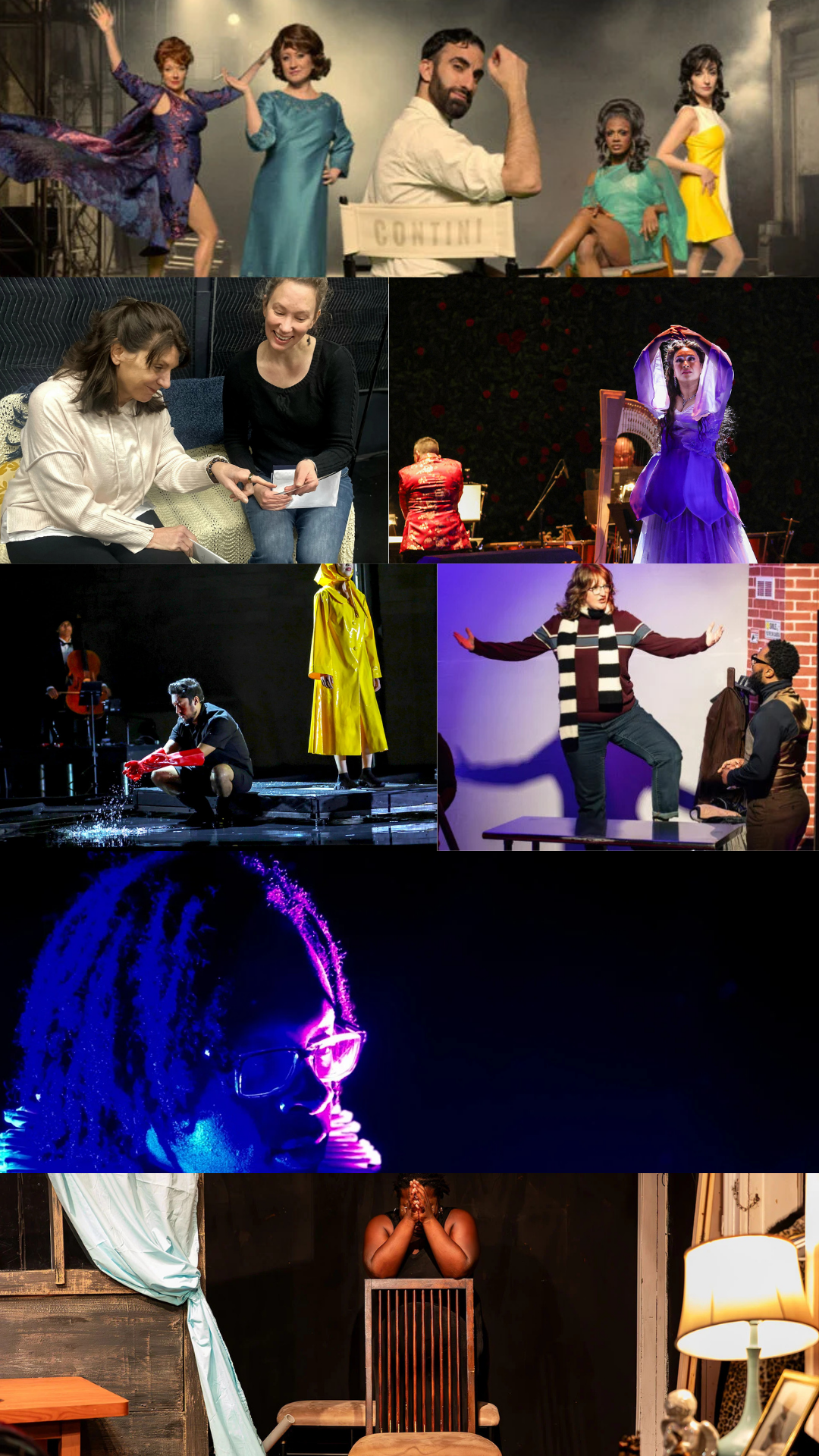
- Nine by Maury Yeston and Jeff Marx, after Federico Fellini, directed by Edward Carignan (Short North Stage) – In my review for Columbus Underground, I wrote, “Carignan does a masterful job of balancing what’s kinetic – keeping the entire cast moving, swirling around both Guido and each other to underscore the sense of chaos and fragmentation in the character’s mind, reinforcing that we’re always in his mind – and pausing to both let the audience breathe as well as stop on these arresting images that pay homage to one of the 20th century’s great image-makers. Another touch that reinforced that push-and-pull, which I appreciated very much, was Vera Cremeans’ take on Guido’s mother, his biggest influence, bringing a stillness that we don’t see much of throughout the rest of the show, the deliberateness she brings to the role and the gravitas, as the only person who does – probably who could – tell Guido to “Shape up,” helps emphasize the loneliness as he’s turned away from that center of gravity, as well as leading the company in a searing, blew-my-hair-back rendition of the title song.”
- Archiving Black Performance: Roots and Futures by Holly Bass, Marjani Forté-Saunders, Jennifer Harge, Ursula Payne, Crystal Michelle Perkins, and Vershawn Sanders-Ward (Dance Notation Bureau/Archiving Black Performance, Wexner Center for the Arts) – This mixture of archives, keeping performance alive, and expanding on languages, is right up my alley and my jaw was in my lap for the entire hour of this.
- Fat Ham by James Ijames, directed by David Glover (Contemporary Theatre of Ohio, Riffe Center) – I didn’t think anything could live up to how The Public Theatre struck me, but my god, this destroyed me. In my Columbus Underground review, I wrote: “Patricia Wallace-Winbush reminds us all that she’s at the very top tier of comic actors; her physicality and timing astonished me over and over. Glover’s production set up an interesting doubling of the outsider-insider observer-and-participant relationship across generations with Reese Anthony’s firecracker of a performance as Tio, resonating in ways I hadn’t noticed when I saw Fat Ham Off-Broadway. Anita Davis’s Tedra also spoke to me in ways the other performance didn’t, giving me a sense of understanding of the character without letting her off the hook for any of the horrible decisions or their repercussions while also still hilarious; I’ve never seen the first half of that equation pulled off as well in any Gertrude from any production of Hamlet, adding the razor-sharp comedic sensibility shoved me back in my chair.”

- Gem of the Ocean by August Wilson, directed by Tyrell Reggins (Trinity Theatre Company, Columbus Performing Arts Center) – The first August Wilson I ever got to see in a theater (the Goodman in Chicago) had a high personal bar set for me and Tyrell Reggins – who I was already a fan of as an actor but didn’t know his directing – sailed so far above that bar I left with my jaw hanging down, unable to talk to anyone as I walked back across downtown. Led by Wilma Hatton as one of my definitive Aunt Esters (again, a high bar, I saw Fences on Broadway), everyone in this left me stunned.
- Dentro. Una storia vera, se volete by Giuliana Musso (translated by Juliet Guzzetta) (Wexner Center for the Arts) – Often documentary theater or journalistic theater I find vital but a little dramatically unsatisfying. Musso’s work here, dealing with child abuse, was exactly the opposite. A riveting, gut-wrenching, searing evening that still has me thinking about it.
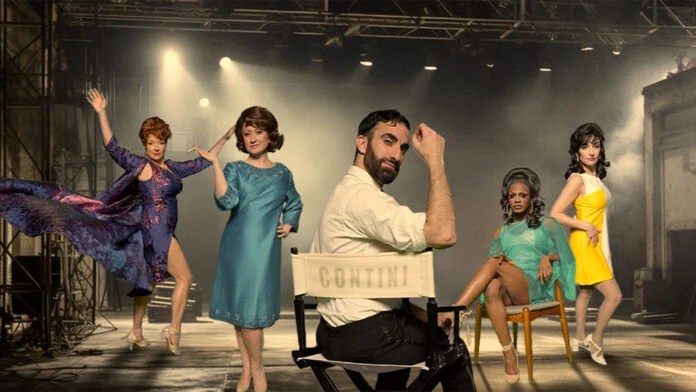
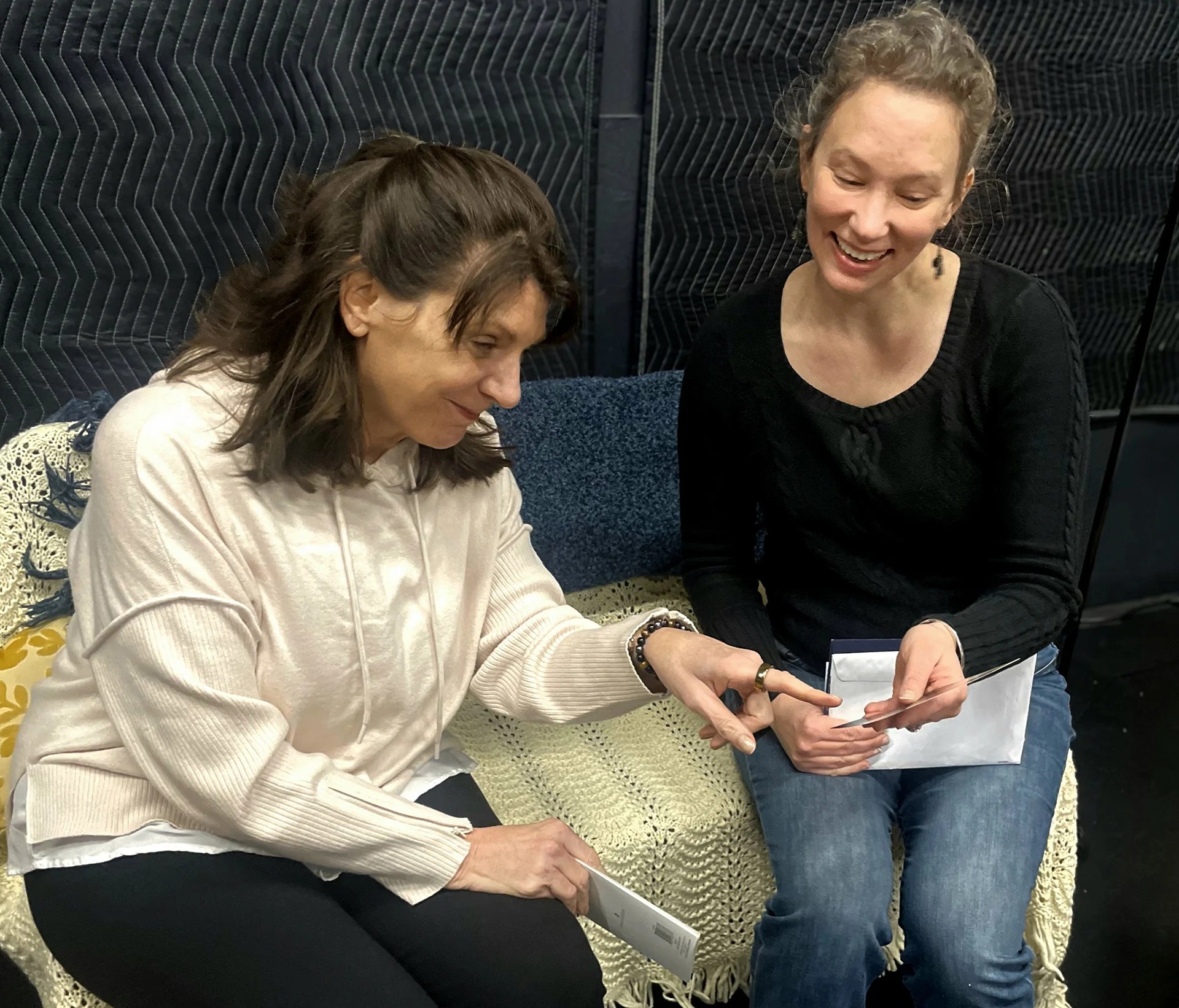
- Bothered and Bewildered by Gail Young, directed by Nancy Shelton Williams (Tipping Point, Columbus Performing Ars Center) – A director whose work I knew on a playwright I didn’t and one of my “Good lord, have you seen this?” shouting at everyone I could find moments of the year. As I said in my Columbus Underground review: “The magic of Bothered and Bewildered lies in its fascinating, yet impossible-to-look-away-from quality; it captures the frustrations and banality of the extremely realistic anger and frustration that no one can fight against. The grinding pain of knowing what the characters are going through will not improve for any of them. Williams and her cast make the immaculate craft going into this invisible; it feels as much like staring into fragments of someone’s life as anything I’ve ever seen on a stage, while simultaneously dragging me to the edge of my seat and slapping me across the face.”
- Rock Egg Spoon by Noah Diaz, directed by David Glover (Available Light, Riffe Center) – A wild burlesquing of history and the present, how good intentions go wrong and bad intentions go worse. The least describable anything I saw all year and maybe my single favorite piece on this list. In my Columbus Underground review, I said “The first act…gets at the heart of the human desire to be remembered, to have one’s story told, as a river flowing from the source of desperation not to be lonely. The hunger for connection and the desire to not show how much you want it, because rugged self-reliance is at the heart of the same myth, reverberates through both acts, as language (including “revolutionary,” “uncharted territory,” and the oft-attributed-to-Jefferson “Something better a few steps ahead”) shows up in different character’s mouths across various situations, showing how these concepts change and don’t change.”
- Amadeus by Peter Shaffer, directed by Matt Hermiz (Gallery Players) – A huge-cast, music-heavy play I’ve known since I was a preteen and Hermiz and cast made me see it with fresh eyes and stand waiting for the bus home grinning, giddy to write notes and capture as much of what I just saw as I possibly could. In my Columbus Underground review, I said “Lusher’s Salieri is a masterpiece of nuance, a finely calibrated performance that makes every shade of the gray the character wallows in rich and vibrant and the character’s slide deeper and deeper into unhappiness feel inexorable, not despite his self-awareness but fueled by it, so enraged by the lack of causality between living up to some standards and talent and reward, so embittered by the lack of direct communication from the almighty that he reshapes his concept of God into his own misery. That unhappiness, that bitterness at life not catering to him is what he worships by the end of the play – something I’d never gotten before from a production of Amadeus: Hermiz and Lusher revealed this to me as not a play about loss of faith but putting that expectation at the center of your belief system.”
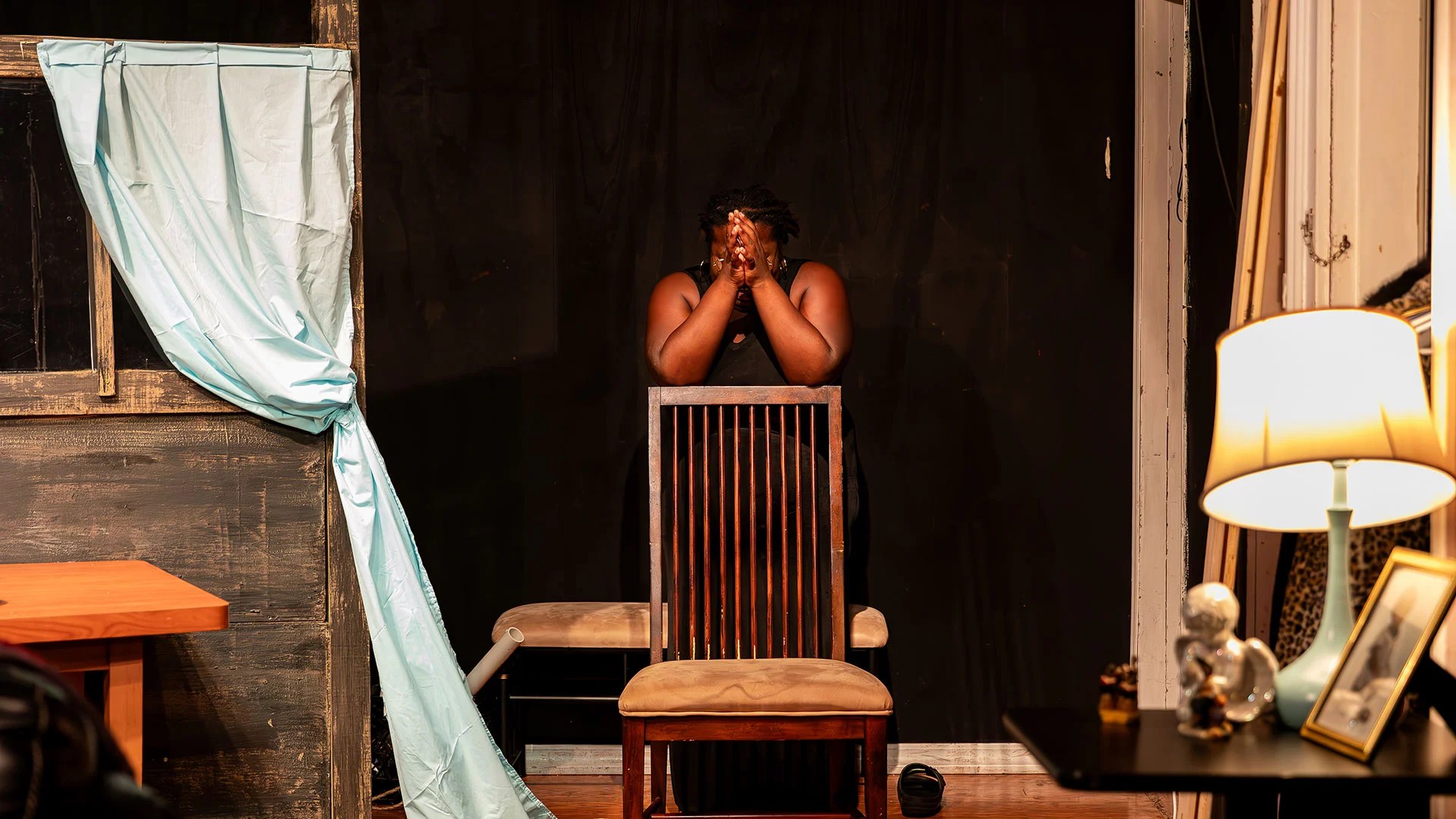
- Being Black Outside by Vinecia Coleman, directed by Sermontee Brown and Sha-Lemar Davis (Endeavor, Club Diversity) – Endeavor put themselves on my personal map with this, my favorite new playwrighting voice in years (maybe since Available Light introducing me to Noah Diaz two years ago, maybe since an Under the Radar four years ago), brilliantly directed by Brown and Davis and beautifully acted by Robinson and Smith. I wrote in Columbus Underground, “I was laughing out loud, huge laughs that got me on the side of these two characters within five minutes of Being Black Outside starting. The voice is so startling and rich, establishing these vibrant characters without wasting words. Coleman’s writing and Brown and Davis’ direction align beautifully in a tone that has no quarter for despair, yet simultaneously doesn’t sugarcoat the terrible nature of many of these events. It’s as effective a piece of art at putting me in a world that’s hostile to the Black people inhabiting it.”
- Gutenberg! by Scott Brown and Anthony King, directed by Niko Carter (Abbey Theatre of Dublin) – The best insider-baseball theatre comedy I’ve seen in a long while, with the genuine affection and respect between the two cast members Jonathan Collura and Joe Bishara shining. For Columbus Underground, I wrote: “The other conceit that’s very hard to pull off and this Gutenberg! does extremely well is actors who know more than their characters. The deep commitment behind every malapropism, every half-understood-at-best trope of theater or movement at history, rings a bell. The bell might ring harder for those of us versed in the subjects but I think Bishara and Collura communicate a strong enough sense of “the confident idiot” that even if an audience member doesn’t know the exact reference, they’ve worked with someone of that stripe to know it’s wrong.”
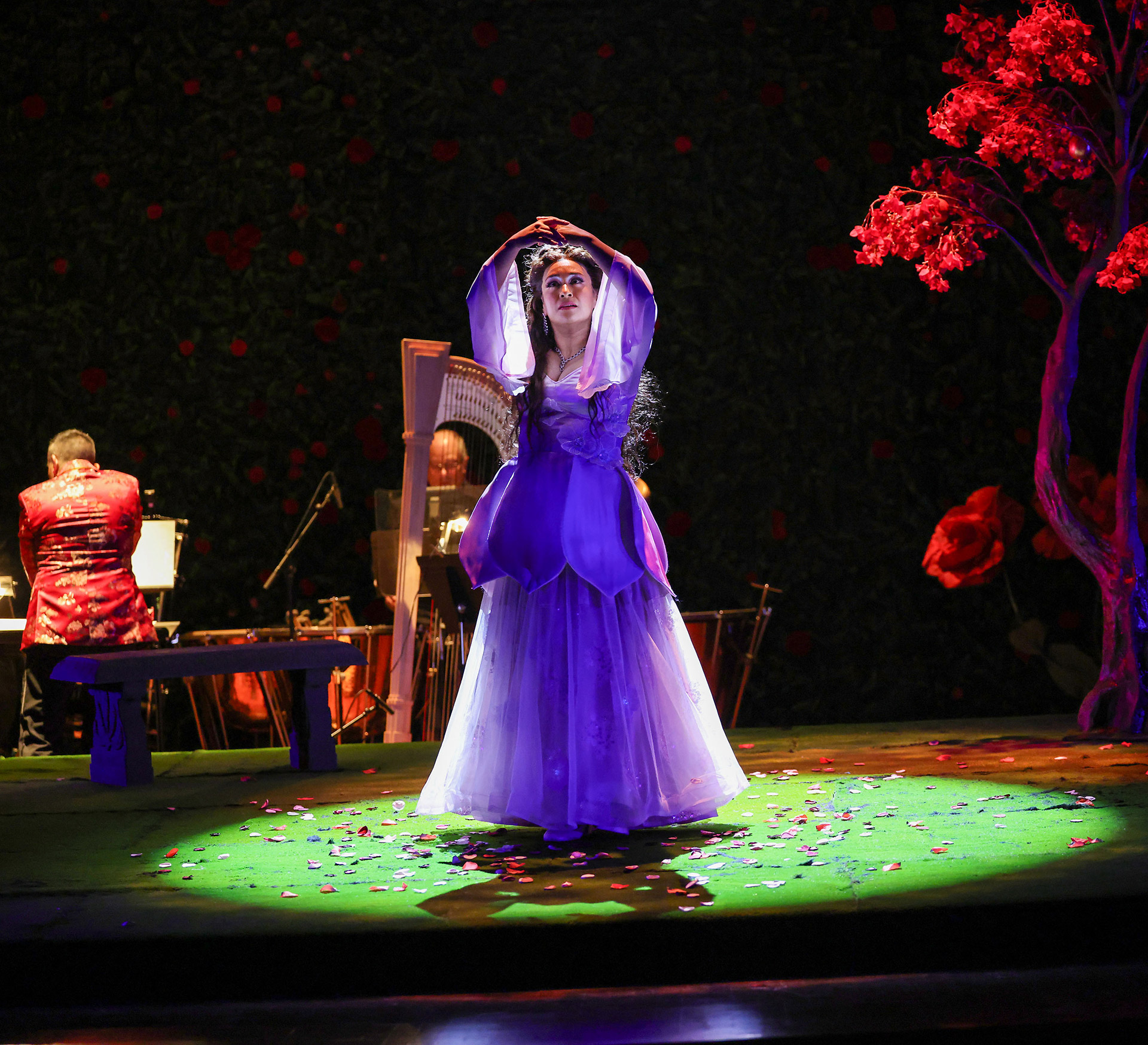
- Rappaccini’s Daughter by Daniel Catán after Nathaniel Hawthorne, directed by Brandon Shaw McKnight (Opera Columbus, Southern Theatre) – This Mexican composer’s take on a Hawthorne story I’ve loved since High School made my entire body vibrate. I said in Columbus Underground: “The fascinating arrangement choices, music directed by Salazar and played by Feza Zweifel (timpani), Carmeron Leach and Chris Lizak (all other percussion), Sara McGill (harp), and Diana Frazer and Que Jones (pianos) create a tense, throbbing landscape where subtle shifts sometimes feel like jump scares and sometimes lull us into a state of hypnotic attention until we come to, realizing we’re in a completely other place. The loveliness of the harp – and sometimes a piano or marimba – is less of a reprieve from the delicious creepiness and more a reminder of the Leonard Cohen line “Even damnation is poisoned with rainbows”…McKnight’s staging also fits into that tapestry of dread like a tight puzzle piece, not drawing attention to itself but putting the characters all just this side of uncomfortably close to one another, or when they’re not directly interacting, far away from anyone else, accenting their loneliness or their monomania or the feeling of drowning like Brueghel’s Icarus”
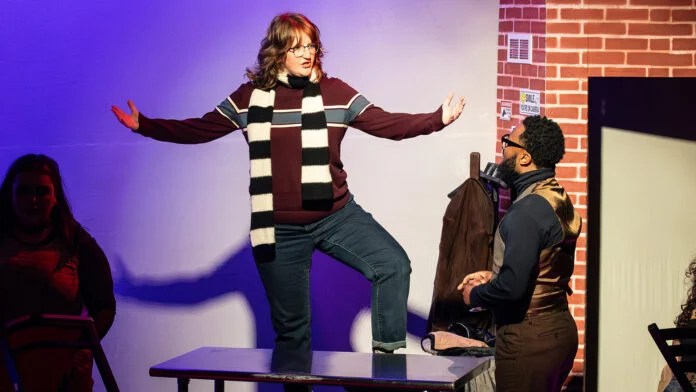
- Clowntime is Over by Joseph R. Green, directed by Michelle Batt (MadLab) – This revival of my personal favorite piece I’ve ever seen at MadLab, retaining Andy Batt’s astonishing existential clown in purgatory but switching the rest of the production up bringing in MadLab vet Michelle Batt as a director and a young supporting cast reminded me how much I loved it and revealed new textures I missed before. A rare utterly vital, necessary revival.
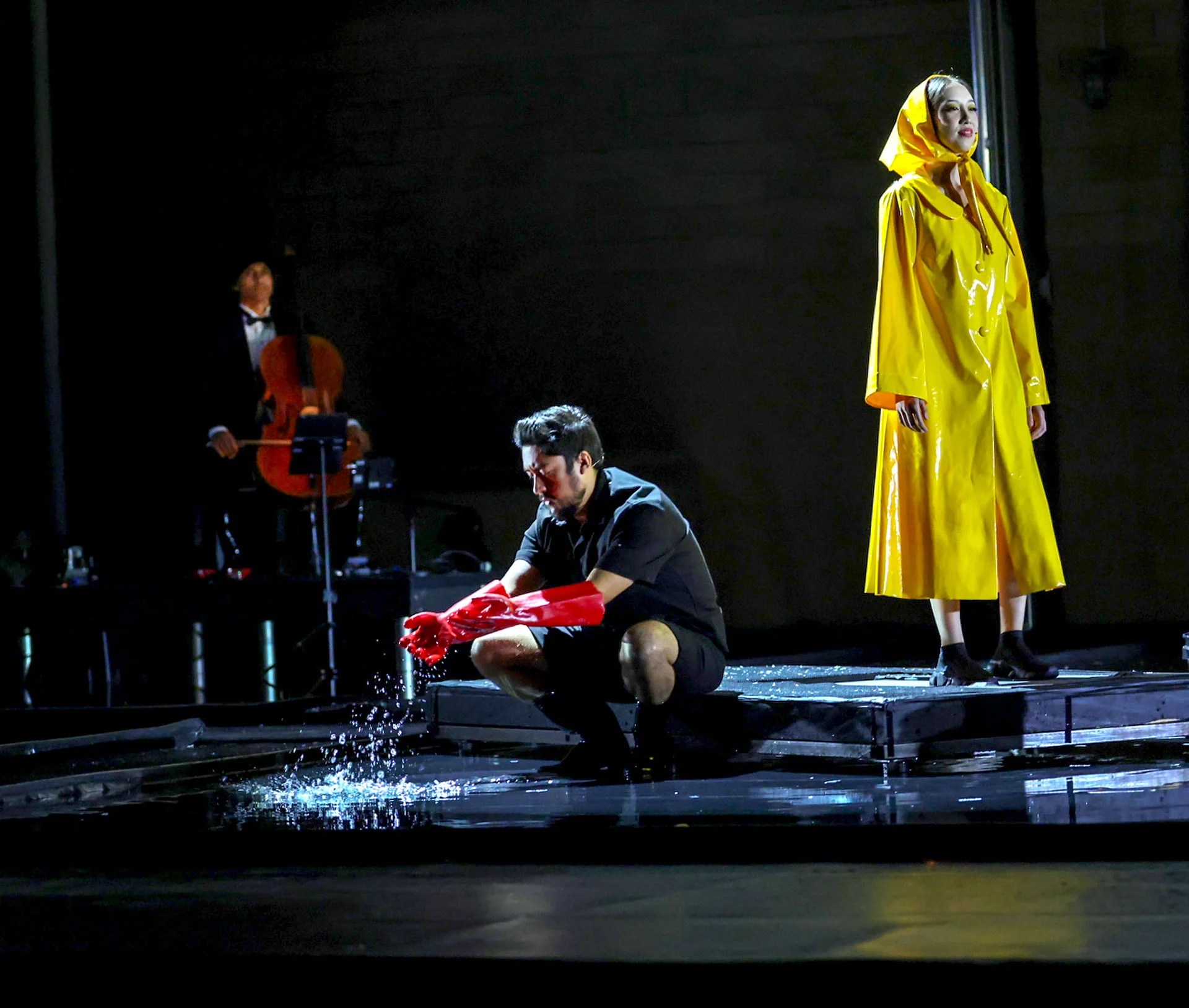
- The Old Man and the Sea by Paola Prestini, Royce Vavrek, and Karmina Šilec, after Ernest Hemingway, directed by Karmina Šilec and Mila Henry (Beth Morrison Productions/Opera Columbus/Wexner Center for the Arts) – On my periodic trips to New York, no producer has a better batting average for my taste than Beth Morrison Productions and the combination of them, the Wex, Opera Columbus, and Paola Prestini set a lot of high expectations… and met every single one of them. I’m about as far as you can get from being a Hemingway fan but I was utterly enraptured and blown away by every minute of this. For Columbus Underground, I wrote: “The music here adroitly evokes, elevates, and amplifies the senses of frustration and transcendence. Jeffrey Zeigler’s cello and Ian Rosenbaum’s percussion establish landscapes but also joust with the vocal writing: bursts of marimba and sweeping arco lines buoy and skip across throbbing choral passages and set up Conteras’ growling hope and Brueggergosman-Lee’s ecstatic blue flame on “What a Fish;” scrabbling, tight percussive cello phrases and the soaring chorus entwine with Girón’s silken cry on “Come;” the marimba bounces across cello that conjures shadows at sunset as the chorus sings lines as clear as ice being dropped in a glass setting up a wry battle/seduction between on Brueggergosman-Lee and Contreras on “Daiquiri,” Those touches enliven the piece, enriching the emotion without distracting…The physical action also packs the field of vision with these allusions and witty references. During the previously mentioned Daiquiri, Contreras takes his blazer off and puts it back over his shoulders repeatedly, winking at the repetition and sameness of a drinking problem, but also shaking the jacket in the direction of La Mar and the glass, nodding to the drink as adversary and honored collaborator through Hemingway’s longtime preoccupation with bullfighting. The use of treadmills also underscores that repetition and monotony (alongside some rich drones from the cello and chorus) and the effort needed to maintain. Women throw plastic into the pools that represent the ocean. A chest freezer – any fisherman knows – stands in for a bar and also a coffin. The boats and rafts are brought down to earth as cheap pool flotation devices. All of these touches led to a grin that didn’t leave my face until I slept.”
- Mareas/Tides by Marion Ramirez and Ojeya Cruz Banks (Wexner Center for the Arts) – The best fusion of various dance styles and live jazz I’ve ever seen in my life, bar none. Unafraid of the prettiness of traditional ballet or the appeal of digging into a groove but also willing to go to the most abstract, mythic spaces.
- Rent by Jonathan Larson, directed by Alan Tyson (Imagine Productions, Columbus Performing Arts Center) – Alan Tyson – beyond this he also directed a chroeopoem that was my favorite part of this year’s Columbus Black Theatre Festival – provided a stripped down Rent with two femme-presenting actors as Mark and Roger that pinned me to my seat and reminded me what I loved about that play originally, and all the people in my friend group who loved it I’ve lost since. For Columbus Underground, I wrote “That feeling – enhanced by terrific, low-key choices in choreography by Nicholas Wilson and intimacy choreography by Krista Lively Stauffer – gives the proceedings a vital, DIY edge, stripping away just enough slickness to lay bare the beating heart of these songs and relationships. In addition, Tyson’s production hits all of the beats a longtime fan would expect (without sacrificing a handshake to any newcomers), but also throws some fascinating curves and angles that sent me out into the night thinking about this production of a play I’ve probably seen a dozen times over the years.”
 Screen of Distance