Last Retrospective Playlist of the year, people who meant a lot to me who passed away. Blurbs below are mostly excerpted from my monthly substacks,Sam Moore – Another of the great American voices, through a partnership with Dave Prater that defined the rawer, rocking side of Stax with one killer single after another – “Soul Man,” “You’ve Got Me Hummin’,” “Thank You,” “Hold On, I’m Comin’,” – in a Best Of that’s as good as any single artist collection of the ‘60s, and deep cuts that would be the envy of almost anyone who ever stepped to a microphone, then a triumphant ‘90s and ‘00s revival. except for a couple of new ones written for this.
Less organization in this, the recommendation is to play it on shuffle.
https://tidal.com/playlist/da3107ee-d3b0-411c-9bca-f37c4e141b97
Melba Montgomery – One of my favorite voices and by far my favorite foil for George Jones, Melba Montgomery also wrote hits for other artists, made spine-tingling duets with other singers (her work with Charlie Louvin is a masterclass in the value of the duet in country music form), and some crushing solo songs like the breathtaking “No Change.”
Sam Moore – Another of the great American voices, through a partnership with Dave Prater that defined the rawer, rocking side of Stax with one killer single after another – “Soul Man,” “You’ve Got Me Hummin’,” “Thank You,” “Hold On, I’m Comin’,” – in a Best Of that’s as good as any single artist collection of the ‘60s, and deep cuts that would be the envy of almost anyone who ever stepped to a microphone, then a triumphant ‘90s and ‘00s revival.
Marianne Faithfull – What a second act – not only presenting as strong an argument for the deepening of an approach and a physical voice with aging and living as Frank Sinatra’s, Faithfull also sharpened her keen ear for material. Starting with Broken English, she unfurled a string of some of the best records anyone has ever made from any genre – Vagabond Ways, Strange Weather, Give My Love to London…just magic.
Susan Alcorn – There’s obviously a history of avant-garde pedal steel, but no practitioner aligned with my tastes and interests as much as Susan Alcorn. I saw an interview with Eugene Chadborne where he talked about seamlessly transitioning between free, atonal improv and the Merle Haggard classic “If We Make It Through December” with her around the same time I found her breakthrough album, with its fascinating Messiaen-riffing title track And I Await the Resurrection of the Pedal Steel Guitar and I was a fan and acolyte from that day forward. I was lucky enough to see her play a number of times over the years – an improv trio with Marc Ribot and a bass player for a Stone benefit, another time with Mary Halvorson, and leading her own combos – and she was one of the sets I was most looking forward to at Big Ears this year. I had a couple of great conversations with her, and she was utterly beloved by every mutual friend we had.
Gene Barge – If all Gene Barge gave us was co-writing – and playing the blistering solo on – the totemic, platonic ideal of a Saturday night banger, Gary “US” Bonds’ “Quarter to Three,” his place in the canon would be assured. But he also gave us wild soul instrumentals, killer playing with the cream of the jazz world like Malachi Thompson and Jack McDuff, and backing some of the finest vocalists including Fontella Bass, Muddy Waters, Jerry Butler, and the Chi-Lites. Swing it, Daddy G.
David Johansen – The volcano who exploded and reshaped so much of what I love about music of the last 50 years and did it all with immaculately bent style. I only got to see the reformed New York Dolls once and his funky excavation into the old weird America with the Harry Smiths once. I kept telling myself I’d time a New York trip to coincide with one of his career-spanning cabaret shows at Cafe Carlyle (captured in Martin Scorsese and David Tedeschi’s terrific Personality Crisis) but I never did, another reminder to prioritize the things you value. Taught me so many songs, many of which he wrote, like the slow-burn classic below.
Angie Stone – What a singular, path-breaking and making career in American music Angie Stone had: getting signed as a teenager by Sylvia Robinson as part of pioneering hip-hop trio The Sequence, writing and singing with Mantronix, and electro-tinged R&B trio Vertical Hold. Right around the time I was discovering Mantronix’s work, I saw her name as a co-writer on one of my favorite songs from D’Angelo’s Brown Sugar, “Jonz in My Bonz,” and I was primed for her solo debut Black Diamond which had a spot on damn near every mixtape I made the year I was 19 and worked just as well for sunny mornings on the porch or sitting around mirror lake as it did late at night. That first trilogy of records – following up Black Diamond with the even better Mahogany Soul and the rich, more club-ready Stone Love – are all classics, and even when I didn’t pay as much attention, every record has gems that shine as bright as any artist. Gone too fucking soon.
Max Romeo – For at least a year, when we were neighbors, my great friend Sarah Yetter (bassist and DJ extraordinaire who’s now killing the coffee game out in Vermont) would great each other on the street with a hearty shout of “You must put on iron shirt to fight the devil!” Romeo’s bridge between roots reggae and dub gave us two of the best records of any genre anywhere, Revolution Time and War Ina Babylon. There’s never a bad time to revisit them – just put them on at a party or a bar and watch how people who didn’t already know them react – but as we bid the departed comrade goodbye, play them loud.
David Thomas – As Ohio expat Ryan Jewell posted in his Instagram, David Thomas through Rocket from the Tombs, Pere Ubu, and later work with bands like Two Pale Boys, was a guiding light for any of us who came from Ohio and wanted to make something that cracked the world open for someone else. I cherish everytime I was lucky enough to see him play – revisiting the first two perfect Pere Ubu records at Ace of Cups; with a reformed RFTT featuring Richard Lloyd at Little Brothers; a beautiful, cracked performance-lecture at OSU where I commented “That was beautiful nonsense,” and simultaneously my pal Fred (the namesake for the “Hey Fred” column) said, “Wow, is that what college was like?” Thomas sent so many of us through higher learning in its purest form over and over again.
Michael Dean Damron – I met Mike a few times but I certainly knew him less than probably 50 of my friends (as evidenced by the righteous, justified outpouring of grief splashing my social media the week after hearing the news he’d passed away). His main band, I Can Lick Any Sonofabitch in the House, was at the center of a loose coalition of bands (including Austin’s Grand Champeen, Denton’s Slobberbone, and Columbus’s own Two Cow Garage) pouring a mix of moonshine and diesel into the engine of roots-rock and giving a genre I loved but which could tend towards mannered recreationism a much needed kick in the ass. Hearing the news of his passing got me to go back into the catalogue – including my favorite of their studio albums, Put Here to Bleed and the ferocious document Live at Dante’s – and be blown away by the solo records that slipped under my radar.
Andy Bey – I grew up loving ballads and standards of every stripe, thanks mainly to the influence of my Grandmother, whom I’ve often written about here and elsewhere. I didn’t know the great ’60s work of the Bey family, but I was primed when his second act started with 1996’s Ballads, Blues, and Bey, kicking off a run of some of the finest ballad records ever, including my personal favorite American Song. I was also lucky enough to see him a couple of times in my annual trips to NYC, usually in tiny rooms, always performances that lit me up from inside.
Sly Stone – If there’s something left to be said about Sly Stone, I’m not the guy to write it. I’m lucky we had that terrific biography and documentary in the last few years. I will say he had as big an influence on the way I hear rhythm and the world inside a song as any other bandleader, writer, composer, or arranger. Seeing Sly’s long-time bass foil (and almost-undisputed inventor of funk bass) Larry Graham once, in Prince’s band, almost made me lose my damn mind. And that love vibrates every time I play “If You Want Me to Stay” (or one of a dozen other choices, but that’s my intersection of good-for-every-bar and never-get-tired-of) on a jukebox.
Al Foster – Like many people of my generation, Al Foster’s fluidity at the core of his thunderous rock backbeat that propelled ‘70s Miles Davis on records like Get Up With It and Agharta felt like a revelation. Being lucky enough to see him in New York and catching up with the rest of his work was a reminder that bebop was Foster’s first love and that love illuminated his never-precious playing with its languages, twists, and turns, that avoided any cliches that a lesser drummer might have reached for. My favorite posts in memorial came from Ethan Iverson at his essential Transitional Technology and Vinnie Sperrazza’s must-read Chronicles.
Art Fein – Not a musician, but as an impresario, producer (the first couple of Blasters records on Slash), compiler (Art Fein Presents LA Rockabilly), liner notes writer (Rhino’s unassailable Zooma Zooma: The Best of Louis Prima and Darlene Love’s Whole Hearted burned themselves in my brain very young, almost as much as the music), visual artist (Skip Heller’s Couch, Los Angeles and the comp Step Right Up: The Songs of Tom Waits are two CDs I distinctly remember buying in my late teens at least partly because of the “curb appeal”), and scene connector (god bless whoever put so many episodes of the public access classic Art Fein’s Poker Party on YouTube), Fein ground – double entrendre noticed after and left in deliberately – a lens that helped me understand the LA side of the weird America I’ve always craved.
Robert Wilson – In a 50-year career that intersected art forms, scenes, genres, and generations in what feels like a particularly mid-century American way, Robert Wilson’s ‘80s-’00s work with musicians I was already a fan of like Tom Waits, Lou Reed, and Bernice Johnson Reagon, nourished a flame of curiosity for avant-garde and experimental theater, which then opened a gateway for me to music like Philip Glass and Louis Andriessen. Seeing the preview of a recent revival of Einstein on the Beach at the University of Michigan remains one of my most treasured memories.
Eddie Palmieri – Pianist Eddie Palmieri – born in the Bronx to Puerto Rican parents – reshaped New York music and Latin music with his approach that brought in and respected the most burning of free jazz and the integrity of a variety of Latin rhythms (he rightly railed against being lumped under the umbrella of “salsa”) and kept crushing it all the way to his death at 88. My favorite piece in the wake of his passing comes from the indispensable The Gig by Nate Chinen.
Michael Beard – This Columbus native held down the drum chair for the funky version of the Bar-Kays on some of their biggest hits including Shake Your Rump to the Funk. In The Dispatch obituary, founder James Alexander said:
“He was a difference maker — a game changer for the Bar-Kays.”
Keith McIvor – In my late teens/early 20s I found myself pretty dissatisfied with the local rock and roll scene (I still found a lot to love but the bands that set me on fire all seemed to be falling apart or drifting away) and moved toward electronic music in various permutations. This also coincided with my early couple-of-times-a-year trips to NYC and both of those lined up with my discovering the work of Keith McIvor, aka JD Twitch, one half of Glasgow force of nature Optimo. His ranging tastes and deep interest in unsettling, disturbing the floor while also giving us all the catharsis we signed up for was a thing of beauty. I was lucky enough to see him spin a couple of times when we were both in the city and revisiting mixes and tributes to him has been an unalloyed pleasure that’s going to vibrate through the fall. The best primer I’ve found comes from Michelangelo Matos’ essential Beat Connection: BC138 – Five Mixes: Optimo (Espacio)/JD Twitch, 2004-23
Dave Cunningham – Since discovering it in 2001 (with, at the time, my fellow Northside crew led by Greg Spahr), I’m sure there have been a handful of trips to Cincinnati without darkening the door of The Comet, but very few and not by preference. As recently as this past Sunday coming back from Gonerfest, the house Dave Cunningham built – where I saw great Cincy bands like The Griefs, my local friends and heroes The Sovines, national acts like Barrence Whitfield and the Savages, and house band The Comet Bluegrass All-Stars so many times – is still the home of my favorite salsa sampler in Ohio and the best jukebox I’ve found anywhere in the world.
D’Angelo – I don’t think there are enough words for the way D’Angelo’s questing mix of classicism and innovation, his – along with various producers and co-writers – hunger to make records that lived up to his idols and also spoke to the here and now, set and broke the template for contemporary music (starting with R&B and radiating out) at the same time, from the quintessential neo-soul document Brown Sugar and its gripping, alive counterpart Live at the Jazz Cafe, to the sui generis all-timer Voodoo and exceptionally strong comeback Black Messiah. I was lucky enough to see the Voodoo tour at 20 and it’s still one of the greatest shows I’ve ever seen. My favorite writing in the wake of his passing comes from Harmony Holiday at 4Columns and Jason King’s liner notes for the Light in the Attic reissue of Voodoo I hadn’t seen before.
Ace Frehley – I’ve gone back and forth on KISS in general, but they were mesmerizing to me as a child, and that rock-solid songcraft still works for me. I’m always happy to hear them on a jukebox, the radio, or at a party. The encomiums of my friends Craig Kempton and Colin Gawel – who’ve seen many shows and raved about Ace Frehley solo live in the last few years – have particularly sharpened my appreciation of KISS’s original lead guitarist, along with plenty of internet hosannas, including Bob Starker and Joe Oestreich talking about the ways his guitar figures shaped the music they went on to make (the selection below was highlighted by Starker).
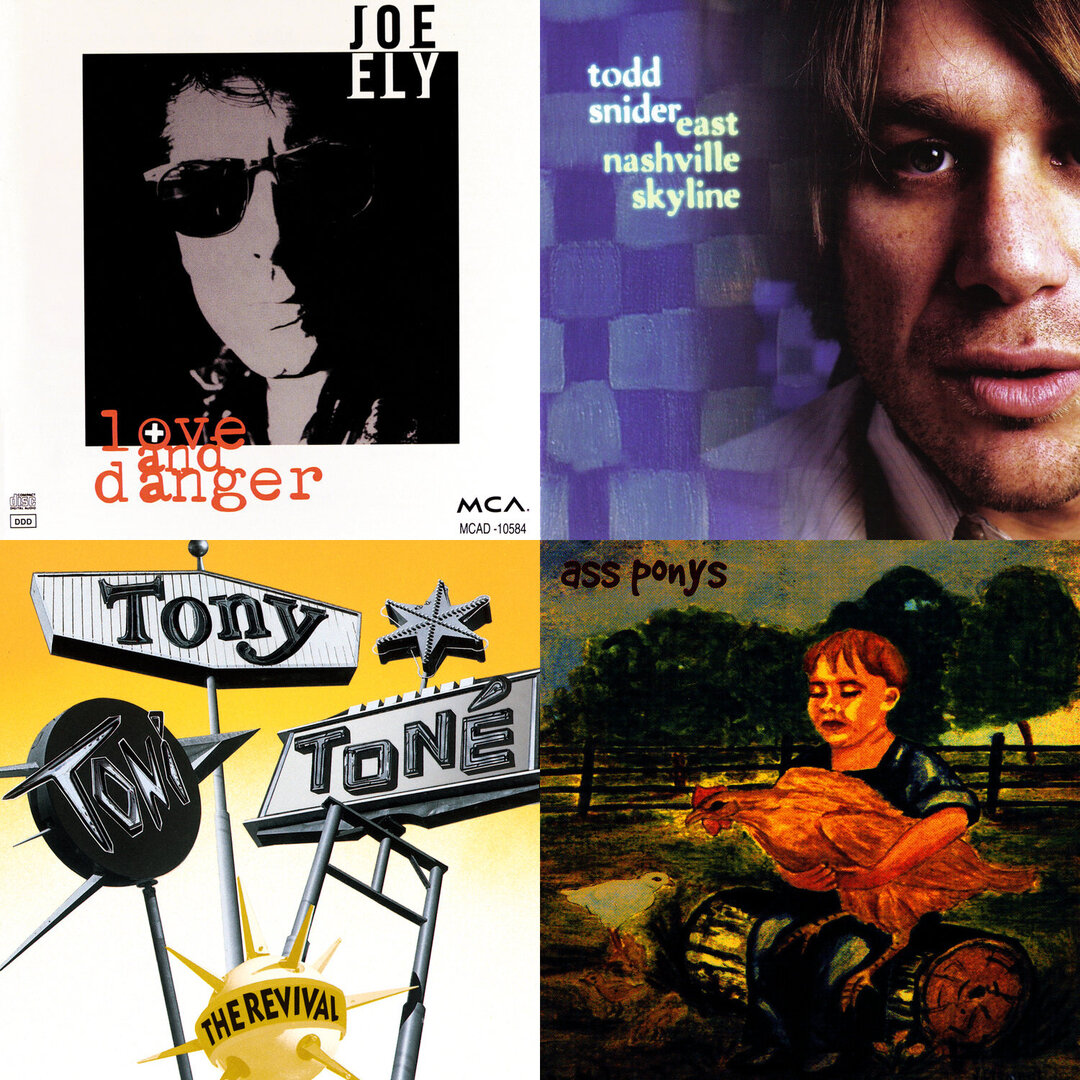
Todd Snider – I don’t even know what to say about Todd Snider. Every single person I know who is connected to Nashville or Americana has a deep connection and a personal story, and he put so many other songwriters on and helped them find a new audience. An exemplar of generosity and community that somehow never overshadowed his own astonishing songwriting (I’d start with East Nashville Skyline but it’s hard to go wrong with his catalog). The best of the mainstream media obituaries is Joseph Hudak for Rolling Stone, who also organized a great podcast with friends, including Elizabeth Cook, Aaron Lee Tasjan, and Chuck Mead, trading stories. Sending him off with one of the great eulogy songs ever written.
Nate Gillies – A more personal choice here. Nate was the door guy at Columbus venue Little Brothers for at least a decade and one of my dearest friends for about that long. We stayed friends as he moved back to Erie, Pennsylvania, and every time he’d come back through town we’d share a drink or two and some laughs; I’m proud to own one of his terrific paintings, bought on one of those trips when he and his partner were vending at a Punk Rock Flea Market on Ace’s back patio. Love you, buddy.
Joe Ely – The connector between generations of Texas music, a great songwriter in his own right (with classics under his belt including “Me and Billy The Kid” and “Lord of the Highway”), the face of progressive Texas to the outside world (including through his appearance singing Spanish on The Clash’s “Should I Stay Or Should I Go” and a decades-long alliance with Bruce Springsteen), and one of the finest interpreters of songs in my lifetime. As the only artist who got two tracks on the playlist, I focused on that with two of the greatest songs of all time in – in my estimation – their finest renditions: Robert Earl Keen’s irony-drenched look at the systems of the world and the way we keep hoping anyway, “The Road Goes On Forever” and Tom Russell’s wrenching ballad about generational betrayal, social stratification, and cockfighting, “Gallo del Cielo.”
Raul Malo – What can you say about someone with the most powerful, dramatic voice I’ve ever heard someone turn toward country music since George Jones who paired that instrument with an appetite to bring all the music he grew up loving in Miami and found on the long roads he traveled together behind one of the finest songwriting voices working. With his long-running band The Mavericks (represented here) he gave more classics than I could name, generated an outpouring of people two degrees or less from me talking about his legacy of making the genre he loved more inclusive, giving people chances through opening, features, or co-writing, or even just singing old songs and passing a bottle in a hotel room for hours after the show ended. Never see the likes of him again.
Beyond what’s discussed in more detail above – and just as a reminder, this includes sessions and band members so they aren’t always labeled in the Playlist itself – this includes
Swinging R&B from D’Wayne Wiggins (Tony! Toni! Tone!) , Brenton Wood, Junior Lowe (Clarence Carter), soulful ballads from Roberta Flack, Jerry Butler, The Whispers, and Walter Scott (The Whispers), disco from Atlantic Starr and Gwen McCrae, stellar jazz from Guy Kulcesevek (Dave Douglas), Al Foster, Ray Drummond (Houston Person), Jack DeJohnette (McCoy Tyner and Joe Henderson), and a lot more. It’s always good to take a breath and remember the people we lost who meant something to us, especially at the end of the year.
 Screen of Distance