Categories
Best Of dance theatre

Best of 2025: Theater/Opera/Dance

This was a closer-to-home year for me in terms of “performance art.” My only New York trip was for my birthday, so more about friends, and I didn’t get to any theater (have no fear, I’ve already got APAP booked and three or four theater/Opera/dance pieces around Winter Jazz Fest and Globalfest).

That local focus really shone a light on how strong the artistic quality of the theatrical scene is right now: the batting average of the 50 shows I saw this year was extraordinary. Beyond the version of Nine that exceeded all my expectations, Short North Stage delivered several other productions that served as a reminder that they’re the best they are at what they do. Abbey Theatre of Dublin swung for the fences and – even when the final product didn’t quite make my final 15, gave me an experience I’d never seen before in a theater (The Witch of November) or delivered all the beauty of some of my favorite musicals with an intimacy and community spirit (Fun Home with Evolution, Hadestown with their Young Adults program). The Contemporary did a version of my favorite play of the last five years that lived up to my memories of seeing it at the Public in every way.

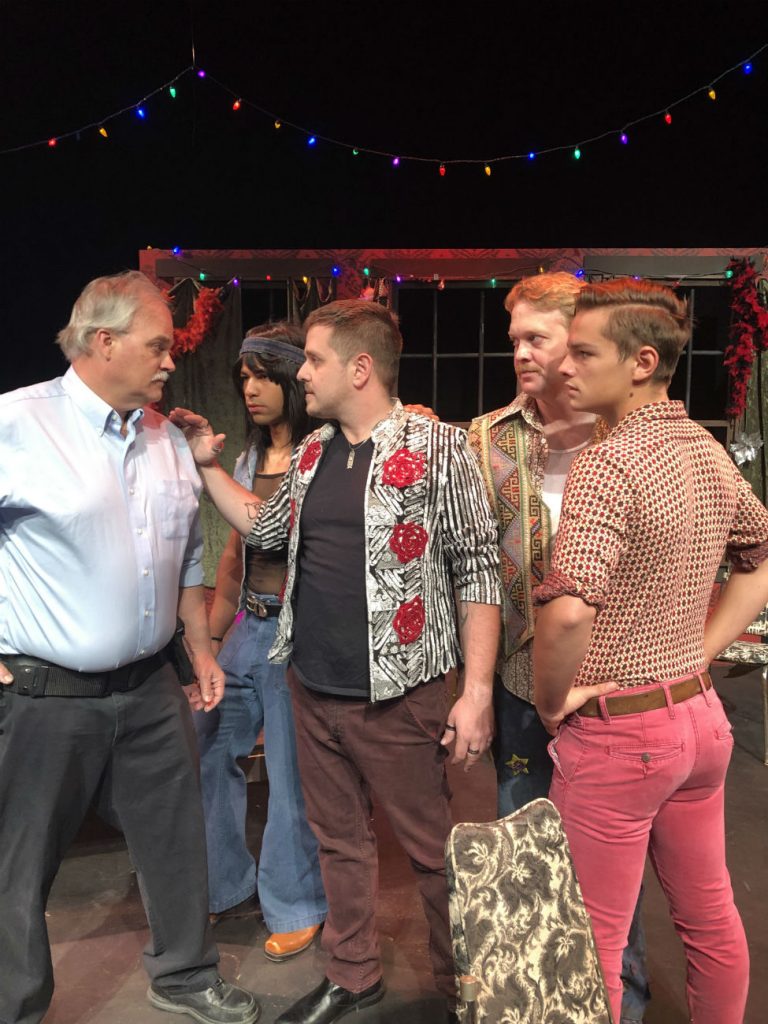
Smaller companies took chances that paid off big, with Tipping Point ripping my heart out of my chest, Endeavor introducing me to one of the freshest playwriting voices in years, Imagine giving us Rent with Mark and Roger played by femme-presenting actors and a fresh, DIY take on material I know in my sleep (along with a Cry-Baby that punched way above its weight class and came within a hair of making this), pointing to a bright future with Brandon Boring taking the reins as Artistic Director. Opera Columbus shows up here twice, and the two that didn’t make the list easily could have. Tyrell Reggins’ Trinity Theatre Company launched an ambitious project to do every August Wilson play of the cycle and set the bar high.

And the biggest story is the return to full artistic power of the Wexner Center. Leveraging relationships with the Department of Dance, Denison University, and national and international artists, they presented the strongest slate since before the pandemic. All praise to Elena Perantoni. All praise to Kathleen Felder. I can’t wait to see what this team does, augmented by Nathalie Bonjour, who joined during the year.

Everything below is in Columbus unless otherwise stated, all photos are provided by respective companies as stated. If I reviewed it, I quote and link to the original review. If a review isn’t linked, it had a limited run or I was out of town and I wrote a preview or I saw it on my own dime. Listed in chronological order.
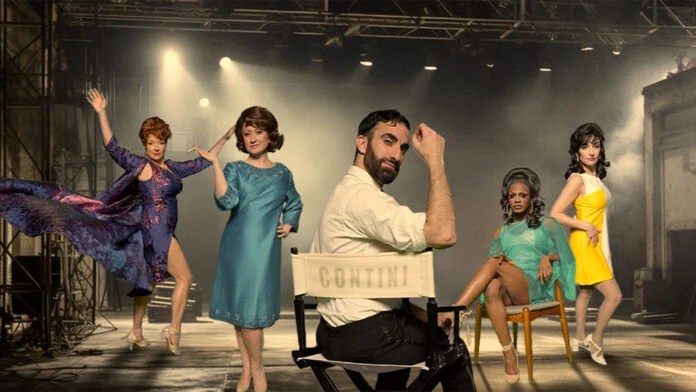
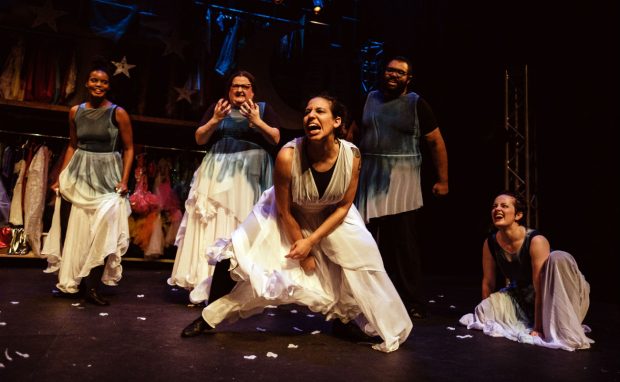
Nine, photo by Fyrebird Media, provided by Short North Stage
  • Nine by Maury Yeston and Jeff Marx, after Federico Fellini, directed by Edward Carignan (Short North Stage) – In my review for Columbus Underground, I wrote, “Carignan does a masterful job of balancing what’s kinetic – keeping the entire cast moving, swirling around both Guido and each other to underscore the sense of chaos and fragmentation in the character’s mind, reinforcing that we’re always in his mind – and pausing to both let the audience breathe as well as stop on these arresting images that pay homage to one of the 20th century’s great image-makers. Another touch that reinforced that push-and-pull, which I appreciated very much, was Vera Cremeans’ take on Guido’s mother, his biggest influence, bringing a stillness that we don’t see much of throughout the rest of the show, the deliberateness she brings to the role and the gravitas, as the only person who does – probably who could – tell Guido to “Shape up,” helps emphasize the loneliness as he’s turned away from that center of gravity, as well as leading the company in a searing, blew-my-hair-back rendition of the title song.”
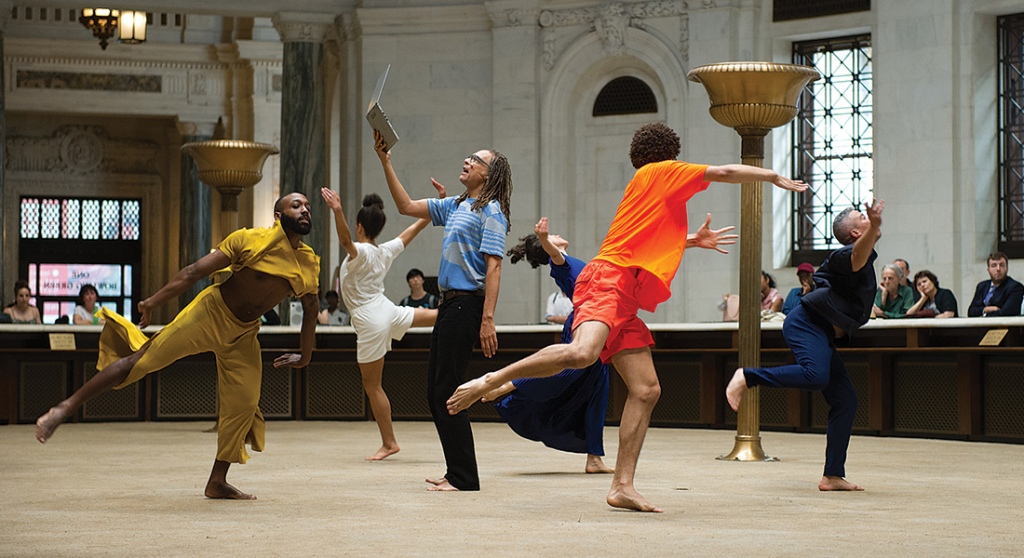
  • Archiving Black Performance: Roots and Futures by Holly Bass, Marjani Forté-Saunders, Jennifer Harge, Ursula Payne, Crystal Michelle Perkins, and Vershawn Sanders-Ward (Dance Notation Bureau/Archiving Black Performance, Wexner Center for the Arts) – This mixture of archives, keeping performance alive, and expanding on languages, is right up my alley and my jaw was in my lap for the entire hour of this.
  • Fat Ham by James Ijames, directed by David Glover (Contemporary Theatre of Ohio, Riffe Center) – I didn’t think anything could live up to how The Public Theatre struck me, but my god, this destroyed me. In my Columbus Underground review, I wrote: “Patricia Wallace-Winbush reminds us all that she’s at the very top tier of comic actors; her physicality and timing astonished me over and over. Glover’s production set up an interesting doubling of the outsider-insider observer-and-participant relationship across generations with Reese Anthony’s firecracker of a performance as Tio, resonating in ways I hadn’t noticed when I saw Fat Ham Off-Broadway. Anita Davis’s Tedra also spoke to me in ways the other performance didn’t, giving me a sense of understanding of the character without letting her off the hook for any of the horrible decisions or their repercussions while also still hilarious; I’ve never seen the first half of that equation pulled off as well in any Gertrude from any production of Hamlet, adding the razor-sharp comedic sensibility shoved me back in my chair.”
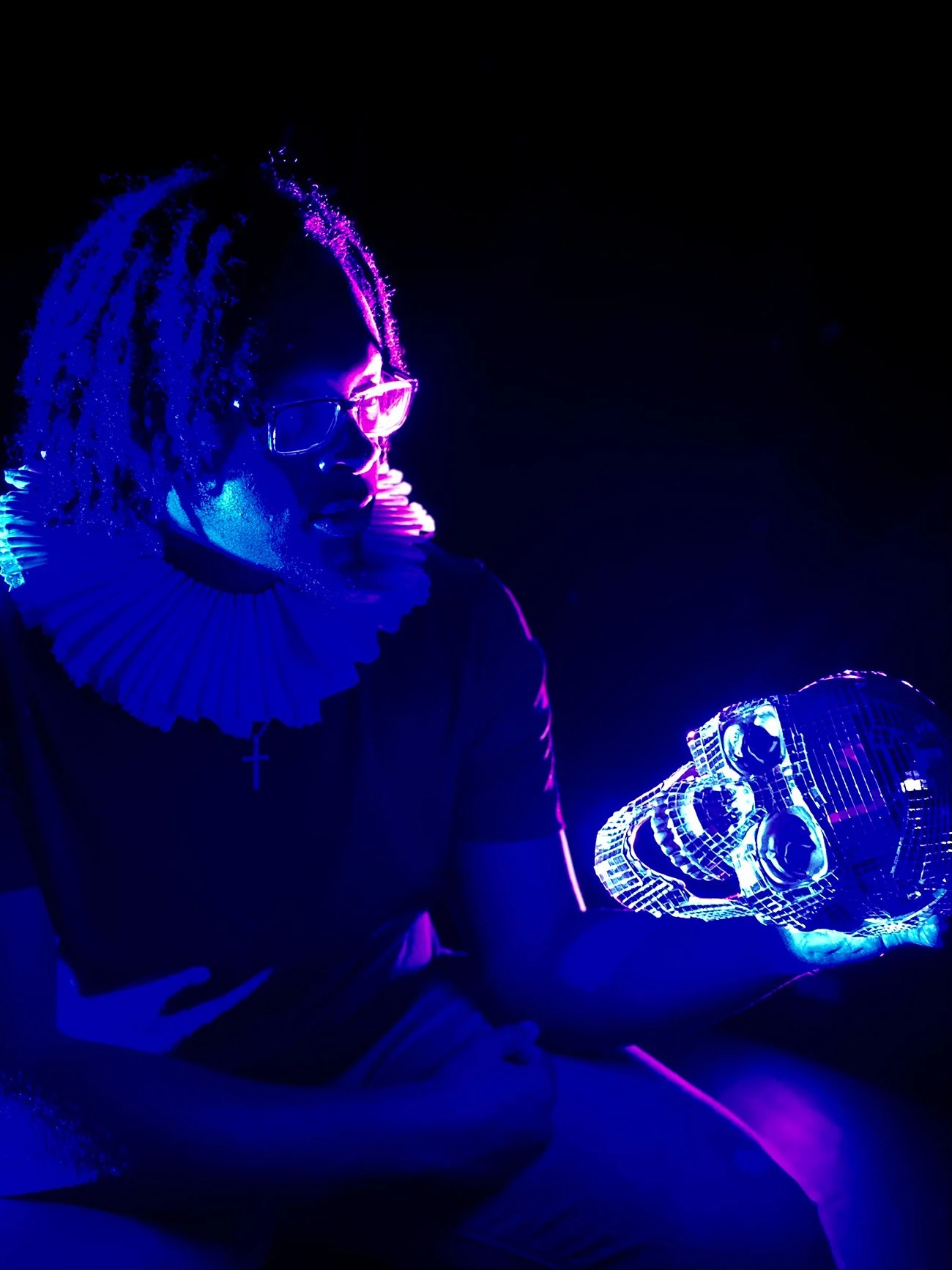
Fat Ham. Photo by Alexa Baker, provided by Contemporary Theatre of Ohio
  • Gem of the Ocean by August Wilson, directed by Tyrell Reggins (Trinity Theatre Company, Columbus Performing Arts Center) – The first August Wilson I ever got to see in a theater (the Goodman in Chicago) had a high personal bar set for me and Tyrell Reggins – who I was already a fan of as an actor but didn’t know his directing – sailed so far above that bar I left with my jaw hanging down, unable to talk to anyone as I walked back across downtown. Led by Wilma Hatton as one of my definitive Aunt Esters (again, a high bar, I saw Fences on Broadway), everyone in this left me stunned.
  • Dentro. Una storia vera, se volete by Giuliana Musso (translated by Juliet Guzzetta) (Wexner Center for the Arts) – Often documentary theater or journalistic theater I find vital but a little dramatically unsatisfying. Musso’s work here, dealing with child abuse, was exactly the opposite. A riveting, gut-wrenching, searing evening that still has me thinking about it.
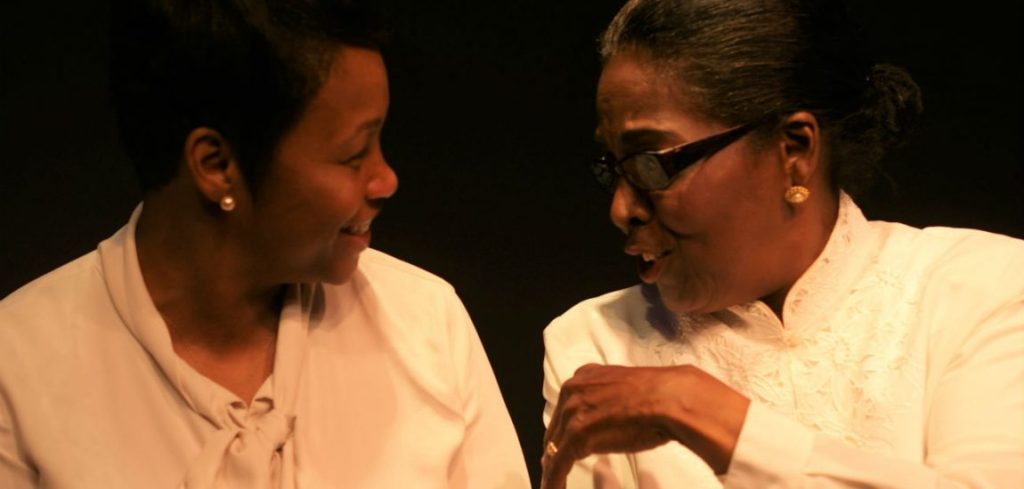
  • Bothered and Bewildered by Gail Young, directed by Nancy Shelton Williams (Tipping Point, Columbus Performing Ars Center) – A director whose work I knew on a playwright I didn’t and one of my “Good lord, have you seen this?” shouting at everyone I could find moments of the year. As I said in my Columbus Underground review: “The magic of Bothered and Bewildered lies in its fascinating, yet impossible-to-look-away-from quality; it captures the frustrations and banality of the extremely realistic anger and frustration that no one can fight against. The grinding pain of knowing what the characters are going through will not improve for any of them. Williams and her cast make the immaculate craft going into this invisible; it feels as much like staring into fragments of someone’s life as anything I’ve ever seen on a stage, while simultaneously dragging me to the edge of my seat and slapping me across the face.”
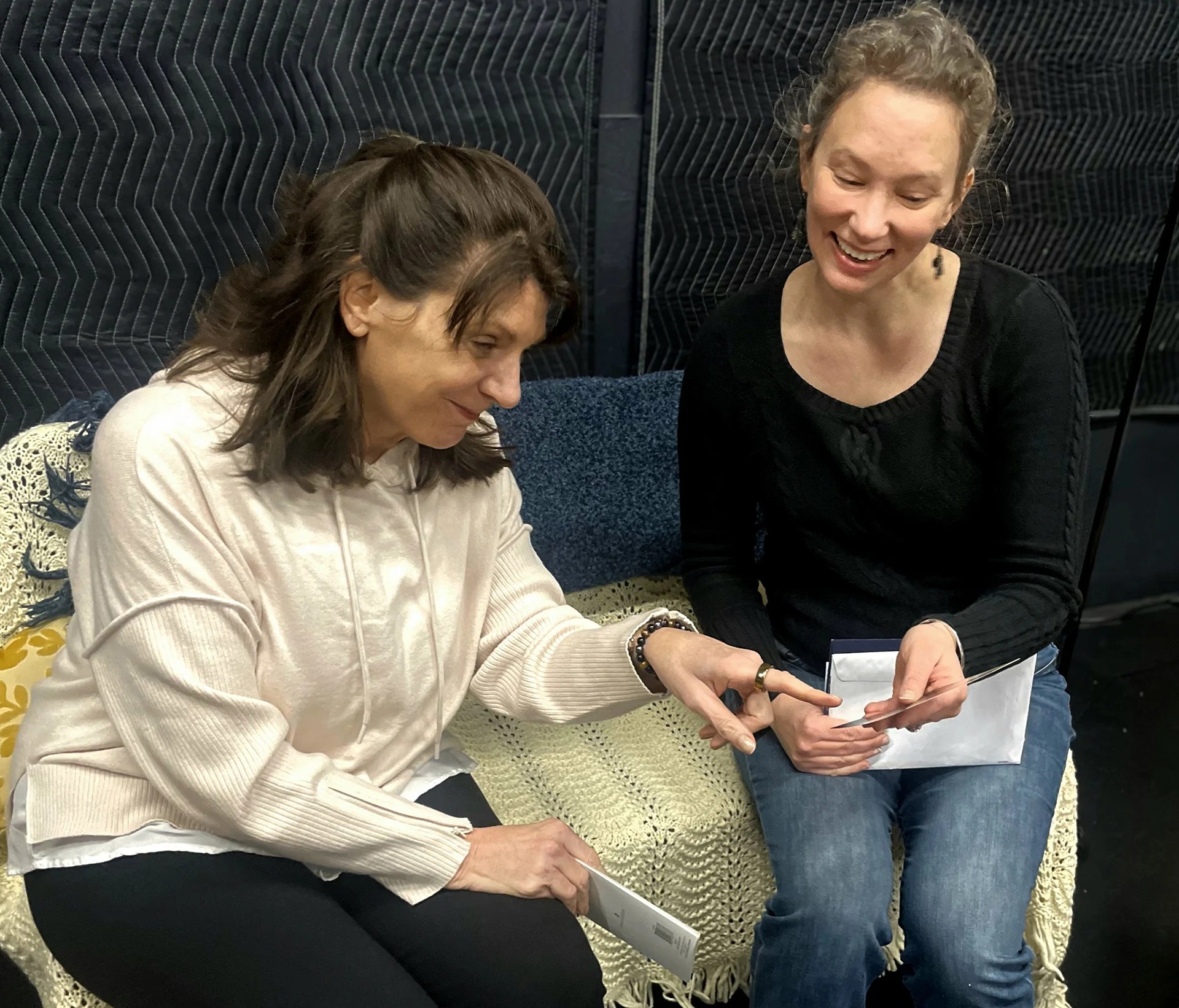
Bothered and Bewildered. Provided by Tipping Point.
  • Rock Egg Spoon by Noah Diaz, directed by David Glover (Available Light, Riffe Center) – A wild burlesquing of history and the present, how good intentions go wrong and bad intentions go worse. The least describable anything I saw all year and maybe my single favorite piece on this list. In my Columbus Underground review, I said “The first act…gets at the heart of the human desire to be remembered, to have one’s story told, as a river flowing from the source of desperation not to be lonely. The hunger for connection and the desire to not show how much you want it, because rugged self-reliance is at the heart of the same myth, reverberates through both acts, as language (including “revolutionary,” “uncharted territory,” and the oft-attributed-to-Jefferson “Something better a few steps ahead”) shows up in different character’s mouths across various situations, showing how these concepts change and don’t change.”
  • Amadeus by Peter Shaffer, directed by Matt Hermiz (Gallery Players) – A huge-cast, music-heavy play I’ve known since I was a preteen and Hermiz and cast made me see it with fresh eyes and stand waiting for the bus home grinning, giddy to write notes and capture as much of what I just saw as I possibly could. In my Columbus Underground review, I said “Lusher’s Salieri is a masterpiece of nuance, a finely calibrated performance that makes every shade of the gray the character wallows in rich and vibrant and the character’s slide deeper and deeper into unhappiness feel inexorable, not despite his self-awareness but fueled by it, so enraged by the lack of causality between living up to some standards and talent and reward, so embittered by the lack of direct communication from the almighty that he reshapes his concept of God into his own misery. That unhappiness, that bitterness at life not catering to him is what he worships by the end of the play – something I’d never gotten before from a production of Amadeus: Hermiz and Lusher revealed this to me as not a play about loss of faith but putting that expectation at the center of your belief system.”
  • Being Black Outside by Vinecia Coleman, directed by Sermontee Brown and Sha-Lemar Davis (Endeavor, Club Diversity) – Endeavor put themselves on my personal map with this, my favorite new playwrighting voice in years (maybe since Available Light introducing me to Noah Diaz two years ago, maybe since an Under the Radar four years ago), brilliantly directed by Brown and Davis and beautifully acted by Robinson and Smith. I wrote in Columbus Underground, “I was laughing out loud, huge laughs that got me on the side of these two characters within five minutes of Being Black Outside starting. The voice is so startling and rich, establishing these vibrant characters without wasting words. Coleman’s writing and Brown and Davis’ direction align beautifully in a tone that has no quarter for despair, yet simultaneously doesn’t sugarcoat the terrible nature of many of these events. It’s as effective a piece of art at putting me in a world that’s hostile to the Black people inhabiting it.”
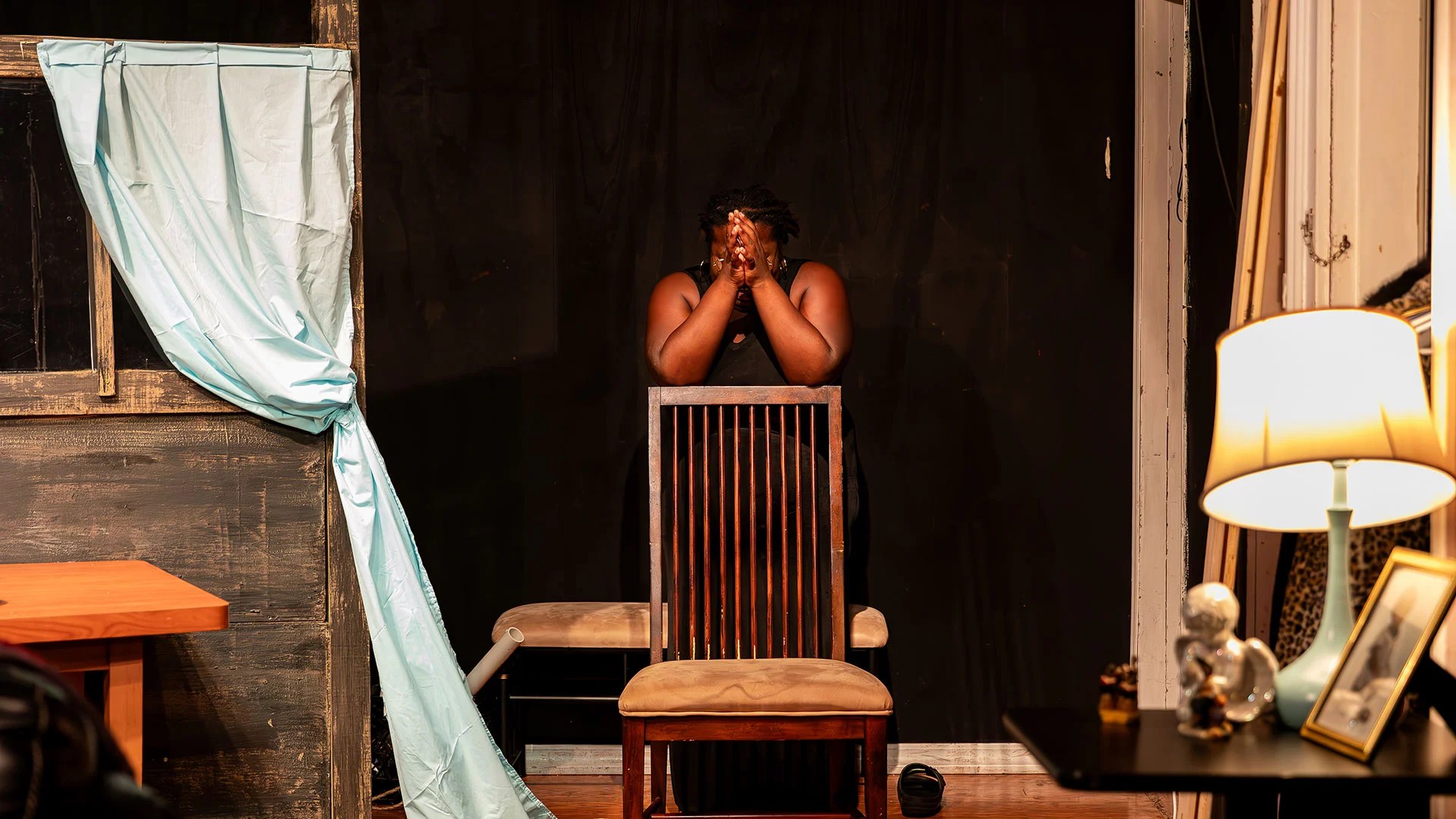
Being Black Outside, provided by Endeavor Theatre
  • Gutenberg! by Scott Brown and Anthony King, directed by Niko Carter (Abbey Theatre of Dublin) – The best insider-baseball theatre comedy I’ve seen in a long while, with the genuine affection and respect between the two cast members Jonathan Collura and Joe Bishara shining. For Columbus Underground, I wrote: “The other conceit that’s very hard to pull off and this Gutenberg! does extremely well is actors who know more than their characters. The deep commitment behind every malapropism, every half-understood-at-best trope of theater or movement at history, rings a bell. The bell might ring harder for those of us versed in the subjects but I think Bishara and Collura communicate a strong enough sense of “the confident idiot” that even if an audience member doesn’t know the exact reference, they’ve worked with someone of that stripe to know it’s wrong.”
  • Rappaccini’s Daughter by Daniel Catán after Nathaniel Hawthorne, directed by Brandon Shaw McKnight (Opera Columbus, Southern Theatre) – This Mexican composer’s take on a Hawthorne story I’ve loved since High School made my entire body vibrate. I said in Columbus Underground: “The fascinating arrangement choices, music directed by Salazar and played by Feza Zweifel (timpani), Carmeron Leach and Chris Lizak (all other percussion), Sara McGill (harp), and Diana Frazer and Que Jones (pianos) create a tense, throbbing landscape where subtle shifts sometimes feel like jump scares and sometimes lull us into a state of hypnotic attention until we come to, realizing we’re in a completely other place. The loveliness of the harp – and sometimes a piano or marimba – is less of a reprieve from the delicious creepiness and more a reminder of the Leonard Cohen line “Even damnation is poisoned with rainbows”…McKnight’s staging also fits into that tapestry of dread like a tight puzzle piece, not drawing attention to itself but putting the characters all just this side of uncomfortably close to one another, or when they’re not directly interacting, far away from anyone else, accenting their loneliness or their monomania or the feeling of drowning like Brueghel’s Icarus”
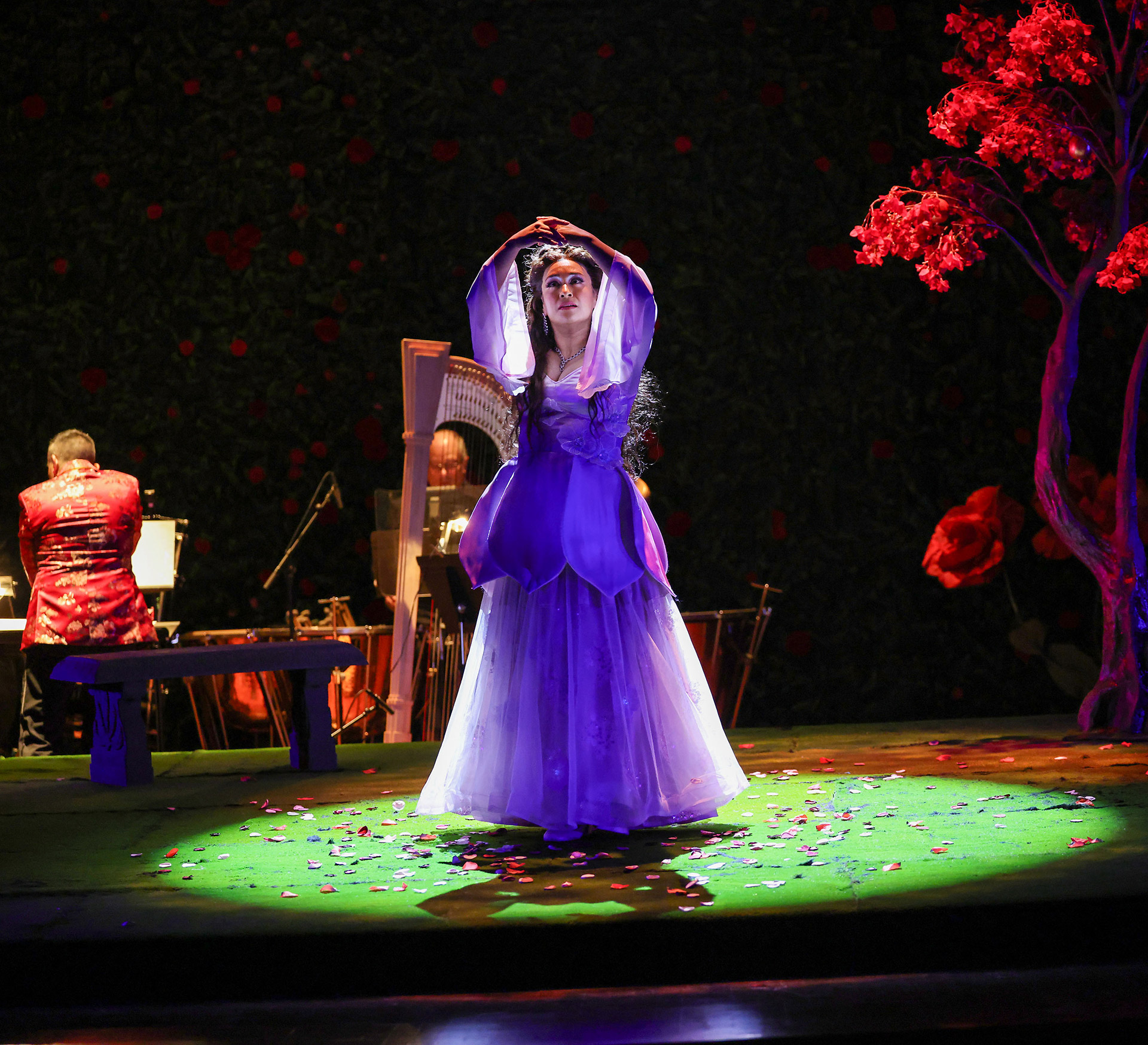
Rappaccini’s Daughter. Photo by Terry Gilliam, provided by Opera Columbus
  • Clowntime is Over by Joseph R. Green, directed by Michelle Batt (MadLab) – This revival of my personal favorite piece I’ve ever seen at MadLab, retaining Andy Batt’s astonishing existential clown in purgatory but switching the rest of the production up bringing in MadLab vet Michelle Batt as a director and a young supporting cast reminded me how much I loved it and revealed new textures I missed before. A rare utterly vital, necessary revival.
  • The Old Man and the Sea by Paola Prestini, Royce Vavrek, and Karmina Šilec, after Ernest Hemingway, directed by Karmina Šilec and Mila Henry (Beth Morrison Productions/Opera Columbus/Wexner Center for the Arts) – On my periodic trips to New York, no producer has a better batting average for my taste than Beth Morrison Productions and the combination of them, the Wex, Opera Columbus, and Paola Prestini set a lot of high expectations… and met every single one of them. I’m about as far as you can get from being a Hemingway fan but I was utterly enraptured and blown away by every minute of this. For Columbus Underground, I wrote: “The music here adroitly evokes, elevates, and amplifies the senses of frustration and transcendence. Jeffrey Zeigler’s cello and Ian Rosenbaum’s percussion establish landscapes but also joust with the vocal writing: bursts of marimba and sweeping arco lines buoy and skip across throbbing choral passages and set up Conteras’ growling hope and Brueggergosman-Lee’s ecstatic blue flame on “What a Fish;” scrabbling, tight percussive cello phrases and the soaring chorus entwine with Girón’s silken cry on “Come;” the marimba bounces across cello that conjures shadows at sunset as the chorus sings lines as clear as ice being dropped in a glass setting up a wry battle/seduction between on Brueggergosman-Lee and Contreras on “Daiquiri,” Those touches enliven the piece, enriching the emotion without distracting…The physical action also packs the field of vision with these allusions and witty references. During the previously mentioned Daiquiri, Contreras takes his blazer off and puts it back over his shoulders repeatedly, winking at the repetition and sameness of a drinking problem, but also shaking the jacket in the direction of La Mar and the glass, nodding to the drink as adversary and honored collaborator through Hemingway’s longtime preoccupation with bullfighting. The use of treadmills also underscores that repetition and monotony (alongside some rich drones from the cello and chorus) and the effort needed to maintain. Women throw plastic into the pools that represent the ocean. A chest freezer – any fisherman knows – stands in for a bar and also a coffin. The boats and rafts are brought down to earth as cheap pool flotation devices. All of these touches led to a grin that didn’t leave my face until I slept.”
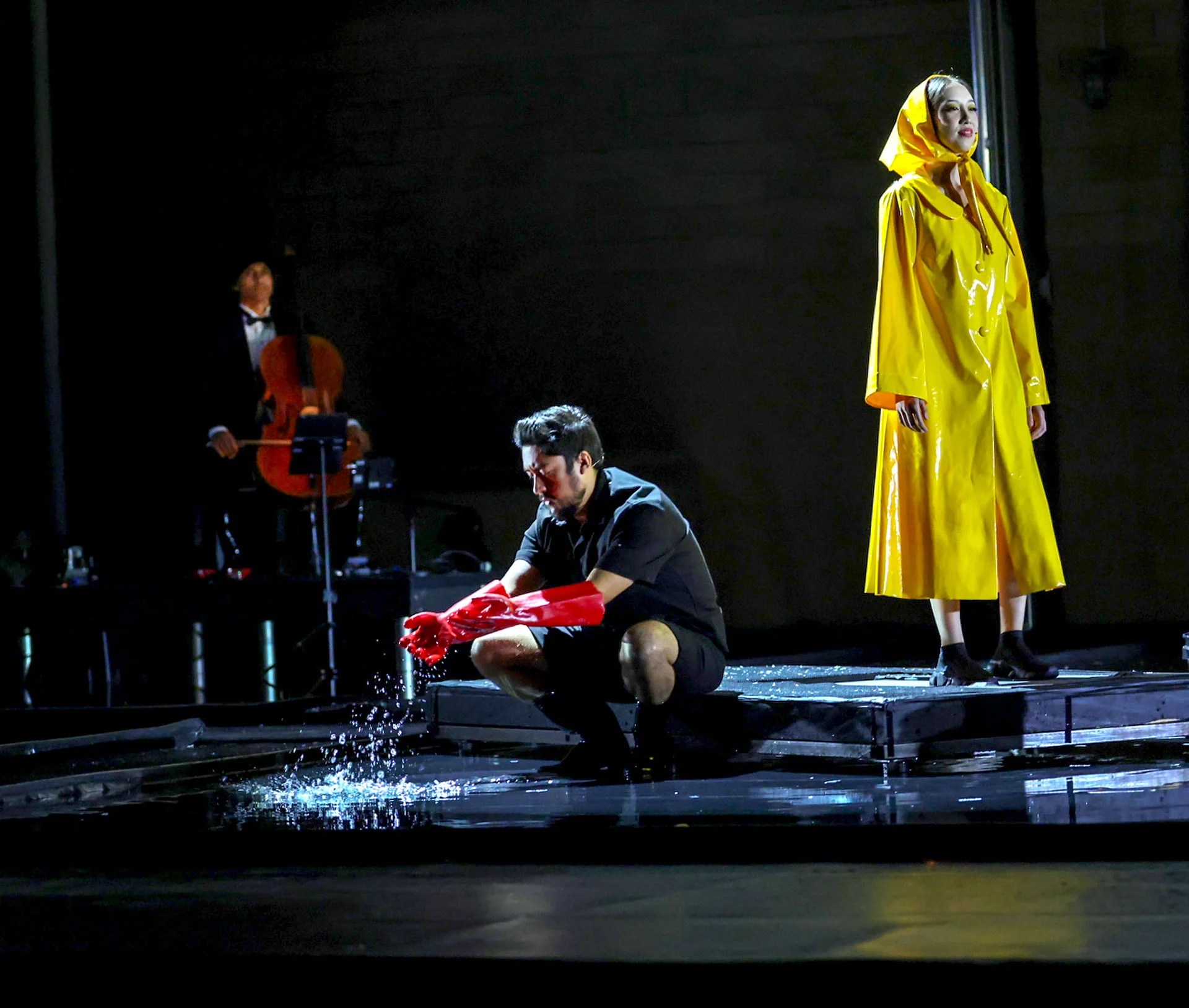
The Old Man and the Sea. Photo by Terry Gilliam, provided by Opera Columbus
  • Mareas/Tides by Marion Ramirez and Ojeya Cruz Banks (Wexner Center for the Arts) – The best fusion of various dance styles and live jazz I’ve ever seen in my life, bar none. Unafraid of the prettiness of traditional ballet or the appeal of digging into a groove but also willing to go to the most abstract, mythic spaces.
  • Rent by Jonathan Larson, directed by Alan Tyson (Imagine Productions, Columbus Performing Arts Center) – Alan Tyson – beyond this he also directed a chroeopoem that was my favorite part of this year’s Columbus Black Theatre Festival – provided a stripped down Rent with two femme-presenting actors as Mark and Roger that pinned me to my seat and reminded me what I loved about that play originally, and all the people in my friend group who loved it I’ve lost since. For Columbus Underground, I wrote “That feeling – enhanced by terrific, low-key choices in choreography by Nicholas Wilson and intimacy choreography by Krista Lively Stauffer – gives the proceedings a vital, DIY edge, stripping away just enough slickness to lay bare the beating heart of these songs and relationships. In addition, Tyson’s production hits all of the beats a longtime fan would expect (without sacrificing a handshake to any newcomers), but also throws some fascinating curves and angles that sent me out into the night thinking about this production of a play I’ve probably seen a dozen times over the years.”
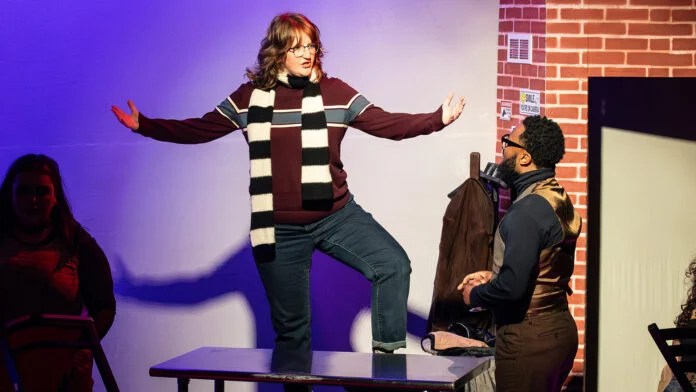
Rent. Photo by Payton Andisman, provided by Imagine Productions
Categories
"Hey, Fred!" dance

Things I’ve Been Digging – 04/19/2021

Netta Yerushalmy’s Dance Dance Demonstration, taken from stream

Netta Yerushalmy – Dance Dance Demonstration, presented by the Wexner Center for the Arts with Los Angeles Performance Practice

Netta Yerushalmy’s Paramodernities, presented at the Wexner in 2019, was one of two or three things I still think about regularly. I’ve loved dance with the fierce ardor of a clumsy man – like watching a magic show – and a crazed metaphor addict for a couple of decades; the Wexner Center planted that seed with two shows: Savion Glover my senior year of High School and William Forsythe when I was in college. 

Distant Dance Demonstration was a new work, filmed at the end of the summer in East River Park, choreographed by Netta Yerushalmy, and danced by Marc Crousillat, Stanley Gambucci, Nick Sciscione, Caitlin Scranton, Hsiao-Jou Tang, Babacar Top, and Symara Johnson. It was designed for the screen by Jeremy Jacob, with photographs by Maria Baranova, camera work by Alex Romania and Maira Duarte, and edited by Yerushalmy and Romania. 

With this new piece, presented by the Wex and Los Angeles Performance Practice, Yerushalmy finds a way, with her steady crew of exquisite dancers, to not only make work in all of this but to thrive while acknowledging the hell of the pandemic and everything else going on with the world in a way that made me tear up even on a screen in my office. I can only imagine the crying I would have done if I’d been in the vicinity. It was hard not to have pangs of jealousy for the handful of assembled watchers we see in the margins.

Everything filmed from a remove kept entire bodies in focus and also nudged a reminder of the restrictions we were under – not too close, for the greater good; nevertheless, a lack, an absence. The title’s “demonstration” nodded to both the necessary and too-often-ignored-or-minimized Black Lives Matter protests and the demonstrations against the ill-advised profiteering plan to replace the beloved East River Park and its band shell for yet more ugly housing in a neighborhood so many of us loved.

The sumptuous filming uses a ‘70s-like patina of grain and discoloration and shifts from black and white to color with still photos as pop art punctuation, amplifying the drenched, saturated-in-history nature of these movements. They batter against the ugly history and dance with it, erupting with the joy of survival and connection in a way dance does better and more directly than any other form I can think of.

The framing by Yerushalmy had that deceptively easy, intoxicating manner of articulation that made interviewing her one of the great pleasures of my time writing about art. It’s an introduction that does what kept me coming back to the Wexner Center early, a handshake for challenging work that doesn’t strip away the mystery or undersell the joy and the pleasure of it.

I’m enormously thankful for the Wexner Center giving us this and profoundly regret I didn’t get to it sooner to tell more people and watch it four or five times.

Categories
"Hey, Fred!" dance live music visual art

Things I’ve Been Digging – 02/01/2021

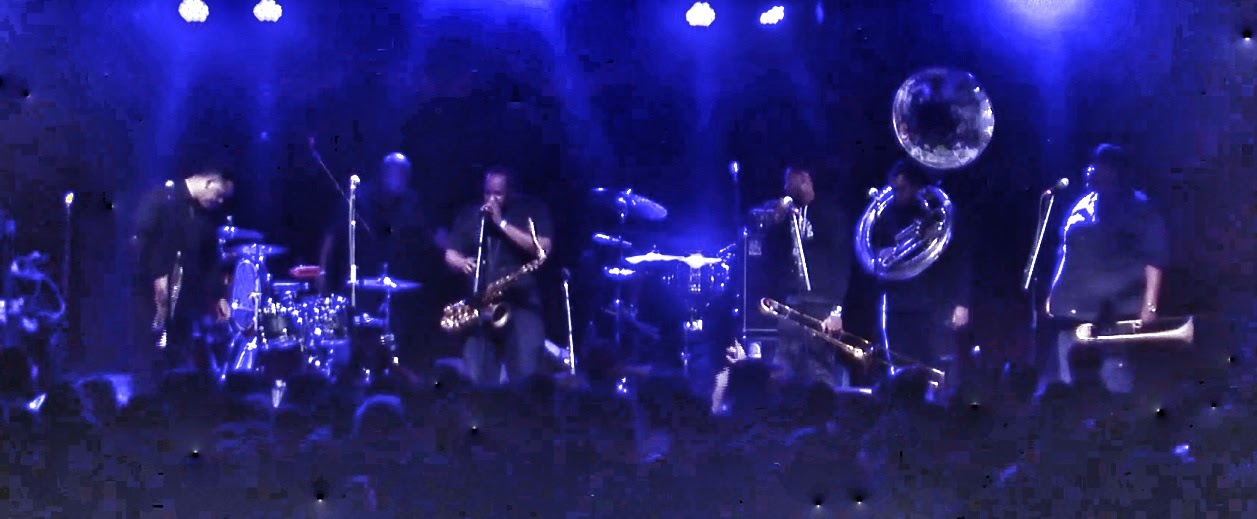
Soul Rebels Brass Band, taken from stream and edited

Soul Rebels Brass Band featuring Roy Hargrove at Brooklyn Boowl, presented by FANS

FANS’ streaming arrangement with Brooklyn Bowl and jamband outlet Relix has given many of us the opportunity to see killing archival sets and throw some money at hurting bands and venues right now.

This 2015 end of a three-night run that paired New Orleans funk titans the Soul Rebels with trumpet master Hargrove was sticky, sweaty rapture. Nothing’s ever as good as being in a room with those slurred, fiery notes washing over a crowd that feels like one undulating body but the sound and videography here gave a hell of a taste.

Watching this, I flashed back to a visceral, burning memory of seeing Soul Rebels Brass band take the Newport to church opening for Trombone Shorty, on a December night, as they raged through tunes like Michael Jackson’s “Rock With You,” D’Angelo’s “Spanish Joint” and originals like “Turn It Up.”

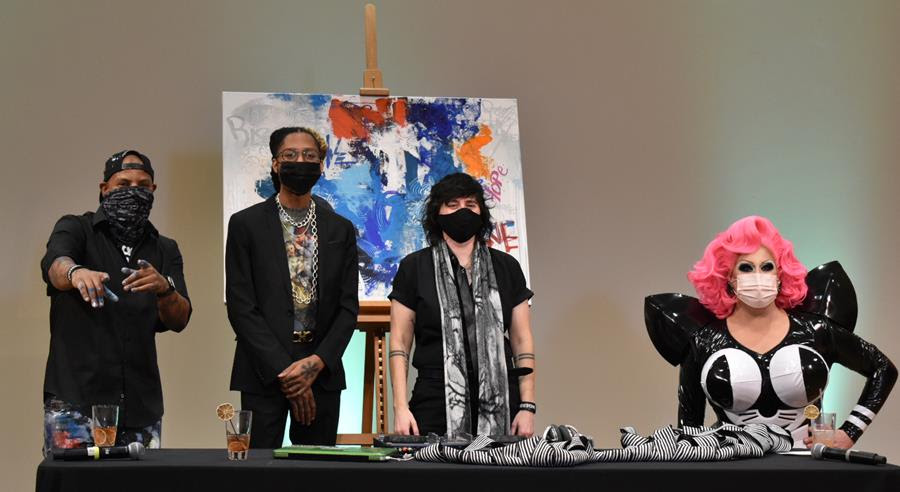
From left: Lance Johnson, Hakim Callwood, Moxy Martinez, and Nina West; promotional image provided by Columbus Museum of Art

Wonderball at the Columbus Museum of Art

For the last few years, Wonderball has been one of the best parties in town. The CMA is setting the standard for museum fundraisers with integration of the work in the galleries, multidisciplinary performances, and outreach to the various corners of the vibrant Columbus scene.

Their digital pivot this year, born of sad necessity, had the same homespun charm and brilliant execution of past years and I was overjoyed to watch it in the backyard of a couple good friends. Fantastic co-hosts Hakim Callwood and Nina West (in a jaw-dropping Felix The Cat Clock dress) kept the show running live with Lance Johnson doing a live painting and Moxy Martinez providing beats.

Mixing live and pre-recorded pieces, they treated us to a gorgeous poem by Cynthia Amoah. They filmed myriad genres of dance throughout the galleries including Amelia Gondara & Micaela Gonzalez, Griset Damas-Roche, and my favorite, Shades of Color with Donald Isom and Brianna Rhodes dancing a duet to Jason Moncrief’s flute playing in dialogue with one of my favorite Kehinde Wiley pieces.

As one of the friends we were in person with said, “An advantage of doing it this way is you can really watch a full performance. There’s no pressure to get out of people’s way to let them see or feeling like you have move on quickly so you don’t miss something else.” And it really was a great side effect of this change.

Many of the DJs who make Wonderball such a terrific party brought their A game. Trueskillz and Aloha spun a vibrant worldbeat set. Heatwave’s DJ Adam Scoppa and DJ Lady Sandoval tore through some classic soul 45s. Ty “Nordiq” Williams laid blissful, throbbing electronica on us.

Nothing is the same as when we can all be together but anything that lets us mark these important events while staying safe is to be applauded. Anything that does it with this kind of aplomb, grace, and sense of fun is a damn miracle.

El Futuro Imposible, taken from stream of The World Around Summit 2021

The World Around Design Summit presented by the Guggenheim

One of my favorite things is hearing smart people take on the world, especially in a field I know very little about. The Guggenheim put together an international virtual festival of architecture and design and it made my heart soar to watch people actively engaged with where we are and where we’re going.

Lines from this sent me to my notebook and kept nagging at me throughout the weekend.

Alice Rawsthorn said, “By sharing constructive design issues on Design Emergency, we can persuade more people, decision-makers especially, to see design as we do: as a powerful tool to address social, political, economic, ecological challenges and to place it at the forefront of the post-pandemic reconstruction. Design isn’t a panacea for any of [our] challenges but it is one of our most powerful tools with which to tackle them if – and it’s a big if – it’s deployed intelligently, sensitively, and responsibly.”

That attitude that everything can be a tool to address the world and make things better for people with creative thought is something I try to carry with me and I’d never had it crystallized like so clearly.

I’ve thought about the Anthropocene a lot lately, it showed up in the Under The Radar pieces I wrote about a while ago, and Feral Atlas added fuel to the fire with “The great programs for the conquest of the Earth promised modern ease and happiness but in their inattention gave us a heap of terrifying, if unevenly spread disasters.”

How do we see things at the level of impact they are without crumbling into despair? I don’t know an answer but I know we have to. I’m still unpacking these three sessions and luckily they’re on Youtube indefinitely, another side benefit of all of us being stuck in our homes:

Categories
"Hey, Fred!" dance theatre

Things I’ve Been Digging – 11/16/2020

Russan Troll Farm – From Upper Left, Haskell King, Ian Lassiter, Greg Keller, Danielle Slavick. Provided by TheatreWorks Hartford on their site.

Theater: Russian Troll Farm by Sarah Gancher, directed by Jared Mezzocchi and Elizabeth Williamson, presented by Theatreworks Hartford and TheatreSquared in association with The Civilians.

I still miss being in a theater, crammed around my fellow audience members, breathing as one, with an uncommon fire. But watching theatre artists – new jacks and veterans alike – mold today’s tools and limitations into beautiful things that feel like theater even split over different rooms. 

I saw one of my favorite examples of this 2020 alchemy this weekend. Long-standing champions of the new The Civilians teamed up with Fayetteville, Arkansas’ TheatreSquared, and Connecticut’s Theatreworks Hartford for a dazzling, incendiary romp through Sarah Gancher’s Russian Troll Farm.

Subtitled “A Workplace Comedy,” the play zooms in on a St Petersburg office to follow a team of trolls sowing discontent and confusion among Americans through Twitter. Former journalist Masha (Danielle Slavick) joins the established dynamic of laser-focused Egor (Haskell King), stunted throwback Steve (Ian Lassiter), and erstwhile artist Nikolai (Greg Keller), in the shadow of the manager: Soviet throwback Ljuba (Mia Katigbak). 

Gancher understands this low-level almost-tech job’s dynamics: the infighting, the jokes, the sourness, and sweetness. A vibrant scene of intense, flirtatious volleying between Slavick and Keller captures the adrenaline of being good at something, even something that feels both futile (from the inside) and evil (for those of us looking in), and Russian Troll Farm is littered with scenes this good. 

Gancher and her cast understand how similar the American and Russian psyches are but filter the characters through their environment’s specifics. Lassiter – recently very good in Gold’s uneven King Lear – has a ball playing the lusty, coarse Steve, bouncing off Slavick’s Masha and King’s brilliant, understated Egor. They create a world that feels like those little rooms for those of us who’ve done call center work or similar and makes us question how much of what we did for those hours and those years was just as morally questionable.

Directors Jared Mezzocchi and Elizabeth Williamson found ways to impose their stellar cast on one another with trickery that doesn’t lose its amateurish afterbirth completely but uses the seams we can see to its advantage. When Katigbak, in a heartbreaking soliloquy, says, “Are you even here? You’re the relic of a dying empire, the ghost of a glorious future that never came,” it snaps into sharp focus that we’ve been seeing ghosts all this time.

Russian Troll Farm was a triumph I’ll be thinking about for a very long time.

Bill Chats: Screenshot taken from livestream

Talk: Bill Chats – The Future is Present: A Casting The Vote Project. Bill T. Jones in conversation with Charlotte Brathwaite, Janani Balasubramanian, Justin Hicks, and Sunder Ganglani.

Bill T. Jones, through his New York Live Arts in association with Bard University, hosted a delightful, recharging conversation with four of the people behind The Future Is Present, a group running workshops at the intersection of performance and collective action.

It’s invigorating watching these ideas of what an artist means or even can mean bounce between people of color who came up in wildly different scenes, at different levels of outward acclaim and success. Jones said, “When I started in the art world, they said, ‘You wanna make art, make art. You want to do politics, do politics.’ And I thought the we was political…Trying to get to a ‘we’, many artists head for the door when that happens. An artist is trying to close the gap between this internal space here and the rest of the universe, and an artist finds a language, a form that lets them do that.”

That resonated deeply with me, who grew up steeped in the kind of late modernism Jones helped define before me, but I was enraptured by the way the younger people he’s talking to centered other people in the lens of their own languages. For instance, Justin Hicks said, “Even transcribing what [young people] want changed the ‘we’. I know lots of artists who don’t trouble themselves with the questions I do,” and “The concept of potential is much more important to us than certainty.”

After Jones posted the question “What are your dreams” to the panel, Sunder Ganglani said, “It’s not easy to imagine one’s self into a world in which you want to live. We have hopes, though,” and Janani Balasubramanian riposted, “You asked that question about certainty – I don’t think this project hinges on certainty, it’s actually present with discomfort, difficulty, and experimentation which is being cleared away in our society, through science, through catastrophe, through violence. In that space of clearing is a process of collective experimentation: sometimes difficult, sometimes joyful, sometimes both. I want to get to a place where people can verb it. Can ‘future’.”

Watching this clear-eyed group articulate a future worth fighting for and creating, while acknowledging the ambiguity it comes with, gave me more hope than anything I’ve seen, read, or heard, in quite a while. As Balasubramanian said, “Future making is about speculation but also about closing that gap between what’s speculative and what’s material – if we’re demanding something of the future, we’re demanding it of the present…Young people don’t need our encouragement for world-building.”

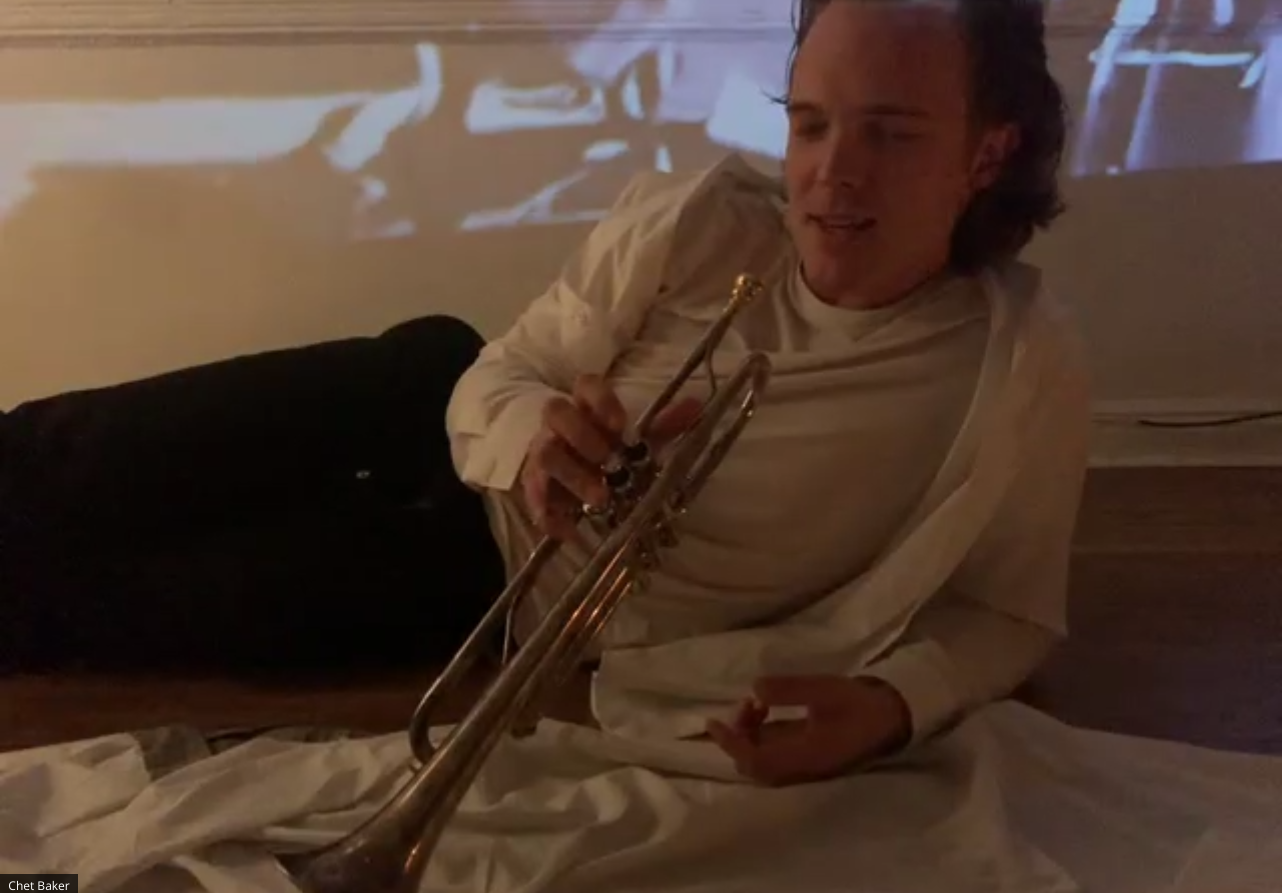
Theater: The Self-Combustion of a 30-Something-Year-Old Chet or, Icarus Tries to Catch the Sun by Keenan Tyler Oliphant, presented by New Ohio Theatre

Oliphant uses the raw material we all know about beautiful and damned Chet Baker and gives it new, molten life with Nicholas McGovern as the seductive wreck in a tiny apartment, old film clips playing on the wall like memories written on skin.

McGovern brings this his utter, unshakable commitment in the life Baker committed himself to, his ability to see magic where it confronted him – a gorgeous reverie about Charlie Parker “rising above us on corrupted wings,” snatches of songs – and his role as a self-identified truth-teller. His Baker is deep in the throes of “poetic self-destruction,” there to “remind [the audience] what it’s like to be awake.”

Somehow, in the crucible of this Zoom so intimate it’s like we’re eavesdropping these words distill into a hard crystal as the liquid boils off and they snap with the hard, sweet rhythm they need – with invaluable assistance from Jacob Robinson’s sound design. The text grows so large and thin we can see through it to the desire behind the words we’ve all heard too many times; the desire that’s all that matters here.

In lesser hands, this raving, this disappearing-ink last testament, could have been laughable, a plywood cartoon. But here it felt like that perfect tune on the jukebox as you order that one last drink you know you shouldn’t have.

Categories
"Hey, Fred!" books dance live music

Things I’ve Been Digging – 10/05/2020

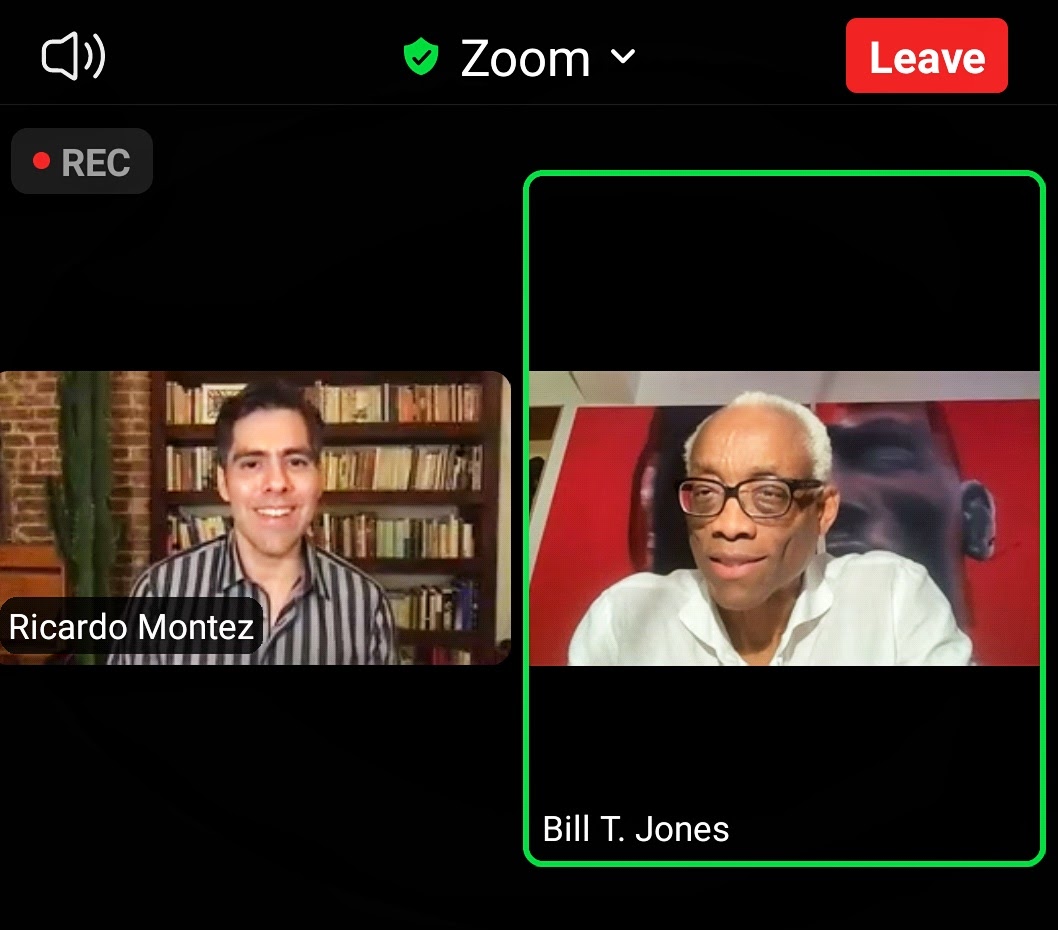
Talk: Virtual Bodies: Bill Chats – Ricardo Montez, Bill T. Jones in Conversation with Ricardo Montez, moderated by Joshua Lubin-Levy

I’ve been trying to stir in some more talks and workshops into the weekly diet of internet consumption, the same way I try to keep a rotation of weightier books and comfort food books. I struck gold this week with a conversation between the choreographer/organizer Bill T. Jones and professor/writer Ricardo Montez, sparked by Montez’s new book Keith Haring’s Line: Race and the Performance of Desire.

Jones’ early work is inextricably tied to the vibrant early ‘80s New York downtown milieu that captivated my peer group 15-20 years later and still feels fresh, striking, and full of life. Particular attention often focuses on Jones’ collaboration with his friend, the painter Keith Haring – the famous photo of Haring painting Jones’ nude body adorns the cover of Montez’s study.

Their conversation ranged from the intersection of race with abstraction, Jones reminiscing about the small number of black artists playing at The Kitchen in that era (“George Lewis, Douglas Ewart, maybe Bebe [Miller]”), and the need for irreverence and engaging with your own time.

Jones balancing his role as an elder statesman and a survivor, a witness, always inspires. Reflecting on his transition into his current roles and what keeps him motivated, he mused, “Do you still believe in beauty, Bill?” and sang a snatch of the standard, “Have I Stayed Too Long At The Fair,” his famous collaborator/companion/muse Arnie Zane’s favorite song.

There were so many lines here that struck me like a molten nail into grey flesh. Of the iconic cover image, he said, “Do I have the guts to do anything like that anymore? Can I be generous like that?” Jones described his goal as “How can I find the fervor of my Mother’s prayers in formalism?” And the thing I’m thinking about nailing like a thesis above my writing desk, his provocation to Montez, “Artists should always be in the face of academia saying, ‘You think you can capture this butterfly?’

John Hiatt and Lilly Hiatt, taken from the livestream and edited

Music: John and Lilly Hiatt, presented by Topeka

John Hiatt and his daughter Lilly have crafted catalogues of songs that dig as deep into the joy of connections and the reason we live as anyone else I can think of. Joy and pain aren’t discrete objects and neither are community and self for either of them. Hiatt’s career, at least since his ‘80s comeback Bring The Family is littered with gems, songs that make people want to sing (I promise, if your town has a bar with music back, someone is covering “Memphis in the Meantime” right this second). 

And especially with her last two records, Lilly is keeping him on his toes. As John said in this stream, “She just writes these amazing songs that make me try to keep up.” Their easy camaraderie, affection, and respect made this livestream deeply comfortable and exciting at the same time; that layer of familial affection didn’t create tension, but it also didn’t smooth out this classic guitar-pull style show.

Songs aren’t mirrors and they aren’t autobiography but it’s hard for a fan to not read a little of that even for those of us who are text essentialists. In that spirit, the father and daughter – who have been open about their struggles – singing together on two of the finest songs ever written about recovery moved me deeply. Lilly’s “Walking Proof,” the title track of her beautiful new album, had John’s authoritative and sweet growl rise to join hers on the chorus’s plea for acceptance and connection: “I could tell you that it’s easy but that wouldn’t be the truth; If you ever need to call me, well, you know there’s walking proof.” 

Later in the set, John’s anthem to those same materials of life, “Through Your Hands” shot into the stratosphere with a light injection of Lilly’s wry harmony as they danced through “And you ask, ‘What am I not doing?’ She said, ‘Your voice cannot command. In time you will move mountains. It will come through your hands.’”

They each had eight songs in the main set, with a two-song encore. John closed with the closest he’s written to a standard, “Have a Little Faith in Me,” that still jerks tears free when I’m not expecting it. With all the connotations of thirty years in our hearts and being covered by so many people, that sets a standard for the other encore.

Lilly met that energy with “Imposter,” a slow-burn highlight from her breakthrough Trinity Lane about her famous father. I loved “Imposter” before it finished the very first time I played it and I’m still beguiled by its ferocious empathy and its delicate power, its rock-solid sense of perspective even through its whip-crack shifting. It accomplishes an impressionistic, all-angles-of-a-perspective feat that makes me think of “Famous Blue Raincoat;” it’s one of the great songs of the 21st century so far.

Music: Jose James with Taali at Le Poisson Rouge

I’m keeping my fingers crossed for every venue I love to make it through to the end of this and watching with interest as they create alternative models to live. Without being privy to the finances of these places, I’m most heartened by the subscription efforts, treating a venue a little like public radio until we can pack in and buy beer. 

The big one here is Smalls which shows up in this column regularly but with October 1st, another of my favorite venues, Le Poisson Rouge in lower Manhattan, launched LPR.tv with an exciting slate that goes a long way to capture their diverse, open-ears booking. Saturday, I caught jazz singer Jose James (who also had Harlem Stage release the archived recording of his dazzling tribute to Billie Holliday to Youtube this week) with an opening set by Taali.

Taali’s spacious and incisive synth and vocal sculptures captivated me. She roamed from her finely wrought originals – “I’ll Meet You” haunted me with its sliding descent through the hook “I will take you home,” – to well-chosen covers. The latter included a lovely Regina Spektor piece, a mesmerizing version of Leonard Cohen’s “Hey, That’s No Way to Say Goodbye” that sounded like melting ice slipping off scaffolding onto concrete and slipping away into fractal patterns and steam on its way to return to water, and a gorgeous multi-tracked vocal on a Jewish hymn she introduced as “The song my parents walked down the aisle to.”

James brought a crack band to that stage I love so much to celebrate a 10th anniversary reissue of his breakout sophomore record Blackmagic. “Code” featured crisp keys from Big Yuki and a burst of acidic guitar by Marcus Machado before he broke down the repeated line “Don’t forget what my name is,” with a jazz singer’s improvisational excitement, a slam poet’s sense of digging up everything a word means through repetition and a DJ’s Burroughs cut-up sense of rhythmic possibility. The rest of the record got the same careful treatment, slow-burn ballads and dancefloor smashes and intriguing riddles.

Categories
dance live music theatre

Things I’ve Been Digging – August 24, 2020

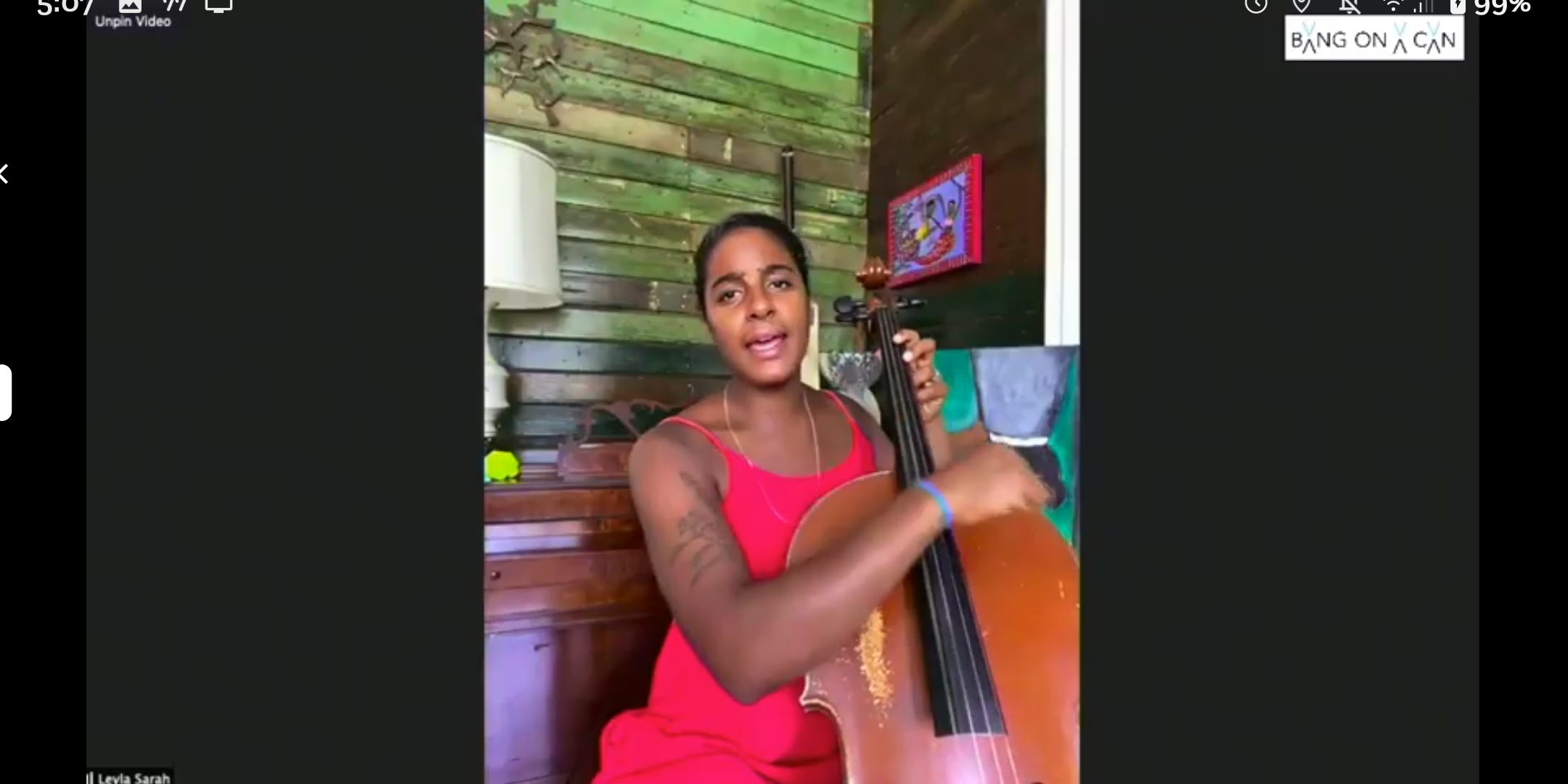
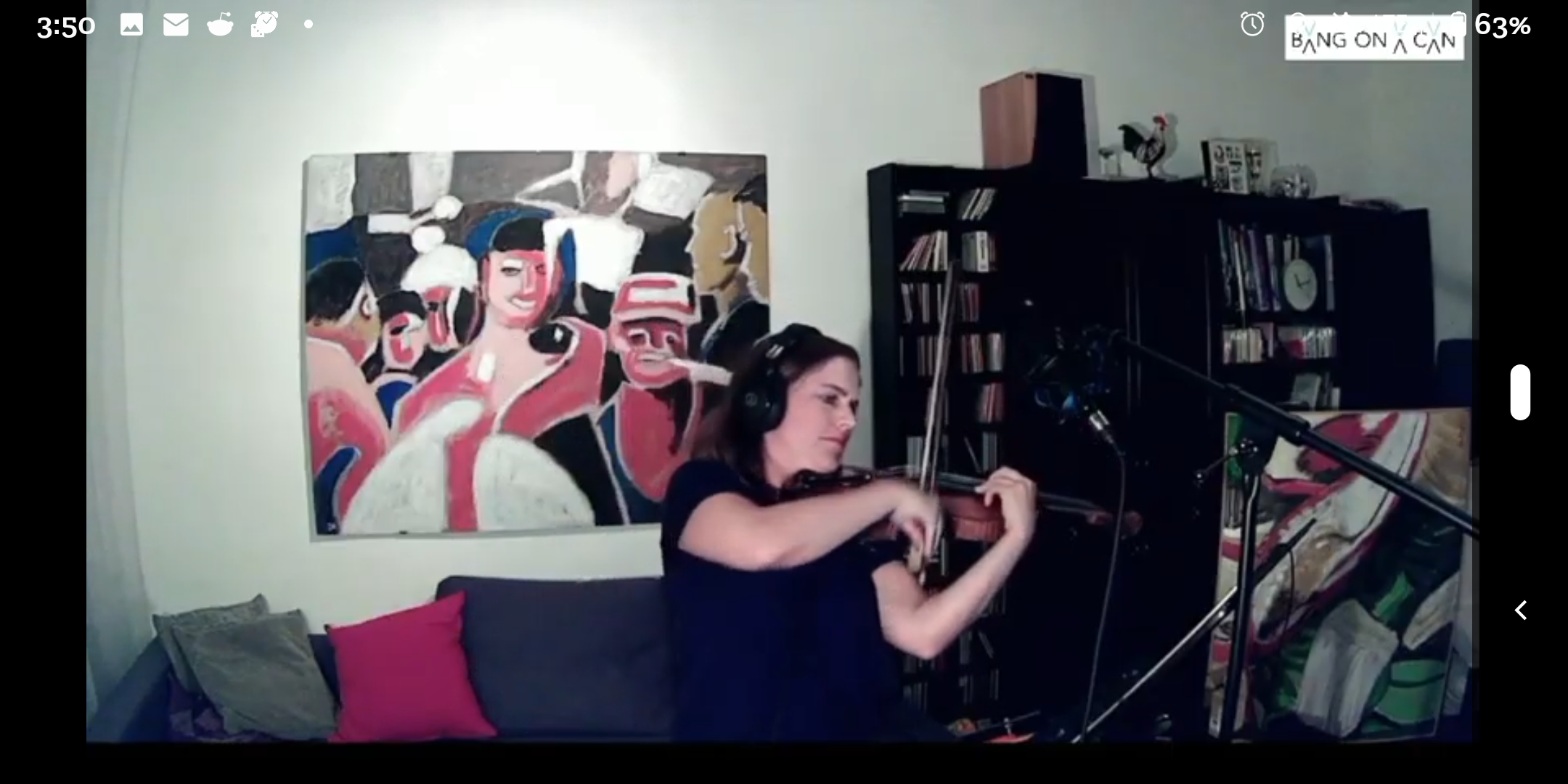
Music: Bang on a Can Marathon

Bang on a Can’s founding composers (Julia Wolfe, David Lang, Michael Gordon) have put on a marathon of new work since the mid ‘80s and the current climate changed the marathon’s form but didn’t diminish any of its vital joy, intensity or defiance.

This, the third version I think, was as full of magic as anything I’ve been lucky enough to see since we’ve been shut inside. Highlights included Olivia de Prato’s dark and holy read of Missy Mazzoli’s Vespers for Violin, singer-cellist Layla McCalla’s songs inspired by Langston Hughes, Ken Thompson’s fiery world premiere of Nicole Mitchell’s A Much-Deserved Ass Whooping, and Jodie Landau’s beguiling version of Jacob Cooper’s Expiation.

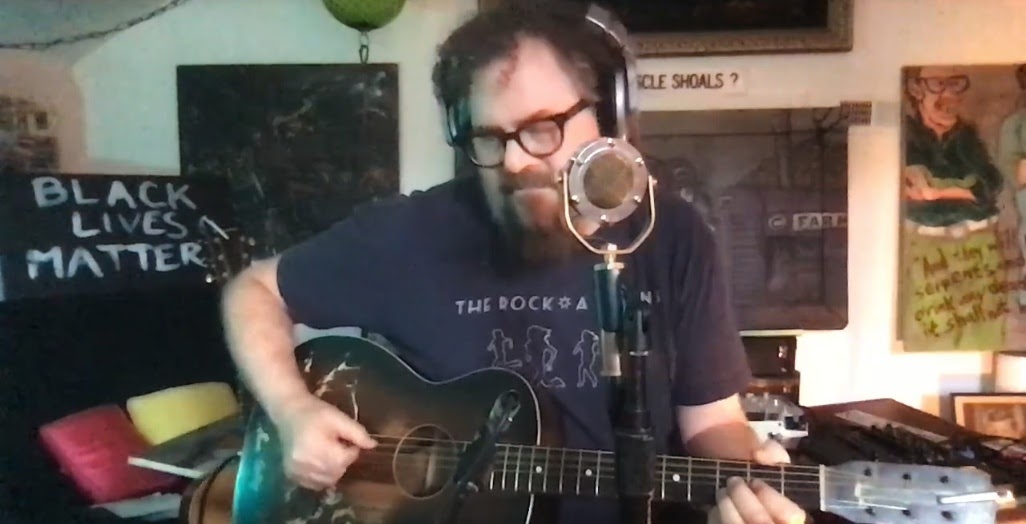
Patterson Hood, screenshot of livestream

Music: Patterson Hood

I think I first heard of the Drive-By Truckers when I was in college through the one-two punch of No Depression magazine and niche CD site Miles of Music (also where I got my first Marah records), around the time of Pizza Deliverance. I first saw them around 2000-2001 when I was down for an Anime Weekend Atlanta and it stands as one of the most electrifying live shows I’ve ever seen – for years I don’t think I missed them any time they were even close to me.

My fandom for DBT has ebbed and flowed, but they won me back big in the last two records. Patterson Hood (and partner/only other constant member Mike Cooley) has not only built one of the most consistent catalogs of songs, but he’s lit an example of how to grow up in rock-and-roll. He’s stayed true to his impulses and interests, but he left room for them to expand. He’s grown into his curiosity and let his empathy grow instead of shrink. His home-recorded livestreams during this pandemic have been a balm, like hearing from an old friend reporting back.

That said, it might make me an enormous hypocrite that my favorite of these streams so far and the one that nudged me to add it here was his delve back into “The Heathen Songs.” As he and Cooley were gestating their breakthrough Southern Rock Opera, they also wrote a flood of songs for what ended up being the next two records, Decoration Day, The Dirty South, and Hood’s first widely distributed solo disc Killers and Stars.

That was my favorite period of the band, when they shrugged off some thought-it-was-a-joke-song classic college rock feint of the first two and opened up the aperture of their view of the south, and only indulged the big guitar jamming sporadically, with songs that ripped my heart out at the same time I was partying with my friends on the dancefloor.

This trip back down memory lane had a clear eye for what those songs meant to him at the time – particularly on his “divorce trilogy”: “Hell No I Ain’t Happy,” “(Something’s Got to) Give Pretty Soon,” and “Your Daddy Hates Me” – and what the songs mean now. That delicate balance between catharsis and wryness gained new, slippery facets on the driving-hot-nails elegy of “Do It Yourself,” “And some might say I should cut you slack, but you worked so hard at unhappiness. Living too hard just couldn’t kill you, so in the end you had to do it yourself.”

The long – almost two hour – set hit his winking nods on “George Jones Talkin’ Cell Phone Blues” and “Uncle Disney” and a hilarious shaggy dog story wrapped around a talking blues about an early tour involving one of the Columbus’s greatest bands and my dear friends (and, clearly, Hood’s) The Lilybandits.

Hood also put in a plug for Lilybandits singer Todd May’s current gig with Lydia Loveless and spoke with love about Wes and Jyl Freed, the recently deceased Carl Dufresne and Todd Nance, and other friends – famous and not. That love littered the set like the confetti from the war we all should be lucky enough to fight and luckier to survive.

Jaamil Olawale Kosoko, from the artist’s official website

Dance/Theater: Chameleon: A Biomythography by Jaamil Olawale Kosoko

Kosoko was in Columbus in late 2018, touring his hypnotic epic of intimacy, Séancers, at the Wexner Center. While in Columbus, he took advantage of a Wex residency grant to help develop his new piece Chameleon. When I interviewed Kosoko for a preview of Séancers, we talked at length about Audre Lorde, a mutual inspiration of ours.

That inspiration flowers in Chameleon, subtitled a biomythography in a nod to Lorde’s Zami and delving into his ancestors, the pain and joy of his background and the vital chimerical work of making art and surviving as a queer, black man in the toxic nature of America. The power of memory, but also the vital, tragic tonic of forgetting.

Talking about his uncle, Kosoko reflects, “Once he told me, ‘The past will always leave a footprint,’…After his funeral, no one wanted to go inside; it was much easier to pretend he never happened. Although I had been the one to feed him, to clean him, to brush his hair, I was afraid. Not so much for him as I was for myself: for how fast my concerns shifted from keeping him alive to removing every infected memory of his existence. What scared me – and still does – is how successful I was. No one speaks his name: his voice, his laughter, are all questions; a black-bodied amnesia taken back by the ethers. Was he ever really here? On this earth? In that stank room? In that stank, angelic body? Was he ever here teaching me something about love?”

But the work isn’t just its lacerating words, it’s a melting, roiling collection of indelible images cracking the world open. And alongside that, Kosoko fully engaged interactivity, the internet and the moment, taking the snatched-away opportunities for this to premiere at Princeton and Tanz with a combination of Vimeo and Discord, context and community and dialogue. A masterpiece that left me looking for my throat and heart on the floor of this second-story room.

Categories
dance live music theatre

Things I’ve Been Digging – July 27, 2020

Ethan Iverson (piano), Ben Street (bass), Nasheet Waits (drums) – screenshot from Smallslive stream

Music: Ethan Iverson trio, Small’s

Small’s continues to excel at providing a wide-open and informal showcase for some of the best jazz music being made. Monday, turning on their stream after a long, exhausting work training, Willner’s club transported me. Like all good art, they threw the world into relief and made the minor irritations recede into the distance.

In an interview upon leaving The Bad Plus, Iverson said he missed playing “pretty music,” and he proved again how deep that vein goes. His selection of beguiling compositions here rippled with hooky melodies, deceptive intricacies, and vibrant surprise. The canvas for these tunes came from a perfect rhythm section – Nasheet Waits, who’s been blowing me away since I saw him with The Bandwagon in 23, on drums, and Ben Street on bass.

Iverson, Street, and Waits took me to school on conversational, intense feeling on a Monday night when I desperately needed that injection. One highlight followed on the heels of another. “Praise Will Travel” rode steady building tension between Street’s suspenseful bass and Iverson’s questioning chords rising to a cry, an exhortation, limned by detonating drum work from Waits. “Hymn to the Old” paid tribute to Johnny Mandel with earworms buried inside baroque constructions and fluidly played. “You Will Never Be Mine” was an atmospheric ballad for the ages, like a dripping candle on a corner table at last call.

Music/Dance: 30 Feet Together, 6 Feet Apart – A Benefit For Chicago Tap Theatre

This benefit, streamed from Chicago’s Athenaem Theatre was a testament to the vitality and necessity of dance and a tribute to the creativity and indomitable spirit of the Chicago scene.

A tight, supple three piece band of guitar, bass and keys, played for and with the small groups (duets, trios, quintets) of tappers on beguiling instrumentals like “Birdland” and “Upstage Rumba” but came to three dimensional life when one of Chicago’s finest singers JC Brooks (also the show’s host) set the party off on vocals.

One of the most rhythmically ingenious singers of his generation, Brooks was the perfect choice for blending and nudging the polyrhythms of these dancers. Opening with a new original, “Six Beats Apart,” that showcased the kind of searching, restless, melancholy he owns, the rest of the set list was comprised of brilliantly chosen covers.

He and the dancers soared through a righteous take on fellow Chicagoan Lupe Fiasco’s “Superstar.” He led a raunchy church service on the Janis Joplin classic “Mercedes Benz” backed only by the rippling tap. He highlighted the bodily longing and keen hope pulled out of heartbreak on the Queen classic “Somebody to Love” as the show’s closer.

This was everything I love and miss about Chicago and about interdisciplinary collaboration, sparks flying when people get in a room together.

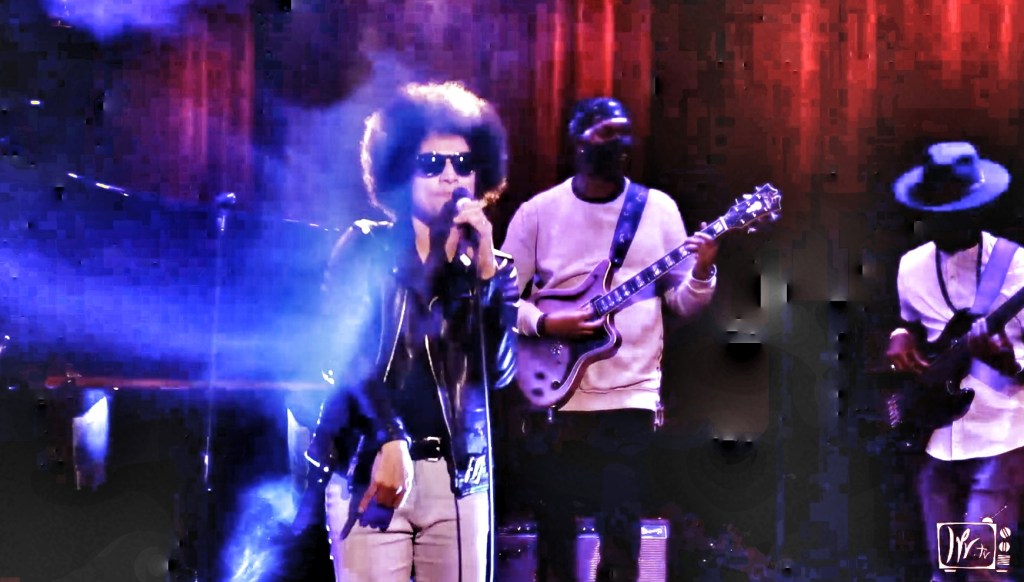
Music: Idiot Prayer, a Nick Cave solo performance

Nick Cave has transitioned into elder statesman status more successfully than most artists I grew up loving as a teenager. As he’s done that, he’s also reinforced the falsity of the conventional wisdom that age means we get smaller and more self-interested – Cave grows outward, he’s refashioned his mission to one of deep empathy and expansiveness.

This solo piano retrospective underlined that empathy and did it with no banter, nothing other than the songs (and some gorgeous lighting and cinematography).

From the opener “Idiot Prayer” from his ballad classic The Boatman’s Call, cast in the echo of that great palace as an ars poetica and mission statement, through the moving, robust and baroque “Galleon Ship,” Cave drew us with him on a 21 song retrospective including the beautiful new tune “Euthanasia.”

Tension and resonance bounced between old classics and very new songs. Cave nestled “Girl in Amber” from the devastating Skeleton Tree between two tunes from his Grinderman project, “Palaces of Montezuma” and “Man on the Moon” and all three acquired new textures and intensity bouncing off one another. More traditionally, the sweet desperation of Let Love In‘s “Nobody’s Baby Now” melted into Boatman’s Call‘s “Are You The One That I’ve Been Waiting For” like the honeyed light of dusk.

A showcase of the magic of song and an inspiring path to finding the light inside ourselves and in the people we love. That’s about as good as it gets.

Categories
Best Of dance theatre

Best of 2019: Theatre/Dance/Opera

“Setting my palms into the mud
at the base of a gnarled vine,
I pressed them together
and whispered “speak.”
But the vine’s silence just grew
into the silence of the dead
who once tended it.

Then I saw exactly how
it was beautiful—
how it held its world whole
beneath its fog-slick bark,
while the things we ask
to hold us leave us
spent.”
-From “Where the Zinfandel Pass Their Seasons in Mute Rows” by Jane Mead

The pleasure of being in a room with performers, sitting with someone else’s voice, the feedback loop between audience and the stage, all resonated more strongly and felt more vital than ever this year. I saw a little less theatre – only one New York trip instead of the usual two and the Italian trip coincided with the opera houses being dark – about 55 performances between three cities – but still had a hard time carving out these fifteen performances.

Each one of these showed me something I didn’t know before, sent me spinning out into the night, made me desperate to talk to someone about them, and usually made me pound my fist into the heavy desk at the impossibility of coming close to doing it justice the next morning. These are in chronological order, instead of ranking, and are in Columbus unless otherwise specified. All art was provided by the companies for promotional use, either sent to me directly or on their site.

Available Light’s Appropriate

Appropriate by Branden Jacobs-Jenkins, directed by David Glover (Available Light) – Available Light crushed this year by bringing the best writing for the American stage to Columbus and executing on it with jaw-dropping alacrity. The two David Glover-directed plays were standouts and Appropriate started my year of theatre-going with the thunderclap of a warning-shot pistol. I called it “An acidic, invigorating evening that will make you laugh, make you hate yourself for laughing, make you hate yourself for giving someone the benefit of the doubt, but acknowledge the horrible, beautiful nature of being human.” Standout performances – in a cast full of winners – included Kim Garrison Hopcraft’s righteous fireball of desperation, Philip Hickman and Beth Josephsen’s metal-grinder of a struggling marriage, and Jordan Fehr’s devastating look at the difficulty of atonement. My review for Columbus Underground.

Into the Woods by Stephen Sondheim (music and lyrics) and James Lapine (book), directed by Brandon Boring (Imagine) It’s rare for a production of a play I love as much as Into the Woods to shock me back into myself. Director Brandon Boring’s risky choices to go off-mic – with all credit to the strong, sympathetic singing of the cast and the nuanced work of musical director Jonathan Collura and his chamber orchestra – and work up an immersive set in a tiny room known for sound problems paid off big in this jaw-dropping, real, funny take. As I said for Columbus Underground, it “took me back to the same place of childlike delight as my first encounter. I found tears coming to my eyes at exactly the places they should have been.”

The Flood by Korine Fujiwara (score) and Stephen Wadsworth (libretto), directed by Stephen Wadsworth (Opera Columbus and ProMusica Chamber Orchestra) – The Flood pointed to a rich, challenging future for two of our best institutions. An original work grappling with a painful chunk of Columbus history, the Franklinton flood, moved me in more senses than just my coming from a family who settled in The Bottoms and ended up on the Hilltop. Fujiwara’s sparkling, layered, complicated score was executed brilliantly with astonishing performances from Lacey Jo Benter, Meröe Khalia Adeeb, and Daniel Stein, among others. I reviewed this for Columbus Underground.

Netta Yerushalmy’s Paramodernities

Paramodernities by Netta Yerushalmy with texts by Thomas F. DeFrantz, Julia Foulkes, Georgina Kleege, David Kishik, Carol Ockman, Mara Mills, Claudia La Rocco (presented by the Wexner Center) – It’s rare I see something that makes me say “I’ve never seen anything like that before.” It’s even rarer I’m in the theatre for over four hours still hungry for more when the lights come up. Yerushalmy’s wild grappling with the history of modernism, scoring dances to lectures set my brain and every part of my body on fire. I walked out wanting to grab everyone I knew by the shoulders and shake, “Why weren’t you there? You missed something special.”

The Wolves by Sarah DeLappe, directed by Elizabeth Wellman (OSU Department of Theatre) – I was bummed to miss DeLappe’s play twice at Lincoln Center (once sold out by the time I got word, the revival opened the day I was flying home) so I was overjoyed OSU took it on this season and it did not disappoint. Elizabeth Wellman’s bone-deep understanding of patterns, their necessity for us to grow up but also their ability to weigh us down, sparkles here, with ferocious performances from Vayda Good and Mehek Sheikh anchoring a top-notch cast. I reviewed this for Columbus Underground.

Red Herring’s Waiting to be Invited

Waiting to Be Invited by S. M. Shepard-Massatt, directed by Patricia Winbush-Wallace (Red Herring Productions) – Red Herring’s ambitious play-a-month schedule this year yielded far more hits than misses. One of my favorites was Shepard-Massatt’s look at the early civil rights movement, directed brilliantly by Patricia Winbush-Wallace, with a stellar, perfectly balanced cast of Winbush-Wallace, Julie Whitney Scott, Demia Kandi, Harold Yarborough, and Josie Merkle. I reviewed it for Columbus Underground.

King Lear by William Shakespeare, directed by Sam Gold (Cort Theatre, NYC) – My favorite Shakespeare in an uneven – the reports were not wrong – at times gaudy and overwrought version, still had pleasures enough to make this list. Foremost among them, Glenda Jackson – I feel like I’ve seen the defining Lear of my generation, terrifying, imperious, wounded; I can count on one hand the performances I’ve seen on a stage that matched hers. Similarly, casting Russell Harvard, a deaf actor, as Cornwall paid off massively especially in the moments before the assault on the Earl of Gloucester (a brilliant James Houdyshell) with a frenzied argument between Corwnwall and his aide/interpreter, Michael Arden, in sign language.

Hillary and Clinton by Lucas Hnath, directed by Joe Mantello (John Golden Theatre, NYC) – A slice of life/secret history about the back rooms of the primaries for the 2008 election. Hnath’s uncanny ability to understand the rhythms of the way we speak to each other in different rooms and with different intentions sang through the amazing performances of Laurie Metcalf, John Lithgow, Peter Francis James, and Zak Orth.

Evolution’s The View Upstairs

The View Upstairs by Max Vernon, directed by Beth Kattelman (Evolution Theatre Company) – My favorite thing in a particularly strong season from Evolution this year. An original musical about the moments before the Upstairs Lounge arson, amplifying that tragedy by being about what brings people together for solace, especially people who are denied it elsewhere. Incredibly moving, warmly directed by Beth Kattelman and with a stellar leading role by Jonathan Collura who I did not know was a late addition until a friend told me that at a party weeks later. I reviewed it for Columbus Underground.

Fine Not Fine written and directed by Andy Batt (MadLab) – Andy Batt’s return to his former home as artistic director delighted me as it brought me to tears. I said at the time it “grapples with the most basic question of humanity: why do we keep living? What makes us want to keep living? It finds a magical strength in the lack of easy answers and in the absence of a magic bullet; in the very difficulty of the road ahead of us all. And it reminds us we don’t have to be alone in that struggle.” I reviewed it for Columbus Underground.

Available Light’s Dance Nation

Dance Nation by Clare Barron, directed by Whitney Thomas Eads (Available Light) – With every play Clare Barron stakes her claim on the title of best American playwright. This look at a teenage dance team boasted crackling direction and choreography from Whitney Thomas Eads and fantastic performances all around. I said at the time, “I’ve seen nothing that felt as much like adolescence – raging, wildfire emotions; the fracturing of friendships that used to feel like home; not everyone is special at the thing you most want to be seen for – as Dance Nation.” I reviewed it for Columbus Underground.

Between Riverside and Crazy by Stephen Adly Guirgis, directed by Ekundayo Bandele (Hattiloo Theatre, Memphis) – I’ve long admired Hattiloo Theatre’s mission. While plays have never been the primary factor in getting me to Memphis regularly, I’ve always been impressed they seem to sell out by the time I start planning. I finally rectified that error with a fiery, intense production of this rich Guirgis drama.

The Humans by Stephen Karam, directed by McKenzie Swinehart – Red Herring ended their run at the Franklinton Playhouse with this nigh-perfect take on Karam’s Tony-winning family drama. Orbiting around the devastating father-daughter dynamic of Christopher Moore Griffin and Becca Kravitz, I said at the time, “Swinehart treats what could be heavy, ponderous material with a light touch, letting her characters breathe and taking full advantage of Edith D. Wadkins’ jaw-dropping set. Love for these characters, even at their most broken, animates this The Humans, searing it into the audience’s brain.” I reviewed it for Columbus Underground.

Short North Stage’s West Side Story

West Side Story by Arthur Laurents (book), Leonard Bernstein (music), and Stephen Sondheim (lryics), directed by Edward Carignan (Short North Stage) – Carignan took this American classic and stripped it down to its raw emotion and primal darkness in this brilliant collaboration with Columbus Children’s Theatre. A shocking, wild take that preserved everything I love about this show I know so well and made me see it anew.

7 by Radouan Mriziga (presented by the Wexner Center) – Mriziga’s take on the Mershon Auditorium brought overload from every corner with voices and symbols, history being rebuilt and seen from various angles. I’d also like to take this moment to shout out the Wex’s recent commitment to accessibility, I saw people enjoying this who would have felt uncomfortable or made to specifically ask for basic accommodation at these kind of immersive performances in the past. It was fantastic to see the beginnings of that change.