Categories
Best Of dance theatre

Best of 2025: Theater/Opera/Dance

This was a closer-to-home year for me in terms of “performance art.” My only New York trip was for my birthday, so more about friends, and I didn’t get to any theater (have no fear, I’ve already got APAP booked and three or four theater/Opera/dance pieces around Winter Jazz Fest and Globalfest).

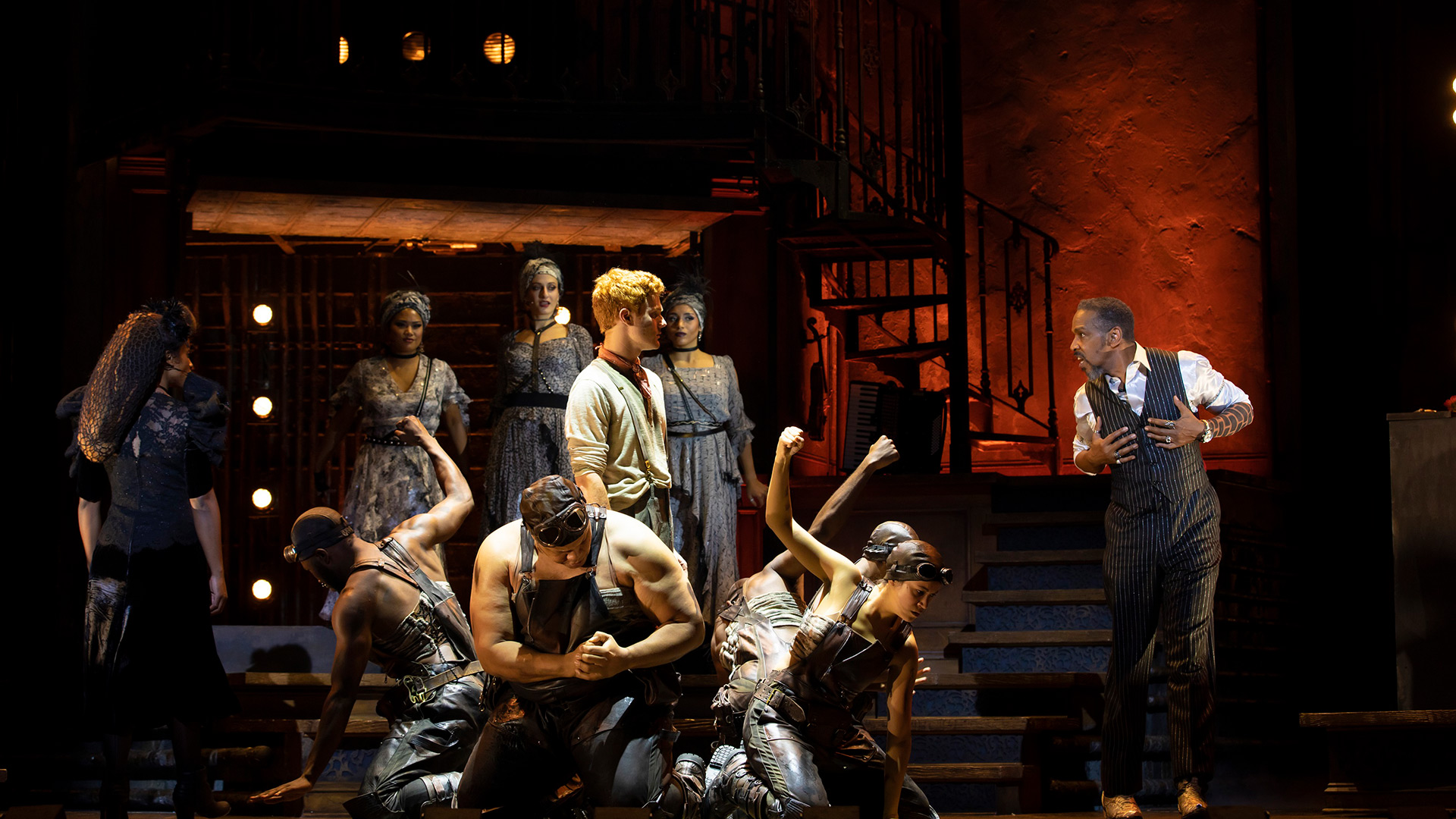
That local focus really shone a light on how strong the artistic quality of the theatrical scene is right now: the batting average of the 50 shows I saw this year was extraordinary. Beyond the version of Nine that exceeded all my expectations, Short North Stage delivered several other productions that served as a reminder that they’re the best they are at what they do. Abbey Theatre of Dublin swung for the fences and – even when the final product didn’t quite make my final 15, gave me an experience I’d never seen before in a theater (The Witch of November) or delivered all the beauty of some of my favorite musicals with an intimacy and community spirit (Fun Home with Evolution, Hadestown with their Young Adults program). The Contemporary did a version of my favorite play of the last five years that lived up to my memories of seeing it at the Public in every way.

Smaller companies took chances that paid off big, with Tipping Point ripping my heart out of my chest, Endeavor introducing me to one of the freshest playwriting voices in years, Imagine giving us Rent with Mark and Roger played by femme-presenting actors and a fresh, DIY take on material I know in my sleep (along with a Cry-Baby that punched way above its weight class and came within a hair of making this), pointing to a bright future with Brandon Boring taking the reins as Artistic Director. Opera Columbus shows up here twice, and the two that didn’t make the list easily could have. Tyrell Reggins’ Trinity Theatre Company launched an ambitious project to do every August Wilson play of the cycle and set the bar high.

And the biggest story is the return to full artistic power of the Wexner Center. Leveraging relationships with the Department of Dance, Denison University, and national and international artists, they presented the strongest slate since before the pandemic. All praise to Elena Perantoni. All praise to Kathleen Felder. I can’t wait to see what this team does, augmented by Nathalie Bonjour, who joined during the year.

Everything below is in Columbus unless otherwise stated, all photos are provided by respective companies as stated. If I reviewed it, I quote and link to the original review. If a review isn’t linked, it had a limited run or I was out of town and I wrote a preview or I saw it on my own dime. Listed in chronological order.

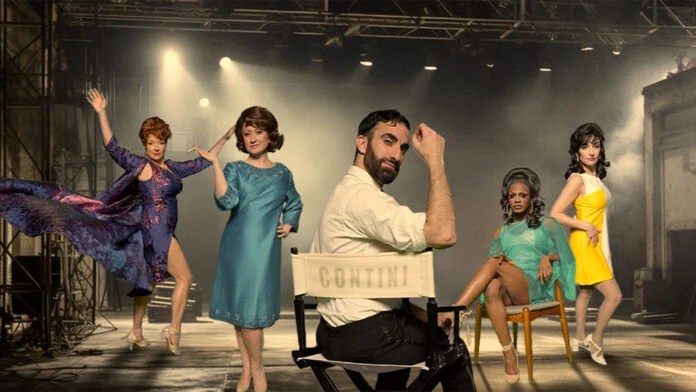
Nine, photo by Fyrebird Media, provided by Short North Stage
  • Nine by Maury Yeston and Jeff Marx, after Federico Fellini, directed by Edward Carignan (Short North Stage) – In my review for Columbus Underground, I wrote, “Carignan does a masterful job of balancing what’s kinetic – keeping the entire cast moving, swirling around both Guido and each other to underscore the sense of chaos and fragmentation in the character’s mind, reinforcing that we’re always in his mind – and pausing to both let the audience breathe as well as stop on these arresting images that pay homage to one of the 20th century’s great image-makers. Another touch that reinforced that push-and-pull, which I appreciated very much, was Vera Cremeans’ take on Guido’s mother, his biggest influence, bringing a stillness that we don’t see much of throughout the rest of the show, the deliberateness she brings to the role and the gravitas, as the only person who does – probably who could – tell Guido to “Shape up,” helps emphasize the loneliness as he’s turned away from that center of gravity, as well as leading the company in a searing, blew-my-hair-back rendition of the title song.”
  • Archiving Black Performance: Roots and Futures by Holly Bass, Marjani Forté-Saunders, Jennifer Harge, Ursula Payne, Crystal Michelle Perkins, and Vershawn Sanders-Ward (Dance Notation Bureau/Archiving Black Performance, Wexner Center for the Arts) – This mixture of archives, keeping performance alive, and expanding on languages, is right up my alley and my jaw was in my lap for the entire hour of this.
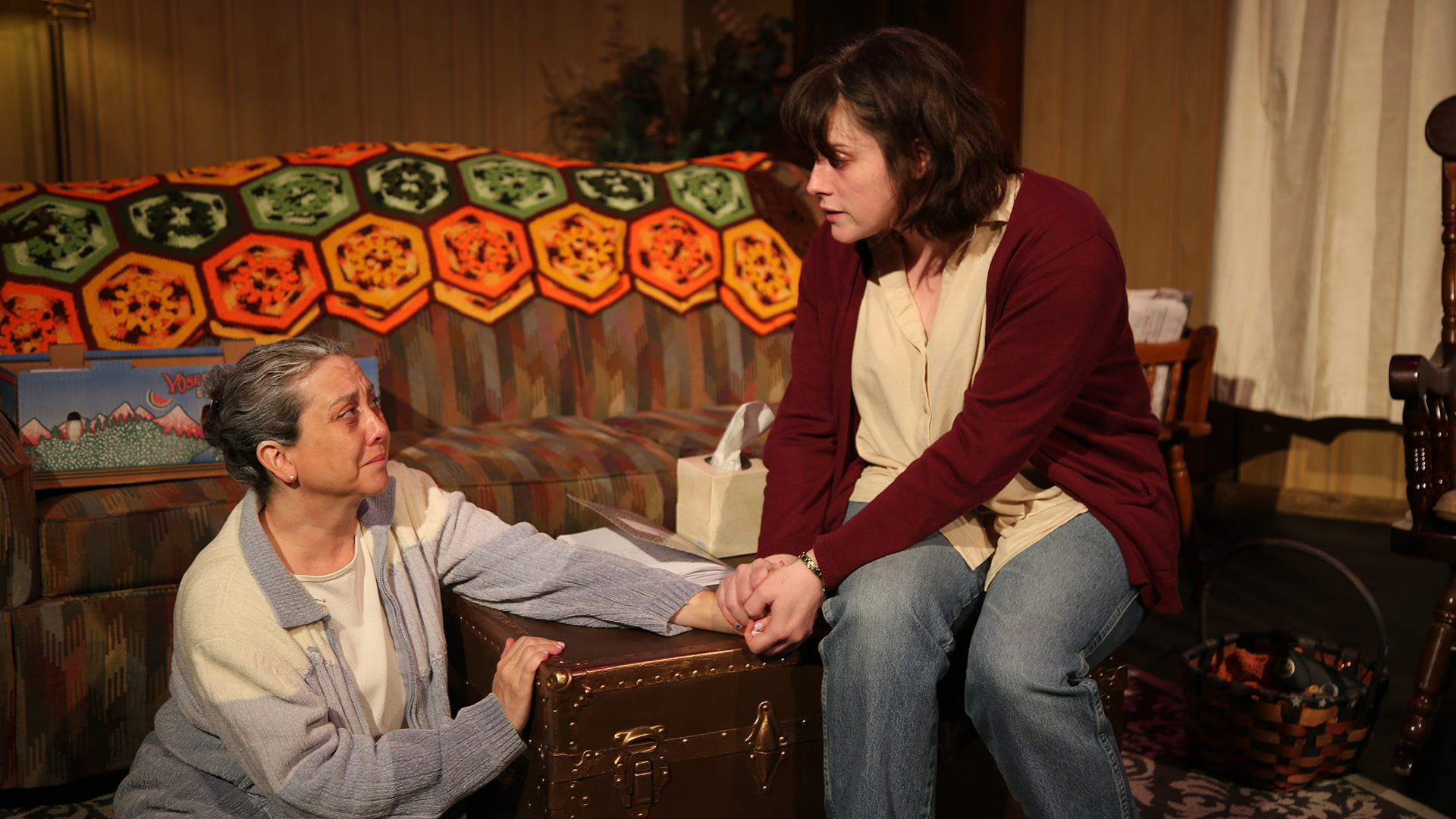
  • Fat Ham by James Ijames, directed by David Glover (Contemporary Theatre of Ohio, Riffe Center) – I didn’t think anything could live up to how The Public Theatre struck me, but my god, this destroyed me. In my Columbus Underground review, I wrote: “Patricia Wallace-Winbush reminds us all that she’s at the very top tier of comic actors; her physicality and timing astonished me over and over. Glover’s production set up an interesting doubling of the outsider-insider observer-and-participant relationship across generations with Reese Anthony’s firecracker of a performance as Tio, resonating in ways I hadn’t noticed when I saw Fat Ham Off-Broadway. Anita Davis’s Tedra also spoke to me in ways the other performance didn’t, giving me a sense of understanding of the character without letting her off the hook for any of the horrible decisions or their repercussions while also still hilarious; I’ve never seen the first half of that equation pulled off as well in any Gertrude from any production of Hamlet, adding the razor-sharp comedic sensibility shoved me back in my chair.”
Fat Ham. Photo by Alexa Baker, provided by Contemporary Theatre of Ohio
  • Gem of the Ocean by August Wilson, directed by Tyrell Reggins (Trinity Theatre Company, Columbus Performing Arts Center) – The first August Wilson I ever got to see in a theater (the Goodman in Chicago) had a high personal bar set for me and Tyrell Reggins – who I was already a fan of as an actor but didn’t know his directing – sailed so far above that bar I left with my jaw hanging down, unable to talk to anyone as I walked back across downtown. Led by Wilma Hatton as one of my definitive Aunt Esters (again, a high bar, I saw Fences on Broadway), everyone in this left me stunned.
  • Dentro. Una storia vera, se volete by Giuliana Musso (translated by Juliet Guzzetta) (Wexner Center for the Arts) – Often documentary theater or journalistic theater I find vital but a little dramatically unsatisfying. Musso’s work here, dealing with child abuse, was exactly the opposite. A riveting, gut-wrenching, searing evening that still has me thinking about it.
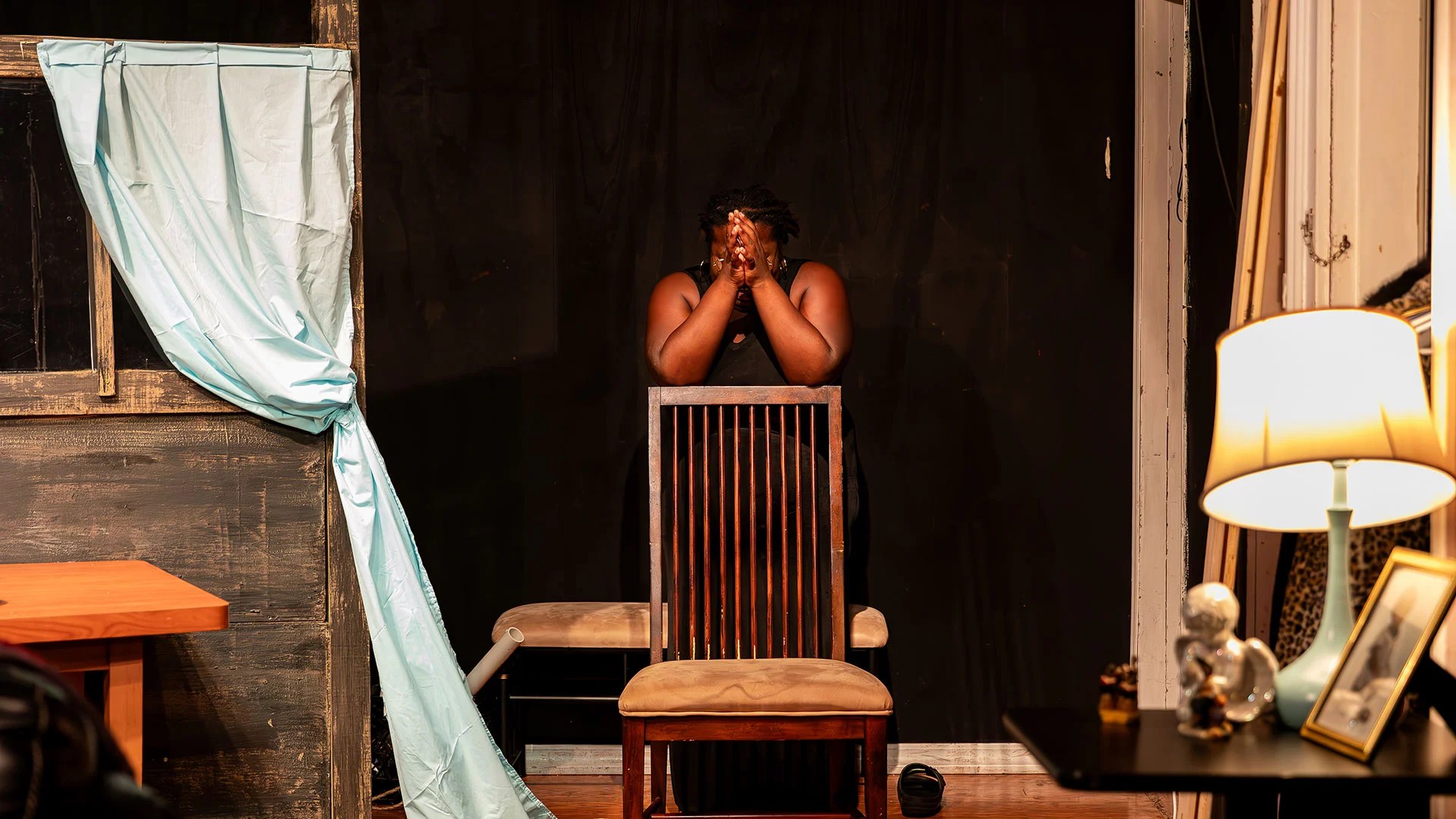
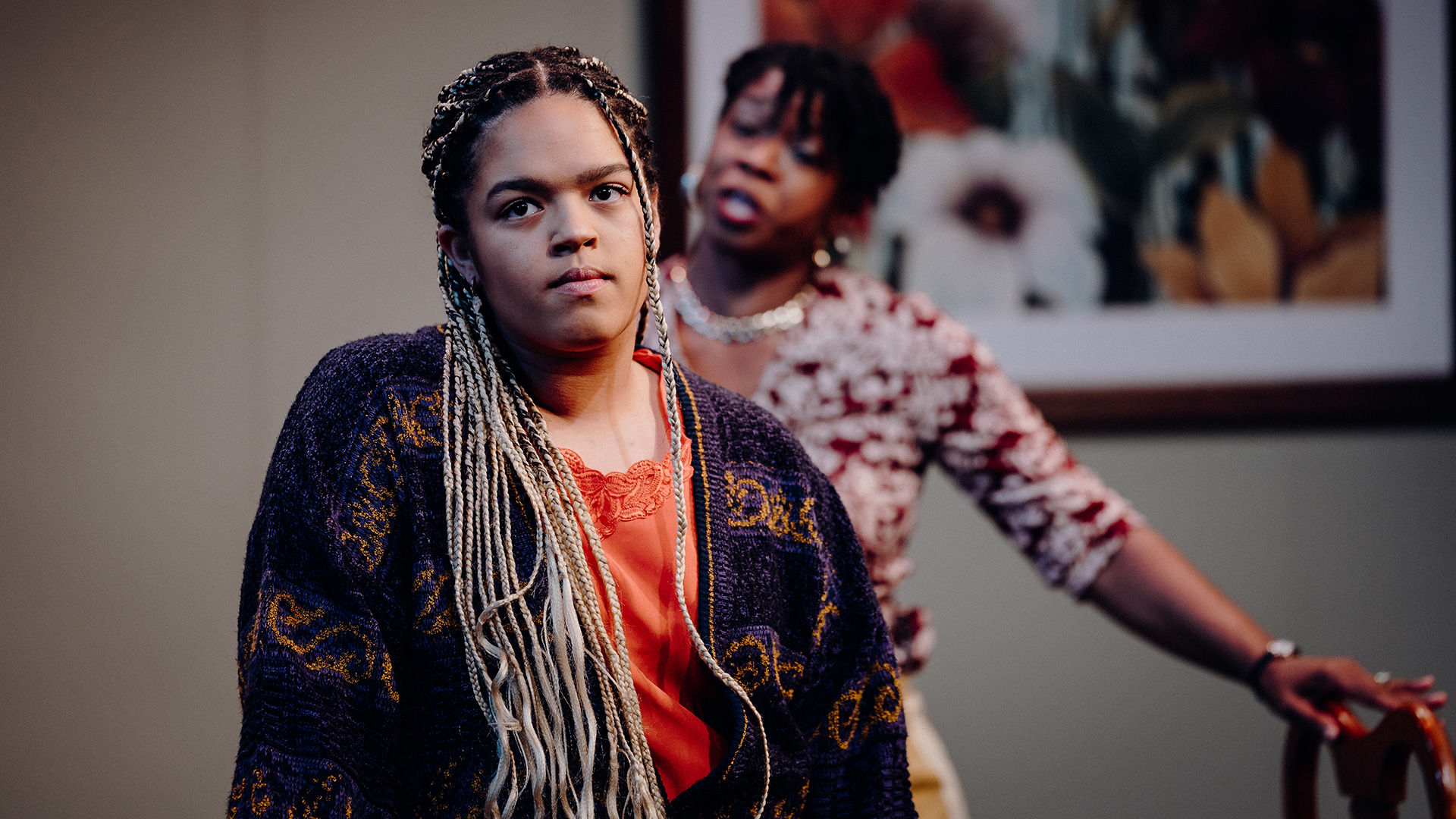
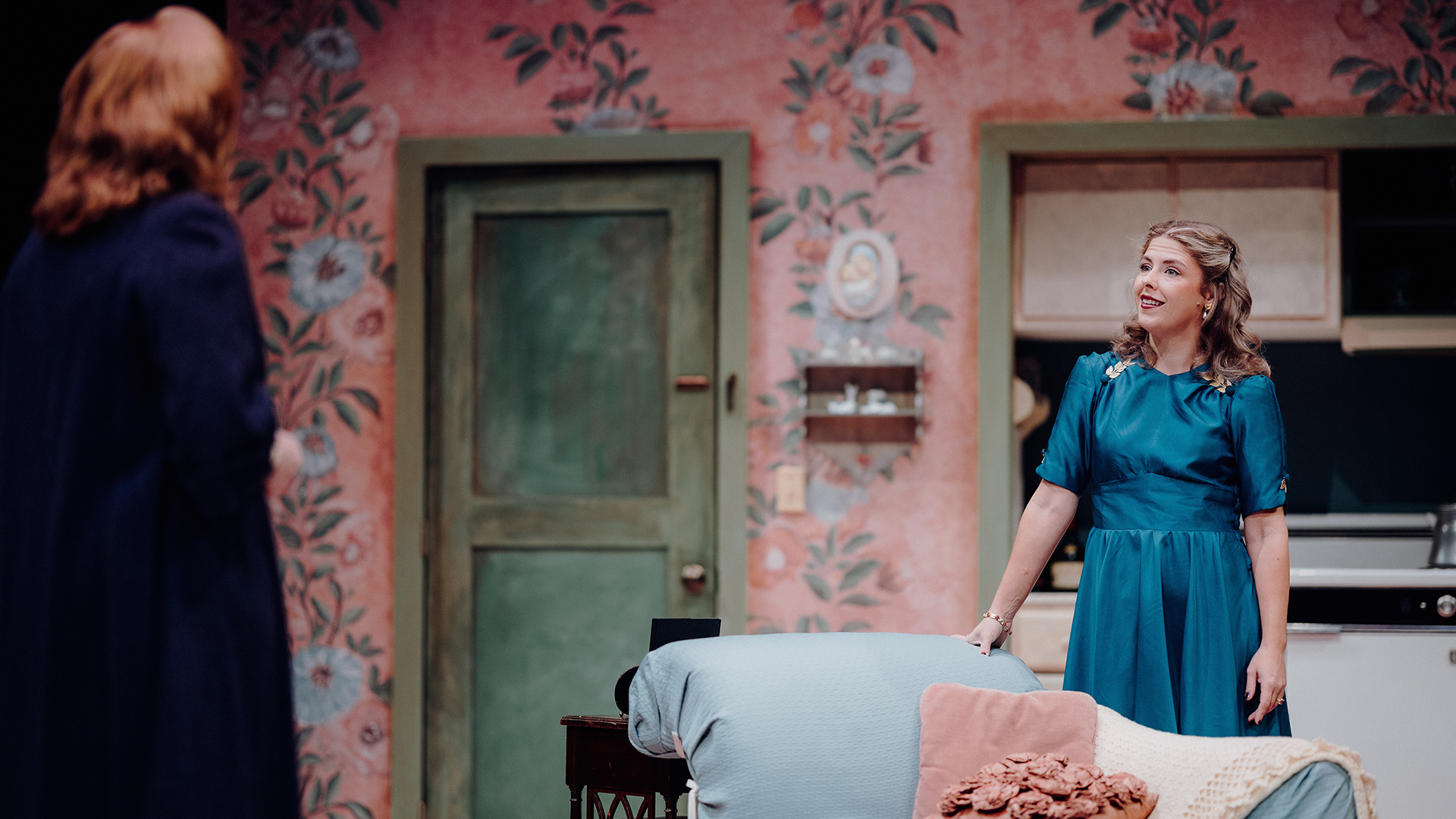
  • Bothered and Bewildered by Gail Young, directed by Nancy Shelton Williams (Tipping Point, Columbus Performing Ars Center) – A director whose work I knew on a playwright I didn’t and one of my “Good lord, have you seen this?” shouting at everyone I could find moments of the year. As I said in my Columbus Underground review: “The magic of Bothered and Bewildered lies in its fascinating, yet impossible-to-look-away-from quality; it captures the frustrations and banality of the extremely realistic anger and frustration that no one can fight against. The grinding pain of knowing what the characters are going through will not improve for any of them. Williams and her cast make the immaculate craft going into this invisible; it feels as much like staring into fragments of someone’s life as anything I’ve ever seen on a stage, while simultaneously dragging me to the edge of my seat and slapping me across the face.”
Bothered and Bewildered. Provided by Tipping Point.
  • Rock Egg Spoon by Noah Diaz, directed by David Glover (Available Light, Riffe Center) – A wild burlesquing of history and the present, how good intentions go wrong and bad intentions go worse. The least describable anything I saw all year and maybe my single favorite piece on this list. In my Columbus Underground review, I said “The first act…gets at the heart of the human desire to be remembered, to have one’s story told, as a river flowing from the source of desperation not to be lonely. The hunger for connection and the desire to not show how much you want it, because rugged self-reliance is at the heart of the same myth, reverberates through both acts, as language (including “revolutionary,” “uncharted territory,” and the oft-attributed-to-Jefferson “Something better a few steps ahead”) shows up in different character’s mouths across various situations, showing how these concepts change and don’t change.”
  • Amadeus by Peter Shaffer, directed by Matt Hermiz (Gallery Players) – A huge-cast, music-heavy play I’ve known since I was a preteen and Hermiz and cast made me see it with fresh eyes and stand waiting for the bus home grinning, giddy to write notes and capture as much of what I just saw as I possibly could. In my Columbus Underground review, I said “Lusher’s Salieri is a masterpiece of nuance, a finely calibrated performance that makes every shade of the gray the character wallows in rich and vibrant and the character’s slide deeper and deeper into unhappiness feel inexorable, not despite his self-awareness but fueled by it, so enraged by the lack of causality between living up to some standards and talent and reward, so embittered by the lack of direct communication from the almighty that he reshapes his concept of God into his own misery. That unhappiness, that bitterness at life not catering to him is what he worships by the end of the play – something I’d never gotten before from a production of Amadeus: Hermiz and Lusher revealed this to me as not a play about loss of faith but putting that expectation at the center of your belief system.”
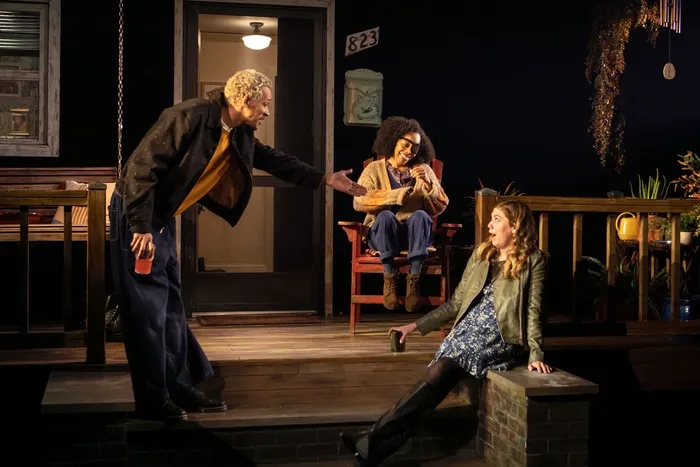
  • Being Black Outside by Vinecia Coleman, directed by Sermontee Brown and Sha-Lemar Davis (Endeavor, Club Diversity) – Endeavor put themselves on my personal map with this, my favorite new playwrighting voice in years (maybe since Available Light introducing me to Noah Diaz two years ago, maybe since an Under the Radar four years ago), brilliantly directed by Brown and Davis and beautifully acted by Robinson and Smith. I wrote in Columbus Underground, “I was laughing out loud, huge laughs that got me on the side of these two characters within five minutes of Being Black Outside starting. The voice is so startling and rich, establishing these vibrant characters without wasting words. Coleman’s writing and Brown and Davis’ direction align beautifully in a tone that has no quarter for despair, yet simultaneously doesn’t sugarcoat the terrible nature of many of these events. It’s as effective a piece of art at putting me in a world that’s hostile to the Black people inhabiting it.”
Being Black Outside, provided by Endeavor Theatre
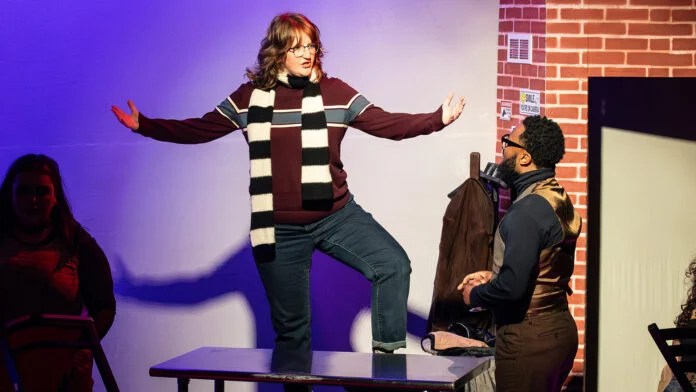
  • Gutenberg! by Scott Brown and Anthony King, directed by Niko Carter (Abbey Theatre of Dublin) – The best insider-baseball theatre comedy I’ve seen in a long while, with the genuine affection and respect between the two cast members Jonathan Collura and Joe Bishara shining. For Columbus Underground, I wrote: “The other conceit that’s very hard to pull off and this Gutenberg! does extremely well is actors who know more than their characters. The deep commitment behind every malapropism, every half-understood-at-best trope of theater or movement at history, rings a bell. The bell might ring harder for those of us versed in the subjects but I think Bishara and Collura communicate a strong enough sense of “the confident idiot” that even if an audience member doesn’t know the exact reference, they’ve worked with someone of that stripe to know it’s wrong.”
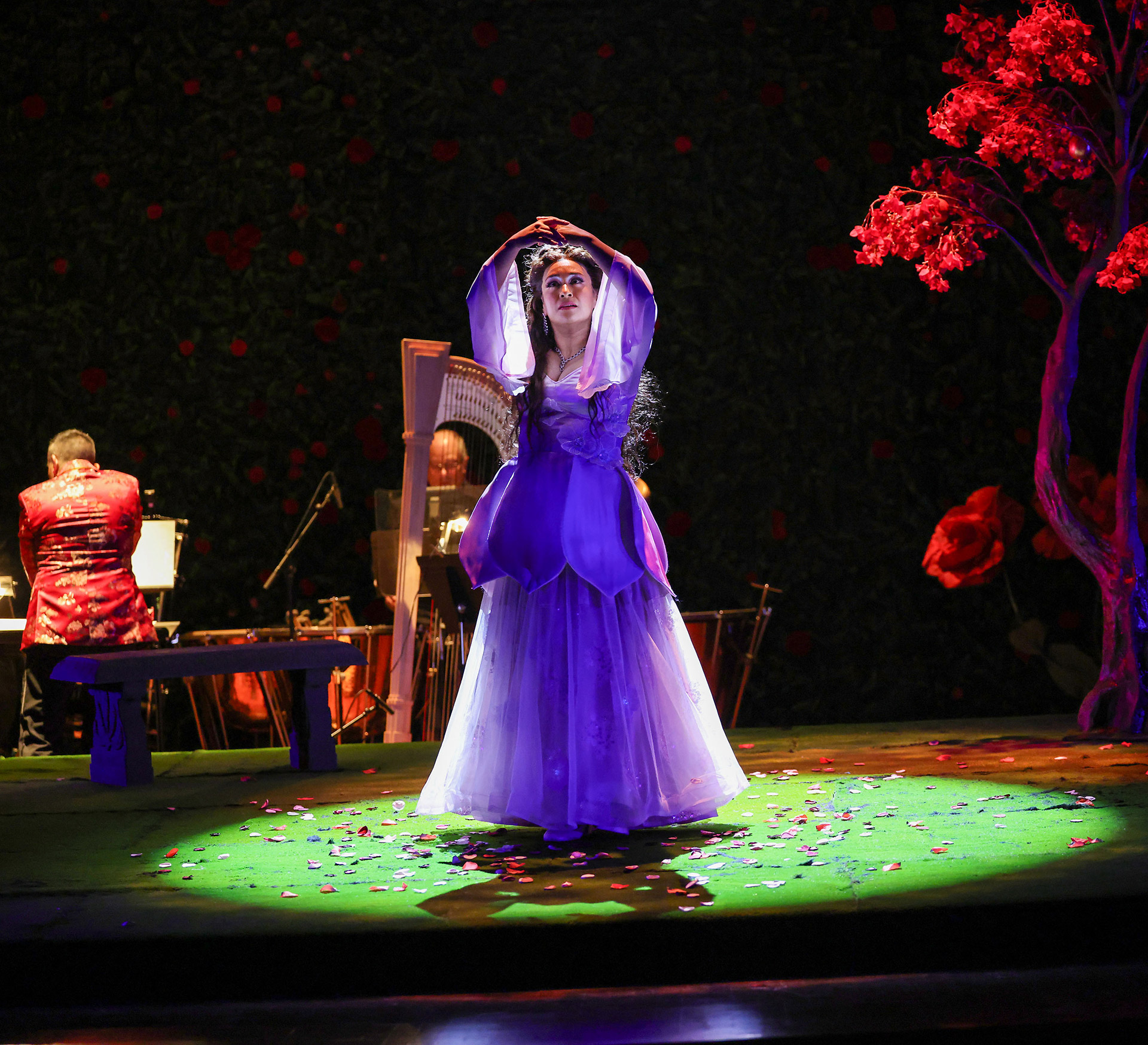
  • Rappaccini’s Daughter by Daniel Catán after Nathaniel Hawthorne, directed by Brandon Shaw McKnight (Opera Columbus, Southern Theatre) – This Mexican composer’s take on a Hawthorne story I’ve loved since High School made my entire body vibrate. I said in Columbus Underground: “The fascinating arrangement choices, music directed by Salazar and played by Feza Zweifel (timpani), Carmeron Leach and Chris Lizak (all other percussion), Sara McGill (harp), and Diana Frazer and Que Jones (pianos) create a tense, throbbing landscape where subtle shifts sometimes feel like jump scares and sometimes lull us into a state of hypnotic attention until we come to, realizing we’re in a completely other place. The loveliness of the harp – and sometimes a piano or marimba – is less of a reprieve from the delicious creepiness and more a reminder of the Leonard Cohen line “Even damnation is poisoned with rainbows”…McKnight’s staging also fits into that tapestry of dread like a tight puzzle piece, not drawing attention to itself but putting the characters all just this side of uncomfortably close to one another, or when they’re not directly interacting, far away from anyone else, accenting their loneliness or their monomania or the feeling of drowning like Brueghel’s Icarus”
Rappaccini’s Daughter. Photo by Terry Gilliam, provided by Opera Columbus
  • Clowntime is Over by Joseph R. Green, directed by Michelle Batt (MadLab) – This revival of my personal favorite piece I’ve ever seen at MadLab, retaining Andy Batt’s astonishing existential clown in purgatory but switching the rest of the production up bringing in MadLab vet Michelle Batt as a director and a young supporting cast reminded me how much I loved it and revealed new textures I missed before. A rare utterly vital, necessary revival.
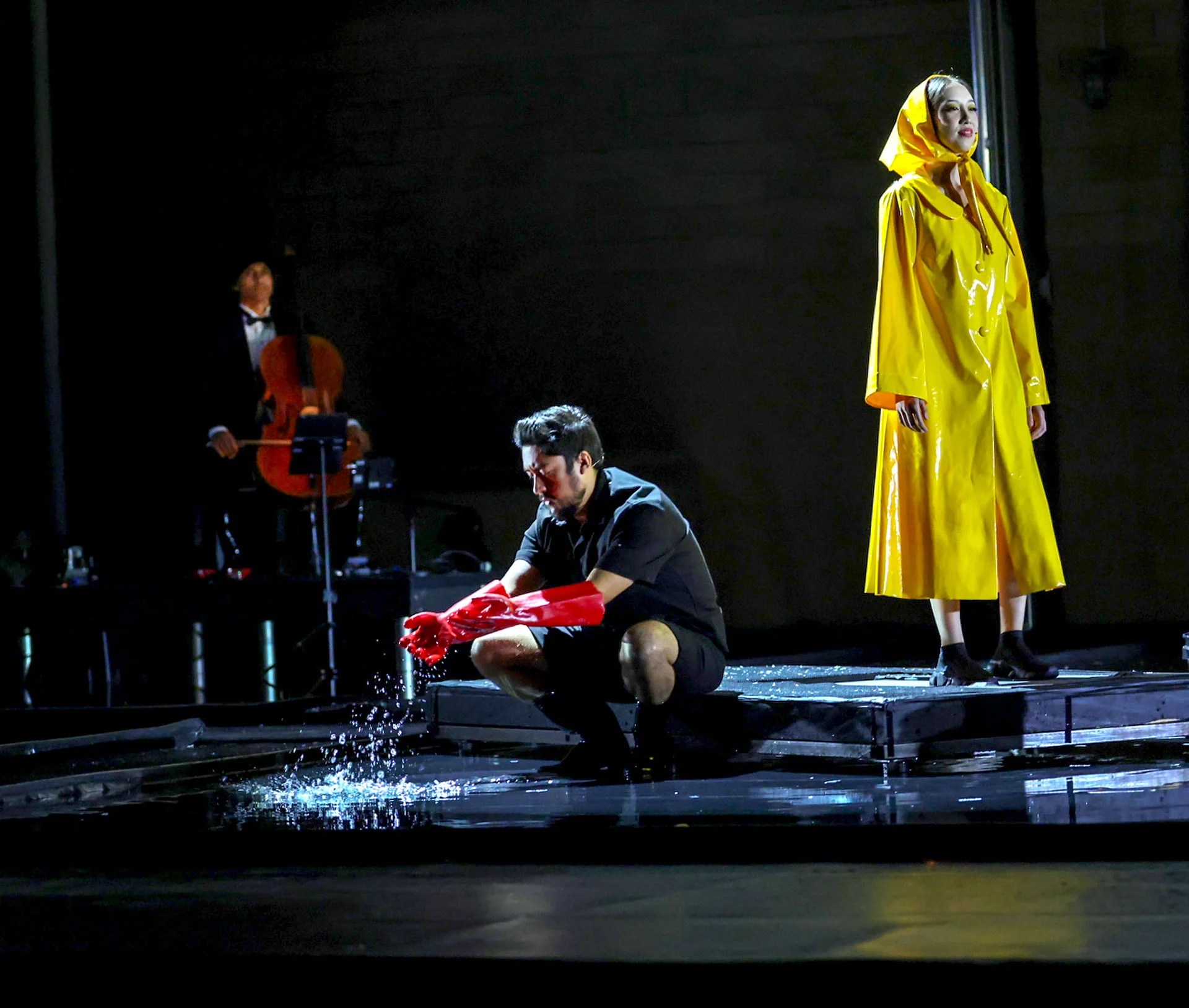
  • The Old Man and the Sea by Paola Prestini, Royce Vavrek, and Karmina Šilec, after Ernest Hemingway, directed by Karmina Šilec and Mila Henry (Beth Morrison Productions/Opera Columbus/Wexner Center for the Arts) – On my periodic trips to New York, no producer has a better batting average for my taste than Beth Morrison Productions and the combination of them, the Wex, Opera Columbus, and Paola Prestini set a lot of high expectations… and met every single one of them. I’m about as far as you can get from being a Hemingway fan but I was utterly enraptured and blown away by every minute of this. For Columbus Underground, I wrote: “The music here adroitly evokes, elevates, and amplifies the senses of frustration and transcendence. Jeffrey Zeigler’s cello and Ian Rosenbaum’s percussion establish landscapes but also joust with the vocal writing: bursts of marimba and sweeping arco lines buoy and skip across throbbing choral passages and set up Conteras’ growling hope and Brueggergosman-Lee’s ecstatic blue flame on “What a Fish;” scrabbling, tight percussive cello phrases and the soaring chorus entwine with Girón’s silken cry on “Come;” the marimba bounces across cello that conjures shadows at sunset as the chorus sings lines as clear as ice being dropped in a glass setting up a wry battle/seduction between on Brueggergosman-Lee and Contreras on “Daiquiri,” Those touches enliven the piece, enriching the emotion without distracting…The physical action also packs the field of vision with these allusions and witty references. During the previously mentioned Daiquiri, Contreras takes his blazer off and puts it back over his shoulders repeatedly, winking at the repetition and sameness of a drinking problem, but also shaking the jacket in the direction of La Mar and the glass, nodding to the drink as adversary and honored collaborator through Hemingway’s longtime preoccupation with bullfighting. The use of treadmills also underscores that repetition and monotony (alongside some rich drones from the cello and chorus) and the effort needed to maintain. Women throw plastic into the pools that represent the ocean. A chest freezer – any fisherman knows – stands in for a bar and also a coffin. The boats and rafts are brought down to earth as cheap pool flotation devices. All of these touches led to a grin that didn’t leave my face until I slept.”
The Old Man and the Sea. Photo by Terry Gilliam, provided by Opera Columbus
  • Mareas/Tides by Marion Ramirez and Ojeya Cruz Banks (Wexner Center for the Arts) – The best fusion of various dance styles and live jazz I’ve ever seen in my life, bar none. Unafraid of the prettiness of traditional ballet or the appeal of digging into a groove but also willing to go to the most abstract, mythic spaces.
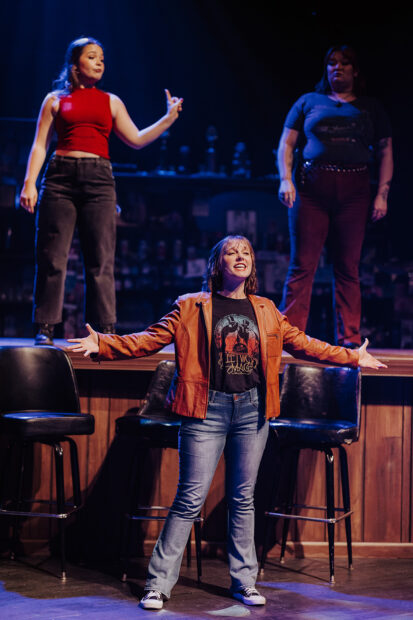
  • Rent by Jonathan Larson, directed by Alan Tyson (Imagine Productions, Columbus Performing Arts Center) – Alan Tyson – beyond this he also directed a chroeopoem that was my favorite part of this year’s Columbus Black Theatre Festival – provided a stripped down Rent with two femme-presenting actors as Mark and Roger that pinned me to my seat and reminded me what I loved about that play originally, and all the people in my friend group who loved it I’ve lost since. For Columbus Underground, I wrote “That feeling – enhanced by terrific, low-key choices in choreography by Nicholas Wilson and intimacy choreography by Krista Lively Stauffer – gives the proceedings a vital, DIY edge, stripping away just enough slickness to lay bare the beating heart of these songs and relationships. In addition, Tyson’s production hits all of the beats a longtime fan would expect (without sacrificing a handshake to any newcomers), but also throws some fascinating curves and angles that sent me out into the night thinking about this production of a play I’ve probably seen a dozen times over the years.”
Rent. Photo by Payton Andisman, provided by Imagine Productions
Categories
Best Of theatre

Best of 2024 – Theater/Opera/Dance

An astonishing year for performance art in its broadest sense – every Columbus troupe was hitting, supplemented by killer work I was lucky enough to see in Chicago and New York. Also celebrating the 10th anniversary of Columbus Underground publishing my more formal thoughts, so all thanks to Anne and Walker Evans and everyone else I work with and I’m happy to call friends.

As usual, in chronological order and in Columbus unless otherwise specified.

  • Fairview by Jackie Sibblies Drury, directed by Aviva Neff; Available Light – A decade ago, before I had an outlet, I was so struck by my introduction to Jackie Sibblies Drury’s plays I felt compelled to blog about it on my old Blogspot spot as part of the season that cemented my affinity for Available Light. In January, Available Light set the bar high for my 2024 with her powerful, uncomfortably hilarious satire Fairview. In Columbus Underground, I said, “Fairview is a Philip K. Dick-inflected MAD Magazine special with a full Three Stooges episode nested inside about race in America, how the act of looking twists both the observer and the observed, the impossibility of truly knowing other people, and the Sisyphean quest for ‘Fairness,’ to accomplish it and even define it.” In December, I’m still citing and thinking about this amazing feat of creation.
Available Light’s Fairview, photo by Kyle Long
  • Second Servings by Nancy Shelton Williams, directed by Sue Wismar; eMBer Women’s Theatre – Sue Wismar’s long been one of my favorite actors in town; on that short list where I can have no interest in subject matter or a writer, but when I hear she’s involved? Now I’m interested. This first exposure to her directing delivered on those expectations and then some, finding breathing room and also a coiled tightness that felt right for these characters in this world. As I said for Columbus Underground, “I’ve seen all three of these actors be very good in many things over my years of seeing theater in town; I’ve never seen them better. The tenuous chemistry of the three, the layers of shifting alliances, feel like they go back decades and are as fresh as an open wound.”
  • You Will Get Sick by Noah Diaz, directed by Eleni Papaleonardos; Available Light – The fact that all three of the Available Light productions I saw this year ended up on this list isn’t an act of intentional favoritism; it’s because all three of them sent me out into the night not just rethinking my perceptions of theater but of the world. Nowhere was that more evident than in this piece, which I called in my CU review, “A play I haven’t seen before, a rare blend of commentary, voice, characters, and love—leavened with appropriate disgust—for the world.”
  • Night, Mother by Marsha Norman, directed by Michelle Batt; eMBer Women’s Theatre – Ember Women’s Theatre had an excellent year – I still regret not being able to make their third production because of family and job travel responsibilities and this bracing, note-perfect production of a great play no one’s done in Columbus for a very long time was a shining example. I said of Melissa Bair’s scorching Thelma, for CU, “Everything feels natural and also like an accumulating snowball in a way that’s as dark and dazzling as a Goya painting.”
eMBer Women’s Theatre’s ‘Night, Mother, photo by Michelle Batt
  • Purpose by Branden Jacobs-Jenkins, directed by Phylicia Rashad; Steppenwolf, Chicago – It was a good year for Branden Jacobs-Jenkins as he further cemented himself as one of our two or three finest voices for the stage and a hell of a year for me as a theater-goer as I got to see two brand new works. Purpose took the black family drama as microcosm, with a civil rights leader patriarch (Cedric Young the week I was there) trying to keep his reputation spotless, with children who took varied paths. The wire-tight pacing given life by Rashad’s direction, the whiplash blending of distance and immediacy, and the best performances I’ve ever seen by actors I’ve been watching for a very long time – including Alana Arenas, Glenn Davis, and Jon Michael Hill – meant this is still reverberating around in my bones.
  • An Enemy of the People by Henrik Ibsen, directed by Amy Herzog; Circle in the Square, New York – My favorite Ibsen, adapted and tightened without losing any of its ferocious ambiguity as the intensity ramped up, by Amy Herzog whose 4000 Miles killed me at Lincoln Center in 2012, and directed by Sam Gold deploying all of the fascinating experiments that haven’t always coalesced in his recent work firing on all cylinders this time, centered around volcanic performances from Michael Imperioli and Jeremy Strong.
  • Legally Blonde by Heather Hach, Laurence O’Keefe, and Nell Benjamin, directed by Dionysia Williams Velazco; Short North Stage – This was a stellar year for Short North Stage – their The Color Purple, Ain’t Misbehavin’, and Jersey Boys were all also evidence of a company working at the height of its powers and perfect versions of the material – but Legally Blonde stuck with me both because of my surprise (I knew it was a musical and I saw the movie years ago, but didn’t know a single song) and because it was one of the purest distillations of delight I had all year, one of the key tenets of the stage, centered around jaw-dropping performances from Laura Overby, about whom I said, “Doesn’t just rise to that challenge; she sails into space, making it look easy,” and Vera Cremeans, whose “Virtuosic performance [let] the character’s hard-won wisdom, wit, and charm shine brilliantly,” (both from Columbus Underground) and a consistently killer ensemble.
  • An Iliad by Lisa Peterson and Denis O’Hare, directed by Cat McAlpine; Actors’ Theatre of Columbus – Actors Theatre was a mixed bag for my taste this year – their Twelfth Night was also beautiful, other two didn’t work for me – but this was the apotheosis of the risks they’re taking and the more adult subject matter they’re working with over the last few years and left me a blubbering mess. I’ve been a fan of Cat McAlpine’s work both as an actor and a director for years, but this sailed over those high expectations. For Columbus Underground, I called it “A riveting night of theater that’s a reminder of the challenges inherent in telling stories, in showing up for and with people, and how easily everything can fall apart.”
Actors’ Theatre’s An Iliad, photo by Nina Martin
  • Black on Earth by Orlando and Riccardo Hunter-Valentine, Brother(hood) Dance; Wexner Center for the Arts – Brother(hood) Dance’s first collaboration between OSU’s dance department and the resources of the Wex made my Best Of list last year and the wider lens they took to grapple with Black farming and integrated society took my breath away. This year had more of the “I can’t picture this anywhere else in Columbus” feeling the Wexner Center’s performing arts program used to give me constantly than I’ve had in years – all props to Elena Perantoni and Kathleen Felder – and this was a prime example.
  • Lunch Bunch by Adrian Einspanier, directed by Eleni Papaleonardos; Available Light – This was another of the most exciting playwrighting voices I’ve ever seen brought to vibrant, touching, and hilariously vicious life by Eleni Papaleonardos with a perfect cast – I was especially struck by Wilma Hatton, Michelle Schroeder-Lowrey, and Whitney Thomas Eads. I said in Columbus Underground, “[It’s] a reminder that we’re all trying to get through and be better, and some of us have to try much harder than others. A reminder of how easy it is to turn into a bully with just a little bit of power. And an uproarious workplace comedy. And it’s more than all those things.”
  • Max Roach 100 by Ayodele Casel, Rennie Harris, Ronald K. Brown, directed by Ayodele Casel, Rennie Harris, Ronald K. Brown, Torya Beard, and Kit Fitzgerald; Wexner Center for the Arts – This was another example of what the Wex does better than anyone else when it clicks – co-commissioning with New York’s Joyce Theater; finding the perfect curator for this, Richard Colton who I interviewed for a preview in one of my favorite interviews this year; and bringing together film, three of the finest choreographers, and astonishing dancers in tribute to one of the great composers of the last century.
Ayodele Casel at Mershon Auditorium, October 2024
  • Good People by David Lindsay-Abaire, directed by Pamela Hill; Tipping Point – First time in 10 or 11 years anyone had done this gut-punch, sadly-even-more relevant gritty poetic look at Boston’s working class from David Lindsay-Abaire, and Pamela Hill and a terrific cast led by a warm, powerful performance from Sonda Staley, broke me with this terrific production that (as I said in Columbus Underground), “Refreshed and deepened my understanding of this play I love while making me dig deeper into my assumptions and reflexive responses to luck, choice, and how I treat other people.”
  • Wife of a Salesman by Eleanor Burgess, directed by Leda Hoffmann; The Contemporary Theatre of Ohio – This was a stunning home run, born of the Contemporary’s keen eye for new plays and recontextualizing some of the American theater history CATCO made its bones on, with two knockout performances from Megan Lear and Teri Clark Linden at its heart, that I said in my CU review, “Give the density of ideas – the value of duty, the ephemerality of choice, the conflicting approaches of different waves of feminism, the commonality between people if we let our guards down enough – a visceral punch that kept me on the edge of my seat.”
The Contemporary Theatre of Ohio’s Wife of a Salesman, photo by Kyle Long
  • Natasha, Pierre, and the Great Comet of 1812 by Dave Malloy after Leo Tolstoy, directed by Melissa Lusher; Otterbein University – I tried to review a lot of college theater in my first couple of years writing for CU. I think it’s important and the two great programs here – OSU and Otterbein – are a lot of people’s introduction to live theater; including me, the first play I remember seeing that wasn’t a Broadway Across America was at OSU (I think; that same High School year also had my first Actors’ Theatre performance). A professor made the great comment on one of my reviews that sometimes a “watchable play” isn’t the best yardstick, sometimes it’s necessary to remember kids are trying their hardest even if I couldn’t recommend something to anyone else, so I backed way off and try to choose what I cover from these programs more carefully. But Otterbein’s musical theater pedigree and the fact this was the first time anyone in central Ohio did this Dave Malloy masterpiece gave me confidence in signing up to review it and I was blown the hell away. Some work fits perfectly with college students and I definitely had that sense the overheated emotion, complicated melodies and harmonies, and large cast all aligned in this phenomenal production. In my CU Review, I said “It drove home the way scale and scope excavate different feelings than smaller-scale work and how beautiful that scope is when everything comes together.”
  • Give Me Carmelita Tropicana! by Alina Troyano and Branden Jacobs-Jenkins, directed by Eric Ting; Soho Rep, New York – Of any non-Columbus venue, I’ve seen the most change-my-head-around work at SoHo Rep’s tiny Off-Broadway space on Walker Street. Beyond what I’ve personally seen and been blown away by there, it’s also been a huge source of the work that made Available Light the theater company that reinvigorated my love of theater in Columbus. So when a New York trip coincided with not only the final production before they search for a new home but also a collaboration between Branden Jacobs-Jenkins and downtown performance art legend – and Jacobs-Jenkins’ former professor – who I’d never gotten to see live, Alina Troyano – made this a no-brainer. With rapid-fire wit, Troyano (as herself and longtime alter ego Camerlita Tropicana) and Jacobs-Jenkins (played brilliantly by Ugo Chukwu) pay loving tribute to experimental theater, a shifting and sometimes hard-to-find “downtown” sensibility, the various characters in Troyano’s Tropicana-verse, and the sense of possibility that hits differently being in a room full of strangers and loved ones seeing it live. There was an almost karmic sense of a circle closing in this being the final play I saw of the year being a perfect summation of what I’m hoping for any time the house lights go down. May this set the tone for another year of wonder and possibility.
Curtain Call for Give Me Carmelita Tropicana! at SoHo Rep, November 2024
Categories
Best Of theatre

Best of 2023 – Theater/Opera/Dance

Brother/Hood/Dance, photo by Ryan Muir, courtesy of the Wexner Center

What a great year for theater – seeing 53 shows over four cities, with particularly good batting averages on the three New York trips. Also, every company in Columbus was hitting this year. Some of the best work I’ve seen in years from MadLab, Opera Columbus, and Evolution, lined up with front-to-back strong seasons from The Contemporary (formerly CATCO) and Available Light, a renewed interest in dance and theater from the Wexner Center, Short North Stage stretching its wings, all added up to more I wanted to see than I could make happen. Even when I didn’t love some of the work, almost every single thing I saw, I admired the effort and the swing they took. It’s a good time to be a fan of theater in town, get out and see as much as possible,

Everything listed here is in chronological order and in Columbus unless otherwise noted. The companies provided all photos for promotion, either sent to me directly or taken from websites.

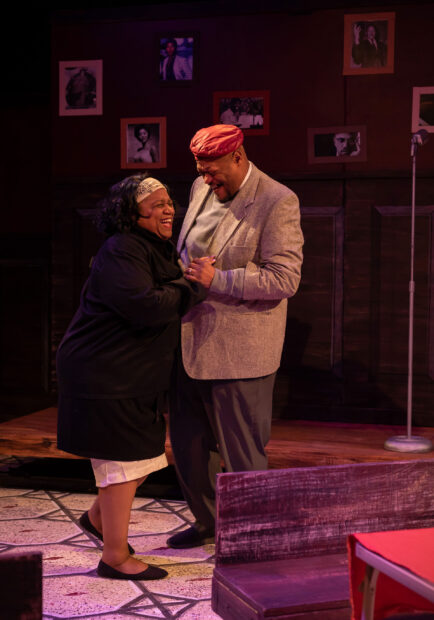
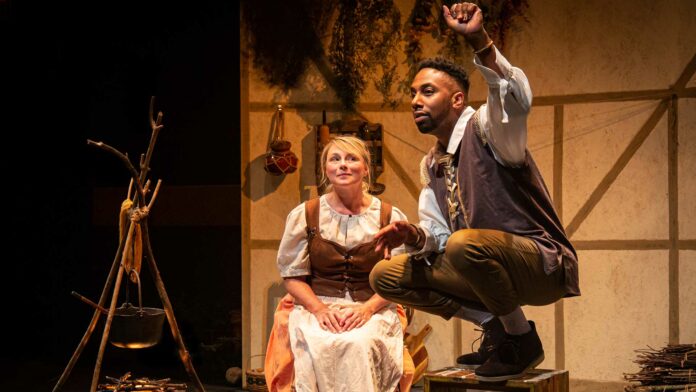
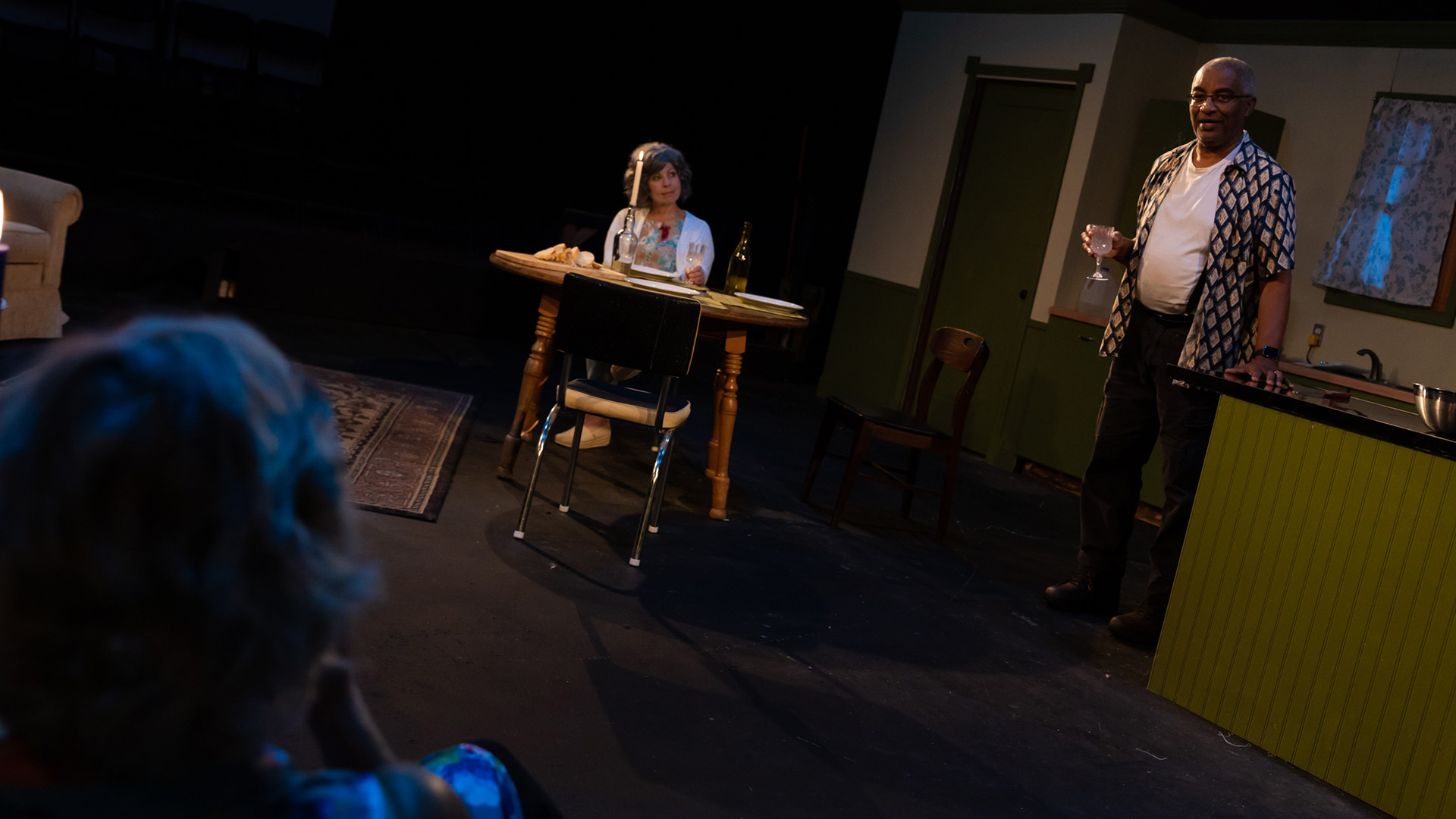
Wilma Hatton and Ricardo Jones in ‘Snowville Cafe’, photo by Steve Malone
  • KL II by Kaneza Schaal, directed by Kaneza Schaal and Christopher Myers (Under the Radar Festival, NYC) – I only made it to one thing out of the three I had booked at Under the Radar this year – one canceled early, one canceled while I was at the Public – but this reaffirmed what a great thing the festival is for those of us who love experimental theater. Kaneza Schaal braided the text of Mark Twain’s King Leopold’s Soliloquy with a personal history with Patrice Lumumba’s independence speech with personal history with so much else and fused it to a blue flame of a performance and fascinating design and direction choices.
  • Snowville Cafe by Julie Whitney-Scott, directed by James Blackmon (MadLab) – Julie Whitney-Scott, one of my favorite theater artists in town, had an astonishing year directing a regional premiere of Pulitzer Prize-winning writer Lynn Nottage, classics like Lorraine Hansberry’s Raisin in the Sun, leading her spectacular tradition of Columbus Black Theater Festival, writing her first novel, it was a dazzling record of work. But my favorite piece, the thing that I kept talking about months after it closed, was this luminous slice of life James Blackmon directed for MadLab. I called it “a poetic character study that also makes its setting a vibrant, fascinating character, with a real love for its characters but a sometimes unsparing eye for their faults. The empathy of the writing and direction are so perfectly in sync they almost seem invisible,” in my review for Columbus Underground.
  • Everybody by Branden Jacobs-Jenkins, directed by David Glover (Available Light) – Available Light continued their astonishing streak this year. Everything they did had the unshakable feeling of “I can’t picture anyone else doing this.” David Glover’s stunning production and brilliant cast were up to the challenge of fusing the technical difficulty – the main five actors pull their characters out of a hat – to the piece’s deep themes and rich humor. I said it, “[highlights the shifting volatility, the danger of using our friends as a mirror of ourselves, but the absolute necessity of friends,” in my review for  Columbus Underground.
  • Afro/Solo/Man by Orlando Zane Hunter, Jr. and Ricarrdo Valentine (Brother(hood) Dance, presented by Wexner Center for the Arts) – The Wexner Center also pulled itself up this year, drawing on some local talent and some far-flung relationships, to put out work I can’t picture any other presenting organization bringing to town. This gut-wrenching dance piece by Hunter and Valentine, about generational trauma and internalized shame but also abundant, bursting-at-the-seams joy, had me babbling about it for weeks after seeing it.
Monica Danilov-Marquez, Maria de Buenos Aires, Opera Columbus; photo by Terry Gilliam
  • Maria de Buenos Aires by Astor Piazzolla and Horacio Ferrer, directed by Christopher Darling (Opera Columbus) – Opera Columbus continues killing it and this Piazzolla operetta lined up with my tastes with sniper-like precision. I said, “The parallel singing and dancing choruses also set the world of the play, accentuating the collage aspects and the surging drama and eroticism. This riff on an opera-ballet with tango feels simultaneously organic and surprising,” in my piece for Columbus Underground.
  • Seven Guitars by August Wilson, directed by Ron OJ Parson (Playhouse in the Park, Cincinnati) – Finally got to see the last of the August Wilson Pittsburgh cycle with this sumptuous production at one of Ohio’s shining theaters, Cincy’s Playhouse in the Park. Bryant Bentley’s Red Carter and Dimonte Henning’s Schoolboy Barton are performances burned into my brain.
Sue Wismar in foreground, Elizabeth Girvin and Sydney Jordan Baker in background, When We Were Young and Unafraid, photo by Cat McAlpine
  • When We Were Young and Unafraid by Sarah Treem, directed by Michelle Batt (eMBer Women’s Theatre) – eMBer Women’s Theatre has come into its own over the last few years, and this year they blew me the hell away with a gorgeous, knife-twisting look at shifting social mores, pervasive sexual violence, the need to connect – and the way that can be a source of strength or twisted into something terrible, with astonishing performances, especially by Sue Wismar and Matthew Sierra. I said, “[The] characters’ arguments about the times changing and the chilling prescient words “They’ll change back,” resonate long after the lights go back on the play,” in my review for Columbus Underground.
  • The Wolves by Sarah DeLappe, directed by Aviva Helena Neff (The Contemporary Theatre of Ohio) – The second production of Sarah DeLappe’s magnificent coming-of-age play The Wolves I’ve seen in a few years, and I’m still knocked out by the play and the synchronicity in coming together and splitting apart personified by the cast hear left my jaw in my lap with awe and broke me in the right measures. For Columbus Underground, I said, “[It] reminded me of its ability to surprise through the quality and sharpness of its execution. It’s hard for me to picture seeing a better production of this beautiful, life-affirming, heartbreaking play.
  • Machinal by Sophie Treadwell, directed by Ryan Naughton (The Sound Company) – Ryan Naughton and Jessica Hughes gave the Columbus theatrical scene a powerful shot in the arm in their few years here, teaching at OSU, and their crowning achievement was a powerful production of landmark expressionist play Machinal by their Sound Company. I said, This production is rich with jagged beauty and a perfect example of how irony can be used to make something hurt more, not less. How much more potent can abstraction be at evoking a feeling than spelling something,” for Columbus Underground.
Jessica Hughes, Machinal, photo by Blake Mintz
  • Beautiful by Doug McGrath and the music of Carole King et al, directed by Dionysia Williams (Short North Stage) – I didn’t see a bad production by Short North Stage all year, but this jukebox musical – which might have had the hardest go with me walking in, given the depth of my familiarity and love of the Carole King-Gerry Goffin songs and the milieu around them, and this captured it so perfectly, anchored by brilliant performances by Britta Rae, Corbin Payne, and Nick Lingnofski. For Columbus Underground, I said, “The book has enough pain and richness to give ballast to the material, but Beautiful never lets anything get in the way of the power and beauty of these songs.”
  • The Comeuppance by Branden Jacobs-Jenkins, directed by Eric Ting (Signature Theatre Company, NYC) – Branden Jacobs-Jenkins is one of the playwrights I’ll see anything that comes out if I can at all make work. I was overjoyed that one of the last matinees overlapped with our middle trip to New York this year. I got there – after two hours a few blocks north of the Signature complex having some drinks and laughs at staple Rudy’s Bar and Grill- and was dismayed to find out the performance was over two hours with no intermission. I’m used to that meaning, “We don’t trust the material/we want to exert some dominance over the audience/people will leave.” But for 2:15, I was staggered, enraptured, blown away. Every tool Jacobs-Jenkins has carefully sharpened is deployed in heartbreaking, unsettling ways with a phenomenal cast in this mythopoetic riff on The Big Chill that tells a story about reckoning with youth, trauma, and who has the right to a story; to pain; that I haven’t heard before. I’m dying to see this again and have already pre-ordered the script in book form (coming out next summer). I saw a couple of things this year where I both immediately said, “This is the best thing I’ve seen,” and I still think that later in the year (you’ll see the other further down this list); this was one of them.
  • Sweeney Todd by Stephen Sondheim and Hugh Wheeler, directed by Thomas Kail (Lunt-Fontanne Theatre, NYC) – I’ve seen a good number of the recent Sweeney Todd revivals, the first Sondheim I loved thanks to an introduction to the taped George Hearn/Angela Lansbury performance from childhood friend Matt Porreca, and I love the attempts at realism, psychological or otherwise. But it was an unalloyed joy to see this Thomas Kail-directed version that focused on the sumptuous music, playing the original orchestrations and with a dynamite lead from Josh Groban, in almost a sharp-edged comic book interpretation. And as with the Sunday Anne and I saw a few years ago, Annaleigh Ashford’s Mrs. Lovett runs away with the whole goddam show, just a dynamite performance.
The Comeuppance photo by Monique Carboni
  • The Inheritance by Matthew Lopez, directed by Joe Bishara (Evolution Theatre Company) – Evolution has been swinging for the fences the last couple of years, and, in my eyes, it’s really paid off. The ambition of this huge cast recasting of Howard’s End to deal with the aftermath of the AIDS crisis, which was the play everyone was talking about when Anne and I were in London (and I couldn’t fit it into the schedule), follows great work Evolution has done with Lopez’s writing like the intimate character-driven Poz and gets to luxuriate in this over two three-hour parts. I called it, “About how we tell stories, how stories bring us together, give us a framework for living, and in the same breath – and sometimes the same story – let us delude ourselves and others, build walls, and slowly (or slowly-then-suddenly) rot us from the inside,” as I reviewed Part 1 and Part 2 for Columbus Underground.
  • POTUS by Selena Fillinger, directed by Leda Hoffmann (The Contemporary Theatre of Ohio) – Fresh off Broadway, POTUS affirmed Hoffmann’s commitment to brand new work and stewardship as CATCO transitioned into The Contemporary Theatre of Ohio. It’s a crackling burlesquing of the highest hallways of power and riotous, hilarious entertainment. It may have been the hardest I laughed all year. I said the production was “A springloaded machine of everything getting worse in ways we see coming, but at just enough of an angle, the wind is knocked from our lungs as a precursor to the following laughs. Hoffmann and her cast excel at this, ratcheting in the tension up, weaving in call-backs (if there’s another inflection you can put on “ass play” we don’t see in this play, I can’t think of it) so they embed in our brains and still getting that jolt of surprise when they detonate, with just enough release to make the pace feel frenzied without being exhausting,” in Columbus Underground.
  • What the Constitution Means to Me by Heidi Schreck, directed by Dakota Thorn (Available Light) – Dakota Thorn, who I’ve long admired as an actor, hit it out of the park with her first – I think – directing and Available Light member Michelle Schroeder-Lowrey is the perfect fit for this funny, intensely moving snapshot of a slice of America from Heidi Schreck. I said, “Hilarity – starting with the 15-year-old Heidi talking about the constitution in bodice-ripper terms (“a sweaty, steamy document”), deep dives into specifics of language, and abject horror bump right up against one another, without feeling unbalanced. In the late-play discussion of Town of Castle Rock v. Gonzales, the play draws a clear line between an abstraction being the point, the nitpicking of “shall” as a dodge, a way to avoid letting people into the argument being seen by the court, and the breathless, sometimes delirious love of words as a way to let people in, to truly see them, instead of shutting them out, as the play does,” in my review for Columbus Underground.
  • Infinite Life by Annie Baker, directed by James Macdonald (Atlantic Theatre, NYC) – I can’t think of a contemporary writer who burrows into the most banal – and simultaneously most intimate – spaces of modern life with more agility and a sharper knife than Annie Baker. This look at seven women in a spa/health retreat that’s not explicitly described is a master class in interweaving perspectives; the way we talk with the knob turned all the way up until it seems strange. Anne and I talked about this all the way down 8th Avenue to the Vanguard (see this year’s live music list), and I’m still turning it over in my head, trying to make sense of it in the best way.
Laurie Carter Rose, Arriah Ratanapan, Noelle Anderson, and Shanelle Marie, POTUS, photo by Terry Gilliam
  • Merrily We Roll Along by Stephen Sondheim and George Furth, directed by Maria Friedman (Hudson Theatre, NYC) – Everything you’ve heard about this is true. Easily the strongest, most fully realized version of this underdog of the Sondheim canon, directed with a sure hand and razor-sharp timing by Maria Friedman, who uses her storied history with Sondheim and her internalizing of those rhythms to make everything breathe and, crucially, peels back a little more of the onion on Franklin Shepherd (a stunning Jonathan Groff) to show the people pleaser quality at the heart of all that grasping – the first time I really believed that line, “I’ve only made one mistake in my life but I’ve made it over and over again: saying ‘Yes’ when I meant ‘No.’” Daniel Radcliffe kills me as the righteous purist Charley Kringus, and Lindsay Mendez, new to me, gives a more fleshed-out version of Mary Flynn, taking her out of the Dorothy Parker caricature while still nailing those lines than I’d previously seen.
  • Which Way to the Stage? by Ana Nogueira, directed by Edward Carignan (Short North Stage) – I didn’t realize how much I’d missed Short North Stage’s taste in non-musical plays until this breath of fresh air reminded me. It felt really good being back in the Green Room, laughing and thinking. In Columbus Underground, I said, “[It] treats these heavier themes with the gravity they need – how does this thing you love change, and what happens when it doesn’t? How do we look to other people? – but they never get in the way of the laughs. It’s a delightful comedy with a sniper-targeted sense of its audience.”
  • Ghost Quartet by Dave Malloy, directed by Drew Eberly (Available Light) – The other thing that stood out to me as the best thing I saw all year, a song cycle with theater running through its veins, that denied my easy understanding as much as it made me love it. For Columbus Underground, I said, “Malloy and the cast, under Eberly’s sure hand, dig into a purer emotional landscape, the way a song feels as it moves through you, and the late nights of wanting to one-up one another because you love the people you’re with so much; while still having all the insecurities and viciousness that makes us human.”
  • Good Grief by Ngozi Anyanwu, directed by Shanelle Marie and Alan Tyson (Contemporary Theatre of Ohio) – Shanelle Marie and Alan Tyson collaborated on directing this lovely meditation on loss, friendship, and growing up by Ngozi Anyanwu, a jewel in a very strong season from The Contemporary Theatre of Ohio. For Columbus Underground, I said, “The ability, starting in Anyanwu’s text and emphasized by Marie and Tyson’s direction, not to demonize anyone, to find drama without making anyone a villain, showing us people who are all doing their best is a rare gift and a pleasure I don’t get often enough in any medium.”
Amy Rittberger in the foreground, Katie Giffin and Jo Michelle Shafer in background on the bar, Ghost Quartet, photo by Kyle Long
Categories
Best Of theatre

Best of 2022: Theater/Opera/Dance

Cast from the Public Theater’s Fat Ham by James Ijames, photo by Joan Marcus

It felt this year – and this is not just me saying it, I had this conversation with actors, with artistic directors, with people in line at the bar – that theatre was back in a way we didn’t quite see in 2021. And for what’s become my favorite art form, that was a balm to my soul I couldn’t quite quantify.

I made it to 52 shows this year. In addition to Columbus, Anne and I saw quite good theater in St Louis (a terrific version of Assassins), Madison (the really fun Temptations jukebox musical Ain’t Too Proud) that didn’t quite make the list for me this year and stuff in New York that did, along with a couple NYC shows that had their hearts and minds in the right place but just didn’t land like I would have liked (a version of Company with a show-stopping lead performance by Katrina Lenk and a great comedic cast but was too uneven otherwise, and a 1776 with a stunning premise of having the founding fathers played by a cast without any cis men, but didn’t do anything with that premise).

It was a joy seeing Available Light back in a big way with a powerful shot across the bow in an exemplary performance of Jen Silverman’s Witch. CATCO built on their good work with Mr. Burns with my two favorite productions of the year, versions of School Girls and Indecent I have a hard time imagining being bettered. eMBer Women’s Theatre did a version of Margaret Edson’s W;t with a jaw-dropping performance by Sue Wismar at its heart that just wrecked me and made Anne say, “That’s the first great theater I’ve seen since we started going again.” Short North Stage – in addition to what was placed on this list – also had a production that turned me around on a show I never really liked Little Shop of Horrors, and one that re-invested me in a show I thought I was done with, Spring Awakening. The bench of choices to pick from was deep this year.

And these were the best of the best for me – the shows that made me want to grab a martini and talk about for two hours afterward (Sardi’s didn’t exactly make us use the elevator after Topdog/Underdog, but it was damn close) or hug whoever was near me. That lit me up and reminded me why I keep doing this.

But that’s not the whole story of the ecosystem. I want to call attention to the great work that MadLab and Evolution are doing: both of these companies take chances on plays no one else is and shine a light on voices that haven’t had many productions at the level of professionalism and care they both always bring to the table. Evolution did the almost unthinkable and brought a brand new musical to life.

For me, the finished products were mixed bags for both companies but you don’t find gems without taking the kind of bold risks they do. And also MadLab and Joe Bishara’s Abbey Theater (who host Evolution along with Original Production Theater, Stage Right, the Columbus Black Theatre Festival, etc) providing space and logistical support to other companies in a world where the rent’s too damn high and locations are thin on the ground for the needs of smaller troupes. They’re doing their part to nurture new, bold work. These are in chronological order and in Columbus unless otherwise stated. Photos are all taken from the theater’s websites or were provided by the production company for publicity purposes.

Sermontee Brown, Shauna Marie and Jacinda Forbes from School Girls; Or, the African Mean Girls Play by Jocelyn Bioh, presented by CATCO. Photo by Terry Gilliam
  • School Girls; Or, The African Mean Girls Play by Jocelyn Bioh; directed by Shanelle Marie (CATCO) – I’d read Bioh’s pitch-perfect dissection of the cruelties people inflict on each other, through the specific lens of a girls’ boarding school in Ghana, and seen the streaming version of Chicago’s Goodman during lockdown but the production of this still hit me like every beat was brand new. I said, “In twenty-five years of regularly seeing theater, and a lifetime of living in Columbus, this is one of the ten best things I’ve ever seen on a stage here. It made me laugh myself hoarse and have to take my glasses off to wipe away tears,” when I reviewed it for Columbus Underground.
  • Fellow Travelers by Gregory Spears (composer) and Greg Pierce (libretto), based on the novel by Thomas Mallon; directed by Bruno Baker (Opera Columbus) – I wrote a preview for this stunning show which premiered in Cincinnati in 2016, a dark look at the HUAC-motivated purge of homosexuals from US government ranks centered around an incendiary performance from baritone Carl DuPont. I wrote about it for Columbus Underground.
  • W;t by Margaret Edson; directed by Michelle Batt (eMBer Women’s Theatre) – This was just breathtaking, a fantastic play that not only holds up but gains new resonance as it feels like anti-intellectualism and disparaging of women’s autonomy gain new, ugly footholds. I said, “Wit is a play that still elicits huge laughs – proven the night I went – and keeps its power to devastate, a prime example of the play as a magician who tells you the trick at the outset, then dazzles you with it anyway”, in my review for Columbus Underground.
  • Fat Ham by James Ijames; directed by Saheem Ali (Public Theater and National Black Theater, NYC) – I’ve been a fan of James Ijames’s’s heavily poetic language and incisive looks at the human condition since Available Light included a work of his in the 2017 Next Stage Initiative – but this year’s Fat Ham was the first piece of his that tied all the threads together and exceeded its potential. A riff on Hamlet set in the deep South, following a gay man, Juicy (Marcel Spears in a masterful performance), as he tries to navigate a bad family situation and relationships he keeps fucking up, with humor and fire. The moment when I realized Calvin Leon Smith’s sharply drawn Larry wasn’t Laertes he was Ophelia almost knocked me out of my chair and the concluding fourth wall shattering “If it’s all right with you, we decide to live,” that could have been so cheesy felt like the only truth I needed. One of the best new plays I’ve seen in many, many years.
  • The Skin of Our Teeth by Thornton Wilder; directed by Lileana Blain-Cruz (Lincoln Center Theater, NYC) – I’d read and enjoyed this Thornton WIlder, but I’m not sure I’d ever seen it. Anne’s enthusiasm for the work – and my curiosity about what Lileana Blain-Cruz, whose work on Suzan-Lori Parks’ The Death of the Last Black Man in the Entire World blew me away a few years ago, would do with it – made this our first trip back to Lincoln Center since the pandemic started and it was a dizzying, almost-too-appropriate take on how you live in the face of an apocalypse. A surreal apocalypse but a reminder that the world, especially in times of crisis, is always surreal. Puppet mammoths and hordes of barbarians tromp through a well-appointed home, with an astonishing performance from Gabby Beans as Sabina at the center of it.
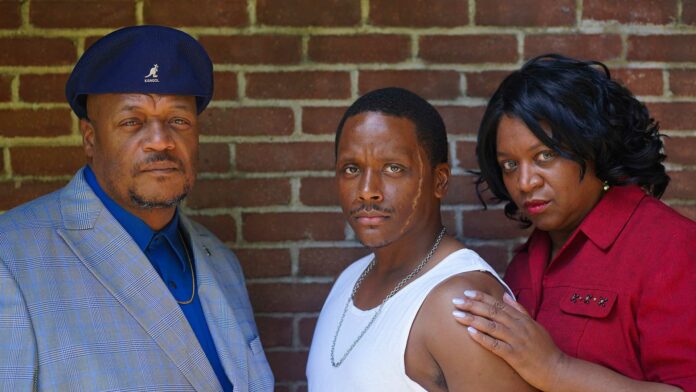
Ricardo Jones, William Tyson, and Wilma Hatton in King Hedley II. Photo by Jabari Johnson
  • Voice of the Net by Jeremy Llorence; directed by Joe Bishara (Original Productions Theater, presented at the Abbey Theatre of Dublin) – Science fiction is hard to adapt on the stage; so are mysteries. So it was an extra delight to see this world premiere cyberpunk/techno-thriller play handle literary tropes I would have thought un-adaptable with stiletto grace. A credit to both the sharp, steady hand of Llorence’s script and Bishara’s innovative and empathetic direction; as well as a great cast including Julie Whitney Scott, Tom Holliday, and Jeff White. I reviewed this for Columbus Underground.
  • Queen Margaret by Jeanie O’Hare, adapted from William Shakespeare; directed by Philip Hickman (Actors’ Theatre) – This Jeanie O’Hare dissection of Shakespeare’s Wars of the Roses plays, centered around a brilliant performance by Jessica Hughes as the eponymous queen, was a shining example of Actors’ Theatre’s power to bring complicated, adult work to a beautiful summer night without any pandering or bullshit. Hickman’s direction kept the tension high but also let the characters breathe. I talked about this for weeks. I reviewed this for Columbus Underground.
  • Althea and Angela by Todd Olson, directed by James Blackmon (JB3 Entertainment, presented at MadLab) – This world premiere historical drama about the friendship between Althea Gibson (Jaymi Horn), the first black American to win a Grand Slam tennis title, and her competitor/sometimes doubles partner Angela Buxton (Mallory Fischer) was a gift. Beautifully directed by James Blackmon for his JB3 Entertainment company. I called it “It’s an exciting slice of history, well-told; a profound look at the reasons and rewards of connecting with one another; and a dazzling reminder of how much beauty there is in being alive,” in my review for Columbus Underground.
  • King Hedley II by August Wilson, directed by Patricia Wallace-Winbush (PAST Productions with Actors’ Theatre) – One of only two August Wilson plays I hadn’t seen performed (*cough* could somebody do Seven Guitars?) paired with the perfect director for it, and Wallace-Winbush met or exceeded every one of my sky-high expectations. A grim, soaring take on the difficulty of getting out of the poverty cycle, others’ expectations, and our own tragic flaws. Wilma Hatton – also excellent in School Girls this year – gives one of those performances of a lifetime. I said, “The care with which Wallace-Winbush and her cast treat the milieu, the characters, and the words, make this an indelible evening and a reminder of the necessary empathy at the heart of all great tragedy,” in my review for Columbus Underground.  
Michelle Schroeder and David Glover in Witch by Jen Silverman, presented by Available Light. Photo by Matt Slaybaugh
  • Witch by Jen Silverman; directed by Whitney Thomas Eads (Available Light)This return from the last of the main theatre companies to come back, AVLT, was almost everything I could have hoped. An amazing central performance from Michelle Schroeder and stellar work from David Glover and Ian Short among others, directed beautifully by Whitney Thomas Eads. I called it “A towering example of exactly what I’m going to the theater for and an incandescent reminder of what Available Light brings to the Columbus theater community,” in my review for Columbus Underground.
  • Rent by Jonathan Larson; directed by Chari Arespacochaga (Short North Stage) – It’s no secret that my tastes have been shaped by a number of friendships over the years. Everything good is the result of a series of friendships, alliances, and warm acquaintances. I lost two friends who were big proponents of Rent and made me see it through a more forgiving eye than my anything-popular-has-to-suck teenage attitude and while it’s not perfect, I have a real fondness for it. Both passed this year, and we hadn’t been close for a little while, which kind of made seeing this again perfect. That feeling was bolstered by the fact that this was a beautiful production. RIP, Kate Wright (Opperman when I knew her). RIP, PBS. I never adequately explained how much you meant to me and my understanding of art and the world over the years. I reviewed this for Columbus Underground.
  • Montag by Kate Tarker; directed by Dustin Willis (SoHo Rep, NYC) – This fall was my first trip back to Soho Rep, the site of many of my most profound theatrical experiences, and I lucked into a flamethrower of a play. I’ve never heard language like Kate Tarker’s, take on relationships – the friendship with the two women, beautifully acted by Nadine Malouf and Ariana Venturi, felt real and approachable even in the heightened circumstances of being under attack. Surreal details creeping into view – a disco ball grim reaper, a motorcycle-loving friend with an operatic area, and a crash of sunlight – are the right balance of terrifying and hilarious. I didn’t understand huge chunks of this, but I fucking loved it.
Cast of Imagine’s Assassins by Stephen Sondheim and John Weidman, photo by Jerri Shafer
  • Topdog/Underdog by Suzan-Lori Parks; directed by Kenny Leon (John Golden Theater, NYC) – Probably my favorite play ever, certainly always one of the two or three things in the conversation. I read Parks’ Topdog/Underdog in 2002 or 03, right after it was published in book form, and it set my hair on fire. I missed its original Broadway run by a couple of months on one of my first trips to New York. And afterward I didn’t miss any of her plays if I could help it and saw a couple terrific regional versions over the years (a very good one at CATCO in 2004 still stands in my mind), so there was no way I was going to miss the first Broadway revival. From the moment I walked into the building to Pete Rock and CL Smooth’s “They Reminisce Over You” booming through the PA, I was hyped. And at first, I was a little disappointed – Kenny Leon’s direction felt a little sitcom-y, a little boom-clap. But by the end of it, the incandescent performances of Corey Hawkins and Yahya Abdul-Mateen II were reverberating in my chest, making me interrogate why some choices made me uncomfortable. Especially when those same choices were turning some of the audience into people never having seen a play before – when Linc announces he’s lost his job, there’s a small chorus of “Awww,” that at first felt annoying and then was really endearing. Two hours of discussion and three manhattans with Anne at Sardi’s later, I got it. It might not be a perfect version (if such a thing even exists), but it’s a stunning, finely tooled for now take on this 20-year-old masterpiece.
  • Indecent by Paula Vogel; directed by Leda Hoffmann (CATCO) – Another take on a play I dearly love, probably my favorite of Vogel’s work, and I’m a fan in general. Leda Hoffmann (who also killed me with Mr. Burns last year) did a marvelous job paying tribute to the Jewish and queer histories in the play and making it luminous, thoughtful entertainment. I was wiped out and burned out from the week when I saw this, but I barely got to the coffee shop to write my review before texting half a dozen friends to tell them how good this tribute to the human need to get together and tell stories, to the eternal power of theater, was. I reviewed it for Columbus Underground.
  • Assassins by Stephen Sondheim (music and lyrics) and John Weidman (book); directed by Brandon Boring (Imagine Productions) – I also saw an excellent production of Assassins, maybe my favorite Sondheim play, in St Louis while there for good friend John Wendland’s wedding, and what I thought was interesting about both was they did away with the abandoned-carnival setting. I got a kick out of Fly North Theatrical’s quite good version set at a political fandom convention, directed by Bradley Rohlf (and it had maybe the best Sam Byck I’ve ever seen, Sarah Lantsberger), but I was fully blown away by Brandon Boring’s staging of this in a courtroom. I previewed it because I was in Mexico City for the first weekend, but I spent my own money to see one of the last two performances, and it reminded me how good it feels to do that once in a while. It was riddled with great touches like the judge’s gavel for gunshots, the balladeer as a prosecuting attorney making his case to the ensemble as a jury, and the assassins gathered around a defense table.  An excellent cast with particularly strong performances from Chris Rusen, Brian Horne, Lexi Vestey, and Nancy Skaggs, delivered the hell out of the material. I had a few issues with projecting; some lyrics got lost when actors realistically turned away from my part of the audience, and I understand the reasons for them, but I’m still not in love with singing to backing tracks, but those minor quibbles couldn’t take the shine off my love of this production. Anne and I went to see our friend DJ at The Oracle after and never left the bar to make our way into the room where the dancing was happening, having a lot to say, which doesn’t normally happen on a play we’ve seen three productions of together before the one we watched that night. Building on his terrific Into the Woods a few years ago, Boring might well turn out to be our current standard-bearer for directing Sondheim.
Categories
"Hey, Fred!" books poetry theatre Writing Other Places

Writers’ Block Retrospective Extended Cut

The thrust of the story and the definitive version of this is in Columbus Underground here, and I want to thank my editors in CU for commissioning it: https://columbusunderground.com/writers-block-poetry-walks-into-the-sunset-rs1/

I also want to thank everyone – yes, again – for being so generous with their time. I go into a little more detail and let some folks run on at a little more length in this extended cut, and I hope the die-hards enjoy it.

When I heard the Writers’ Block Poetry Night –  with a rich history across seven venues going back 24 years – was calling it quits (at least as a weekly event) after the December 21 show, I knew it was something I had to write about. 

As someone who grew up in Columbus and turned 18 around the time the night started, I watched the poetry scene blossom into something that would have been unrecognizable just a few years later. And while I wasn’t the most regular attendee, I was always grateful when I made my way through those doors; I always left inspired and usually left with another poet I was checking for. If anyone from out of town was here on a Wednesday looking for something “Columbus,” it was one of my very first suggestions.  

I made it to an event recently,  and it’s as irreverent, moving, and powerful as ever – glowing with community and affection for its regulars but encouraging to newcomers. I intended to stay for an hour and get a few photos, but I ended up pushing my other plans back, getting a second drink and staying for the last poet; I was having that good a time. Do not miss these last shows.

I was lucky enough to talk with the three current runners of the event, Kerouac’s owner, and two poets from different periods of the event. I want to thank each of them for being so generous with their time and memories.  conversations were edited for clarity and length.

People interviewed:

Vernell Bristow: Poet and Co-Founder, Originating MC.
Scott Woods: Poet and Co-Founder, former President of Poetry Slam Inc.
Louise Robertson: Poet and Coordinator.
Sidney Jones, Jr.: Poet and Teacher.
Zach Hannah: Poet.
Mike Heslop: Owner of Kafe Kerouac

Pre-History

So, how did you originally meet? At [legendary downtown venue] Snaps and Taps?

Bristow: I had been to the poetry forum at Larry’s a couple times. And one day I saw a flyer in the Black Cultural Center, and I said, “Oh, maybe I’ll give it another try. It’s Black people.” I went to [the reading] and met brother Is Said [acclaimed Columbus poet and playwright]. He used to have a series: Poetry in the summer was his thing at Hot Times [Festival]. And poetry in the winter was always on campus in the Frank Hale Black Cultural Center. He introduced me to the series at the Marble Gang [restaurant].
I credit brother Is Said with starting me on my way with poetry in Columbus.

Woods: He was carrying the torch for Black poetry since the late ’60s, at least, early ’70s. And he was doing that pretty much by himself, I guess until Snaps came along. But he always crossed worlds. He was always at Larry’s. Always at Hot Times. He was known throughout the city. He was carrying the torch for us.

Bristow: Before Snaps & Taps, in the same location, was [James Chapmyn’s Living the Dream] theater company, and they had a weekly open mic poetry reading. When it was time for his theater company to go on their college tour, I started hosting it. [Is Said] saw me host. He was like, “Oh, you’re pretty good at that.” So, when Snaps opened and they were having a weekly open mic, they naturally asked Is Said if he would host that open mic. And he said, “Oh no, I’m too old for that commitment. You need somebody young for that. Sister Vernell can do it.” 

And one day, this guy, Scott Woods, came walking in with some love poems tucked under his arm and the rest was history.

Early Years

When did the series begin?

Woods: This is always the point of contention. Here… It was ’98. It was the year that the movie Slam came out. Because one of the first gigs that came through Snaps & Taps was getting poached to do a reading at the Drexel Theater for the opening of Slam.

Bristow: When we were at Snaps & Taps, the room was packed every week, but never the same people. Repeat poets would come out. But the audience was never the same people. It was more like people would come out maybe once a month, once every six weeks. Just bunches of people on the same schedule, but on different weeks.

Woods: That’s because it wasn’t a good time. Snaps didn’t serve alcohol. It didn’t serve food. And when it was packed, it wasn’t the most comfortable place to be. And you were subjected to three hours of poetry on a Wednesday night.  Those shows were long. 

Jones: [Coming to OSU after graduating from LSU,]  Snaps & Taps [was] the place to be. It was Love Jones but with way better poetry in a lot of ways. 

Bristow: That’s funny.

Woods: Highly debatable, but that was definitely the vibe. And then somewhere along the way, we started caring about what the show was doing.

Jones: Almost anyone I consider a friend today, I met at Snaps & Taps or through Snaps & Taps. I met Scott there, I met Vernell, [I met] a lot of the early poets and a lot of my early associations [moving to town]: Kim Brazwell, Jason Brazwell, Ed Mabrey, people like that.

Slam

For many years, this open mic was heavily associated with Slam in a way I don’t remember having seen in Columbus beforehand. When did that start?

Woods: Not long after we got going. For the record, we were not the very first slam event in the city; OSU used to put on these things they called slams. But technically, we were the first actual poetry reading to put on a slam. We were slamming not too long after we got going; maybe a year. We did our first regional slam in 2000. The first time we sent a team to nationals was in 2001, Seattle.

And I remember I had gotten hip to it online, and I was like, this sounds wild. And at some point, I saw [the documentary] Slam Nation. I kind of got hip to it on the internet, which was tough because back then, all there was, was, like, forums. There was no YouTube, there was no social media. So, I joined an email listserv for slam, and it was dope because back then, like everybody at the national level was tied into the same source. We just kind of did them for kicks. 

Bristow: It was just like bragging rights. Like, [Snaps and Taps owner Todd Tuney] he has like 20 bucks [as a prize].

Woods: And they were really rough affairs. Like again, like the poets didn’t really know what it was. We didn’t really know what it was. People were getting really invested in it, which made it appealing to us as a program.

Jones:  There used to be a Midwest poetry slam league. Columbus had a team; Dayton had a team. Let’s see. Detroit, Chicago, Kalamazoo, places like that. It was cool. 

Woods: Marc Smith, the founder of poetry slam of Chicago had become very uninvested in what was happening at the national level. I met [Marc] in 2000. And he had this idea: “Yo, the Midwest has this really special energy. Slam came out of the Midwest. I want to create a league. It’s basically like a bowling league. I want it to be fun again. I don’t care about all these points and all the stuff they’re doing at the national level. I don’t want to do any of that. But I want to keep it in the Midwest where we have a certain value.” And so, he started the Midwest Poetry Slam League, and basically venues in different cities would have a bowling team of poets.

Jones: This is how crazy we were, right? And this is how crazy I was as an early teacher: the Midwest slams would be during the middle of the week, right? And it would always be some time like… I don’t know. Let’s say 8:00 at night in Detroit. Everyone would get off work, leave school, meet at Snaps & Taps or carpool, drive the three hours or so to Detroit.

Slam would last like… I don’t know. Maybe an hour and a half, two hours. And you’ll slam off against at least Detroit, and maybe another team might be there. And it’s all about like bragging rights. And so, you would have that. And then you would drive back home. So, you get back home at God knows what hour, then I’m up for work the next day. Maybe I got papers graded. Maybe I didn’t. Luckily, I was conscientious about always having lesson plans. 

 There was a friendly rivalry between Columbus and Dayton. Sometimes Columbus and Cleveland, you had that going back and forth. There was also the Rustbelt Poetry Slam, that was a regional slam, that was an invitational that Columbus has hosted a couple times, Dayton hosted. 

Woods:  We had rules, but they were very short and not intense. But you had to do group pieces and stuff like that. It was a beautiful thing. Short-lived, because ultimately there was no money to be made in it. And so, it’s very hard to give people gas money. And our team was like 10 folks deep.

Bristow:  I think we even had a couple of Dayton people that ended up on our team, Columbus Thunderpants, in the second year [when their team folded].

Robertson: Rustbelt is a single tournament, and the Midwest Poetry Slam League was like, “Go here and then go here.”

Woods: Rustbelt was a two-day competition that would change cities. It was created by [Dayton Poetry Slam founder] Bill Abbott, and then it started bouncing. It was in Dayton for a few years. Then Columbus at least four times [some run by Ed Mabrey].  those were good times, good shows, good showcases of the region: when it comes to performance poetry, the Midwest’s got chops. Especially back then.

Jones: When [school slams were] first announced in the district, my department chair is like, “Hey…” Because they knew I was involved in slam in the past and I had done open mics. Like, “Hey, we’re going to send a team. You want to do this?” And I resisted. I was like, “No. I don’t know if I want to do it.” Because as much as I love poetry itself, I do have a love-hate relationship with slam. 

You love the competition, you love poetry events, but the thing about slam is the best poem sometimes, and maybe a lot of times, does not win, right? That’s the nature of the game; there are a lot of other factors that go into what an audience wants. I’m not going to be so bold as to say the audience is wrong. They like what they like. But if you are a listener and a poetry nerd of sorts, you’re like, “There’s no way this poem is as well-crafted as this thing that won.” Sometimes the audience and the judges want more entertainment than they want craft. 

 And my thought was, “I don’t know if I want to do this to kids.” I don’t know if I want to subject them to this because I know it gives and it takes. And it can lift you up, and you can have some heartbroken times, right? But they talked me into it, and we had a group, And I remember telling them our first meetings, “Look, guys, I’m going to tell you right now: we’re not going to win. We’re not going to win this. So, my job is, at the very least, I want people to know that you can write good poetry. I want you to be good poets. I want you to present good poetry.” 

In a lot of ways, I tried to model myself after the way that I was coached by Scott, right? And the things I had learned and seen from my experiences with especially Snaps & Taps, especially the slam team coming out of that venue, just pushing the craft and challenging them. Challenging [the students] like, “Hey, don’t use cliches. Give me something other than an angsty teenage poem about a breakup. And if you give me a breakup poem, make it original. Show me the breakup in a way I’ve never seen it before. This isn’t good enough. Try it again.” I tried to push craft more than anything. And then we worked on delivery. I think we spent probably 80% of our time working on the poems, beating the poems up, 20% of our time working on delivery.  

And maybe that’s me, because I never memorized anything, right? But I push that with the kids. I’m like, “If you want to memorize, I will help you with that. You don’t have to [but] if you decide you want to memorize, then I’m going to make sure you do it and I’m going to push you that way.” 

And the kids, by and large, they responded. They loved it. They became critical listeners themselves, of poetry. our first team, I think we tied for eighth, out of like 16. I think every school in the district had a slam team that first slam. Then we just kept getting better and better each year; kids got more into it, it got more competitive at the school level to make the team.

National Poetry Slams

Writers’ Block was the first Columbus reading to send representation to the National Poetry Slam (nationals) and sent teams every year from 2001 through 2013.

Jones: I was somehow lucky to be on that first slam team. I don’t know how, because it was a team of heavy hitters. I squeaked by. I don’t know. 

Columbus hosted the Women of the World Poetry Slam [another event run by PSI] twice.

Bristow:  It was amazing to experience what I had experienced in other cities that had hosted national events. But I got to experience them right here, in my city. Poetry Everywhere. People who weren’t a part of it, but were like, “What is happening?” Seeing the frenzy of everyone wondering what would happen. 

Robertson: [At one show, there] was a huge breakdown. [A slam] judge left the room to go to the bathroom, think. And Vernell flawlessly – seamlessly – kept the energy up; kept it even, because if you get too high or get too low, the poets are grumbling they’re not going to get points.

Woods: That [tourism piece] is important, too. The WOW events were not local events; they were not regional events. They were national events. Poets from all over the country, poets who’d been on television, poets who had been in movies, poets who had won prizes, name poets.

Robertson: A few of them international, Canadian, Caribbean.

Woods: [They] came to our city and walked away with this amazing impression of the city. That was like not easy to do, right? Because Columbus is Columbus. But we had to think really hard about putting [this on]. Because we only have a couple of local poets participating in that competition. Everybody else is from somewhere else. We’re talking like 60, 65, 70 poets, All from different places. All the side events, right? We were showcasing our city. Right? We were the reading that did that. We are the people who did that.

Poets, The Audience, and Community

Robertson: [In 2004, when the show was in] Barrister Hall, I had not been writing: job, kids, all that. I had started writing again, and they had a virgin night. I wrote a note to them saying, “I haven’t written in 10 years. Does that mean I’m a virgin?” Then Scott gave the most Scott answer ever. “We’ll see.”

Bristow: That is so Scott.

Robertson: I show up, and I just thought it was great. Then a couple weeks later, I came again and  I haven’t looked back. [Staffing came] about a year later; they needed press releases written. Of course, me, kids, jobs, everything, I’m like, “I could write a press release in the middle of the night.” And since I’m a web developer and email developer, I would do web stuff [because] you could do that in the middle of the night too. [When] we had a fundraiser, I set up the digital money [collection] and the microsites with the poets [pictures, bios]. Then I just insinuated myself. Because you really do need three people. You could do [run a show] with two. You can even do it with one; on those very rare weeks where it’s only one, you draft somebody to do the door, greet people when they come in, and you can do it, but it’s like hanging on with your fingernails.

Jones: There’s polite applause. You get that. But you earned the respect for your work too. But you always have to earn your spot too. That’s another thing about Snaps & Taps. even at Writers’ Block, [has] this idea of earning respect through your work. You earn your applause.

Hannah: I came at a time where I probably needed it more than anything else in my life. I needed community because I was a wild one. I had lots of wrangling with language over the years but never had really applied it to any one form or format or medium. Never really put anything into the ether. [About 10 years ago,] I Googled open mics in the city, and Writers’ Block came up. I never had community outside of, like, childhood church. I’d never even been a part of anything [that was] borderline community. Partying doesn’t count.

Robertson: We had a writer by the name of Rick Forman come through and drop these little two-line truth bomb poems that rhyme. Scott, every week would introduce him with a fantastical long, sometimes marathon, 12-minute introduction. And he could always weave into that fantastical castle of words, a lot about poetry. And both Vernell and I had moments when we could introduce Rick, and we had our different shticks and things, but we would also weave structure words. So in an ongoing way, Rick provided a way, not only to be fun and something people expected. It was funny. But we could talk about art overtly and have a great time with this really sweet guy who came every week. 

Bristow: When I first got involved, I wanted to celebrate poets. That’s why I loved Scott’s introduction of Rick. We celebrated Rick every single week [and] the essence of poetry. I wanted people to try to find community. Knowing Rick confirmed to me that we did what I wanted to do: create a community. I started running into Rick, outside of Writers’ Block. Rick was like in his seventies, and he had relocated back to Columbus. I would run into Rick’s younger sister. She never came to Writers’ Block, but I would run into her at the Jewish Community Center. One day, she stopped me and thanked me for giving Rick a home when he moved to Columbus. 

I think probably my most memorable moment is near the end of Rick’s life. He had been in the hospital  I went to go see him. Here he is with cancer, and he is so concerned about how Scott is doing, how Louise is doing, how Marshall [another poet] was doing, how I’m doing. One time, I went to go see him after a long day, and I was so tired. He was like, “Take a nap. I am.” I took a nap in his room. He took a nap in his bed.

But one night, one day when he was in that Wexner [Medical] Center, he was so concerned about poetry that he wrote a poem right there for me to share at open mic. We were his people. I think for me, he symbolizes what I hope Writers’ Block would accomplish, one of the things that it would accomplish, that it would give poets a home and a place to feel comfortable about sharing.

Hannah: Rick had me finish his feature. He brought me onstage to finish his feature for him. I didn’t know it, but it was about Herman the Worm. He didn’t know I had a speech impediment. But I went up there, and Rick probably slapped me in the mouth harder with the last poem he made me read for his feature. I’m reading it for the first time onstage to other people, and one of the last things of his feature is, “You don’t have to hurt for your art.” It was like, I’m reading that, and I’m like, “That’s it.” The crowd was clapping, and I’m like, “Oh, Rick just bodied me.” It was the community that pushed me in the right direction.

Robertson: We talk a lot about fostering good poetry, but we also make sure that [when] somebody comes, they don’t have to worry about the thing they might feel self-conscious about. That’s not the business here. Sometimes readings give a certain vibe, or a certain kind of person does a reading. [Here,] you see a lot of different ages, different groups, different backgrounds. 

Hannah: One of my good friends, one of the guys I started poetry with here, Dug of Happy Tooth & Dug, I watched him. It was when we were new. This might have been his fifth or sixth time onstage. He said a word that no longer is used as much – an ableist word – in a poem, and Izetta [Thomas] yelled out from the back and said, “You can do better.” And Dug is like, “What?” She explained to him why and how he can do better. Dug learned from that and Dug came back. Now, Dug is one of the more forward-thinking people I know. 

Hannah: I didn’t mention Izetta [yet]. That’s a shame. Jesus Christ, Izetta is one of the best, 

Robertson: It’s a community; you end up caring about everybody, no matter who they are. We’ve lost a couple other poets, and it’s just heartbreaking.

Bristow: Gina Blaurock. Oh God. [Gina Blaurock passed in 2015] Bill Hurley.

Hannah: Bill Hurley’s reading of “The Raven” every year, it wasn’t “The Raven,” but it was The Raven.

Hannah:  Gina Blaurock was one of the reasons why I felt like I started to gain community here. [She and] Vernell Bristow would go out to pizza with me after Writers’ Block for some five, six, seven months. I don’t know if I would have ventured outside of the stage here if it were not for those two. I had many features change my life on that stage, but the community I definitely got, through the crew: Scott and Vernell and Louise and at that point Gina, were just inseparable, [and] Ed Plunkett [Columbus poet  who wrote a beautiful tribute to Blaurock here.]

Woods: [A] definite one is when Marc Smith, founder of Slam, came to our show.[Him] being at the show, seeing the open mic, we did a slam that night. He got up, did his poem. But he said to me that he loved our show because it had the energy and the vibe of what he originally created.  “This is what slam used to be like; this is what the old-school stuff felt like.” He was just very proud of the show. I was like, “We’re doing it. This is it. This is the mountaintop. That’s it.”

Hannah: I know it had been going on for a few years beforehand, the murderer’s row of hecklers that used to be at the back. If it doesn’t get mentioned in the story as a part of the culture here, something’s wrong. You could hear the criticism of some of the less careful with their language onstage. You could be listening to both. You could hear the poets say some pretty unacceptable things and hear them in the back going, “What the fuck?” There was always that mid-level to where you could hear it. 

That was one of the wilder things about this place as opposed to other shows and other mediums, and other art forms that I’ve seen over the years. Because at a comedy show, a heckler gets singled out. At a music show, if you interrupt the music, if you stop the music, you are enemy number one. Burlesque, drag,  so on and so forth. But to have the poets be like, “Fuck him,” from the back as a guy’s reading a poem, that was where it was at. The judgment happened live.

Scott said this is not a safe space to make speeches over the years. I mean, because so many young, heart in a good place, generally white kids would really think like, “Hey …” They all have this knee-jerk reaction that you should not be allowed to say certain things on the stage. Scott proved them all wrong and why over the years because if you had something messed up that the court of general opinion did not agree with, you would find out. 

You know, poets aren’t quiet types. People sometimes pay money to hear us speak, you know what I mean?  that definitely happened years ahead of the conversation [about] safe spaces.  Way before Roxane Gay [and] articles are being shared on the internet, Scott is saying, “This is not a safe space.” I’ve run events over the years and if there’s any influence that Scott had on me was the idea that this is not a safe space, “Say whatever you want, but we’re going to hold you accountable.” 

Hearing young cis men poets use the word rape pretty [flagrantly] but to hear afterward over the years in different contexts and settings, different faces or whatnot, to hear them being told afterwards, “Okay, the poem is cool, but that actually hurt me.” To hear how they took it because some have learned. Some have moved forward, and some of them have realized the power they wield with their language. Then others just, again, wouldn’t last because they weren’t welcome here. Sign up. Go up onstage. We’re just not going to listen. 

[Once] a kid asked Scott, after Scott had given people some just history of things or whatnot because somebody had asked. A kid said, “If you’re so famous, why are you still a librarian?”

Scott laid into the kid verbally and then laid out a challenge. He said, “You want to write some poems and have a little showdown?” The kid very, very reticently – he was not excited about it – said, “Okay.” Honestly, my memory doesn’t serve me if it was that night or the next week. But they went outside, and I’ve been in a lot of poetry ciphers and people reading around. A lot of sex noises coming out of people listening. I have never heard like, “Ooh. Damn,” so much as when Scott obliterated that kid. 

He murdered him. It was violent. The very last line of that poem says that the kid is dead from the neck up. People lost their shit. They were spilling out into the road. So poetry got taken to the streets like rap battle style, sans mic.

Woods: We gave Hanif [Abdurraqib] his first feature.

Robertson: Gave a lot of people their first feature.

Woods: Yeah. But you know, only one that has a [MacArthur] genius grant.

Woods:  One of the purposes of the Writers’ Block Poetry Night, very specifically, is that I’ve always wanted to be a place where people could go in Columbus, and you don’t know what’s going to happen. I wanted it to be a place where you can still be surprised by art.

Venues

Between the early gestation period at Snaps and Taps and the stability of Kafe Kerouac, Writers’ Block went through five other venues, to mixed reception, growing pains, and sometimes scant audiences.

Woods: [We went through downtown coffeehouse] Skambo, Casablanca, which was an African owned bar…

Bristow: Down by the Courthouse. We showed up one day with their bartender, and we found out together that it had  permanently closed  the week before.

Woods: That was extremely short-lived. After that, we were in Barrister Hall [storied Columbus jazz and cigar bar, now closed] for a while [where Louise joined]. And then [we moved to] Columbus Music Hall [which was] like, “Y’all got to…” The show was almost dead at that point in the water.

Bristow: They had scheduled something else. We were on their website noticing that they had something else scheduled for our time [without telling us].

Woods:. In all fairness, nobody was coming to the show at that point. 

Bristow:  we had like eight people, 10 people [in a 100-capacity room]. 

Woods: I immediately hit up Mike at Kerouac because he’d been hitting me up at that point for at least a couple years. Kafe Kerouac is like the fourth Beatle here, right? There’s something to that space that lets you get away.

Heslop:  I  saw Writers’ Block back when they were in Barrister Hall. When I started Cafe Kerouac in 2004, I always wanted to get Writers’ Block involved in having a show there. It took a couple of years to lure them over. I think Writers’ Block poetry was a big part of helping us create our identity and expand our customer base to a lot more people around the city because they were able to draw in poets that may not have heard of us otherwise.

Woods:  I’ve always loved trying to figure out what we can’t do in Kafe Kerouac. I haven’t come across anything. Kafe Kerouac is very punk to me. Right? It’s very “old campus.” Once those doors close, we make no promises. We won’t physically hurt you. That’s all. 

Robertson: It makes you feel like you don’t have to be worried about breaking something. You can do your thing, and you can throw the paint, and you will not be a bull in a China shop. You will not be hurting anything. We really have to give a round of applause, and we do every week, for Mike Heslop. [He] is the most gracious [partner]. I’ve been around since Barrister Hall, and the relationship with the venue owner is sometimes rocky, sometimes filled with restrictions, because they’ve got a business to run. But Mike has been, do what you want. You are good for business. We have just found some degree of home.

Heslop: I opened Kerouac to have that old vibe where it was disappearing. There used to be other venues like Larry’s Bar that used to host poetry and things like that. I grew up at OSU campus, I went to Ohio State, and all those independent little quirky spaces have disappeared over time and been replaced by Targets and Starbucks and those type of things. I  see Kerouac as “Let’s push the limits a little bit; let’s have fun with it,” in the sense of art and simplicity of it, but I don’t take it too seriously. It’s supposed to be a casual artist hangout, and I think Writer’s Block did and does a great job in making everyone feel welcome.

Woods: For a long time,  as an MC, I was always trying to make this show more entertaining and engaging. I was always adding these games and little tricks to the show. And then eventually, it was just like, why does this feel like work? I was doing those things since I thought it would add audience. And the audience would fluctuate wildly. 

Ultimately, I just had to sit down and break everything down to its last compound and say, why do people go to poetry shows. Why that’s presumably to see poetry. Instead of trying to create this experience, I was like, “Yo, we got to strip this thing back down to the poetry, and then we can sprinkle some stuff on top.” And that would be the show. 

That’s essentially what we have now. We make it look easy, but that took years to learn. And a lot of people come to our show, and they see us engaging with the audience and the banter. But they think that we are like doing a process, right?  it’s not. We’re just greasing the wheels for the people who are actually here.

Robertson:  The modifications we make intentionally all foster better poetry in very subtle ways. We’ve gotten down to a system, and the introduction of the [one poem] rule was one. I don’t know if the rule came – it didn’t come first. But we made people only read one poem [instead of the standard poetry reading two-poems-or-five-minutes]. Two magical things are: if you have to pick one, you go for the good one. Like, not to say that there’s not good ones.

Bristow: And that one poem [rule], it kept that show moving really fast: get them up, get them down. You can get more poets, you know? Because when we were doing two poems, it would be a three-hour show, and sometimes we would have to tell poets, “Come next week, we’ll put you up early.” It would just be exhausting. I think one of the things [that led to that] was when we created a monthly show called First Draft [you could only bring new poems to].

Robertson: It changed the culture of the show. See that guy with that poem you heard 22 times, and you’re like, “It was a good poem the first time.” But it fostered the culture of writing. And now, sometimes I feel like we’ve gone too far. Because people are afraid to repeat, and you’re like, “No, no, no: good poem. I want to hear it again.” 

Woods: Which is why we killed First Draft.

Woods: We seem unassuming. If you’ve been around the block a little bit, when you walk in there, you don’t get the vibe like, “Oh, this is like the nationally lauded Writers’ Block Poetry Night. You’re just like, “This looks like just a regular poetry reading situation.” People who don’t really know what we’re about, they learn really quick that there’s something under the surface happening there. We’ll go pound for pound on the poems, on the awards, on whatever you want, publications? Like, how many books you got? Blam! Blam! We will run it all night.

Bristow: All night, all night. Every now and then, someone like that will come in, and they have no idea who we are. They will come in wanting to educate us about poetry slam. One of the most ridiculous moments is this young person gets on the mic and says, “I’m going to read a poem by another poet. You guys have probably never heard of him. His name is Buddy Wakefield.” It was just all out laughing. He’s like, “What? What?”

Woods: It’s like, you mean the Buddy Wakefield who slept on my couch? Is that the one you’re talking about?

Hannah: I tattooed myself [on that stage] during MeatGrinder. I’ve been in a gimp suit during a poem, being beaten and shocked and flogged. I wielded a chainsaw to my baby nephew.

Legacy in Columbus and the Poetry Scene

Bristow: Because people met at our nights, got married after meeting at our nights, spawned children after meeting at our night, sometimes got divorced after coming to our night.

Woods: So many things, probably an incalculable number of things, have sprung out of a little silly Wednesday night show, right?  Holler, because of what we do on Wednesday nights. Writers’ Block made all of that possible. The things that we brought, the things that we made possible in this city… You probably won’t even get those stories until we’re done. People will feel the impact of not being there, and they’ll recall it.

Woods: Half of the readings that have ever existed in the last 20 years are because of that show. Certainly, I would say 90% of good poets in this town have had to come to [our] show. I think most poets set out to change the world. The Writers’ Block Poetry Night didn’t set out to change the world, but it did change the city.

Robertson: One of our regulars, Su Flatt, had a project with Columbus State. She was creating an online resource of people reading Shakespearean, all the sonnets. She recruited from Writers’ Block and elsewhere and people were assigned or chose sonnets. Right in this room, they did a big day of recording. You had Scott, you had me, Vernell like all these different styles of writers and readers. That came out of Writers’ Block. She had that go-to resource of dozens of poets who could just come in and give their all to it. It was great.

Woods: It’s important to note that Streetlight Guild wouldn’t exist without the Writers’ Block Poetry Night. It’s a direct line because Glen Kizer, the guy who made this investment possible, was a regular attendee at the Wednesday night shows. He’s not there trying to be a better poet or anything. He just wants to connect with people. Be a part of a community. Every once in a while, he might read a little poem or something, but mostly he would just watch the shows. It was a place for him to kind of connect with people and laugh and be himself. He would get up and read these poems that were very personal, and he would occasionally cry. There was a place where you could do that.

Jones: There is no way I would have been a slam coach [in the Columbus City Schools] without first doing it through my experiences with Snaps & Taps and Scott. I think a lot of that is a stepchild of Snaps & Taps and Writers’ Block. And he would never admit this, but [the students] are like the Grandchildren of Scott Woods to a degree, just in the way they’ve been coached. A lot of them have found their way to Writers’ Block, right? They’re like, “Hey, I’m going to Writers’ Block. And Scott said hi,” or whatever, because Scott would ask them where they went to school. They would mention me. Then he would give him hell.

Robertson: Columbus got a reputation for being a fantastic place not only to put on an event, but how many times people have used the cliché: is there something in the water? Because of the number of just phenomenal writers that are here. Writers’ Block is a big part of the ecosystem that welcomes poets, meets them where they are, doesn’t force them anywhere, and yet somehow lets them flourish.

Hannah: Writers’ Block is my glue. This was the lab. This is where I tested all the crap that I do. I’m on a circuit of punk houses and such in the Midwest. I’ve built a pretty sincere network across these punk houses in the Midwest or whatnot of people who know that I will actually listen and engage with them if they need it. When I do these punk shows, I will start off being loud and catch their attention. Then make them feel things, which they’re not accustomed to. Bucking expectations is definitely something I learned there on [the Writers’ Block] stage.

Saying Goodbye and What’s Next

Woods: It was my idea. I had flirted with the idea of ending it in the past, but it was only an idea. And usually, I was coming from a place where I was really burned out. Usually, Louise would talk me off that ledge. But this time around, it just felt right. Columbus has changed a lot over the years and especially the arts scene. Once we got settled in Kerouac, you could pull a pin on a grenade in that room, and we would still do the show. You know what I’m saying? The audience would still show up, poets would still show up, and one of us would MC. Even when there was no power in Kerouac, we did the show. That show was basically indestructible in that way.

Jones: I don’t begrudge him for this, but it is going to leave a vacuum. It’s definitely going to be missed. And it’s something that I would like to think that someone or someones would follow this example, at least pick up the baton, and go forth  like, “Hey, let’s build on this legacy.” [So it doesn’t] just live on in people’s memories but lives on in someone taking this blueprint of what a good poetry night could be and maybe going in a different direction but still having some of those same elements. That’s my hope. And there are a lot of young and new poets who are doing similar types of things as Writer’s Block.

Woods: I’ve spent a lot of years doing stuff for everybody else. And I’m just in this season of my life where I really want to do certain things as an artist, as someone who creates things for myself. I have a lot of titles, but I am a writer. As a writer, it doesn’t take much to knock you out of your lane. An email knocks you out of the zone, a phone call knocks you out of the zone, social media knocks you out of the zone, taking the trash out knocks you out of your zone.

I  needed to get out of several commitments so I could get down to what I’m doing. Because I’ve got four books sitting on the table looking at me like, “When are you going to finish us?” I’m like, “Well, I think I’m going to finish one of you this year. Or maybe next year.” We’ll see what happens.

Hannah: The way Scott runs this show would prime the audience to be accepting of many different ranges of entertainment. At other open mics where the poetry largely runs the show itself, and a host just brings people up, the audience, I could see getting tired or having low expectations; they don’t pay attention. I think Scott and Louise and Vernell were the magic. They kept this space what it was, the irreverent open mic because of the essence of all the irreverent poets that kind of gathered here over the years didn’t hurt. But that irreverence is why the stage kept being fun.

Bristow: In previous times when Scott would bring it up, I would be like, “Yeah, I don’t want to hear that. No.” And then it was brought up at the beginning of the pandemic when we couldn’t gather and all that stuff. And I was emphatically: no

For all the reasons that we talked about. While Writers’ Block was wonderful, I did not want it to go out like that. I did not want it to be a casualty to COVID like so many other things in the city. Louise was like, “Let’s do Zoom.” And I was like, “yeah, girl,” because I thought at that time, we owed it to this thing that we created

Then we came back this April of 2022, and it was great. Every show has been great. And a couple weeks ago after a great show, the next day Scott [brings it up]. And I was like, “wow, we had such a great time last night.” But I thought about it for a second. And I thought about for me personally, what that would mean. 

My life has changed a lot in the past couple of years. I’m working full-time. I’m also earning a doctorate degree, and I don’t know what wonderful things will await me when I claim that degree in a couple years. For the first time when he said that, I wasn’t like, “No.” I was like, “Why do you want to end it?” And we had a conversation, the three of us. At least for me, every goal that we had for Writer’s Block, we had already achieved it. . I liked the idea of going out on top. I wouldn’t want to see it die on the vine. I wouldn’t want to see it trickle off with five, six people in the audience. Nothing lasts forever, let’s move on to the next thing while we’re still young enough to make it happen.

Woods: Wednesday night is awesome. It’s obviously working, but I’m like, “what are we waiting for? We’re not going to hand the show off [to someone else]. What are we waiting for? Are we waiting for one of us to die? We’re all 50 or older. I’ve been doing this show for half of my life. Louise was almost a completely different person when she started into the show. Let’s go out on top. Whatever it is that we have to offer, we have nothing left to prove.

And I will tell you that I still like doing poetry shows. If one of us gets an itch to do it, then we’ll go posse up, and we’ll do it. Every once in a while, Writers’ Block will poke its head up, we’ll do something that nobody else can do. We’ll do some wild, crazy show and then we’ll go home. We won’t have to move the chairs. We’ll just leave.

Let Columbus figure it out. It’s okay. We’ve been doing it for longer than a generation. I think it’s okay for another generation to figure it out.

For more information about Writers’ Block poetry, visit their Facebook.
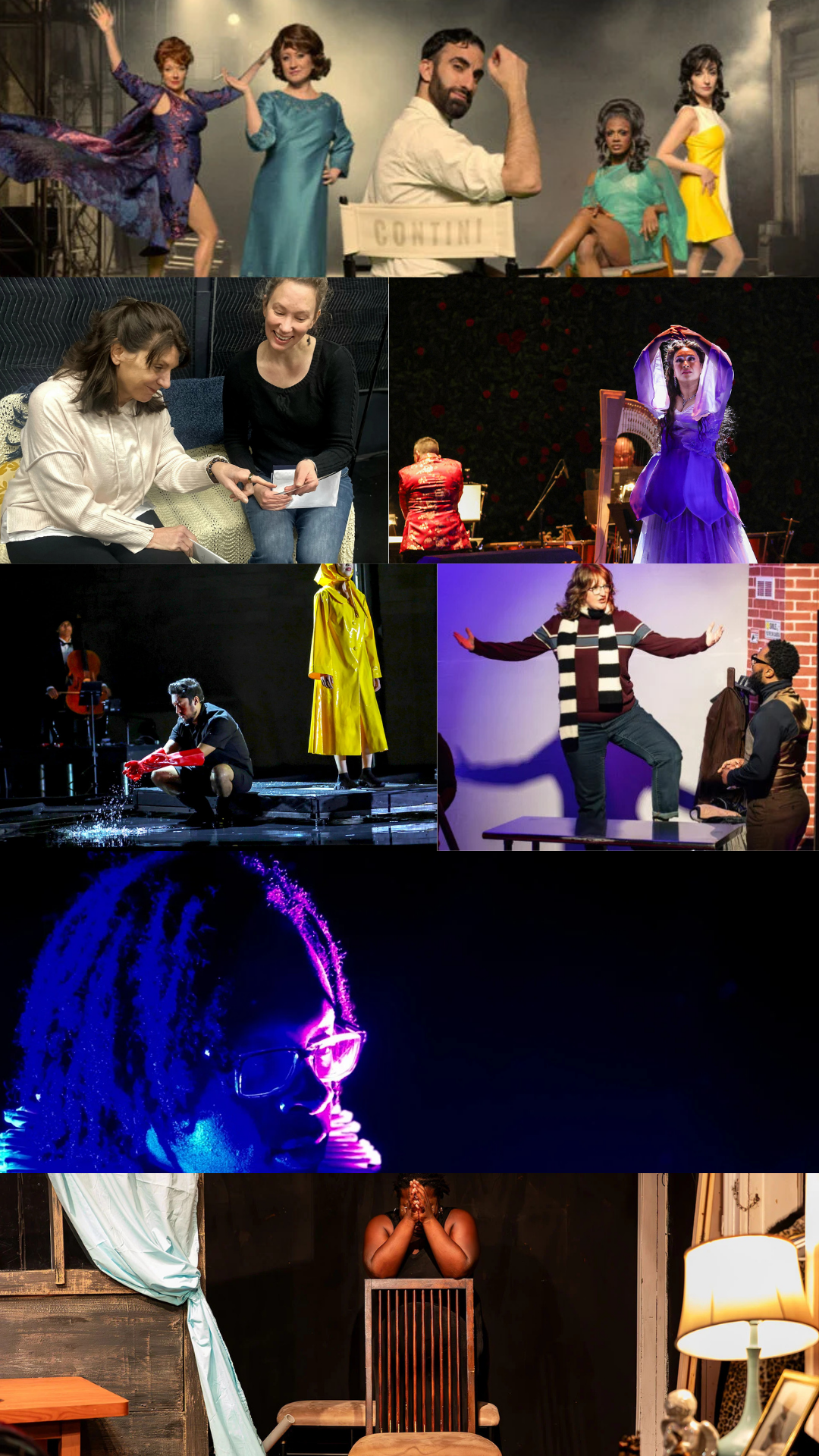
Categories
theatre

Sweets By Kate Preview Outtakes

The OSU School of Music is bringing a fascinating-sounding new opera from composer Griffin Candey, Sweets By Kate, under the auspices of director Lara Semetko-Brooks. One of the productions I’m most excited about this season.

I wrote a preview for Columbus Underground and the conversation I was lucky enough to have with Candey, Brooks, and music director/professor Ed Bak yielded what I thought was some interesting discussion on what this kind of new work means to students and the current state of opera. It ran too long for the outlet but I didn’t want it to be lost, so continue reading for those outtakes.

OSU Page: https://music.osu.edu/events/opera-sweets-by-kate-sp22

Columbus Underground preview: https://columbusunderground.com/opera-preview-opera-theatre-at-ohio-state-presents-ohio-premiere-of-sweets-by-kate-rs1/ 

Categories
Best Of theatre

Best Of 2021 – Theater/Opera/Dance

God, it felt good to be back in a room with people sharing the vibration of other humans on a stage, the feedback loop of energy and – dangerous as it sometimes felt – sharing breath. Starting literally two weeks after my second shot, I was lucky to see 30 shows and miracle of miracles, none of them were bad.

Every company that’s returned, making work, is bringing it right now – playing to their core strengths and stretching their muscles. Beyond what made this list? I saw crisp, vibrant shows from Evolution and Gallery. Otterbein and Short North Stage’s sister/adjunct company Columbus Immersive crafted productions that fully turned me around on shows I actively didn’t like previously. All four of the Actors’ shows and all four Red Herring productions left me talking about them into the night if not for weeks. MadLab and CATCO revealed the fruits of the energy and enthusiasm of new artistic directors (in the latter case after a year’s preview of fascinating streaming work). Imagine returned with a brand new, original musical with 19 cast members.

This town rang with the echoes of gauntlets dropping and examples of exactly what keeps me going out night after night. I enjoyed every minute of that energy and enthusiasm being back, even when the finished piece didn’t work for me. But the 10 here would have blown me away in any circumstances and it was a hard call whittling down to them.

Back to NYC for Under the Radar and sundry in January, great stuff on the books for the Wexner Center in Spring, fingers crossed we get closer to “back” with every month.

That NYC trip in January includes the reopened revival of Company we originally had tickets to for my 40th birthday in 2020 – there will be more in my year end music playlists, but I can’t imagine my cultural life without the shining influence of Stephen Sondheim who passed away the day before I started assembling this. I grew up steeped in musicals – the heavy influence of my mom and my grandmother – including some of his, including A Funny Thing Happened on the Way to the Forum, West Side Story and Gypsy. But when I discovered his mature work – starting with my massive love of Sweeney Todd and Assassins, it felt like I found musical theater pitched directly at me – this also gives me a chance to acknowledge and publicly express gratitude for the friends who opened that door: Doug Smith, Sean Klein (who we also lost this year, barely a week after we texted about getting the old gang together), Matt Porreca, and Robin Seabaugh; nothing would have fallen into place without each of you.

That said, I want to acknowledge the stellar online work that helped get me through the months beforehand, that gave me a taste, a little hint of the electricity that kept me going. Everything here is in chronological order and everything in person is in Columbus (except otherwise noted doesn’t apply this time, but I’m thirsty for when it does).

Online

Alicia Hall Moran, from her website

Online 

  • Rich Kids: A History of Shopping Malls in Tehran by Javaad Alipoor (The Javaad Alipoor Company, presented by Public Theatre’s Under the Radar) 
  • The Motown Project by Alicia Hall Moran (Presented by Public Theatre’s Under the Radar) 
  • Fragments, Lists, and Lacunae by Alexandra Chasin and Zishan Ugurlu (Presented by New York Live Arts) 
  • Blue Ridge by Abby Rosebrock (Presented by Play Per View) 
  • Revenge Porn by Carla Ching (Presented by Play Per View) 
  • Hymn by Lolita Chakrabati (Presented by Almeida Theatre) 
  • A Fire Shut Up in My Bones by Terrence Blanchard, libretto by Kasi Lemmons (Met LiveinHD) 

In Person 

Don Giovanni, photo by Terry Gilliam
  • Don Giovanni by Wolfgang Amadeus Mozart, libretto by Lorenzo Da Ponte (Opera Columbus), directed by Eve Summer – I’m not sure I could have picked a better return to live theater than this super-charged, intense reading of one of the very first operas I loved by a revitalized Opera Columbus. The safety measures had a fascinating thematic thrust and the performances, especially Jorell Williams in the title role and Amber Monroe’s Donna Elvira, singed my eyebrows off. I said “They amplify the deep loneliness of the libertine and his victims and the teeth-gnashing frustration of attempts at revenge and forgiveness… Having been 14 months since I’d been inside a theater, the longest stretch since I was 16, it was probably not unlikely I’d cry anyway. But it’s hard for me to imagine a better return to live performance than this dazzling Don Giovanni,” in my review for Columbus Underground
  • Carrie, book by Lawrence D. Cohen, music by Michael Gore, lyrics by Dean Pitchford, after the novel by Stephen King, directed by Edward Carignan (Columbus Immersive Theater/Short North Stage) – Growing up in awe of Stephen King’s debut novel, setting the tone for his character-focused horror novels to come, and simultaneously steeped in the lore of this musical adaptation, this came with the deck stacked against it. But Carignan and company not only hit every mark, they crushed those expectations. I took my mom as my plus-one, the reason I read Stephen King in the first place, and she was as dazzled as I was. In my Columbus Underground review, I said, “Carignan, Williams, and the cast never lose sight of the deep sadness at the heart of Carrie and the lesson that we can all be monsters with less of a nudge than we want to admit. And they make that uncomfortable identification into a riotous, quick-witted, wild carnival ride of an entertainment. It’s an alternately sticky-hot and brilliantly cold look at humanity perfect for the depths of summer.” 
  • Various Artists, Columbus Black Theater Festival (Mine4God Productions, presented by Abbey Theatre of Dublin) – One of my favorite events of the Columbus calendar returned in a slightly streamlined version, and resulted in one of my favorite conversations, with artistic director Julie Whitney Scott (I didn’t capture it as well as I would have liked in the article, a reminder to keep trying harder). After writing a preview, I paid to see this on my own dime. And while I didn’t see it all – I didn’t quite allow myself enough time for the rich marathon – the two hours I was in the Abbey sent me back into the night reeling and bending the ear of Anne and whoever else would listen. 
  • Eurydice by Sarah Ruhl, directed by Beth Josephsen (Actors Theatre of Columbus) – The classic Orpheus and Eurydice story was heavy in the zeitgeist this year and Sarah Ruhl has long been one of my favorite playwrights (her memoir Smile is on the bedstand as I write this). In the strongest Actors’ Theatre season in recent memory – I was also blown away by a Much Ado About Nothing, The African Company Presents Richard III, and a childhood favorite of mine The Secret Garden – this lovely, incisive meditation on memory kept rippling in my mind for weeks.  For Columbus Underground, I commented, “The modifications to the climax land with the thud of inevitability and surprised the audience enough at the performance I attended I heard gasps spring up around me. Josephsen and her cast balance the abstract and accessible elements of this modern take on one of the western world’s classic tragic love stories in a way that feels fresh, exciting, and powerful.” 
The Children, photo by Jerri Shafer
  • The Children by Lucy Kirkwood, directed by Michael Herring (Red Herring) – This locked-room drama, balancing intimate, personal apocalypses with a shadow growing over the world, featured blistering performances by Harold Yarborough, Nancy Skaggs, and Josie Merkel, and stood out in a season where I didn’t see anything weak from Red Herring. I said, “At every level, the characters face snowballing consequences of thoughtless choices, wounds never disinfected, from the contaminated water flowing in the power plant to old slights among each other, and have to deal with what they owe the next generation up to and including their use as sacrificial lambs,” for Columbus Underground
  • Let’s Hope You Feel Better by Samantha Oty (MadLab), directed by Sarah Vargo – MadLab came out on fire this year, taking some interesting chances. And this bitterly funny, whiplash-inducing sex farce was one of the best things I saw all year. Boasting killer – *rimshot* – performances by McLane Nagy and Tom Murdock at the center of a stellar cast, this crackled with reminders of the crucial energy MadLab brings to our theater scene. I commented in Columbus Underground: “The serious themes here – does a person have a right to die with dignity, what are the limits on the Hippocratic Oath’s “do no harm,” what do we owe the people in our lives – get a strong, thoughtful workout in Let’s Hope You Feel Better but nothing gets in the way of the play as a sharp, molten-hot, and sub-zero cold, often at the same time, entertainment.” 
  • Life Alert by Chris Sherman, directed by Michelle Batt (eMBer Womens Theater) – eMBer Womens Theater returned with a lovely series of shorts, Muses, and then this dazzling, delayed world premiere boasting a stellar cast with particularly strong performances by Melissa Bair and Josie Merkel. I said in Columbus Underground, “Sherman’s play is deeply concerned with who society considers disposable, whose work matters and whose doesn’t, and how demoralizing that gets. How deeply baked into so many of our consciouses those biases are, how they feel like pollution in the air we breathe and how a woman saying ‘Am I expected to sacrifice my life’ for others’ needs, putting it in the world out loud, is still a radical and necessary act. The ending gets a little more obvious and underlined than anything else but it’s a minor blip after two hours – with one intermission – that rang so true.” 
Mr. Burns, photo by Terry Gilliam
  • Mr. Burns: A Post-Electric Play by Anne Washburn with music by Michael Friedman, directed by Leda Hoffmann (CATCO) – More than anything else this year, this was the experience I missed so badly.  A play I’ve wanted to see since the Off-Broadway run but never made happen, and the first in-person taste of new CATCO artistic director Hoffmann’s work, this slapped me around in all the best ways. Crystallizing thoughts I’d had about storytelling, the strange era of the 20th century where we build art upon allusion on top of allusion, exploding the metaphor at the heart of all history and language. A tribute to the community of our actors, with standout performances by Scott Douglas Wilson, Jonathan Putnam, Acacia Duncan, and Shauna Davis leading a terrific cast. The production’s also – using the three spaces effectively – a reminder of the symbiosis of audience and performers. Anne and I spent the next two hours, right up until an excellent Chuck Prophet show you’ll be hearing about on my live music list, going over this in delighted detail. For Columbus Underground, I commented: “Like the best Simpsons episodes, Mr. Burns bulges with references and easter eggs but in the best sense: I felt a frisson of delight whenever I caught one – as I write this, the example jumping to my mind is Wilson delivering the play’s Sweeney Todd nod “Life has been kind to you” – but it didn’t bog me down looking for them. More, nothing felt tacked on or inessential. Everything adds to a piece I wish I could find the time to see again.” 
  • The Thanksgiving Play by Larissa Fasthorse, directed by Mark Mann (Red Herring) – Red Herring closed 2021 with a wild, ribald farce that reminded my how good their ear is for plays that have achieved some acclaim but might never have made it to Columbus otherwise. Fasthorse’s play made me laugh until my sides hurt, with a cast full of wild energy, especially Todd Covert and Elizabeth Harelik Falter. As I said in Columbus Underground, “Fasthorse’s play finds the perfect tenor for it, without getting too meta or cerebral, grounding the comedy in the ambitions and insecurities of a classic group of misfits, and it’s hard to imagine this getting a better production than Mann and Red Herring provide.” 
  • Hadestown by Anais Mitchell, directed by Rachel Chavkin (Broadway in Columbus) – I’ve been a fan of Anais Mitchell for many years, her song “Cosmic American” lighting the fire, and I loved the original Hadestown concept album when it came out. I hadn’t managed to catch this expansion on Broadway but my return to Broadway in Columbus with the touring production – featuring Audrey Ochoa who you’ll see on my playlists – reminded me how great, and how specific, that kind of big stage theater can be. How marvelous it is to see something in a packed house. So beautiful Anne and I had conversations about it with different people in different bars for the next two weeks, the only other play I kept wanting to dig into to that extent was Mr. Burns. For Columbus Underground: “Chavkin’s expansion of Mitchell’s song cycle takes one of the quintessential stories of both the transformative power of art and its limitations, its ability to change – and not change – the world and the hearts of both audience and creator, and imbues what could be a heavy slog, with all the fun of a carnival ride or a night at a wild party. As Marable sings while leading the cast in the curtain call, ‘We raise our cups to them.’” 
Hadestown, photo by T Charles Erickson

As always, thank you – to everyone who helped make these shows happen, who joined me for them, who talked with me about them after, and who reads this. Thank you so much.

Categories
"Hey, Fred!" live music theatre

Things I’ve Been Digging – 03/22/2021

Amina Claudine Myers, taken from livestream and edited

Amina Claudine Myers Solo

Keyboardist Amina Claudine Myers is the beating heart of the soulful Chicago avant-garde that enraptured me as a teenager and shaped so much of my tastes then and since. Arts For Art, the organization that helps present Vision Festival, has done more to keep the flame of this music strain alive when we can’t gather than anyone else. They outdid themselves with a birthday set by the great one herself on solo piano.

In the same room they’ve used for other streams, Arts for Art deployed their typically excellent sound design and production values. Every vibrant note rang out of the piano and washed over me, almost making me forget I was so many miles away, watching it on Youtube.

A long ballad with sparse, affecting lyrics floated on chords that seemed to play in the dappled Sunday sunlight when I watched this. A speedier, percussive, swinging piece used clusters of notes to make me feel the pounding in my chest a little more deeply. 

For this hour of her birthday, Myers treated us to gorgeous conversations with the universe, her intense history of the piano, and with the core goal of turning personal expression into a deeply felt sense of connection with her chosen community. I was lucky to even be in the room, virtually, for this reminder of everything I love about music.

L-R: Ashton Lambert and William Porter in the Otterbein Departments of Theatre & Dance and Music production of “Into a Lamplit Room: the Songs of Kurt Weill.”
Photo By: Mark Mineart; provided by Otterbein

Into a Lamplit Room: The Songs and Life of Kurt Weill produced by Otterbein University

I hadn’t checked in with Otterbein University’s virtual offerings this season until now, and I regret I wasn’t able to make my schedule such to write a full preview of their delightful Kurt Weill tribute, which aired last week.
I’ve long been a fan of Weill, in my case going back to a Grandmother who loved standards (and placed “September Song” so high it was practically the star on the Christmas tree) and the Hal Willner compilation Lost in the Stars I found on a campus record store run during High School. 

And I love what Otterbein does. Their focus on very traditional, entertaining storytelling with rock-solid standards for singing and dancing occasionally lines up with my more idiosyncratic tastes for some of my favorite experiences in town – in recent years they gave us a Top Girls and a Fiddler on the Roof I still talk about. 

Into a Lamplit Room, a 2013 revue devised by CCM Musical Theatre chair Aubrey Berg with arrangements by Julie Spangler, soars. I hadn’t realized how much I missed what they do until watching this a stellar young cast of Emily Baggarly, Lucy Breedlove, Nijah Dent, Ashton Lambert, Kate Maniuszko, Victoria Mesa, William Porter, Max Pinson, Hannah Schmidt, Tru Stites, and Dean Yurecka splash a new coat of paint on these time-worn chestnuts. I apologize I didn’t capture who sings what – my press data just says there are no named characters. If someone wants to fill me in with the comments or in an email, I’d appreciate it.

Under the expert hands of director Thom Christopher Warren and musical director Lori Kay Harvey, Into a Lamplit Room balances the rat-a-tat-tat percussiveness and wordplay of these songs with a necessary acid irony befitting the times they were written and just as useful a tonic today.

 The former glows like a knife on finger-snapping romps through “Schicklgruber” (with expert use of split-screen), “Economics,” and a riotous “The Trouble With Women” sung by the women in the cast. 

Not every experiment works. There’s an off-kilter “Mack The Knife” that tries too hard to put the sociopathic narrator in a social context and falls flat – though the gorgeous black and white footage of the cast at Westerville hotspot Asterix made me miss that bar with a visceral pang.

At its best, Into a Lamplit Room summed up what I love about these songs and gave me fresh ears. The cast’s women harmonizing and trading off on a brittle, wrenching “The Soldier’s Wife” stunned me. A breathtaking “Pirate Jenny” made the line “And you yell, ‘Why the hell do they spare that one?’” hit like an acid-tipped dagger. A duet on “Moon Faced, Starry Eyed” was ribald perfection and a crackling showcase for Stella Hiatt Kane’s always dazzling choreography. A bravura “Cry. The Beloved Country” excellently used footage around the Short North without detracting from the jaw-dropping singing.

I want to take a moment to highlight the stellar production values. Otterbein takes deserved pride in the technical side of their theatrical education department and Warren, Harvey, Kane, scenic designer Rob Johnson, and costume designer Rebecca White, with special attention to Avery Barrett’s stage managing, T. J. Gerckens’ lighting and the sound design team of Doc Davis and Kailey Miller, made something that sounds and looks every bit as good as it does in their big concert hall. It’s a tremendous achievement and a hell of a lot of fun.

Categories
"Hey, Fred!" live music theatre visual art

Things I’ve Been Digging – 03/01/2021

Clockwise from top left: Sarah Hollis, Chris Gardner, Naïma Hebrail Kidjo; taken from stream and edited

Iseult et Tristan by Pia Wilson

One of the great landmarks of New York underground experimental theater, La MaMa ETC, continues bringing exciting, vibrant work as it transitions to a digital space. Monday’s entry in the Experiments series was a brilliant example of how classic, almost archetypal stories can be repurposed and still resonate in our shared here and now.

Writer Pia Wilson resurrected the centuries-old love triangle of Iseult (Naïma Hebrail Kidjo), Margot (Sarah Hollis), and Tristan (Chris Gardner). She placed these old-as-time feelings in the milieu of contemporary New York with Iseult as a boxer, fresh out of rehab, under the tutelage of her retired boxer sister and her sister’s man struggling with some issues of his own.

Sympathetically directed by Susan Dalian in this zoom reading, the specifics of the setting hit with the concentrated fury of targeted punches as the characters danced around each other and their own pain. Lines drew blood like Iseult’s devastating “How do you do your life sentence in a cage of skin and blood? I don’t know how to do this life sentence.”

This is still viewable at http://lamama.org/iseult-et-tristan/ for I don’t know how long.

November at CCAD’s Beeler Gallery

My first art exhibit of the year and it felt like the first air in my lungs after being submerged in dark water. All the art institutions here are doing a great job with capacity limits, timed ticketing, contact tracing. Those steps make me feel mostly comfortable doing an activity that gave me the most joy before the pandemic even while I’m not as at ease doing it, always watching to see who is in the room and how close we are to one another. 

For the last several years, the Columbus College of Art and Design’s main exhibition space, Beeler Gallery, has carved out its own vital, unique space in our crowded art world. This multi-artist exhibition, November, was curated by alum Heather Taylor for the uncertainty and challenge of the 2020 election and pushed back due to a record-high wave of cases. 

These works stand up to the different but still present anxiety and tension of the moment because they were built already dealing with the layers of historical rage, sadness, and mistreatment. The unifying thread among these pieces is the sad certainty that what we all went through wasn’t a blip but a coalescence, a locus, a culmination; a clear-eyed desire to understand and respond to move forward.

Each of the artists brought something personal and sharp to this call and Taylor’s curation – and whichever preparators she worked with – shines in the way they speak to one another. Benjamin Willis’ gripping self-portraits in a warm, textured light played with Dawn Kim’s punching layers of The Apprentice soundtrack over a C-Span litany of contenders walking into Trump Tower in early 2017. 

Some of the highlights were full-room installations. Bobby T. Luck’s Drapetomania, or The Disease Causing Negroes to Run Away presented a breathtaking collage knocking the breath out of my lungs. Luck plays with our inability to connect and the sea of media buffeting us at every step and forcing a hard look at who chooses the prevailing images of a group – in this case, specifically black Americans – and why. 

Calista Lyon used old-school overhead projectors to dive into colonialism’s impact on the Crimson Spider Orchid, stitching together history and an almost apocalyptic warning in deep duende, amplified by the nostalgia of that humming light and the pink cast of the walls. 

There’s so much to unpack in this triumphant exhibition and it runs for one more week (through March 6, 2021). For details and to reserve timed tickets, visit https://www.ccad.edu/events/november 

Farewell, Ace of Cups: Muswell Villebillies on 02/27/2021

Anne rightly points out that one key to not losing your mind in this time when we can’t see each other up close is finding ways to mark the things we’d usually get together to celebrate or mourn. The value of that approach was affirmed and its limits tested this Saturday as Marcy Mays said goodbye to her time owning Ace of Cups.

For the last decade, Ace made itself indispensable to the Columbus rock and roll scene, filling a specific gap. We had great clubs since Little Brothers closed but we missed that size of room with a rock-centered booking approach but casting a wide tent (and using the best existing bookers in town) while also being open for bar hours and serving as a central clubhouse for many of us.

Ace of Cups’ greatest successes came from its unshakable faith in and deep love for our shared community – Columbus’s and the larger rock and roll scene. I lost count of the number of birthdays (including Anne’s and her Mom’s) we celebrated, the people we mourned, the out-of-town friends who wanted to come back, and the great times we shared. I also lost count of the number of musicians who wanted to play Ace – sometimes hadn’t been to Columbus in many years – because of their longstanding friendship with Marcy going back to her days in Scrawl.

That sense of community was all over this final show as Ace transitions to a new owner – Conor Stratton who comes highly recommended by every friend of mine involved and with a proven track record including the exciting Yellow Springs Springfest. First, by continuing a long partnership with neighbors Lost Weekend Records, owned by scene stalwart (and the gold standard for stage managers) Kyle Siegrist, for Lost Weekend’s 18th-anniversary celebration.

That community pumped through the veins of this show in the people playing too. The core of two of this town’s favorite cover-bands-for-people-who-hate-cover-bands, The Randys (Dave Vaubel and Jon Beard) and Popgun (Joey Hebdo and Tony McClung) teamed up with guitarist and producer of too many bands to count Andy Harrison in a gloriously fun Kinks tribute act, the Muswell Villebillies, aided by key members of New Basics Brass Band, Tim Perdue on trumpet and Tony Zilinick on trombone and sousaphone, on key tunes.

The players had a great time leaning into some of the great pop songs of the middle of the 20th century and the Kinks’ wide-ranging appetite for fusing disparate, sometimes discarded styles and making something new out of them along with the almost ravenous taste for melancholy in these songs made for an appropriate sendoff to a place we love so much.

That hunger for connection in tunes like “All of My Friends Were There” with its lines about “I’m thinking of the days – I won’t forget a single day, believe me;” “Picture Book;” “Party Line” with its warm paranoia, “I wish I had a more direct connection,” cut deeper than I expected, watching from my couch. 

The set drove home that longing – not being in the room to hug people and give it a proper goodbye as I did with other rooms I loved so much in their last days, Little Brothers and Larry’s here, Lakeside Lounge in New York immediately come to mind – on tunes tailor-made for it, Ray Davies’ wincing look at childhood on “Come Dancing” and a wrenching turn through one of the most beautiful songs of the 20th century, “Waterloo Sunset,” with guest vocals by Mays.

Part of what made this band work so beautifully is the best work of most of these players comes in reconfiguring and enlivening structures. There weren’t a lot of deconstructionist impulses on display and you don’t want it for this kind of repertory band. The key to breathing life into these classic songs is trusting them and loving them on their own terms and the distinct players’ skillsets and ability to find space within both the song and the unit of the band shone brightly.

McClung’s heavy post-Elvin Jones drumming – I’ve compared him to Columbus’ “Tain” Watts a few times – snaps everything into place here, with the supple rhythm section rounded out by Vaubel’s crisp, melodic bass and Beard’s blood-pumping surges on barrelhouse piano, silent-cinema organ, and beer-garden accordion. 

Within that framework, Hebdo leaned into the aggressive affectation of Davies’ phrasing, not making the mistake of trying to make things more natural to our ears, turning over the words and their rhythm as they were set in stone. Harrison’s crackling guitar and gets space to play as the horns lift everything up with punctuation and announcement.

I’ll miss you, Ace. I look forward to seeing what you bring us in the future. And I look forward to catching this band when I can dance with my friends and sing along in the open air.

This is still viewable for an indeterminate length of time: https://youtu.be/-6oNhPm-Yj8 

Categories
"Hey, Fred!" live music theatre

Things I’ve Been Digging – 02/22/2021

Seth Soulstein from Hotel Good Luck, image taken from official website of the production

Hotel Good Luck by Alejandro Ricaño, presented by Cherry and New Ohio Theater

I’ve liked New Ohio’s work for a long time – they’re always on the short list of companies I check for whenever I’m in New York – and they have taken their ethos of brand new work that simultaneously vibrates with the pulse of the avant-garde and packs a deep emotional punch and found a path to present that vital work in our distanced environment and sacrificing very little in translation.

The newest, striking example of this crucial work came in partnership with the Cherry Artists Collective. Hotel Good Luck, from acclaimed Mexican playwright Alejandro Ricaño, hit hard in a stream from an empty theater in Ithaca, with an empathetic translation by Jacqueline Bixler and directed by Samuel Buggeln.

Hotel Good Luck uses the vibration of that empty theater to braid the metaphors of parallel universes and the solitary DJ for maximum loneliness. Bobby (Seth Soulstein) hunches over his turntables, spraying patter into the void and spinning records like a French version of “My Generation” when he discovers a gateway into other universes.

The irrevocability of death is baked into the Minotaur’s maze Bobby runs, backed by haunting cello lines and the confounding guidance of his psychologist and quantum physicist Larry (Desmond Bratton, also composer of the original music he plays). 

The work also teases the frustration of figuring out where in the world – which world – any of us belongs. As Bratton declaims, right as answers start to appear in front of our hero but without solidity, “You be a disc jockey without listeners and I’ll be a therapist without patients! There is no original universe, Bobby. There is a universe you belong to but I don’t know how you get back there.” 

The two performances and Buggeln’s beguiling direction, creating enough space to drift through but always knowing when to focus, made this dazzling play sing.

From left: Adrian Lester, Danny Sapani, from Hymn. Image taken from official website of the production

Hymn by Lolita Chakrabarti, presented by Almeida Theater

My first – alas, so far only – trip to London made me fall in love with so much I expected to (The Tate Modern, The V&A, Southbank) and things that weren’t even on my radar before. Almeida is top of that latter list, a contemporary theater doing everything right, from the cafe to sightlines to starting on time to their selection of work.

Playwright Lolita Chakrabarti hit my radar through one of my favorite institutions, St Ann’s Warehouse in Brooklyn. In 2013, St Ann’s presented the American premiere of Red Velvet, based on the true story of Ira Eldridge, the first black American to play Othello on the West End, starring Chakrabarti’s husband Adrian Lester, fresh off a smoking-hot London run.

Rolling the dice on an actor I was a fan of and a presenter who’d never let me down, I was enraptured. Later, I saw and reviewed a very good production at Ohio State’s theater department, proving the play wasn’t reliant on just that symbiotic relationship between star and writer.

Almeida’s transitioned to virtual shows that pack almost the same punch as being in their theater and I was overjoyed to wake up in time to catch the new Chakrabarti play, Hymn, streamed at 10 am my time (3 pm in London), starring Adrian Lester as Gilbert, the only known son of a local dry cleaner and upstanding member of the community, and Danny Sapani as the half-brother he didn’t know he had until a notice of their father’s funeral brings their orbits into collision.

In a taut 90 minutes, Hymn delves into what family and friendship mean, and the tracks left by the enormous shadow of a charismatic and loved father. Those impressions hit the two men in different ways but confirm presence and absence can both be suffocating and everything we live through has to be navigated.

The piece is bookended – after a whiplash prologue of Benny (Sapani) at the end of his rope, roaring at a bartender – by two eulogies, each delivered by one brother. The struggle to sum up a life in a few well-chosen words reverberates through the acid-burned snapshots that string the rest of the play together.

Music strings together this sudden, late-life friendship, staring from Sapani’s righteous takes on an evocative “Lean On Me,” and a furious read of the ominous Temptations classic “Papa Was a Rolling Stone,” through ‘80s classics like Full Force’s “Alice, I Want You Just For Me,” “Rapper’s Delight,” and a big UK hit I had to look up, “Street Tuff” by Rebel MC and Double Trouble, even into an ironic twisting of “Gettin’ Jiggy With It.”

The script brilliantly lets the physicality of these two men imply whole lives we only see glimpses of and highlights how little we – especially men – know each other, how hard we have to dig. McIntyre (who also directed The Writer which I saw at Almeida) uses the sparse set to evoke space and time, melting the scenes together organically with almost imperceptible transitions until suddenly the transition is a crash.

Grappling with self-awareness sparks heartbreaking moments at the end of the play. A haunted Lester saying “It’s the silence that breaks your heart,” looking at a suit in plastic. Sapani, summoning all his strength, sums up his brother with “The pieces of your life you think are missing are not necessarily the right ones…Gil tried so hard to play his notes in the right order but there is no right order, is there?”

We all have to reckon with that lack of a right order to find any semblance of peace. Hymn knows the joy in trying to live, if we let ourselves, but never forgets how much work it requires.

Frank Lacy’s Trombonivers at Smalls, image taken from stream and edited

Frank Lacy’s Trombonivers at Smalls

One of the great things about Smalls in its public incarnation was – through their late-night jam sessions – they provided more public showing-your-ass stage time for young players than anywhere else in the current state of moneyed Manhattan, while still having the core house band be professional enough that if things went south it didn’t go on so long it drove the post-midnight crowd back up to 10th Street.

Great trombone player and bandleader Frank Lacy also has a reputation as a great teacher and encourager of young talent. For a vibrant Smalls set that brought tears to my eyes and made me dance around the room, he convened 8 fellow trombone players across the spectrum of experience – Corey Wilcox, Rashaan Salaam, Corey Wallace, Colman Hughes, Alevtina Wilcox, James Rodgers, Jacob Melsha, Maxine Troglauer – along with a sizzling rhythm section of Felix Moseholm on bass, Evan Sherman on drums, and Jon Elbaz on piano.

Appropriate for Fat Tuesday, that instrumentation soared through strutting New Orleans material with teeth like Ellis Marsalis’s “Nostalgic Expressions.” They also played with dynamics, harmonies like slow molasses seeping into a holy river then evaporating into colored smoke on a ballad original of Lacy’s. That ballad, with an insinuating, punchy bassline from Moseholm melted into one of the great ballads, Monk’s “Crepuscule for Nellie, with the horns capturing all that kaleidoscopic color, bouncing back and forth between dramatic punctuation and a silken waltz.

Probably my favorite – or at least most surprising – tune from the set was a funky dance take on Wayne Shorter’s “Palladium,” a highlight from the first Weather Report record I bought as a kid. Explosions of dive-bomb harmony with a thick, sultry bottom and a particularly smoking drum solo from Sherman which hinted at the Latin elements of the original without falling into cliches.