Categories
Best Of Playlist record reviews

Best of 2023 – Spaces

Here are some things that moved me in jazz, classical, and other instrumental (mostly) forms this year.

https://tidal.com/browse/playlist/bbe455af-3b1f-4a30-a42c-9a967bc93869

  • Wild Up/Julius Eastman, “If You’re So Smart, Why Aren’t You Rich?” – The ensemble Wild Up continues their vital grappling with/resurfacing the once-thought-lost work of composer Julius Eastman with a third volume containing several of the pieces on the original three-disc anthology I had the hardest time grappling with. The acidic overtones and sharp stabs on this sardonic, jagged piece are perfectly executed here, under the baton of Christopher Rountree, and reflect a world I see in a way I didn’t when I first heard the piece, also laying bare the sense of hope inherent in getting off the mat every time.
  • Wadada Leo Smith and Orange Wave Electric, “Nzotake Shange” – One of America’s finest composers and trumpeters, Wadada Leo Smith (Anne said, after watching a quartet set at the Stone, it sounded like “Falling down stairs” and she wasn’t wrong but in a good way), assembled a dream team of electric downtown-associated players for his remarkable record Fire Illuminations: guitarists Nels Cline, Brandon Ross, and Lamar Smith; bassists Bill Laswell and Melvin Gibbs; electronic musician Hardedge; percussionist Mauro Refosco; and drummer Pheeroan akLaff. Each tune reflects on an individual or a specific moment in history, and this piece, named for the poet and playwright who broke me when I read for colored girls 15 years after it premiered, exemplifies everything I find so intoxicating about the album, the deep groove and the perfectly refined and directed shots of fire spraying over it.
  • Irreversible Entanglements, “root ⇔ branch” – Irreversible Entanglements not only blew my hair back twice this year but also put on an even more assured and powerful second album, Protect Your Light. This piece, partly in tribute to jaimie branch, has been a favorite since I first hit play, and it’s still a balm, horns slowly waltzing through Moor Mother’s poetry and the deep, circular groove of Luke Stewart’s bass before erupting into a hip-swaying march. “Let the horns open the day and get free.”
  • Johnathan Blake, “Lament for Lo” – Drummer Johnathan Blake released his best record as a leader with this year’s Passages, and it’s full of great players. Still, I kept coming back to this drum solo intro/tribute to fellow New York drummer Lawrence “Lo” Leathers, both as a tribute to conciseness in a playlist more given to sprawling statements and a reminder of how much texture and emotional content one instrument being played alone can be.
  • Darcy James Argue’s Secret Society, “Last Waltz for Levon” – I’ve been waiting for several of the pieces on Darcy James Argue’s latest record, Dynamic Maximum Tension, to be collected on a recording for a very long time. This one, written in the wake of The Band drummer Levon Helm’s passing, I saw him do almost ten years ago in the basement theater of subculture, and he introduced it by paying tribute to Helm’s deep, instantly recognizable pocket. The Secret Society pays tribute to that slippery waltz that shadow-painting sense of time, in one of a record packed with gems – until writing this, the Duke Ellington tribute “Tensile Curves” was my choice for the playlist periodically, it was the Buckminster Fuller-inspired piece – and I can’t wait to see this band again at Big Ears finally.
  • Henry Threadgill, “The Other One: Movement III, Section 13” – Henry Threadgill followed one of the all-time great music memoirs, Easily Slip Into Another World, with a stunning chamber music record, The Other One, from which this is drawn. Not playing horn, just conducting, Threadgill’s affinity for tension and mystery in dynamics shines through loud and clear and his facility for strings takes on dimensions I wasn’t expecting.
  • Kali Malone, “Does Spring Hide Its Joy v2.1” – One of the standout performances I saw at Big Ears last year, composer and organist Kali Malone convenes a trio with cellist Lucy Raiton and guitarist Stephen O’Malley for a long record of beguiling riffs on melodic cells glowing with long tones.
  • Ingrid Laubrock and Cecilia Lopez, “LUNA MAROMERA” – Ingrid Laubrock put out several good records this year but I kept coming back to this duo record with Cecilia Lopez on electronics, Maromas, a continued investigation of the duo format from one of my favorite saxophonists, that also beguiled me when Anne and I saw the duo in Brooklyn in the Spring. There’s grit here, the ragged breathy tones and the long pulses that decay unevenly, that add to the inherent mystery.
  • Thandi Ntuli and Carlos Niño, “Lihlanzekile” – Producer/percussionist Carlos Niño has gotten a lot of deserved heat this year, I saw him anchor a brilliant trio with Surya Botofasina and Nate Mercereau at Winter Jazzfest in January, and my favorite record of his was this gorgeous duo album with South African pianist Thandi Ntuli. This closing track, translating to “It is clean”, was a piece I returned to over and over, an undulating landscape that changes every time I try to perceive it.
  • Andre 3000, “BuyPoloDisorder’s Daughter Wears a 3000® Button Down Embroidered” – The record that put Niño’s name into the wider American consciousness and which I liked a lot; though, as I discussed with Andrew Patton, it fits more neatly into the ambient genre or even downtempo electronica than the “flute jazz” box some people who didn’t know that was a genre tried to put it in. This track features the trio I mentioned above, creating alongside Andre Benjamin, and is one of the two tracks to feature flute instead of what I think is an EWI. It’s beautiful.
  • Allison Miller, “Fierce” – One of my favorite composer-drummers, Allison Miller, outdid herself this year with a small group record co-sponsored by a series of art spaces with Lake Placid Center for the Arts in the lead, Rivers in Our Veins. As always, she assembled a remarkable group of musicians with a deep history with her and each other: Jenny Scheinman on violin, Jason Palmer on trumpets, Ben Goldberg on clarinets, Carmen Staaf on keys, and Todd Sickafoose on bass. The intertwining – I think – Rhodes and acoustic piano comping under Scheinman’s solo that seems to burble out of Goldberg’s is a highlight of this track, and there’s not a dull track on the album. The interplay is really as good as it gets.
  • Damon Locks and Rob Mazurek, “Yes!” – Trumpeter, composer, and bandleader Rob Mazurek has worked with composer/bandleader/polymath Damon Locks in a variety of settings, most notably Mazurek’s shifting Exploding Star Orchestra, but distilling their two languages down to a duo on New Future City Radio paid off big, both on this record and seeing them live at Big Ears.
  • MEM_MODS, “Midtown Miscommunication” – One of my sleeper favorites in the good-for-all-parties category, a deep Memphis groove project from Paul Taylor (Amy Lavere, New Memphis Colorways), Steve Selvidge (Big Ass Truck, Hold Steady, Lucero), and Luther Dickinson (North Mississippi Allstars).
  • James Brandon Lewis and the Red Lily Quintet, “Were You There” – Saxophonist James Brandon Lewis reconvenes my favorite of his bands, the Red Lily Quintet – Kirk Knuffke on cornet, William Parker on bass, Chad Taylor on Drums, Chris Hoffman on cello – for a tribute to his Grandmother by way of paying tribute to the pioneering gospel singer Mahalia Jackson. Every song on For Mahalia, With Love, is a winner, with deep soulful grooves and stretching out without sacrificing any bit of these timeless melodies. The colors of the instruments coming in on this one remind me of Beethoven’s 9th in the best way.
  • Chris Potter, “You Gotta Move” – Saxophonist Chris Potter has a special affinity for the Village Vanguard. His newest record, Got the Keys to the Kingdom, is another stunning example. Potter and his powerful quartet – Craig Taborn on piano, Scott Colley on bass, and Marcus Gilmore on drums – tear into and pay homage to fascinating repertoire throughout the record, but I kept coming back to this glorious cubist-gutbucket take on Mississippi Fred McDowell’s “You Gotta Move.”
  • Mendoza Hoff Revels, “Echolocation” – Also blues-inflected but with open arms for everything since, the collaboration between guitarist Ava Mendoza and bassist Devin Hoff, featuring James Brandon Lewis in a more coiled, snarling mode than I’m used to, and Ches Smith’s powerful drumming, is the best avant-rock ensemble I’ve heard in recent memory. The liner notes referencing Ornette Coleman’s Prime Time and later Black Flag ring true, but this doesn’t sound like anyone else.
  • Tyshawn Sorey, “Seleritus” – Drummer and composer Tyshawn Sorey digs into the corners of the songbook with his killing trio of Matt Brewer on drums and Aaron Diehl on piano on Continuing. This deep dive into an Ahmad Jamal piece captures the space and silence of Jamal’s kind of shorthand in the common parlance but also captures the heaviness he always brought to the bandstand. A majestic tribute that plays everything these three have learned about the source and brought to their own work through the original.
  • Love in Exile, “Eyes of the Endless” – This supergroup of Arooj Aftab, Vijay Iyer, and Shahzad Ismaily exceeded every expectation I had going in as a big fan of all three players and writers. This piece has Iyer on Rhodes instead of the normal acoustic piano, and both the heavy strike and the ring of that instrument give the astonishing melody from Aftab a different, shimmering texture, like a cape being flung off and tossed into a bay.
  • Kurt Rosenwinkel and Geri Allen, “A Flower is a Lovesome Thing” – The gods of reissuing blessed us with a remarkable document of a duo concert in Paris in 2012 before Allen’s untimely passing. Two voices that shaped the jazz players my age and younger as much as anybody else explode this tune, one of my favorite Billy Strayhorn pieces, thoughtfully, out of love. Every note of this holds the next, waiting to be born, but not in a way that ever feels rote or obvious.
  • Aaron Diehl and the Knights, “Gemini” – Speaking of acts of love, it’s hard to compete with this one. The great Mary Lou Williams wrote her Zodiac Suite – which many jazzers play at least parts of to this day – as a through-composed chamber suite but it’s – I don’t think – ever been recorded as such. Masterful pianist Aaron Diehl restored the score and teamed up with NYC guardians of the contemporary canon, The Knights, for a beautifully recorded, definitive reading.
  • Roy Hargrove, “The Love Suite: In Mahogany – Obviously Destined” – Another gift from the reissue gods: a pristine recording of the 1993 Alice Tully Hall performance of trumpeter-composer Roy Hargrove’s piece The Love Suite: In Mahogany. This movement highlights both Hargrove’s sizzling horn playing and Marc Cary’s piano (that solo a couple of minutes in undulates with silky dynamism, but everyone – Jesse Davis, Ron Blake, and Andre Heyward comprise the rest of the horn section, Rodney Whitaker and Gregory Hutchinson keep things moving and held down as the remainder of the rhythm section – kills it here.
  • Yasmin Williams featuring Aoife O’Donovan, “Dawning” – Columbus was finally blessed with Yasmin Williams as the Wexner Center this year after several cancellations. The entire performance floored me, but I was especially intrigued by this new piece she introduced, revealing Aoife O’Donovan’s involvement. The studio recording delivers on all the promise that collaboration holds. Williams lets every note ring on its own, rolls feel like last year’s snow finally slipping down cliff sides, in a slow drag tempo perfectly suits O’Dovonan’s wordless vocals.
  • Chad Fowler/Zoh Amba/Ivo Perelman/Matthew Shipp/William Parker/Steve Hirsh, “Sentient Sentiment” – Chad Fowler, here on stritch and saxello, assembles a contemporary fire music supergroup and lets them loose in a frenzy of ecstatic, deeply thoughtful play on the five tracks of Alien Skin. The single show I was sorriest to miss in my town was Zoh Amba’s local debut featuring Chris Corsano, and I heard it was just as good as I’ve heard her in the past. Her lines exquisitely intertwine with Fowler’s and Perelman’s, particularly on this slow burn that blossoms into a line of explosions, as Parker, Shipp (both of whom appear elsewhere on this playlist), and Hirsh set up a baseline that shifts exactly as the music needs to.
  • Wolf Eyes, “Engaged Withdrawal” – I’ve been a fan of Wolf Eyes almost as long as I’ve been digging William Parker and Matthew Shipp, and their Dreams in Spattered Lines is another classic, with maturity as a blessing and not a crutch. This song creeps at a measured pace, Nate Young and John Olson leaving one another enough space and care, enough listening, to each make a proper impression on a record that has everything in its place and wastes no gesture, no moment.
  • David Lang/Cincinnati Symphony Orchestra/Sō Percussion, “man made” – The CSO (not that one, the other one), under their director Louis Langrée, teamed up with leading NYC contemporary troupe Sō Percussion for the first recording of David Lang’s stunning piece “man made.” Lang’s program note about the orchestra acting as translators and decoders, for the less traditional instrumentation and movement of the percussion quartet rings true, and that process – showing the strings – makes it all more magical rather than less.
  • Matthew Shipp, “The Bulldozer Poetics” – Shipp continues his growth into a clearer more approachable, even when the work itself gets thornier and more complex, like the world, piano style on the phenomenal solo album The Intrinsic Nature of Shipp. From the crush of those first notes, this driving piece sets up an entire world.
  • Curtis J. Stewart, “vii. Adagio from Johannes Brahms Sonata No. 1 Op. 78 (We Are Going to Be OK)” – Violinist/composer/arranger Curtis Stewart’s remarkable solo record of Love is one of those gargantuan acts of love I keep talking about and being drawn to. An expansive weaving together of pieces he’s been playing for years and knows well by composers who still speak to him, like Brahms and Ellington, and originals, played in tribute to his late Mother in her Upper West Side apartment. 
  • Kieran Hebden and William Tyler, “Darkness, Darkness” – This collaboration between Kieran Hebden, the electronic musician better known as Four Tet, and avant-Americana guitarist William Tyler, delighted me, particularly this take on the Youngbloods song “Darkness, Darkness.” It unfurls slowly, letting the listener glimpse it in pieces, coming into view like a slowly backing-up camera refocusing every few seconds and coalescing into a powerful groove.
  • Rob Moose featuring Phoebe Bridgers, “Wasted” – yMusic co-founder violinist Rob Moose teamed with a variety of singers on his dazzling Inflorescence EP. I kept coming back to this fragile, pulsing collaboration with Phoebe Bridgers. The strings are both stabbing and enveloping light here. “Standing in the parking lot, in the glow of a Rite-Aid sign, everyone I know is staying in tonight. I’ve been here before, just screaming at a cell phone. Seems like a couple of months went by, but it’s years ago.”
  • Gerald Cleaver, “Of the American Dream” – One of the finest jazz drummers, Gerald Cleaver, has been working up a second strain of electronica-based music that I think hit its most assured and together expression yet with 22/23.
  • JD Allen, “Mx. Fairweather” – JD Allen stepped into the ring with electronics on THIS without sacrificing any of that rich, rounded tone. His great trio – Alex Bonney on those electronics and effects, Gwilym Jones on drums – attack this ballad and the other gorgeous originals on the record with subtlety and laser focus.
  • Nubya Garcia, “Lean In” – This killer single from one of my favorite London sax players, Nubya Garcia, summons up some of the textures of the garage club music she grew up with for an infectious mix.
  • Sexmob, “Club Pythagorean” – Downtown New York institution Sexmob – Steven Bernstein, Briggan Krauss, Tony Scherr, Kenny Wollensen – brought longtime collaborator Scotty Hard (Prince Paul, Mike Ladd, Antibalas) into the fold as a full member on their electrifying The Hard Way. This track also features John Medeski on Mellotron for a powerful groove bursting with hooks.
  • Javier Nero, “Kemet (The Black Land)” – Trombonist-composer Javier Nero leads a large band – including guest Sean Jones on a crackling solo on this title track – paying tribute to the ancient African empire of Kemet. The wordless vocals and frenetic cymbal work from Kyle Swan set up gorgeous massed horns, and killer vibes work from Warren Wolf, and a sizzling solo from Nero.
  • Marquis Hill featuring Joel Ross, “Stretch (The Body)” – Trumpeter Marquis Hill approached the ways intention can give our lives meaning and thoughtless action/habits can decay us, in a way that made more musical sense than any other such attempt I can think of, with the riveting Rituals + Routines. This track features vibes player Joel Ross painting constellations around the tight quartet of Hill, Junius Paul, Micheal King, and Indie Buz.
  • Chris Abrahams, Oren Ambarchi, Robbie Aveniam, “Placelessness (Side B excerpt)” – Chris Abrahams (The Necks’ pianist) brought together this trio of avant-garde guitarist and electronics player Oren Ambarchi and drummer Robbie Aveniam for Placelessness, two extended tracks of throbbing minimalism. Those squiggles around the minute mark, creating an interference color between the circular piano figure and the stuttered drums, were my initial handhold into the world of this music, and they still excite me.
  • Greg Ward Presents Rogue Parade, “Noir Nouveau” – Chicago alto player Greg Ward brings together some of his town’s finest players under the Rogue Parade name – Matt Gold, Dave Miller, Matt Ulery, Quin Kirchner – for the delightful concept album Dion’s Quest. This cinematic piece builds slowly, like shadows creeping along a wall, and develops sharper edges and flashes of light.
  • Sara Serpa and Andre Matos, “Carlos” – The vocalist pushing the boundaries furthest in the jazz/improvisation world right now, Sara Serpa, found an exquisite foil in guitarist/bassist Andre Matos. They assembled a great band consisting of Dov Manski on keys, João Pereira on drums, Okkyung Lee on cello, and Sofia Jernberg on additional vocals for the astounding album Night Birds. This original builds up from cells, sharing some sound-world commonality with the last two tracks, and flies to another place entirely.
  • Lawrence English and Lea Bertucci, “A Fissure Exhales” – I’ve been a big fan of Lea Bertucci’s playing and soundscapes for years. This collaboration with field recordings and tape manipulation artist Lawrence English, a standout track for me from their record Chthonic summons a sense of glacial motion, like many of the instrumental records that drew me this year, brings an entire world into my view and keeps revealing new mysteries.
  • Chief Xian aTunde Adjuah, “Shallow Water (Tribute Big Chief Donald Harrison Sr., Guardians of the Flame)” – The power of the statement in Chief Xian aTunde Adjuah leaving his – up to now – primary instrument, the trumpet, behind in favor of his self-created Chief Adjuah’s bow and vocals, paid off big in his remarkable Bark Out Thunder Roar Out Lighting, a mythopoetic tribute to all New Orleans has given us and everything it can still be. This tribute to the great Donald Harrison, Sr., features electrifying playing from Weedie Braimah on percussion, Luques Curtis on bass, and Marcus Gilmore on drums, among excellent guests.
  • Dan Wilson, “Bird Like” – Akron-based guitarist Dan Wilson grapples with his influences on the terrific Things Eternal, leading a great quartet of Glenn Zaleski on Rhodes, Brandon Rhodes on bass, and David Throckmorton on drums. The fluid lines and gleeful interplay make this Freddie Hubbard classic vibrantly, wrigglingly, alive.
  • Matana Roberts, “a caged dance” – Anything Matana Roberts does is worthwhile, and the fifth chapter in her Coin Coin series, delving into her family history and examining its context in American and specifically Black American history, In The Garden, might be the best installment yet. Produced with aplomb by Kyp Malone (TV on the Radio) and a large band of excellent musicians, including Mike Pride and Ryan Swift on drums, Stuart Bogie and Darius Jones on reeds, and Mazz Swift on violin, there’s not a weak track to be found. The stuttering, walking-the-line-between early 20th-century jazz and mid-century free jazz intro of this tune grabbed me immediately, and the rest of the track never let go.
  • Angel Bat Dawid, “INTROID – Joy ‘n’ Stuff’rin”  – When I interviewed Angel Bat Dawid years ago, she was working on the multimedia Requiem for Jazz project. While I’m still chomping at the bit to see it realized, the record was maybe the most ambitious and moving jazz and jazz-adjacent piece I’ve heard all year. Massed vocal writing and those interweaving horns on this tune… it doesn’t get better. I’m still unpacking this Requiem and will be for a while.
  • Ambrose Akinmusire featuring Bill Frisell and Herlin Riley, “Owl Song 1” – Trumpeter-composer Ambrose Akinmusire assembled a trio of guitarist Bill Frisell and drummer Herlin Riley for the gorgeous Owl Song. This lead-off track is a tribute to all three players’ dedication to tone, space, and adventuring spirits.
  • Missy Mazzoli/Third Coast Percussion, “Millenium Canticles Pt 5, Survival Psalm” – The “Millenium Canticles” suite by Missy Mazzoli, one of my favorite composers and who makes one more appearance on this playlist, is the opening salvo to Third Coast Percussion’s dynamic Between Breaths and this final movement feels like you’ve just made your way to shore. A tribute to finding ways and reasons to live.
  • Beverly Glenn-Copeland, “Harbour (Song for Elizabeth)” – Beverly Glenn-Copeland’s first record in 20 years is a rapturous collection of art songs only he could write. The melody and lyrics of this song, in particular, wrecks me every time. “Don’t you know that you’re the deep, where water, earth, and fire meet? Don’t you know that when you sleep, life’s laughing, weeping?”
  • Mark Lomax II featuring Scott Woods, “Ho’oponopono” – One of the performances I was sorriest to miss in the fall of 2022 was the premiere of Columbus’s greatest composer Mark Lomax’s newest collaboration with poet Scott Woods, Black Odes. I’m still sorry I wasn’t in town to see it, but the record is a spectacular document of an opening into a new era for two of our finest artists. “What else do I need but this hem? / What else do I need to decolonize this kiss to make it a worthy offering?”
  • Missy Mazzoli/Arctic Philharmonic, “These Worlds In Us” – I’ve been a big fan of Missy Mazzoli’s writing since I heard her chamber ensemble Victoire on a blog, and a year or two later saw them in Chicago’s Millennium Park. Her work has grown more expansive, covering a multiplicity of forms, and finally, there was a collection under her name with a variety of uncollected orchestra pieces, Dark With Excessive Bright. This one, new to me, was an immediate favorite and falls into my usual tone: a prayerful/hope-for-the-world piece I like to end these playlists on. Thank you all for reading/listening. I love you.
Categories
Playlist record reviews

Playlist – May 2023

After a couple of months that felt like watching for a flower to bloom, but with the physical sensation of pulling teeth, I felt really energized and enthusiastic digging into stuff this time. That sensation carried over through a delightful return to Twangfest, full of not just my friends but some of my mentors and inspirations for loving music the way I do; where I wrote some of the later blurbs in the morning with coffee or in the airport waiting for my (delayed) flight, and now still riding that high a few days later. Thank you for listening, reading, or both. I love you all.

https://tidal.com/browse/playlist/3ebe3157-0377-4c01-b0cd-c0232238f508

  • Fred Davis, “Wine Hop” – Eli “Paperboy” Reed learned to play guitar with his father Howard Husock showing him tricks he’d learned from legendary Cleveland blues singer-guitarist Fred Davis (tragically murdered in 1988). Finding a tape of what are thought to be the only recordings Davis ever made, mostly with his band Dave and the Blues Express, Reed and his father cleaned up and released this stirring document (and also provided a marker for Davis’s grave). This grinding, growling jump blues is a perfect example of its type and a reminder to treasure the heroes in your town – and record what you can – because it may leave only memories.
  • Janelle Monae featuring Seun Kuti and Egypt 80, “Float” – This opening salvo from Janelle Monae’s The Age of Pleasure is a rich, powerful statement of intent, using the massed horns and power of Seun Kuti’s Egypt 80 – who my pal Andrew and I saw at the Alrosa Villa (RIP) – in a restrained, sensuous way. One of my favorite grooves of the year so far in a field with stiff competition. “I don’t dance; I just float.”
  • Amanda Shires and Bobbie Nelson featuring Willie Nelson, “Summertime” – The heads always knew, but it feels like it was only in the last 10 or so years of her life that pianist Bobbie Nelson received more of the just acclaim she deserved as brother Willie Nelson’s right hand/the key instrumental voice in The Family through so many changes. That reputation was helped by some duo records – and a heart-breaking joint memoir – and I think this collaborative record with fellow Texan, singer-fiddle player Amanda Shires, is going to help keep that reevaluation rolling. This gorgeous romp through the Gershwins’ “Summertime” stands up against any of the hundreds I’ve heard over the years. “Hush, little baby, don’t you cry.”
  • Valerie June featuring Bill Frisell, “Handsome Molly” – Tribute albums used to be kind of cast-off/throwaways, but the last year has given us some really stunning examples of the form, and I Am a Pilgrim: Doc Watson at 100 is another shining example. It’s full of beautiful performances that honor the thick, intricate rhythm and keening emotional content Doc Watson gave to roots music while also applying everything the artists know about the songs and themselves. This read on “Handsome Molly” with Valerie June’s intriguing, powerful vocal and Bill Frisell’s shadowy, echo-drenched guitar is a stellar example. “While sailing around the ocean, while sailing around the sea, I’ll dream of handsome Molly, wherever she might be.”
  • Shirley Collins, “Hares on the Mountain” – I’ve been a fan of Shirley Collins since my early Current 93 fandom, with David Tibet issuing a compilation of her work that sent me on a long and merry chase. And she’s still putting out astonishing work. Here, she revisits a mournful traditional she first recorded with legendary British folk guitarist Davey Graham, with subtle production from Ian Kearney, highlighting a haunting slide guitar. “If all you young men were fish in the water, how many young girls would undress and dive after?”
  • Peter Brotzmann, Majid Bekkas, Hamid Drake, “Balini” – Multi-reed player Peter Brotzmann injected a palpable energy into the European free jazz scene in the ’60s, and conjured a similar ferocity in the ’90s/early ’00s Chicago scene I first fell in love with. There have always been other textures and other passions in his sound – I remember being stunned by the solo record 14 Love Songs as a teenager – but he’s gone deeper into those in recent years, in his ’80s. The live record Catching Ghosts, captured at the 2022 Berlin Jazzfest, continues his investigations into Gnaouan music, teaming Brotzmann and longtime collaborator Hamid Drake with singer-guembri player Majid Bekkas.
  • Baby Rose featuring Smino, “I Won’t Tell” – This highlight from Baby Rose’s sophomore album Through and Through is one of my favorite examples of playing with classic disco tropes in a while. The clipped rhythm and throaty singing that at times recalls Nina Simone and early Macy Gray send me. “Some need emotion; I’ll take the thrill.”
  • Holy Tongue, “Saeta” – The debut full-length from London-based collaboration between percussionist Valentina Magaletti, multi-instrumentalist Al Wooton, and bassist Susumi Makai, layers on additional textures to the earlier dark ambient work. This opening track surges with ecstatic brass courtesy of David Wootton before shifting into a more contained intensity.
  • Fred again… and Brian Eno, “Secret” – I was vaguely aware of Fred again as a songwriter on those Brian Eno/Karl Hyde records, but I completely missed his Actual Life records until hearing Jon Caramanica talk about them on the New York Times’ Popcast. Of course, I loved them, they were right in my wheelhouse, and so I was primed for this full collaboration with Eno. I love the magpie energy, the way Fred strings together influences in ways that honor them but don’t feel handcuffed to history. I found the record as a whole to be hit and miss, but I loved this repurposing of some lyrics from Leonard Cohen’s “In My Secret Life” into immaculately carved and broken soundscapes for a long night of the soul. “Hold on, hold on, my brother. My sister, hold on tight. Finally found my whole life, so I’ve been marchin’ through the morning, marchin’ through the night. Moving ‘cross the borders of my secret life.”
  • Morgan Peros, “Last Straw” – Violinist-arranger Morgan Peros steps in front with this irresistible single highlighting her gifts as a singer-songwriter. I love the sudden flurry of drums toward the end before the strings and synths break the track open. “People talk about last straws: forgiveness, belonging, and betrayal. They load up their weapons, hide their loneliness, cling to a portrayal. I’ll be looking for beauty in the broken.”
  • The Baseball Project, “Journeyman” – This indie rock super group, Peter Buck and Mike Mills of R.E.M, Scott McCaughey from the Minus Five (and longtime touring member of R.E.M.), Steve Wynn from the Dream Syndicate, Linda Pitmon from ZuZu’s Petals and Golden Smog (and for many years, in Wynn’s Miracle 3), has extended into four records and this advance single from Grand Salami Time, co-written by Buck and Wynn, has a beautiful desert-sky melancholy running through it. “Always keep my bags packed. Never get too close to anyone. Long as there’s someone who needs me, down the road I go.”
  • The Gaslight Anthem, “Positive Charge” – It’s no secret to anyone reading this I’ve got a massive soft-spot for wordy anthemic rock, and that weakness most obviously manifests itself in my unabashed  (mostly) love for the Gaslight Anthem. This early single from their reunion period, produced by Peter Katis, plants Brian Fallon’s voice in the thick of the other sounds instead of dragging it in front. and highlights the shadowy spaces between the bright slashes of guitar, while also playing up the deep undertow of the drums. It feels thick, it feels heavy with life in a way I find really appealing. “I need a positive charge. Plug it into my veins, make me love this life again.”
  • Who Parked the Car, “Sunburns” – Parisian collective Who Parked The Car made a terrific album of low-key R&B that feels like sliding down those streets in the dark. The deep hookup between Thomas Salvatore’s keys and Alejandro Dixon’s drums reminds me of the best of Cory Henry’s ballads and Laura Wamble’s vocal drives the mood deep. “Stay one more day.”
  • Mark Chang, “Turning Pages” – For me, this strikes a similar mood as the last song. I couldn’t find much about this Hong Kong-based singer-songwriter but it feels like he’s merging a more direct emo singing influence with the emo textures that have been prevalent in R&B for the last decade.  “There’s no point in trying to change what no one can control.”
  • Naya Baaz, “Charm” – Naya Baaz, roughly translated as New Falcon, teams sitar player Josh Feinberg with jazz guitarist Rez Abbasi and a rhythm section of Jennifer Vincent on five-string cello and drummer Satoshi Takeishi, for a keening record fully of melodies that are hard to shake and explorations that always have a narrative propulsion. This title track is a beautiful blending of their styles I keep coming back to.
  • Fat Tony and Blockhead, “I’m Thinking ‘Bout Moving” – Like a lot of people my age, I fell in love with Blockhead’s beats on those early Aesop Rock records, and very shortly after a few of my favorite tracks on Columbus rapper Illogic’s Got Lyrics. I haven’t kept up very closely, but anytime something he’s worked on hits my radar, I’m happy to hear it and it’s always of interest. This pairing with Houston rapper Fat Tony is a hand-in-glove fit, humid and languid, perfect for this narrative I’m overjoyed I’m years away from being relatable. “When my girl over, one roommate look at her strange. He always wanna small talk and mispronounce her name. The living room littered with beer, cassette tapes and weed – all are his.” 
  • Rocket 808, “House of Jackpots” – Rocket 808, John Schooley’s solo electric guitar and vocals with drum machine project, are one of my favorite bands from recent Gonerfests, and this instrumental title track off the new record finds him dipping more into texture and expanse than the sharp jabs of songs he first wowed me with.
  • Rich the Kid featuring Rema, Arya Starr, and KDDO, “Yeh Yeh” – This new single from Atlanta rapper Rich the Kid felt like it fit with the heat-mirage distorted landscapes of the previous few songs. The choice of collaborators here – Nigerian singers Rema, Arya Starr, and producer KDDO – helps this soar: the blending of their different voices and effects moves me every time. “We come alive in the night time and won’t let it die. And all the drinks I pour in, is it more that we dance?”
  • Gotopo featuring Don Elektron, “Piña pa la Niña” – Berlin-based and South American-raised singer-songwriter Gotopop crafted a phenomenal, mysterious, multifaceted groove of a record with Sacúdete and this collaboration with Latin electronic music superstar Don Elektron is high on that list of songs I can never stay in a bad mood after hearing.
  • Cyril Cyril and the Meridian Brothers, “Diablos de Chuao” – The duo of Cyril Yeterian, formerly of Swiss-Cajun band Mama Rosin, and Swiss experimental music maven Cyril Bondi, team up with Eblis Álvarez in his Meridian Brothers guise (and if you haven’t had your ear bent by me about the Meridian Brothers’ live incarnation at Big Ears recently, trust that it’s coming) for this infectious slab of heaving, accordion-driven Latin soul.
  • Black Market Brass, “Rat Trap” – I believe it was my pal Andrew who tipped me off to this single, on the can’t-miss Colemine label, from recent favorites Black Market Brass. The serrated horn stabs and choppy guitar sum up everything I’m looking for from this great Minneapolis band, and this should be part of the mix at any party for the forseeable future, while also getting me excited for their next full-length in the fall.
  • The Whiffs, “I Didn’t Need You to Know” – This sunrise-bright slice of powerpop from the Kansas City band The Whiffs is a prime example of what that genre does so well. A cry in the dark and a catchiness that can’t be denied, one of many highlights on their terrific record Scratch ‘N’ Sniff.
  • Rodney Crowell, “You’re Supposed to be Feeling Good” – Since his career rebirth with The Houston Kid – and make no mistake, I love a whole lot of Crowell songs before then – Rodney Crowell has refined his work into a new plane of clarity and consistency. His new one, The Chicago Sessions, with Jeff Tweedy, like recent Tweedy productions for Mavis Staples and Richard Thompson, puts his voice front and center and finds the perfect, stripped-down textures for another great collection of Crowell work. This lilting apology/admonition originally (I think) recorded by Emmylou Harris on her landmark Luxury Liner album gets a lived-in treatment like a worn leather jacket you finally know every crease in, with some lovely frayed-around-the-edges soul falsetto from Crowell and some great guitar from Jeff Tweedy. “Soulmate, the blues are deceiving. It keeps us believing we’re on the wrong road.”
  • ANHONI, “It Must Change” – ANHONI harkens back to her early soul/orchestral pop influences on this beautiful new single, coming in advance of a new record My Back Was a Bridge For You To Cross, her first work billed as “And the Johnsons” since 2010. That soaring bridge, repeating the lines “That’s why this is so sad,” breaks me every time.
  • ARTEMIS, “Bow and Arrow” – Contemporary jazz supergroup ARTEMIS return with a second album, In Real Time, that maybe even betters their stunning debut. This track written by drummer Allison Miller and arranged by pianist Renee Rosnes boasts a stunning alto solo from Alexa Tarantino and sizzling trumpet work from Ingrid Jensen in an almost-telepathic ensemble.
  • Oval, “Ohno” – Seeing Oval (Markus Popp) in a tiny gallery space next to one of Columbus’s only (at the time) vegan restaurants, Dragonfly, was a mind-melting experience for me. I couldn’t believe “art music”, much less laptop music, could be that powerful and that almighty loud. He moved around and shaped broken sound – much of his early work came from a program that mirrored skipping CDs – in a way that tied back to an entire history to musique concrete and Fluxus but still felt like it was speaking to now. It blew my 20 (21?) year old mind. But while I was a big fan for a few years, I didn’t keep up. A notice of this new record Romantiq caught my eye and he’s added in lusher harmonies and deliberate tempos into that sense of the artfully broken for something truly beautiful.
  • Khanate, “It Wants to Fly” – Another act I saw around the same time I saw Oval, but in a more traditional dive bar venue, the much-missed High Five (it’s a “fancy” taco place now in the tradition of all things Columbus, at least Dragonfly and Neo are still good restaurants). The pulverizing slowness of drone/doom metal supergroup Khanate (featuring favorites of mine Tim Wyskida and Stephen O’Malley) didn’t quite connect with me in that club, that night, with a cold beer in my hand – or at least they had a hard time competing with OGs of the genre working a new pastoral set of turf, Earth, who they were on the bill with. But I kept going back to those records, and their out-of-nowhere resurgence album To Be Cruel blew my hair back in the best way. “We’re going down.”
  • Saint Harison, “ego talkin'” – UK singer-songwriter Saint Harison caught my attention with this stunning single – finding beauty in devastation in a way that’s certainly at an angle from the last couple of songs but felt like it shares emotional space with them. “Admittance is the key to start the healing right, but I didn’t want to eat that humble pie.”
  • Sunny Sweeney, Miko Marks, Rissi Palmer, and Tami Neilson, “Don’t Think Twice, It’s All Right” – This Mount Rushmore-style collection of some of the best singers and songwriters in contemporary country music teams up for a ferocious, slow-burn, soul-infused read on the Bob Dylan classic. “We never did too much talking, anyway.”
  • Jordyn Shellhart, “On a Piano Bench Getting Wasted” – This song by Nashville writer-singer Jordyn Shellhart had me hook, line and sinker with its first line of “With a loneliness that’s pervasive, on a piano bench getting wasted,” piano-driven with subtle flashes of handclaps and string bass for the first third before a fuller arrangement blooms, Shellhart’s questioning voice hangs in the center like a single film noir bolt of light.
  • Bob Martin, “Stella” – I learned about Bob Martin’s landmark 1972 album Midwest Farm Disaster from my pal Jerry DeCicca and a few years later I remember being on the patio of a club talking about the work he was doing to produce a new record of Martin’s material. The results of that, a beautiful record called Seabrook, finally came out this year in the wake of Martin’s passing, his first record in something like a decade. It’s a beautiful, wistful piece conjuring and dancing with ghosts; every curve and crack in Martin’s voice up front with Sven Kahns’ pedal steel curling around it like smoke. Get well, soon, Jerry; the world needs your wit and empathy, and we can use as many more records like this (and of your own material) as you have time for. “She said, ‘God, you should have seen him then, before the money and the fame. His face was like sweet Jesus and his hide was like a flame. But his life was all on fire and there was nothing you could say to hold him down in this small down and try to make him stay.”
  • Morgan Wade, “Psychopath” – I liked Nashville songwriter Morgan Wade’s last record, Reckless, but if this first single is any indication her new record in August (also named Psychopath) is going to be a world-beater. Swirling keyboards and pedal steel highlighting a slow, menacing stomp around a lyric full of declarations with a question stuck through them like the pin in a voodoo doll and questions that aren’t really questions. “You might be the death of me. Throw my ashes out into the sea; get drunk and give your eulogy. You might be the death of me.”
  • Layng Martine Jr., ” Try Me Again” – I grew up with Layng Martine Jr’s songs for Reba McEntire and Trisha Yearwood, but I have to confess I was more familiar with his son, the producer Tucker Martine’s, work. So this collaboration, Music Man, was a beautiful surprise. This easy swinging barroom slow dance plea for another chance exemplifies what keeps me going back to the record. “Well, I never understood just what you needed, ’til you were gone and I was all alone. Now I know the ways I’d love to touch you are just what you had wanted all along.”
  • Wally B. Seck, “Waka Waka” – I became a fan of Wally Seck through a conversation in a Lyft with a driver about his father Thione Seck, and the younger Seck continues to come into his own with one great single after another. The easy, sun-on-a-brook groove of this tune provides the perfect propulsion for Seck’s light, dancing tenor. “Baby say me deep in, I deep in.”
  • Summer Walker, “Mind Yo Mouth” – Summer Walker got my attention with her last record, Still Over It, and this new EP Clear 2: Soft Life is one classic after another. This miniature, with a silky arrangements, updates the slacker boy genre with an unsparing specficity delivered in a sweet and spiked tone. “They say, ‘Hush girl, mind your mouth; you don’t wanna turn him off.’ Well he might have to deal with it. See I pay my own bills, get it? Why I gotta be so soft? Charmin. I find it quite alarming ’cause I ain’t ya mama. Wanna be with me then you gon’ get up off your bottom.”
  • Ian Hunter, “Pavlov’s Dog” – Another easy-going groove and a perfect example of how a midtempo rock tune can still pack such a powerful emotional punch. This standout track from Ian Hunter’s solid front-to-back Defiance Part 1 teams him with Stone Temple Pilots’ core Robert and Dean DeLeo and Eric Kretz, and longtime vocal foils Andy York and Dennis Dibrizzi. “I’ve got a job to do.”
  • Scar Lip, “This is New York” – The creep of the groove, the ominous strings, and the tone of defiance on this felt like an expansion and escalation of the sound worlds of the last couple tracks Scar Lip’s bitten-off vocal delivery makes a meal out of this track with lines I’ve been quoting for weeks since hearing it.  “Don’t come to Queens with that shit because we ain’t fuckin’ with that shit. Get the fuck out, go to PA with that shit.”
  • Alvorada, “Decadência” – I couldn’t find much about this Brazilian band, whose name refers to the palace the president lives in, except that I don’t believe they’re the UK-based band of the same name who specialize in the instrumental form of choro music. This takes a Beatles-y vocal including harmonies and adds some sheets of shearing, acidic guitar.
  • Peso Pluma featuring Jasiel Nuñez, “Rosa Pastel” – Peso Pluma is one of the Mexican artists getting a large international office with updatings of the narcocorrido form; he emphasizes an aggressive rhythm that belies some rap and reggaeton influence but the songs also recall the classic genre tropes, like the smeared trumpets and the mournful guitar break on this gorgeous song.
  • The Ironsides, “Violet Vanished” – Great friend Andrew Patton turned me onto California’s cinematic soul band The Ironsides’s new record Changing Light over lunch a few weeks ago; we’d both been fans of their earlier singles and EPs. Taken as a whole, it’s a little plodding for me, but once I put it on, I have a hard time being made because they’re such gorgeous, lush landscapes to sink into. For pouring yourself a glass of something sweet and smooth, lighting a smoke, and luxuriating.
  • Brent Cordero and Peter Kerlin, “Affordable For Who” – This collaboration from the Psychic Ill’s Brent Cordero and Sunwatchers’ Peter Kerlin, also feels like it deals in landscapes but of a more psychedelic bent, rich with non-Euclidean geometry; meditative passages suddenly rupture into fields of soft beauty that is then beset upon with spikes. This track adds Aaron Siegel on vibes and drummer Ryan Jewell to flesh out the smooth corners and rough edges.
  • Lesley Mok, “again, all” – Continuing the trend of music made for contemplation that works equally well but very differently in practice, in smoky rooms and long walks through wooded passages, drummer-composer Lesley Mok’s made one of my favorite records of chamber jazz in a long time with The Living Collection. The murderer’s row of players she’s assembled doesn’t hurt either, with Adam O’Farrill’s menacing but vulnerable trumpet leading the charge, Cory Smythe’s piano like falling leaves and like the lightning around the thunderstom of Mok’s drums, Leon and Uesaka’s interlacing, battling reeds. Every part of this ensemble and record is magic.
  • Billy Woods and Kenny Segal, “The Layover” – I’ve talked plenty about New York rapper Billy Woods, but Maps, reinvigorating his collaboration with LA-based producer Kenny Segal (Abstract Rude, Freestyle Fellowship), is my favorite thing of his since the collaboration with Moor Mother a year or two ago. This track combines crunching drums with ice-knife piano, and a whisper of a horn section. “Before history, I made fire in the cave – midwifery, delivery a ball of rage. Hide and go seek: some never find a hiding place, some kids hid so well they never found a trace. It’s too late, but they came all the same; eyes begging for something for the pain.”
  • Califone, “comedy” – A new record from Tim Rutili’s shifting collective Califone is always a cause for celebration in my world, and Villagers is another home run. This woozy, cracked confession/indictment, drunk on horns and emboldened with sweet harmony vocals, is a perfect example of what I love about the album and their work in general. “Are you my enemy? Made to make you a little less alone?”
  • Whitney Rose, “Tell Me A Story, Babe” – At a similar nothing-to-prove tempo, Canadian singer-songwriter Whitney Rose, who I mostly knew from her work with Raul Malo, affirms the beauty and power of a straight-forward country record. Almost no one writes classic honky tonk ballads like this album opener anymore, and we’re all the richer for her example. “Tell me something from when you were a child. Just bring something up, babe, we have got all night.”
  • Marty Stuart and his Fabulous Superlatives, “Nightriding” – Marty Stuart is a shining example of following your own tastes, your own intuition, and especially your own curiosity. For someone who literally knows everyone in Nashville – and there are some judicious guest stars – he loves and honors this stable lineup of his Fabulous Superlatives (Chris Scruggs, Harry Stinson, Kenny Vaughan) not only by letting them stretch out on the various genres he dips into on Altitude but by crediting them as co-producers alongside the engineer Mick Conley. This song is a seductive slab of last call ’60s country-soul, done as well as anyone’s doing it these days. “Everywhere you look, read ’em like a book. Nightriding.”
  • Brandy Clark, “Up Above the Clouds (Cecilia’s Song)” – Brandy Clark’s 12 Stories knocked me off my chair when it came out about 10 years ago. I remember distinctly bending Ed Mann’s ear about it in a bar, and telling my other pal Brian Galensky at the bar he owned it contained the best Kris Kristofferson-style songs anyone was writing. Since then, she’s made great record after great record (“Pawn Shop” off the last one kills me” but this new eponymous album, produced by Brandi Carlile, comes the closest to matching that debut pound for pound without just working over that same ground. This mosaic of shattered heart-glass welded together with hope and a keen understanding of human nature, was the first song on the album to make me stop everything else I was doing and give it my full attention, but it’s not alone. “When your blue eyes are cryin’ ’cause love’s let you down; when a fool’s dream is dyin’ and the sunshine’s all run out, remember there’s a blue sky up above the clouds.”
  • Leyla McCalla, Joy Clark, Lilli Lewis, Sabine McCalla, Sula Spirit, and Cassie Watson Francillon, “Freedom is a Constant Struggle” – As usual, I end the playlist with a couple of songs worth of benediction or prayer. This Roberta Slavitt song, popularized by the Freedom Singers, gets a stirring read led by singer Leyla McCalla and a stellar collection of other voices. “They say that freedom is a constant dying. Oh Lord, we’ve died so long that we must be free. We must be free.”
Categories
Best Of Playlist record reviews

Playlist – 2022 Spaces

In contrast to the last playlist, these are compositions and performances I didn’t think fit as neatly into the categorization of songs. Usually – but not always – instrumental, usually – but not always – a little longer, a little more sprawling.

https://tidal.com/browse/playlist/3d5c5631-c345-46e8-8584-b749c9631177

  • Medicine Singers featuring Jaimie Branch, “Sanctuary” – I was a big fan of Yonatan Gat’s band Monotonix live, but they never quite gelled for me on record, but I’ve been extremely excited to see the various paths, curiosities, and enthusiasms he’s followed since breaking out on his own. My favorite is his collaboration with the Native American group Eastern Medicine singers on this stunning self-titled album. The record is full of guests, but every guest seems well-chosen, none more so than Jaimie Branch here, who adds a questing, majestic trumpet that feels like coming home to a place that doesn’t look quite the same.
  • Terri Lyne Carrington featuring Ambrose Akinmusire, “Rounds” – Drummer-composer-bandleader Terri Lyne Carrington’s New Standards project is one of the most important pieces of work enhancing jazz in years, with 100 great new compositions by women. The accompanying record, New Standards Vol. 1 finds Carrington assembling a crack rhythm section of herself, Kris Davis on piano, Linda May Han Oh on bass, Matthew Stevens on guitar, and a series of guests. This album-closing, spiky house fire written by one of my favorite pianists (and the artist we went to see the first time Anne and I went to the Village Vanguard together), Marilyn Crispell, features a jaw-dropping, dangling off the edge of the world trumpet solo from Ambrose Akinmusire.
  • Mary Halvorson, “Amaryllis” – Mary Halvorson made two of her strongest statements yet in 2022, with the mirrored records Amaryllis and Belladonna. I greatly admired the work with the Mivos Quartet on the latter – and it’s one of the things I’m most looking forward to seeing at Big Ears – but I couldn’t get several of the pieces with her crushing new sextet of Patricia Brennan on vibes, Nick Dunston on bass, Tomas Fujiwara on drums, Jacob Garchik on trombone, and Adam O’Farrill on trumpet out of my head, especially this title track on the other album. It’s a call to arms of raging beauty and a successful attempt to transcribe the beauty of the world, that moment where Halvorson’s comping mutates right behind O’Farrill’s blistering solo then takes off in another direction knocks me out.’
  • Loraine James, “Building Something Beautiful For Me (Holy Presence of Joan d’Arc)” – The posthumous renaissance of Julius Eastman continues to be a source of joy. This year brought a couple of artifacts of his own compositions and a breathtaking record of homages and refiguring from London-based composer/producer Loraine James. This title track uses the first piece of Eastman’s work I loved, the vocal intro and massed cellos of The Holy Presence of Joan d’Arc, and stretches the tones, playing with the colors so new light shines right through.
  • Brian Harnetty, “Let There Be a Moving Mosaic of This Rich Material” – Brian Harnetty is one of Columbus’s finest composers in a field where the bar is high. Over the last several years, his work with archives, especially with the past of Kentucky and Ohio, has provided a rich field he’s dug deep and made the best use of. His new record, Words and Silences, is a masterful look at the monk and writer Thomas Merton, using Merton’s own words and Harnetty’s settings to craft a mosaic look at the great man’s life. It’s a remarkable paean to stillness, attention, to getting off the merry-go-round of modern life and stopping to hear ourselves. Like all of Harnetty’s work, the insistence on meeting the materials where they are doesn’t negate the artist’s intention or vision, it opens it wide.
  • Bill Frisell, “Waltz for Hal Willner” – As I said in an earlier Parting Gifts playlist, Hal Willner’s tribute records were world-shattering to me, bringing together Leonard Cohen, Diamanda Galas, Harry Partch instruments in the service of Charles Mingus compositions, everything on Night Music… it all stunned me. And I’m so glad I got to see Willner once doing a piece with recordings accompanied by a small band, including Bill Frisell, where the affection between the two was radiating throughout the Stone. I love everything on Frisell’s new record, Four, pairing him with pianist Gerald Clayton, drummer Johnathan Blake, and Greg Tardy on clarinet and saxophone, but I kept coming back to this beautiful, elegiac waltz.
  • Kalia Vandever, “Passing Through” – Composer and trombonist Kalia Vandever assembled a nuanced, powerful sextet for an album of some of the best jazz compositions anyone’s writing now, Regrowth. Her striking trombone voice is front and center with gripping accompaniment from Immanuel Wilkins on alto, Lee Meadvin on guitar, Paul Cornish on piano (check his dancing solo that rises right out of a gorgeously gnarled stretch from Vandever), Nick Dunston on bass, and Connor Parks on drums.
  • Mark Lomax Trio, “Better Get Hit in Your Soul” – Another of the finest Columbus composers is also one of our best drummers and bandleaders, Dr. Mark Lomax II. For Charles Mingus’s centennial, Lomax and his longtime collaborators Dean Hulett on bass and Eddie Bayard on tenor team up for loving, well-crafted versions of a number of Mingus’s finest compositions. This is one of my favorite pieces on Trio Plays Mingus, with a long, melodic bass intro that flowers into a soulful masterclass in group interplay about a minute in. Three of our greatest players digging into material they’ve been working with as long as they’ve been playing music, with nothing to prove but always the questing spirit for finding something new, of surpassing their own expectations. This rises and rises but never leaves the soulful, earthy qualities of the original piece behind; you could sing every solo in this if you had the knack.
  • Tigran Hamasyan featuring Mark Turner, “All The Things You Are” – Armenian pianist Tigran Hamasyan first caught my attention for his intricate compositions so his album-length detour into standards, StandArt with a sympathetic rhythm section of Matt Brewer and Justin Brown, and guests was a delightful surprise. This gorgeous version of one of my favorite standards features the great tenor player Mark Turner and the lines Hamasyan and Turner weave around one another leave me breathless.
  • Moor Mother featuring Nicole Mitchell, “ARMS SAVE” – Moor Mother’s Jazz Codes plays with and jousts the jazz influences that have always been present in her un-classifiable work. This track, a highlight in a record full of them, featuring multi-reedist and composer Nicole Mitchell, uses the classic poetic device of sliding sentence fragments around, watching them spark against each other, in the night-sky-tapestry of reeds and a subtle beat. “I’m so hot, but no fans, but at the stake of all your demands, guess my presence never been felt.”
  • Mali Obomsawin, “Blood Quantum (Nəwewəčəskawikαpáwihtawα)” – Bassist and bandleader Obomsawin’s Sweet Tooth is one of my favorite debuts in a long while and this 11-minute album closer merges an Obomsawin composition with a contemporary Native American chant written by Obomsawin, Lokotah Sanborn and Carol Dana of the Penobscot Nation with arranging assistance from Lancelot Knight of Muskoday First Nation, and it’s a stunning, defiant, swinging meshing of jazz playing with horns from Allison Burik, Noah Campbell, and the record’s co-producer Taylor Ho Bynum, and a rhythm section including drummer Savannah Harris and guitarist Miriam Elhajli and the music of Obomsawin’s (and the nation’s) heritage.
  • Tarbaby featuring Oliver Lake, “Purple” – The collective trio Tarbaby – pianist Orrin Evans, bassist Eric Revis, and drummer Nasheet Waits – is one of my favorite groups in contemporary jazz, for many years at this point, and some of my favorite work of theirs also brings in the saxophone giant Oliver Lake. This simmering free ballad featuring trumpeter Josh Lawrence is a perfect example of form meeting intention and lighting the flame of beauty.
  • Jacob Garchik, “Bricolage” – Garchik’s new record “Assembly” fits together pieces of improvisations with a killing quintet of Sam Newsome on soprano, Jacob Sacks on piano, Thomas Morgan on bass, and Dan Weiss on drums, into new compositions in a really beautiful way that feels like it builds on his last few records, Ye Olde and Clear Line and playing with some ideas from his film scores while also staying in touch with his lineage as a jazz trombone player.
  • Bobby Previte, “GAMBLE” – One of my great joys this year was getting together in the same place with my childhood friend Mike Gamble and his wife, filmmaker Devin Febboriello, after a break of several years. So it was an extra joy to get to tell him how much I loved his work on Bobby Previte’s Nine Tributes for Electric Band and ask him if it was intimidating to be the guitarist on a record that pays tribute to so many other amazing players that Previte had worked with, from Sonny Sharrock to Charlie Hunter to Nels Cline. And, of course, with the humility I’d expect, the answer was, “Oh man, of course.” But it says something that not only did Previte – who’s played with everybody – call him for this task, but one of the tributes is dedicated to Gamble. And it’s a crushing piece, a key example of an artist being truly seen by another.
  • Sonic Youth, “In & Out” – I loved the collection of Sonic Youth compilation rarities and outtakes this year, In/Out/In, varying from fully formed works to rehearsal space jams. The wordless vocals on this and sly krautrock rhythms kept giving me joy in the months since its release.
  • Angelica Sanchez Trio, “Before Sleep/The Sleeping Lady and The Giant that Watches Over Her” – One of the great pianists working in jazz today, Sanchez assembled an all-star rhythm section of Billy Hart and Michael Formanek for this formidable trio album. The newly composed “Before Sleep” section blends so perfectly into the Ellington piece it feels like they were made for one another.
  • Lara Downes, “Magnetic Rag” – I was late to the party with Lara Downes, discovering her with last year’s series of work by black American composers, but I made up for the newness of that fandom with enthusiasm, so I was ready for her Scott Joplin record Reflections. This piece is a prime example of how a subtle arrangement by Stephen Buck and her light but decisive touch on the piano can remind us of the gorgeous accessibility, and the big riffs in these 100+ year-old songs, reminding us that Joplin helped define where American music was going and that the artistry of Downes is helping keep it alive.
  • Sweet Teeth, “City of Fern” – Sweet Teeth is a band I love in town because I can never quite get my finger on what they’re doing before they’re onto the next thing, but it’s always good. Brothers Stew (guitar, electronics, vocals) and Sam (cello) Johnson have seemingly voracious appetites for sounds, genres, and approaches. With Body Weather, they made a record as good as the times I’ve had seeing them live. This song sets up a deceptively placid surface and subverts those expectations over and over again for its seven-minute run time. “Ghost walk through a city of fern. All those bell shaped flowers try to sing.”
  • Charles Mingus, “Fables of Faubus” – Much as I love Mingus, I balked at the price of The Lost Album from Ronnie Scott’s on Record Store Day so I had to find it electronically after multiple people told me I was an idiot. This joyous and rightfully enraged romp through one of his classics is a key example of why this document is important and how his songs still glow 50 years after being recorded. A particularly good showcase for Jon Faddis on trumpet – whose other work did not wow me like he does here – and John Forster on piano about whom I knew nothing.
  • Wild Up, “Stay On It” – The Wild Up ensemble presents this favorite of mine of the Julius Eastman compositions, arranged by Christopher Rountree and Chris Kallmeyer, that captures all of its joy, its ebullient intensity, its encouragement to keep going.
  • Ethan Iverson, “For Ellen Raskin” – Iverson made his best, most consistent solo record with his Blue Note debut Every Note is True, making excellent use of a spectacular rhythm section of Jack DeJohnette on drums and Larry Grenadier on bass. I can’t count how many records I have with those gentlemen on them, but I can promise there’s not a bad one. And having three melodicists but who also know and love the simplicity of comping, of finding that pocket in a rhythm section, makes every tune on here shine. For me, this is one of the best melodies Iverson’s ever written, begging to be untangled, played with, and admired.
  • Fred Hersch, “Pastorale” – Speaking of melodicists, pianist Fred Hersch has been setting that bar high for decades, and his Breath by Breath, with a rhythm section of Drew Gress and Joachen Rueckert and the Crosby Street String Quartet, is another glowing example. An example of being perfectly lovely without being syrupy or contrived.
  • Mal Waldron, “You Don’t Know What Love Is” – I got into Mal Waldron after reading he was Billie Holliday’s last accompanist around the same time my late high school/early college self got extremely into Steve Lacy, who collaborated with Waldron for many years. I remember being in Portland and seeing a whole section of mostly solo Mal Waldron discs, getting two, and being blown away by both. Everything record of his I’ve ever found had something to teach me, and this year’s Searching in Grenoble from 1978 is a prime example. In excellent sound, in a transitional moment in his life, and it all comes out in a series of stormy pieces like this dissection of a favorite standard of mine, played with the thump of a martini shaker hitting the bar, then delicately as playing curls of smoke.
  • Peter Brotzmann/Milford Graves/William Parker, “Side B” – This year’s Historic Music Past Tense Future is a remarkable document of an explosive meeting between three artists who worked with each other over the years, all growing out of ’60s free jazz. Brotzmann always plays best with people with strong senses of rhythm and the storytelling drums of Graves bring out something different in his playing from the soulful pulse of Hamid Drake or the crunching surprise of Han Bennink. And Parker’s bass, that knew both so well, is a magic meeting place. This reminds me how lucky I was to live when all three of them walked the Earth and to make time to see Parker soon and Brotzmann whenever he next hits the states.
  • Anadol, “Gizli Duygular” – Anadol, the electronic music project of Turkish artist Gözen Atila has a sense of going inside oneself – the record Felicita is a favorite thing to write to – but there’s always a sense of play, the kind of joyful curiosity every meditation teacher always told me I should approach meditating with and the kind of joyful curiosity I try to approach writing and anything I absorb culturally (but often fall short of).
  • Immanuel Wilkins, “Fugitive Ritual, Selah” – Rising star saxophonist Immanuel Wilkins’ latest record for Blue Note, The 7th Hand, is a triumph, a connected suite where each piece makes its own impression. This composition features the core quartet of Micah Thomas on piano, Kweku Sumbry on drums, and Rolling Stones member Daryl Johns on bass, with subtle but gripping interplay and a melody that stuck with me as soon as I heard it.
  • Elvin Jones, “13 Avenue B” – Elvin Jones is very well recorded but there aren’t a lot of examples of him this early as a bandleader after leaving the classic Coltrane quartet. This smoking 1967 set from Pookie’s Pub in SoHo. This piece of classic hard bop features a prime example of his hook-up with bassist Wilbur Little, familiar from Jones’ late ’60s studio dates as a leader but also fiery playing from Joe Farrell, best known for his Return to Forever work, and pianist Billy Greene.
  • Taru Alexander, “Kojo Time” – Drummer and bandleader Taru Alexander’s Echoes of the Masters pays tribute to his inspirations, including his father Roland Alexander. This impassioned romp through a Roland Alexander classic highlights saxophonist Antoine Roney as the entire quintet does a spectacular job with the piece.
  • JD Allen, “This World is a Mean World” – JD Allen, with maybe my favorite tone of any working tenor player, continues his deep dive into blues and the roots of American music with Americana Vol. 2, using the same empathetic rhythm section of Gregg August and Rudy Royston, adding guitar virtuoso Charlie Hunter to the mix to powerful effect.
  • John Scofield, “Junco Partner” – Maybe the first jazz guitarist I was a fan of, John Scofield’s first solo guitar record, self-titled, is a mix of strong originals and classics. This version of the blues traditional – which I learned from the Clash then went back to the Dr. John, the Professor Longhair, the Louis Jordan – highlights Scofield’s blues background and the smoothness of the ideas flowing out of him.
  • Johnny Gandelsman, “Barbary Coast, 1955” – Violinist Johnny Gandelsman went to many of our great American composers for his rapturous and sometimes heartbreaking This is America. For this piece, for five-string violin, Terry Riley wrote a gorgeous homage to a seedy strip of San Francisco in the ’50s.
  • Antoine Fatout, “Roger’s Riff” – Columbus drummer Antoine Fatout has been making noise as a sideman – I first heard him with great guitarist Brett Burleson – and with his own Trio Fa2. This debut record teams him with two of Columbus’s treasures we sometimes share with the world – Roger Hines on bass, best known for a long stretch in Ray Charles’ band, and guitarist Stan Smith (Moacir Santos, Madrugada, Descendre) – for a swinging, melodic record. This is a favorite of mine but there isn’t a bad tune on the album.
  • Oren Ambarchi, “IV” – Oren Ambarchi’s Shebang is one of my favorite recent examples of composition by accumulation. The guitarist brings in collaborators, including drummer Joe Talia, Necks pianist Chris Abrahams, pedal steel player BJ Cole, 12 string guitarist Julia Reidy, and lets them do what they do in cells, slowly drawing it together into this final, jubilant movement.
  • Isaiah Ceccarelli, “Toute Clarte m’est obscure: V. Aubade” – I fucking love an aubade, though I knew the poetic form before I discovered the musical. This fifth movement of Ceccarelli’s Toute Clarte m’est obscure composition centers on Ellen Weiser’s voice that, along with Katelyn Clark’s organ, feels like the sun rising on your face.
  • Mike Baggetta/Jim Keltner/Mike Watt, “Everywhen We Go” – This title track of the new album from this terrific collaboration has a cool spaghetti western feeling, set up as much by Keltner’s crisp drum rolls and edge-of-the-cymbal work as Baggett’s echoing twang and Watt’s melodic heartbeat bass.
  • James Brandon Lewis, “An Anguish Departed” – Saxophonist James Brandon Lewis seems to pop up everywhere these days. This quartet is probably my favorite of the working bands, with Aruán Ortiz on piano, Brad Jones on bass, and Chad Taylor on drums, and Molecular Systematic Music Live captures them at the height of their powers. This mournful throb of a song features wrenching solos from Lewis and Ortiz.
  • Jeremy Pelt, “Still Standing” – Trumpeter Jeremy Pelt follows last year’s conceptual tribute masterpiece with a record of mostly originals, including this one, cinematic in nature as befits the title, and about getting down and playing. The tight band here includes Chien Chien Lu on vibes (check out that buoyant solo), Vicente Archer on bass, Allan Mednard on drums (throughout, his comping is a wonder), Victor Gould on piano, and Brittany Anjou on synth around Pelt’s razor-sharp trumpet sound.
  • Walter Smith III and Matthew Stevens, “Hornets” – In Common III, the latest in a series of collaboratively led records by saxophonist Smith and guitarist Stevens, with an all-time rhythm section of Kris Davis, Dave Holland, and Terri Lyne Carrington, is a perfect example of how tight and beauitful this kind of small group jazz playing can be. One of my favorite things in jazz is hearing how the group comes out of a solo and there are so many excellent examples in this concise five minute piece, particularly after riveting solos from Stevens and Davis, back to that infectious chorus with meaty transitions.
  • Dezron Douglas, “Coyoacán” – Dezron Douglas leads a killer band including George Burton on piano, Joe Dyson Jr on drums, and Emilio Modeste on sax, through a series of terrific compositions on his new Atalayan. This smoldering tune is a highlight on an album full of highlights.
  • Julian Lage, “Heart is a Drum” – Guitarist Julian Lage continues to refine his approach and expand his field of vision with every outing. On View With a Room, his most developed album yet, he re-teams with tight rhythm section Jorge Roeder and Dave King and adds influence turned peer Bill Frisell into the mix for ten great originals. This one grabbed me by the lapels almost immediately.
  • Kali Malone, “Living Torch I” – Composer Kali Malone trades in the pipe organ she’s best known for on Living Torch for a series of synthesizers in a trio format with trombonist Mats Äleklint and bass clarinetist Isak Hedtjärn. With that instrumentation, long, painterly tones are almost expected but Malone and the other two players use those in a way that’s as surprising and fresh as it feels natural and organic. These two pieces are like watching the shadows change as the sun rises over a canopy of trees.
  • Sarah Davachi, “Harmonies in Bronze” – One of my favorite contemporary composers, Sarah Davachi didn’t disappoint on the 2022 record Two Sisters. This pipe organ solo builds slowly and, appropriate to its name, takes on sculptural qualities. The entire record is stunning but this piece makes me want to simultaneously unpack it and just sit back and watch the light drip out of it.
  • Makaya McCraven, “Seventh String” – I had a harder time finding a way into McCraven’s sprawling In These Times, and I suspect seeing more of the material live (after the tastes we got in the excellent Wexner Center show) will snap it into focus. That said, I immediately loved a handful of songs, including this stormy slow jam.
  • Kaitlyn Aurelia Smith, “Have You Felt Lately?” – This opening track from LA based composer Kaitlyn Aurelia Smith uses elastic tones, sudden shifts in rhythm, and treated vocals to build a doorway to an entire universe, shimmering and shifting.
  • Dirty Bird, “The Question” – This loping house track kicks off producer Dirty Bird’s excellent Wagenmuzik album. The chopped, moaning vocal “Is it real?” repeats and folds over on itself around the hard but distant drums, like the soundtrack to a montage at sunset over a dirty street, day melting into night, one world rubbing up against the next.
  • Anna Butterss, “La Danza” – Anna Butterss, known as a bassist but playing everything on this standout track from her excellent Activities record, creates a soundworld that’s full of details and nuance but here never rising above a steady throb, a slow dance in the waning moonlight.
  • Tyshawn Sorey Trio, “Autumn Leaves” – I’ve seen Tyshawn Sorey a lot over the years in many contexts, mostly focused around his compositions or avant-garde improvisation (I still cherish seeing him in the trio with Ingrid Laubrock and Kris Davis at the late, lamented Cornelia Street Cafe). So it was a little bit of a surprise to see this record of standards with pianist (and Columbus native) Aaron Diehl and bassist Matt Brewer come out, but once I heard it it felt like the most natural thing in the world. Standards I’ve heard a million times, like this one, in versions that hold up to any I’ve heard by any of the greats.
  • RedmanMehldauMcBrideBlade, “Rejoice” – The second reunion record of this quartet that was so influential to me and so many others in the ’90s, LongGone, did not disappoint. This bouncing Joshua Redman composition gives he and Mehldau plenty of space to stretch and I’m especially in love with the almost taunting call and response inside McBride’s playing.
  • Tony Monaco, “Lush Life” – One of Columbus’s keyboard treasuers, maestro of the B-3 Tony Monaco, made his best record in years, Four Brothers, teaming up with saxophonist Eddie Bayard, guitarist Kevin Turner, and drummer Willie Barthel III. Here they take on maybe my favorite standard of all time, digging deep on a classic slow-burn rendition.
  • Charles Lloyd with Zakir Hussain and Julian Lage, “Tales of Rumi” – I enjoyed all three of the Charles Lloyd Trios records but I think my favorite was this collaboration with tabla master Zakir Hussain and virtuoso guitarist Julian Lage. The three approach the situation as equals and the equal weight on each instrument shines and lets the difference in tonal quality shine through this winding, snaking piece. As usual with these, I try to end with a prayer. Thank you all for reading and listening.
Categories
"Hey, Fred!" live music

Things I’ve Been Digging – 02/08/2021

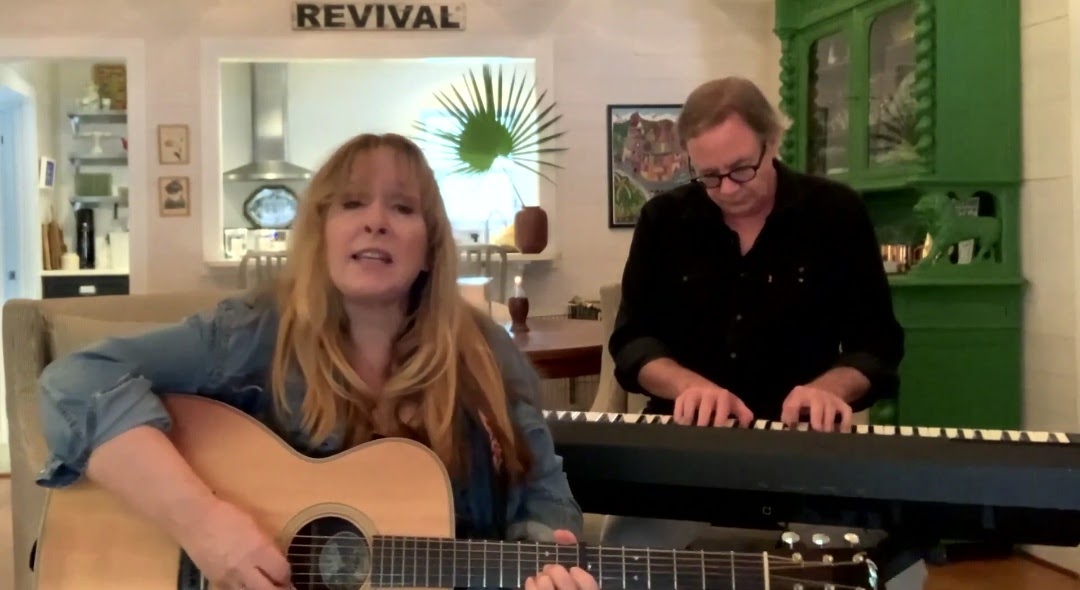
Gretchen Peters and Barry Walsh, taken from the stream and edited

Zeppelin Productions Tribute to Natalie’s

Unlike most of what I write about, this is still up through February 28. Donate and watch here: https://nataliesgrandview.com/events/zeppelin-productions-benefit-for-natalies/

I unabashedly want every venue to make it through to the other side of this. I want the places in my neighborhood that are clubhouses for other musicians, for loudmouths like me, where I’m likely to randomly stop in and discover something thrilling, like Dick’s Den and Ace of Cups to still welcome us all with a heavy pour and friendly faces. I want the places that make me feel old and bring stuff that’s setting kids’ hair on fire to keep giving us all hell – Cafe Bourbon Street, No Place Gallery (give to their fundraiser to relocate), all the house shows.

But it’s no secret there’s a special place in my heart for the Natalie’s family, Natalie and Charlie Jackson, but also their fantastic staff. As soon as they opened the first location in Worthington, this was a model of venue we just didn’t have in Columbus: the closest comparisons were to City Winery (at the time only in NYC) or the Jazz Standard, where sound and the listening environment were given the same kind of care as excellent food and service. 

And within six months, it became apparent we were on the roadmap of acts that hadn’t come to town since Dan Dougan’s Little Brothers closed: Big Sandy, Robbie Fulks, Scott Miller, Barrence Whitfield. Artists raved about it to other people. Soon, they established synchronicity with another booker I’ve talked about as the only reason Columbus is such a strong market for the kind of storytelling roots music I love: Alec Wightman and his Zeppelin Productions.

I’d follow what Wightman books anywhere, and I have, through the uncomfortably tight Columbus Music Hall to the booming Mannerchor, dancing with ghosts in the Valleydale Ballroom, all some of the best shows I’ve seen anywhere, in any city. But there was a unique and comfortable magic when he started bringing things to Natalie’s, even when I had to be on my game to ensure I wasn’t shut out of a seat.

Natalie’s was also hit harder than many venues because the pandemic came only a few months after they expanded into a second, larger, more flexible location. And while there were a few new-venue jitters, seeing a Zeppelin show – Chuck Prophet solo acoustic – early in 2020 made me hungry to watch this venue grow into the same kind of love I have for their Worthington room.

The pivot to live streams has been well-done in this climate, keeping the high sound and production values standards we know and love from their venues. And it speaks to the sterling reputation of both booker and room that Zeppelin assembled a who’s who of towering figures in roots rock and Americana to donate a short video to help out Natalie’s. 

These songs usually came accompanied with sweet words about the space. Many artists – including Tom Russell, who started Alec Wightman booking shows – brought brand new work. Artists did huge hits: Kevin Welch with a song he wrote for Chris Stapleton in a stripped-down, tough, and lovely version. Artists known for their high energy rocking, like Sarah Borges and Rosie Flores, brought more nuanced, shaded sides of their personae.

A couple of artists brought gleeful, surprising covers. Chuck Prophet and Stephanie Finch did “The Little Black Egg,” known to most music fans for its inclusion on Nuggets but with extra resonance as Ohio was one of the few markets it was a real hit. Ward Hayden and the Outliers romped through a joyful, winking version of Ernest Tubb’s “Thanks a Lot.”

And it’s maybe not surprising the performance reverberating in my bones a couple days later as I write this was by Bruce Robison and Kelly Willis. They did Robison’s song “Lifeline” off their first duo record, Cheaters’ Game.

Bruce Robison and Kelly Willis, taken from stream and edited

 As soon as I heard it, it was one of my favorite songs in a catalog packed with contenders. It’s prime Robison, a story song with enough left unsaid for magic to get in, about the ways we connect, like it or not – “There was a crackdown in the street tonight: the stars and the boys ended up in a fight. One step over the line, he says that his Daddy knows mine.” The ways we hunger to connect, “True love comes in the dark, by the rocks and the trees and the rocks in the dark.” The ways we fail to connect, studded with indelible images, “She used to curl up like the steam from a train.”

The taunting darkness as the last verse ends and the final chorus opens were what stuck with me, the tricky balancing act of hope as an act of survival. The way Robison and Willis sing “So damn hard to find…” with a delicate enjambment change the meaning into “Find you” then repeat “Find you” until the previous line almost falls away, getting louder and more powerful, no longer “Find a little lifeline but “Find you a little lifeline – a little bit of hope. In the deep, dark night, need a little bit of rope.” None of us can wholly save each other, and we can’t save ourselves alone, but we can all provide a little rope, in one way or another. 

Thank you, Natalie and Charlie and Alec – and Bruce Robison and Kelly Willis and all the other artists – for reminding me of that. I hope my small contribution added to that hope.

From left: Joe Lovano, Tyshawn Sorey, Bill Frisell. Taken from stream and edited

Tyshawn Sorey/Joe Lovano/Bill Frisell at the Village Vanguard

I’ve waxed rhapsodic about the live streams coming from the legendary Vanguard before, but this weekend’s performance exceeded even my outsized expectations.

I discovered tenor saxophonist Joe Lovano and guitarist Bill Frisell when I was in High School, a solid 15 years into their active careers. They hit creative strides – Lovano on Blue Note Records and Frisell with Nonesuch, as leaders – that period. My burgeoning love for their work led me to the first time I ever heard the drummer Paul Motian: a trio record in this same location that came out a couple of years earlier when I was 15.

This trio date at the Vanguard links these two giants with one of the brightest lights in jazz and chamber music on drums. Tyshawn Sorey’s playing carries the torch of Motian along with a hundred other influences he distills into something fresh, astonishing, and unmistakable. 

The same childhood friend who hipped me to Frisell, Mike Gamble, turned me onto Sorey right after college. I was an immense, drooling fan – anyone who’s read my work has seen him dot year-end lists in almost any year I managed to overlap an NYC trip with a performance of his: Fieldwork at the old Jazz Gallery with Gamble and our other High School buddy, poet Dave Gibbs; Paradoxical Frog at Cornelia Street; as a leader at the Vanguard.

This set vibrated with the spacious, organic magic that’s a trademark of these players. I frequently have a more challenging time paying attention to a live stream than being there in the room – too many distractions – this set had the opposite effect: I couldn’t pay attention to anything else except to write some notes down.

Moments that left my jaw agape, and me gasping came in torrents and also with the perfect, mesmerizing placement of a night’s sky full of stars. Sorey hitting three notes on the vibes, playing off Frisell’s comping, between some skittering, delicate and intense cymbal work, changed the whole texture of Lovano’s dark, lush melody. An unaccompanied Lovano rolling around a theme to amplify the right textures until the band comes in with a clatter and the tune turns into a tightrope knife dance.

A breathtaking set as good as I’ve ever seen anywhere, and something that makes me lucky for the few pleasures we have in these times, and so fortunate people make art despite it all.

Categories
Best Of Playlist

Best of 2020 Playlist – Spaces

This encompasses freer-form work. I once set up two basic “things” I’m looking for in music, all credit to mentor and friend Rich Dansky for helping me get to this: either a shot of emotion, a story; or a landscape I want to come back to and explore again and again. These are some examples of the latter category I loved in the darkness of 2020.

Continue reading for notes on each piece, basically post-show cocktail talk because you’d never hear me playing 90% of these on a jukebox.

Where to buy what’s available on Bandcamp, courtesy of Hype Machine’s merch table: https://hypem.com/merch-table/1LcoH1YHihwDfw0XxlFvBD

Categories
live music theatre

Things I’ve Been Digging – August 31, 2020

Andrew Cyrille Quartet, taken from livestream and edited

Music: Andrew Cyrille Quartet, The Village Vanguard 

Drummer Andrew Cyrille, who I first became a fan of with his exciting work with Cecil Taylor, led a mysterious, beautiful Quartet this weekend from the Vanguard. 

Cyrille’s supple feel with bass player Ben Street buoyed these songs like an abstracted nature painting. Throughout, the interlocking front line of David Virelles on piano and Bill Frisell spun wildly original and wholly organic melodies and harmonies. Highlights included Cyrille’s shadowy ballad “Special People” turning into crashing waves; Frisell’s tantalizing slow-burn “Worried Woman;” Frisell’s “Drink” with its slinky melody, moves from a leisurely build to a classic 60s saloon groove littered with spikes and a barely sublimated frenzy.

Theater: The Jacksonian by Beth Henley, presented by The New Group

With this New Group production in 2013, Beth Henley proved her sharp, sweltering take on the South is as sharp as her heyday with Crimes of the Heart. As a benefit directed by Robert Falls, reunited most of its cast for a riveting return to the poisonous swamp of the human heart in 1964.

I can’t think of an American actor who does a better downward spiral than Ed Harris and Perch, the disgraced dentist making one last swing at getting his life together in the eponymous hotel, is a remarkable role for him to sink into. Amy Madigan as his estranged wife and Juliet Brett as his neglected, confused daughter are powerhouses. Bill Pullman, riffing on Flanner O’Connor’s Misfit, finds the sadness in a lifetime of malevolence, and Carol Kane (stepping into the shoes of the late, great Glenne Headly) is a vibrant, exciting foil. 

The Jacksonian is a classic potboiler with teeth and language that crackles and steams; this reading increased my regret at not catching it on a New York trip that year tenfold.

Optic Sink, Screenshot from Livestream

Music: Goner TV episode 3, featuring Optic Sink

Goner Records looms large in the landscape of music I enjoy. Through their record label and store, their friendships with and promotion of Columbus bands, and their annual festival, they’ve been my gateway to Memphis as a tangible reality I love every bit as much as the mythopoetic Memphis I grew up with as a vision and a dream.

They’ve done spectacular work keeping this international community I’m on the fringes of but love so much connected in these distanced times: teaming with other labels like Slovenly for day-long blowout livestream marathons and, more recently, their every other Friday Goner TV broadcasting from the store and giving us a glimpse into Memphis and what’s coming next on the label.

This week’s was my favorite yet, previewing the debut album from Optic Sink with a live in-store. In NOTS, one of my favorite, most exciting, cerebral without being dry, bands of the last 10 years, Natalie Hoffman’s guitar and vocals lead the band’s cracking, dark narratives and off-kilter, surprising, prickly earworms. 

With Optic Sink she moves to keys and the cracked-mirror science fiction vibe from the NOTS mix comes to the fore with longer, slower, murkier songs. But these new tunes still have a dancefloor punch and pop nougat wrapped in their intriguing mystery; based on this evidence, I’m very excited to hear the record. 

This Goner TV also featured Hoffman’s Optic Sink bandmate Ben Bauermeister in his solo electronic guise A55 Conducta which was even more what I didn’t expect from Goner – though I know the mutual affections run deep with Bauermeister’s work in bands like Magic Kids and Toxie – but it was a fucking party.

This also featured video from longtime Goner cohorts Quintron and Ms. Pussycat, multidisciplinary Memphis artist Don Lifted, and made me miss the city it’s based in terribly.