What a marvelous year for Visual Art. 125 or so exhibits, over nine cities, giving me peace or disrupting that peace. Leaving me unable to speak or filled with an irrepressible urge to tell someone, everyone, about them, or sometimes both at the same time.
All photos are by me, with no claim made to the underlying rights to the artwork. Everything listed here is in chronological order based on when I saw it (or in some cases, like the Wexner Center, No Place Gallery, and Streetlight Guild shows, based on the first time I went).
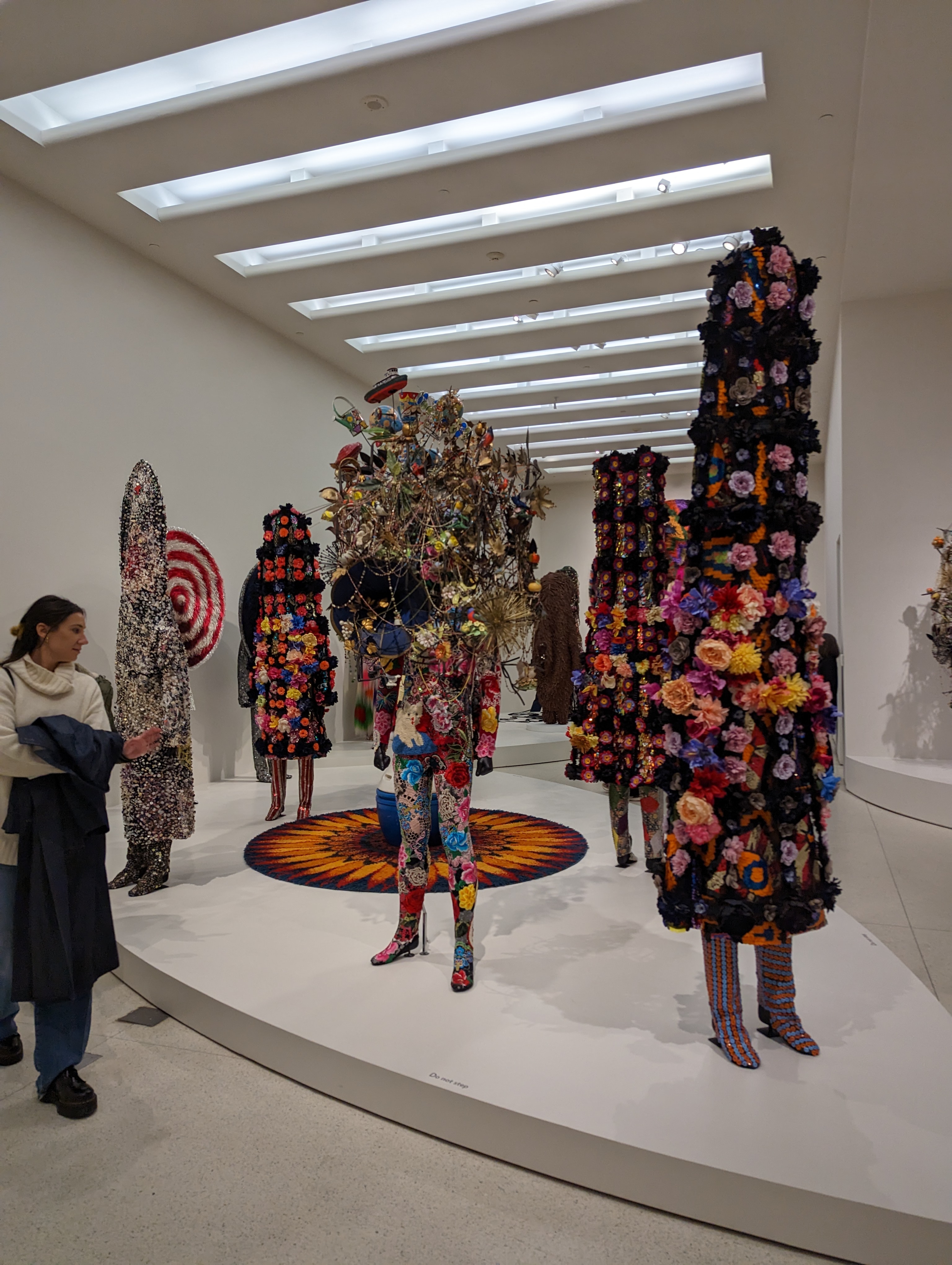
- Nick Cave, Forothermore (Guggenheim, NYC) – I was overjoyed that my APAP/Winter Jazzfest/work trip overlapped with the last weeks of this dazzling retrospective of the American artist Nick Cave filling the side galleries of the Guggenheim. There was so much to love in this massive collection showing off the various sides of his work. My favorite part of this was the way it led the audience through the thornier, more jagged pieces of his work before the catharsis of the better-known sound suits which really underlined the sound suits’ beauty and joy as an act of resistance, of asserting his power and dignity.
- Felix Gonzalez-Torres, S/T (David Zwirner, NYC) – Another more expansive look at an artist I’d been a fan of for a very long time. This retrospective took over three of David Zwirner’s massive gallery spaces, including finally assembling two pieces (both labeled “Untitled” with different subtitles) had had fully planned before his death. Gonzalez-Torres’ ability to transmute the basic objects of our lives, to abstract and expand, has never been as moving for me as it was on this blustery New York afternoon. Just recalling, it clicked through my bones like pins snapping into a lock.
- Susan Phillipsz, Separated Strings (Tanya Bonakdar, NYC) – Susan Phillipsz’ film of the story of Pavel Haas, a composer who wrote and performed a piece while in Auschwitz and was killed anyway, played on a two-channel installation and a sound installation isolating the violin part on multiple speakers in a bright room upstairs, floored me. This is what I want from most installation art and only seldom get.

- Tiffany Lawson, Contemporary Colored Deluxe (Streetlight Guild) – Streetlight Guild is killing it in every respect. Music, poetry, education, but especially for visual art: this is the kind of permanent, visible home Columbus’s fertile black art scene hasn’t had for a while, and the crowds, whenever I come, seem to back me up at how much we’ve all missed it. I liked everything I saw here, but this concentrated dose of Tiffany Lawson’s witty, nuanced, narrative-informed-but-never-constrained collage work was one of my favorite discoveries (I know, I know, I should have known more of her work earlier – sometimes I’m slow) of the year.
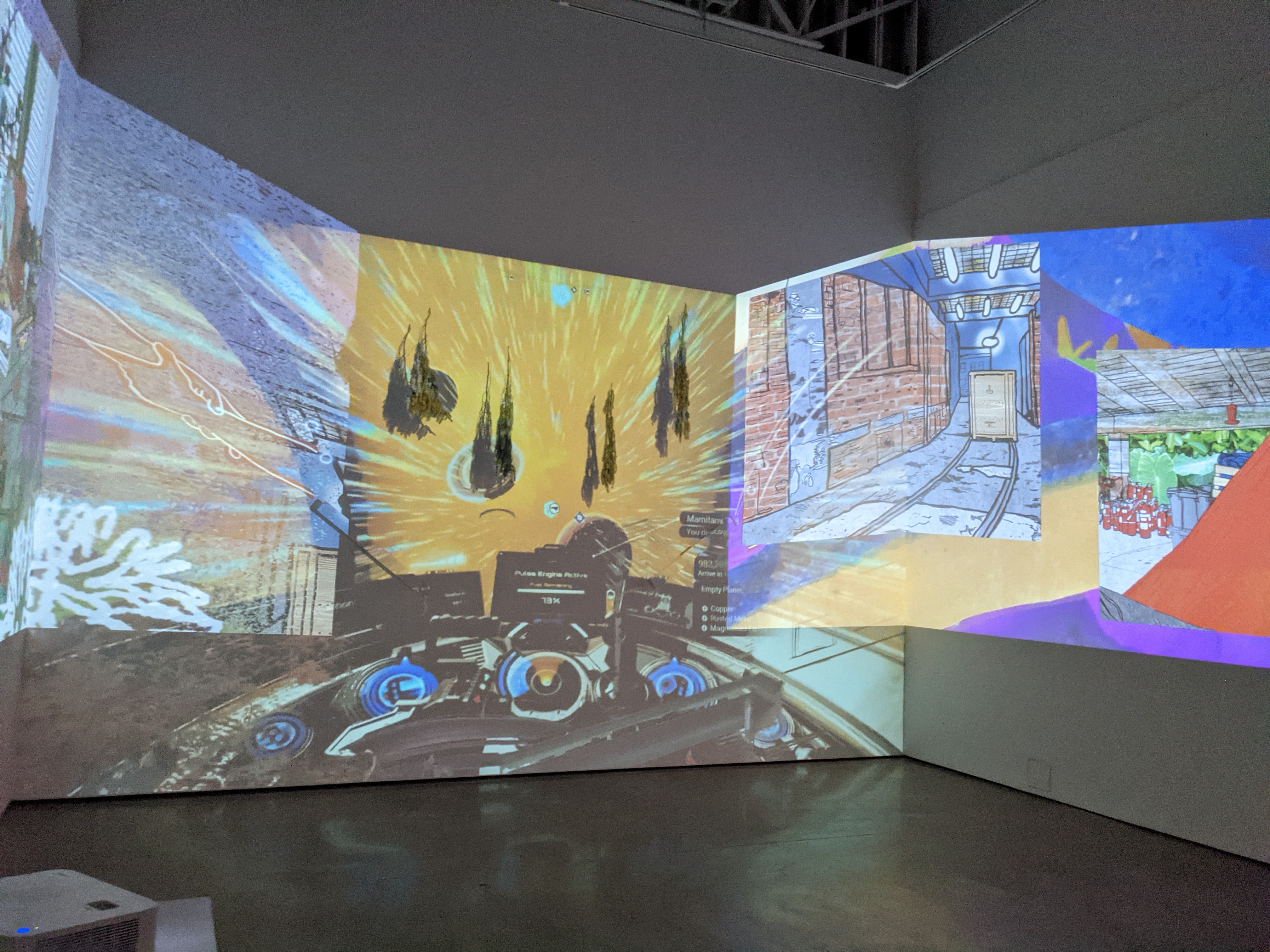
- AK Burns, Of Space we are… (Wexner Center) – All three of the spring exhibits at the Wexner Center worked for me, but the A.K. Burns – showing all four of his Negative Space films and building installations and ephemera around them, situating the storytelling in these moving, chilling environments – just stuck to my ribcage and never quite let go. This as a whole – believe I came back to watch each movie in the galleries – fulfilled the promise I grew up searching for in science fiction and only found fleetingly.
- Bobby T. Luck, Was it Your Trigger Finger? (Pizzuti Collection at Columbus Museum of Art) – This two-room installation skewered vintage US military recruiting propaganda, institutional racism, government bureaucracy, and so much else in a way that balanced its wit with tear jerking, landing perfectly placed piledrivers.
- Sydney G. James, Girl Raised in Detroit (MOCAD, Detroit) – Another look into the past, both James’ personal past and a wider social and political past, balancing a tear-jerking and nostalgic installation with enormous and unsparing mural-style tributes. Breathtaking and bracing.
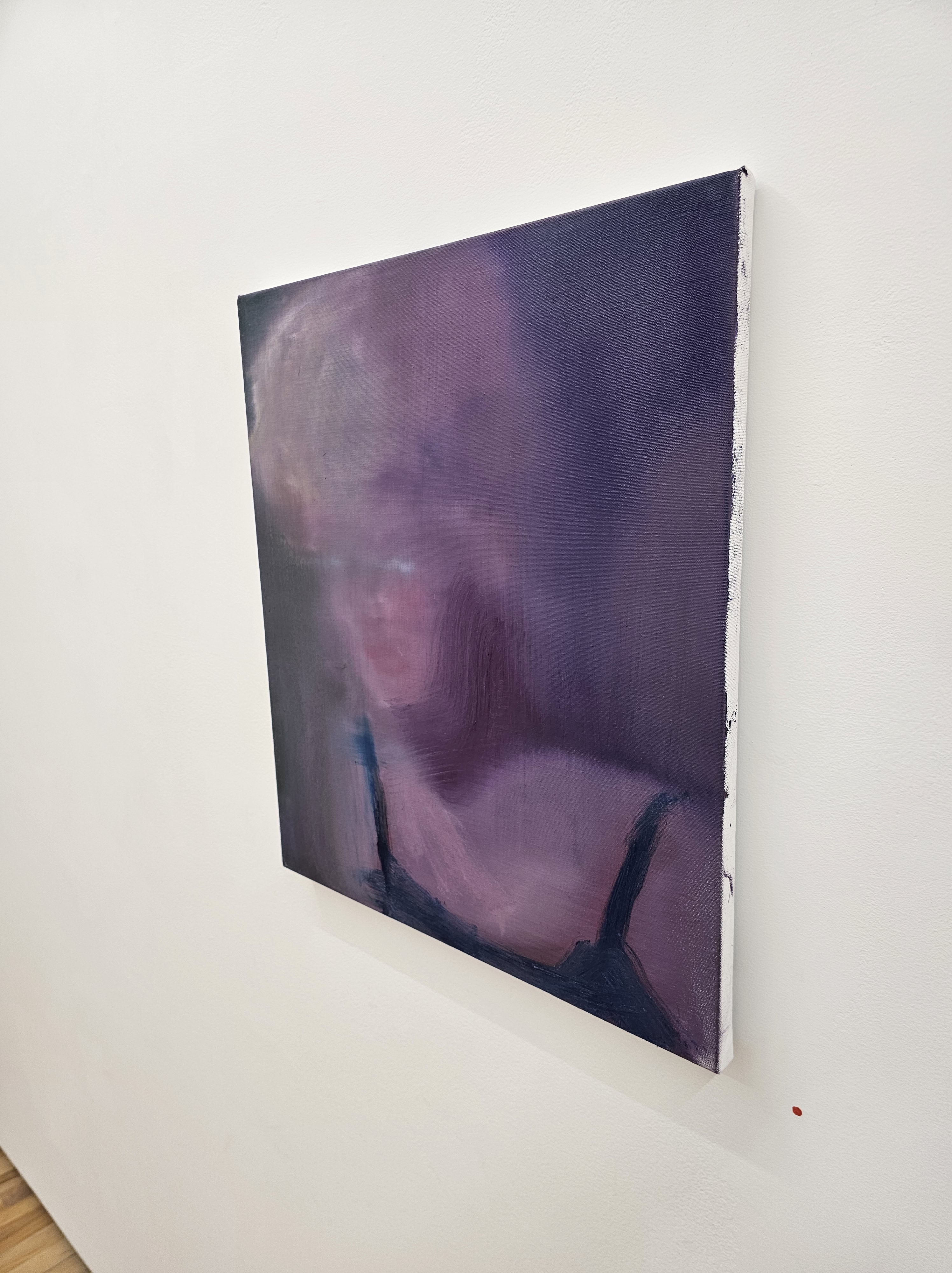
- Caleb Yono, Impersonator (No Place Gallery) – Hoisting the torch for uncompromising art in downtown Columbus proper, No Place Gallery put out one stellar exhibit after another. My favorite was this – occasionally blurred – myriad of paintings of Madonna impersonators, drenched in atmosphere and pulsing with energy.
- Claude Monet and Joan Mitchell, Monet/Mitchell: Painting the French Landscape (St Louis Art Museum, St Louis) – The scholarship at this spellbinding rapture of an exhibit at one of my favorite US Museums was second only to the rapturous beauty both Monet and Mitchell evoked. The connections between what each artist found in the countryside, far away from Paris and New York, are as intense as the different paths and techniques they deployed in the service of that building.
- Faye HeavyShield, Confluences (Pulitzer Art Foundation, St Louis) – The Pulitzer has always had a special place in my St Louis heart, basically, next door to the better-known CAM STL (also great), finding interesting connections to avant-garde artists of different backgrounds, time periods, and media. I had the pleasure of a phenomenal tour led by curator Tamara Schenkenberg, the perfect introduction to an artist I’m ashamed to say I knew nothing about before walking through the door. This wide-ranging retrospective was bursting with wrenching work that used highly modern techniques to get at the power and the pain of Faye HeavyShield’s overlapping histories and color the world in ways I knew but didn’t know and ways I knew but wished weren’t what they are. A show – and conversation – that still haunts me as I look back on this year.
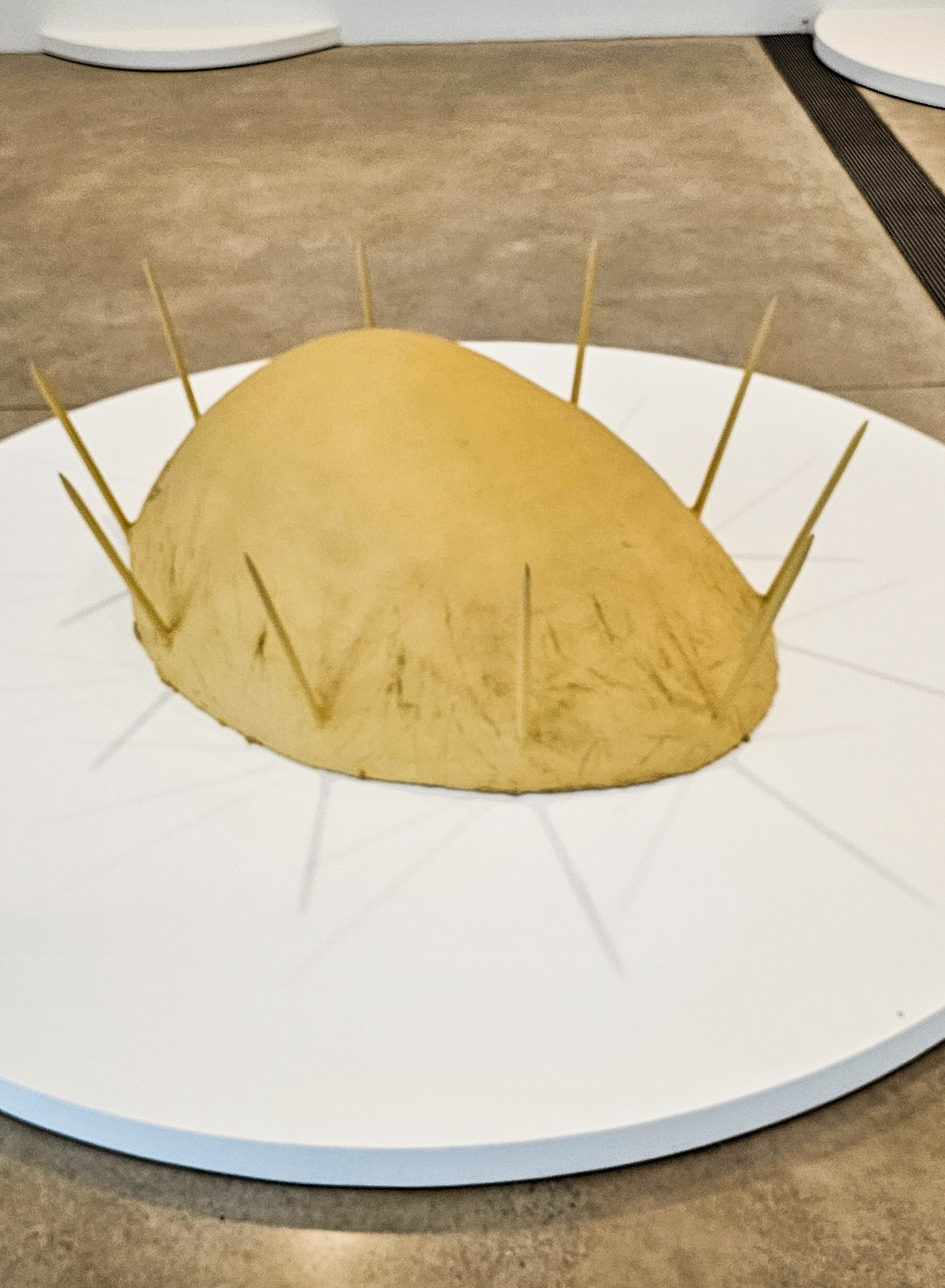
- Various Artists, Irrepressible Soul (Urban Arts Space) – Iyana Hil (creator and co-curator with Dr. Terron Banner, Mario Hairston, and Christopher Hearn) did an astounding job here, bringing together artists whose work I already knew and loved, like William Evans, Cameron A. Grainger, and L’Ouverture Jones with artists I’d never heard of into a tapestry of black and Afro-Diasporic arts. As someone who’s been going to the Urban Arts Space since the building opened, I believe this may be the best single exhibit I’ve ever seen there. Plus – and it’s my eternal regret I didn’t get to the satellite events – tying the work here together with other Columbus black cultural institutions, from the King Arts Complex to Sole Collections, was a wonder.
- Juane Quick-To-See Smith, Memory Map (Whitney Museum, NYC) – My first conscious exposure to Juane Quick-to-See-Smith was at one of my favorite public art events anywhere, Counterpublic 2023 in St Louis, so it was even more of a joy to see this enormous retrospective at the Whitney when Anne and I went to New York late summer to see Greg Cartwright play. The playful but deadly serious tones captured an America that was always on the surface for the people being oppressed, but it uses defiance as a path to hope, sunlight cracking through moldering walls.
- Sahar Khoury, Umm (Wexner Center) – The Wex’s fall exhibits were also all extremely strong. Still, Khoury’s collaged sculptural and installation pieces inspired by the legendary Egyptian singer Umm Kulthum kept me coming back, always finding something new in the glitter and the scuffs.

- Gary Simmons, Public Enemy (MCA, Chicago) – A work trip to Chicago let me catch up with some dear friends, have some strategy sessions with coworkers and also catch a couple of astonishing art exhibits on lunch hours – the benefit of being right downtown. The MCA is always more than edifying when I get there – they turned me onto Doris Salcedo and so much more – and this Gary Simmons’ mixed-media grappling with racism and its after-effects, twisting every symbol just artfully enough that it wasn’t the version I expected, landed hit after hit.
- Remedios Varo, Science Fictions (Art Institute of Chicago, Chicago) – The Art Institute of Chicago also blew me away with this early surrealist who relocated from Spain to Mexico City with the outbreak of WWII. Exactly the stew of midcentury elements I’ve loved but at an angle, I wasn’t expecting, in the first major museum I ever fell in love with.

- Various Artists, Columbus Metropolitan Library at 150 (CML Main Branch) – Not just here because our house was in one of the photos taken and selected by Dorian Ham as part of this exhibit, but that was the kind of surprise that won me over. The perfectly chosen artists for this – people I’ve been a big fan of for a while, like April Sunami, Rob W. Jones, and Tera Stockdale, and those whose names I didn’t even know – and the pieces were woven into an evocation of the sense of community I still love about Columbus, even when it pisses me off or lets me down. A flag-planting about the role libraries have played in that and still play.
- Various Artists, Black American Portraits (Brooks Museum, Memphis) – The Brooks does astonishing work; over the 10 years I’ve been visiting regularly, it’s become a must-see part of my Memphis trips. This touring exhibition, which originated at LACMA and was curated by Dr. Patricia Daigle and Efe Igor Coleman, took me through thematic rooms to shine a light on a shifting black experience that always rightfully resists being restrained or easily named.
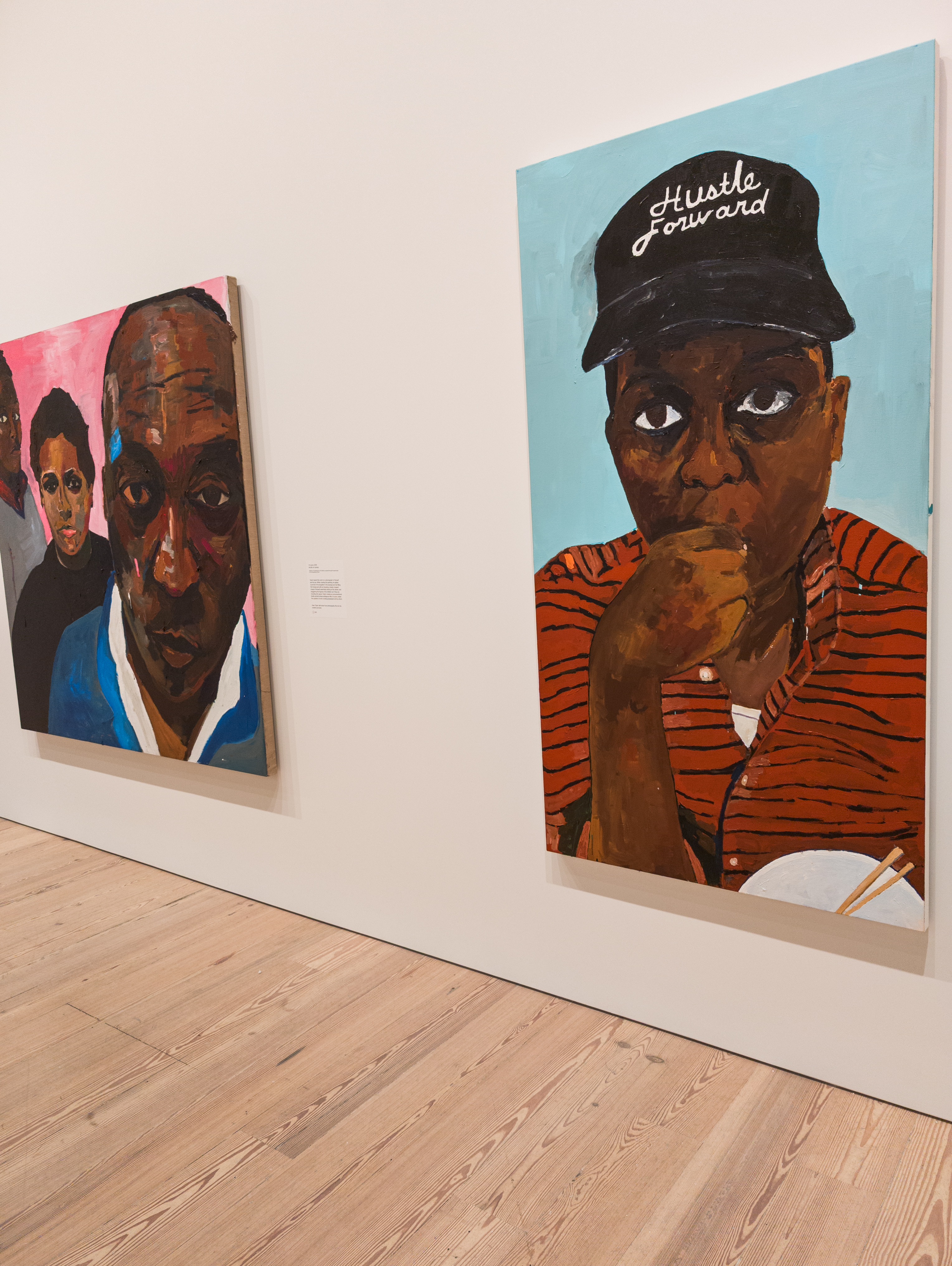
- Henry Taylor, B Side (Whitney Museum, NYC) – Another hat tip to the Whitney – in a season where everything was good, from a look at one of my polymath inspirations Harry Smith doing the almost impossible to the finest wide-lens look at Ruth Asawa I’ve ever seen; to a gut-wrenching group show; this deep dive into painter Henry Taylor vibrated every nerve ending in my body.
- Ben Shahn, On Nonconformity (Reina Sofia, Madrid) – Most of what we did in Madrid and Barcelona wasn’t new exhibitions; first time in cities of course I’m spending a lot of time in the Prado and looking at Gaudi. But the Reina Sofia is the kind of contemporary art museum – and I love all the US versions, don’t misunderstand – I could really only compare to Centre Pompidou. I was that wowed. And I liked everything on display, but this extensive, almost exhausting, retrospective of Shahn’s work took him out of my previous understanding of his art in Diego Rivera’s slipstream and made it fully formed and three-dimensional in my brain.
- Laura Ramírez Palacio, S/T (PlusArtis, Madrid) – Anne and I stumbled here when the other modern art gallery we intended to hit was closed. In a thriving gallery scene, this was the exhibit that wouldn’t let me go. Gone too young, Palacio crafts a mythoautobiography in drawings with clear referents, but I couldn’t ever quite put my finger on it. I staggered out of the gallery, pretty much only wanting to talk about this.


 Screen of Distance