Categories
Best Of Playlist record reviews

Best of 2024 – Spaces

As I’ve done for the last few years, I create a couple of lists that are loosely grouped by impact – if it feels like something I’d play on a jukebox or has lyrics, if it creates a sharp impression that might reverberate later – if I feel like it’s a “song” I put it in songs. It goes here if it feels spacious or dreamy, like architecture or a painting or landscape. Obviously, in a lot of cases, these distinctions are porous.

Similarly to my songs list, there was so much good shit this year and I’m looking forward to getting this posted so I can really dig into everyone else’s lists.

  • Wadada Leo Smith and Amina Claudine Myers, “Central Park at Sunset”– Two veterans of Chicago’s AACM movement – equally prominent as composers and virtuoso instrumentalists – teamed up for a duo record Central Park’s Mosaics of Reservoir, Lake, Paths and Gardens that’s as rich, sprawling, and vibrant as the urban park that inspired it. This particular piece reaffirms the poetry in both artists’ playing – I’m not sure anybody plays a sunset on any instrument as well as Smith, and those delicate and powerful chords from Myers are like the shifting moods of a summer breeze.
  • Mary Halvorson, “Desiderata” – I liked both of the last two Halvorson records on Nonesuch, but Cloudward synthesized those pleasures and reaffirms her Amaryllis octet as one of the great working ensembles, able to conjure any mood, any atmosphere her writing requires and bring in their own personalities without overwhelming the overall tone. A band of leaders that are always in service of the music. The way the jaunty swing in the beginning shatters into abstraction to flow back together in a new form is a Halvorson trademark, executed perfectly here.
  • David Murray Quartet, “Free Mingus” – Elder statesman and master at blending the melodic and the free, David Murray, assembles a brilliant quartet with pianist Marta Sanchez, bassist Luke Stewart, and Russell Carter, for his breathtaking record Francesca. On this track the band digs into an undulating saloon song tempo with the intensity and beauty it demands – that flow from Murray’s solo into Sanchez’s brings me to the edge of my seat every time, and every bit of the record is this good.
  • Vijay Iyer/Linda May Han Oh/Tyshawn Sorey, “Ghostrumental” – The second record with Iyer’s world-beating trio with Linda May Han Oh and Tyshawn Sorey exceeded even the high expectations I had. Thick grooves that shifts almost imperceptibly into deep abstractions and switch up again without feeling like an exercise, and melodic cells that swirl around and lock into place. There are a lot of piano trios on the playlist this time because all of them kicked enormous amounts of ass. Maybe my favorite moment on this track is Oh’s rich bass solo and the surprising, no-bullshit but also unshowy comping from Iyer and Sorey behind her.
  • Soundwalk Collective featuring Patti Smith, “Pasolini” – As someone who’s as much a film nerd at heart – at least they took up equal headspace in my adolescence – and who’s off and on written poetry since I was a teenager, both Patti Smith and the subject of the piece, Pasolini, loom very large in my psyche. I also love Soundwalk Collective’s playing with time, geography, specifics. So Correspondences Vol. 1 hit me right where I live. This is a gorgeous, mysterious piece.
  • Nduduzo Makhathini, “Water Spirits: Izinkonjana” – South African pianist/composer Nduduzo Makhathini’s second Blue Note album uNomkhubulwane is a gorgeous, meditative work immaculately played by his trio of Zwelakhe-Duma Bell le Pere and Francisco Mela. The little shifts in this piece, the way a bluesy run gives way to bright crispness and then they conjure clouds in the water, keep me coming back.
  • Six Organs of Admittance and Shackleton, “Spring Will Return/Oliver’s Letter” – I didn’t have this collaboration between freak-folk/noise-rock chameleon Ben Chesney (as Six Organs of Admittance) and dubstep pioneer Shackleton (I think I bought everything on Skull Disco for at least a few years) but this droning, atmospheric track captures both artists’ mature powers and finds new textures where they intersect. Meditative like the last piece but not at all like the last piece.
  • Cassie Kinoshi’s seed., “iii sun through my window” – Saxophonist/composer from the incredible London scene and her seed collective’s record Gratitude. This track conjures a pastoral lushness with an underlying tension that I find gripping and intoxicating.
  • J. Pavone String Ensemble, “Embers Slumber” – I first saw Jessica Pavone at the exact same time I first saw Mary Halvorson, when Gerard Cox brought their long-running duo to town, and have been a fan ever since. The shadowy, rapturous Reverse Bloom features a trio of Abby Swidler on viola and violin, Aimée Niemann on violin, and Pavone on viola and compositions. This closing track alternates between heartbeat pizzicato and long, arco lines curling like smoke. The exquisite pace lets every element burst and then fade, letting the decay play off one another like the shadows in a Twombly mobile.
  • SML, “Three Over Steel” – SML set the bar high – in a year full of contenders – for smart, surprising groove music. This quintet of Anna Butterss on bass – on this track sometimes so heavy and thick it feels like a tuba in the best way – Jeremiah Chiu on synths, Josh Johnson on sax (those overlapping curlicues resist being easily grasped but also rebel against not being an earworm), the always subtle and response Booker Stardrum on drums and percussion, and Greg Uhlman on guitar. This track is a party starter in the world I want to live in.
  • Dave Guy, “Footwork” – As with many things, I have Andrew Patton to thank for hipping me to Ruby, a record led by longtime Daptone – more recently of The Roots – trumpeter Dave Guy. This Latin-flavored piece feels like the first rays of sunshine on a cobblestone street, with Guy’s sing-along trumpet leading a dance over lush beds of percussion.
  • Adam O’Farrill, “Dodging Roses” – Another favorite trumpet player, Adam O’Farrill, continues to top himself with the addictive HUESO, featuring a tight quartet of frequent collaborators including his brother Zack, bassist Walter Stinson – I’ve been blown away by that rhythm section hookup live and on record before, but they’ve never sounded better – and saxophonist Xavier Del Castillo. Crystalline writing given added life by the personalities of these players and a tribute to the kind of telepathy you hear at the absolute highest levels of this kind of small-group jazz.
  • Happy Apple, “Turquoise Jewelry” – Another stunner from this band led by drummer Dave King (The Bad Plus, Fellwalker) with bassist Erik Fratzke and saxophonist/keyboardist Michael Lewis. I love the stop-start and the subtlety of this one.
  • Caroline Davis and Wendy Eisenberg, “Accept When” – Saxophonist/synth player Caroline Davis put out multiple records that killed me this year, but this duo with guitarist Wendy Eisenberg vibrated strings in my heart I didn’t know existed, or had maybe forgotten about. That stretch toward the midpoint when their unison voices sing “Synchronicity” over and over, and then the instruments take over with this subtle, picked melody from Eisenberg and long tones from Davis, tentative at first and then stretching further and further out… good lord. One of my musical moments of the year.
  • Erik Friedlander, “Shrimping (Mod 9)” – Erik Friedlander is one of my favorite cellists in any contexts, but there’s something special about his writing when he applies it to a specific thematic context. His instrumental dissection of MMA, Dirty Boxing, with a sympathetic quartet of Uri Caine on piano, Mark Helias on bass, and Ches Smith on drums, is my favorite record in years. This bouncy but restrained track is a prime example of what I loved about the record.
  • Dirty Three, “Love Changes Everything II” – A new Dirty Three record is always a cause for celebration in my world, and the magnificent Love Changes Everything is my favorite since She Has No Strings, Apollo, maybe my favorite since Whatever You Love, You Are. I have countless records in my collection all three of these Australian players are on – none of them bad – but that unmistakable language when they get together is to be savored.
  • Marquis Hill featuring Samora Pinderhughes, “Balladesque (Nothing to Lose)” – Chicago-native trumpeter Marquis Hill assembled a dream team including Makaya McCraven, Jeff Parker, Caroline Davis, Josh Johnson, and Juan Pastor, to tackle six of his compositions and tunes by fellow Chicagoans on his Composers Collective: Beyond the JukeBox record. The vocals by Samora Pinderhughes on this one are the icing on the cake.
  • Patricia Brennan, “Los Otros Yo” – Vibes and marimba wizard Patricia Brennan wrote many of my favorite tunes this year and assembled an astonishing band to tackle them – including her bandmate in Halvorson’s Amaryllis, Adam O’Farrill, alongside Jon Irabagon and Mark Shim on reeds, and Marcus Gilmore on drums. This track grabbed me from that horn fanfare on the intro and never let me go.
  • Alabaster DePlume, “Honeycomb” – London-based poet and saxophonist Alabaster DePlume floored me with a beautiful EP this year, Cremisan: Prologue To a Blade that leads off with this gorgeous, melancholy duet for reeds and piano.
  • Max Richter, “The Poetry of Earth (Geophony)” – In a Landscape distilled the particular pleasures I get from Max Richter’s compositions, a series of pastoral watercolors that have enough tension to stay consistently interesting. One of my records of the year for both self-soothing and trying to go deeper.
  • Pat Thomas, “The Oud of Ziryab” – I loved London pianist Pat Thomas’s work with free jazz titans like Derek Bailey, but this was my first exposure to his solo piano conception and every track on The Solar Model of Ibn Al-Shatir knocked me for a loop.
  • Matt Wilson, “Good Trouble”- One of the shows I was sorriest to miss this year was the Jazz Arts Group bringing drummer/composer/bandleaders Matt Wilson back to the Lincoln with his killer band promoting the record this is the title track (composed with sax player Jeff Lederer) of a tribute to the late Senator John Lewis and, more broadly, a hard-swinging tribute to community in all its stripes.
  • Asher Gamedze and the Black Lungs, “Elaboration” – Another drummer/composer on the rise, South Africa’s Asher Gamedze assembled an octet and worked with one of my heroes, poet Fred Moten, on a spoken word meets fire music masterpiece I’m still unpacking, Constitution. This mostly words and drums duet of a track is maybe the purest distillation but it’s an unskippable record.
  • Immanuel Wilkins, “MOSHPIT” – Saxophonist/composer Immanuel Wilkins released a magnum opus Blues Blood this year and it’s another landmark flag-planting from an artist who’s better every time I see him – last time was Winter Jazzfest 2022, be damn sure I’m going to see this live at Big Ears in the spring.
  • Kronos Quartet featuring Jlin, “Maji” – The long-running lineup of the Kronos Quartet took a well-deserved victory lap this year before two seats switched members, including their spectacular Sun Ra tribute Outer Spaceways Incorporated. This track finds them collaborating with Chicago electronic artist Jlin – the only artist I’ve seen get a standing ovation in the middle of their set at Big Ears this year – on an infectious tune that samples Sun Ra’s “Hidden Spheres.”
  • Love Higher, “Crush” – Another recent favorite electronic artist of mine, Love Higher splits her time between Columbus and New York and is moving the dance floor culture in both scenes, with her own work, curating series like Errant Forms, and even acting in the Cameron Granger film that formed the spine of one of my favorite art shows this year. The EP this is the title track from is one of my favorite dance records in a while.
  • J. Rawls, “Fresco” – Sticking with the Columbus theme for a moment, legend J. Rawls released a stellar record Bump the Floor. The light, staccato house-echoing flavor of this was infectious.
  • Nubya Garcia, “The Seer” – My favorite of the current London saxophonists bringing contemporary flavors to a rock-solid grasp of the jazz tradition, Nubya Garcia’s Odyssey is the best synthesis yet of her varied interests, all filtered through her molten-gold, unmistakable sax tone.
  • Matt Mitchell, “Angled Langour” – Another crushing piano trio record – Zealous Angles – captures Mitchell’s working trio with Chris Tordini on bass and Dan Weiss on drums, and it has all the heaviness you’d expect from those three names but also, as on this track, reminds us how much intensity and delicateness they can balance, how many Kandor-style worlds they can build in these bubbles of restraint. Beautiful.
  • Marta Sanchez, “3:30 AM” – This Marta Sanchez record – also featuring Tordini in the bass chair alongside Savannah Harris on drums – felt like it had a similar powerful and restrained quality, an intense rhythm engine pushing right into the red, that I loved on its own but while playing with the list really felt nice between these other two pieces. A standout on a record – Perpetual Void – with no shortage of standouts.
  • Oneida, “Gunboats” – Opening with a heavy-motorik drum beat and squealing feedback, “Gunboats” instantly landed in the classic rager category for me of a band that has more of those deep rocking expansive jams that hold my interest all the way through than anybody still working I can name. This closed the snarling, searching Expansive Air on a fist-pumping note.
  • Kris Davis Trio, “Knotweed” – I was lucky to see this trio the week the record came out, and it made my shows of the year list. Maybe my single favorite pianist of my generation with the best rhythm section she’s had – Robert Hurst and Johnathan Blake – tearing into her excellent compositions. Probably the hardest time I had picking a single track to represent on this playlist.
  • Tyshawn Sorey, “Your Good Lies” – I’ve been lucky enough to see Sorey’s current trio of Columbus native Aaron Diehl on piano and Harish Raghavan on bass twice in the last year, and they only grow into their power and rapport with one another. The Susceptible Now, the new record of standards, is the finest document yet of this working unit and this tightly arranged expansion of the Vividry song might be its crowning achievement.
  • Brian Charette, “6:30 in the Morning” – Brian Charette, with a pulse-pounding quartet of Cory Weeds on tenor, Dave Sikula on guitar, and John Lee on drums paid tribute to B3 legend Jack McDuff in high style on You Don’t Know Jack! and they conjure the lighter Latin flavor of this McDuff composition beautifully.
  • James Carter, “Prince Lasha” – I don’t know why it took this long for a solo baritone saxophone record from James Carter, but it felt like answering (a very specific subset of) my prayers when it happened. An essential document from probably the finest practitioner of the instrument working today.
  • Nicole Connelly, “Sky Piece” – The presence of drummer Kate Gentile got me to check out Stamp in Time, and the writing and playing of trombonist Nicole Connelly (with Zachary Swanson rounding out the trio, along with Andrew Hadro guesting on bari on this track) kept me enthralled. The floating, plaintive quality here is always held together and held aloft by a tensile strength, with one of my favorite tones on trombone I’ve heard in a while.
  • Ibrahim Maalouf, “Timeless” – Lebanese trumpeter Ibrahim Maalouf was one of my favorite discoveries at an early (for me) Winter Jazz Fest, and I’ve been enraptured by his sound and writing ever since. Trumpets of Michel-Ange is a stunning cross-cultural achievement highlighting the quarter-tone trumpet Maalouf’s father created and on this track including guests like the kora master Toumani Diabaté.
  • Sarah Davachi, “Night Horns” – Sarah Davachi’s The Head As Form’d In The Crier’s Choir is another gob-smacking triumph, conjuring a diversity of moods from different instruments and combinations and a real mastery of all of them. This closing track, for pipe organ (also played by Davachi), is one of my favorite pieces to get lost in, always finding new threads.
  • Painkiller, “Samsara III” – John Zorn reformed Painkiller with the original trio of Bill Laswell and Mick Harris, Harris of course doing samples and electronics instead of acoustic drums these days, and I was overjoyed to find the acid-fried intensity and chemistry are both not only intact but deepened.
  • Kali Malone, “No Sun To Burn (for brass)” – I liked Kali Malone on records. Still, I became a massive fan seeing her live at the end of the night in one of the churches at Big Ears two years ago. All Life Long captures that power and the evolution of her compositional language better than any record before. This version of “No Sun to Burn” for a brass quintet – it also appears on the record in an organ arrangement – feels like the fog burning off a lake in the still morning.
  • Walter Smith III, “24” – For his second Blue Note record, saxophonist Walter Smith III assembled a hard-to-top quartet of Jason Moran, Eric Harland, and Reuben Rogers (the aptly titled Three Of Us Are From Houston and Reuben Is Not) and they make a meal of Smith’s originals including this one, that feels tailor made for the sense of deeply serious play all of these musicians bring to the table, as well as a great Sam Rivers tune.
  • JD Allen, “Know Rose” – Another tenor sax player at the top of his game, JD Allen, leans into denser, moodier territory on The Dark, The Light, The Grey, and The Colorful, and this sinewy, smoky ballad is right in his sweet spot. That tone needs to be luxuriated in.
  • Tallā Rouge, “Shapes in Collective Space” – Tallā Rouge’s first record of compositions for viola duo, Shapes in Collective Space, finds whole universes in that range and a wildly expressive palate with these two players, Aria Cheregosha and Lauren Spaulding. It’s here because those tones at the beginning felt there was a shared feeling with the Allen piece right before and the Beethoven-ish sunrise elements of the Richard/Zahn piece after.
  • Dawn Richard and Spencer Zahn, “Traditions” – The single piece I knew had to be somewhere on a year end playlist but I struggled the most with figuring out if it was here or songs. This second collaboration between R&B powerhouse singer-songwriter Dawn Richard and avant-jam bassist/composer Spencer Zahn expanded on their language and opened up even more of their world to me. This tone poem – with minimal, sharply carved lyrics that imply whole lives intersecting – is one of the most moving things I heard all year. “On game day, my brother wears his Saints shoes. Must be a Frank thing, ’cause when I wear ’em, shit, they lose.”
  • Carolyn Enger, “Orizzonte” – Pianist Carolyn Enger built Resonating Earth specifically to be a meditative, transportive work, and she chose the right composers for the job, especially Missy Mazzoli who put together this shadows-over-the-world miniature.
  • MTB, “Angola” – This reteaming of the frontline of Brad Mehldau, Mark Turner, and Peter Bernstein (the MTB of the name) with the rhythm section of Larry Grenadier and Bill Stewart is a delight start to finish, with beautiful interplay that comes from walking the same roads as all five of these players have. This lighthearted but deep romp through Wayne Shorter’s “Angola” was a highlight for me.
  • Dalia Stasevska and the BBC Symphony Orchestra, “Symphony No. II: The Faithful Friend: The Lover Friend’s Love for the Beloved” – Conductor Dalia Stasevska’s Dalia’s Mixtape bursts with ideas, colors, and gave me the most hope for the health of symphonic music of anything I’ve heard in years, including great new pieces from the likes of Anna Meredith, but I had to give it to this movement from a previously lost (I think) Julius Eastman symphony that moved me to tears on first hearing it.
  • Brian Harnetty, “The Workbench” – One of Columbus’s finest composers, Brian Harnetty put out this stand-alone piece written in honor of his father and it’s both a moving tribute and an example of Harnetty working at the top of his game.
  • Lara Downes, “America” – Pianist Lara Downes’ This Land is a stunning grappling with what this country we share means, full of both beauty and truth. My highlight was this Noah Luna arrangement of Simon and Garfunkle’s “America,” that opens the song up while keeping everything that’s good about it, played exquisitely.
  • Shabaka, “As The Planets And The Stars Collapse” – One of my highlights of this year’s Big Ears – and an appearance as part of A Night at the East in WJF – was Shabaka’s new flute conception; I worried I was so deep into his tenor player bag that I’d have a hard time getting on board, but the first few notes put those fears to rest and the richly developed record keeps unfolding and revealing both its truths and more mysteries to me.

Categories
Best Of live music

Best of 2024 – Shows

Stunning year of shows this time – in the usual suspect cities as well as a more than welcome return to Chicago. As you can probably expect, Dick’s Den featured most prominently in my show-going this year, with 26 as I write this (had to cut it off to give myself a break at year’s end, but I’ll probably be there twice more before the 31st) and Natalie’s coming in second at 20, followed by Cafe Bourbon Street at 14, and Rumba Cafe at 11.

As usual, everything listed is in chronological order, all photos are by me, and everything is in Columbus unless listed otherwise. Openers are listed if they added to my impression as I thought about this list.

The Barbarians Reunion, Radegast, January 2024
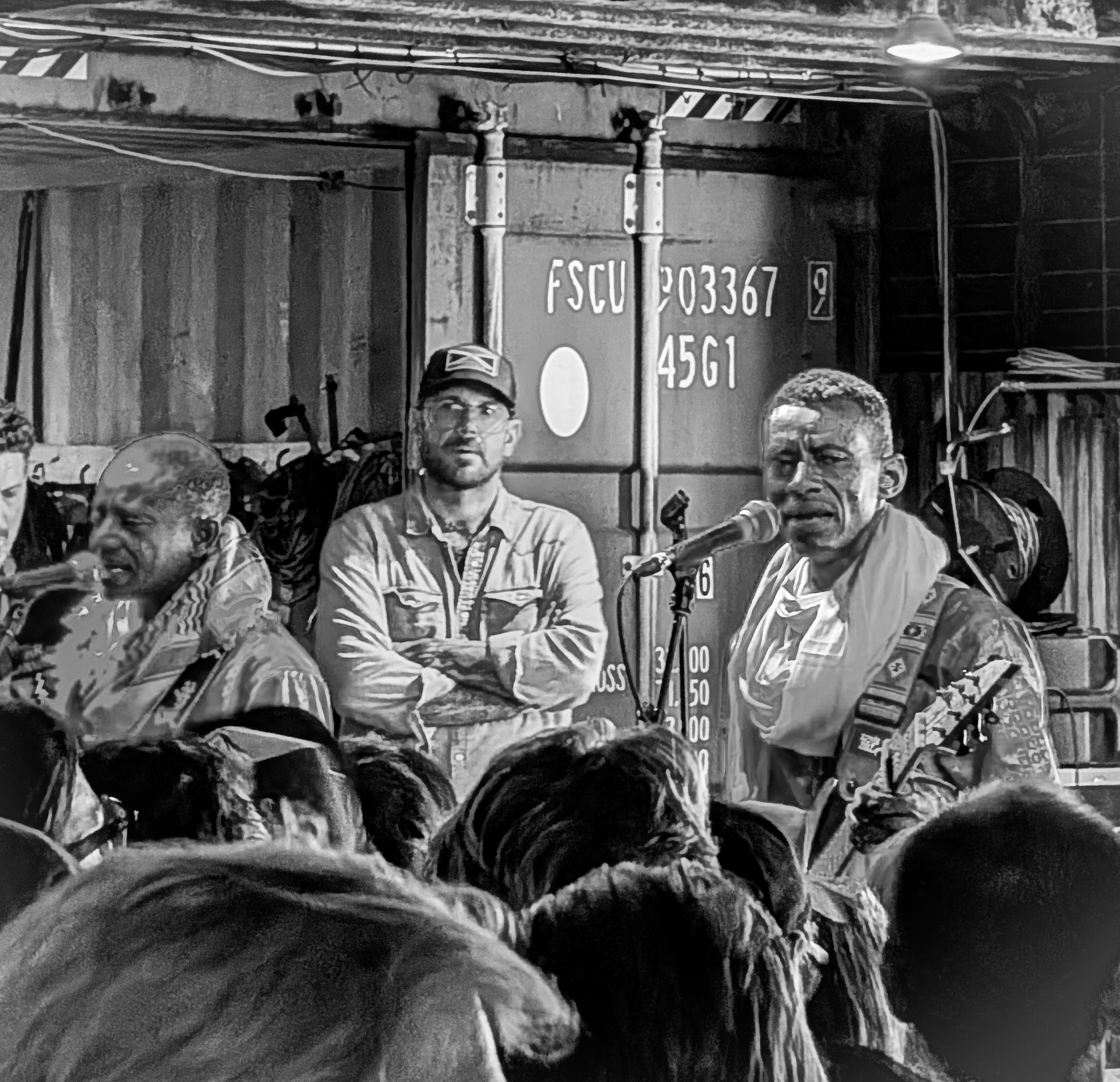
  • Tony Barba and Friends, Radegast Hall, NYC – A surfeit of credit card points allowing me to do it on the cheap made for a last-minute trip to Winter Jazz Fest in January 2024. I saw great shit there, as well as theater and exhibits, which I’m going to talk about in the Festivals portion of this wrap up… but the single thing that made me decide, “Fuck it, I’m going,” was a Facebook announcement of a reunion in the Brooklyn beer hall Radegast on Sunday night of one of my all-timers, a band of some of my dearest friends that helped define Brooklyn to me when I was first going there often in the early 2000s: the Tony Barba-led, hook-drenched The Barbarians. I rolled into this dark, cavernous room for two sets, wrapping the vintage Barbarians lineup’s mini-set of five stone-cold classics with older and newer material of Barba’s playing with other friends like Noah Jarrett, Conor Elmes, and Dave Treut that made me get off my stool and dance, that knocked me against the bar, that made me regret having a flight that left five hours after I stumbled out into the street, and that put a flag in the ground that said “This is going to be a good fucking year.”
  • Worthington Chamber Orchestra with Ucelli, Worthington United Methodist Church – I’m on record as thinking Mark Lomax is one of Columbus’s very finest composers and the more of his chamber music I hear the stronger that impression gets. I didn’t even know the Worthington Chamber Orchestra existed until I heard about this Sunday afternoon program themed around the underground railroad’s presence in Worthington (a good reminder in the wake of more recent white supremacist news around this suburb), and I was blown straight back in my seat. Lomax’s concerto used the cello quartet Ucelli at its spine to create a different form of cello concerto than I’d heard and, with the WCO under the baton of Antonie Clark, a wild, shifting, stormy narrative that opened up into these gorgeous sunlight textures. Anne and I talked about this for half an hour over dinner after.
  • Benefit for Dre Peace, Natalie’s Grandview – This show was a reminder of one of the things the Columbus music scene has always done very well: show up for each other. And a sterling reminder of the good work Natalie’s does providing stages to support this showing up. While the discussion from someone else with a kidney transplant at this benefit to get singer Dre Peace a new kidney was the single most moving moment of the evening, I was also gobsmacked by beautiful songs from Talisha Holmes, Ebri Yahloe, Starlit Ways and the Liquid Crystal Project. A Night that made my heart feel a little more full.
  • Nickel Creek and The Staves, Mershon Auditorium – Only got to the venue in time for a few songs from The Staves but their harmonies and barbed songwriting blew me away. Nickel Creek I was later to the party than other roots fans of my generation – I had to back into it through my love of Chris Thile and Sara Watkins’ later work – so this was the first time I’d seen them as a unit. Cataracts burned off my eyes – this was one of the best, most energetic live bands of any genre I’d ever seen: the beautiful tension and floating quality of encore-closer “Holding Pattern,” where Thile’s high-and-sweet tenor took on a flood of shadows as he sang, “Hold me, darling, while the world burns down,” is still stuck in my throat nine months later.
  • The Sleeveens with Goblin Smut and the Whiteouts, Cafe Bourbon Street – Irish-born Stef Murphy’s Tennessee-based supergroup (featuring members of Sweet Knives and Cheap Time) The Sleeveens blew my mind with catchy, crunchy riffs and grooves that recalled my favorite parts of the Stiff records catalog without feeling like just a throwback. And reminded me of the joyous, snotty power of longtime friends/faves The Whiteouts while turning me onto jubilant Goblin Smut. One of my most satisfying nights of rock and roll all year.
  • Hurray for the Riff Raff with NNAMDI, Skully’s Music Diner – I’ve been a fan of Hurray for the Riff Raff for a while – my fandom solidified with a stunning Twangfest set in 2016 followed by their masterpiece The Navigator (my favorite record of theirs until this year’s record of the year for me, The Past Is Still Alive). This set – with a killer opener from avant-R&B chameleon NNAMDI who also held down the bass chair in Hurray for the Riff Raff – did a couple of things I thought were almost impossible at the same time: doing a set of the entire new record that had come out in the last week or so, with one older tune included, for an artist with such an extensive and deep catalog, and having the crowd eat it up; and a set I didn’t move once during. Not to get another beer, not to talk to someone, not to use the restroom. The rare set that didn’t provoke any restlessness. The moment on “Snakeplant,” hearing a full room cheer as Alynda Segarra sang, “There’s a war on the people, what don’t you understand,” was as powerful a reminder I got of the connection between performer and audience as I had all year. Maybe as powerful as I’ve ever had.
Hurray for the Riff Raff, Skullys, March, 2024
  • Jeff Parker and the New Breed, Wexner Center for the Arts – An hour-plus of music whose seamless transitions and taste for ambience and texture – with an astonishing band including Josh Johnson on sax and keys, Paul Bryan on bass and synth bass, and Jeremy Cunningham on drums and sampler, Parker reaffirmed why he’s one of the great guitarists, composers, and bandleaders of my lifetimes, doing favorites of mine like “Executive Life,” the Steve Reich funk of “Max Brown,” and even dipping into forbears for that kind of elastic, electric group dialogue with a sterling read on Weather Report’s “River People.”
  • Seventh Son Anniversary, Seventh Son Brewery – Another reminder of the beauty of my community. Seventh Son – co-owner Jen has been a friend since I was 20 – open their doors and hearts to a lot of community organizations, artists, projects. Their anniversary this year coincided with Record Store Day and assembled some of my favorite people and acts in this town – including probably my favorite DJ duo The Coming Home, Natural Sway, my first time seeing Big Fat Head, and rare, welcome performances from the full trio version of Scrawl and Envelope that had a crowd of at least 1/3 people I wholeheartedly love singing along with me.
  • Scott Miller and Robbie Fulks, Thunderbird Cafe, Pittsburgh – I’ve been lucky to see these two of my favorite songwriters – and two of my gateway drugs to alt.country (whatever that is) – semi-often in the last few years, but this shared bill was tempting enough to schedule a trip to Pittsburgh around an art exhibit Anne wanted to see to overlap their date. And it didn’t disappoint – both singers, solo acoustic, have what feels like an infinite grasp on the history of American music and a wide, deep catalog to draw from. My heart vibrated like it was going to pound out of my chest from the first notes of Miller’s teenage looking-back-rallying-cry “Freedom is a Stranger” to the last downbeat of their shared Roger Miller encore.
  • Chicano Batman with Lido Pimienta, The Bluestone – I was blown away when I first saw LA R&B/rock powerhouse Chicano Batman at A&R bar back in 2017 and they’ve only grown in power – intense grooves and sweet harmonies, a kaleidoscopic sense of melody and an encyclopedic understanding of rhythm made a set I couldn’t stop dancing during. Lido Pimienta accompanied by an astonishing percussionist blew me away with poison-tipped songs and a voice that made my spine straighen.
  • Shannon and the Clams with Tropo Magica, Ace of Cups – Long one of the best live bands in the world, Shannon and the Clams brought their doo-wop tinged soul-rock back to Ace to promote their best, most painfully textured record yet, The Moon is in the Wrong Place, for a night of pure but never monochromatic beauty and catharsis. And they brought Tropo Magica who – back when they were still called Thee Commons as a four piece – Anne and I rolled the dice on at Ace almost a decade ago not knowing anything and walked away with a new favorite band, destroyed. An opening set I couldn’t imagine anyone else following, but, of course, Shannon Shaw, Hunx, and the rest of her band did with grace; making transmuting personal tragedy and quieter moments into anthems that feed the audience’s souls seem easy.
  • Contrary Motion, Urban Arts Space – More of this, please. A stellar chamber music program in honor of Pride Month spanning the spectrum from legends like Pauline Oliveros and Julius Eastman to the first great local contemporary composer I ever heard, Rocco DiPietro (who also worked with and wrote a great book on Eastman), to a striking new piece from co-director (with Sam Johnson) Noah Demland.
Chicano Batman, The Bluestone, May 2024
  • Megan Palmer and the Mezzanines, Rambling House – One of Columbus’s finest exports, Megan Palmer, has been setting the world on fire in Nashville for a while but we always benefit when she comes back through town. This collaboration with Dave Vaubel (The Randys) and Max Button’s delightful Western Swing/countrypolitan covers band The Mezzanines, augmented by the firepower of guitarist Brett Burleson gave fascinating rhythmic textures I wasn’t used to on Palmer songs I’ve been singing along to for years – a samba here, a rolling rockabilly riff there – and she’s always had good bands. Her adding rich violin textures to half of the Mezzanines repertoire was icing on the cake.
  • The Mavericks with Nicole Atkins, Rock the Ruins, Indianapolis – This double bill – finally getting to see the Nicole Atkins lineup with great Memphis guitarist/songwriter John Paul Keith on leads – in Indianapolis, a city Anne and I already love, was a no brainier. A beautiful summer night, The Mavericks changing up the set list in interesting ways – including frontman Raul Malo smiling more than I’d ever seen and finding the perfect balance between the dance party and the after party – and Nicole Atkins and band making those sometimes very intimate songs into anthems as big as the sky.
Nicole Atkins and Raul Malo, Indianapolis, August 2024
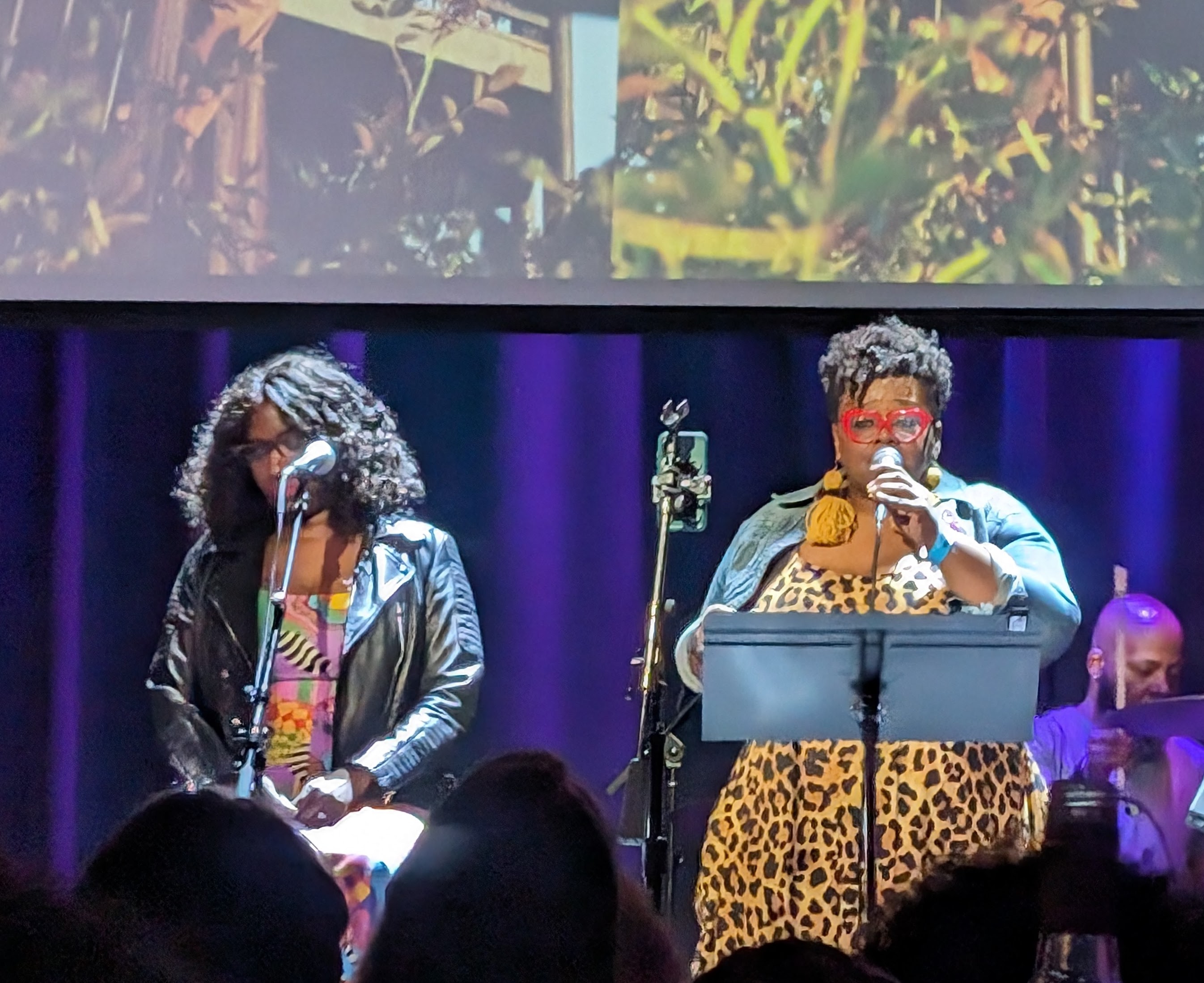
  • Meshell Ndegeocello, Wexner Center for the Arts – Meshell Ndegeocello has been on an artistic hot streak lately – following a masterpiece in a career strewn with masterpieces, Omnichord Real Book with an expansive, as-overflowing-with-ideas-as-its-subject tribute to James Baldwin No More Water – bringing the latter live to the Mershon stage under Wex auspices was breathtaking. Going to church in the best ways. The two shows from the Wex on here were – finally, after a while – just scratching the surface; the Art Ensemble of Chicago, Nathalie Joachim, and Tyshawn Sorey were all best-of-year contenders. It was just a stacked year.
  • Steve Dawson and Diane Christiansen, Hogan House – This was a reminder how good Fall is – Anne and I had to leave one of our favorite events, Art of the Cocktail, at the CMA early to make this; we’d also given up tickets for one of my favorite current jazz singers, Cecile McLorin Salvant, at the Wex because we’d bought those when Dawson and Christiansen were announced; all the same night. It’s also a tribute to Hogan House – a venue run by PJ and Abbie Hogan that brings these celebrations of the power of song to our town on a regular basis and constantly blows me away with its welcoming vibe, its remarkably good sound, and the friendliness and charm of its owners I’m lucky enough to call friends. Even with all that going on, within the first few notes of a set that reached back to Dolly Varden classics and leaned heavily on Dawson’s last two stellar records, Time to Let Some Light In and Ghosts, Anne and I both knew there was nowhere we’d rather be, and posted up at a bar halfway home to talk mostly about this set for an hour.
Meshelle Ndegeocello, Wexner Center, September 2024
  • Kris Davis Trio, Columbus Museum of Arts – A piano player who’s given me many of my favorite records and shows over the years making the trio record that stood above for me in a year of astonishing trio records, with one of the finest rhythm sections working, Robert Hurst and Johnathan Blake, hitting the highest heights in that CMA auditorium.
  • Davila 666 with The Ferals, Ladrones, and Las Nubes, Rumba Cafe – The same night as the Kris Davis Trio (what’d I tell you about fall?) brought back one of my all-time live rock backs, Puerto Rico’s Davila 666 for the first time in five years and they tore the roof off Rumba, partying like 2 am while the sun was still out and leading a stacked bill that introduced me to one of my favorite newish bands, Ladrones.
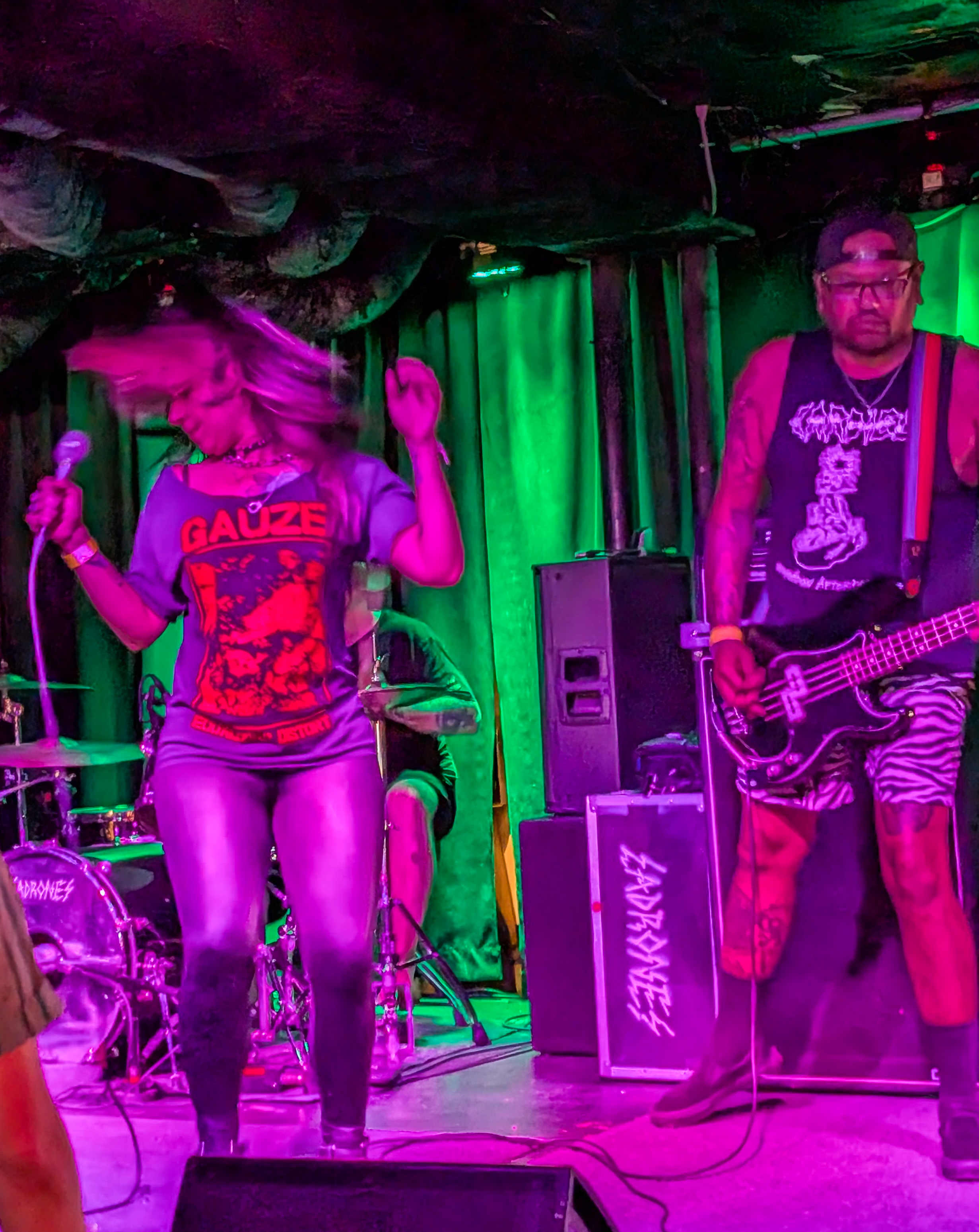
Ladrones, Rumba Cafe, October 2024
  • Dave Alvin and Jimmie Dale Gilmore, Natalie’s Grandview- I’ve been seeing Dave Alvin shows presented by Alec Wightman’s essential Zeppelin Productions since 2000; Wightman also promoted the first time I ever got to see another of my songwriter heroes, Jimmie Dale Gilmore. This appearance by those two fronting Alvin’s crack Guilty Ones band (Chris Miller, Lisa Pankratz, Brad Fordham) was a clinic in the power of songs – songs they grew up with in a lifetime of music fandom, songs that helped make their names like Alvin’s “Marie Marie” and Gilmore’s “Dallas,” songs by their friends (a jaw-dropping reggae take on a Butch Hancock song), and an example of how to balance an unflinching eye with belief things can get better and people can be better.
  • Jason Moran and the Bandwagon, Village Vanguard, NYC – One of my dream gigs for a long time has been to see Jason Moran and the Bandwagon in their standing Village Vanguard residency – a group that turned my head around when they first came to the Wexner Center under the auspices of Chuck Helm and who are still blowing me away in a variety of contexts – and luckily the last New York trip of the year allowed for just that. The final set of the week was dedicated to Duke Ellington with a side trip to songs he’d written for multi-media collaborations with Joan Jonas (the great artist was in attendance) and the bone-deep love of that music, the keen, active listening and responding between Moran, Tarus Mateen, and Nasheet Waits, and the ability to make it all alive was on full display.
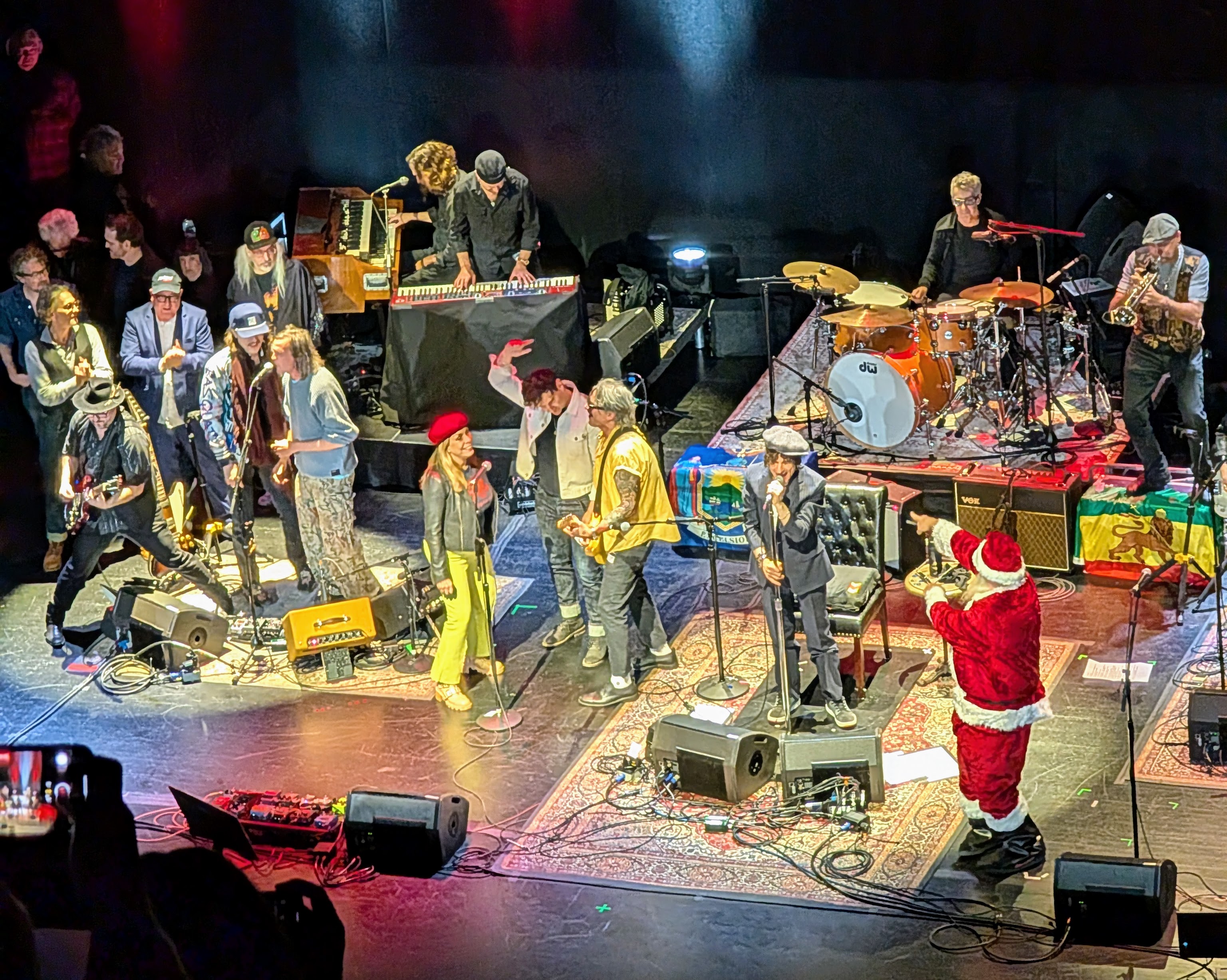
  • Jesse Malin and Friends, Beacon Theatre, NYC – The reason we made that final New York trip and the icon of a saying Anne brings out regularly, “You can’t give yourself away.” Malin has thrown benefits, donated, opened the doors of the many bars he co-owns, for every benefit, every friend of his who was in need – and he’s friends with everyone in the music scene – and so it was only appropriate they all returned the favor. Even those of us who have but a couple specific memories flooded the Beacon Theatre with the kind of love I’ve talked about in this list – hell, in almost all of these lists – written large and in neon. I saw a few things after this – some great – but Malin and his band roaring through “Meet Me at the End of the World” and “Turn Up the Mains,” The Hold Steady exploding “Deathstar,” and Lucinda Williams doing their co-write “New York Comeback” are still echoing in my head.

Favorite Festival Sets:

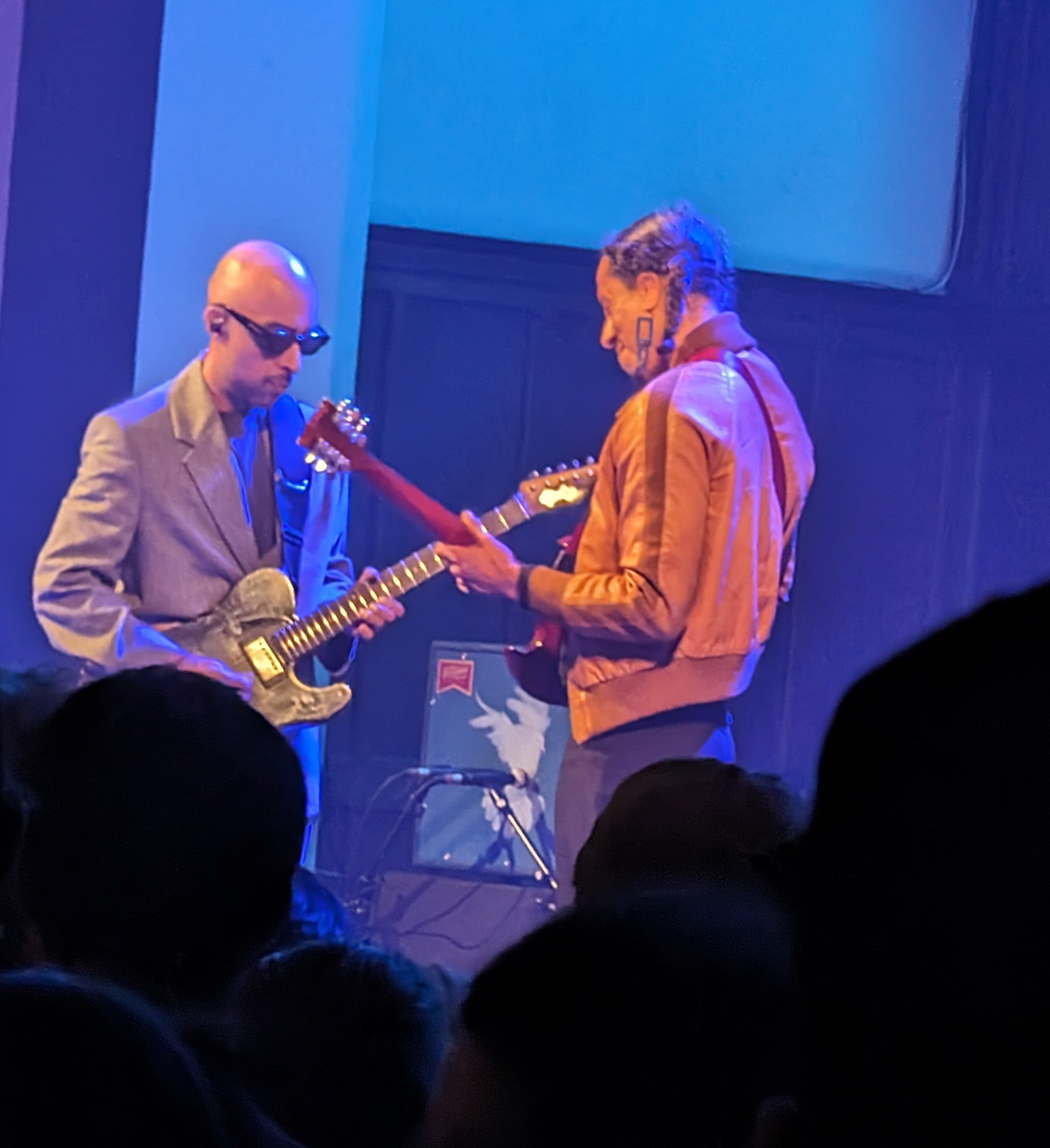
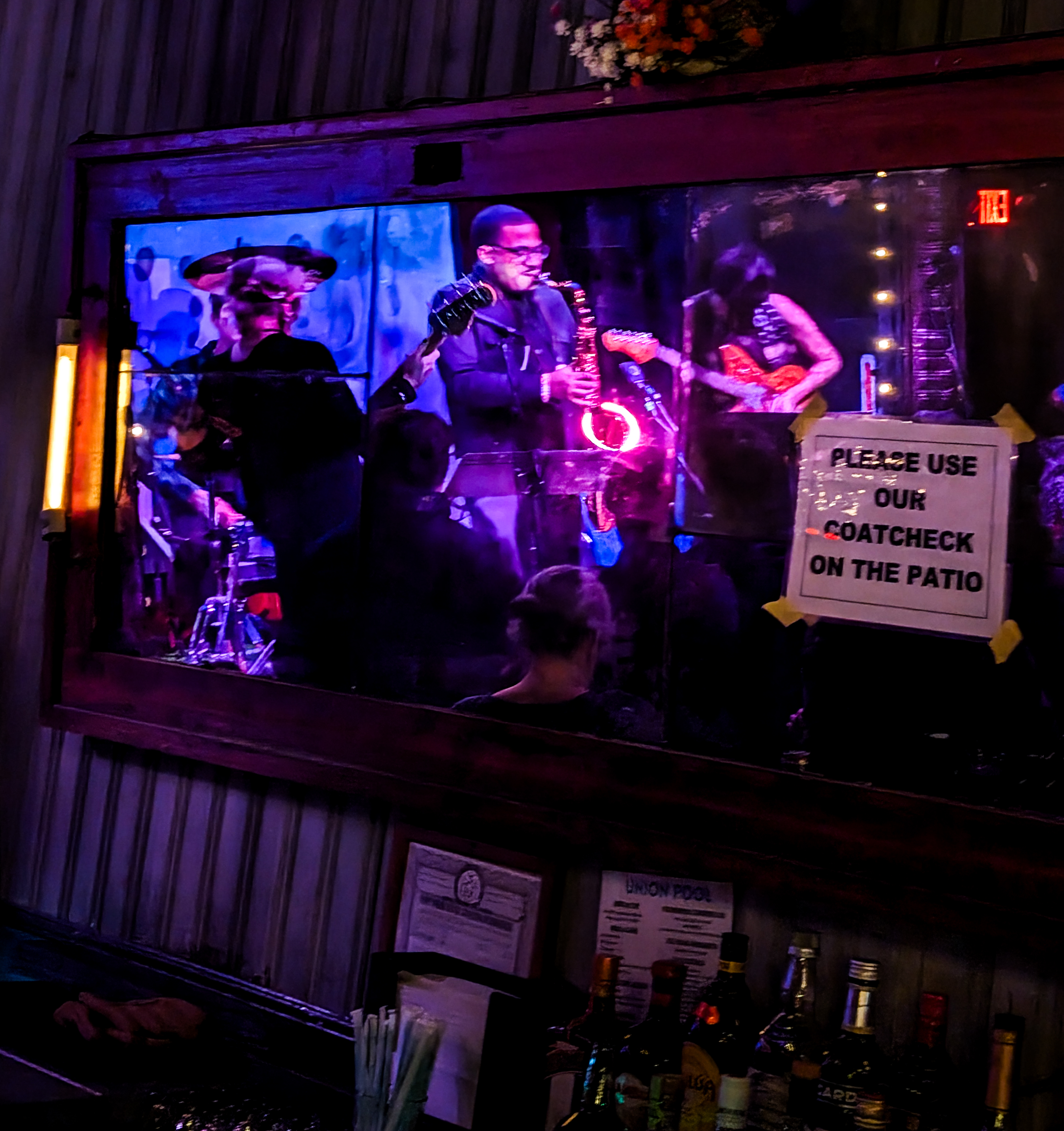
Mendoza Hoff Revels in the bar mirror at Union Pool, NYC, January 2024
  • Winter Jazz Fest, NYC
    • Kaila Vandever, Zürcher Gallery
    • Marc Ribot and Mary Halvorson, Bowery Ballroom
    • Burnt Sugar with Vernon Reid, Brooklyn Bowl
    • Mendoza Hoff Revels, Union Pool
    • A Night at the East, Crown Hill Theatre
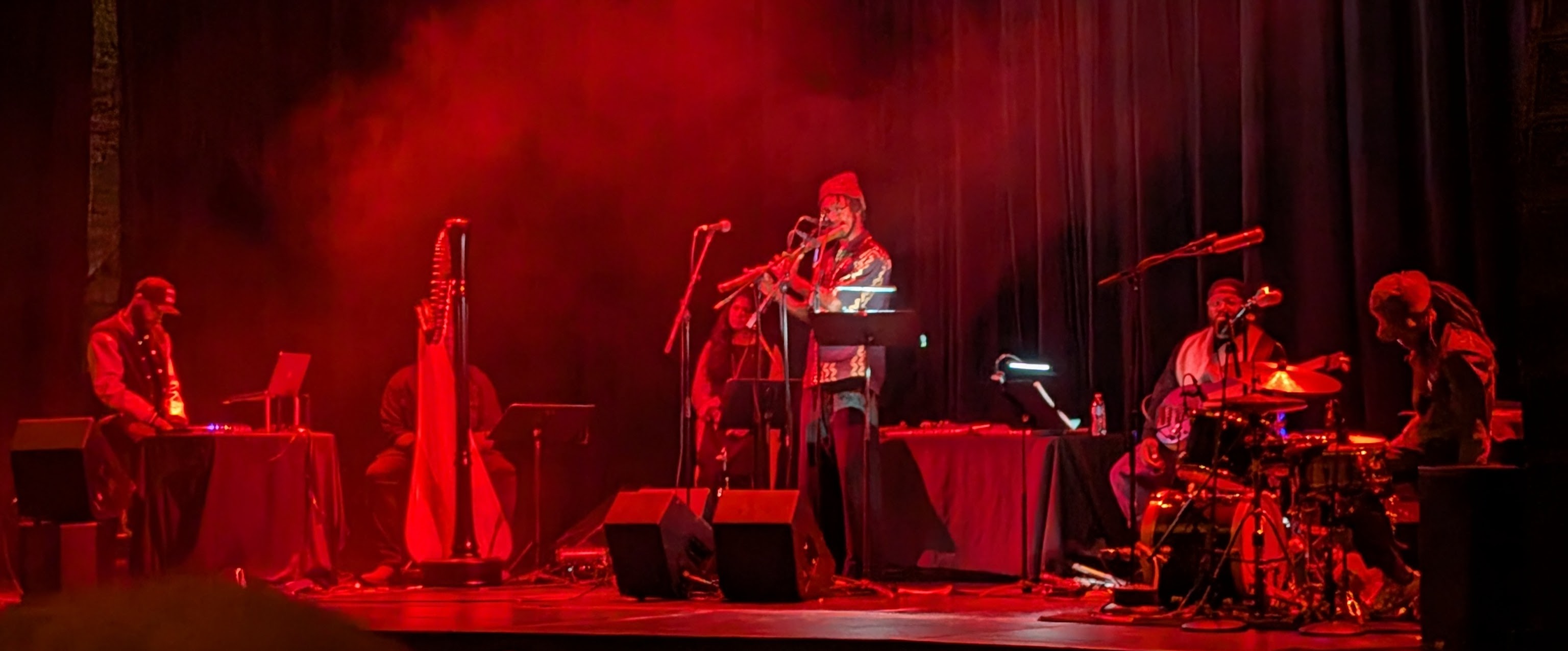
Shabaka, Bijou Theatre, Knoxville, March 2024
  • Big Ears Festival, Knoxville
    • Mary Halvorson’s Amaryllis, Tennesee Theatre
    • Jlin, The Point
    • Jason Moran and the Harlem Hellfighters, Knoxville Civic Auditorium
    • Chocolate Genius Inc, Bijou Theatre
    • Christian McBride and Brad Mehldau, Tennessee Theatre
    • Sexmob, The Standard
    • Charlie Dark MBE, Jackson Terminal
    • Shabaka, Bijou Theatre
    • Davone Tines and the Truth, Tennessee Theatre
    • Henry Threadgill/Vijay Iyer/Dafnis Prieto, Tennesee Theatre
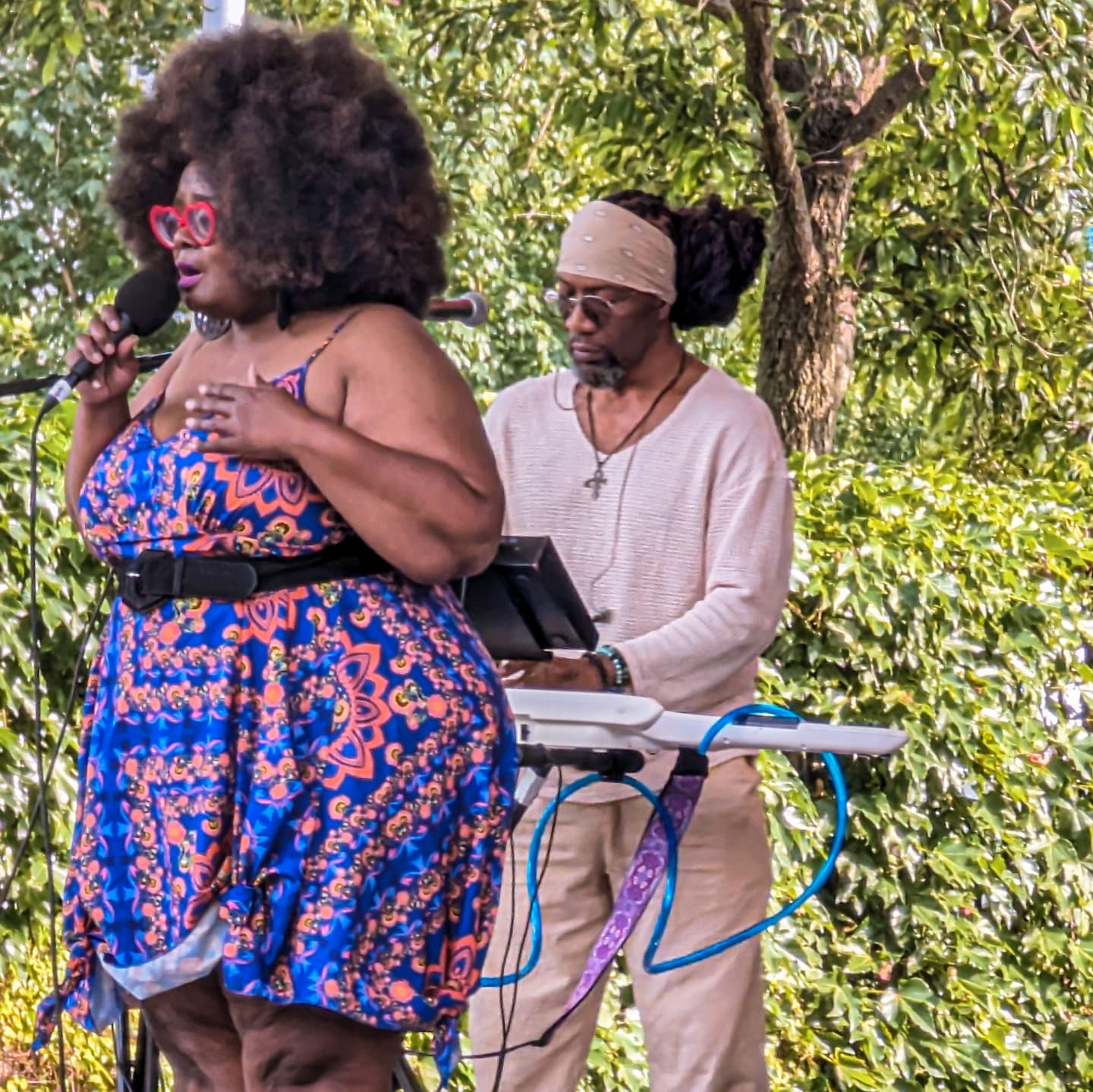
Talisha Holmes, Columbus Arts Fest, June 2024
  • Columbus Arts Fest
    • Talisha Holmes
    • Soulutions Band
    • Trek Manifest and the Aye-1 Band
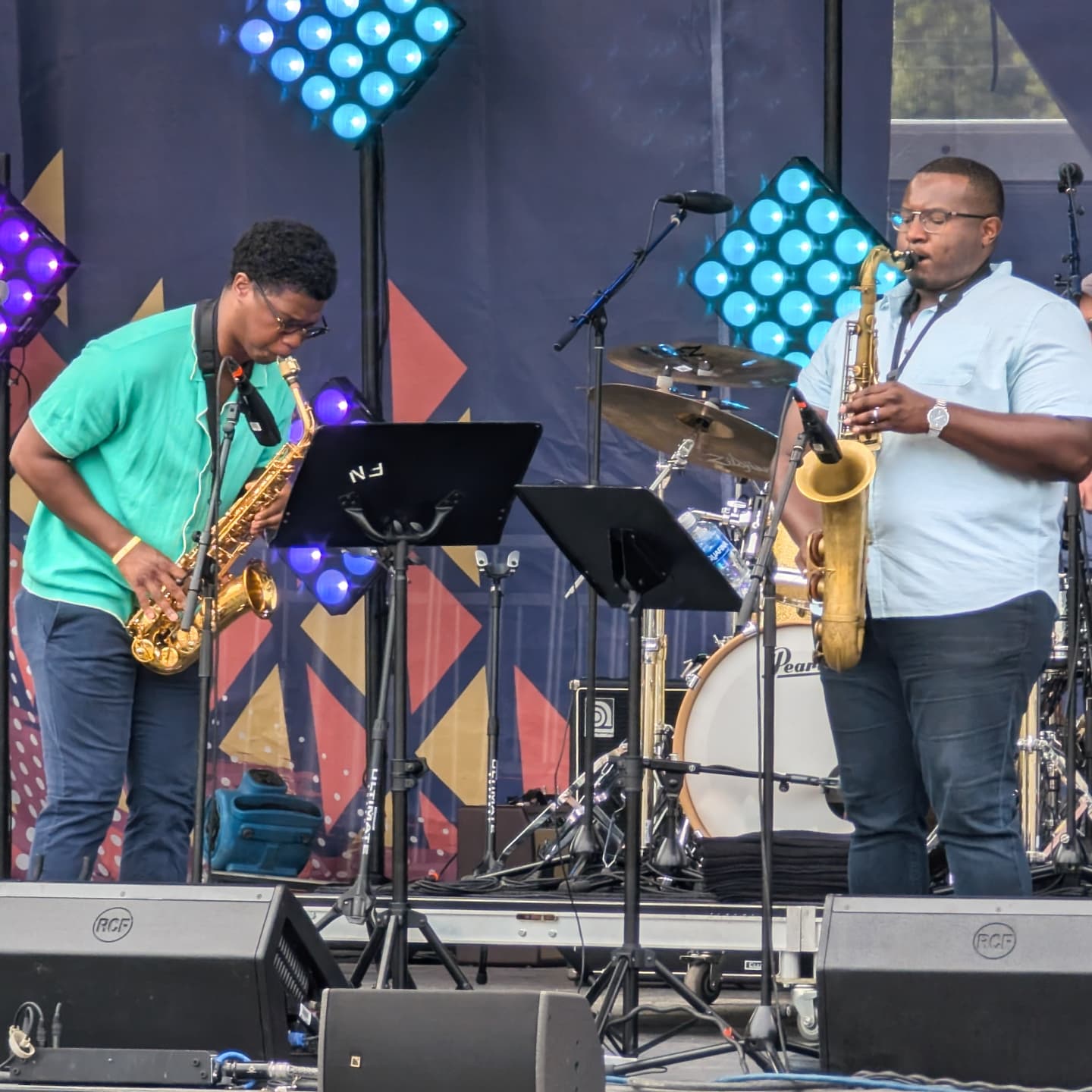
Faheem Najieb Quintet, Jazz and Ribs, July 2024
  • Columbus Jazz and Ribs Festival
    • Faheem Najieb Quintet
    • Milton Ruffin Quintet
    • Clave Sonic
Etran de L’air, Railgarten, Memphis, September 2024
  • GonerFest, Railgarten, Memphis
    • Pull Chains
    • RMFC
    • So What with Derv Gordon
    • Etran de L’air
    • Water Damage
Vernon Reid Conducting Burnt Sugar, Brooklyn Bowl, NYC, January 2024
Categories
Best Of Playlist record reviews

Playlist – 2022 Spaces

In contrast to the last playlist, these are compositions and performances I didn’t think fit as neatly into the categorization of songs. Usually – but not always – instrumental, usually – but not always – a little longer, a little more sprawling.

https://tidal.com/browse/playlist/3d5c5631-c345-46e8-8584-b749c9631177

  • Medicine Singers featuring Jaimie Branch, “Sanctuary” – I was a big fan of Yonatan Gat’s band Monotonix live, but they never quite gelled for me on record, but I’ve been extremely excited to see the various paths, curiosities, and enthusiasms he’s followed since breaking out on his own. My favorite is his collaboration with the Native American group Eastern Medicine singers on this stunning self-titled album. The record is full of guests, but every guest seems well-chosen, none more so than Jaimie Branch here, who adds a questing, majestic trumpet that feels like coming home to a place that doesn’t look quite the same.
  • Terri Lyne Carrington featuring Ambrose Akinmusire, “Rounds” – Drummer-composer-bandleader Terri Lyne Carrington’s New Standards project is one of the most important pieces of work enhancing jazz in years, with 100 great new compositions by women. The accompanying record, New Standards Vol. 1 finds Carrington assembling a crack rhythm section of herself, Kris Davis on piano, Linda May Han Oh on bass, Matthew Stevens on guitar, and a series of guests. This album-closing, spiky house fire written by one of my favorite pianists (and the artist we went to see the first time Anne and I went to the Village Vanguard together), Marilyn Crispell, features a jaw-dropping, dangling off the edge of the world trumpet solo from Ambrose Akinmusire.
  • Mary Halvorson, “Amaryllis” – Mary Halvorson made two of her strongest statements yet in 2022, with the mirrored records Amaryllis and Belladonna. I greatly admired the work with the Mivos Quartet on the latter – and it’s one of the things I’m most looking forward to seeing at Big Ears – but I couldn’t get several of the pieces with her crushing new sextet of Patricia Brennan on vibes, Nick Dunston on bass, Tomas Fujiwara on drums, Jacob Garchik on trombone, and Adam O’Farrill on trumpet out of my head, especially this title track on the other album. It’s a call to arms of raging beauty and a successful attempt to transcribe the beauty of the world, that moment where Halvorson’s comping mutates right behind O’Farrill’s blistering solo then takes off in another direction knocks me out.’
  • Loraine James, “Building Something Beautiful For Me (Holy Presence of Joan d’Arc)” – The posthumous renaissance of Julius Eastman continues to be a source of joy. This year brought a couple of artifacts of his own compositions and a breathtaking record of homages and refiguring from London-based composer/producer Loraine James. This title track uses the first piece of Eastman’s work I loved, the vocal intro and massed cellos of The Holy Presence of Joan d’Arc, and stretches the tones, playing with the colors so new light shines right through.
  • Brian Harnetty, “Let There Be a Moving Mosaic of This Rich Material” – Brian Harnetty is one of Columbus’s finest composers in a field where the bar is high. Over the last several years, his work with archives, especially with the past of Kentucky and Ohio, has provided a rich field he’s dug deep and made the best use of. His new record, Words and Silences, is a masterful look at the monk and writer Thomas Merton, using Merton’s own words and Harnetty’s settings to craft a mosaic look at the great man’s life. It’s a remarkable paean to stillness, attention, to getting off the merry-go-round of modern life and stopping to hear ourselves. Like all of Harnetty’s work, the insistence on meeting the materials where they are doesn’t negate the artist’s intention or vision, it opens it wide.
  • Bill Frisell, “Waltz for Hal Willner” – As I said in an earlier Parting Gifts playlist, Hal Willner’s tribute records were world-shattering to me, bringing together Leonard Cohen, Diamanda Galas, Harry Partch instruments in the service of Charles Mingus compositions, everything on Night Music… it all stunned me. And I’m so glad I got to see Willner once doing a piece with recordings accompanied by a small band, including Bill Frisell, where the affection between the two was radiating throughout the Stone. I love everything on Frisell’s new record, Four, pairing him with pianist Gerald Clayton, drummer Johnathan Blake, and Greg Tardy on clarinet and saxophone, but I kept coming back to this beautiful, elegiac waltz.
  • Kalia Vandever, “Passing Through” – Composer and trombonist Kalia Vandever assembled a nuanced, powerful sextet for an album of some of the best jazz compositions anyone’s writing now, Regrowth. Her striking trombone voice is front and center with gripping accompaniment from Immanuel Wilkins on alto, Lee Meadvin on guitar, Paul Cornish on piano (check his dancing solo that rises right out of a gorgeously gnarled stretch from Vandever), Nick Dunston on bass, and Connor Parks on drums.
  • Mark Lomax Trio, “Better Get Hit in Your Soul” – Another of the finest Columbus composers is also one of our best drummers and bandleaders, Dr. Mark Lomax II. For Charles Mingus’s centennial, Lomax and his longtime collaborators Dean Hulett on bass and Eddie Bayard on tenor team up for loving, well-crafted versions of a number of Mingus’s finest compositions. This is one of my favorite pieces on Trio Plays Mingus, with a long, melodic bass intro that flowers into a soulful masterclass in group interplay about a minute in. Three of our greatest players digging into material they’ve been working with as long as they’ve been playing music, with nothing to prove but always the questing spirit for finding something new, of surpassing their own expectations. This rises and rises but never leaves the soulful, earthy qualities of the original piece behind; you could sing every solo in this if you had the knack.
  • Tigran Hamasyan featuring Mark Turner, “All The Things You Are” – Armenian pianist Tigran Hamasyan first caught my attention for his intricate compositions so his album-length detour into standards, StandArt with a sympathetic rhythm section of Matt Brewer and Justin Brown, and guests was a delightful surprise. This gorgeous version of one of my favorite standards features the great tenor player Mark Turner and the lines Hamasyan and Turner weave around one another leave me breathless.
  • Moor Mother featuring Nicole Mitchell, “ARMS SAVE” – Moor Mother’s Jazz Codes plays with and jousts the jazz influences that have always been present in her un-classifiable work. This track, a highlight in a record full of them, featuring multi-reedist and composer Nicole Mitchell, uses the classic poetic device of sliding sentence fragments around, watching them spark against each other, in the night-sky-tapestry of reeds and a subtle beat. “I’m so hot, but no fans, but at the stake of all your demands, guess my presence never been felt.”
  • Mali Obomsawin, “Blood Quantum (Nəwewəčəskawikαpáwihtawα)” – Bassist and bandleader Obomsawin’s Sweet Tooth is one of my favorite debuts in a long while and this 11-minute album closer merges an Obomsawin composition with a contemporary Native American chant written by Obomsawin, Lokotah Sanborn and Carol Dana of the Penobscot Nation with arranging assistance from Lancelot Knight of Muskoday First Nation, and it’s a stunning, defiant, swinging meshing of jazz playing with horns from Allison Burik, Noah Campbell, and the record’s co-producer Taylor Ho Bynum, and a rhythm section including drummer Savannah Harris and guitarist Miriam Elhajli and the music of Obomsawin’s (and the nation’s) heritage.
  • Tarbaby featuring Oliver Lake, “Purple” – The collective trio Tarbaby – pianist Orrin Evans, bassist Eric Revis, and drummer Nasheet Waits – is one of my favorite groups in contemporary jazz, for many years at this point, and some of my favorite work of theirs also brings in the saxophone giant Oliver Lake. This simmering free ballad featuring trumpeter Josh Lawrence is a perfect example of form meeting intention and lighting the flame of beauty.
  • Jacob Garchik, “Bricolage” – Garchik’s new record “Assembly” fits together pieces of improvisations with a killing quintet of Sam Newsome on soprano, Jacob Sacks on piano, Thomas Morgan on bass, and Dan Weiss on drums, into new compositions in a really beautiful way that feels like it builds on his last few records, Ye Olde and Clear Line and playing with some ideas from his film scores while also staying in touch with his lineage as a jazz trombone player.
  • Bobby Previte, “GAMBLE” – One of my great joys this year was getting together in the same place with my childhood friend Mike Gamble and his wife, filmmaker Devin Febboriello, after a break of several years. So it was an extra joy to get to tell him how much I loved his work on Bobby Previte’s Nine Tributes for Electric Band and ask him if it was intimidating to be the guitarist on a record that pays tribute to so many other amazing players that Previte had worked with, from Sonny Sharrock to Charlie Hunter to Nels Cline. And, of course, with the humility I’d expect, the answer was, “Oh man, of course.” But it says something that not only did Previte – who’s played with everybody – call him for this task, but one of the tributes is dedicated to Gamble. And it’s a crushing piece, a key example of an artist being truly seen by another.
  • Sonic Youth, “In & Out” – I loved the collection of Sonic Youth compilation rarities and outtakes this year, In/Out/In, varying from fully formed works to rehearsal space jams. The wordless vocals on this and sly krautrock rhythms kept giving me joy in the months since its release.
  • Angelica Sanchez Trio, “Before Sleep/The Sleeping Lady and The Giant that Watches Over Her” – One of the great pianists working in jazz today, Sanchez assembled an all-star rhythm section of Billy Hart and Michael Formanek for this formidable trio album. The newly composed “Before Sleep” section blends so perfectly into the Ellington piece it feels like they were made for one another.
  • Lara Downes, “Magnetic Rag” – I was late to the party with Lara Downes, discovering her with last year’s series of work by black American composers, but I made up for the newness of that fandom with enthusiasm, so I was ready for her Scott Joplin record Reflections. This piece is a prime example of how a subtle arrangement by Stephen Buck and her light but decisive touch on the piano can remind us of the gorgeous accessibility, and the big riffs in these 100+ year-old songs, reminding us that Joplin helped define where American music was going and that the artistry of Downes is helping keep it alive.
  • Sweet Teeth, “City of Fern” – Sweet Teeth is a band I love in town because I can never quite get my finger on what they’re doing before they’re onto the next thing, but it’s always good. Brothers Stew (guitar, electronics, vocals) and Sam (cello) Johnson have seemingly voracious appetites for sounds, genres, and approaches. With Body Weather, they made a record as good as the times I’ve had seeing them live. This song sets up a deceptively placid surface and subverts those expectations over and over again for its seven-minute run time. “Ghost walk through a city of fern. All those bell shaped flowers try to sing.”
  • Charles Mingus, “Fables of Faubus” – Much as I love Mingus, I balked at the price of The Lost Album from Ronnie Scott’s on Record Store Day so I had to find it electronically after multiple people told me I was an idiot. This joyous and rightfully enraged romp through one of his classics is a key example of why this document is important and how his songs still glow 50 years after being recorded. A particularly good showcase for Jon Faddis on trumpet – whose other work did not wow me like he does here – and John Forster on piano about whom I knew nothing.
  • Wild Up, “Stay On It” – The Wild Up ensemble presents this favorite of mine of the Julius Eastman compositions, arranged by Christopher Rountree and Chris Kallmeyer, that captures all of its joy, its ebullient intensity, its encouragement to keep going.
  • Ethan Iverson, “For Ellen Raskin” – Iverson made his best, most consistent solo record with his Blue Note debut Every Note is True, making excellent use of a spectacular rhythm section of Jack DeJohnette on drums and Larry Grenadier on bass. I can’t count how many records I have with those gentlemen on them, but I can promise there’s not a bad one. And having three melodicists but who also know and love the simplicity of comping, of finding that pocket in a rhythm section, makes every tune on here shine. For me, this is one of the best melodies Iverson’s ever written, begging to be untangled, played with, and admired.
  • Fred Hersch, “Pastorale” – Speaking of melodicists, pianist Fred Hersch has been setting that bar high for decades, and his Breath by Breath, with a rhythm section of Drew Gress and Joachen Rueckert and the Crosby Street String Quartet, is another glowing example. An example of being perfectly lovely without being syrupy or contrived.
  • Mal Waldron, “You Don’t Know What Love Is” – I got into Mal Waldron after reading he was Billie Holliday’s last accompanist around the same time my late high school/early college self got extremely into Steve Lacy, who collaborated with Waldron for many years. I remember being in Portland and seeing a whole section of mostly solo Mal Waldron discs, getting two, and being blown away by both. Everything record of his I’ve ever found had something to teach me, and this year’s Searching in Grenoble from 1978 is a prime example. In excellent sound, in a transitional moment in his life, and it all comes out in a series of stormy pieces like this dissection of a favorite standard of mine, played with the thump of a martini shaker hitting the bar, then delicately as playing curls of smoke.
  • Peter Brotzmann/Milford Graves/William Parker, “Side B” – This year’s Historic Music Past Tense Future is a remarkable document of an explosive meeting between three artists who worked with each other over the years, all growing out of ’60s free jazz. Brotzmann always plays best with people with strong senses of rhythm and the storytelling drums of Graves bring out something different in his playing from the soulful pulse of Hamid Drake or the crunching surprise of Han Bennink. And Parker’s bass, that knew both so well, is a magic meeting place. This reminds me how lucky I was to live when all three of them walked the Earth and to make time to see Parker soon and Brotzmann whenever he next hits the states.
  • Anadol, “Gizli Duygular” – Anadol, the electronic music project of Turkish artist Gözen Atila has a sense of going inside oneself – the record Felicita is a favorite thing to write to – but there’s always a sense of play, the kind of joyful curiosity every meditation teacher always told me I should approach meditating with and the kind of joyful curiosity I try to approach writing and anything I absorb culturally (but often fall short of).
  • Immanuel Wilkins, “Fugitive Ritual, Selah” – Rising star saxophonist Immanuel Wilkins’ latest record for Blue Note, The 7th Hand, is a triumph, a connected suite where each piece makes its own impression. This composition features the core quartet of Micah Thomas on piano, Kweku Sumbry on drums, and Rolling Stones member Daryl Johns on bass, with subtle but gripping interplay and a melody that stuck with me as soon as I heard it.
  • Elvin Jones, “13 Avenue B” – Elvin Jones is very well recorded but there aren’t a lot of examples of him this early as a bandleader after leaving the classic Coltrane quartet. This smoking 1967 set from Pookie’s Pub in SoHo. This piece of classic hard bop features a prime example of his hook-up with bassist Wilbur Little, familiar from Jones’ late ’60s studio dates as a leader but also fiery playing from Joe Farrell, best known for his Return to Forever work, and pianist Billy Greene.
  • Taru Alexander, “Kojo Time” – Drummer and bandleader Taru Alexander’s Echoes of the Masters pays tribute to his inspirations, including his father Roland Alexander. This impassioned romp through a Roland Alexander classic highlights saxophonist Antoine Roney as the entire quintet does a spectacular job with the piece.
  • JD Allen, “This World is a Mean World” – JD Allen, with maybe my favorite tone of any working tenor player, continues his deep dive into blues and the roots of American music with Americana Vol. 2, using the same empathetic rhythm section of Gregg August and Rudy Royston, adding guitar virtuoso Charlie Hunter to the mix to powerful effect.
  • John Scofield, “Junco Partner” – Maybe the first jazz guitarist I was a fan of, John Scofield’s first solo guitar record, self-titled, is a mix of strong originals and classics. This version of the blues traditional – which I learned from the Clash then went back to the Dr. John, the Professor Longhair, the Louis Jordan – highlights Scofield’s blues background and the smoothness of the ideas flowing out of him.
  • Johnny Gandelsman, “Barbary Coast, 1955” – Violinist Johnny Gandelsman went to many of our great American composers for his rapturous and sometimes heartbreaking This is America. For this piece, for five-string violin, Terry Riley wrote a gorgeous homage to a seedy strip of San Francisco in the ’50s.
  • Antoine Fatout, “Roger’s Riff” – Columbus drummer Antoine Fatout has been making noise as a sideman – I first heard him with great guitarist Brett Burleson – and with his own Trio Fa2. This debut record teams him with two of Columbus’s treasures we sometimes share with the world – Roger Hines on bass, best known for a long stretch in Ray Charles’ band, and guitarist Stan Smith (Moacir Santos, Madrugada, Descendre) – for a swinging, melodic record. This is a favorite of mine but there isn’t a bad tune on the album.
  • Oren Ambarchi, “IV” – Oren Ambarchi’s Shebang is one of my favorite recent examples of composition by accumulation. The guitarist brings in collaborators, including drummer Joe Talia, Necks pianist Chris Abrahams, pedal steel player BJ Cole, 12 string guitarist Julia Reidy, and lets them do what they do in cells, slowly drawing it together into this final, jubilant movement.
  • Isaiah Ceccarelli, “Toute Clarte m’est obscure: V. Aubade” – I fucking love an aubade, though I knew the poetic form before I discovered the musical. This fifth movement of Ceccarelli’s Toute Clarte m’est obscure composition centers on Ellen Weiser’s voice that, along with Katelyn Clark’s organ, feels like the sun rising on your face.
  • Mike Baggetta/Jim Keltner/Mike Watt, “Everywhen We Go” – This title track of the new album from this terrific collaboration has a cool spaghetti western feeling, set up as much by Keltner’s crisp drum rolls and edge-of-the-cymbal work as Baggett’s echoing twang and Watt’s melodic heartbeat bass.
  • James Brandon Lewis, “An Anguish Departed” – Saxophonist James Brandon Lewis seems to pop up everywhere these days. This quartet is probably my favorite of the working bands, with Aruán Ortiz on piano, Brad Jones on bass, and Chad Taylor on drums, and Molecular Systematic Music Live captures them at the height of their powers. This mournful throb of a song features wrenching solos from Lewis and Ortiz.
  • Jeremy Pelt, “Still Standing” – Trumpeter Jeremy Pelt follows last year’s conceptual tribute masterpiece with a record of mostly originals, including this one, cinematic in nature as befits the title, and about getting down and playing. The tight band here includes Chien Chien Lu on vibes (check out that buoyant solo), Vicente Archer on bass, Allan Mednard on drums (throughout, his comping is a wonder), Victor Gould on piano, and Brittany Anjou on synth around Pelt’s razor-sharp trumpet sound.
  • Walter Smith III and Matthew Stevens, “Hornets” – In Common III, the latest in a series of collaboratively led records by saxophonist Smith and guitarist Stevens, with an all-time rhythm section of Kris Davis, Dave Holland, and Terri Lyne Carrington, is a perfect example of how tight and beauitful this kind of small group jazz playing can be. One of my favorite things in jazz is hearing how the group comes out of a solo and there are so many excellent examples in this concise five minute piece, particularly after riveting solos from Stevens and Davis, back to that infectious chorus with meaty transitions.
  • Dezron Douglas, “Coyoacán” – Dezron Douglas leads a killer band including George Burton on piano, Joe Dyson Jr on drums, and Emilio Modeste on sax, through a series of terrific compositions on his new Atalayan. This smoldering tune is a highlight on an album full of highlights.
  • Julian Lage, “Heart is a Drum” – Guitarist Julian Lage continues to refine his approach and expand his field of vision with every outing. On View With a Room, his most developed album yet, he re-teams with tight rhythm section Jorge Roeder and Dave King and adds influence turned peer Bill Frisell into the mix for ten great originals. This one grabbed me by the lapels almost immediately.
  • Kali Malone, “Living Torch I” – Composer Kali Malone trades in the pipe organ she’s best known for on Living Torch for a series of synthesizers in a trio format with trombonist Mats Äleklint and bass clarinetist Isak Hedtjärn. With that instrumentation, long, painterly tones are almost expected but Malone and the other two players use those in a way that’s as surprising and fresh as it feels natural and organic. These two pieces are like watching the shadows change as the sun rises over a canopy of trees.
  • Sarah Davachi, “Harmonies in Bronze” – One of my favorite contemporary composers, Sarah Davachi didn’t disappoint on the 2022 record Two Sisters. This pipe organ solo builds slowly and, appropriate to its name, takes on sculptural qualities. The entire record is stunning but this piece makes me want to simultaneously unpack it and just sit back and watch the light drip out of it.
  • Makaya McCraven, “Seventh String” – I had a harder time finding a way into McCraven’s sprawling In These Times, and I suspect seeing more of the material live (after the tastes we got in the excellent Wexner Center show) will snap it into focus. That said, I immediately loved a handful of songs, including this stormy slow jam.
  • Kaitlyn Aurelia Smith, “Have You Felt Lately?” – This opening track from LA based composer Kaitlyn Aurelia Smith uses elastic tones, sudden shifts in rhythm, and treated vocals to build a doorway to an entire universe, shimmering and shifting.
  • Dirty Bird, “The Question” – This loping house track kicks off producer Dirty Bird’s excellent Wagenmuzik album. The chopped, moaning vocal “Is it real?” repeats and folds over on itself around the hard but distant drums, like the soundtrack to a montage at sunset over a dirty street, day melting into night, one world rubbing up against the next.
  • Anna Butterss, “La Danza” – Anna Butterss, known as a bassist but playing everything on this standout track from her excellent Activities record, creates a soundworld that’s full of details and nuance but here never rising above a steady throb, a slow dance in the waning moonlight.
  • Tyshawn Sorey Trio, “Autumn Leaves” – I’ve seen Tyshawn Sorey a lot over the years in many contexts, mostly focused around his compositions or avant-garde improvisation (I still cherish seeing him in the trio with Ingrid Laubrock and Kris Davis at the late, lamented Cornelia Street Cafe). So it was a little bit of a surprise to see this record of standards with pianist (and Columbus native) Aaron Diehl and bassist Matt Brewer come out, but once I heard it it felt like the most natural thing in the world. Standards I’ve heard a million times, like this one, in versions that hold up to any I’ve heard by any of the greats.
  • RedmanMehldauMcBrideBlade, “Rejoice” – The second reunion record of this quartet that was so influential to me and so many others in the ’90s, LongGone, did not disappoint. This bouncing Joshua Redman composition gives he and Mehldau plenty of space to stretch and I’m especially in love with the almost taunting call and response inside McBride’s playing.
  • Tony Monaco, “Lush Life” – One of Columbus’s keyboard treasuers, maestro of the B-3 Tony Monaco, made his best record in years, Four Brothers, teaming up with saxophonist Eddie Bayard, guitarist Kevin Turner, and drummer Willie Barthel III. Here they take on maybe my favorite standard of all time, digging deep on a classic slow-burn rendition.
  • Charles Lloyd with Zakir Hussain and Julian Lage, “Tales of Rumi” – I enjoyed all three of the Charles Lloyd Trios records but I think my favorite was this collaboration with tabla master Zakir Hussain and virtuoso guitarist Julian Lage. The three approach the situation as equals and the equal weight on each instrument shines and lets the difference in tonal quality shine through this winding, snaking piece. As usual with these, I try to end with a prayer. Thank you all for reading and listening.
Categories
Playlist record reviews

Playlist – September 2022

Once again – as befits my favorite cultural season – a lot of writing for other outlets, so I’m racing to get this one done and out before New York this week. But also as befitting my favorite season in general, so much great work. A little more meditative maybe but also some hard partying tracks. Hope you’re all doing well, whether you inherently love fall as much as I do or not. Love to anyone who takes the time to listen to and/or reads these.

https://tidal.com/browse/playlist/94d5c558-a938-471d-a46a-1bb7945a4eed

  • Beth Orton, “Arms Around a Memory” – I was one of the many people who got my head split open by Beth Orton’s Trailer Park when I was 16 and every record through Sugaring Season blew me away, with 2002’s Jim O’Rourke-produced Comfort of Strangers as a personal high water mark. Her new one, Weather Alive, after a six-year wait, brings me back to the best parts of all of those records while stirring in new colors. This track, with a combination of English (including drummer Tom Skinner who knocked my face in this spring playing with Sons of Kemet) and NYC (bassist Shazad Ismaily who shows up here with so much regularity I should send him something, Antibalas’s Stuart Bogie on sax, Winged Victory for the Sullen’s Dustin O’Halloran, and guitarist Greg McMurray whose guitar is a key voice of the current chamber music scene) band centered around Orton’s piano and voice, became an immediate front runner in a record I have a hard time picking favorites from. The subtle, insistent rhythms and repetition and the expansiveness of the synths, backing vocals, and reeds feel like walking through streets you know almost too well, while Orton’s murmured vocal wrestles with ghosts and finds exactly the place to put that memory in a way I still struggle with more often than not. For me, this feels like walking through New York in the morning – helped by the specific reference in the first verse and the Johnny Thunders nod in the title – but I know it works just as well for those memories in the long shadows of London or Kansas City. “And I got to questioning my credibility like you’re the reliable witness to what I feel, though I can still taste the sweetness of what we had, and there’s no one will kiss me as deep as you know you have. Once that I saw how to see all of your love was looking back at me, it was hard not to fulfill the prophecy we could have been.”
  • Afghan Whigs, “Domino and Jimmy” – The new Afghan Whigs record is still sinking in for me; it’s a slower build than the last few post-reunion albums. But I loved this expansive, cracked ballad immediately, and not just because it reunites them with my pal and Scrawl co-leader Marcy Mays, reviving her character from “My Curse” and putting her in direct dialogue with the male half, voiced, of course, by Dulli. It’s a prime example of their rocket ride to the bottom songs, land they plow better than anyone else I can think of, giving glory to people in their worst moments. “You are lost in sight and lost inside my head. You seem to insinuate that I leave. I know it’s been a while. But, baby, if you were waiting for me, we’re going out in style.”
  • Terri Lyne Carrington, “Circling” – One of the great drummers, composers, and bandleaders of our time, Terri Lyne Carrington, turned her attention to a much-needed project to start redressing the place of women in the jazz composition canon with her editing of The New Standards Vol. 1, 100 pieces by women and including many of the best composers working now. This beautiful Gretchen Parlato song augments Carrington’s killer core group of rhythm section mates Kris Davis on piano and Linda May Han Oh on bass, Nicholas Payton on trumpet, and Matthew Stevens on guitar (who co-produces with Carrington), with guitarist Julian Lage, vocalist Michael Mayo, and percussionist Negah Santos – someone please correct me if I’ve gotten the vocalist wrong, I tried to piece this together from partial credits I could find googling. The warm, swirling melody and the perfect empathy of the group – Carrington’s cymbals on the verses, cutting through the dancing guitars, Davis’ piano at precisely the right moments; Payton’s trumpet solo that feels like liquid light – made this an immediate standout on another record that has so many highlights for me, and a song that hit me at a moment I really needed it. “Stop wishing on so many stars above. All that you’ve done has come from wanting love. What if we met at some other place in time? There’d still be rain. There’d still be sun to shine. Your happiness to give away is so much more than all the games they play. So be done.”
  • Garbage Greek, “Bad Habit” – I can’t believe I haven’t put something from this record – one of my favorites of the year and one of my favorite Columbus rock records in a very long time – on a previous playlist. I’ve long liked Garbage Greek, the harder garage project of guitarist/lead vocalist Lee Mason and bassist/vocalist Patrick Koch when schedules stopped their previous (also great) band Comrade Question, but hearing it stripped to a three-piece from five, those two with powerhouse drummer Jason Winner, occasionally augmented live (and on this record) with percussion and backing vocals from Adam Scoppa after the pandemic, shot up to favorite band status. And that added potency is distilled into their finest record, Quality Garbage, which is everything I want from garage rock: muscular hooks, grooves that work as well for a dance party as a fist fight, lyrics that stick but aren’t showy. This song hit me early, but there isn’t a bad track to be found. “I have a nasty habit of forgiving you.”
  • Black Thought and Danger Mouse, featuring Michael Kiwanuka, “Aquamarine” – Roots frontman Black Thought stretches in different directions on Cheat Codes, a stunning collaborative record with producer Danger Mouse. This track, featuring Michael Kiwanuka on the hook, combines dusty samples with gleaming synths and chopped guitar stings as the perfect backdrop for his laid back, layered rhymes. “Trying to find soul again, but my thoughts corrupt the vials and contaminate the console again. It’s a shame, but I cannot complain though I am not the same.”
  • Cory Branan featuring Brian Fallon and Jason Isbell, “When In Rome, When in Memphis” – Memphis Americana singer-songwriter Branan was the first small club show I saw in Columbus after getting vaccinated, and it was a wake-up call to just how good his songs are and his rich coffee after a long night voice just seems to get stronger and more interesting. His new record When I Go I Ghost is a similar reminder of the power of his work, full of interesting arrangements and, while it’s early in my listening, the equal of instant classics The No-Hit Wonder and Adios. This single, with Fallon and Isbell lending backing vocals, is a classic on-the-road rocker with a huge riff and big drums, but wrapped in a little more abstraction, leaning into the mystery that the genre tends to strip out.
  • Danielle Ponder, “Only The Lonely” – My first trip to Nelsonville Music Festival in many years had some frustrations, but it did my heart good to see how much so many of my dearest friends loved it, and it had a few sets that blew me away, including my first exposure to the torchy R&B of Danielle Ponder. Seeing her create such a degree of intimacy in a huge field from the main stage, then digging into her records, has me dying to see her in a club. The crisp crack of the drums under a phantom smoke choir and suspended electric piano chords underpins a vocal as rich and potent as any of the great soul singers of history. “There’s a truth in the dark. It’s gonna break you down, so steel your heart. ‘You don’t love me, you just lonely,’ that’s what my mind say. Your daddy left you guilty, that’s what you don’t see.”
  • The McCrary Sisters featuring Allen McCrary, “Run On” – I’m a sucker for classic gospel quartet music and I’ve been a big fan of the McCrary Sisters for about a decade; I think I came to them through their connections to the Fairfield Four. Coming on the heels of the sad news of Deborah McCrary’s passing, they released this stormy version of the gospel standard “Run On” I heard on one of my Grandmother’s records but snapped into my attention on the Blind Boys of Alabama 2001 record Spirit of the Century. The McCrarys give us a definitive version of a song done so well by so many.
  • Dr. John featuring Aaron Neville and Katie Pruitt, “End of the Line” – Dr. John’s posthumous album Things Happen That Way also features moving versions of “Old Time Religion” featuring Willie Nelson, “Funny How Time Slips Away,” and the Cowboy Jack Clement-penned title track, but I kept coming back to this laid-back swinging take on the Traveling Wilburys song, with fellow New Orleans icon Aaron Neville and Nashville singer Katie Pruitt. Wreathed in second-line horns like smoke, with subtle church-steeped grooves from the great drummer Herlin Riley (powering the best of the post-“Tain” Watts era of Wynton Marsalis) and Jon Cleary’s B3. Hearing those three voices come together on “I’m satisfied” touches me every single time.
  • Tedeschi Trucks Band, “Soul Sweet Song” – Sometimes the undeniably strong Tedeschi Trucks Band gets a little too jammy for me – hearing this as I was playing with the order of the playlist, Anne said, “What are you some kind of a hippie?” – but there’s a warmth and a love for the world their best work has that resonates with me and this is a prime example of them firing on all cylinders. Band members Gabe Dixon and Mike Mattison wrote this in tribute to the late multi-instrumentalist Kofi Burbridge and Susan Tedeschi gives it a vocal like a bonfire, the only sign of life for miles, in the darkness, the promise of warmth and the sun rising again. “In the memory of your melody, when the dawn breaks out, the birds all sing. And I feel your rhythm moving me, ’cause your soul’s sweet song’s still singing.”
  • Late Night Cardigan, “B-Movie” – I hear a similar play of sunlight and shadow to the previous couple of tracks on this tune by Memphis four-piece Late Night Cardigan from their terrific record Life is Bleak and It’s My Cheat Day. Vocalist Kacee Russell sells the loneliness of trying to make someone suddenly being gone make sense, as her and Stephen Turner’s guitars intertwine over the crunching rhythm section of Jesse Mansfield and Zach Mitchell’s steadily turning up the flames.
  • Rich Ruth, “Desensitization and Reprocessing” – For me, this centerpiece of Rich Ruth’s (Nashville musician Michael Ruth) simultaneously mournful and majestic record I Survived, It’s Over is one of the keystones of instrumental music as a way of processing trauma, especially of processing the pandemic we’re still in but I don’t want to make it sound like therapy. The compositional rigor, the delicate layering, the building to fiery free jazz horns and clicking back into the more placid textures of synth and pedal steel, all make it a piece that can stand up to whatever previous associations a listener brings to it.
  • Madison Cunningham, “My Rebellion” – I was a fan of Madison Cunningham’s work on Chris Thile’s Live From Here but never caught one of her own records until this year’s spectacular Revealer. This song’s staccato, repetitive pattern on Cunningham’s guitar ties it to the previous songs as it brings up the emotional intensity and forward motion of the playlist with a supple vocal that takes the melody into surprising places and leaves the lyrics rattling in the listener’s skull. “What is wrong? Have you forgot I’m not a stranger? You’re lead-footed and headstrong and the quiet turns me into a rambler.”
  • Sick Thoughts, “Someone I Can Talk To” – I’ve been a fan of New Orleans Sick Thoughts since first seeing them a number of years ago in Memphis when they were kind of the ur-Gonerfest band, punchy rhythm section in the intense undertow of frontman Drew Owen’s powerful presence and energy. But their new record Heaven is No Fun, and the drop-to-my-knees reminder of everything I love about rock and roll set Anne and I got to see at this year’s Gonerfest took them to another level, the songs are sharper, taking the ear candy riffs that would be tossed off on a bridge on earlier records and allowed to develop into whole songs. A heaping dose of Thin Lizzy in a stew of classic ’77 punk and early ’00s garage but done as well as anyone’s doing it, with more hooks in that scene than anything I’ve heard since Gentleman Jesse’s Leaving Atlanta. My rock record for the end of summer and my favorite record loaded in the barrel for next summer. “Well, there are sometimes that I don’t know where I am. And there are some things that I’ll never understand. There must be someone I can talk to about this. I never realized how much friendship can be missed. But it’s no good now, there’s no one but we two. And I’m alone in the city with you.”
  • Laura Benitez and the Heartache, “Let the Chips Fall” – San Francisco’s Laura Benitez and her crack band crafted one of my favorite sets of classic Bakersfield country/rockabilly in a while with California Centuries. Dave Zirbel’s pedal steel stands out on this track amid a tight rhythm section and Benitez’s clipped, punky vocal on the verses and soaring notes on the choruses. “It took me too many years to start to be brave, and I gotta move now while there’s still a part of me that’s left to save. I know that failing ain’t worse than doing nothing at all, so let the dice roll and let the chips fall.”
  • Snakehips featuring Tinashe, “Who’s Gonna Love You Tonight” – British electronic duo Snakehips reteam with one of my favorite current R&B singers, Tinashe, on this slinky sun-drenched beckoning/indictment rising to a powerful gospel-seared climax. “Who’s gonna tell you that you ain’t just high? Show you that you love this life.”
  • Makaya McCraven, “This Place, That Place” – I’ve been a fan of Makaya McCraven since the very first time I heard him – drawn to that first record because my old friend Tony Barba played on a track or two. And that fandom increased exponentially when I finally saw him life; he merges the repetitive, cell-based constructions of hip-hop, electronic dance music, and modern composition with the strengths of classic free jazz, a nimbleness on his kit, and a Mingus-esque talent for bringing out exactly the strengths of his players. When I interviewed him earlier this year to preview a (stunning) Wexner Center show Anne and I took her Mom to, he talked about the upcoming record, and how great it was that each of the labels he’d worked with recently, free jazz standard bearers International Anthem, British electronic stars XL, and legendary new music label Nonesuch, were teaming up to release In These Times. Hearing it, that almost feels like a metaphor. This record takes everything he’s learned and worked with up to now, especially in the larger band shows like the mind-blowing Webster Hall hit I saw at Winter Jazz Fest a few years ago and ties it all together while also moving forward. Brandee Younger’s harp is a key component of this track, tying the strings together with the horns and Joel Ross’ vibraphone.
  • Julian Lage, “Let Every Room Sing” – Julian Lage’s View With a Room reunites him with the crackling, empathetic rhythm section bassist Jorge Roeder, who I’ve been a fan of since hearing him with trombonist Ryan Keberle’s Catharsis, and Bad Plus/Happy Apple founder Dave King on drums, and adds the additional element of guitarist Bill Frisell who also has an extensive history with King. Their two lines snake and crack around one another in a way that always is surprising and invigorating. There’s enough crunchy noise on this Lage original to remind old heads of Frisell’s early work but without forsaking the Americana leanings and gorgeous melodies of both their more recent outings.
  • Nikki Lane, “Live/Love” – I was a fan of Nikki Lane’s songs and voice the second I heard All or Nothin’, and each record has deepened and broadened that appreciation, but Denim & Diamonds feels like the purest distillation of her magic yet. Whether it’s extra time on the songs, an affinity for Josh Homme’s sympathetic production – he also plays piano, percussion, and mellotron on this track – that works as well on gentle, west coast lopes like this one as the stomping dance numbers, or just a magic confluence of a number of factors, this is one of the most addictive albums I’ve sank into all year.
  • Ice Spice, “Munch (Feelin’ U)” – This Bronx-based rapper’s breakthrough single was all over this summer and coming to it a little late made me very nostalgic for the days I would have heard this in a club or coming out of a car rolling down the street. In less than two minutes, with a creeping track by Riot, it’s a perfect shot in the arm of low-key and well-earned braggadocio. “Sayin’ you love me but what do that mean? Pretty as fuck, and he like that I’m mean.”
  • Snarky Puppy, “Honiara” – Instrumental jazz-funk band Snarky Puppy returned this year with Empire Central, continuing the snarling crime-movie jazz tendency I loved so much on Culcha Vulcha (and the barn-burning live set Andrew Patton and I caught on that tour) but, true to form, bringing in elements from their various side projects and never staying still for too long. The woozy horns and bursting-at-the-seams production keep any part of this from getting too tidy, too clean, and it’s deep enough for the listeners but it’ll get a party out of their chairs.
  • Dmo!, “Save Your Soul” – I found this through one of my favorite local musicians, writer-keyboardist Brandon “BJazz” Scott who co-wrote and co-produced this with Aaron Hardin. I got to know BJazz’s work through his accompanying Talisha Holmes on some of her best thorny R&B and Hardin has a resume including Raheem DeVaughn and Eric Roberson, and this smooth and smoky cry into the darkness is squarely in both of those sweet spots. I couldn’t find much about the singer here but believe I’ll be checking for him going forward.
  • Madi Task, “Quitter” – A newer (or at least newer to me) Columbus singer-songwriter, with some similar gospel tendencies in the piano line and the way she leans way back behind the beat and the lunges at it. It’s raw and vibrant, powerful and a little unformed. “I fill up my cup but it tastes mediocre. The conversations are relying on me. There’s nothing to sip on and nothing to say; I’ll save my wit for a better day. Can’t take the silence? Go back to sleep, ’cause I don’t owe you a goddam thing.”
  • My Idea, “Cry Mfer” – I loved Palberta so I’m obviously interested in whatever else Lily Konigsberg is working on, and this collaboration with Nate Amos didn’t disappoint. The repetition and mix of warmth and chill groove feels like a cold breeze walking through a city and her voice cuts through it like streetlight daggers. “In all my life, I can hardly say I’ve been a light-caster. Found that talking to God was a lot faster.”
  • Courtney Marie Andrews, “These Are The Good Old Days” – The shimmering, mysterious keyboard riff that opens this track sets the tone of questioning memory even while the memory’s happening, interrogating motives, and is a magic springboard (along with other subtle touches on the arrangment: an acid trail guitar, brushed drums) for her candle-in-the-dark vocals in this standout from Andrews’ Loose Future album. “People like me think feelings are facts; falling in love gives us a heart attack.”
  • John Thayer featuring Tara Shupe, “I Couldn’t Find It In the Dark” – John Thayer from the SF band Monkey Lizards made a perfect slightly-bent Americana record with The Hottest Record Of The Year and this song, collaborating with Tara Shupe as co-writer and playing mandolin, piano, and bass along with adding magnetic harmony vocals to Thayer’s holy quaver and guitar and Brian Surano’s subtle, sauntering drums. “I been up every trail, down every road. I’d ask anyone, wherever I would go. Look for it in their faces, and I could see a spark. But I couldn’t find it in the dark.”
  • James Brandon Lewis Quartet, “Molecular” – Saxophonist James Brandon Lewis is killing it lately, from tracks with artists like Moor Mother, William Parker, and Alan Braufman, to one of the greatest contemporary jazz masterpieces Jesup Wagon. I was already sorry I hadn’t gotten to see him live yet, but this new live record with his stunning quartet MSM Molecular Systematic Music – Live rubs salt in that wound. Perfect, empathetic group playing with the insanely tight but never airless rhythm section of Brad Jones and Chad Taylor alongside pianist Aruán Ortiz who fully redirects gravity with that solo about four minutes in, playing killer compositions.
  • Wayne Shorter, Terri Lyne Carrington, Leo Genovese, Esperanza Spalding, “Endangered Species” – One of the great saxophone players of the 20th century, Wayne Shorter has never rested on his laurels or stopped searching, stopped question. This crack quartet of drummer Terri Lyne Carrington, bassist/vocalist Esperanza Spalding, and pianist Leo Genovese (who all get front-of-record billing), tear into this Shorter composition originally heard on his oft-maligned ’80s record Atlantis with a fire that can make any of us who couldn’t hear past the shiny textures of that record feel like an idiot (I may be projecting). Every piece of this – recorded live at the Detroit Jazz Festival – is perfection.
  • The Paranoid Style, “Steve Cropper Plays Femme Fatale” – I was extremely late to this killer indie pop band from DC led by Elizabeth Nelson and Timothy Bracy, but John Wendland’s playing songs from For Executive Meeting including this one won me over. This jumble of images tying Memphis and New York, the past and the present together, over jangling, barbed guitars, makes my heart sing. “In the final estimation, in the final accounting, God have mercy on the man who believes what he’s been doubting. God have mercy on the man who sees her walking down the street. Before you start you know you are already beat.”
  • Giuda, “Medley (Get it over / Space Walk / Watch Your Step)” – One of my favorite contemporary pub-rock examples, this Italian band picks up where Slade left off and Dave Wallingford and I still talk about that one perfect time they came through Ace of Cups. While I’m still hungry for their next visit, Giuda’s raging Live at Punk Rock Raduno captures some of that power and the vibrating enthusiasm of a band and crowd playing one of the first shows after lockdown.
  • Off!, “Free LSD” – Anne turned me onto Off! in the days of their first EPs, drawn from her love of Burning Brides (another band I wouldn’t know without her) from which guitarist Dimitri Coates came, uniting with Black Flag/Circle Jerks singer Keith Morris, and new rhythm section of Autry Fulbright II (from …And You Will Know Us By The Trail of Dead) and Justin Brown (if the Discogs is to be believed, the same drummer who blew me away on Flying Lotus, Gerald Clayton, and Ambrose Akinmusire records). This is another slab of powerful, surging rock.
  • Cam’ron and A-Trak, “All I Really Wanted” – Even hearing about this collaboration with Dipset founder Cam’ron and downtown DJ A-Trak made the nostalgia molecules in my blood boil. Cam’ron’s mainstream rap hits were the soundtrack of my immediately-post-college years and around that time I started working at Chase and friends there said, “You need to check out the Diplomats double CD.” Around that time, A-Trak was getting a lot of buzz as a club DJ leading to touring with Kanye West and then founding Fool’s Gold records and exploding. This reunion doesn’t try to reinvent the wheel but is a magic example of how that music made so many of us feel, and still does. “By the time I turned thirty, I completed my bucket list. I don’t take threats likely, careful who you’re fucking with; dying’ll make you way more famous than your publicist.”
  • EST Gee, “Bow And Say Grace” – This standout track from Louisville rapper EST Gee’s debut full length I Never Felt Nun pairs a smooth rumble of a vocal delivery with a menacing, almost gothic beat that reminds me of the more underground stuff I was listening to around the time I first got into the music I mentioned in the previous blurb. “Roll over, play dead, wreck for the ‘gram – some of they other tricks. I sit back and watch all the rumors they be running with. All who been involved won’t call it off but it’ll never quit. Broke my Granny’s heart, she say her boy done let the devil in.”
  • Mary Bragg, “The Lonely Persistence of Time” – Singer-songwriter Mary Bragg drills down into an existential loneliness on her self-titled fourth record and it’s exactly the record I want in my headphones as I walk through streets covered in wet leaves. Soulful and sumptuous, with her voice and guitar perfectly set up by the rhythm section of Jordan Perlson (who also killed me on Becca Stevens and Joel Harrison’s records) and Ryan Madora, and Rich Hinman’s electric and steel guitars (who’s enhanced great records by everyone from Amythyst Kiah to Sara Watkins to k.d. lang). “It’s a quarter to you as I wait for the blue. How do you find another love that defies and colors the lonely persistence of time? I wanna know. Don’t you wanna know?”
  • Angelica Sanchez Trio, “Before Sleep / The Sleeping Lady and the Giant that Watches Over Her” – Talk about a record that punched me in the gut, especially by artists I already loved. Sanchez is one of the most consistently inventive pianists working in and expanding the jazz tradition and this record, Sparkle Beings pairs her with the astonishing rhythm section of Michael Formanek on bass and Billy Hart on drums, to attack a series of surprising selections from the canon and make them wholly their own. Here, Sanchez wrote an interlude to lead into the Duke Ellington classic for the record closer and, together, they capture the majesty, power, and delicateness of the original while shining powerful new light through it.
  • Redman/Mehldau/McBride/Blade, “Ship to Shore” – Anybody within 5-10 years of my age with even a passing interest in jazz got turned around by the quartet of tenor saxophonist Joshua Redman, pianist Brad Mehldau, bassist Christian McBride, and drummer Brian Blade. Those records blew my mind in High School and I can only imagine the punch they would have packed for someone seeing that band live. I still check for each of their records 25 years later – the first time Anne and I took her Mom to New York, maybe my favorite memory was taking her to see Redman at the Vanguard. I’m happy to report that the second reunion album, LongGone maybe even improves on Round Again. This sumptuous slow blues is everything I’m looking for from a certain kind of jazz and, like the last few, I think these three tracks in conjunction form kind of a prayer for a new day. Thank you all for reading this; I love you.