Categories
Best Of live music

Best of 2025: Live Music

In a world that felt even more on fire than usual – by which I mostly mean the fire was closer to me personally – I found a lot to be grateful for: my friends, my partner, my family, my jobs. My most often source for solace was, as it has been since I was a teenager, live music.

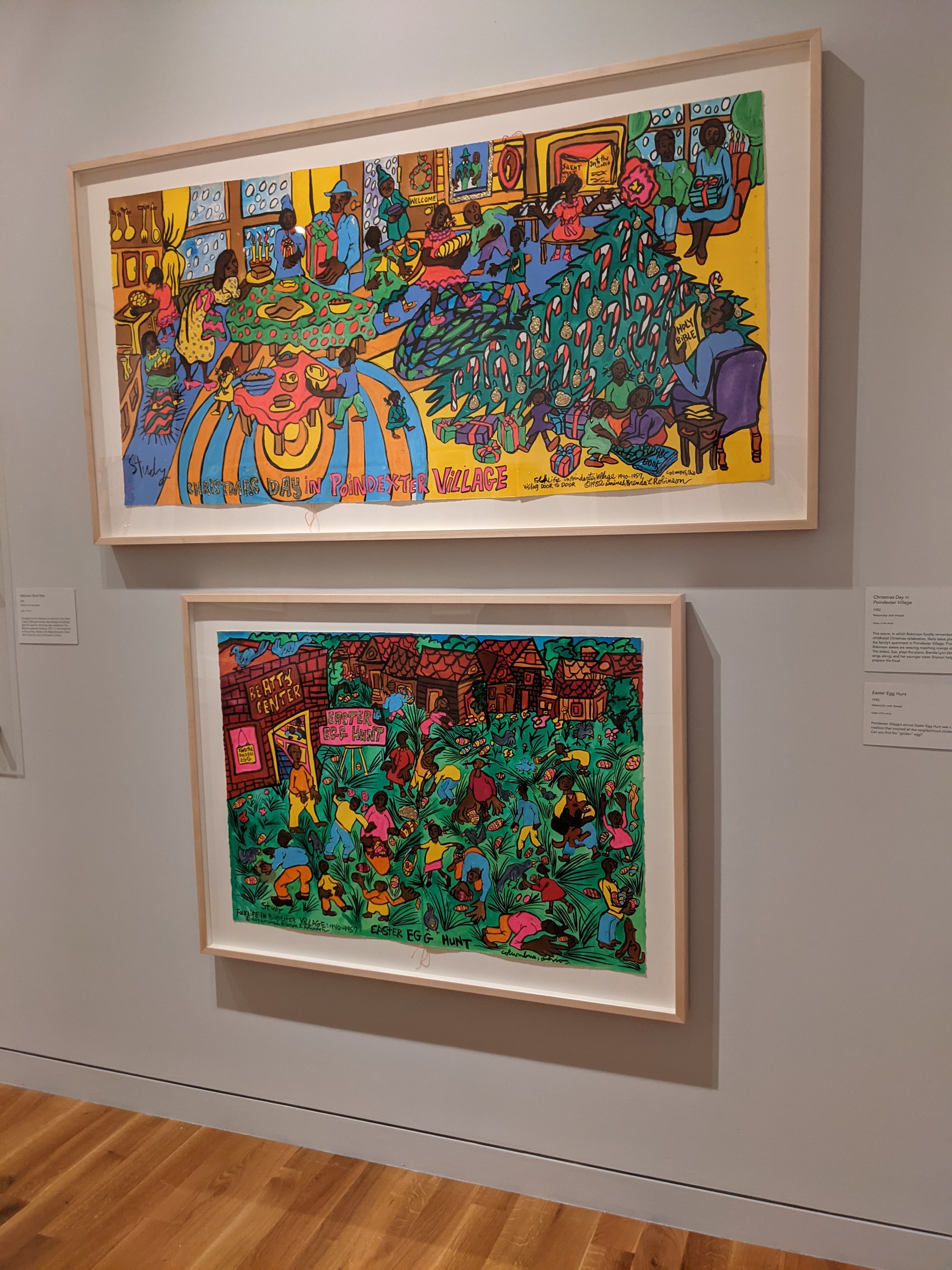
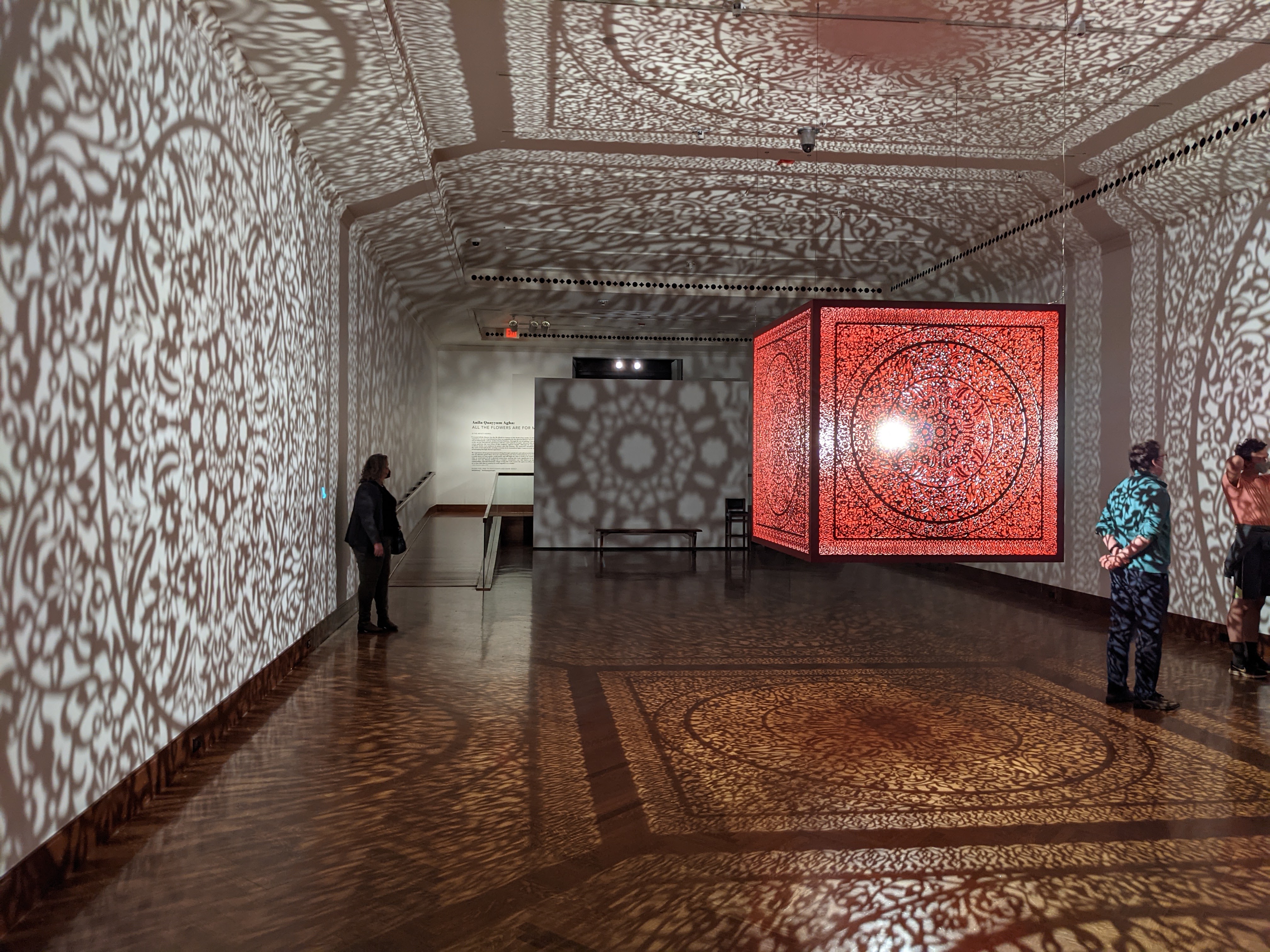
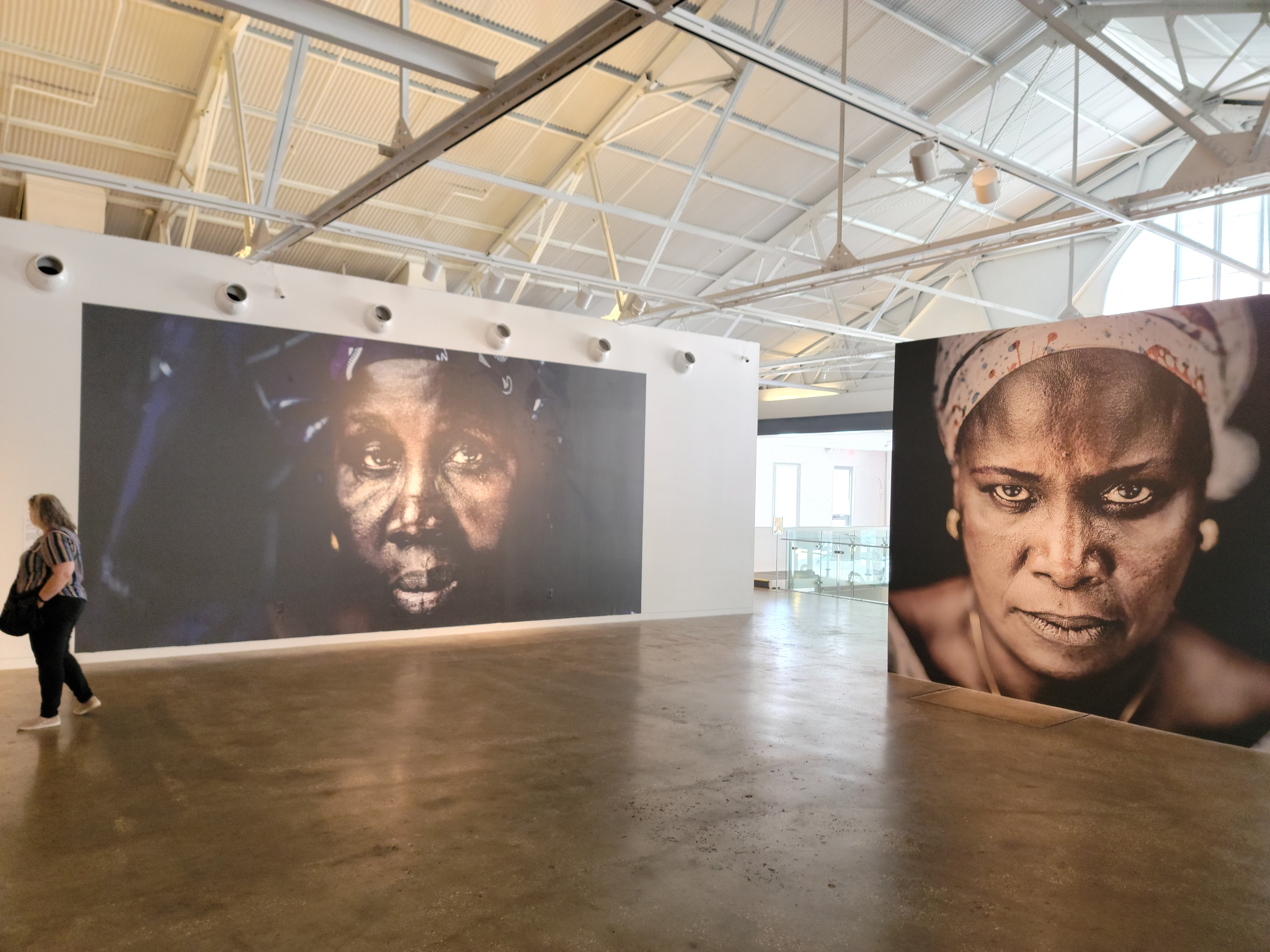
Across nine cities, I saw about 150 shows (expect that to be fewer next year; I’m trying to be more intentional and include more deliberate days of rest each week). Unsurprisingly, Dick’s Den was at the top of my list, hitting an average of once every two weeks, with Natalie’s Grandview and Cafe Bourbon Street tied for second place at 12, and Ace and Rumba also tied at 7. Interestingly, the Columbus Museum of Art and the Wex tied at 4 each, and all of which were terrific. Because there was so much good stuff, I interpreted “Festival” a little more liberally, as anything with multiple stages or days.

No way of knowing what’s next, but there are already some shows I’m very excited for in the upcoming year, and choosing to set my eyes with hope rather than leap to despondency.

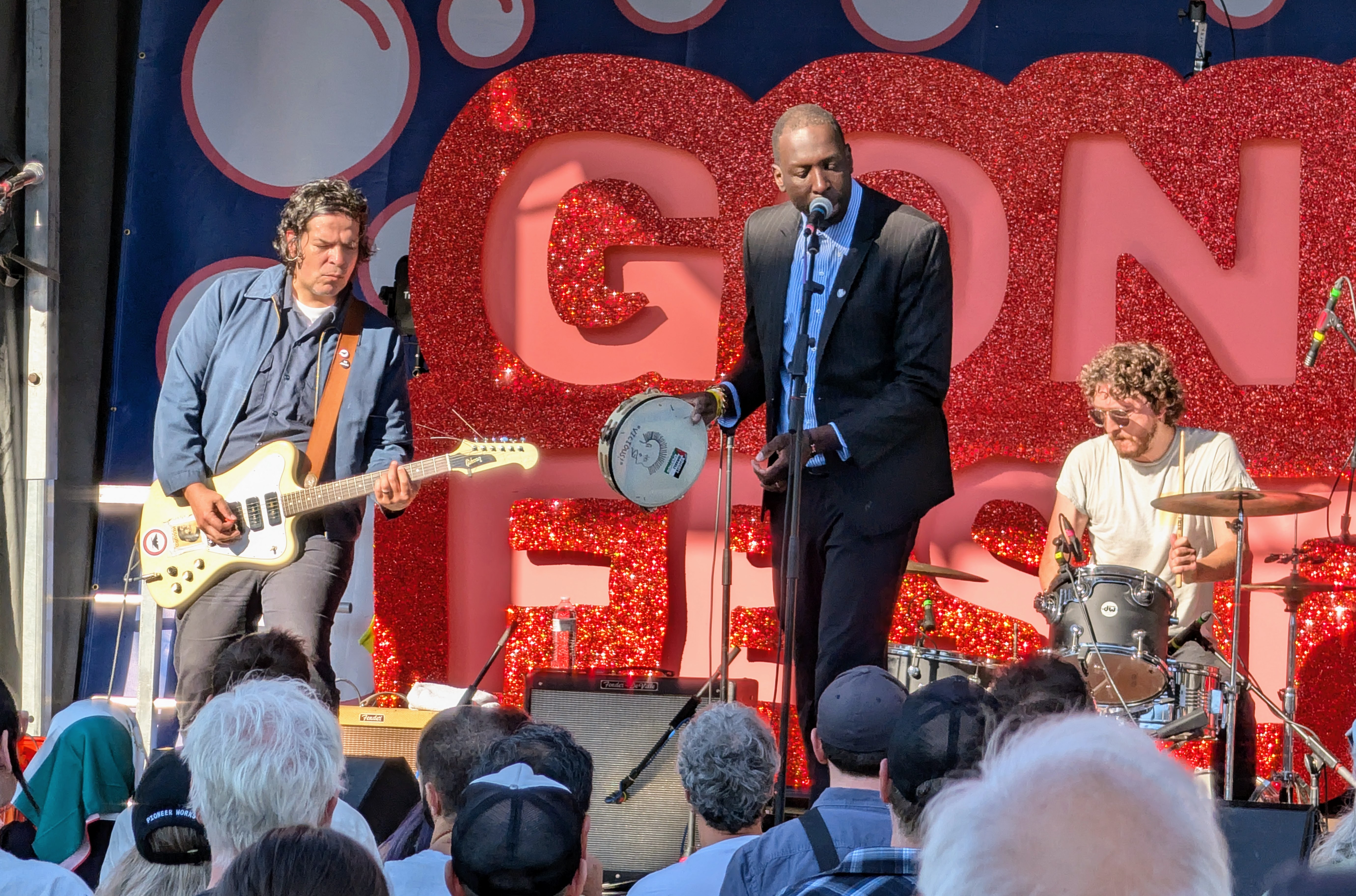
All photos are by me, everything is in Columbus unless stated otherwise, and the listings are in chronological order
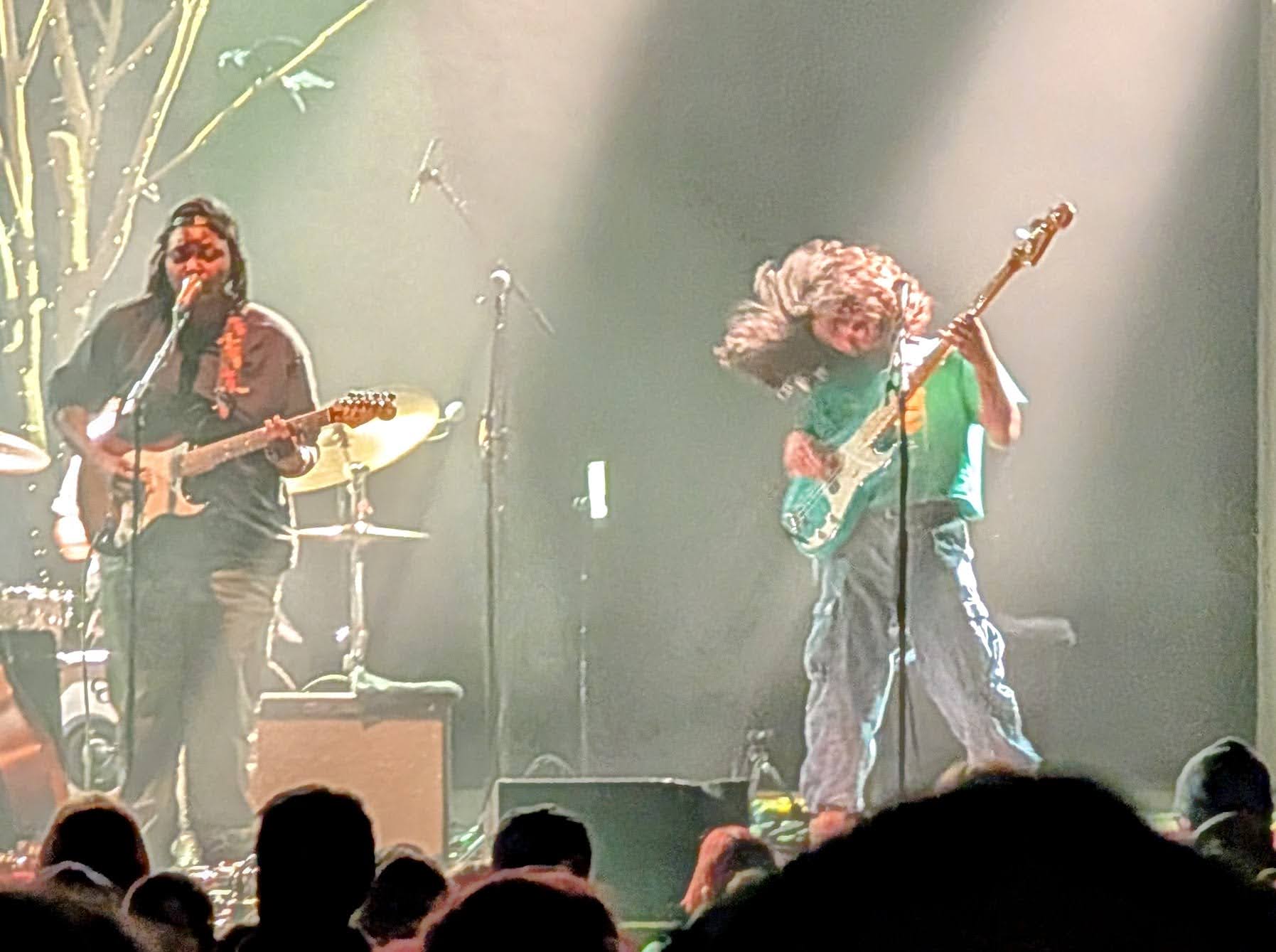
Joy Oladokun at Newport Music Hall

Top 25(ish) Shows

  • Joy Oladokun (Newport Music Hall, 01/21/2025) – Not quite the first show of the year I saw, or even exactly the first touring show (John Calvin Abney, who had a banner this year supporting SG Goodman as well as putting out a stellar EP, did a joint show with Lydia Loveless at Secret Studio a little earlier), but in many ways finally getting to see Joy Oladokun after being a massive fan of her last two records in the room that held so many of my favorite shows of all time (Wilco, Morphine, The Cramps, Sonic Youth, Medeski Martin and Wood/Chocolate Genius, X/The Detroit Cobras) set the tone perfectly and gave me a shot of burning resolve right after the inauguration. I thought the mix of solo acoustic and full-band numbers highlighted both sides of her work in a way I’ve seen a lot of singer-songwriters try but very rarely pull off anywhere nearly as well, and made some of the textures – revealing a surprising (to me) contextual thread between her Observations From a Crowded Room and Don Henley’s Building a Perfect Beast – appear in greater detail and relief.
  • Chuck Prophet and his Cumbia Shoes (Natalie’s Grandview, 02/05/2025) – I’ve never seen a bad Chuck Prophet show – the rare universally acclaimed songwriter who’s every bit as powerful a bandleader – but this flourishing of his merging a couple of members of his longstanding unit Mission Express with Cali cumbia band ¿Qiensave? into Cumbia Shoes hit another level of powerful catharsis, nuance, and unbridled fun.
Chuck Prophet and his Cumbia Shoes at Natalie’s Grandview
  • Joel Ross’s Good Vibes (Wexner Center for the Arts)/Joel Harrison’s Anthems of Unity (Natalie’s Grandview), both 03/06/2025 – Talking to a good friend and stalwart of the NYC and, now, LA, jazz scene about how the touring climate was in town, I brought up this particular evening when I got to see the first set of vibes maestro Joel Ross’s crushing current Sextet (that interplay of Maria Grand on alto and Josh Johnson on tenor in the frontline seared my eyebrows off), an unbroken suite of music blending Ross’s originals and standards that turned my head around then drive 10 minutes and see the astonishing guitarist Joel Harrison do his Anthems of Unity book with two of our local heroes, organist Tony Monaco and drummerr Louis Tsamous. These two approaches to jazz/improvised music/the history of American music, and the way both of these artists approached the canon and the way music can be about the rest of the world instead of being hermetic or closed reverberated hard against each other in my chest.
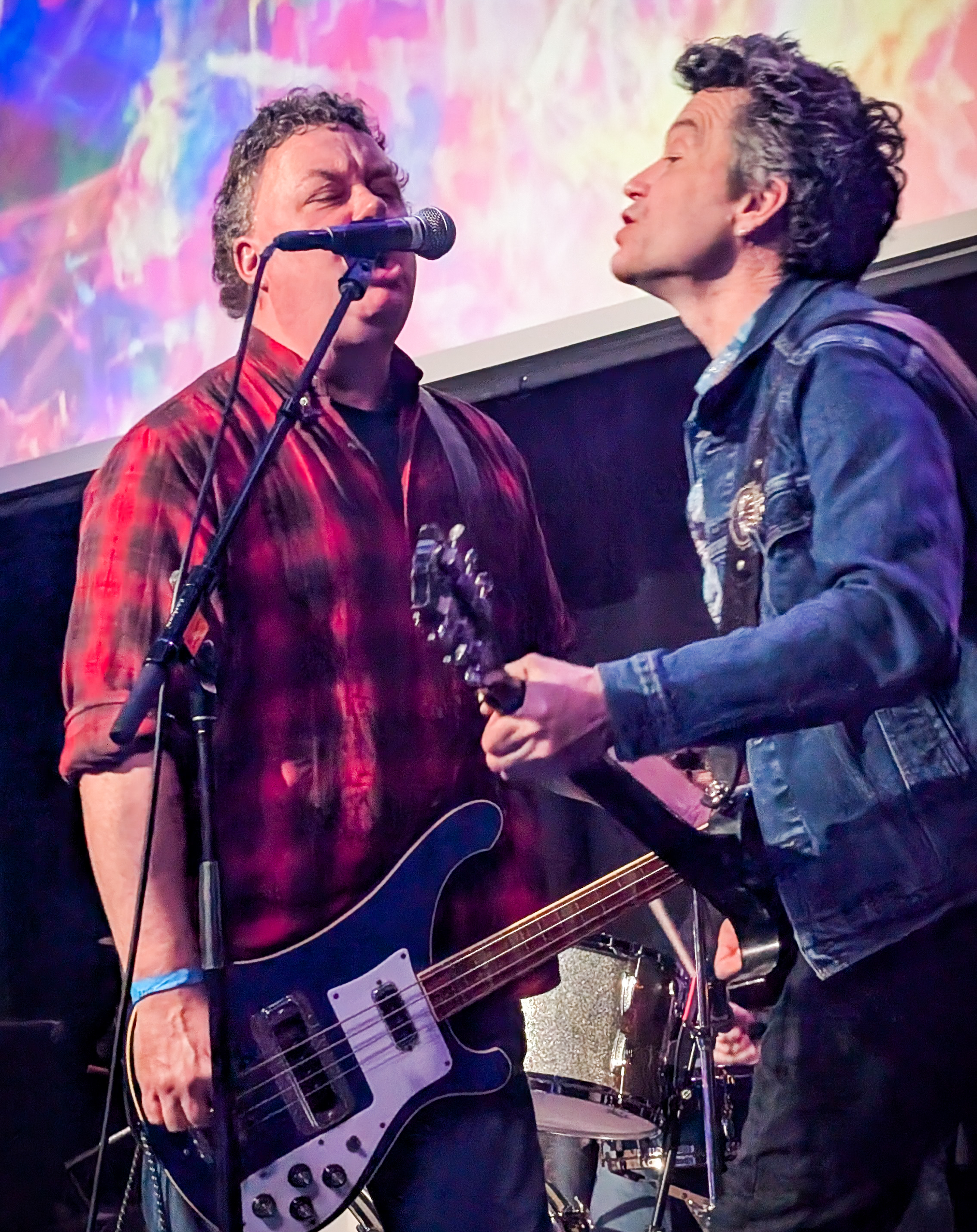
  • Deli Girls with Deionyx (Cafe Bourbon Street, 04/04/2025) – Over the last couple of years, Bobo has reclaimed the throne as my favorite place to see noisy, edgier rock and roll and one of my favorite places to see more underground-leaning DJs. This show scratched both of those itches hard and deep – NYC’s Deli Girls’ mix of grinding, throbbing rave beats, acid-singed noise, and in-your-face punk and Deionyx’s bleeding edge soulful-at-an-angle set of surprising and powerful records both made my heart incredibly full, as did the room packed full of people 15-25 years younger than I am.
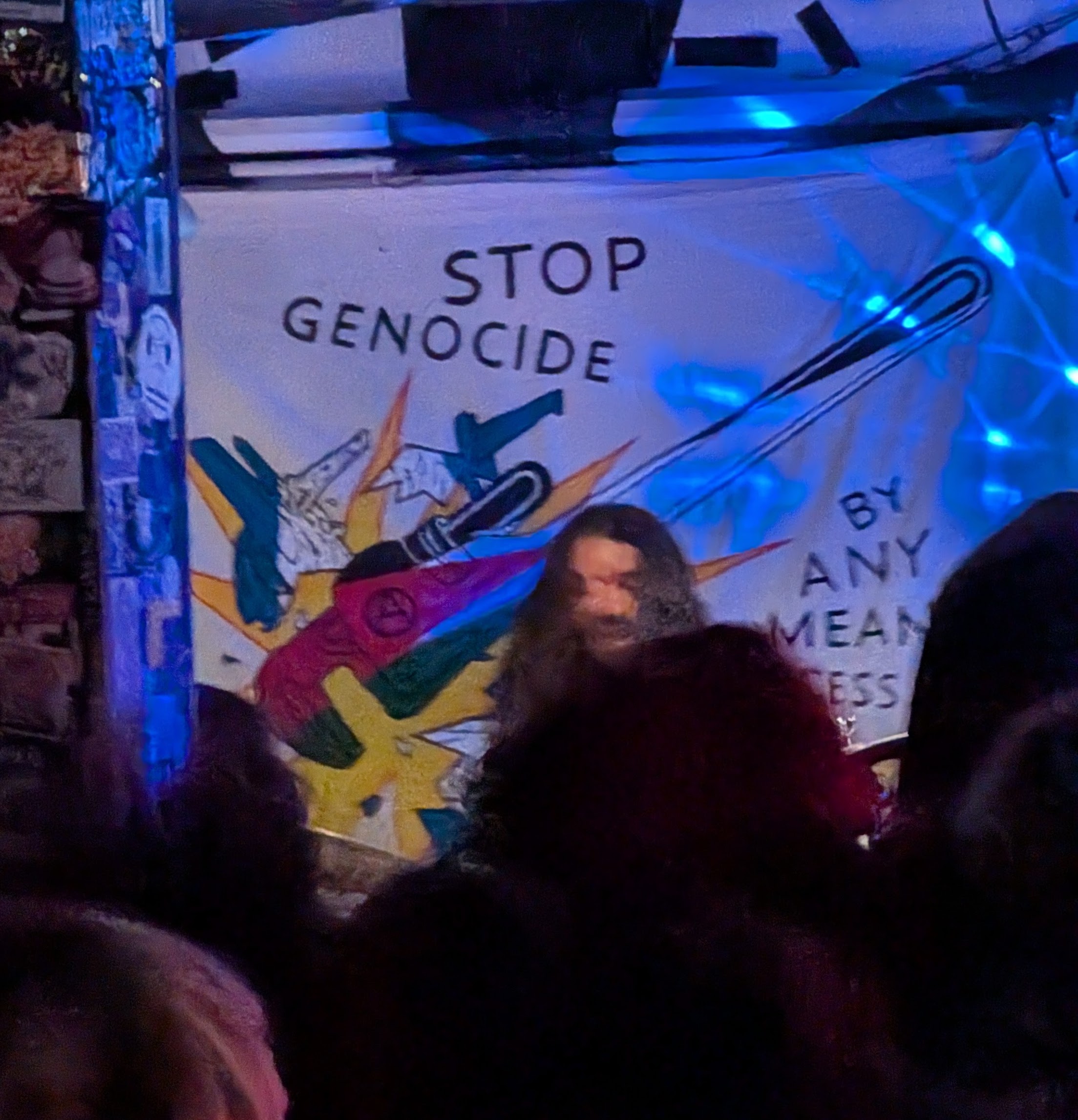
Deli Girls at Cafe Bourbon Street
  • Greater Columbus Community Orchestra with Brian Harnetty, The Visitor (Hilliard Presbyterian Church, 04/06/2025) – Banner year for composer Brian Harnetty, who released a remarkable memoir, Noisy Memory, and put out a gorgeous recording of string quartet and samples The House, and a visual installation This Was Once a Forest, This Was Once a Sea, as well as premiering this rich, sparkling brass ensemble piece with the Greater Columbus Community Orchestra that I’m still feeling vibrate through me.
  • Nikhil P. Yerwadekar and Living Language (Barbes, NYC, 04/11/2025) – Because the sole New York trip this year was to celebrate my 45th birthday with a gang of my favorite people in the world, there were fewer distinct cultural items on the calendar. But this was an extreme highlight: Yerwadekar, whom I last saw backing Hailu Mergia at a Big Ears, leading a ferocious band through Afrobeat classics and originals in a wall-to-wall-packed Barbes back room where no one stopped moving. Made even sweeter as my great friend Andrew Patton’s inaugural visit to one of my temples of music.
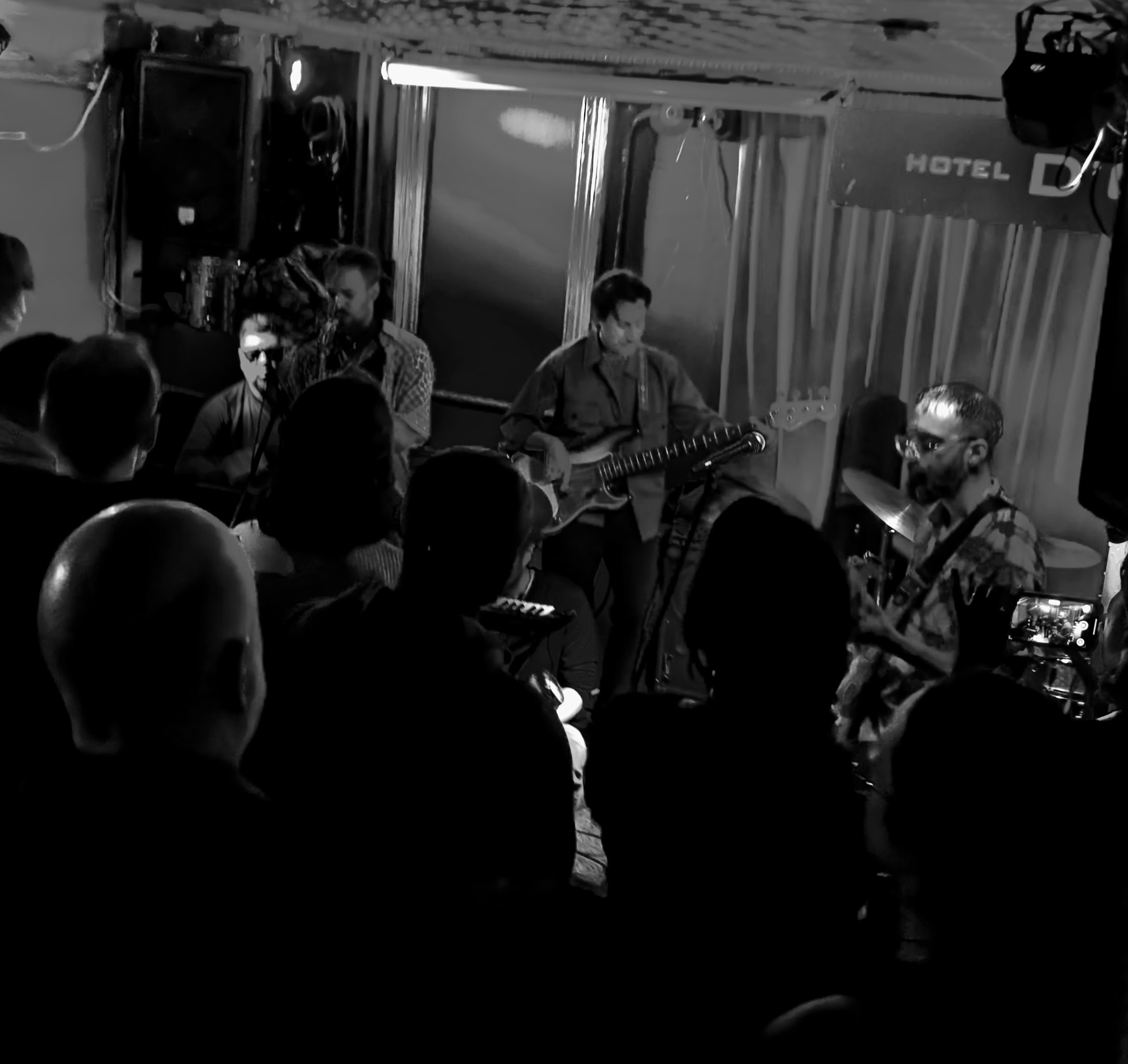
Nikhil P. Yerwadekar and Living Language at Barbes
  • The Lilybandits with Two Cow Garage (Natalie’s Grandview, 06/05/2025) – I think anyone who’s read ten lines I’ve written or spent ten minutes in my presence knows I think Todd May’s the greatest songwriter Columbus has ever produced. They culminated an important reissue project of his first mature band, The Lilybandits with At Thirty Three and a Third this year, and lost its drummer and their lifelong friend Keith Smith last year. This extremely rare reunion of the original core members (May, Trent Arnold, Jose Gonzalez, Bob Hite) with longtime friend Keith Hanlon filing in on drums, Bob Ray Starker providing the horn lines he gifted them with on those records, and Smith’s son joining on a few vocals, was probably the biggest reminder of how much I love my town all year, wrapped up in a rock show that made hard to believe they’d only gotten together to run through the songs once. Two Cow Garage, long influenced by the Lilybandits (the first time I ever saw Two Cow, they did a Todd May song and dedicated it to “The genius of Bernie’s”) set the tone with a set of jubilant catharsis.
  • Charles “Wigg” Walker (ACME Feed and Seed, Nashville, 06/14/2025) – My eyebrows shot up when I saw Charles Walker – who I knew from his days with the Dynamites (who the Funkdefy collective, at the time including the above-mentioned Andrew Patton, booked in Columbus more than once, and my great friends in St Louis, at the time including fellow Columbus legend Matt Benz booked at Twangfest – was doing a regular brunch gig when Anne and I already planned to be in Nashville. We juggled our schedule to make sure we were in town in time for this and stayed for two sets: Walker still in perfect voice, backed by a sizzling organ trio led by his longtime Dynamites foil Charles Treadway, going through stone soul classics and gorgeous new originals.
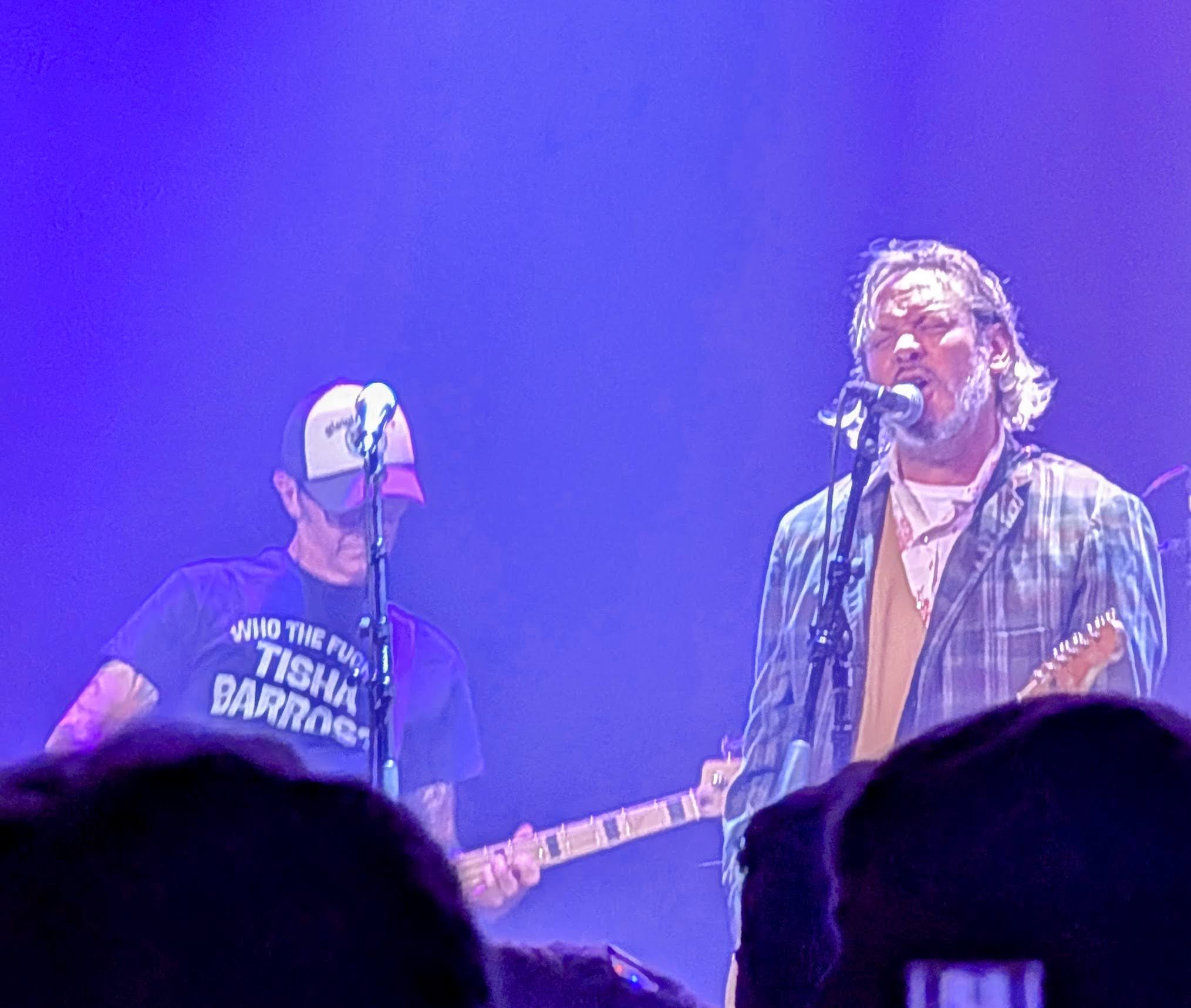
Lilybandits at Natalie’s Grandview
  • Dan Baird and Homemade Sin (Eastside Bowl, Nashville, 06/14/2025) – If the only thing this show gave us was the five minutes of Dan Baird and his killer band opening with the Open All Night highlight “Sheila,” with Baird’s grin and electric presence, it would have justified the six-hours drive each way, the hotel cost, all of it. But it gave us so much more. 45 minutes of blistering rock and roll, led by someone who, at 71, is outplaying and dancing rockers a third of his age. Also, this was a beautiful look in the way other scenes take care of their own, organized by Warner Hodges (Baird’s guitar foil in Homemade Sin, longtime lead player in Jason and the Scorchers), here leading his own band and sitting in with every other set in a benefit for his former Scorchers bandmate Jeff Johnson.
  • Sam Johnson and Noah Demland, Contrary Motion (Wild Goose Creative, 06/20/2025) – The second or third year in what I hope continues as a series exploring the history of Queer chamber music/new music featured new originals from organizers Sam Johnson and Noah Demland, classics of the canon from Pauline Oliveros and John Cage, and contemporary pieces from Caroline Shaw and Leilahua Lanzilotti by a tight ensemble of some of our best players. A brilliant glimpse of where this music is, how it got here, and how relevant it still is.
  • Say She She (Woodlands Tavern, 06/20/2025) – Finally got to see my favorite of the current neo-disco bands, NYC’s Say She She, and they tore the roof off Woodlands in a crowd full of people I mostly didn’t know (besides Anne and my Providence-based friend Daria, maybe we knew two other people in a nearly sold out room) all dancing in a sweaty, delirious mess. The reason I went from the show above to this show, but they got separate listings, is that they felt like very distinct events to me; they didn’t resonate against one another like the couple of shared line items.
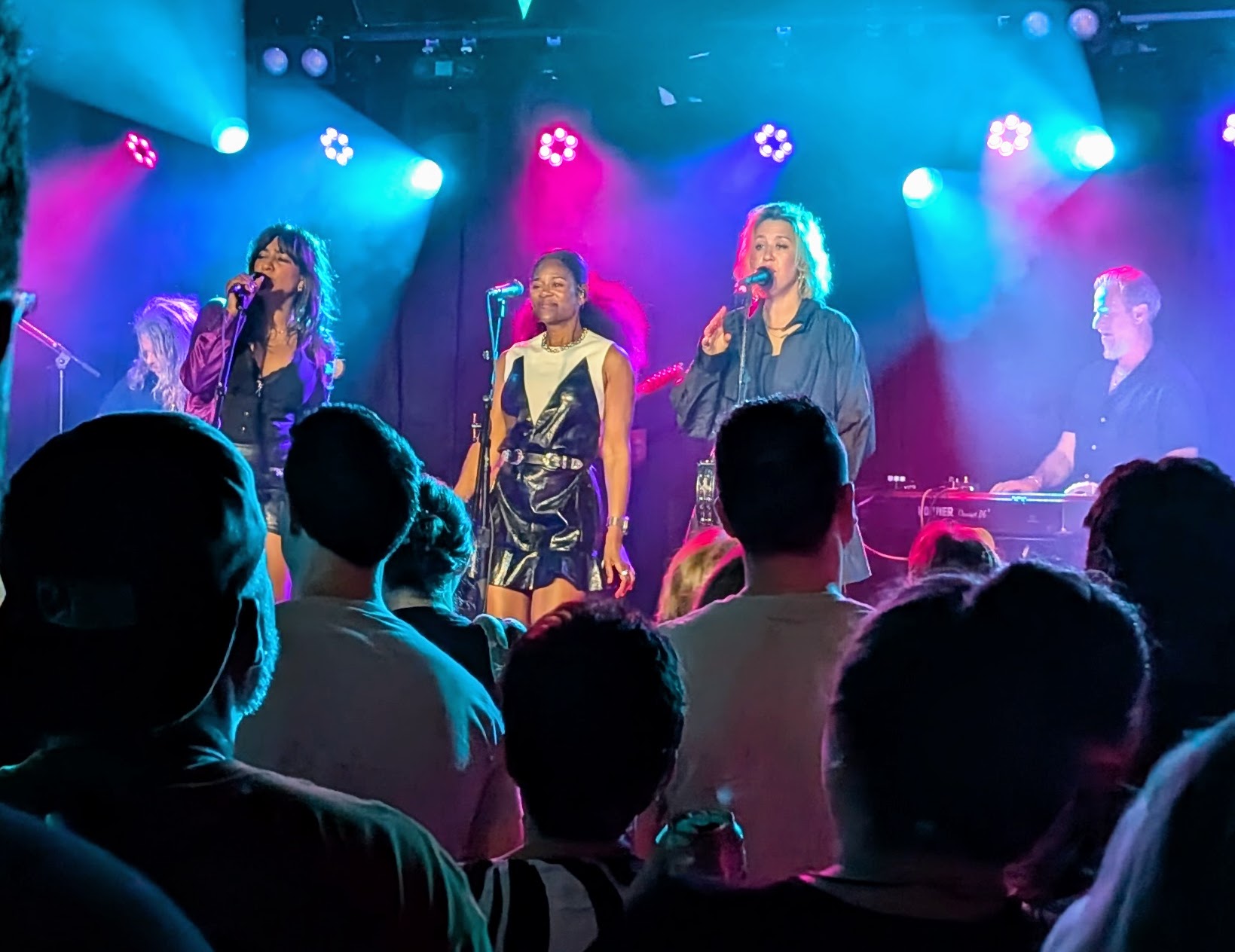
Say She She at Woodlands
  • Budos Band with Benny Trokan (Woodward Theatre, Cincinnati, 07/15/2025) – One of the great live bands I’ve seen in 30 years of seeing live music, Budos Band, retained their crown on a gorgeous summer night in a venue I hadn’t made it to in Cincinnati previously. Icing on the cake was Benny Trokan – who Anne introduced me to in his days with Robbers on High Street – with a tight, swinging four-piece going through the lovely smooth soul of his recent solo record.
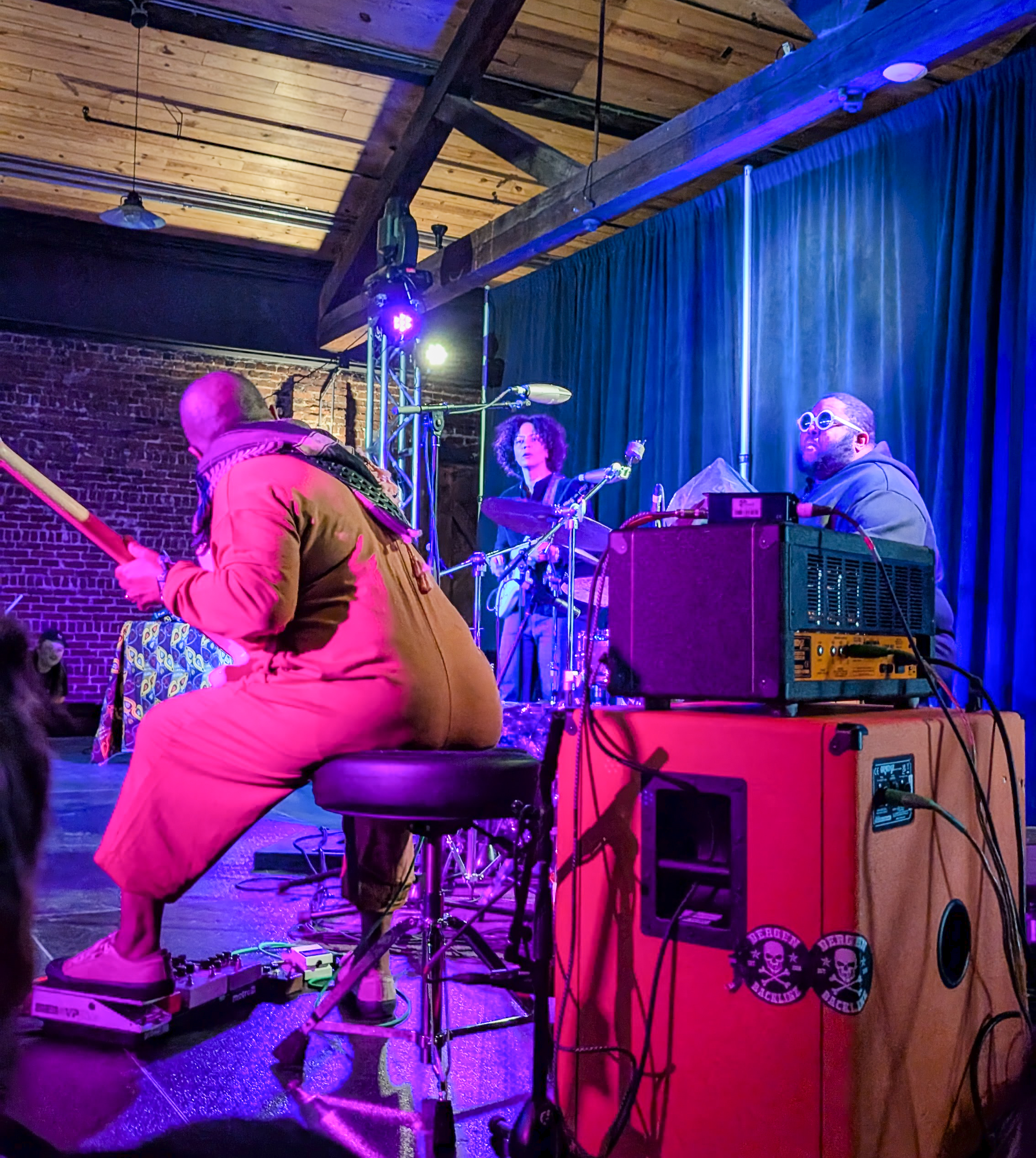
  • Mike Dillon’s Punkadelick (Dick’s Den, 07/18/2025) – Columbus is lucky to get percussionist Mike Dillon coming through our fair city a decent amount, but what made this show special was the presence of New Orleans drummer Nikki Glaspie, who’s shared the stage with Beyonce, Ivan Neville, Snarky Puppy, and Nth Power. That powerhouse sense of the multiplicity of groove and the emotional content of the song took both sets I stayed for into outer space.
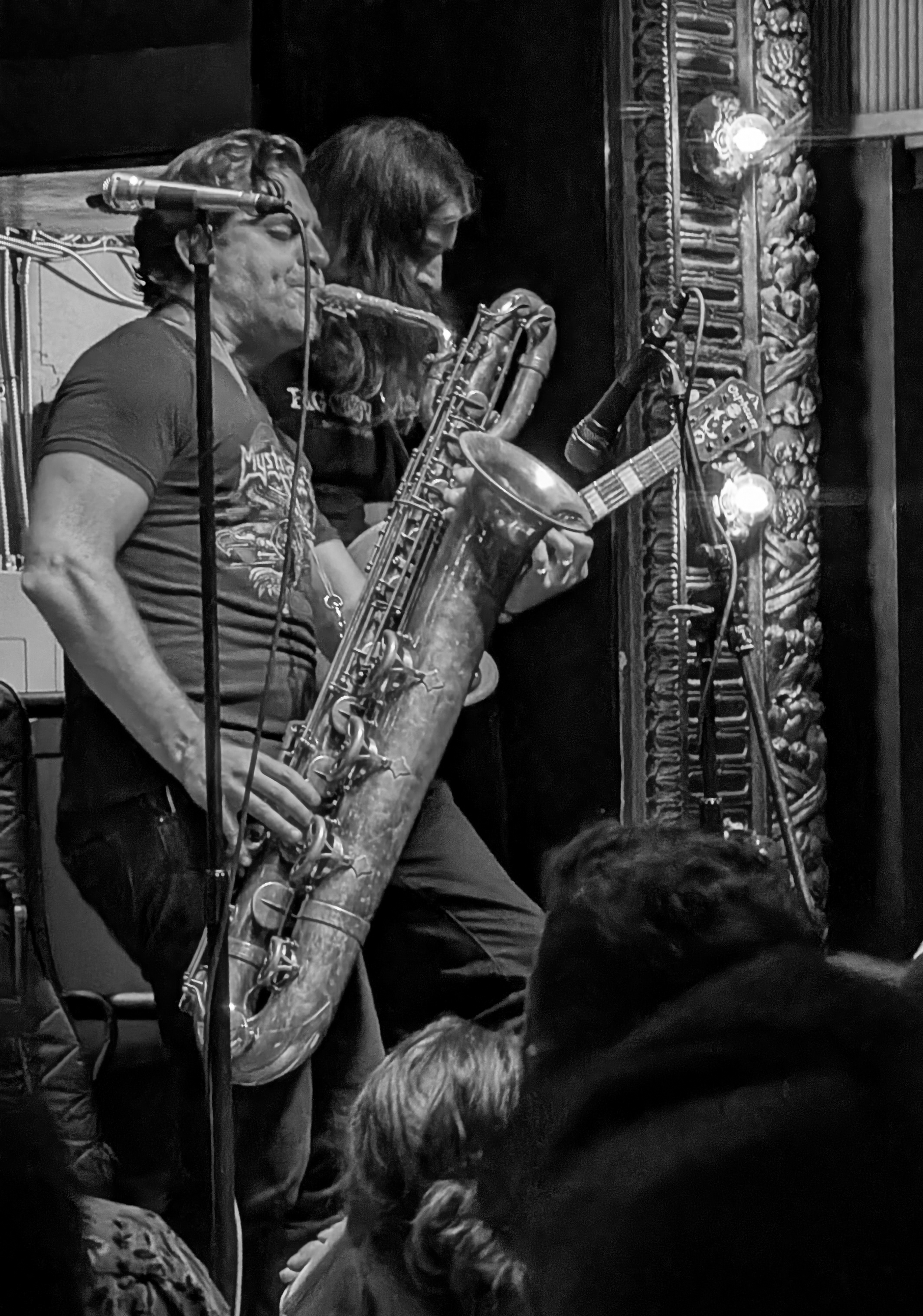
Budos Band at Woodward Theatre, Cincinnati
  • Vandoliers (Rumba Cafe, 08/12/2025) – I’d been a fan of the Vandoliers since their 2019 breakthrough Forever and this year’s Life Behind Bars was a revelation: simultaneously a reminder of what drove me so crazy about the alt.country/Americana scene in my teens and 20s and a broadening in the same sense as their Dallas forebears’ Old 97s’ Fight Songs and Satellite Rides. Similarly, this show was a gleeful, textured statement of purpose, with lead singer Jenni Rose’s songs detailing her coming out the other side of addiction and gender dysmorphia into a brighter place without sugarcoating any of the challenges, and the band – with one exception – having been with her the entire ride and still shouting together. As Anne said, “This is what all protest music should sound like: a party that also makes you want to smash shit.”
  • Mark Lomax II (Streetlight Guild, 08/28/2025) – I was lucky to see a few examples of one of our finest composers and drummers, Mark Lomax, in action this year, including a reunion with Scott Woods and his trio, and also missed a big premiere at the Wexner Center because I lost track of my schedule and didn’t buy before it sold out. But this rare solo drum recital, directly inspired by Tiffany Lawson’s What If I Told You It Was Freedom (look for more on that in my Art Exhibits Best Of) in Streetlight Guild’s smaller upstairs gallery space was a direct injection into my veins of his compositional strategies, his fingerprint-distinct approach to the drums, and about creativity in general as he discussed the pieces and personal history with Lawson and Woods.
Mark Lomax II at Streetlight Guild
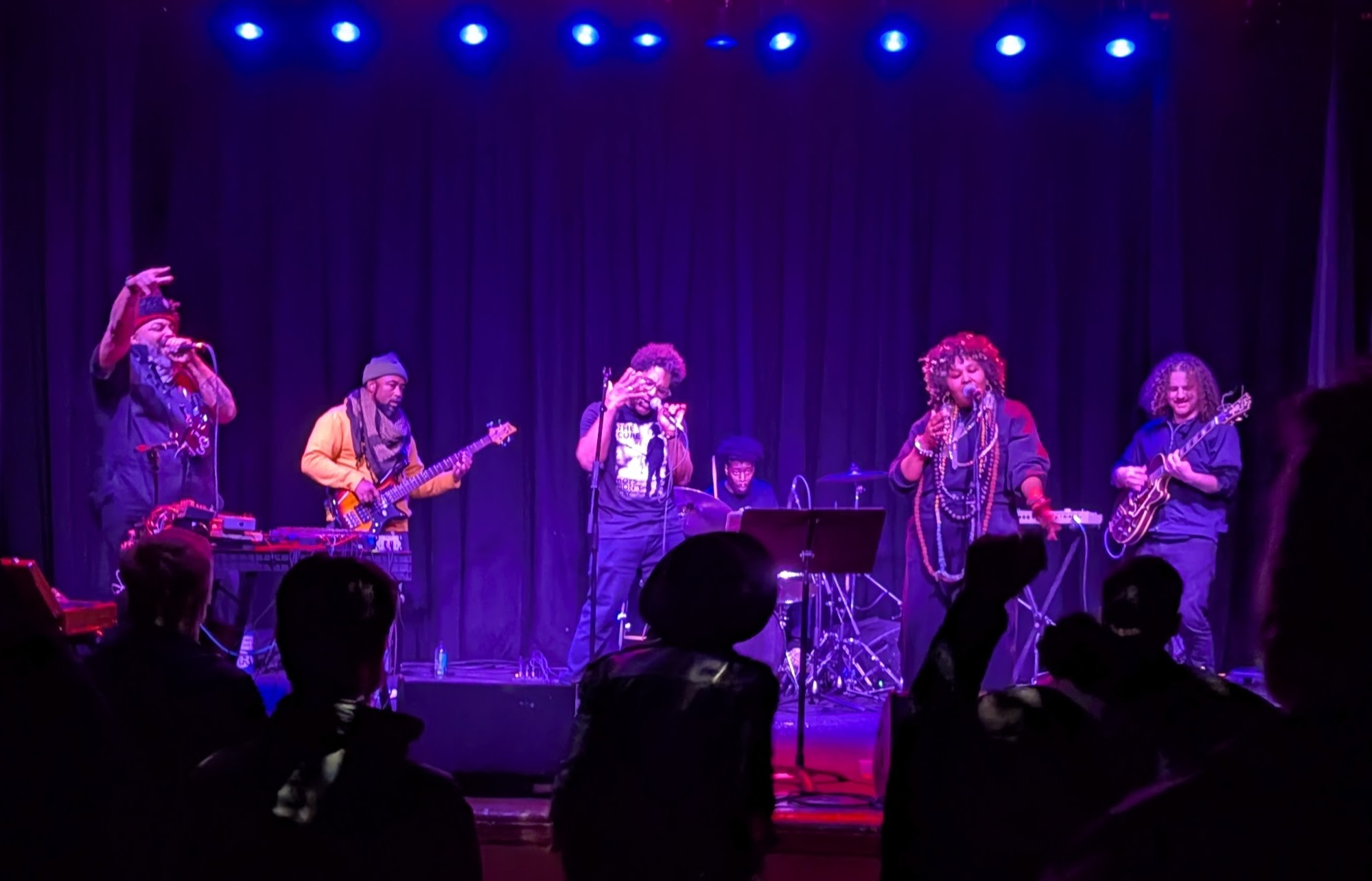
  • Etienne Charles and Creole Soul (Wexner Center for the Arts) and Quintron and Ms. Pussycat with DANA (Cafe Bourbon Street), both 09/18/2025 – Two approaches to blending cultures and styles through a distinct lens of a life in art, both made exciting shows on this September night. Trumpeter/composer Etienne Charles led his phenomenal band through a selection of compositions drawing from jazz and funk traditions and his Trinidadian heritage to a rapturous crowd at the Wexner Center Performance space. A five minute drive away – we sadly missed Mutha Funk though I heard great things – Quintron and Ms. Pussycat celebrated their 30th anniversary as a rock-and-roll puppet show with homemade drum machines, greasy organ, and garage-rock hooks that’s had me in its hooks for decades and is still a show like nothing else and one I’ll never miss if I can help it.
  • Kid Congo Powers with Cheater Slicks (Grog Shop, Cleveland, 09/20/2025) – I did a lot of thinking about memory this year – I often do, but at 45 it felt pronounced – and seeing the great Kid Congo, a throughline of so much music I loved play a set bursting with memories of friends and colleagues he’d lost, including “The Boy Had It All,” “Sean DeLear,” “La araña,” “He Walked In,” and songs he’d played with bands many of whose members have slo passed on like The Cramps and The Gun Club, vibrated with those feelings and reminded me that you can carry those people with you in a jubilant way without diminishing how much it hurts. In addition, Cheater Slicks (longtime friends and mutual admirers of Powers) who have been on a streak the last two years, played one of the best sets I’ve seen them do in 30 years of seeing them semi-regularly.
  • Lorette Velvette with Deerfrance (Bar DKDC, Memphis, 09/26/2025) – The best musical side quest we’ve had in over a decade of going to Memphis with Gonerfest as the main course: Panther Burns legend Lorette Velvette on a double-bill with linchpin of John Cale’s Sabotage era Deerfrance in the intimate confines of Bar DKDC. Killing new songs from both artists, excellent bands including members of the Reigning Sound, Panther Burns, and the Memphis Symphony, and a gorgeous clinic of song.
Lorette Velvette at Bar DKDC, Memphis
  • Talisha Holmes and the Stardust (Dick’s Den, 10/03/2025) – I’ve been a fan of Talisha Holmes’ voice since High School and her singing and repertoire for almost 20 years, but the first show with the band she dubbed Stardust felt like a new chapter opening with ecstatic/spiritual jazz and folk textures into the thorny, dense R&B she does better than anyone else in town. It was an eye opening evening that got me extremely excited to see what’s coming next.
  • DANA with Messrs and DJ Adam Scoppa (Ace of Cups, 10/17/2025) – As seen in my records of the year, I thought DANA’s Clean Living was a triumph, and their constant touring schedule honed their most nuanced and powerful set of songs into a ferocious live set. Here, along with a rare reunion set from Columbus’ deconstructed hardcore heroes Messrs (including drummer Mat Bisaro playing like a monster while also going through a grueling round of chemo) and the sweet sounds of Adam Scopp’s Heatwave dance night made one of the most satisfying reminders of what I love about Columbus.
DANA at Ace of Cups
  • Robbie Fulks (Natalie’s Grandview, 10/18/2025) – Robbie Fulks is another artist who is no stranger to anyone who’s read this or talked to me, but what made this appearance at Natalie’s special to me was a return to the four-piece rock band format that made me fall hard in the first place, with drummer Gerald Dowd, bassist KC McDonough, and guitarist Robbie Gjersoe doing a setlist that returned to the first three records – and the excellent new one, Now Then – with one highlight after another.
  • Micah Schnabel and Vanessa Jean Speckman (Rumba Cafe, 10/23/2025) – A valedictory show for two artists who have done so much for Columbus in their performance home, Rumba, and a set that made my heart almost burst out of my chest.
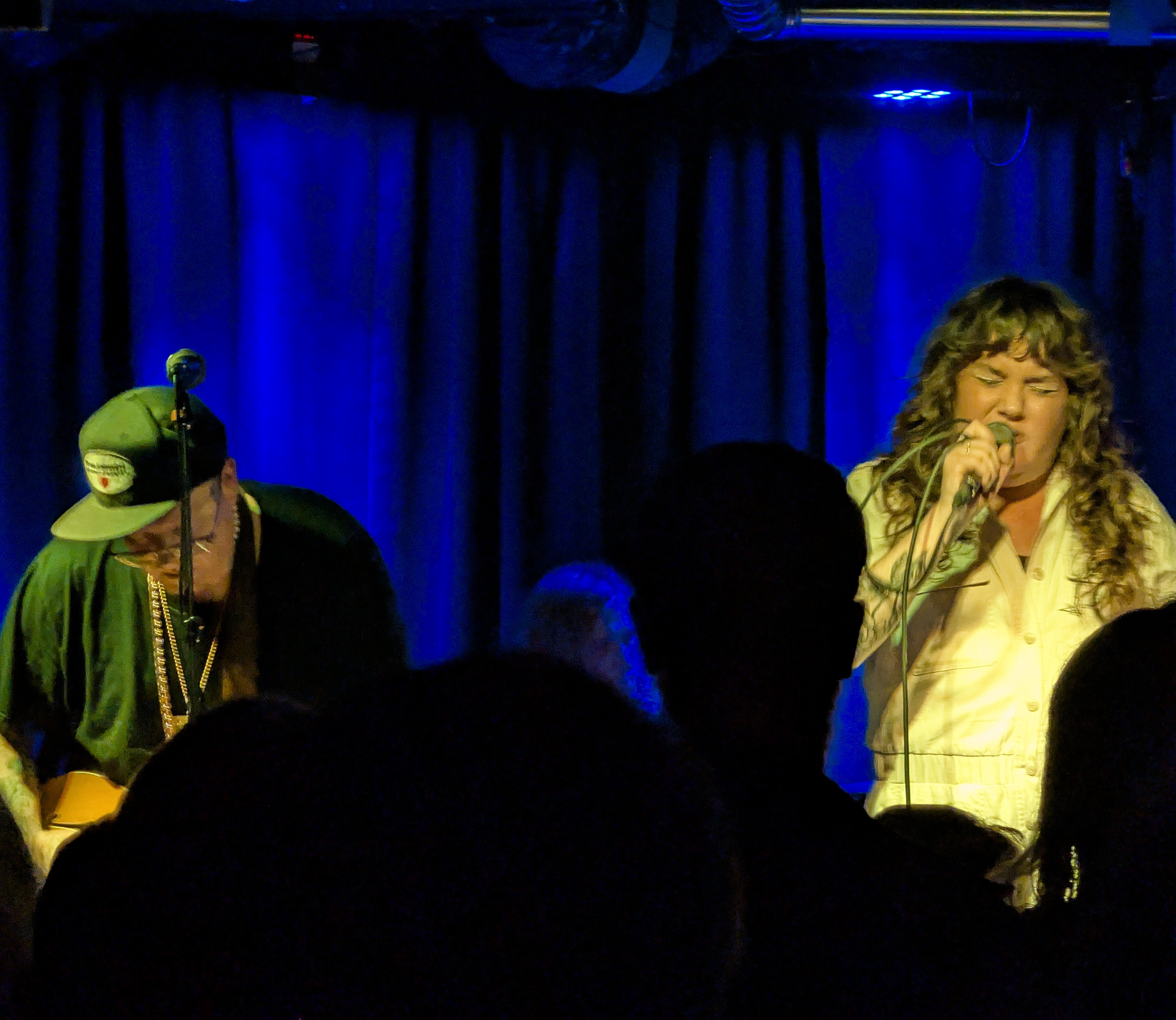
Micah Schnabel and Vanessa Jean Speckman at Rumba Cafe
  • Worthington Chamber Orchestra, Frontiers of Sound (Worthington United Methodist Church, 11/07/2025) – The Worthington Chamber Orchestra has a great series, and they continued to cement their place in the creative firmament of Columbus with commissioning the first violin concerto from Columbus native (now based in New York) Aaron Quinn, played by Devin Copfer (WCO concertmaster, Chamber Brews co-founder, Devi and Liz, Urban Art Ensemble) and the orchestra. The piece planted its flag in a truly American continuum, textures that felt like Ives and Copland, cascading harmonies that recalled some of the sticky synth layers of vintage Detroit techno, and a soulful bluesiness in the central violin line that still had all rigor you’d want to see from classical music.
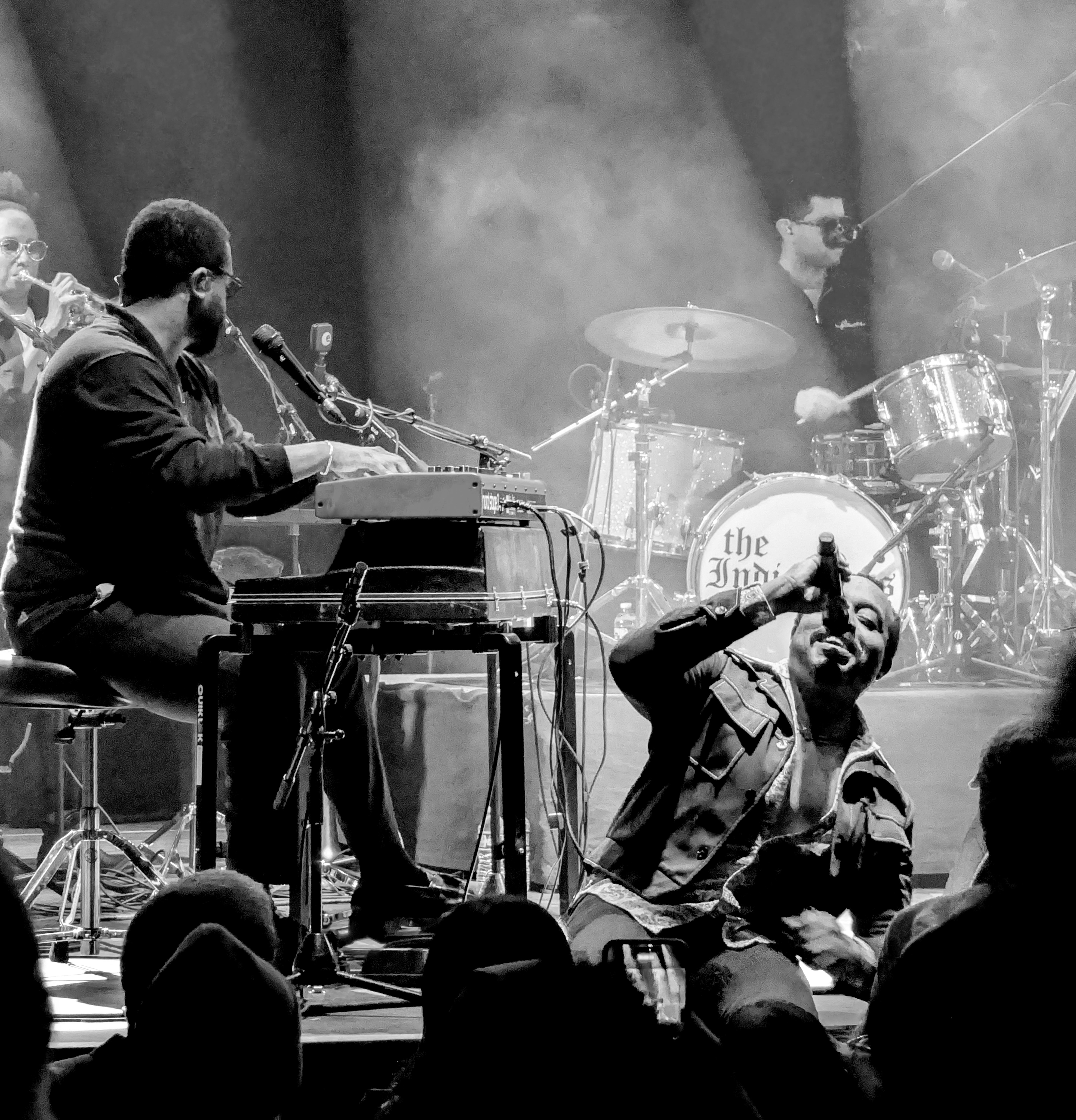
  • Durand Jones and the Indications with Psycodelics (Newport Music Hall, 11/09/2025) – The smooth soul of Durand Jones had a packed crowd at the Newport eating out of their palms with a sweaty, vibrant show that summed up what so many of us love about the genre while also serving as the entry point for so many younger people. Psycodelics did a muscular, fiery take on vintage sounds like EWF, Sly, and P-Funk that reminded me that music has a long future ahead of it.
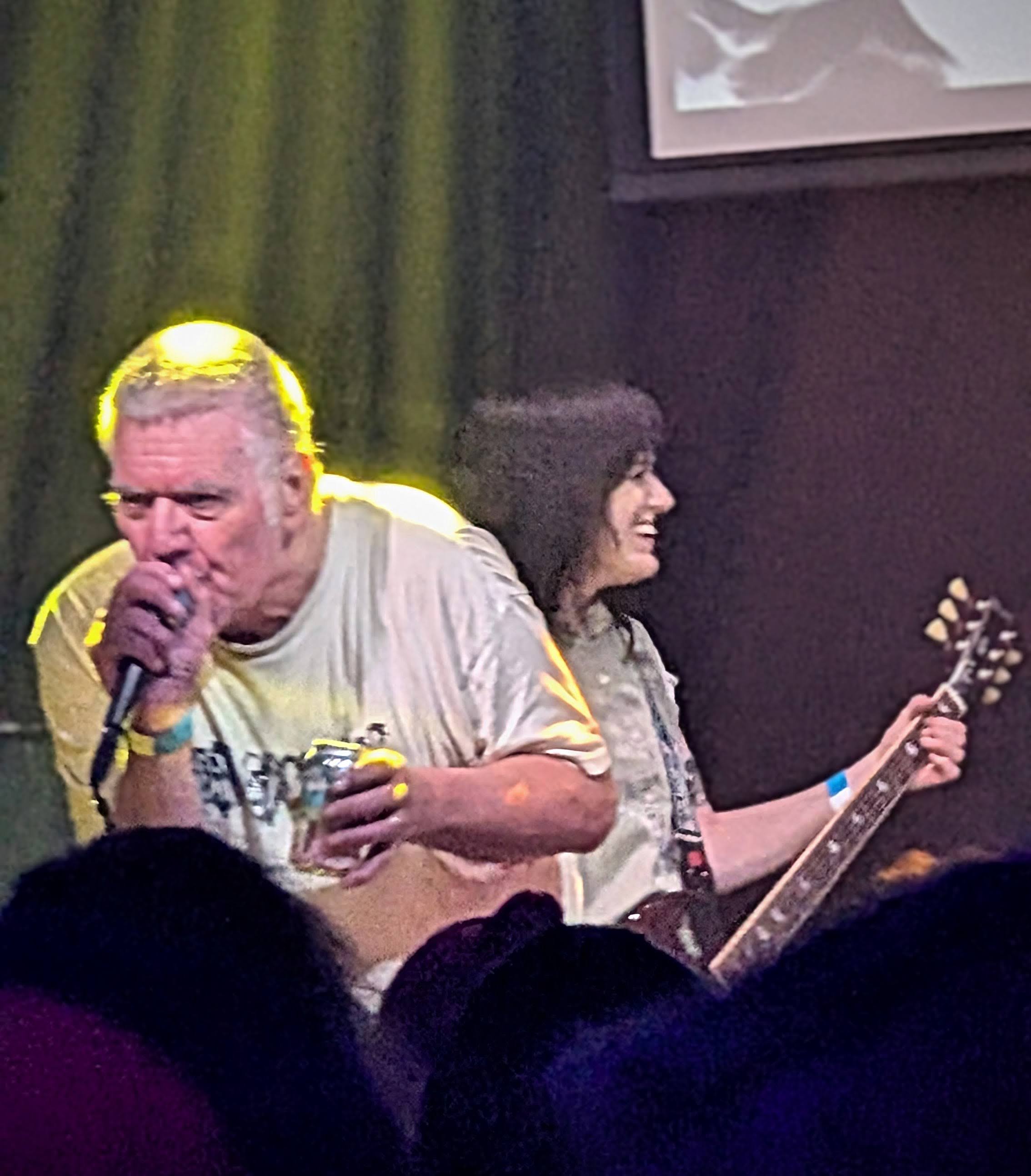
  • Minibeast (Cafe Bourbon Street, 11/14/2025) – Peter Prescott’s Minibeast knocked me completely over, with sparking noise and 10,000-league-deep grooves. Also a reminder of how good Bobo sounds these days. Every nuance of that powerful, multifaceted sound washed over everyone in the room.
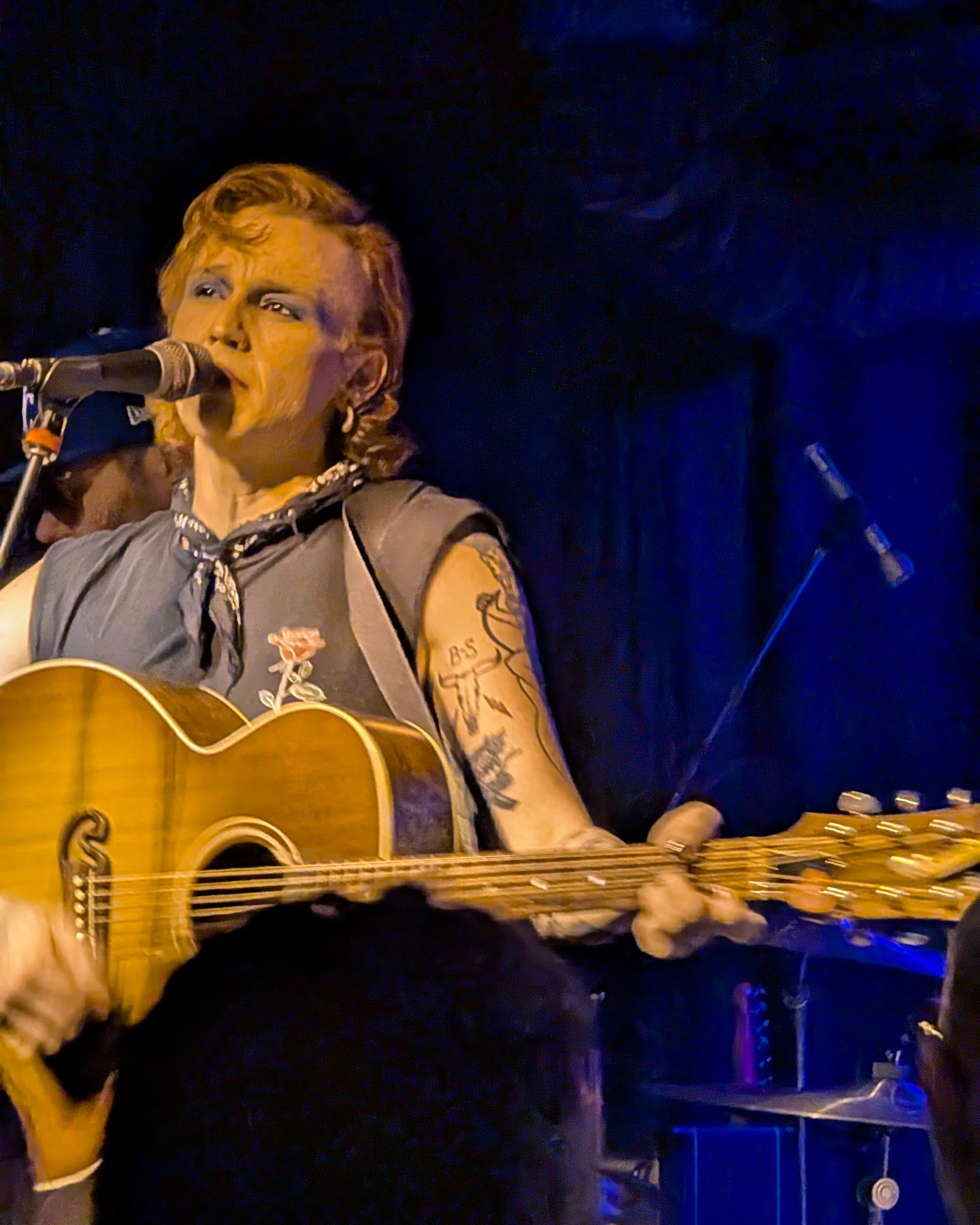
Vandoliers at Rumba Cafe

Top 20 Festival Sets

Ugly Stick at Natalie’s Grandview
  • Beachland’s 25th Anniversary (Beachland Ballroom and Tavern, Cleveland)
    • Mourning [A] BLKStar
    • Pull Chains
Mourning [A] BLKStar at Beachland Ballroom
  • Lost Weekend Records’ 22nd Anniversary (Natalie’s Grandview)
    • Ugly Stick
    • Thomas Jefferson Slave Apartments Featuring Mickey Mocnik
TJSA with Mickey Mocnik at Natalie’s Grandview
  • Big Ears Festival (Various Venues, Knoxville)
    • Kate Soper and Wet Ink Ensemble, Ipsa Dixit (Bijou Theatre)
    • Joy Guidry (The Point)
    • Tyshawn Sorey and DACAMERA, Monochromatic Light (Afterlife) (St. John’s)
Kate Soper and Wet Ink Ensemble, Big Ears
  • Lee Bains III and Lonnie Holley (Barley’s)
  • King Britt/Tyshawn Sorey/Meshell Ndegeocello/Melz (Jackson Terminal)
  • SML (The Standard)
King Britt/Tyshawn Sorey/Meshell Ndegeocello/MELZ at Big Ears
  • Future Salad Days Opening (Blockfort Parking Lot)
    • Juanita and Juan
    • Clickbait
    • Cheater Slicks
Juanita and Juan at Future Salad Days
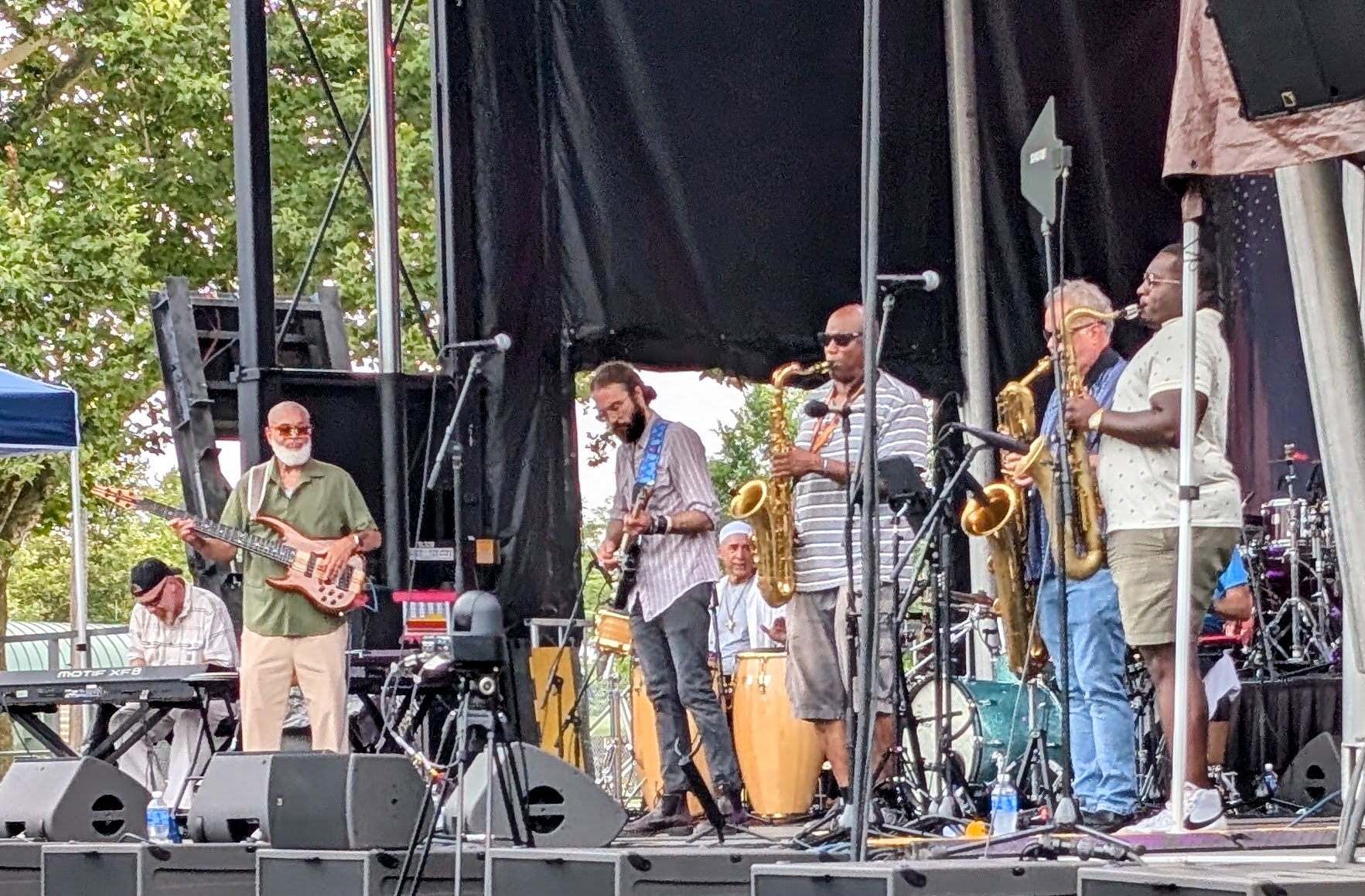
  • Jazz and Ribs Fest
    • Ron Holmes’ Eclecticism
Ron Holmes Eclecticism, Jazz and Ribs Fest
  • Gonerfest (Wiseacre Brewing, Memphis)
    • Pylon Reenactment Society
    • Lightning Bolt
    • Lothario
    • Cheap Fix
    • Des Demonas
    • TINA!!!
Des Demonas, Gonerfest
Categories
Best Of Playlist record reviews

Best of 2024 – Spaces

As I’ve done for the last few years, I create a couple of lists that are loosely grouped by impact – if it feels like something I’d play on a jukebox or has lyrics, if it creates a sharp impression that might reverberate later – if I feel like it’s a “song” I put it in songs. It goes here if it feels spacious or dreamy, like architecture or a painting or landscape. Obviously, in a lot of cases, these distinctions are porous.

Similarly to my songs list, there was so much good shit this year and I’m looking forward to getting this posted so I can really dig into everyone else’s lists.

  • Wadada Leo Smith and Amina Claudine Myers, “Central Park at Sunset”– Two veterans of Chicago’s AACM movement – equally prominent as composers and virtuoso instrumentalists – teamed up for a duo record Central Park’s Mosaics of Reservoir, Lake, Paths and Gardens that’s as rich, sprawling, and vibrant as the urban park that inspired it. This particular piece reaffirms the poetry in both artists’ playing – I’m not sure anybody plays a sunset on any instrument as well as Smith, and those delicate and powerful chords from Myers are like the shifting moods of a summer breeze.
  • Mary Halvorson, “Desiderata” – I liked both of the last two Halvorson records on Nonesuch, but Cloudward synthesized those pleasures and reaffirms her Amaryllis octet as one of the great working ensembles, able to conjure any mood, any atmosphere her writing requires and bring in their own personalities without overwhelming the overall tone. A band of leaders that are always in service of the music. The way the jaunty swing in the beginning shatters into abstraction to flow back together in a new form is a Halvorson trademark, executed perfectly here.
  • David Murray Quartet, “Free Mingus” – Elder statesman and master at blending the melodic and the free, David Murray, assembles a brilliant quartet with pianist Marta Sanchez, bassist Luke Stewart, and Russell Carter, for his breathtaking record Francesca. On this track the band digs into an undulating saloon song tempo with the intensity and beauty it demands – that flow from Murray’s solo into Sanchez’s brings me to the edge of my seat every time, and every bit of the record is this good.
  • Vijay Iyer/Linda May Han Oh/Tyshawn Sorey, “Ghostrumental” – The second record with Iyer’s world-beating trio with Linda May Han Oh and Tyshawn Sorey exceeded even the high expectations I had. Thick grooves that shifts almost imperceptibly into deep abstractions and switch up again without feeling like an exercise, and melodic cells that swirl around and lock into place. There are a lot of piano trios on the playlist this time because all of them kicked enormous amounts of ass. Maybe my favorite moment on this track is Oh’s rich bass solo and the surprising, no-bullshit but also unshowy comping from Iyer and Sorey behind her.
  • Soundwalk Collective featuring Patti Smith, “Pasolini” – As someone who’s as much a film nerd at heart – at least they took up equal headspace in my adolescence – and who’s off and on written poetry since I was a teenager, both Patti Smith and the subject of the piece, Pasolini, loom very large in my psyche. I also love Soundwalk Collective’s playing with time, geography, specifics. So Correspondences Vol. 1 hit me right where I live. This is a gorgeous, mysterious piece.
  • Nduduzo Makhathini, “Water Spirits: Izinkonjana” – South African pianist/composer Nduduzo Makhathini’s second Blue Note album uNomkhubulwane is a gorgeous, meditative work immaculately played by his trio of Zwelakhe-Duma Bell le Pere and Francisco Mela. The little shifts in this piece, the way a bluesy run gives way to bright crispness and then they conjure clouds in the water, keep me coming back.
  • Six Organs of Admittance and Shackleton, “Spring Will Return/Oliver’s Letter” – I didn’t have this collaboration between freak-folk/noise-rock chameleon Ben Chesney (as Six Organs of Admittance) and dubstep pioneer Shackleton (I think I bought everything on Skull Disco for at least a few years) but this droning, atmospheric track captures both artists’ mature powers and finds new textures where they intersect. Meditative like the last piece but not at all like the last piece.
  • Cassie Kinoshi’s seed., “iii sun through my window” – Saxophonist/composer from the incredible London scene and her seed collective’s record Gratitude. This track conjures a pastoral lushness with an underlying tension that I find gripping and intoxicating.
  • J. Pavone String Ensemble, “Embers Slumber” – I first saw Jessica Pavone at the exact same time I first saw Mary Halvorson, when Gerard Cox brought their long-running duo to town, and have been a fan ever since. The shadowy, rapturous Reverse Bloom features a trio of Abby Swidler on viola and violin, Aimée Niemann on violin, and Pavone on viola and compositions. This closing track alternates between heartbeat pizzicato and long, arco lines curling like smoke. The exquisite pace lets every element burst and then fade, letting the decay play off one another like the shadows in a Twombly mobile.
  • SML, “Three Over Steel” – SML set the bar high – in a year full of contenders – for smart, surprising groove music. This quintet of Anna Butterss on bass – on this track sometimes so heavy and thick it feels like a tuba in the best way – Jeremiah Chiu on synths, Josh Johnson on sax (those overlapping curlicues resist being easily grasped but also rebel against not being an earworm), the always subtle and response Booker Stardrum on drums and percussion, and Greg Uhlman on guitar. This track is a party starter in the world I want to live in.
  • Dave Guy, “Footwork” – As with many things, I have Andrew Patton to thank for hipping me to Ruby, a record led by longtime Daptone – more recently of The Roots – trumpeter Dave Guy. This Latin-flavored piece feels like the first rays of sunshine on a cobblestone street, with Guy’s sing-along trumpet leading a dance over lush beds of percussion.
  • Adam O’Farrill, “Dodging Roses” – Another favorite trumpet player, Adam O’Farrill, continues to top himself with the addictive HUESO, featuring a tight quartet of frequent collaborators including his brother Zack, bassist Walter Stinson – I’ve been blown away by that rhythm section hookup live and on record before, but they’ve never sounded better – and saxophonist Xavier Del Castillo. Crystalline writing given added life by the personalities of these players and a tribute to the kind of telepathy you hear at the absolute highest levels of this kind of small-group jazz.
  • Happy Apple, “Turquoise Jewelry” – Another stunner from this band led by drummer Dave King (The Bad Plus, Fellwalker) with bassist Erik Fratzke and saxophonist/keyboardist Michael Lewis. I love the stop-start and the subtlety of this one.
  • Caroline Davis and Wendy Eisenberg, “Accept When” – Saxophonist/synth player Caroline Davis put out multiple records that killed me this year, but this duo with guitarist Wendy Eisenberg vibrated strings in my heart I didn’t know existed, or had maybe forgotten about. That stretch toward the midpoint when their unison voices sing “Synchronicity” over and over, and then the instruments take over with this subtle, picked melody from Eisenberg and long tones from Davis, tentative at first and then stretching further and further out… good lord. One of my musical moments of the year.
  • Erik Friedlander, “Shrimping (Mod 9)” – Erik Friedlander is one of my favorite cellists in any contexts, but there’s something special about his writing when he applies it to a specific thematic context. His instrumental dissection of MMA, Dirty Boxing, with a sympathetic quartet of Uri Caine on piano, Mark Helias on bass, and Ches Smith on drums, is my favorite record in years. This bouncy but restrained track is a prime example of what I loved about the record.
  • Dirty Three, “Love Changes Everything II” – A new Dirty Three record is always a cause for celebration in my world, and the magnificent Love Changes Everything is my favorite since She Has No Strings, Apollo, maybe my favorite since Whatever You Love, You Are. I have countless records in my collection all three of these Australian players are on – none of them bad – but that unmistakable language when they get together is to be savored.
  • Marquis Hill featuring Samora Pinderhughes, “Balladesque (Nothing to Lose)” – Chicago-native trumpeter Marquis Hill assembled a dream team including Makaya McCraven, Jeff Parker, Caroline Davis, Josh Johnson, and Juan Pastor, to tackle six of his compositions and tunes by fellow Chicagoans on his Composers Collective: Beyond the JukeBox record. The vocals by Samora Pinderhughes on this one are the icing on the cake.
  • Patricia Brennan, “Los Otros Yo” – Vibes and marimba wizard Patricia Brennan wrote many of my favorite tunes this year and assembled an astonishing band to tackle them – including her bandmate in Halvorson’s Amaryllis, Adam O’Farrill, alongside Jon Irabagon and Mark Shim on reeds, and Marcus Gilmore on drums. This track grabbed me from that horn fanfare on the intro and never let me go.
  • Alabaster DePlume, “Honeycomb” – London-based poet and saxophonist Alabaster DePlume floored me with a beautiful EP this year, Cremisan: Prologue To a Blade that leads off with this gorgeous, melancholy duet for reeds and piano.
  • Max Richter, “The Poetry of Earth (Geophony)” – In a Landscape distilled the particular pleasures I get from Max Richter’s compositions, a series of pastoral watercolors that have enough tension to stay consistently interesting. One of my records of the year for both self-soothing and trying to go deeper.
  • Pat Thomas, “The Oud of Ziryab” – I loved London pianist Pat Thomas’s work with free jazz titans like Derek Bailey, but this was my first exposure to his solo piano conception and every track on The Solar Model of Ibn Al-Shatir knocked me for a loop.
  • Matt Wilson, “Good Trouble”- One of the shows I was sorriest to miss this year was the Jazz Arts Group bringing drummer/composer/bandleaders Matt Wilson back to the Lincoln with his killer band promoting the record this is the title track (composed with sax player Jeff Lederer) of a tribute to the late Senator John Lewis and, more broadly, a hard-swinging tribute to community in all its stripes.
  • Asher Gamedze and the Black Lungs, “Elaboration” – Another drummer/composer on the rise, South Africa’s Asher Gamedze assembled an octet and worked with one of my heroes, poet Fred Moten, on a spoken word meets fire music masterpiece I’m still unpacking, Constitution. This mostly words and drums duet of a track is maybe the purest distillation but it’s an unskippable record.
  • Immanuel Wilkins, “MOSHPIT” – Saxophonist/composer Immanuel Wilkins released a magnum opus Blues Blood this year and it’s another landmark flag-planting from an artist who’s better every time I see him – last time was Winter Jazzfest 2022, be damn sure I’m going to see this live at Big Ears in the spring.
  • Kronos Quartet featuring Jlin, “Maji” – The long-running lineup of the Kronos Quartet took a well-deserved victory lap this year before two seats switched members, including their spectacular Sun Ra tribute Outer Spaceways Incorporated. This track finds them collaborating with Chicago electronic artist Jlin – the only artist I’ve seen get a standing ovation in the middle of their set at Big Ears this year – on an infectious tune that samples Sun Ra’s “Hidden Spheres.”
  • Love Higher, “Crush” – Another recent favorite electronic artist of mine, Love Higher splits her time between Columbus and New York and is moving the dance floor culture in both scenes, with her own work, curating series like Errant Forms, and even acting in the Cameron Granger film that formed the spine of one of my favorite art shows this year. The EP this is the title track from is one of my favorite dance records in a while.
  • J. Rawls, “Fresco” – Sticking with the Columbus theme for a moment, legend J. Rawls released a stellar record Bump the Floor. The light, staccato house-echoing flavor of this was infectious.
  • Nubya Garcia, “The Seer” – My favorite of the current London saxophonists bringing contemporary flavors to a rock-solid grasp of the jazz tradition, Nubya Garcia’s Odyssey is the best synthesis yet of her varied interests, all filtered through her molten-gold, unmistakable sax tone.
  • Matt Mitchell, “Angled Langour” – Another crushing piano trio record – Zealous Angles – captures Mitchell’s working trio with Chris Tordini on bass and Dan Weiss on drums, and it has all the heaviness you’d expect from those three names but also, as on this track, reminds us how much intensity and delicateness they can balance, how many Kandor-style worlds they can build in these bubbles of restraint. Beautiful.
  • Marta Sanchez, “3:30 AM” – This Marta Sanchez record – also featuring Tordini in the bass chair alongside Savannah Harris on drums – felt like it had a similar powerful and restrained quality, an intense rhythm engine pushing right into the red, that I loved on its own but while playing with the list really felt nice between these other two pieces. A standout on a record – Perpetual Void – with no shortage of standouts.
  • Oneida, “Gunboats” – Opening with a heavy-motorik drum beat and squealing feedback, “Gunboats” instantly landed in the classic rager category for me of a band that has more of those deep rocking expansive jams that hold my interest all the way through than anybody still working I can name. This closed the snarling, searching Expansive Air on a fist-pumping note.
  • Kris Davis Trio, “Knotweed” – I was lucky to see this trio the week the record came out, and it made my shows of the year list. Maybe my single favorite pianist of my generation with the best rhythm section she’s had – Robert Hurst and Johnathan Blake – tearing into her excellent compositions. Probably the hardest time I had picking a single track to represent on this playlist.
  • Tyshawn Sorey, “Your Good Lies” – I’ve been lucky enough to see Sorey’s current trio of Columbus native Aaron Diehl on piano and Harish Raghavan on bass twice in the last year, and they only grow into their power and rapport with one another. The Susceptible Now, the new record of standards, is the finest document yet of this working unit and this tightly arranged expansion of the Vividry song might be its crowning achievement.
  • Brian Charette, “6:30 in the Morning” – Brian Charette, with a pulse-pounding quartet of Cory Weeds on tenor, Dave Sikula on guitar, and John Lee on drums paid tribute to B3 legend Jack McDuff in high style on You Don’t Know Jack! and they conjure the lighter Latin flavor of this McDuff composition beautifully.
  • James Carter, “Prince Lasha” – I don’t know why it took this long for a solo baritone saxophone record from James Carter, but it felt like answering (a very specific subset of) my prayers when it happened. An essential document from probably the finest practitioner of the instrument working today.
  • Nicole Connelly, “Sky Piece” – The presence of drummer Kate Gentile got me to check out Stamp in Time, and the writing and playing of trombonist Nicole Connelly (with Zachary Swanson rounding out the trio, along with Andrew Hadro guesting on bari on this track) kept me enthralled. The floating, plaintive quality here is always held together and held aloft by a tensile strength, with one of my favorite tones on trombone I’ve heard in a while.
  • Ibrahim Maalouf, “Timeless” – Lebanese trumpeter Ibrahim Maalouf was one of my favorite discoveries at an early (for me) Winter Jazz Fest, and I’ve been enraptured by his sound and writing ever since. Trumpets of Michel-Ange is a stunning cross-cultural achievement highlighting the quarter-tone trumpet Maalouf’s father created and on this track including guests like the kora master Toumani Diabaté.
  • Sarah Davachi, “Night Horns” – Sarah Davachi’s The Head As Form’d In The Crier’s Choir is another gob-smacking triumph, conjuring a diversity of moods from different instruments and combinations and a real mastery of all of them. This closing track, for pipe organ (also played by Davachi), is one of my favorite pieces to get lost in, always finding new threads.
  • Painkiller, “Samsara III” – John Zorn reformed Painkiller with the original trio of Bill Laswell and Mick Harris, Harris of course doing samples and electronics instead of acoustic drums these days, and I was overjoyed to find the acid-fried intensity and chemistry are both not only intact but deepened.
  • Kali Malone, “No Sun To Burn (for brass)” – I liked Kali Malone on records. Still, I became a massive fan seeing her live at the end of the night in one of the churches at Big Ears two years ago. All Life Long captures that power and the evolution of her compositional language better than any record before. This version of “No Sun to Burn” for a brass quintet – it also appears on the record in an organ arrangement – feels like the fog burning off a lake in the still morning.
  • Walter Smith III, “24” – For his second Blue Note record, saxophonist Walter Smith III assembled a hard-to-top quartet of Jason Moran, Eric Harland, and Reuben Rogers (the aptly titled Three Of Us Are From Houston and Reuben Is Not) and they make a meal of Smith’s originals including this one, that feels tailor made for the sense of deeply serious play all of these musicians bring to the table, as well as a great Sam Rivers tune.
  • JD Allen, “Know Rose” – Another tenor sax player at the top of his game, JD Allen, leans into denser, moodier territory on The Dark, The Light, The Grey, and The Colorful, and this sinewy, smoky ballad is right in his sweet spot. That tone needs to be luxuriated in.
  • Tallā Rouge, “Shapes in Collective Space” – Tallā Rouge’s first record of compositions for viola duo, Shapes in Collective Space, finds whole universes in that range and a wildly expressive palate with these two players, Aria Cheregosha and Lauren Spaulding. It’s here because those tones at the beginning felt there was a shared feeling with the Allen piece right before and the Beethoven-ish sunrise elements of the Richard/Zahn piece after.
  • Dawn Richard and Spencer Zahn, “Traditions” – The single piece I knew had to be somewhere on a year end playlist but I struggled the most with figuring out if it was here or songs. This second collaboration between R&B powerhouse singer-songwriter Dawn Richard and avant-jam bassist/composer Spencer Zahn expanded on their language and opened up even more of their world to me. This tone poem – with minimal, sharply carved lyrics that imply whole lives intersecting – is one of the most moving things I heard all year. “On game day, my brother wears his Saints shoes. Must be a Frank thing, ’cause when I wear ’em, shit, they lose.”
  • Carolyn Enger, “Orizzonte” – Pianist Carolyn Enger built Resonating Earth specifically to be a meditative, transportive work, and she chose the right composers for the job, especially Missy Mazzoli who put together this shadows-over-the-world miniature.
  • MTB, “Angola” – This reteaming of the frontline of Brad Mehldau, Mark Turner, and Peter Bernstein (the MTB of the name) with the rhythm section of Larry Grenadier and Bill Stewart is a delight start to finish, with beautiful interplay that comes from walking the same roads as all five of these players have. This lighthearted but deep romp through Wayne Shorter’s “Angola” was a highlight for me.
  • Dalia Stasevska and the BBC Symphony Orchestra, “Symphony No. II: The Faithful Friend: The Lover Friend’s Love for the Beloved” – Conductor Dalia Stasevska’s Dalia’s Mixtape bursts with ideas, colors, and gave me the most hope for the health of symphonic music of anything I’ve heard in years, including great new pieces from the likes of Anna Meredith, but I had to give it to this movement from a previously lost (I think) Julius Eastman symphony that moved me to tears on first hearing it.
  • Brian Harnetty, “The Workbench” – One of Columbus’s finest composers, Brian Harnetty put out this stand-alone piece written in honor of his father and it’s both a moving tribute and an example of Harnetty working at the top of his game.
  • Lara Downes, “America” – Pianist Lara Downes’ This Land is a stunning grappling with what this country we share means, full of both beauty and truth. My highlight was this Noah Luna arrangement of Simon and Garfunkle’s “America,” that opens the song up while keeping everything that’s good about it, played exquisitely.
  • Shabaka, “As The Planets And The Stars Collapse” – One of my highlights of this year’s Big Ears – and an appearance as part of A Night at the East in WJF – was Shabaka’s new flute conception; I worried I was so deep into his tenor player bag that I’d have a hard time getting on board, but the first few notes put those fears to rest and the richly developed record keeps unfolding and revealing both its truths and more mysteries to me.

Categories
Best Of Playlist record reviews

Playlist – 2022 Spaces

In contrast to the last playlist, these are compositions and performances I didn’t think fit as neatly into the categorization of songs. Usually – but not always – instrumental, usually – but not always – a little longer, a little more sprawling.

https://tidal.com/browse/playlist/3d5c5631-c345-46e8-8584-b749c9631177

  • Medicine Singers featuring Jaimie Branch, “Sanctuary” – I was a big fan of Yonatan Gat’s band Monotonix live, but they never quite gelled for me on record, but I’ve been extremely excited to see the various paths, curiosities, and enthusiasms he’s followed since breaking out on his own. My favorite is his collaboration with the Native American group Eastern Medicine singers on this stunning self-titled album. The record is full of guests, but every guest seems well-chosen, none more so than Jaimie Branch here, who adds a questing, majestic trumpet that feels like coming home to a place that doesn’t look quite the same.
  • Terri Lyne Carrington featuring Ambrose Akinmusire, “Rounds” – Drummer-composer-bandleader Terri Lyne Carrington’s New Standards project is one of the most important pieces of work enhancing jazz in years, with 100 great new compositions by women. The accompanying record, New Standards Vol. 1 finds Carrington assembling a crack rhythm section of herself, Kris Davis on piano, Linda May Han Oh on bass, Matthew Stevens on guitar, and a series of guests. This album-closing, spiky house fire written by one of my favorite pianists (and the artist we went to see the first time Anne and I went to the Village Vanguard together), Marilyn Crispell, features a jaw-dropping, dangling off the edge of the world trumpet solo from Ambrose Akinmusire.
  • Mary Halvorson, “Amaryllis” – Mary Halvorson made two of her strongest statements yet in 2022, with the mirrored records Amaryllis and Belladonna. I greatly admired the work with the Mivos Quartet on the latter – and it’s one of the things I’m most looking forward to seeing at Big Ears – but I couldn’t get several of the pieces with her crushing new sextet of Patricia Brennan on vibes, Nick Dunston on bass, Tomas Fujiwara on drums, Jacob Garchik on trombone, and Adam O’Farrill on trumpet out of my head, especially this title track on the other album. It’s a call to arms of raging beauty and a successful attempt to transcribe the beauty of the world, that moment where Halvorson’s comping mutates right behind O’Farrill’s blistering solo then takes off in another direction knocks me out.’
  • Loraine James, “Building Something Beautiful For Me (Holy Presence of Joan d’Arc)” – The posthumous renaissance of Julius Eastman continues to be a source of joy. This year brought a couple of artifacts of his own compositions and a breathtaking record of homages and refiguring from London-based composer/producer Loraine James. This title track uses the first piece of Eastman’s work I loved, the vocal intro and massed cellos of The Holy Presence of Joan d’Arc, and stretches the tones, playing with the colors so new light shines right through.
  • Brian Harnetty, “Let There Be a Moving Mosaic of This Rich Material” – Brian Harnetty is one of Columbus’s finest composers in a field where the bar is high. Over the last several years, his work with archives, especially with the past of Kentucky and Ohio, has provided a rich field he’s dug deep and made the best use of. His new record, Words and Silences, is a masterful look at the monk and writer Thomas Merton, using Merton’s own words and Harnetty’s settings to craft a mosaic look at the great man’s life. It’s a remarkable paean to stillness, attention, to getting off the merry-go-round of modern life and stopping to hear ourselves. Like all of Harnetty’s work, the insistence on meeting the materials where they are doesn’t negate the artist’s intention or vision, it opens it wide.
  • Bill Frisell, “Waltz for Hal Willner” – As I said in an earlier Parting Gifts playlist, Hal Willner’s tribute records were world-shattering to me, bringing together Leonard Cohen, Diamanda Galas, Harry Partch instruments in the service of Charles Mingus compositions, everything on Night Music… it all stunned me. And I’m so glad I got to see Willner once doing a piece with recordings accompanied by a small band, including Bill Frisell, where the affection between the two was radiating throughout the Stone. I love everything on Frisell’s new record, Four, pairing him with pianist Gerald Clayton, drummer Johnathan Blake, and Greg Tardy on clarinet and saxophone, but I kept coming back to this beautiful, elegiac waltz.
  • Kalia Vandever, “Passing Through” – Composer and trombonist Kalia Vandever assembled a nuanced, powerful sextet for an album of some of the best jazz compositions anyone’s writing now, Regrowth. Her striking trombone voice is front and center with gripping accompaniment from Immanuel Wilkins on alto, Lee Meadvin on guitar, Paul Cornish on piano (check his dancing solo that rises right out of a gorgeously gnarled stretch from Vandever), Nick Dunston on bass, and Connor Parks on drums.
  • Mark Lomax Trio, “Better Get Hit in Your Soul” – Another of the finest Columbus composers is also one of our best drummers and bandleaders, Dr. Mark Lomax II. For Charles Mingus’s centennial, Lomax and his longtime collaborators Dean Hulett on bass and Eddie Bayard on tenor team up for loving, well-crafted versions of a number of Mingus’s finest compositions. This is one of my favorite pieces on Trio Plays Mingus, with a long, melodic bass intro that flowers into a soulful masterclass in group interplay about a minute in. Three of our greatest players digging into material they’ve been working with as long as they’ve been playing music, with nothing to prove but always the questing spirit for finding something new, of surpassing their own expectations. This rises and rises but never leaves the soulful, earthy qualities of the original piece behind; you could sing every solo in this if you had the knack.
  • Tigran Hamasyan featuring Mark Turner, “All The Things You Are” – Armenian pianist Tigran Hamasyan first caught my attention for his intricate compositions so his album-length detour into standards, StandArt with a sympathetic rhythm section of Matt Brewer and Justin Brown, and guests was a delightful surprise. This gorgeous version of one of my favorite standards features the great tenor player Mark Turner and the lines Hamasyan and Turner weave around one another leave me breathless.
  • Moor Mother featuring Nicole Mitchell, “ARMS SAVE” – Moor Mother’s Jazz Codes plays with and jousts the jazz influences that have always been present in her un-classifiable work. This track, a highlight in a record full of them, featuring multi-reedist and composer Nicole Mitchell, uses the classic poetic device of sliding sentence fragments around, watching them spark against each other, in the night-sky-tapestry of reeds and a subtle beat. “I’m so hot, but no fans, but at the stake of all your demands, guess my presence never been felt.”
  • Mali Obomsawin, “Blood Quantum (Nəwewəčəskawikαpáwihtawα)” – Bassist and bandleader Obomsawin’s Sweet Tooth is one of my favorite debuts in a long while and this 11-minute album closer merges an Obomsawin composition with a contemporary Native American chant written by Obomsawin, Lokotah Sanborn and Carol Dana of the Penobscot Nation with arranging assistance from Lancelot Knight of Muskoday First Nation, and it’s a stunning, defiant, swinging meshing of jazz playing with horns from Allison Burik, Noah Campbell, and the record’s co-producer Taylor Ho Bynum, and a rhythm section including drummer Savannah Harris and guitarist Miriam Elhajli and the music of Obomsawin’s (and the nation’s) heritage.
  • Tarbaby featuring Oliver Lake, “Purple” – The collective trio Tarbaby – pianist Orrin Evans, bassist Eric Revis, and drummer Nasheet Waits – is one of my favorite groups in contemporary jazz, for many years at this point, and some of my favorite work of theirs also brings in the saxophone giant Oliver Lake. This simmering free ballad featuring trumpeter Josh Lawrence is a perfect example of form meeting intention and lighting the flame of beauty.
  • Jacob Garchik, “Bricolage” – Garchik’s new record “Assembly” fits together pieces of improvisations with a killing quintet of Sam Newsome on soprano, Jacob Sacks on piano, Thomas Morgan on bass, and Dan Weiss on drums, into new compositions in a really beautiful way that feels like it builds on his last few records, Ye Olde and Clear Line and playing with some ideas from his film scores while also staying in touch with his lineage as a jazz trombone player.
  • Bobby Previte, “GAMBLE” – One of my great joys this year was getting together in the same place with my childhood friend Mike Gamble and his wife, filmmaker Devin Febboriello, after a break of several years. So it was an extra joy to get to tell him how much I loved his work on Bobby Previte’s Nine Tributes for Electric Band and ask him if it was intimidating to be the guitarist on a record that pays tribute to so many other amazing players that Previte had worked with, from Sonny Sharrock to Charlie Hunter to Nels Cline. And, of course, with the humility I’d expect, the answer was, “Oh man, of course.” But it says something that not only did Previte – who’s played with everybody – call him for this task, but one of the tributes is dedicated to Gamble. And it’s a crushing piece, a key example of an artist being truly seen by another.
  • Sonic Youth, “In & Out” – I loved the collection of Sonic Youth compilation rarities and outtakes this year, In/Out/In, varying from fully formed works to rehearsal space jams. The wordless vocals on this and sly krautrock rhythms kept giving me joy in the months since its release.
  • Angelica Sanchez Trio, “Before Sleep/The Sleeping Lady and The Giant that Watches Over Her” – One of the great pianists working in jazz today, Sanchez assembled an all-star rhythm section of Billy Hart and Michael Formanek for this formidable trio album. The newly composed “Before Sleep” section blends so perfectly into the Ellington piece it feels like they were made for one another.
  • Lara Downes, “Magnetic Rag” – I was late to the party with Lara Downes, discovering her with last year’s series of work by black American composers, but I made up for the newness of that fandom with enthusiasm, so I was ready for her Scott Joplin record Reflections. This piece is a prime example of how a subtle arrangement by Stephen Buck and her light but decisive touch on the piano can remind us of the gorgeous accessibility, and the big riffs in these 100+ year-old songs, reminding us that Joplin helped define where American music was going and that the artistry of Downes is helping keep it alive.
  • Sweet Teeth, “City of Fern” – Sweet Teeth is a band I love in town because I can never quite get my finger on what they’re doing before they’re onto the next thing, but it’s always good. Brothers Stew (guitar, electronics, vocals) and Sam (cello) Johnson have seemingly voracious appetites for sounds, genres, and approaches. With Body Weather, they made a record as good as the times I’ve had seeing them live. This song sets up a deceptively placid surface and subverts those expectations over and over again for its seven-minute run time. “Ghost walk through a city of fern. All those bell shaped flowers try to sing.”
  • Charles Mingus, “Fables of Faubus” – Much as I love Mingus, I balked at the price of The Lost Album from Ronnie Scott’s on Record Store Day so I had to find it electronically after multiple people told me I was an idiot. This joyous and rightfully enraged romp through one of his classics is a key example of why this document is important and how his songs still glow 50 years after being recorded. A particularly good showcase for Jon Faddis on trumpet – whose other work did not wow me like he does here – and John Forster on piano about whom I knew nothing.
  • Wild Up, “Stay On It” – The Wild Up ensemble presents this favorite of mine of the Julius Eastman compositions, arranged by Christopher Rountree and Chris Kallmeyer, that captures all of its joy, its ebullient intensity, its encouragement to keep going.
  • Ethan Iverson, “For Ellen Raskin” – Iverson made his best, most consistent solo record with his Blue Note debut Every Note is True, making excellent use of a spectacular rhythm section of Jack DeJohnette on drums and Larry Grenadier on bass. I can’t count how many records I have with those gentlemen on them, but I can promise there’s not a bad one. And having three melodicists but who also know and love the simplicity of comping, of finding that pocket in a rhythm section, makes every tune on here shine. For me, this is one of the best melodies Iverson’s ever written, begging to be untangled, played with, and admired.
  • Fred Hersch, “Pastorale” – Speaking of melodicists, pianist Fred Hersch has been setting that bar high for decades, and his Breath by Breath, with a rhythm section of Drew Gress and Joachen Rueckert and the Crosby Street String Quartet, is another glowing example. An example of being perfectly lovely without being syrupy or contrived.
  • Mal Waldron, “You Don’t Know What Love Is” – I got into Mal Waldron after reading he was Billie Holliday’s last accompanist around the same time my late high school/early college self got extremely into Steve Lacy, who collaborated with Waldron for many years. I remember being in Portland and seeing a whole section of mostly solo Mal Waldron discs, getting two, and being blown away by both. Everything record of his I’ve ever found had something to teach me, and this year’s Searching in Grenoble from 1978 is a prime example. In excellent sound, in a transitional moment in his life, and it all comes out in a series of stormy pieces like this dissection of a favorite standard of mine, played with the thump of a martini shaker hitting the bar, then delicately as playing curls of smoke.
  • Peter Brotzmann/Milford Graves/William Parker, “Side B” – This year’s Historic Music Past Tense Future is a remarkable document of an explosive meeting between three artists who worked with each other over the years, all growing out of ’60s free jazz. Brotzmann always plays best with people with strong senses of rhythm and the storytelling drums of Graves bring out something different in his playing from the soulful pulse of Hamid Drake or the crunching surprise of Han Bennink. And Parker’s bass, that knew both so well, is a magic meeting place. This reminds me how lucky I was to live when all three of them walked the Earth and to make time to see Parker soon and Brotzmann whenever he next hits the states.
  • Anadol, “Gizli Duygular” – Anadol, the electronic music project of Turkish artist Gözen Atila has a sense of going inside oneself – the record Felicita is a favorite thing to write to – but there’s always a sense of play, the kind of joyful curiosity every meditation teacher always told me I should approach meditating with and the kind of joyful curiosity I try to approach writing and anything I absorb culturally (but often fall short of).
  • Immanuel Wilkins, “Fugitive Ritual, Selah” – Rising star saxophonist Immanuel Wilkins’ latest record for Blue Note, The 7th Hand, is a triumph, a connected suite where each piece makes its own impression. This composition features the core quartet of Micah Thomas on piano, Kweku Sumbry on drums, and Rolling Stones member Daryl Johns on bass, with subtle but gripping interplay and a melody that stuck with me as soon as I heard it.
  • Elvin Jones, “13 Avenue B” – Elvin Jones is very well recorded but there aren’t a lot of examples of him this early as a bandleader after leaving the classic Coltrane quartet. This smoking 1967 set from Pookie’s Pub in SoHo. This piece of classic hard bop features a prime example of his hook-up with bassist Wilbur Little, familiar from Jones’ late ’60s studio dates as a leader but also fiery playing from Joe Farrell, best known for his Return to Forever work, and pianist Billy Greene.
  • Taru Alexander, “Kojo Time” – Drummer and bandleader Taru Alexander’s Echoes of the Masters pays tribute to his inspirations, including his father Roland Alexander. This impassioned romp through a Roland Alexander classic highlights saxophonist Antoine Roney as the entire quintet does a spectacular job with the piece.
  • JD Allen, “This World is a Mean World” – JD Allen, with maybe my favorite tone of any working tenor player, continues his deep dive into blues and the roots of American music with Americana Vol. 2, using the same empathetic rhythm section of Gregg August and Rudy Royston, adding guitar virtuoso Charlie Hunter to the mix to powerful effect.
  • John Scofield, “Junco Partner” – Maybe the first jazz guitarist I was a fan of, John Scofield’s first solo guitar record, self-titled, is a mix of strong originals and classics. This version of the blues traditional – which I learned from the Clash then went back to the Dr. John, the Professor Longhair, the Louis Jordan – highlights Scofield’s blues background and the smoothness of the ideas flowing out of him.
  • Johnny Gandelsman, “Barbary Coast, 1955” – Violinist Johnny Gandelsman went to many of our great American composers for his rapturous and sometimes heartbreaking This is America. For this piece, for five-string violin, Terry Riley wrote a gorgeous homage to a seedy strip of San Francisco in the ’50s.
  • Antoine Fatout, “Roger’s Riff” – Columbus drummer Antoine Fatout has been making noise as a sideman – I first heard him with great guitarist Brett Burleson – and with his own Trio Fa2. This debut record teams him with two of Columbus’s treasures we sometimes share with the world – Roger Hines on bass, best known for a long stretch in Ray Charles’ band, and guitarist Stan Smith (Moacir Santos, Madrugada, Descendre) – for a swinging, melodic record. This is a favorite of mine but there isn’t a bad tune on the album.
  • Oren Ambarchi, “IV” – Oren Ambarchi’s Shebang is one of my favorite recent examples of composition by accumulation. The guitarist brings in collaborators, including drummer Joe Talia, Necks pianist Chris Abrahams, pedal steel player BJ Cole, 12 string guitarist Julia Reidy, and lets them do what they do in cells, slowly drawing it together into this final, jubilant movement.
  • Isaiah Ceccarelli, “Toute Clarte m’est obscure: V. Aubade” – I fucking love an aubade, though I knew the poetic form before I discovered the musical. This fifth movement of Ceccarelli’s Toute Clarte m’est obscure composition centers on Ellen Weiser’s voice that, along with Katelyn Clark’s organ, feels like the sun rising on your face.
  • Mike Baggetta/Jim Keltner/Mike Watt, “Everywhen We Go” – This title track of the new album from this terrific collaboration has a cool spaghetti western feeling, set up as much by Keltner’s crisp drum rolls and edge-of-the-cymbal work as Baggett’s echoing twang and Watt’s melodic heartbeat bass.
  • James Brandon Lewis, “An Anguish Departed” – Saxophonist James Brandon Lewis seems to pop up everywhere these days. This quartet is probably my favorite of the working bands, with Aruán Ortiz on piano, Brad Jones on bass, and Chad Taylor on drums, and Molecular Systematic Music Live captures them at the height of their powers. This mournful throb of a song features wrenching solos from Lewis and Ortiz.
  • Jeremy Pelt, “Still Standing” – Trumpeter Jeremy Pelt follows last year’s conceptual tribute masterpiece with a record of mostly originals, including this one, cinematic in nature as befits the title, and about getting down and playing. The tight band here includes Chien Chien Lu on vibes (check out that buoyant solo), Vicente Archer on bass, Allan Mednard on drums (throughout, his comping is a wonder), Victor Gould on piano, and Brittany Anjou on synth around Pelt’s razor-sharp trumpet sound.
  • Walter Smith III and Matthew Stevens, “Hornets” – In Common III, the latest in a series of collaboratively led records by saxophonist Smith and guitarist Stevens, with an all-time rhythm section of Kris Davis, Dave Holland, and Terri Lyne Carrington, is a perfect example of how tight and beauitful this kind of small group jazz playing can be. One of my favorite things in jazz is hearing how the group comes out of a solo and there are so many excellent examples in this concise five minute piece, particularly after riveting solos from Stevens and Davis, back to that infectious chorus with meaty transitions.
  • Dezron Douglas, “Coyoacán” – Dezron Douglas leads a killer band including George Burton on piano, Joe Dyson Jr on drums, and Emilio Modeste on sax, through a series of terrific compositions on his new Atalayan. This smoldering tune is a highlight on an album full of highlights.
  • Julian Lage, “Heart is a Drum” – Guitarist Julian Lage continues to refine his approach and expand his field of vision with every outing. On View With a Room, his most developed album yet, he re-teams with tight rhythm section Jorge Roeder and Dave King and adds influence turned peer Bill Frisell into the mix for ten great originals. This one grabbed me by the lapels almost immediately.
  • Kali Malone, “Living Torch I” – Composer Kali Malone trades in the pipe organ she’s best known for on Living Torch for a series of synthesizers in a trio format with trombonist Mats Äleklint and bass clarinetist Isak Hedtjärn. With that instrumentation, long, painterly tones are almost expected but Malone and the other two players use those in a way that’s as surprising and fresh as it feels natural and organic. These two pieces are like watching the shadows change as the sun rises over a canopy of trees.
  • Sarah Davachi, “Harmonies in Bronze” – One of my favorite contemporary composers, Sarah Davachi didn’t disappoint on the 2022 record Two Sisters. This pipe organ solo builds slowly and, appropriate to its name, takes on sculptural qualities. The entire record is stunning but this piece makes me want to simultaneously unpack it and just sit back and watch the light drip out of it.
  • Makaya McCraven, “Seventh String” – I had a harder time finding a way into McCraven’s sprawling In These Times, and I suspect seeing more of the material live (after the tastes we got in the excellent Wexner Center show) will snap it into focus. That said, I immediately loved a handful of songs, including this stormy slow jam.
  • Kaitlyn Aurelia Smith, “Have You Felt Lately?” – This opening track from LA based composer Kaitlyn Aurelia Smith uses elastic tones, sudden shifts in rhythm, and treated vocals to build a doorway to an entire universe, shimmering and shifting.
  • Dirty Bird, “The Question” – This loping house track kicks off producer Dirty Bird’s excellent Wagenmuzik album. The chopped, moaning vocal “Is it real?” repeats and folds over on itself around the hard but distant drums, like the soundtrack to a montage at sunset over a dirty street, day melting into night, one world rubbing up against the next.
  • Anna Butterss, “La Danza” – Anna Butterss, known as a bassist but playing everything on this standout track from her excellent Activities record, creates a soundworld that’s full of details and nuance but here never rising above a steady throb, a slow dance in the waning moonlight.
  • Tyshawn Sorey Trio, “Autumn Leaves” – I’ve seen Tyshawn Sorey a lot over the years in many contexts, mostly focused around his compositions or avant-garde improvisation (I still cherish seeing him in the trio with Ingrid Laubrock and Kris Davis at the late, lamented Cornelia Street Cafe). So it was a little bit of a surprise to see this record of standards with pianist (and Columbus native) Aaron Diehl and bassist Matt Brewer come out, but once I heard it it felt like the most natural thing in the world. Standards I’ve heard a million times, like this one, in versions that hold up to any I’ve heard by any of the greats.
  • RedmanMehldauMcBrideBlade, “Rejoice” – The second reunion record of this quartet that was so influential to me and so many others in the ’90s, LongGone, did not disappoint. This bouncing Joshua Redman composition gives he and Mehldau plenty of space to stretch and I’m especially in love with the almost taunting call and response inside McBride’s playing.
  • Tony Monaco, “Lush Life” – One of Columbus’s keyboard treasuers, maestro of the B-3 Tony Monaco, made his best record in years, Four Brothers, teaming up with saxophonist Eddie Bayard, guitarist Kevin Turner, and drummer Willie Barthel III. Here they take on maybe my favorite standard of all time, digging deep on a classic slow-burn rendition.
  • Charles Lloyd with Zakir Hussain and Julian Lage, “Tales of Rumi” – I enjoyed all three of the Charles Lloyd Trios records but I think my favorite was this collaboration with tabla master Zakir Hussain and virtuoso guitarist Julian Lage. The three approach the situation as equals and the equal weight on each instrument shines and lets the difference in tonal quality shine through this winding, snaking piece. As usual with these, I try to end with a prayer. Thank you all for reading and listening.
Categories
Best Of record reviews

Best of 2022 Records

As with the past few years, the actual writing about these pieces will come with the playlist posts, but I like the idea of keeping the tradition of having a list of my favorite records of the year in one place. And good lord, there was a lot to love this year.

New Albums:

  • Florence and the Machine, Dance Fever
  • Anteloper, Pink Dolphins
  • Anaïs Mitchell, Anaïs Mitchell
  • Big Joanie, Back Home
  • Amanda Shires, Take It Like a Man
  • Gabriel Kahane, Magnificent Bird
  • Moor Mother, Jazz Codes
  • Brian Harnetty, Words and Silence
  • Loraine James, Building Something Beautiful For Me
  • Mary Halvorson, Amaryllis
  • Leyla McCalla, Breaking the Thermometer
  • Eli “Paperboy” Reed, Down Every Road
  • Lady Wray, Piece of Me
  • Terri Lynn Carrington, New Standards Vol. 1
  • Sick Thoughts, Heaven is No Fun
  • Kalia Vandever, Regrowth
  • SG Goodman, Teeth Marks
  • Tarbaby featuring Oliver Lake, Dance of the Evil Toys
  • Mali Obomsawin, Sweet Tooth
  • Terence Etc., VORTEX 

Archival/Reissue/Compilations:

  • Various Artists, Here It Is: A Tribute to Leonard Cohen
  • Sonic Youth, In/Out/In
  • Various Artists, Disco Reggae Rockers
  • Mal Waldron, Searching in Grenoble: The 1978 Solo Piano Concert
  • Wilco, Yankee Hotel Foxtrot
  • Charles Mingus, The Lost Album from Ronnie Scott’s
  • Various Artists, Live Forever: A Tribute to Billy Joe Shaver
  • Cecil Taylor, The Complete, Legendary, Live Return Concert
  • Tom Petty and the Heartbreakers, Live at the Fillmore, 1997
  • The Lilybandits, Shifty’s Tavern
  • Various Artists, Life Between Islands
  • Various Artists, Sharayet El Disco
  • Ray Pérez y Perucho Torcat, They Do It
  • Elvin Jones, Revival: Live at Pookie’s Pub
  • Charles Stepney, Step on Step
  • Brotzmann/Graves/Parker, Historic Music Past Tense Future
  • Various Artists, Something Borrowed, Something New: A Tribute to John Anderson
Categories
Playlist record reviews

Playlist – October 2022

Last monthly playlist since December I’ll dedicate to my three best-of playlists (also glad there’s less paid writing in Dec because I churn out a lot of year-end words in those bloated gratitude exercises). Between working on this and writing it, I went to New York for the best trip – and the one that felt the most like a “real” NYC trip – since COVID first struck and my and Anne’s first trip to Mexico City (which I loved), but also got to enjoy my favorite season in town. It’s been a particularly good autumn at the end of a roller coaster year. To a holiday season filled with more joy than guilt. Onward, my friends.

https://tidal.com/browse/playlist/1174690c-c1f0-4ebb-aa95-02bb2d8e6343

  • Vieux Farka Touré and Khruangbin, “Diarabi” – I’ve really enjoyed all Khruangbin’s collaborations lately but Ali, their collaboration with Touré on a collection of his father’s classic songs, takes that love to another level. I’ve talked about seeing the elder Touré early in college and that being a huge gateway for me to other sounds and other connections across the world of music, and in a similar way, this re-imagining always keeps the vital core of the song but doesn’t treat it like a museum piece. Every track here is perfect, and we’ve got a reminder here of the covers album as an act of love.
  • Monophonics featuring Kelly Finnigan, “The Shape of My Teardrops” – Long one of my favorite psych-soul bands, San Francisco’s Monophonics, team up with vocalist/lyricist Kelly Finnigan for a concept album built around the artfully crumbling Sage Motel. This track puts them in that silky, saloon tempo they ride so well, drenched in strings and echoing background vocals. “Somebody’s crying over you.”
  • Brian Harnetty, “Thinking Out Loud in a Hermitage” – One of the brightest lights of Columbus composers, Harnetty has done some of his best work interacting with archives. I was sorry Anne and I were out of town for the live debut of this work. His new one, Words and Silences, takes on the American monk and scholar Thomas Merton, using recordings of his own voice. Not “takes on” in terms of grappling with but trying to understand, trying to see Merton as he is and as he presented himself. The arrangements around the vocals often have a cycling, hypnotic feeling, not getting lost in the details but letting them shine just like the diary entries, but those details are all massively important; the clarinet on this track breaks my heart open to let the light in. It’s the best, most fully realized work yet from someone I don’t think has ever made a bad record.
  • Gustav Lundgren Trio, “My Dear Country” – This bucolic title track off Swedish jazz guitarist Lundgren’s latest record teams him with drummer Karl-Henrik Ousbäck (who’s worked with Lage Lund and Ambrose Akinmusire, among others) and bassist Pär-Ola Landin whose melodic lines add some additional gravity and nuance to the gorgeous subtlety of the tune and Ousbäck’s textured drumming (those dancing cymbals around the three-minute mark) changes the complexion of the song’s atmosphere as well as adding propulsion.
  • Bruce Barth Trio, “In Memoriam – for George Floyd & so many others” – Pianist Bruce Barth’s gorgeous new record Dedication features bassist Vicente Archer (a key component of the last couple of great Jeremy Pelt and Orrin Evans records) and drummer Montez Coleman who I think I first heard with Roy Hargrove and it’s a perfect meshing between piano and rhythm section. Befitting the title, the record features beautiful tributes to fellow pianists McCoy Tyner and Tommy Flanagan but I kept coming back to this heartbreaking elegy to black men killed by police brutality.
  • Oren Ambarchi, “IV” – I’ve been a fan of Oren Ambarchi since finding his work with the eai crowd like Otomo Yoshihide and Sachiko M in the early ’00s and, not long after, his crucial contributions to several Sunn O))) records and side projects. His new one, Shebang, is his most immediately accessible and overall satisfying album to date. The four numbered tracks add layers and textures, climaxing in this burst of shimmering color, featuring Jim O’Rourke’s synths, BJ Cole’s pedal steel, Chris Abrahams’ piano, and Julia Reidy’s 12-string.
  • Tigran Hamasyan featuring Mark Turner, “All The Things You Are” – Pianist Hamasyan delivered his first record of standards with the stunning StandArt, and this take on one of the quintessential standards gave me chills all the way down. At times pulsing, floating in space, like the square in a Rothko painting or a Steve Reich piece, always coming back to that perfect melody, dancing with tenor saxophonist Mark Turner.
  • Meg Baird, “Will You Follow Me Home?” – I got into Meg Baird through her time in the Philly free-folk band Espers and have remained a rabid fan through multiple solo records, her time in Heron Oblivion (who were my absolute favorite part of the little Columbus psych fest Melted a few years ago), and various other collaborations. This advance track off her upcoming solo disc Furling is everything I love about her work, that stunning, pure-water voice front and center with backings that have a warm-light ’70s quality but with enough weirdness, enough gaps around the edges to keep it interesting.
  • Melissa Stylianou featuring Gene Bertoncini and Ike Sturm, “It Might As Well Be Spring” – One of my favorite contemporary jazz singers, I got into Stylianou through her work in the vocal trio Duchess (seeing them at the 55 Bar at a happy hour show, sitting down the bar from half a dozen big-name band leaders, is still a memory I treasure). She tears into one of my favorite standards – in a more straight-ahead take than the Hamayasan earlier – with a legend of jazz guitar, Gene Bertoncini, and the warm, swinging bass of Ike Strum.
  • George Strait, “Willy the Wandering Gypsy and Me” – This song was one of my gateway drugs to Billy Joe Shaver, in the version by Tom T. Hall, and so it’s no surprise that this take on it by one of the great gods of the Olympus of Texas Music on the stacked-front-to-back-with-gold tribute album Live Forever would have been one of my standouts. The layers of George Strait in his Lion in Winter phase covering a song by one of his influences and doing a song that influence wrote as a young man trying to place himself in that great lineage of Texas singer-songwriters give this some additional juice for me, but it’s also just a stellar read on one of the great ballads. “Well, I reckon we’re gonna ramble till hell freezes over.”
  • Terence Etc, “In Contemplation of Clair’s Scent” – The hurtling, echoing but tightly controlled drums on this infectious track tied it together with the Andy/Sherwood collab of the previous track. I knew Terence Nance as a filmmaker, but this supernova of an album, VORTEX, was my first exposure to him as a singer and songwriter. The grooves are refreshing and surprising, the lyrics finely chiseled but also elliptical. I have no idea what this will be like live – if there are even any plans for it – but if it comes within 200 miles of me, I’ll have a ticket and be in the front.
  • Electric Shit featuring Walter Daniels, “La Bondad Y La Maldad” – This dovetails to help sum up a year of great but expensive and exhausting travel. While researching the fantastic Mexico trip Anne did most of the planning for, I discovered a show Electric Shit was headlining. Looking into them, I found their release from this year teamed the Ecatepec band with gnarled Austin harmonica master Walter Daniels (who co-led those South Filthy records I love and was so glad to finally see them live this year in Memphis) on a tribute record to the Atlanta band The Subsonics for this raging Spanish cover of “Good Half – Bad Half.”
  • Bad Manor, “Hallowed Ground” – This closing track from the black metal band Bad Manor’s delightful debut full-length The Haunting welds a sinister groove to lacerating guitars and a barbed howl, and hits a similar throw-on-your-old-leather-jacket-and-thrash-in-a-dark-room sweet spot for me as the last track.
  • Horace Andy, “Come After Midnight” – I liked reggae legend Horace Andy’s earlier record this year, Midnight Rocker, but I love producer Adrian Sherwood’s rework of Midnight Scorchers, especially this moody, seductive lead-off track. Summoning up a late-night dispatch with the loneliness and urgency of a broadcast from a dying star.
  • Lustre, “Faith” – I’m late to the party on this ambient/atmospheric black metal band, but sole member Henrik Sunding was in a band I liked quite a bit, Hypothermia. And their new record, A Thirst for Summer Rain enraptured me from the first few notes, especially this lovely instrumental that sprays acidic guitars over beds of synths.
  • The Delines, “My Blood Bleeds The Darkest Blue” – I love the Delines just as much as I loved lead singer Amy Boone’s (Damnations TX) and principal songwriter Willy Vlautin’s (Richmond Fontaine) previous bands, which I didn’t think was possible, my ardor for those earlier groups was so strong. But every record has grown that passion for this band, and the new single The Lost Duets actually has their voices directly interacting with one another, so it took me to the moon. The splashes of trumpet and organ stabs like dust swirling in the afternoon sunlight are among the details that make this tune feel like a hand-chiseled window into a world we shouldn’t see.
  • Oakwalker, “Future Lover” – This Memphis band features the lush multi-tracked vocals of Victoria Dowdy (who also plays rhythm guitar) and co-writer/co-leader Ethan Baker’s violin with a swinging rhythm section of Graham Winchester on drums (who’s the secret weapon of what feels like most of Memphis these days, including Jack Oblivian and the Sheiks, The Turnstyles, Devil Train, and the stellar reunited Compulsive Gamblers Anne and I saw this year) and Tyler Marberry. This walked a similar line through the landscape of the bloodied but unbowed as the previous track, tipping a bit more toward hope for the future.
  • Plains, “Problem With It” – I’ve been a big fan of Katie Crutchfield’s Waxahatchee since Cerulean Salt but this collaboration, I Walked With You a Ways, was my first exposure to Jess Williamson. Another almost impossible choice of a song, but this loping rootsy tune about holding the people in our lives – and ourselves – to the right standard, scratched an itch down deep in me. That electric guitar solo – not sure if it’s Brad Cook or Alex Farrar – is in my personal hall of fame for concise solos that sum up the complicated emotions of the melody and lyric. “I drive fast on high alert past the Jet Pep and the Baptist church. On the county line, I’ll be a songbird softly heard, my loose change falling out. Got a heartbreak burn, take the quickest route on this four-lane highway. I’ll trace it in the clouds.”
  • First Aid Kit, “Out of My Head” – This second single from the Swedish folk duo’s stellar record Palomino weaves hints of shadowy drone through a nimble dance beat and sticky harmonies. “All my dreaming, all my trials – where they’ll lead, does it matter now?”
  • Dawn Richard and Spencer Zahn, “Umber” – I’m still getting over Second Line, last year’s record that helped cement Dawn Richard among my favorite current R&B singers (and the incendiary set at Big Ears this year), so this collaboration with friendly acquaintance Spencer Zahn (his band Father Figure crashed on my floor but I didn’t formally meet him until the next year’s Winter Jazzfest) was right up my alley. Zahn’s textured chamber jazz arrangements meld with Richard’s dynamic, nuanced voice and lyrics in a way that makes almost too much sense. Every track on Pigments is winning, but the shifting of foreground and background on this one kept calling to me when I tried to choose one.
  • Urban Elegance, “Midnight Flowers” – This homegrown collaboration unites Columbus heavyweights producer/electronic musician Storm9000 with bassist/former guitar maker to the stars Phil Maneri and harpist Trista Hill. It’s not only a great example of community in my town; I believe this collab was sparked by a meeting at my friend Scott Woods’ invaluable Streetlight Guild space.
  • Batts, “All That I Need” – Nightline, her sophomore record with project Batts was my first exposure to Melbourne singer-songwriter Tanya Batts, and it took my breath away. The crunching rhythm section, Brendan Tsui and Lachlan O’Kane augmented by slipper synths, rubs against the soft-focus light around the powerful vocal. “How you feeling, babe? Has it hit you yet? I can see the whole wide world. Let’s never forget how we feel right now.”
  • Illogic, “Passion Fruit” – Illogic was the first rapper in Columbus I was a big fan of, seeing him on stages around campus and making great records with killing producers like Blueprint, DJ PRZM, and Blockhead in the early ’00s. I lost track of his work for a few years but his new record The Transition not only finds him growing into maturity without being boring, it also finds him coming into his own as a beatmaker with warm, classic tracks that speak to today as much as they conjure nostalgia.
  • Scratcha DVA with Tribal Brothers, DJ Polo, and Nasty Jack, “Pull Up – Rhubarb and Custard Vocal” – I’ve been a big fan of British electronic musician Scratcha DVA since I first heard his work a few years ago and I’m pretty sure the person lending some excellent rhymes to this is Nasty Jack but I couldn’t find any additional information about this track. The sliding clatter of the beat and those low tones speaks to me, a Saturday night rager but also with some wistfulness shot through it.
  • Micah Schnabel, “Dirtbag” – Schnabel’s solo work has gotten deeper and knottier, more complex but lit by a brilliant blue flame. He plants a flag against the encroaching wave of homogenization and for the pleasures of community, of being there for the people you love and letting that include yourself. And he ties that to a pulsating groove (anchored here by Jason Winner on drums and Micah on bass) and a singalong chorus that reminds me of my pal Angela saying “Everything of theirs is an anthem,” over a decade ago. “You can ridicule my resume. I did not ask how you get paid. So tell me, how do you get paid?”
  • Labretta Suede and the Motel 6, “Teenagers Gettin’ High” – This New Zealand-bred but Dallas-based retro rock group are putting out one fizzy, swinging stomp after another, and this burst of greasy energy might be my favorite yet.
  • Los Carnash, “Borracho” – Another band I discovered doing research for the Mexico City trip and I think they were the one band we managed to see at the Sonido Necrotico show. A pummeling drummer and a charismatic screamer of a frontman power these short bursts of metal-flecked punk (but on the opposite end of the spectrum from metalcore) power.
  • Damjonboi, “Top Shelf” – Rising Detroit rapper and producer Damjonboi works an appealingly easy going flow, sliding between and around a menacing beat that laces electronic handclaps and stuttered hi-hats with piano stabs and slashing strings.
  • Mali Obomsawin, “Blood Quantum (Nəwewəčəskawikαpáwihtawα)” – Bassist, percussionist, and vocalist Mali Obomsawin, of the First Nation at Odanak, made a powerful statement of purpose, using jazz, the chants of her people (those she grew up with and the contemporary chants like the one underpinning this piece, co-written with Lokotah Sanborn and Carol Dana of the Penobscot Nation, and every other form available). A paean to the beauty and hopefulness in defiance, with a crushing rhythm section that finds Obomsawin partnered with drummer Savannah Harris and guitarist Miriam Elhaji and a brilliant horn section of Allison Burik on alto sax and bass clarinet, Noah Campbell on saxophones, and co-producer Taylor Ho Bynum on cornet and flugelhorn.
  • Jake Blount featuring Demeanor, “Give Up The World” – Jake Blount’s at the fore of the much-needed corrective movement of artists reclaiming the banjo and old time music, tying it to its African roots and telling stories that speak to the here and now in a way that’s both beautiful and refreshing. This year’s The New Faith, is his finest statement yet. On this track, Blount teams with rapper Demeanor (Rhiannon Giddens’ nephew), bassist Mali Oobomsawin, and guitarist/violinist/coproducer Brian Slattery for a record that’s as catchy as it is sharp. “We must leave this world behind.”
  • Julianna Riolino, “Isn’t It a Pity” – Toronto-based singer-songwriter Riolino works with more contemporary roots forms, ’70s Laurel Canyon and ’60s pop soul (that marvelous carnival/cocktail party organ from Thomas Hammerton, Anthony Ronaldi’s bari sax and the shattering, rising guitar solo from I suspect Daniel Romano but could be producer Aaron Goldstein) around her voice like that first bolt of light coming onto the frost-covered window with a great cup of coffee, and witty lyrics with a strong point of view but room for everything else in the world. “A wily old cadaver, a velvet swinging hammer, a windmill of a force is what keeps us both apart.”
  • Rhianna, “Lift Me Up” – Generally I’m on record as preferring the dance numbers – even, or especially, the minor key tension-filled ones – of Rhianna’s catalog, but she his this breathtaking ballad so far out of the park I keep playing it over and over again, slack-jawed. “Burning in a hopeless dream. Hold me when you go to sleep.”
  • Shy Martin, “Wish I Didn’t Know You” – Swedish singer-songwriter Shy Martin splits the difference of the last couple tracks in this spiderweb of a track, seemingly fragile but detailed and incredibly strong.
  • Sunny War, “No Reason” – Bringing the tempo up a little with this more direct anthem – that still doesn’t skimp on the complications of the world singer-songwriter Sunny War aims to reflect. One of the acts I was sorriest to miss at this year’s Nelsonville Music Festival and I’m kicking myself even harder with every song she puts out. “Don’t know you well but I can bet you did some things that you regret.”
  • Nora O’Connor, “Follow Me” – Nora O’Connor’s one of those voices I think of whenever I think of the Chicago country scene, one of the not-in-my-town scenes I gravitated toward first, from her work with The Blacks, Neko Case, Kelly Hogan, the Flat Five, Robbie Fulks, and Mavis Staples. But I get even more excited when there’s new solo work under her own name. “Follow Me” doesn’t disappoint; it’s an easygoing stroll through a sunset when you don’t necessarily know where you’re headed.
  • Seth Avett, “The Poet Game” – Another stroll through memories and an understanding of the way they point toward the future, as Avett brother Seth takes on one of my all time favorite songs as part of a tribute EP to one of the great songwriters, Seth Avett sings Greg Brown. It doesn’t reveal anything new about the song but the little pauses, the way he finds a middle ground between the phrasing of the original and his style of singing, works for me on every level. “I had a friend who drank too much and played too much guitar, and we sure got along. Reel-to-reels rolled across the country near and far, with letters, poems, and songs. But these days he don’t talk to me and he won’t tell me why; I miss him every time I hear his name. I don’t know what he’s doing or why our friendship died while we play the poet game.”
  • Alela Diane, “Dream a River” – From that first line, “I just returned to say goodbye,” over the circling acoustic guitar riff, this song stood out to be on Alela Diane’s consistently excellent Looking Glass album and when those strings come in, I’m transported. “I hear her silver bracelets down the hall. That, and the lingering cry of a song. Everything’s exactly as we left it but where’s the sun come through?”
  • Loraine James, “The Perception of Me (Crazy Nigger)” – The surge in interest in Julius Eastman, a tragically overlooked composer of the downtown scene in ’70s and ’80s New York, has been a blessing to chamber music lovers and to me personally. Phantom Limb’s stellar work assembling and releasing his work also extends into projects like this where electronic composer/producer Loraine James uses some of his most iconic pieces as a jumping off point. This revisioning takes the original piece, which I first heard on Unjust Malaise for four pianos, and removes the percussive part of the hypnotic movements, stretching it out, pulling it back, and working it for different types of keyboard while retaining both its beautiful and its raging, powerful defiance.
  • Mavis Staples, “If It Be Your Will” – I always end with something that feels to me like a prayer and this is both one of the best examples of that form in a pop song, Leonard Cohen’s original closer from Various Positions, given a definitive reading by one of the great American voices. Blue Note’s stellar all-around tribute record to Cohen, Here It Is finds Larry Klein assembling an all-star core band of Bill Frisell (whose chiming guitar comping is crucial to the atmosphere throughout), the rhythm section of Kevin Hays on piano, Scott Colley on bass, and Nate Smith on drums (who fit together so perfectly, especially the drifting clouds of Smith’s brushwork here), longtime Frisell collaborator Greg Leisz on pedal steel, and Immanuel Wilkins on saxophone (following, teasing out the textures in Staples’ read on the song). It’s a perfect track on one of the few great-all-the-way-through tribute albums. Thank you all, as always, for taking this trip with me.
Categories
Best Of visual art

Best of 2021 – Visual Art

Aminah Robinson, Raggin’ On, Columbus Museum of Art

Interestingly – and don’t get me wrong, I greatly appreciate the efforts to shift to digital, distanced forms of presentation – the one medium of art I couldn’t really connect with online while we were locked down was visual art. Painting, sculpture, mixed-media all get the lion’s share of their impact on me from being in the room, breathing in the same space, seeing how much weight and density the work has, its presence.  

So, the combination of not being as worried breathing in the same air as my fellow people – though I always took precautions – and the connected relief of being able to travel again, along with reconnecting with my town, meant I saw about 55 exhibits over six cities. These are the 20 that made my heart sing, my blood run cold, or both; that wouldn’t let me go. These are unranked and in chronological order. 

Everything below is in Columbus and any photo is taken by me, unless otherwise noted. 

Anila Quayyum Agha, Cincinnati Museum of Art
  • Various Artists, November (Beeler Gallery) – The Beeler is one of my favorite spaces in Columbus and too often gets left out of the conversation, with consistently provocative commissions and group shows that benefit from the thoughtful combustion of the various works in conversation with themselves, with the CCAD Institution, with Columbus, and the world. Curator Dean Taylor exemplified all these qualities, suffused with a dread and uncertainty created for 2020 and still reverberating into February where my visit, my grappling with these deep feelings, made a sheet of ice crack inside of me. 
  • Anila Quayyum Agha, All The Flowers Are For Me (Cincinnati Art Museum, Cincinnati) – Stil only partially vaccinated, we went to Cincinnati for my birthday, as much outdoor and distant fun as we could muster in late March. Even under some constraints, it felt good to be out of town, dining on patios, and going to a couple of my favorite museums. Of everything Anne and I saw, I mulled over Pakistani-American artist’s meditative, expansive work, a steel-cut cube created to slice light in shadows inspired by Islamic architecture and classical art. 
  • Aminah Robinson, Raggin’ On (Columbus Museum of Art) – Sometimes it’s too easy to take the giants in our midst, the legends we grew up with, for granted. For too much of my youth I bristled at hearing about Aminah Robinson or James Thurber or George Bellows, though I loved their work, because I worried about how Columbus looked under a reductive lens. I’ve gotten over most of that but there are still some lingering “I know all there is to know” feelings. Within five minutes of walking into this gorgeous, immaculately curated (by Carole Genshaft and Deidre Hamlar) retrospective of one of our great artists, I was reminded I was a fucking idiot to even think that. This first retrospective since Robinson’s death hit her principal preoccupations, her recurring themes, and highlighted both the variations, the deep studies of character and place, the chimerical and literary qualities of her work, as well as the consistency of her work, in quality and thematically. I went to this three times and kicked myself for not going a dozen more. In a better world, this would have toured ten cities on three continents – as it is, it’s a stunning testament to the value of donating your estate to your local art museum. 
  • Various Artists, Partially Buried: Land Art in Ohio 1970-Now (Columbus Museum of Art) – Another thing I chafed at through its Ohio ubiquity as a kid? “Indian mounds.” Which I lumped land art in alongside. It took my fine arts major roommate, who idolized Andy Goldsworthy, to not only shake me out of that but show me how lucky we were to have such a tradition of it in Ohio. Anne’s enthusiasm for it later fully unlocked my appreciation, and this synthesized the tradition in a way I came back to soak in more than once. Anna Talarico’s curation drew deep lines from Robert Smithson’s seminal work that gave the exhibit its name to contemporary work like my pal Brian Harnetty’s sound piece “Forest Listening Rooms.” This was a stunning slice of history reminding us of the Faulkner line “The past is never dead, it isn’t even past.” 
Alun Be, CAM Raleigh
  • Alun Be, Perseverance, Pride, Power (CAM, Raleigh) – These enormous photos, in close up, of women by Senegalese photographer Alun Be, knocked the wind right out of my lungs. Taking up whole walls at Raleigh’s Contemporary Art Museum, the June sun filtered by clouds through the giant windows, gave a glimpse of a whole world, whole stories these women inhabit and embody. It made the museum glow like a holy temple and a reminder of how connected we are and how important it is to hold to that connection without falling into some namby-pamby “We’re all alike” bullshit. This was a crucial reminder to respect and understand other people’s differences, their different paths, their different dreams. And a reminder to try to start with love and with a desire to understand. 
  • Kennedi Carter, Flexing/New Realm (CAM, Raleigh) – One of the other two exhibits at CAM, Carter’s work was new to me and hit me almost as hard. Sharing some commonalities with Kehinde Wiley’s paintings linking contemporary black culture with classical portraiture of European royalty, there’s a deeper psychological cant to her photographs I had a hard time looking away from. 
  • Lynn Hershman Leeson, Twisted (New Museum, NYC) – All three exhibits at the New Museum this trip made an impression on me, but Leeson’s mixed media pieces reminded me of all the promise of science fiction growing up, a truly speculative art that centers people. Enraptured by the promise of new discoveries and spectacular frontiers but with an eye toward the way the future can widen and exacerbate pain and inequality, and the entropic tendency of it to do just that if we let the same bastards hold the wheel. 
Alice Neel, Metropolitan Museum
  • Yayoi Kusama, Cosmic Nature (New York Botanical Garden, NYC) – I raved about Kusama a couple years ago in Cleveland, and many years back at the Whitney. She’s the kind of blockbuster, crowd-pleasing artist with so many layers and such a love of things that are messy, are complicated, that there’s always something to unpack. Pairing her work with the Bronx’s beautiful New York Botanical Garden was a perfect fit, the art and the nature vibrating together, feeding each other, giving enough surface for the selfies but enriching for the rest of us. 
  • Alice Neel, People Come First (Metropolitan Museum of Art, NYC) – I don’t remember the first time I saw Alice Neel’s work, but my fandom bloomed with Hilton Als’ retrospective focusing on her time in upper Manhattan at David Zwirner a few years ago and hit overdrive when I read the terrific biography by Phoebe Hoban (or did those go in the other order?). This retrospective was exactly what I go to the Met for, the kind of expansive, deep dive I’ve loved since my first trip to this temple of art to see El Greco. Neel’s ability to center people in her art and her life, to make sure her subjects are seen without judgment, is a benchmark I sometimes fuck up but always try to shoot for. And the work is gorgeous beyond reckoning.  
Julie Mehretu, Whitney Museum
  • Julie Mehretu, Julie Mehretu (Whitney Museum, NYC) – I’d seen a couple pieces by Ethiopian artist Julie Mehretu before, but this dazzling retrospective shone light on her unique style of abstraction and her way of viewing the world as a collection, a melange, maps that feel right but don’t draw a linear story. One of the most vital, vibrant abstract painters I’ve been turned onto in many years. 
  • Dawoud Bey, An American Project (Whitney Museum. NYC) – Another vital eye on the current moment, Dawoud Bey’s work struck me as soon as I saw it. This retrospective showed his incisive, open-hearted approach from his ‘70s portraits in Harlem to the mysterious, speculative landscapes evoking underground railroad passages from 2018. Seeing this the day after Alice Neel and these artists decades apart, though they overlapped, finding ways to center humanity in their art, was awe-inspiring. Anne and I posted up at Radio Bar and talked about this for an hour after. 
  • Various Artists, Ashcan School Prints and the American City: 1900-1994 (Cleveland Museum of Art, Cleveland) – I overloaded on the Ashcan school as a kid, partly because of Columbus native George Bellows’ prominence in it and partly because I was drawn to a level of social realism. Some time away from that let me see this terrific retrospective at the Cleveland Museum with fresh eyes and I was stunned by the breadth and intensity of that work and its uniquely American patina.  
Axis Mundo, MOCA Cleveland
  • Various Artists, Axis Mundo: Queer Networks in Chicano LA (MOCA, Cleveland) – This MOCA exhibit made a series of puzzle pieces fall into place in my head. I knew how impactful the Latinx communities were on Los Angeles history and especially that punk scene I grew up idolizing. Until this, I hadn’t seen something that tied the various LA art scenes together so sharply (in the way I’ve seen a million books/exhibits/articles do for New York of the same time period) and emphasizing seeing these scenes through a Chicano lens, immaculately curated by C. Ondine Chavoya and David Evans Frantz. This set my hair on fire. 
  • Danielle Deley and Allison Baker, Home (934 Gallery) – 934 Gallery is one of the Columbus gems and when I stopped at their 934 Fest I had the chance to check out a fantastic exhibit – Home – that placed Danielle Deley’s huge-canvas explorations of her Catholic background in dialogue with Allison Baker’s razor-edged investigations of what we think of as domesticity and women’s work in dialogue with each other and the space. 
Danielle Deley, 934 Gallery
  • Wayne Thiebaud, Wayne Thiebaud at 100: Paintings, Prints, and Drawings (Dixon Gardens and Gallery, Memphis) – In all my trips to Memphis, including repeated visits to the botanical garden, Anne and I hadn’t yet made it to Dixon Gardens and Gallery. We corrected that this trip – it reminded me of a Southern Frick – with a stunning retrospective of Wayne Thiebaud. His looks at urban landscapes, the sensual pleasures of food, and the rapidly changing 20th century struck a particular pleasure center for me I’m not sure any other art did this year. 
  • Mark Selinger, On Christopher Street: Transgender Portraits (Brooks Museum, Memphis) – The Brooks has become one of my favorite museums over repeated treks to Memphis and they’ve got a particularly good eye for photography exhibitions. This year, Selinger’s (whose work I knew from GQ) contemporary look at the storied cobblestones of Christopher Street and its transgender residents and visitors blew me away. A moving look at connection without trying to underplay their differences, another reminder at the powerful capacity for empathy visual art possesses. 
Mark Selinger, Brooks Museum, Memphis
  • Nina Katchadourian, To Feel Something That Was Not Of Our World (Pizzuti Collection of the Columbus Museum of Art) – This fascinating exhibit delved into the survival memoir Survive the Savage Sea, with translations of the book, excerpts, life-size drawings of tortoises and whales, audio recordings, and printed messages exchanged between the artist and the family. It’s a beguiling look at what makes us survive, what keeps people from giving up, and family in the best sense, atomized and displayed in ways I didn’t expect. 
  • Bruce Robinson, Flutterby (Pizzuti Collection of the Columbus Museum Art) – The other exhibit in the Pizzuti Collection was longstanding CCAD professor Bruce Robinson’s work. Motion is at the center of all these pieces, some abstract, and this had an interesting resonance for me with the other people-centered exhibits I saw this year. There’s a special bravery and a special open-heartedness in including your friends, your community, in your work that has to encompass your feelings for them but also stand outside of your specific experience. This helped reinforce all the feelings I grasped for all year. 
Bruce Robinson, Pizzuti Collection of the Columbus Museum of Art
  • Carol Stewart and Janice Lessman-Moss, Still Is Still Moving (Hammond Harkins Gallery) – I don’t stop at Hammond Harkins that often but the sunny Saturday afternoon I popped in wowed me. These two carefully chosen artists, both of whom have histories with the gallery and with Columbus, sparked against each other, leading me on a long, fascinating conversation with the gallery employee/attendant/manager who was there at the time. Lessman-Moss’s textile pieces used metallic thread for contrast in stunning geometric patterns. Stewart’s still lifes actually made the artifice in any still life concrete for me in a way I’m not sure I’ve ever seen – the deliberate placement of everything in the picture frame was done with intention and deliberation but – like Jeff Wall’s photographs – that artifice makes them more intriguing and more full of life, not stiffer. These two approaches, talking to each other across the room, under the banner of the Willie Nelson lyric the show is named for, left me chewing on them for weeks. 
  • Jacqueline Humphries, jHΩ1: ) (Wexner Center) – I went to see this stunning Humphries retrospective four times and I’m still not sure I got it but I loved it. I said to a friend who saw it a different time, “I felt like I was drowning but not in an unpleasant way.” These expansive abstractions of the data and metaphor we’re all swimming in are as messy and as orderly, as intense, as my first impressions of Kusama or Rothko or Agnes Martin. It’s a knockout blow to end the year on. 
Jacqueline Humphries, Wexner Center for the Arts