Categories
"Hey, Fred!" live music theatre visual art

Things I’ve Been Digging – 03/01/2021

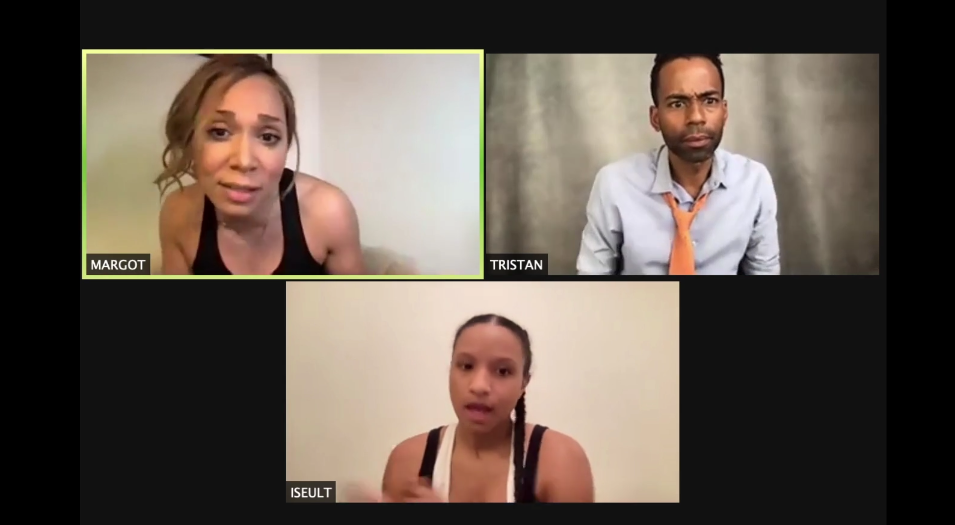
Clockwise from top left: Sarah Hollis, Chris Gardner, Naïma Hebrail Kidjo; taken from stream and edited

Iseult et Tristan by Pia Wilson

One of the great landmarks of New York underground experimental theater, La MaMa ETC, continues bringing exciting, vibrant work as it transitions to a digital space. Monday’s entry in the Experiments series was a brilliant example of how classic, almost archetypal stories can be repurposed and still resonate in our shared here and now.

Writer Pia Wilson resurrected the centuries-old love triangle of Iseult (Naïma Hebrail Kidjo), Margot (Sarah Hollis), and Tristan (Chris Gardner). She placed these old-as-time feelings in the milieu of contemporary New York with Iseult as a boxer, fresh out of rehab, under the tutelage of her retired boxer sister and her sister’s man struggling with some issues of his own.

Sympathetically directed by Susan Dalian in this zoom reading, the specifics of the setting hit with the concentrated fury of targeted punches as the characters danced around each other and their own pain. Lines drew blood like Iseult’s devastating “How do you do your life sentence in a cage of skin and blood? I don’t know how to do this life sentence.”

This is still viewable at http://lamama.org/iseult-et-tristan/ for I don’t know how long.
November at CCAD’s Beeler Gallery

My first art exhibit of the year and it felt like the first air in my lungs after being submerged in dark water. All the art institutions here are doing a great job with capacity limits, timed ticketing, contact tracing. Those steps make me feel mostly comfortable doing an activity that gave me the most joy before the pandemic even while I’m not as at ease doing it, always watching to see who is in the room and how close we are to one another. 

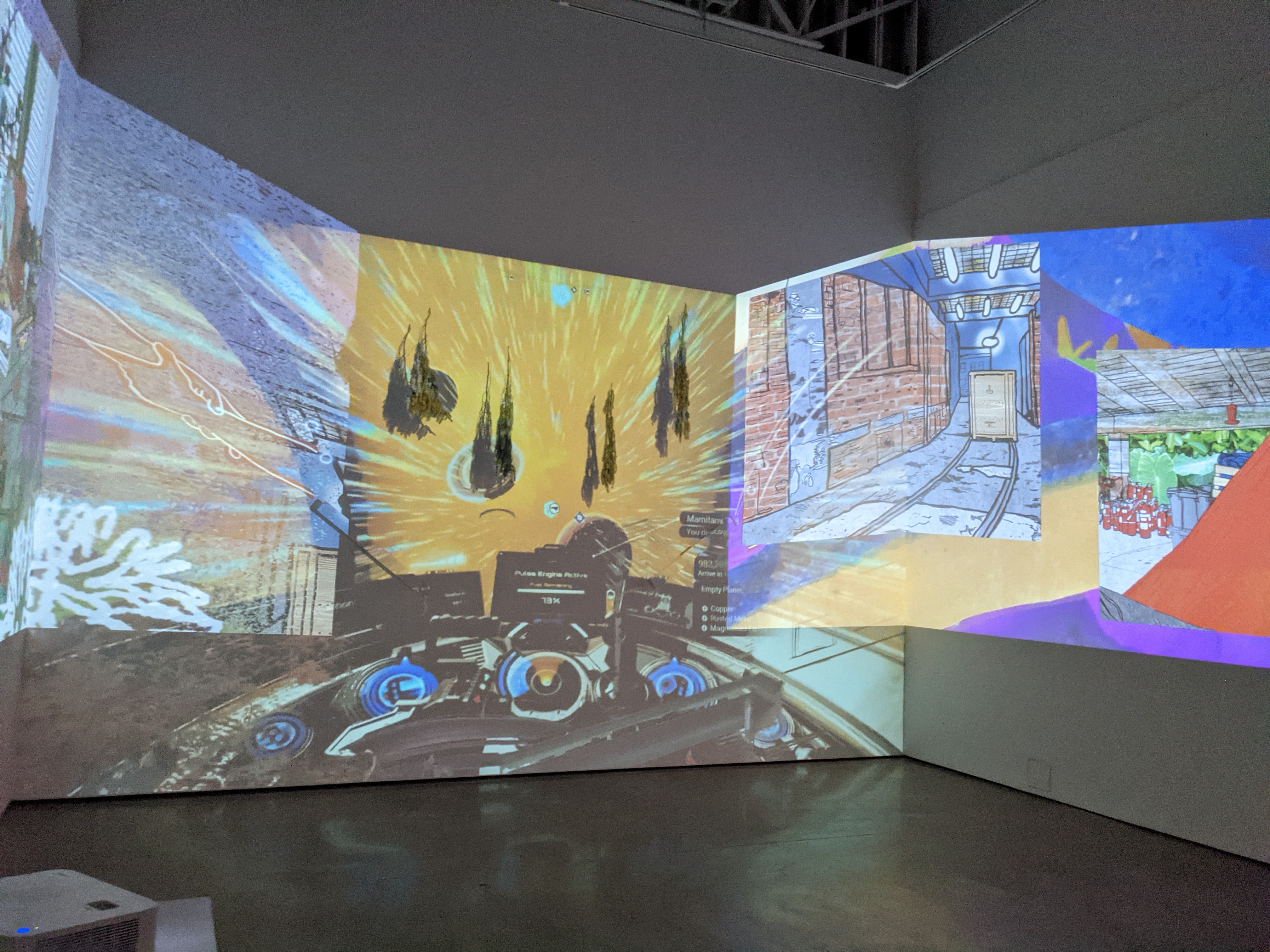
For the last several years, the Columbus College of Art and Design’s main exhibition space, Beeler Gallery, has carved out its own vital, unique space in our crowded art world. This multi-artist exhibition, November, was curated by alum Heather Taylor for the uncertainty and challenge of the 2020 election and pushed back due to a record-high wave of cases. 

These works stand up to the different but still present anxiety and tension of the moment because they were built already dealing with the layers of historical rage, sadness, and mistreatment. The unifying thread among these pieces is the sad certainty that what we all went through wasn’t a blip but a coalescence, a locus, a culmination; a clear-eyed desire to understand and respond to move forward.

Each of the artists brought something personal and sharp to this call and Taylor’s curation – and whichever preparators she worked with – shines in the way they speak to one another. Benjamin Willis’ gripping self-portraits in a warm, textured light played with Dawn Kim’s punching layers of The Apprentice soundtrack over a C-Span litany of contenders walking into Trump Tower in early 2017. 

Some of the highlights were full-room installations. Bobby T. Luck’s Drapetomania, or The Disease Causing Negroes to Run Away presented a breathtaking collage knocking the breath out of my lungs. Luck plays with our inability to connect and the sea of media buffeting us at every step and forcing a hard look at who chooses the prevailing images of a group – in this case, specifically black Americans – and why. 

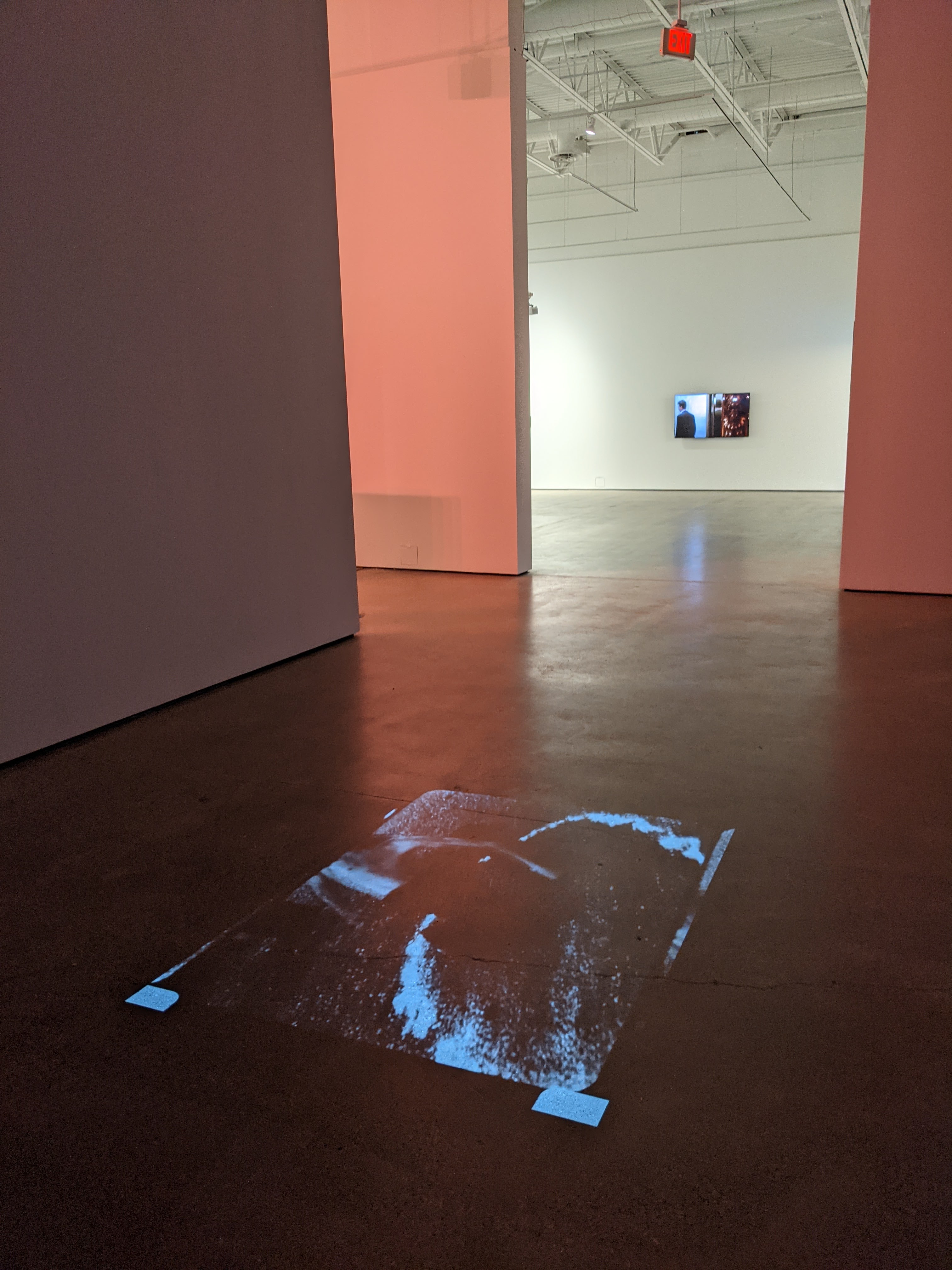
Calista Lyon used old-school overhead projectors to dive into colonialism’s impact on the Crimson Spider Orchid, stitching together history and an almost apocalyptic warning in deep duende, amplified by the nostalgia of that humming light and the pink cast of the walls. 

There’s so much to unpack in this triumphant exhibition and it runs for one more week (through March 6, 2021). For details and to reserve timed tickets, visit https://www.ccad.edu/events/november 
Farewell, Ace of Cups: Muswell Villebillies on 02/27/2021

Anne rightly points out that one key to not losing your mind in this time when we can’t see each other up close is finding ways to mark the things we’d usually get together to celebrate or mourn. The value of that approach was affirmed and its limits tested this Saturday as Marcy Mays said goodbye to her time owning Ace of Cups.

For the last decade, Ace made itself indispensable to the Columbus rock and roll scene, filling a specific gap. We had great clubs since Little Brothers closed but we missed that size of room with a rock-centered booking approach but casting a wide tent (and using the best existing bookers in town) while also being open for bar hours and serving as a central clubhouse for many of us.

Ace of Cups’ greatest successes came from its unshakable faith in and deep love for our shared community – Columbus’s and the larger rock and roll scene. I lost count of the number of birthdays (including Anne’s and her Mom’s) we celebrated, the people we mourned, the out-of-town friends who wanted to come back, and the great times we shared. I also lost count of the number of musicians who wanted to play Ace – sometimes hadn’t been to Columbus in many years – because of their longstanding friendship with Marcy going back to her days in Scrawl.

That sense of community was all over this final show as Ace transitions to a new owner – Conor Stratton who comes highly recommended by every friend of mine involved and with a proven track record including the exciting Yellow Springs Springfest. First, by continuing a long partnership with neighbors Lost Weekend Records, owned by scene stalwart (and the gold standard for stage managers) Kyle Siegrist, for Lost Weekend’s 18th-anniversary celebration.

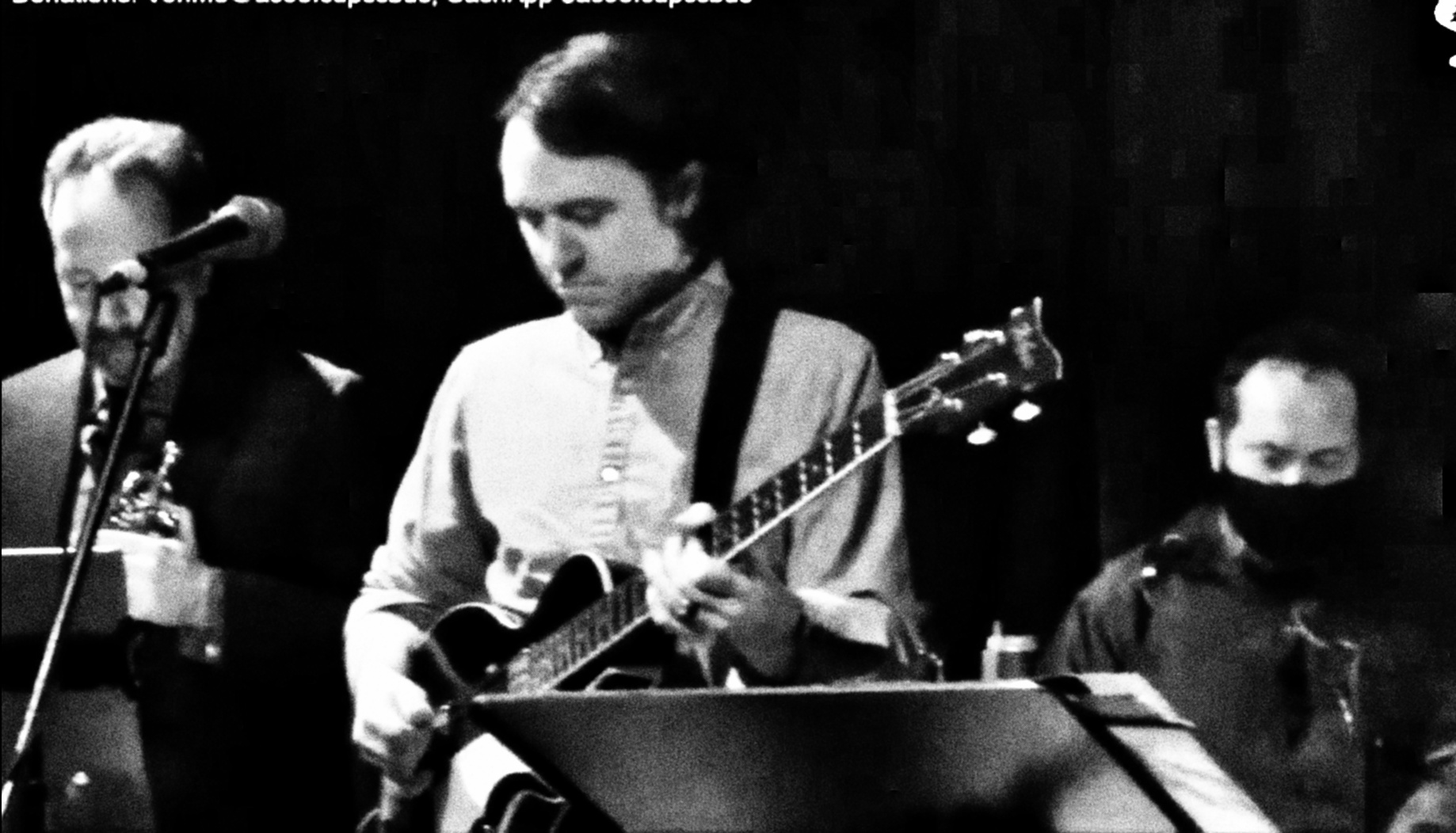
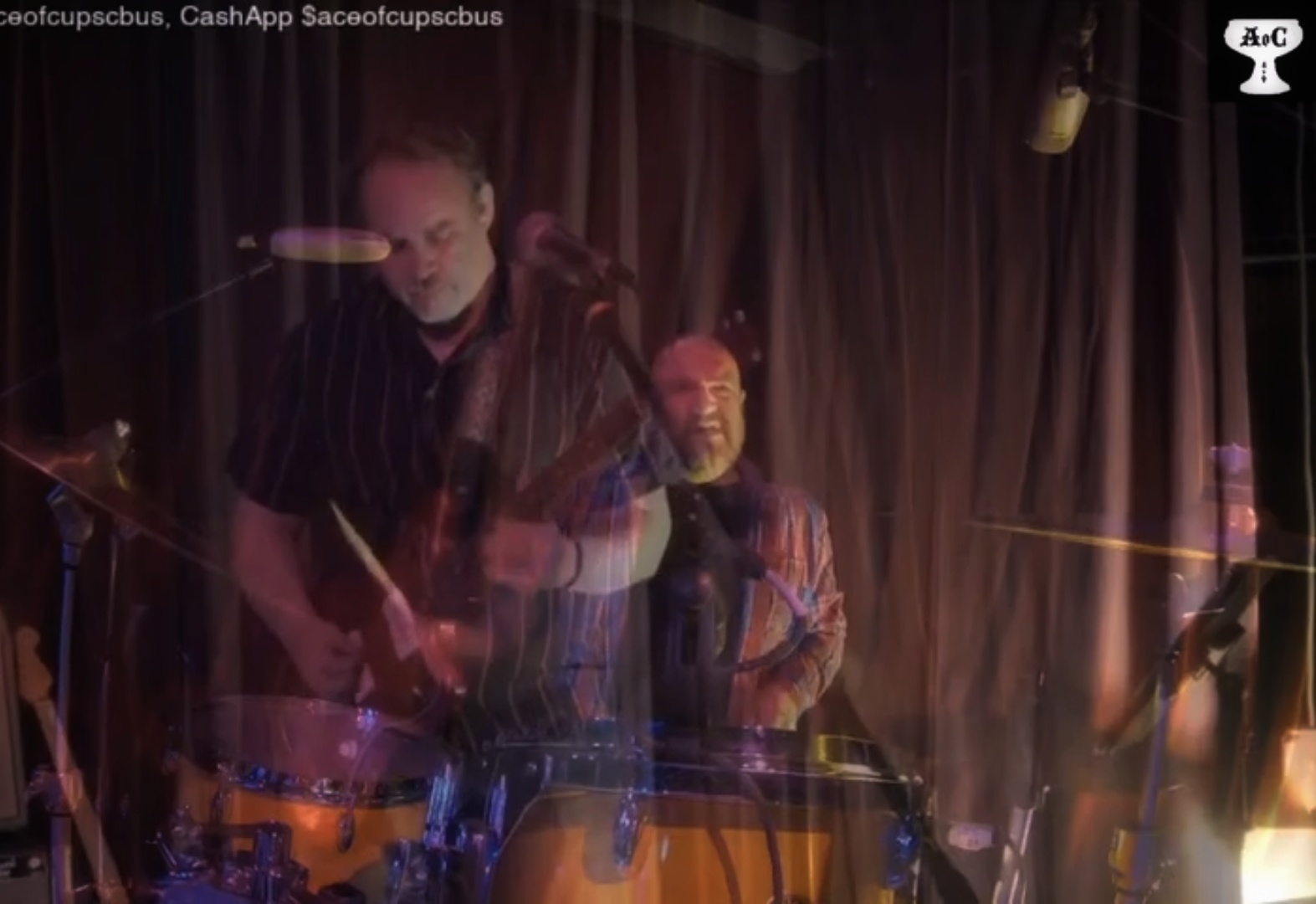
That community pumped through the veins of this show in the people playing too. The core of two of this town’s favorite cover-bands-for-people-who-hate-cover-bands, The Randys (Dave Vaubel and Jon Beard) and Popgun (Joey Hebdo and Tony McClung) teamed up with guitarist and producer of too many bands to count Andy Harrison in a gloriously fun Kinks tribute act, the Muswell Villebillies, aided by key members of New Basics Brass Band, Tim Perdue on trumpet and Tony Zilinick on trombone and sousaphone, on key tunes.

The players had a great time leaning into some of the great pop songs of the middle of the 20th century and the Kinks’ wide-ranging appetite for fusing disparate, sometimes discarded styles and making something new out of them along with the almost ravenous taste for melancholy in these songs made for an appropriate sendoff to a place we love so much.

That hunger for connection in tunes like “All of My Friends Were There” with its lines about “I’m thinking of the days – I won’t forget a single day, believe me;” “Picture Book;” “Party Line” with its warm paranoia, “I wish I had a more direct connection,” cut deeper than I expected, watching from my couch. 

The set drove home that longing – not being in the room to hug people and give it a proper goodbye as I did with other rooms I loved so much in their last days, Little Brothers and Larry’s here, Lakeside Lounge in New York immediately come to mind – on tunes tailor-made for it, Ray Davies’ wincing look at childhood on “Come Dancing” and a wrenching turn through one of the most beautiful songs of the 20th century, “Waterloo Sunset,” with guest vocals by Mays.

Part of what made this band work so beautifully is the best work of most of these players comes in reconfiguring and enlivening structures. There weren’t a lot of deconstructionist impulses on display and you don’t want it for this kind of repertory band. The key to breathing life into these classic songs is trusting them and loving them on their own terms and the distinct players’ skillsets and ability to find space within both the song and the unit of the band shone brightly.

McClung’s heavy post-Elvin Jones drumming – I’ve compared him to Columbus’ “Tain” Watts a few times – snaps everything into place here, with the supple rhythm section rounded out by Vaubel’s crisp, melodic bass and Beard’s blood-pumping surges on barrelhouse piano, silent-cinema organ, and beer-garden accordion. 

Within that framework, Hebdo leaned into the aggressive affectation of Davies’ phrasing, not making the mistake of trying to make things more natural to our ears, turning over the words and their rhythm as they were set in stone. Harrison’s crackling guitar and gets space to play as the horns lift everything up with punctuation and announcement.

I’ll miss you, Ace. I look forward to seeing what you bring us in the future. And I look forward to catching this band when I can dance with my friends and sing along in the open air.

This is still viewable for an indeterminate length of time: https://youtu.be/-6oNhPm-Yj8 
Categories
Best Of visual art

Best of 2019 – Visual Art

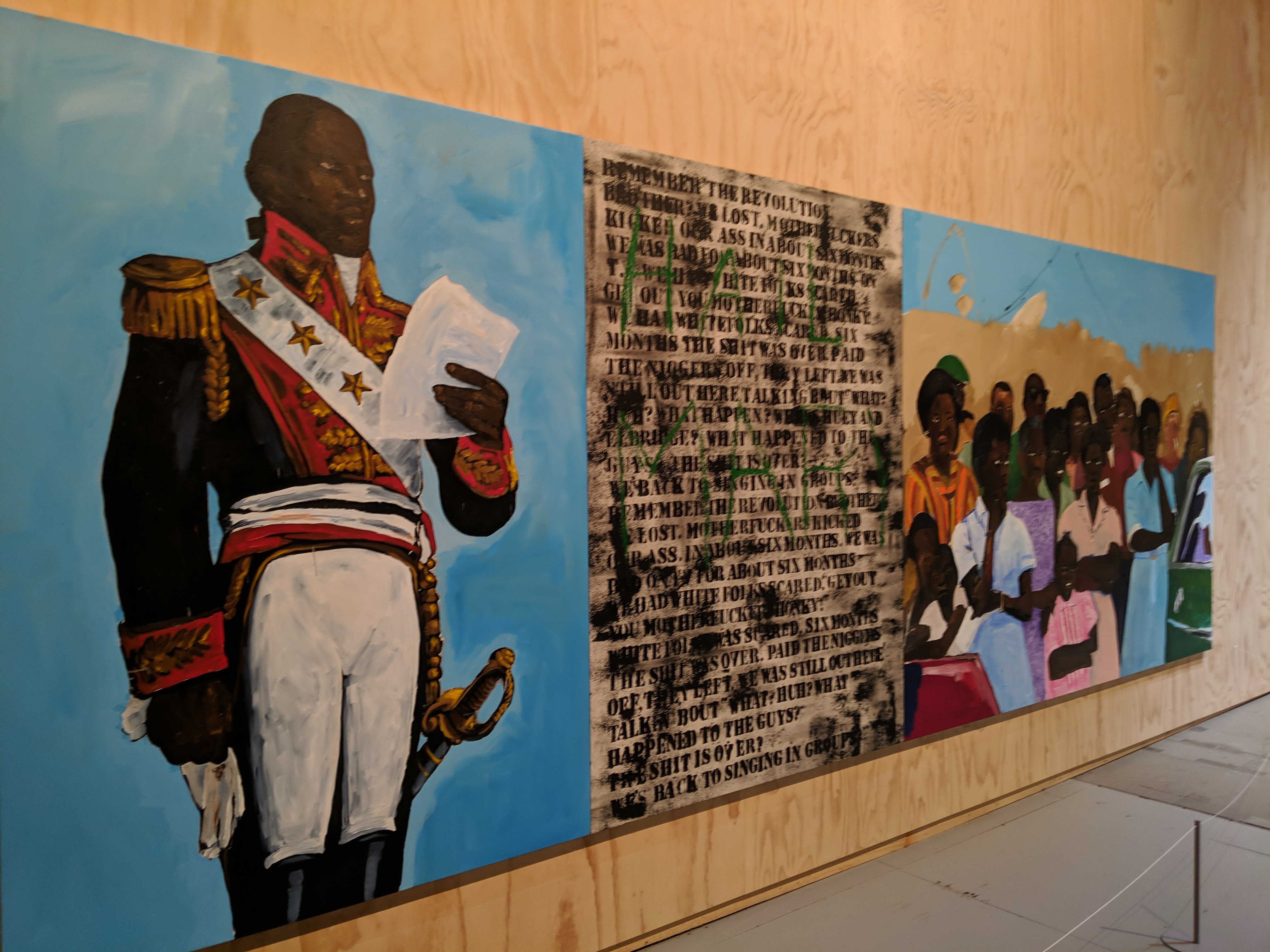
Henry Taylor, Venice Biennale

“If you notice anything,
It leads you to notice
more
and more.”
– Mary Oliver, “The Moths”

In this year – by turns more magnificent than I could hope and immeasurably shitty – visual art continued to be a balm, a lifeline, and a reminder to wake up and try harder. I was lucky enough to catch 75 exhibits over 9 cities in two countries. I left this one ranked – unlike the two performance lists which I put in (mostly) chronological order – we’ll see if I stay comfortable with that.

Everything below is in Columbus unless otherwise noted. All photos have been taken by me for reference for discussion with no claim on the original work, unless otherwise noted.

Natalia Goncharova, Palazzo Strozzi
  1. Various Artists, 2019 Venice Biennale: May You Live in Interesting Times (various locations, Venice) – It’s hard to compete with new – my memories of the first Whitney Biennial I was lucky enough to visit are stronger than my memories of this year’s (for more reasons than one) – so it’s not surprising I was so dazzled by my first Venice Biennale. That said, my eyes almost popped out of my head, from the main exhibit curated by Ralph Rugoff with the best overview of artists grappling with the current shifting, chaotic moment, to the various national pavilions haunting and inspiring, to the satellite exhibitions (a storefront dedicated to Sierra Leone knocked me over), this took me back to the best parts of that childlike state where everything’s new and I’m hungry for all of it.
  2. Barbara Hammer, In This Body (Wexner Center for the Arts) – Barbara Hammer’s work has always fascinated me and the Wex – led by its curator, Film/Video Studio Program Curator Jennifer Lange – outdid themselves with this exhibit put together up to Hammer’s death this year. The kind of grappling with mortality that doesn’t come easy, a fusing of rigor with the sensuality her work reminded us can never been separated from politics and society. I spent hours in the main installation, walking through X-Ray negatives bathed in a haunting film, I even went the day after my stepsister’s funeral, and it comforted and challenged me every time.
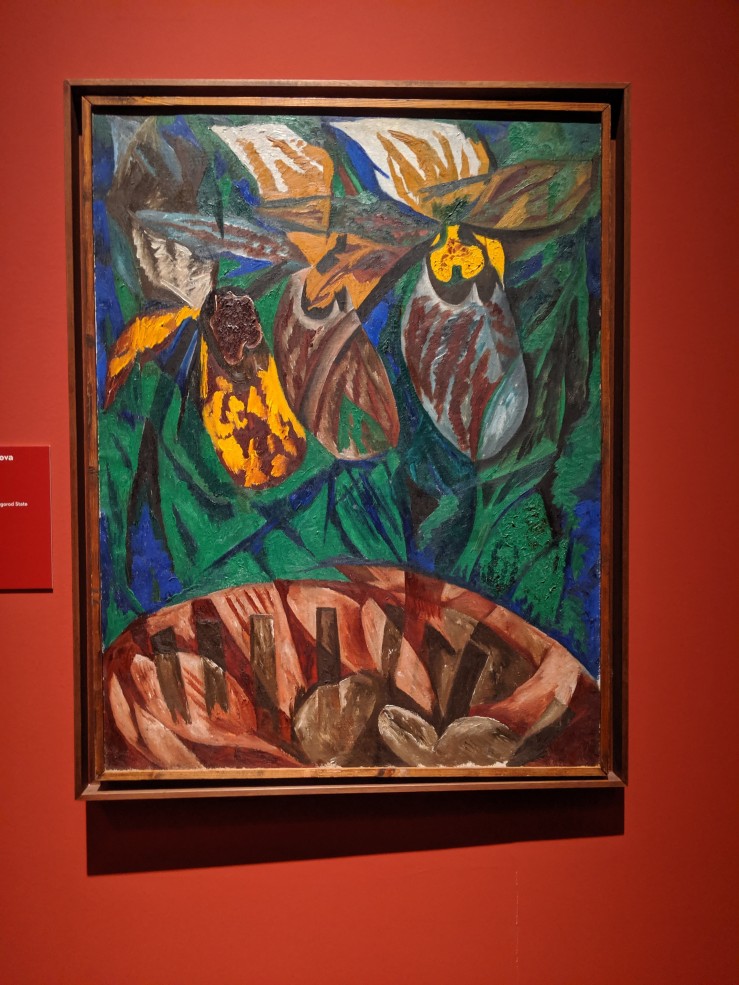
  3. Natalia Goncharova, Natalia Goncharova (Palazzo Strozzi, Florence) – This was a happy surprise for my first trip to Florence and a source of immense chagrin that the only thing I know of Goncharova previously was her costumes for Dhagliev. A cornucopia of classic high modernism practiced at a level almost no one could match. Masterpieces in dialogue with all the better known names of her time – Picasso, Chagall – while never feeling like she was trying on techniques. A time that felt like the end of the world mapped out and sung in a voice I couldn’t forget.
Joan Mitchell, David Zwirner
  1. Suzanne Lacy, We Are Here (SFMOMA and Yerba Buena Center for the Arts, San Francisco) – Suzanne Lacy’s a brilliant example of an artist who works directly with society, never content to only let her work be uplifting. This retrospective, spread across downtown San Francisco’s two main institutions, reminded me how vital her work still is and how inspiring her mission).
  2. Joan Mitchell, I Carry My Landscapes Around With Me (David Zwirner, NYC) – Joan Mitchell’s been one of my favorite painters since I first saw her work; some days, she’s easily my favorite of the Abstract Expressionists. This retrospective of her large-scale paintings at David Zwirner was earth-shattering for me; taking that fusion of abstraction and landscape many of us associate with Kandinsky and exploding it into other worlds. A crystallized moment of the 20th century and a reverberation through the foreseeable future.
  3. Jason Moran, Jason Moran (Wexner Center for the Arts) – Moran’s one of my heroes since I first heard Black Stars when I was in college. His appearance with the Bandwagon is one of my all-time top five concert experiences at the Wexner Center. This look at his – often collaborative – visual art was stunning. The detail-rich replicas of key spots from jazz history loom in the middle, heavy with history as tombs but also vibrating to be reactivated. His video work with Carrie Mae Weems and Stan Douglas hinted at secret histories. I had some issues with the selection of the live performance aspects – would have liked more things like the opening Ogun Meji – but I kept visiting and unpacking this.
Jason Moran, Wexner Center
  1. Various Artists, Everything is Rhythm: Mid-Century Music and Art (Toledo Museum of Art, Toledo) – 40s-60s contemporary art and music are obsessions of mine, still, and this multimedia presentation in the always excellent Toledo Museum was the best, most approachable tying-together of those threads I’ve ever seen.
  2. Lorna Simpson, Darkening (Hauser and Wirth, NYC) – I knew Lorna Simpson’s photography work a little but this selection of layered, gripping paintings felt revelatory. The light growing dim so you have to lean in and then the cold opens you up.
  3. Various Artists, Detroit Collects: Selections of African American Art from Private Collections (Detroit Institute of Art, Detroit) – Private collectors in museum contexts are problematic but everything about this warmed me up, members of Detroit’s black community talking about collecting black art and fascinating examples of what draws them to it and keeps them going. A deep dive into the best parts of collection and curation – paying tribute, keeping voices alive, giving you something to pass onto your children.
Anselm Kiefer, German Abstraction After 1950, SFMOMA
  1. Various Artists, Leonard Cohen: A Crack in Everything (Jewish Museum, NYC) – Various artists taking on Leonard Cohen, one of the most imagistic lyricists of the 20th century made this lifelong Cohen fan’s heart grow three sizes. The variety of work, from an amateur men’s choir doing “I’m Your Man” in multichannel video to an organ that played a word with each key to an installation where “Famous Blue Raincoat” synchronizes with a flood of iconography, there was so much to love here.
  2. Various Artists, Artistic License: Six Takes on the Guggenheim Collection (Guggenheim, NYC) – Celebrating an anniversary, the Guggenheim turned to artists to contextualize the parts of the massive modern art collection and it’s the best use of the iconic Frank Lloyd Wright building and the best use of a giant collection of holdings I’ve seen in years.
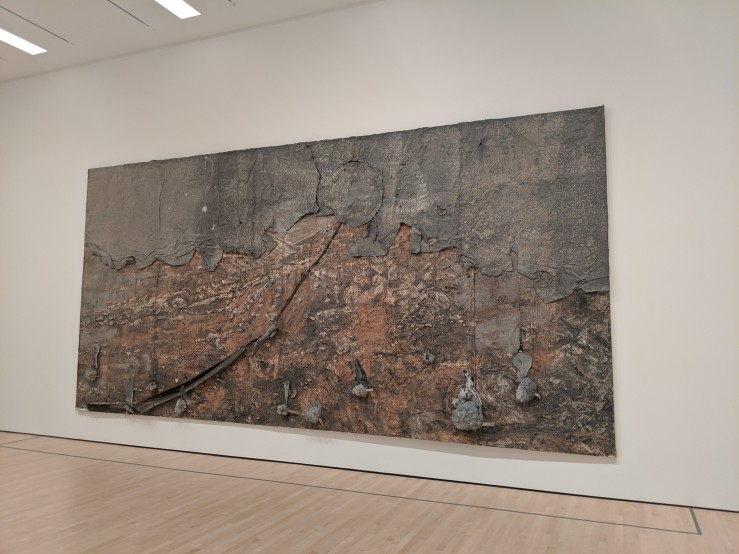
  3. Various Artists, German Abstraction After 1950 (SFMOMA, San Francisco) – This era – Kiefer, Richter, et al – is a personal favorite of mine and this was an embarassment of riches I couldn’t believe I was seeing all in one place.
Nancy Spero, MoMA PS1
  1. Peter Hujar, The Speed of Life (Wexner Center for the Arts) – I loved the John Waters piece that ran in parallel with Hujar, and I loved seeing the two dialogue with one another but the Hujar wrecked me every damn time. A reminder how potent portraiture can be in letting us see and a reminder to be grateful for our networks and the love around all of us.
  2. Simone Fattal, Works and Days (MoMA PS1, NYC) – An artist I knew nothing about before this trip to PS1 knocked me sidewise. Sculptures and watercolors working through the consequences of archaeology and imperialism, knowledge and the stories we tell ourselves. I needed far more hours than I had to properly appreciate this but it’s still with me.
  3. Walid Raad, Walid Raad (Paula Cooper, NYC) – Walid Raad’s alternate history work reminds us all how science fiction tropes can illuminate real world pain and challenge. His puzzles dare you to tease out the facts from the greater truth and complicate your own feelings as you work through them.
  4. Nancy Spero, Paper Mirror (MoMA PS1, NYC) – Spero’s work benefited from the volume and the jumble of this perfect PS1 show, words coming at the viewer like daggers but so many you can’t focus on any one, you have to give into the flood.
Huma Bhabha, Gagosian Rome
  1. Gordon Parks, The New Tide: Early Work 1940-1950 (Cleveland Museum of Art, Cleveland) – Gordon Parks’ social realist photography is always a wake up call to being alive and this tight, well-curated collection in Cleveland was exactly what I needed in a summer of too much feeling sorry for myself.
  2. Sondra Perry, A Terrible Thing (MOCA Cleveland, Cleveland) – Perry’s video work dug deep into infrastructure and invisible labor in a biting, potent critique that sung.
  3. Various Artists, arms ache avid aeon (CCAD’s Beeler Gallery) – Jo-ey Tang’s work with the Beeler Gallery is coming into its own; I love his specialty of slow exhibitions that evolve over periods of time and this look back on the fierce pussy collective, capped by a symposium that was the most energized I felt all year, was a dazzling, meditative explosion.
  4. Huma Bhabha, The Company (Gagosian, Rome) – In a trip spent gorging ourselves on old masters and antiquity, Bhabha’s sardonic looks at the modern age was the perfect palate cleanser.