Categories
Best Of live music

Best of 2023 – Live Music

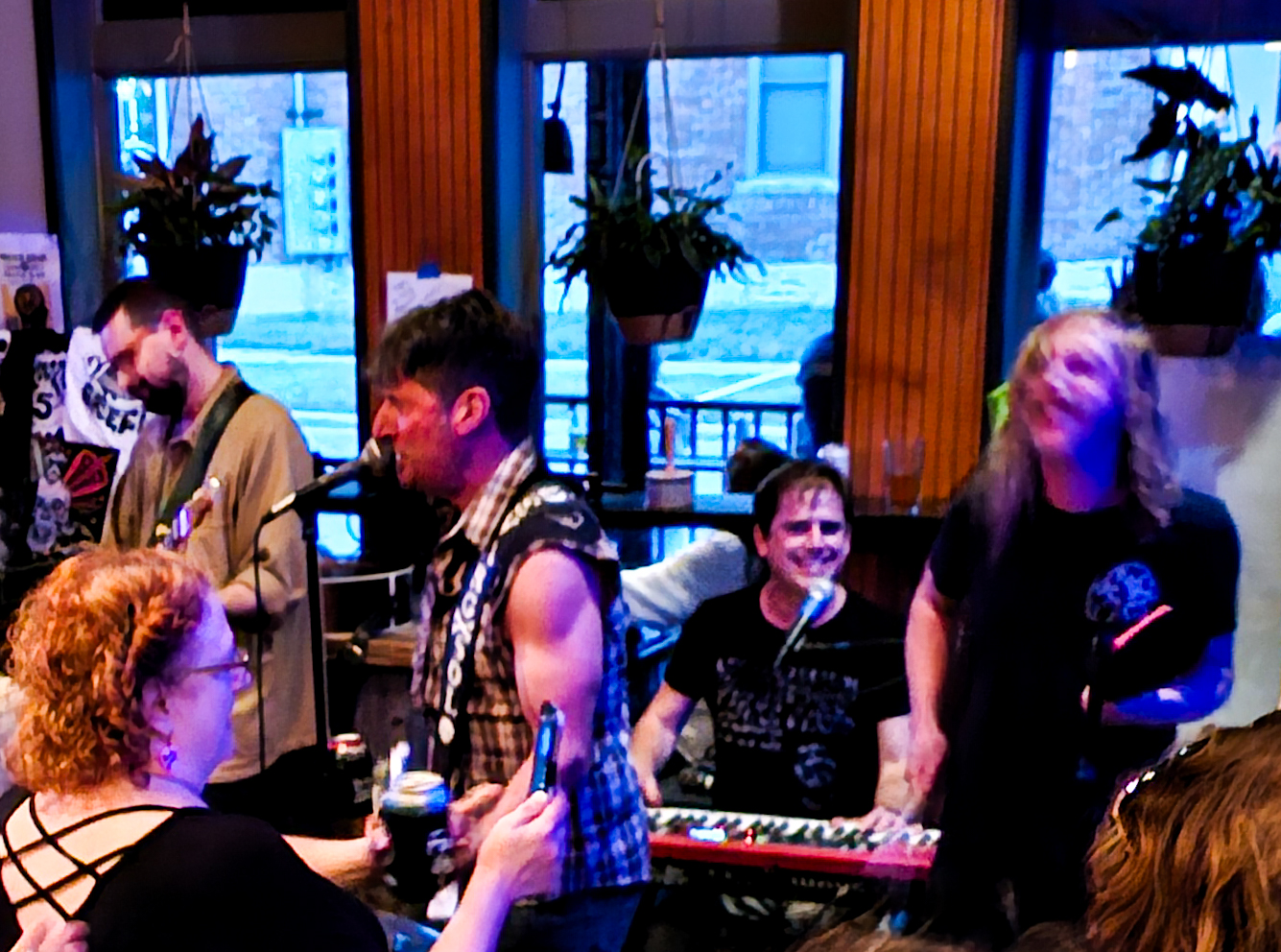
Small bar, two dark haired white men playing guitars, one singing, one light haired white man playing piano and singing, one light haired white man playing cowbell and dancing so hard he's blurry
The Little Rockers (from left, Phil Cogley (if I’m wrong there, someone please post), Quinn Fallon, Joe Peppercorn, Jason Winner)

This may sound like a joke to most people who know me, but this year, I really felt the strain of trying to juggle too much. Some of that stress resulted from differently demanding jobs – especially switching companies around Memorial Day. Some of that feeling was mental health, including the fact that a bout of COVID and a recurrence of gout both threw my gym habit, which I’d really enjoyed the last two years, off hard. I’ve got some strategies, and it’s all about iterative improvement/a feedback loop I’d been steadfastly ignoring; we’ll see if I can get to a more balanced place of being open to really enjoying everything I head out for and not being so goddam tired.

That whining out of the way; I’m so glad I have a habit of doing these every year because I saw an amazing array of stuff.  Narrowing this down to 20 was extremely hard – even with another 20 of the best sets I saw at a festival. I saw about 170 shows over 12 cities – though a few of those cities were only for festivals, like Knoxville for Big Ears or Memphis for Gonerfest. 

In no surprise, I was at Dick’s Den the most often, with 25 appearances, and I never saw any bullshit music there. It’s not only my clubhouse; it’s where our finest musicians feel comfortable stretching out, trying new things, and checking new players. Not only our jazz scene, but I feel safe saying Columbus’s entire cultural firmament would be poorer without the constantly rejuvenating energy of Dick’s.

Natalie’s Grandview was next up; I was there 11 times (with two more scheduled after this intro – hopefully after this post, but we’ll see how long this takes – but before the end of the year). Beyond the dazzling show that did make this list, it had the most sweated-over, where-does-this-go shows of any venue in town. In another year, the Robbie Fulks (first time with a full band in a few years), the Sadies (who killed me as a trio when I didn’t think I’d ever get used to them without Dallas Good), Sarah Borges/Eric Ambel (who brought my favorite set list they’ve ever done from two artists who’ve never made a bad record), and Chuck Prophet and the Mission Express (who sailed over what’s always a high bar when he’s in town) all would have made this list handily. 

And I want to take a second to shout out something Natalie’s does that I think is important: residencies. Beyond their legendary extension of Bobby Floyd’s Sundays (to which I’ve been an intermittent visitor since they were held at the Lobby on the east side), they’ve made space to give established and up-and-coming artists recurring weekly space on their more intimate Charlie’s Stage to bring guests, workshop new material, and remind us all just how deep the bench is of talent in this town. I saw stellar examples of this by Lydia Loveless, the duo of singer Sydney McSweeney and saxophone player Terrance Charles, Hammond B-3 players Jon Eshelman and Tony Monaco, and the trio version of alternate-universe harmony maestros The Randys, and easily missed half a dozen I wanted to make. My cultural life is richer through the efforts of Charlie and Natalie Jackson; every year, they double down on that.

Speaking of, I want to take a second to shout out fellow Grandview venue Woodlands Tavern: every time I made it out for Colin Gawel’s monthly residencies, I had a fantastic Sunday; more than once taking out-of-town pals, enjoying the guests he’d bring on, especially his rallying for both democracy in general and reproductive rights in specific with two Issue 2 shows before the two elections.

Cafe Bourbon Street either continues getting its groove back, or I continue getting my head out of my own ass and noticing. Every one of the six nights I spent there could have easily made this list; the one show that made the 20 not only still reverberates in my head but also was worth getting COVID again. Ace of Cups, I haven’t been to as often, but the subtle improvements in sound and the bar, while keeping some of the great staff and the overall ambiance, always make me feel good. I especially appreciate the carrying the torch for bigger community building or reinforcing events – the two-day 20th anniversary of Lost Weekend Records and the fundraiser for Arturo De Leon, headlined by the return of the New Bomb Turks; both made my heart swell.

Everything listed below is in Columbus unless otherwise stated; everything is in chronological order. All photographs are by me. When I list an opening act, it’s because that opener helped nudge the show onto this list.
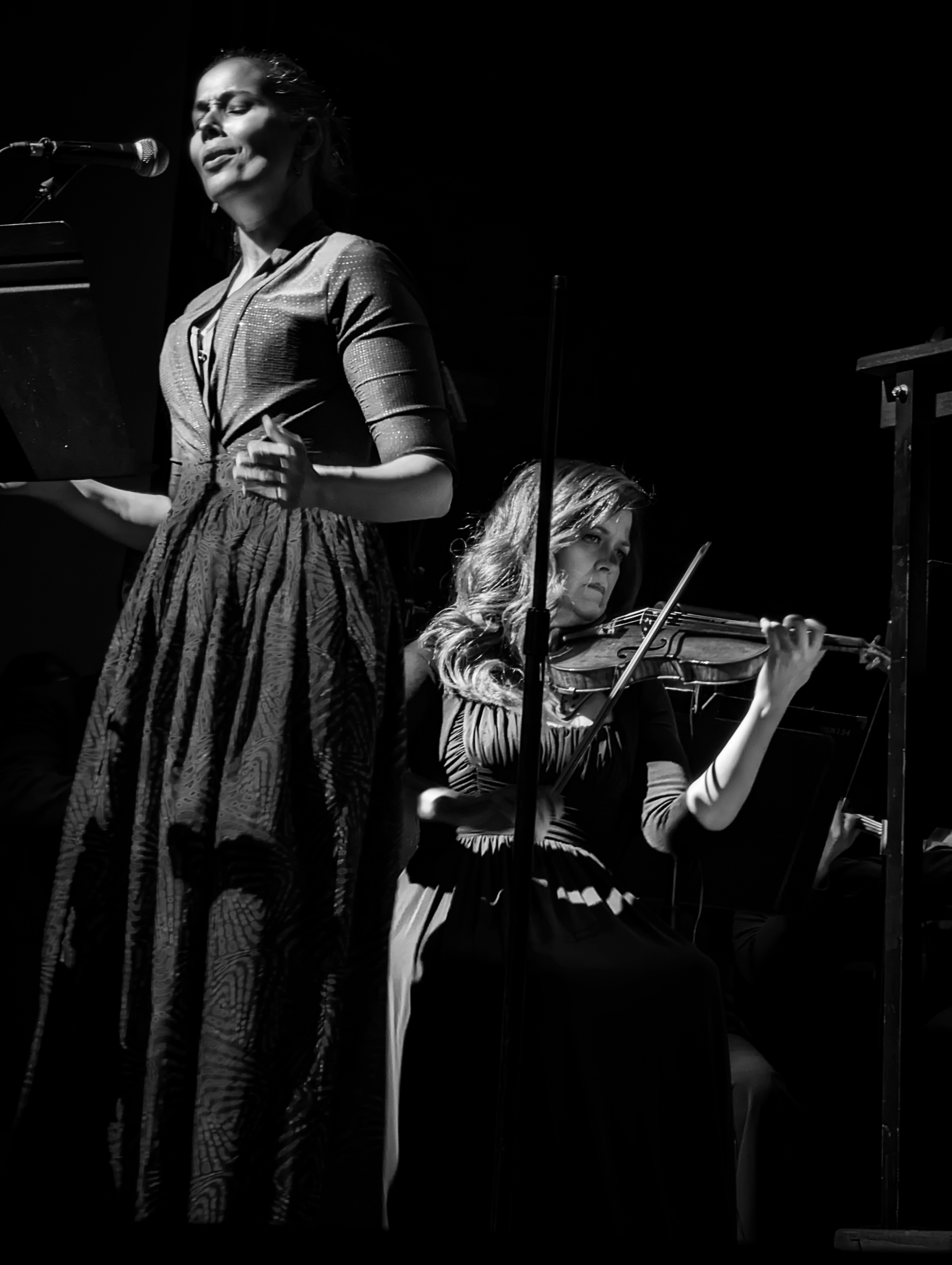
Black and white photo, dark skin woman singing, light skinned woman sitting and playing violin
Rhiannon Giddens, standing, and Katherine McLin, playing violin, from the Promusica Chamber Orchestra
  • Meshell Ndegeocello (Blue Note, NYC, 01/12/2023) – I’ve been a fan of Ndegeocello since hearing Plantation Lullabies in High School, but I’d never seen her live, so a week at the Blue Note when I was in town for the constellation of APAP side events was a no-brainer. She augmented the already tight usual band with guitarist Jeff Parker and keyboardist Julius Rodriguez. She opened by saying, “It’s rainy outside; we’re going for a mood,” and held me in the palm of her hand as the band slid from silky looseness to snapping wire-tight at precisely the right moments, all hovering around her voice and guitar or keys. They previewed songs from the at-the-time-upcoming The Omnichord Real Book, dipped into the catalog, and sprinkled the 70-80 minute set with a handful of beautiful covers, including a smoky, slow-jam take on the ‘80s George Clinton classic Atomic Dog. Not the first show of the year I saw, but this definitely set a bar for everything that came after.
  • Promusica Chamber Orchestra with Rhiannon Giddens (Southern Theater, 01/19/2023) – One of my favorite contemporary singers since first hearing Carolina Chocolate Drops, my fandom of Rhiannon Giddens exploded after seeing her solo at one of my first couple of Big Ears festivals in the Bijou Theater. She captured the spectrum of American music in Columbus’s intimate historic theater, working alongside our Promusica Chamber Orchestra at Promusica’s annual fundraiser alongside her musical foil, Francesco Turrisi and upright bassist Jason Sypher. With soaring, nuanced string arrangements from Gabe Witcher (often a visitor to the Southern as a member of the Punch Brothers), she tore into classics like Nina Simone’s “Tomorrow is My Turn” and Gillian Welch’s “Factory Girl” along with originals like “At the Purchaser’s Option” with aplomb and that crystalline tone. Just breathtaking.
  • Teeth Marks/Cardiel/Garbage Greek (Rumba Cafe, 02/11/2023) – It’s no surprise Garbage Greek is the only band to make this list twice. They are my people and have been my favorite straight-up rock band since stripping down and woodshedding during COVID. They always bring it whether they’re coming as a three- or four-piece (Adam Scoppa’s percussion and backing vocals add fascinating textures when he’s available). They’ve brought a strain of harder rock to Rumba Cafe. They’re bringing bands that probably wouldn’t play here otherwise. This example turned me onto beautifully unhinged Mexico City two-piece Cardiel – who fused furious garage rock with acid-tinged improv and even the depth and richness of dub reggae – and local band Teeth Marks, who had an appealingly raw vibe that immediately added me to their list.
  • Columbus Jazz Orchestra with Maria Schneider (Southern Theater, 02/12/2023) – I love our Jazz Orchestra, but sometimes the rep isn’t right up my alley. Obviously, there were no such questions with Maria Schneider, who’s been at the forefront of modernizing the big band language for decades. Watching her conduct a set of her deathless compositions was my favorite example of seeing how the muscles of this band can flex, be delicate, and powerful in the same breath.  
Dark skin woman sitting, playing acoustic guitar
Yasmin Williams
  • Yo La Tengo (Beachland Ballroom, Cleveland, 03/22/2023) – Speaking of delicate and powerful, alternating and at the same time, Yo La Tengo might be the touring band I’ve seen most often over the years, but I’ve never seen a better two sets than they brought to one of my favorite venues in March. Highlights for me included an opening “Sinatra Drive Breakdown,” a breathtaking “Center of Gravity,” a dazzling “Sugarcube,” and an encore starting with a cover from underground Ohio heroes Electric Eels.
  • Yasmin Williams with Tarta Relena (Wexner Center, 03/28/2023) – I’d waited a long while for Yasmin Williams. Canceled at least twice due to COVID, another cancelation and a year wait after I’d interviewed her and written a preview. But this makeup date affirmed everything I love about her records, gave me my first taste of my current favorite acoustic guitarist live, and introduced me to the astonishing Spanish singing duo Tarta Relena. Hymns not bound to a specific tradition, resonating notes tearing rips into universes. Once again, an astonishing show from the Wexner Center that served as a palate cleanser/amuse bouche for the glorious buffet of Big Ears.
  • Jason Isbell and the 400 Unit with Amythyst Kiah (Andrew J. Brady Center, Cincinnati, 04/29/2023) – Maybe the last leg of Isbell’s touring with longtime bass foil Jimbo Hart in a new big room in Cincinnati I wasn’t familiar with before heading down, he and his crack band hit every stage of his career, from the song that introduced most of us to him as a writer, DBT’s “Outfit” through a solid helping of Southeastern songs in the year of its 10th anniversary, and every record since Southeastern rehabilitated his image, including an encore that paired the devastating “Cast Iron Skillet” off not-yet-released Weathervanes with early DBTs standout “Decoration Day.” And Amythyst Kiah and band killed a tight nine-song set heavy on her terrific record Wary and Strange but also sprinkled with hard-edged takes on classics like her set-closing bring-the-house-down take on Vera Hall’s “Trouble So Hard,” which she also appeared alongside Gregory Porter on Moby’s recent revisiting of his “Natural Blues” that introduced many of us to that through a sample.
  • Promusica Chamber Orchestra with Caroline Shaw (Southern Theater, 05/14/2023) – Promusica has been one of our cultural treasures for (barely) longer than I’ve been alive, and their 2022-23 season closer brought Caroline Shaw, one of my favorite contemporary composers, to town finally after originally being booked in 2020. Three pieces gave a taste of the scope of Shaw’s work as a writer and writer-performer – Blueprint for a String Quartet, Is a Rose, and Entr’acte for String Orchestra – and they paired this section with a gorgeous version of the first Brahms symphony which Shaw sat in on in the back of the violin section. It was a rapturous night. I couldn’t believe I was lucky enough to see it.
  • Jerry Powell Experience (Lalibela, 06/14/2023) – I was intrigued when, over lunch at a favorite Ethiopian spot in town, Lalibela, I saw a table card advertising that Jerry Powell III, one of our finest jazz drummers whom I hadn’t seen in a while, had a Wednesday residency in the restaurant’s bar. A stripped-down version of his band, accompanied only by a great keyboard player, took us on a journey in two sets: some standards, some more traditional “dinner music,” and some surging extended afrobeat jams. A reminder to be open to what’s in every corner of your town; I end up in the same venues a lot, and it’s not a bad thing; they’re places that are easy for me to get to from my home and from other venues, and that book a large number of shows that align with my tastes. But it’s always good to be reminded how much terrific shit is happening off that well-trod path.
  • Joe Peppercorn/Little Rockers/X-Rated Cowboys/Garbage Greek (Little Rock Bar, 06/21/2023) – Quinn Fallon’s Little Rock Bar has been a locus for multiple groups of my friends; I’ve made friendships there, and I’ve strengthened friendships. I’ve had some of the best nights of the last ten years at its bar or on its patio. Their annual celebration is right before Comfest, so getting some returning out-of-towners is always a delight, but this year was special. Everybody playing, all current or former employees of the bar, brought it. A beautiful solo Joe Peppercorn set. Pickup band Little Rockers’s blazing set included both a gorgeous take on the ‘Mats “Swinging Party” sung by Peppercorn and a killing “Ramblin’ Gamblin’ Man” sung by Patrick Koch. Koch’s own band, Garbage Greek, continued their streak of burning down everything in sight. And Fallon’s own X-Rated Cowboys, with a great record out this year, continued their evolution into a leaner, meaner, more colorful band than the one I started seeing over 20 years ago. A tribute to one of the shapes community takes and much of what I love about this town.
Light skinned man in dark blazer and cowboy hat playing guitar, light skinned woman playing drums
Dave Alvin and Lisa Pankratz
  • Dave Alvin and the Guilty Ones (Natalie’s Grandview, 06/29/2023) – I got into Dave Alvin buying King of California when I was in High School. My fandom went into overdrive with the one-two punch of Hightone’s 1997 reissue of The Blasters’ debut album American Music and Alvin’s Blackjack David the next year (still one of my favorite singer-songwriter records of all time, and still a record I go to often, especially in the wee hours of the morning). I remember talking to Alec Wightman on the phone from my dorm room, getting tickets for the first time I saw Alvin at the Columbus Music Hall promoting Public Domain in 2000 – starting me down the road of following Zeppelin Productions, who I don’t think have had a year they didn’t make this list at least once since I started keeping track in college. I’ve lost count of how many times I’ve seen Alvin over the years, at least 15, but – and I had a little trepidation given what I’d heard about his cancer battle recently – I don’t think I’ve ever heard him sing better, the richness of his voice almost knocked the drink out of my hand, and his guitar playing had a razor-cut crispness that more than made up for any minor losses in speed. Plus, he’s always had great bands. Still, this four-piece Guilty Ones was just perfection: Lisa Pankratz’s band-leading behind the drums as she elegantly worked every mood of the set, as good on a smoldering ballad like “King of California” as the gutbucket raunch of Big Bill Broonzy’s “You’ve Changed” and the soaring wistfulness of “Abilene.” Flexible and driving bass from Brad Fordham. And Alvin’s longtime guitar foil Chris Miller with harmonies and jousting, never too showy. Watching this, I was reminded of the purpose of a writer as a conduit for remembrance, for honoring moments that might not come back. In the American popular – whatever that means – music world, Alvin’s given us more shining examples of that mood, that form, than anyone else. He doled out many of my favorites in this show, reminding us that memory doesn’t have to be somber: the rave-up “Haley’s Comet,” the sexy-as-its-subject R&B of “Johnny Ace is Dead,” the Sam Cooke homage “Border Radio,” and the double-barreled reflections on youth and California “Dry River” and “Ashgrove.” A perfect night and a prime example of how good two guitars, bass and drums still sound. Anne and I decompressed, dissecting this in a bar a few blocks away, for hours.
  • Fred Moten/Brandon Lopez/Gerald Cleaver with Ingrid Laubrock/Cecilia Lopez (FourOneOne, NYC, 07/10/2023) and Big Joanie with Frida Kills (Baby’s All Right, NYC, 07/10/2023) – Once in a while, there’s a night that reminds me what enraptured me about Brooklyn in the first place. I was lucky enough to have a few of those nights this year. Maybe my favorite all-around started with a drink with Anne right off the Metropolitan Avenue L stop (following a long remote work day), dinner at still my favorite New York steak house St Anselm, jukeboxes and bar hopping down the street to a space I hadn’t made it to yet, FourOneOne for a set from one of my favorite saxophone players, Ingrid Laubrock, who Anne and I saw on one of our very first trips to the city together, in a mesmerizing duo with Cecilia Lopez on electronics, followed by one of my favorite writers and thinkers about music, Fred Moten, leading a burning rhythm section of Brandon Lopez and Gerald Cleaver. Then, with a debriefing drink on the walk back up the hill, saw righteous Brooklyn band Frida Kills open for UK powerhouse Big Joanie, who made one of my favorite rock records in a long time last year, turning out a packed house.
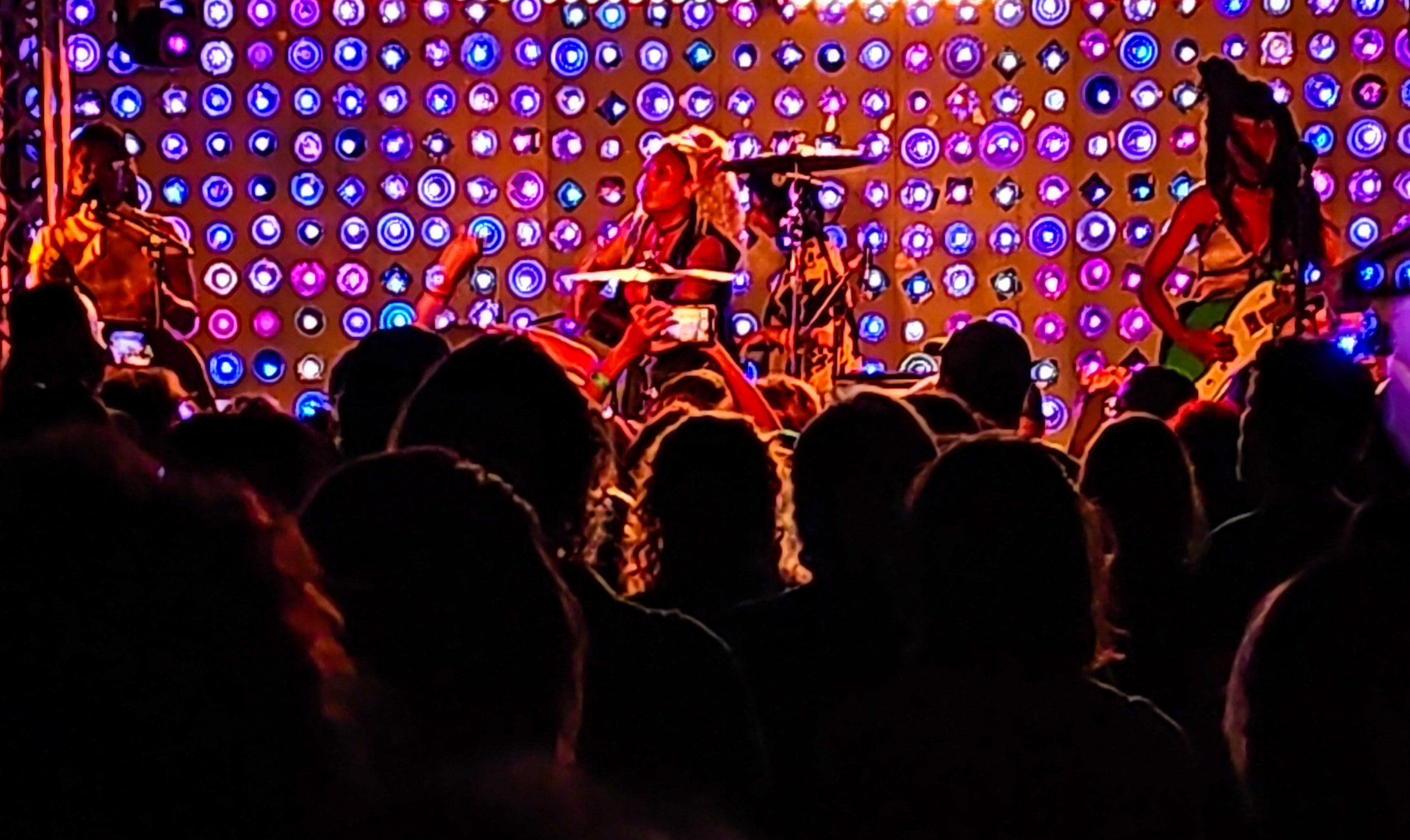
Punk rock trio - three dark skinned women - with a cheering crowd in the foreground
Big Joanie
  • Soul Glo with MSPAINT (Ace of Cups, 07/20/2023) – Another band who made one of my favorite rock records from 2022, Philly’s Soul Glo, paired with one of my favorite Gonerfest discoveries from the last decade, Hattiesburg’s MSPAINT – I’m not sure there’s a lyric Anne quotes more often than “Destroy all the flags and the symbols of man!” – was obviously a can’t-miss pairing. So much better than I hoped. Hardcore’s always been a genre I admired more than loved, with some exceptions, but I generally love when a band uses those colors as a foundation and color with the rest of rock history. MSPAINT’s gnarled organ-trio crunch has taken on additional flexibility and suppleness, featuring more dynamics than the epic piledriver we first fell for but with the same wit and fury. And Soul Glo was every single thing I wanted in a rock and roll band: a rhythm section that knows when to swing and when to pummel, a slashing colorist of a guitarist, and a frontman I couldn’t stop watching—a magical combination and a show perfectly sized and pitched for Ace.
  • Oneida with DANA (Cafe Bourbon Street, 8/16/2023) – Pal Fred Pfening getting back into booking in 2023 was a phenomenal delight and the barn burning avalanche of Oneida was a show for the ages, dipping into some of their longer dance forms – their krautrock tendencies even blossoming into flowers blooming in disco trenches – with an opening set from DANA who get looser and more vibrant while holding their crown of best rock band in town.
  • Waco Brothers with Jon Langford and the Bright Shiners (Big Room Bar, 09/22/2023) – The last few times we’d been lucky enough to see Jon Langford, one of the iconic songwriters and singers going back to helping invent British post-punk with the Mekons, were at the fantastic Hogan House venue. We still had the pleasure of seeing PJ and Abbie, proprietors/bookers of Hogan House, and doing as much for music that wouldn’t come to this town otherwise as anybody I can think of, but it was a pleasure to see the Bright Shiners in a bar and the Wacos in a room where we could dance. Their own crackling songs like “The Man That God Forgot” and “This Town” holding their own with covers from the real rock and roll canon like “Teenage Kicks” and “All or Nothing” – the best rocking dance party of the year. 
  • Johnathan Blake Quintet (Village Vanguard, NYC, 10/12/2023) – On the heels of a phenomenal record (you’ll see some evidence on this year’s playlists), drummer and composer Johnathan Blake brought the power of a volcanic quintet – Dezron Douglas on bass, Dayna Stephens on sax, Fabian Almazan on piano, and Jalen Baker on vibes – for a perfect set that went from Horace Silver (maybe the best “Peace” I’ve ever heard) to his own new tunes to classics from his father Ralph Peterson, Jr. A night that reminded me why the Village Vanguard stays one of the best listening rooms in the world.
Three dark skinned men singing, two light skinned men playing horns, one light skinned man singing and playing guitar, one light skinned man playing guitar
Harlem Gospel Travelers, Eli “Paperboy” Reed, and band
  • Eli “Paperboy” Reed and the Harlem Gospel Travelers (Union Pool, NYC, 10/14/2023) – I don’t always love a repertory show, but this was exactly how you do it. Eli “Paperboy” Reed used his 40th birthday to pack out the Union Pool room and tear into one of my favorite records of all time, Sam Cooke’s Live at the Harlem Square Club 1963, and for the encore, instead of dipping into his own catalog, brought up the Harlem Gospel Travelers and did songs Cooke was doing in concert contemporaneously. He didn’t even dip into earlier, better-known Sam Cooke songs like “You Send Me.” It was a tribute to scholarship but also to sensual delight – the looseness and good time everyone had on stage and in the audience lit me up from the inside on a day that also included the production of Merrily We Roll Along that made my theater list and a return to century-old Brooklyn classic restaurant Bamonte’s, plus always killer DJing from legends like Mr. Finewine as a nightcap.
  • Lady Wray and 79.5 (Brooklyn Made, NYC, 10/15/2023) – I’ve been a fan of Lady Wray since “Make It Hot” and her co-writes/guest spots on Missy Elliot classics. And I’ve seen a few R&B hitmakers who transitioned to classic soul sounds over the years. But I’ve never seen one do it with the kind of grace and wit Wray did here, honoring her earlier life with a scorching “Make It Hot” about a third of the way through the set and devoting just as much energy and enthusiasm to the newer work. Finally, seeing the reigning Brooklyn disco band 79.5 was as much a selling point as the headliner. They didn’t disappoint – sweated so much from dancing that my blazer stuck to me from sweat when we finally tumbled into the chilly Brooklyn night.
Dark skinned woman playing keyboards and singing, dark skinned woman singing, light skinned man playing bass, light skinned man playing guitar
Lady Wray and band
  • Los Rumberos (Cafe Marula, Barcelona, 11/11/2023) – First trip to Spain, especially Barcelona, was more focused on food and art than music, but after a fantastic dinner, Anne found at Restaurante Informal – some of the best sea bass I’ve ever had – where we didn’t have a plan except not feeling like heading home immediately after, we stumbled into Mexican band Los Rumberos, not just playing rumbas but son, cumbia, vintage disco, reggae, in a ball of sweaty, kinetic energy. Blew me back against the bar.
  • Mulatu Astatke (Fernán Gómez Centro Cultural de la Villa, Madrid, 11/17/2023) – I loved those Ethiopiques compilations, and my favorite was the volume dedicated to percussionist Mulatu Astatke that came out when I was 18. So, seeing he was playing the first night we were in Madrid was a no-brainer. And at 79 years old, fronting a septet of much younger players, he astonished me. Slipping between marimba, timbales, congas, and electric piano, he guided the band like a wizard redirecting a river.
Two light skinned men playing horns, light skinned man playing piano, dark skinned man playing marimba, light skinned man playing cello
Mulatu Astatke and Band

Festival Sets:

Dark skinned woman singing, dark skinned man playing trumpet, light skinned man playing saxophone, dark skinned man playing upright bass, cheering crowd in foreground
Irreversible Entanglements
  • Winter Jazz Fest (NYC, Various Venues, January 2023)
    • New Standards Songbook
    • Irreversible Entanglements
Light skinned woman playing bass and singing, light skinned woman playing guitar and singing, crowd in foreground
Scrawl
  • Lost Weekend Records Anniversary (Ace of Cups, February 2023)
    • Scrawl
Light skinned man, filming, light skinned man playing guitar, three backing singers - two dark skinned women flanking a dark skinned man, dark skinned man singing, keyboard player and horn section in the background, crowd in foreground
Lonnie Holley with Mourning [A] BLKStar
  • Big Ears (Knoxville, Various Venues, March 2023)
    • Lonnie Holley with Mourning [A] BLKStar
    • Terry Allen and the Panhandle Mystery Band
    • James Brandon Lewis
    • Trio Imagination
    • Staples Jr. Singers
    • The Jazz Bins
    • Rica Chicha
    • Peter One
Light skinned woman playing upright bass, crowd in foreground
Amy Lavere
  • Twangfest (St Louis, Off Broadway/Tower Grove, June 2023)
    • Amy Lavere and Will Sexton (Tower Grove Farmer’s Market)
    • Paranoid Style
  • Summer Solstice (Cleveland Museum of Art, Cleveland, June 2023)
    • Barzuto All Stars
Light skinned woman singing, flanked by two light skinned men playing guitars
King Louie Memorial Family Band
  • Gonerfest (Memphis, Railgarten, September 2023)
    • Alien Nosejob
    • Virvon Varvon
    • COFFIN
    • Civic
    • King Louie Memorial Family Band
    • The Courettes
Light skinned woman singing and playing percussion, light skinned man playing drums, light skinned man playing banjo
Rica Chicha
Categories
Best Of visual art

Best of 2022: Visual Art

I repeatedly say that these year-end lists are foremost an exercise in gratitude, and, as I said in 2021, visual art was the thing I missed most during the lockdown and one of the great boons of the travel we did this year. Visual art slows me down, at least a little, and reminds me of the Mary Oliver line, “Attention is the beginning of devotion.” It’s become one of the main tenets of my art diet, and something dazzled me everywhere I turned.

All of these are in chronological order and in Columbus unless otherwise noted. All photos were taken by me unless otherwise noted.

Faith Ringgold, New Museum, NYC

Diane Fox, Unnatural History (Red Gallery, Knoxville) – The return to Big Ears was the indisputable highlight of my musical calendar (Winter Jazzfest was canceled due to the surge, Gonerfest returned in late 2021) and I was overjoyed to see an enhanced visual art element, both in official venues (some really strong work in my hotel lobby) and at other spots around downtown and Old City Knoxville. My favorite was at the Red Gallery along Jackson Avenue. Diane Fox takes photographs of dioramas in natural history museums to create a look at how we frame anthropological history and our relationships to animals over the years that I couldn’t get out of my head.

Various Artists, Black Life As Subject Matter II (Riffe Center Gallery) – The Ohio Arts Council gallery in the Riffe Center is one of Columbus’s most underrated gems and early May’s group show, curated by Willis “Bing” Davis and produced/circulated by Ebonnia Gallery was a kaleidoscopic work at not just black art but the way white America and the “mainstream” art world have given their lives a fair shake, and pointing at ways a more equitable and sane narrative is possible. And the opening had a warmer, more community oriented feeling than art openings almost ever do, aided by music by Derek Dicenzo on bass and Chris Brown on piano.

Terry Adkins, Terry Adkins (Paula Cooper Gallery, NYC) – This first retrospective of artist Terry Adkins since Adkins passed away in 2014 gave me a brilliant jolt of energy and shamed me for not knowing this artist’s work first. Sculptures and videos actively reshaping history and the world around Adkins.

Frédéric Bruly Bouabré, MoMA, NYC

Frédéric Bruly Bouabré, World Unbound (MoMA, NYC) – Another artist I sadly didn’t know anything about and a breath of fresh air, the kind of show MoMA’s scholarship really shines with. This late artist (died in 2014) from Cote d’Ivoire, tried to summarize and preserve every piece of information about the known universe, including creating his own alphabet. It’s a magic-drenched tribute to the power and beauty of observation, of looking as deeply as you can.

Henri Matisse, The Red Studio (MoMA, NYC) – Another exhibition that uses MoMA’s scholarship to its fullest and a rare new look at perennial MoMA artist Matisse by assembling the pieces Matisse painted in his masterwork The Red Studio. It’s another tribute to seeing, to really understanding, to collecting the things that help feed our own art and keep them close.

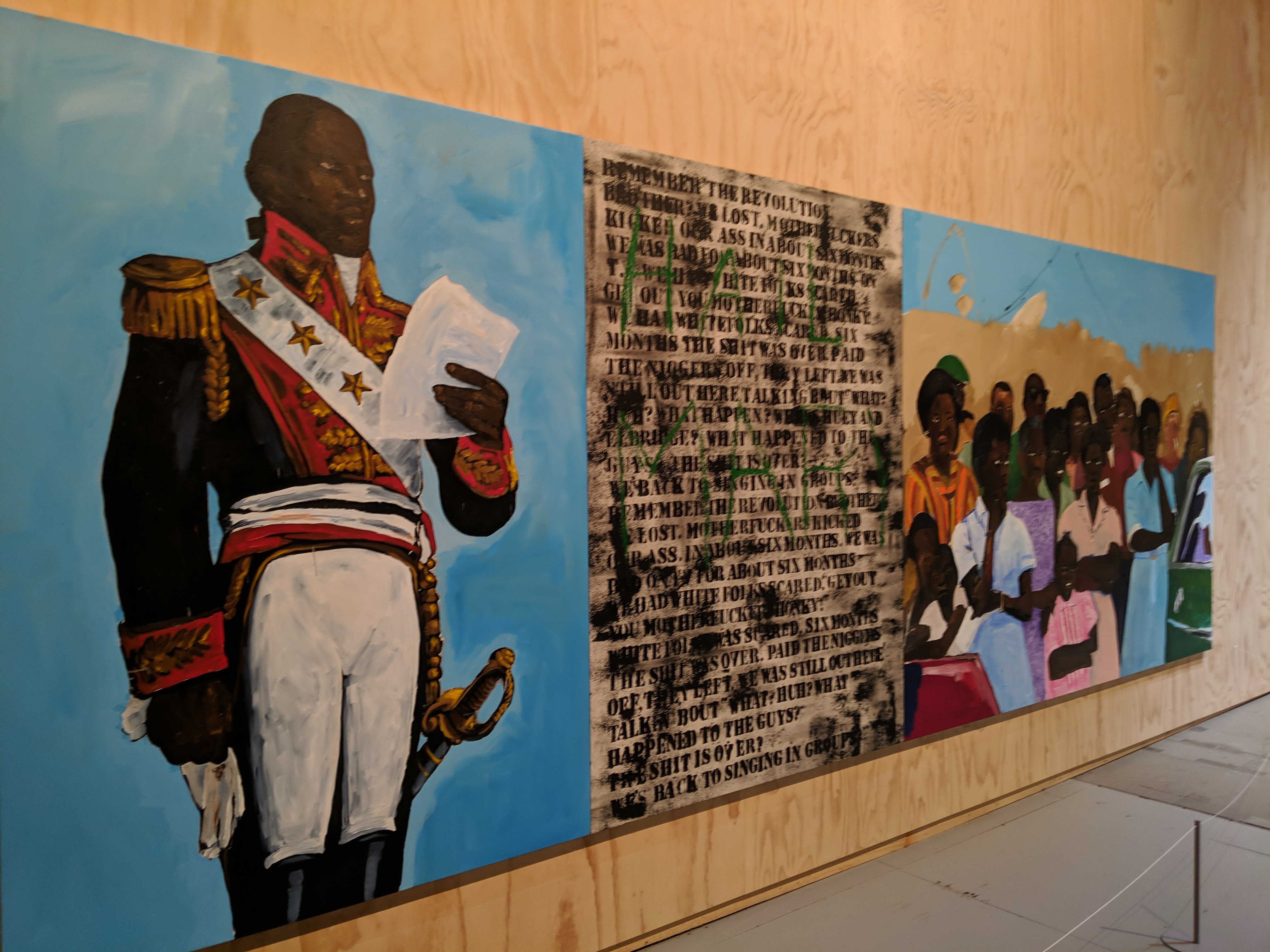
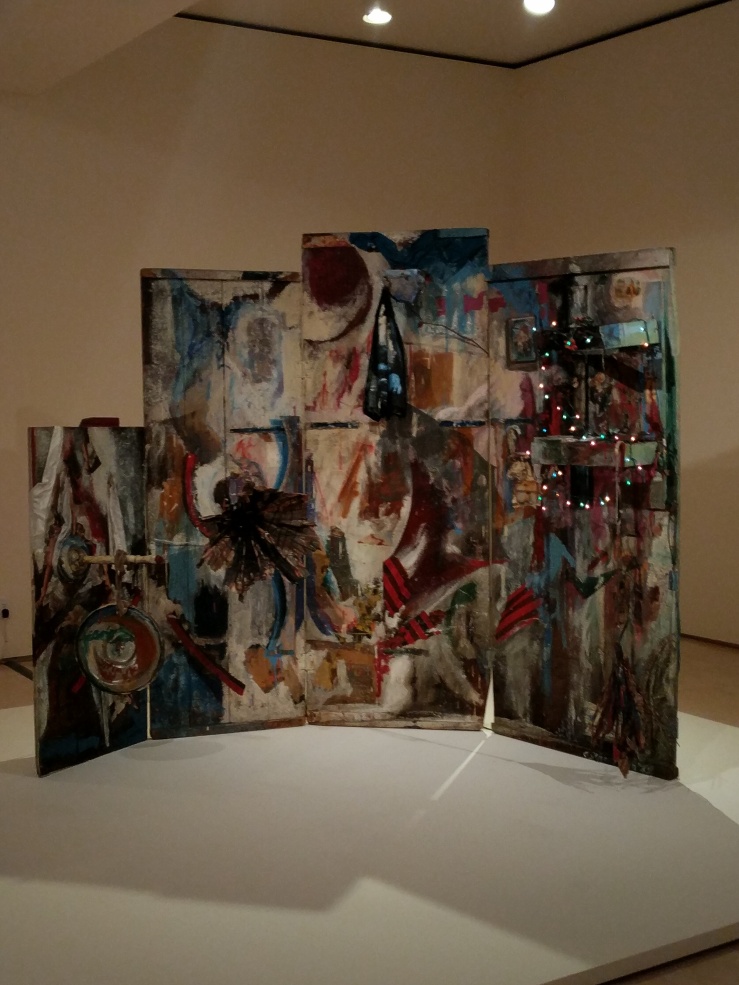
Faith Ringgold, American People (New Museum, NYC) – Probably my favorite show of the entire year. I knew Ringgold’s work and I’d seen what I thought was a pretty strong cross section over the years but this cornucopia of her potent, dazzling work, recontextualizing and re-visioning American history was so beautiful and  such a punch in the gut that I did the full court press to get Anne to see it on a later day of our trip and so saw it twice, which has only happened once or twice before in 20 years of going to New York on relatively brief trips.

Cameron Granger, No Place Gallery

Clarence Heyward, Unseen (CAM, Raleigh) – There’s always something at CAM that turns me sideways, even when we’ve only been in Raleigh for a few hours I go out of my way to make a trip. Clarence Heyward’s portraits looked at his family, what being a black man and having expectations of filling those roles of protector and provider, in the face of lockdown and the high-attention murder of George Floyd as burning reminders of inequity and cruelty that have always been there. The expression on his daughter’s face in more than one of these still haunts me.

Various Artists, Ain’t I A Woman? (Museum of Contemporary Art, Madison) – My first trip to Madison, Wisconsin, since college was delightful front-to-back with a million great dive bars and a killer show commemorating punk label Dirtnap Records’ 20th anniversary. Their Museum of Contemporary Art provided a beautiful stop in the middle of the day with this group show, part of their Wisconsin Triennial, which took its title from the Sojourner Truth quote used as a bell hooks book title. Curated by Fatima Laster, this introduced me to so many great artists I didn’t already know.

Various Artists, Portal For(e) the Ephemeral Passage (Wexner Center for the Arts) – jaamil olawale kosoko was one of my favorite interviews I’ve ever done, in advance of his poetic dance peace Séancers, and his curatorial work on this piece, bringing together artists whose work I knew well like nora chipaumire and Keioui Keijaun Thomas with those I didn’t know at all, like Jasmine Murrell, tied together with kosoko’s powerful installation at the end, in one of the most satisfying overall exhibits I took in this year.

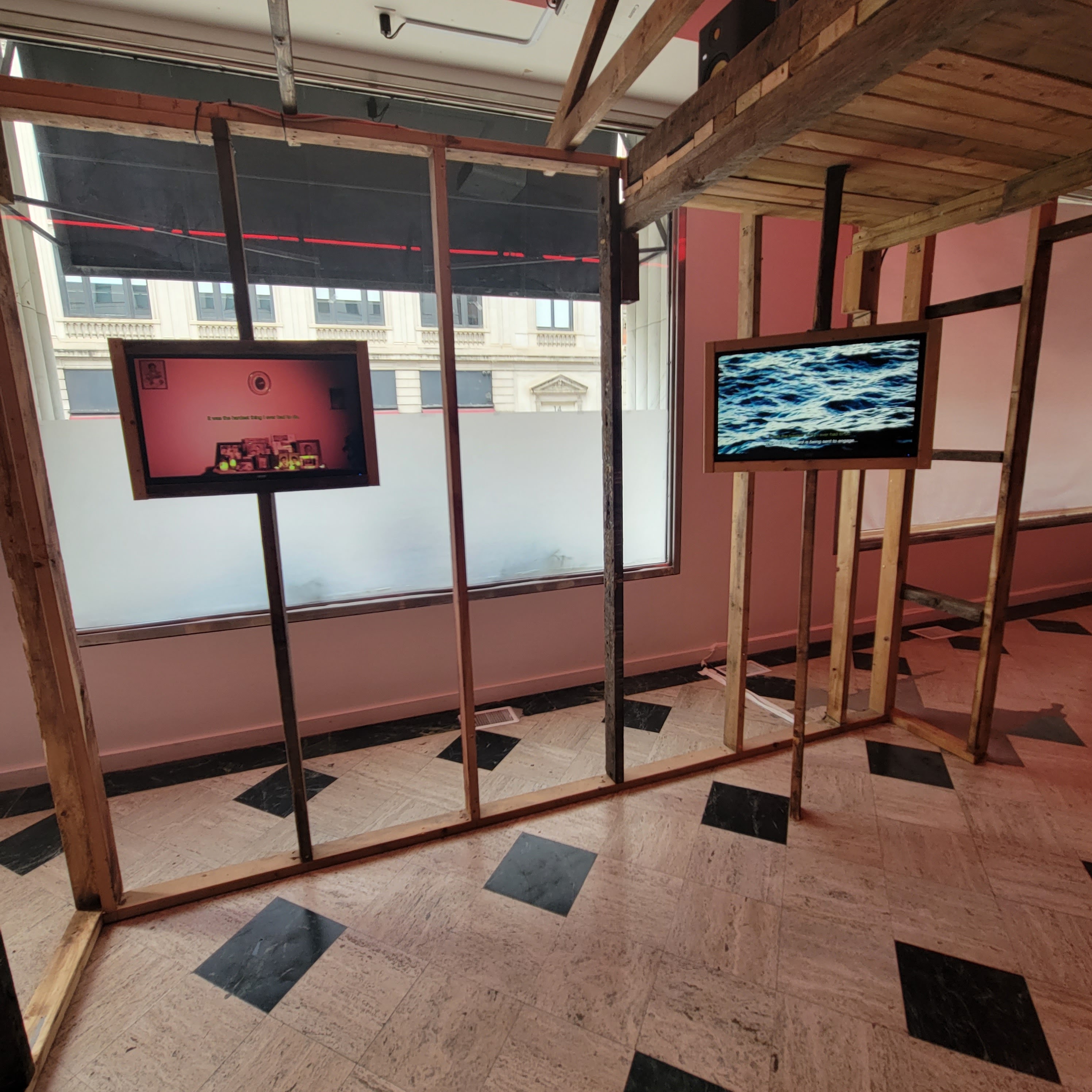
Cameron Granger, Heavy As Heaven (No Place Gallery) – No Place Gallery had a great year, building on a streak of great years. I’m sure I missed a couple of exhibits over the course of the year, but anytime my schedule lined up with their open hours, I was there, and it always paid dividends. My favorite thing I saw in that space – I’m not alone – and if I were doing more of a ranking, one of my three or four favorite things all year, was this excavation of Granger’s own past and the wider world – the frame of a small house inside the gallery leading to a devastating short film but also with texts lying nearby and a separate film specifically about gentrification in the gallery’s side room. I think I snuck in to see this three times before it closed, and it broke my heart and uplifted me every time.

Amina Ross and Lola Ayisha Ogbara, The Luminary, St Louis

Various Artist, Split My Sides (The Luminary, St Louis) – It felt really good getting back to St Louis this year for the joyous occasion of my good friend John Wendland’s wedding and it did my heart good to see my favorite art space – in a town full of a lot of my favorite art – The Luminary is still holding it down on Cherokee Street. Amina Ross and Lola Ayisha Ogbara delve deep into black trans and feminine experience with a variety of mixed media work that don’t make anything obvious, work that’s visceral and gripping but that rewards further meditation. That huge Ross installation/film nagged at me for days.

Gala Porras-Kim, Correspondences Toward the Living Object (Contemporary Art Museum, St Louis) – Gala Porras-Kim’s elegantly wielded daggers turn on the problematic process of museum collections of sacred or beloved artifacts avoids easy answers for layers of complication upon complication, in a way that uses and benefits from the amount of space and the curatorial structure of a museum exhibit instead of some other gallery spaces.

Julie Mehretu, Cleveland Museum of Art

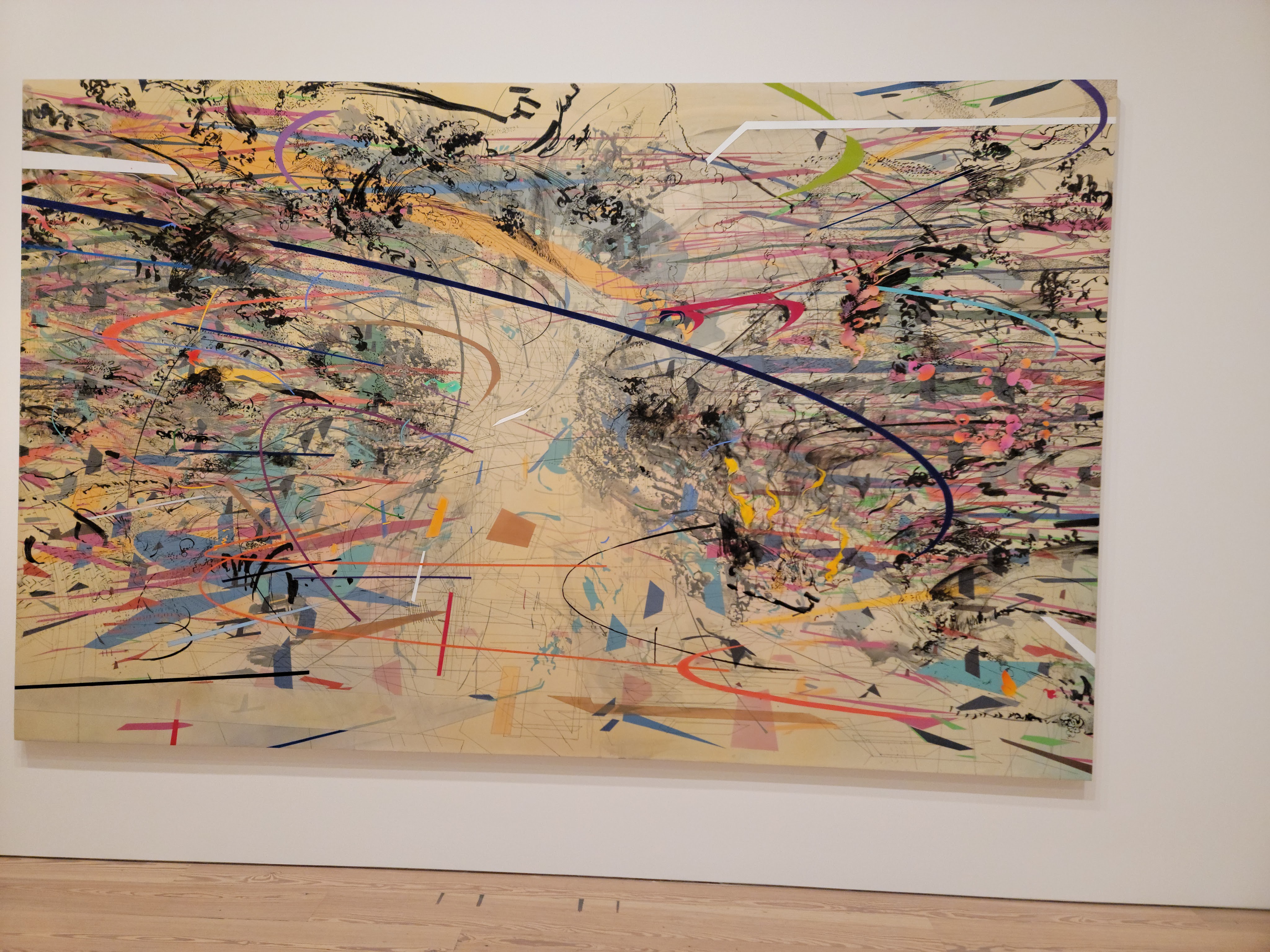
Various Artists, Front 2022 Triennial (Various Spaces, Cleveland) – I loved the earlier iteration of Cleveland’s multi-venue Front Triennial and was a little afraid the pandemic would have been its death knell but it returned strong in 2022 and the sampling Anne and I did, on a quicker than usual trip centered around a great Compulsive Gamblers reunion show at the Beachland gave me Renee Green’s work interspersed with other artists at MOCA, Julie Mehretu’s architectural explosive drawings in direct dialogue with the CMA collection, SPACES’ international work in Oh, Gods of Dust and Rainbows and so much more.

Various Artists, New York 1962-64 (Jewish Museum, NYC) – I’m a huge fan of this transitional period of post-war modernism and the Jewish Museum always does a great job of zooming in. In this case, they simultaneously shone a light on a window where New York was at the very center of the art world but also on Alan Solomon’s tenure as director, helping shape the Jewish Museum into the powerhouse of contemporary art it is today. A moving reminder of how much community matters and how one person can shift a narrative, can change the course of time.

Danielle McKinney, Marianne Boesky Gallery, NYC

Lorna Simpson, 1985-92 (Hauser and Wirth, NYC) – I thought I knew photographer Lorna Simpson’s work pretty well but this deep dive into her early work was revelatory. The way she looks at masks from the inside, from hair, from the way we invent ourselves and, in particular, how black feminine identity gets shaped was exactly the kind of stab in the heart I needed. Powerful, every-more-relevant work.

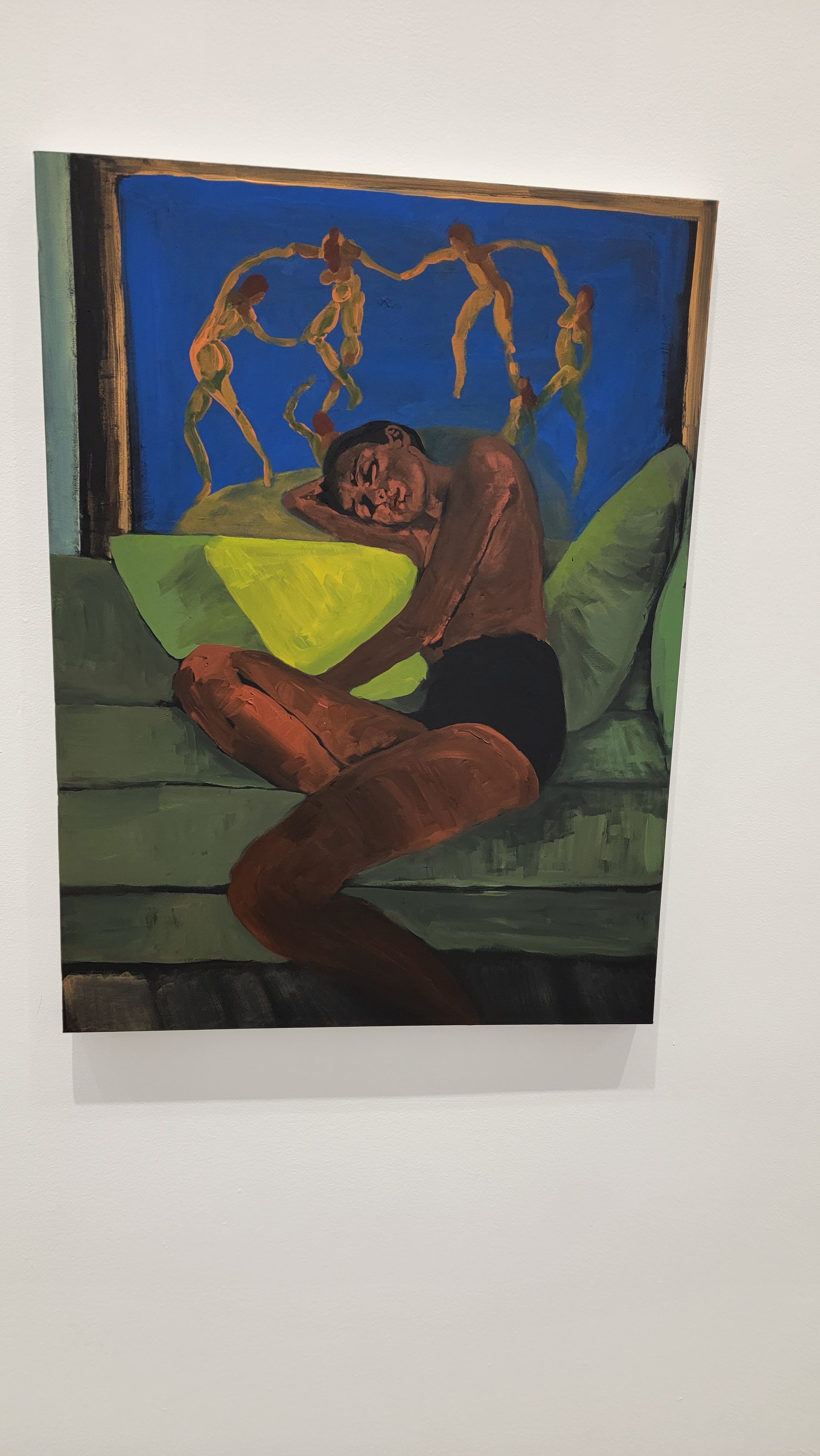
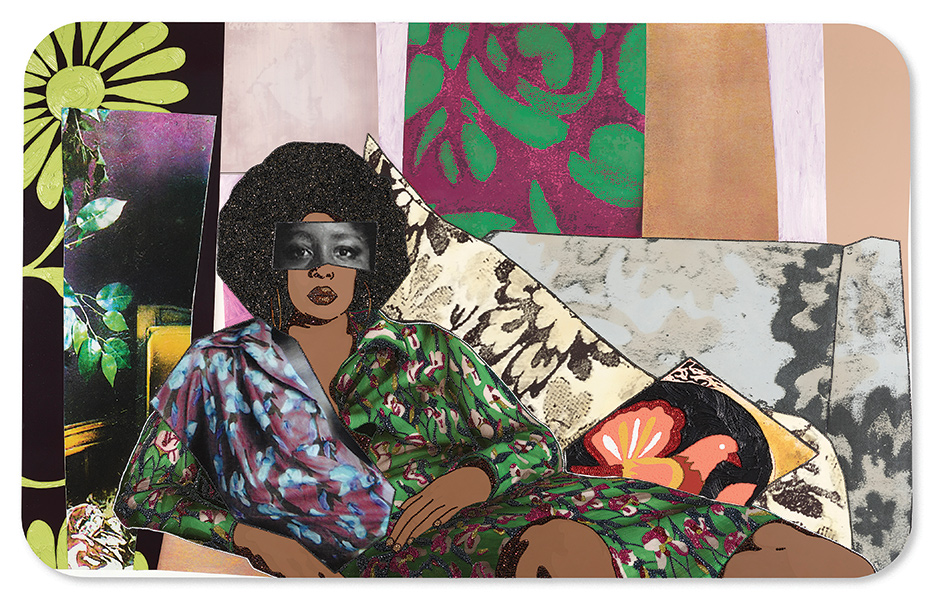
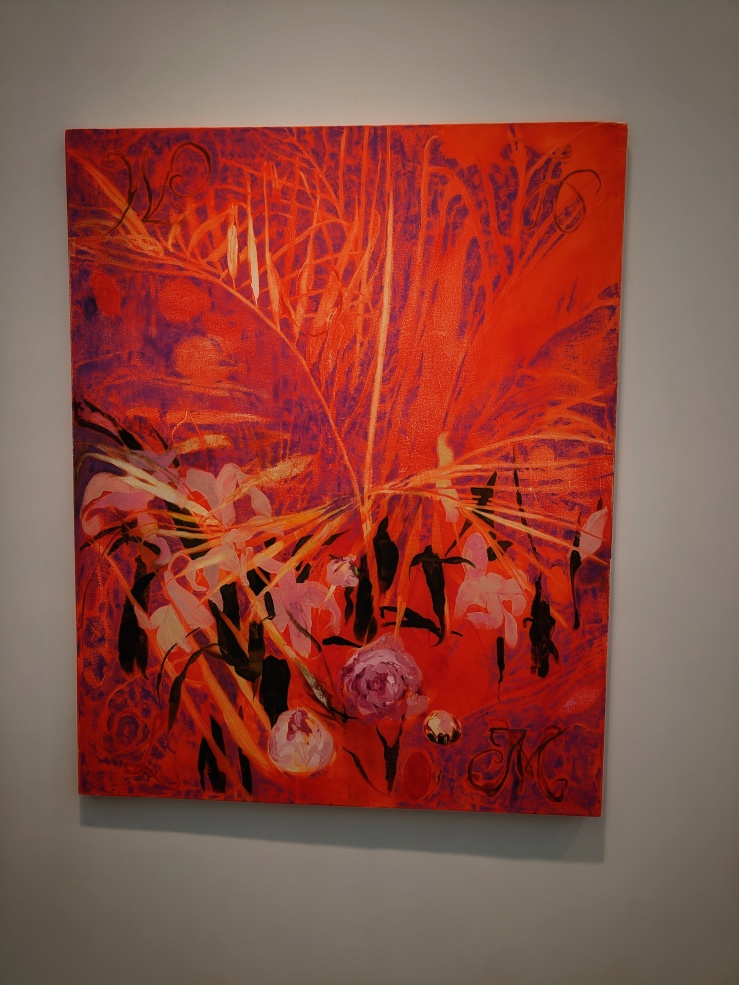
Danielle McKinney, Golden Hour (Marianne Boesky Gallery, NYC) – McKinney’s work made me think about portraiture in a different way, looking at black women in quiet, intimate moments but undercutting the thought that it’s natural, reminding me that everything in art comes through layers of thought and intention, in some cases directly – like placing one figure under Matisse’s The Dance – and in others with subtler hints at patterning and shapes. The brush strokes hint at a throb, electricity going through everything and illuminating the world.

Hank Willis Thomas, Jack Shainman Gallery, NYC

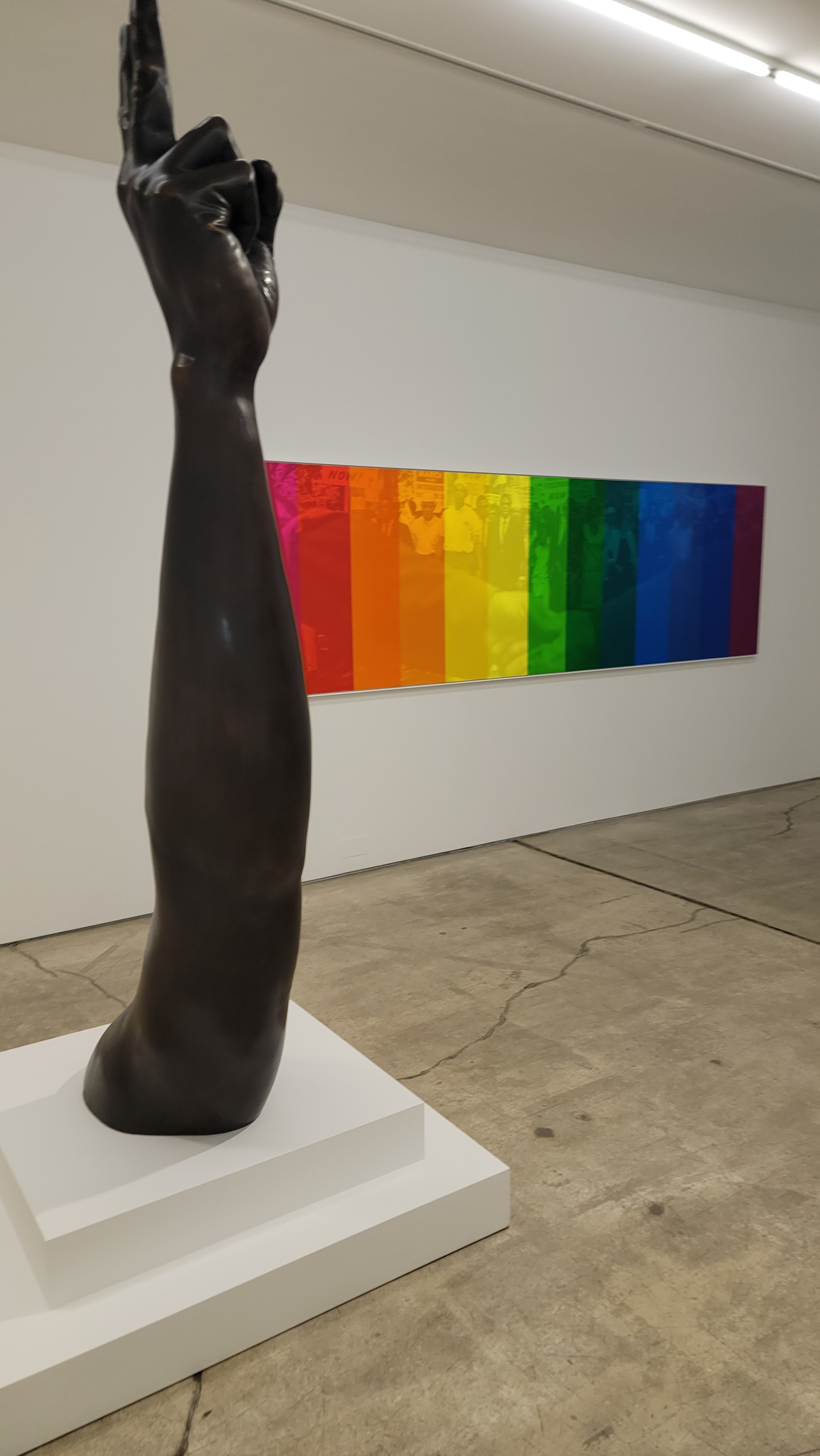
Hank Willis Thomas, Everything We See Hides Another Thing (Jack Shainman Gallery, NYC) – I’ve been a sucker for the images that hide and reveal at the same time – I read Kenneth Koch’s “One Train May Hide Another” as a teenager – for a long time, and Thomas does that beautifully as well as engaging with technology in a way I don’t think I’d ever quite scene, engaging with cell phone photographs to expose pain and turmoil – and hope – underneath placid, accepted reality, almost banality, of test patterns and color fields.

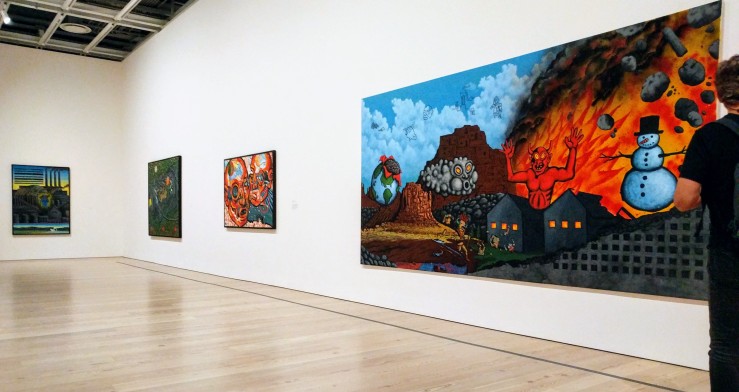
Tania Pérez Córdova, Generalización (Museo Tamayo, Mexico City) – I loved Mexico City so much it’s almost impossible to pick a single favorite moment, but the Tamayo, one of the best contemporary art museums – from layout to curation to the building itself – I’ve ever been to, and the solo morning I spent there, is high on the list. I felt the vibration of Córdova’s work almost immediately and realized I’d first encountered the Mexico City-born artist at the MCA Chicago about six years ago. This larger retrospective about changing our perceptions of the world – melting down musical instruments and reconstructing them, melting ice in concrete blocks with the molds of people’s faces like death masks… as powerful and poetic a voice as I can think of.

Carlos Motta, Your Monsters, Our Idols (Wexner Center for the Arts) – I knew Motta’s work a little, but the panoply of visions with this strong, surging voice at the top of the Wex ramps killed me. Linking body horror and S&M with liberation and claiming space for oneself and always in a way that was beautiful, no matter how unsettling.

Katie Forbes, Documenting a Movement (Bridge Gallery) – Katie Forbes’ work around the Black Lives Matter protests is a testament to putting in the time and bringing her craft to something that’s important. Her willingness to be vulnerable and be on the ground – some of the photos, like a police officer pepper spraying someone whose hands are up, are uncomfortably close – and her empathy, the desire to know the people here without salaciousness, is an astonishing gift to this town.

Tania Pérez Córdova, Museo Tamayo, Mexico City
Categories
Best Of visual art

Best of 2021 – Visual Art

Aminah Robinson, Raggin’ On, Columbus Museum of Art

Interestingly – and don’t get me wrong, I greatly appreciate the efforts to shift to digital, distanced forms of presentation – the one medium of art I couldn’t really connect with online while we were locked down was visual art. Painting, sculpture, mixed-media all get the lion’s share of their impact on me from being in the room, breathing in the same space, seeing how much weight and density the work has, its presence.  

So, the combination of not being as worried breathing in the same air as my fellow people – though I always took precautions – and the connected relief of being able to travel again, along with reconnecting with my town, meant I saw about 55 exhibits over six cities. These are the 20 that made my heart sing, my blood run cold, or both; that wouldn’t let me go. These are unranked and in chronological order. 

Everything below is in Columbus and any photo is taken by me, unless otherwise noted. 

Anila Quayyum Agha, Cincinnati Museum of Art
  • Various Artists, November (Beeler Gallery) – The Beeler is one of my favorite spaces in Columbus and too often gets left out of the conversation, with consistently provocative commissions and group shows that benefit from the thoughtful combustion of the various works in conversation with themselves, with the CCAD Institution, with Columbus, and the world. Curator Dean Taylor exemplified all these qualities, suffused with a dread and uncertainty created for 2020 and still reverberating into February where my visit, my grappling with these deep feelings, made a sheet of ice crack inside of me. 
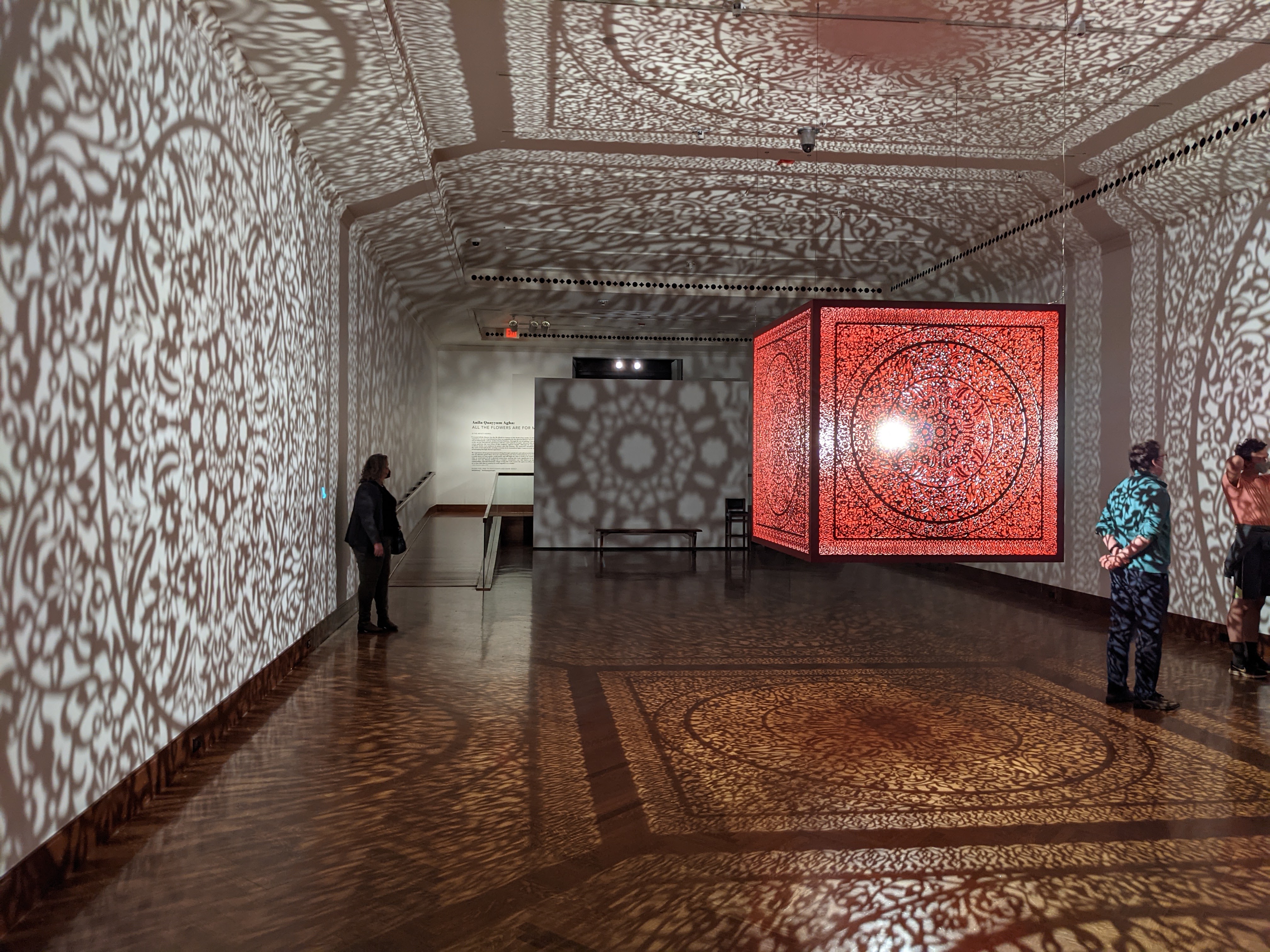
  • Anila Quayyum Agha, All The Flowers Are For Me (Cincinnati Art Museum, Cincinnati) – Stil only partially vaccinated, we went to Cincinnati for my birthday, as much outdoor and distant fun as we could muster in late March. Even under some constraints, it felt good to be out of town, dining on patios, and going to a couple of my favorite museums. Of everything Anne and I saw, I mulled over Pakistani-American artist’s meditative, expansive work, a steel-cut cube created to slice light in shadows inspired by Islamic architecture and classical art. 
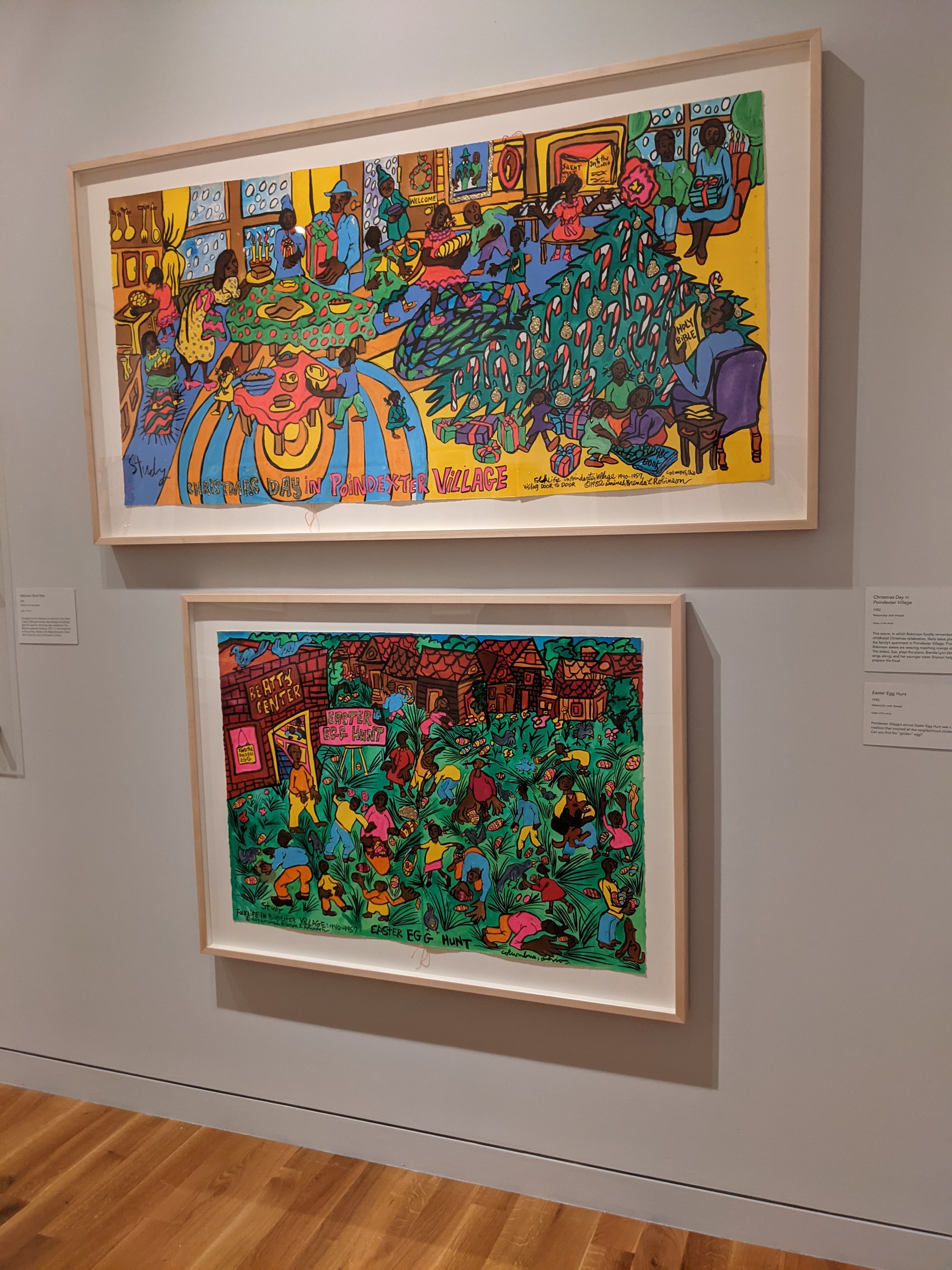
  • Aminah Robinson, Raggin’ On (Columbus Museum of Art) – Sometimes it’s too easy to take the giants in our midst, the legends we grew up with, for granted. For too much of my youth I bristled at hearing about Aminah Robinson or James Thurber or George Bellows, though I loved their work, because I worried about how Columbus looked under a reductive lens. I’ve gotten over most of that but there are still some lingering “I know all there is to know” feelings. Within five minutes of walking into this gorgeous, immaculately curated (by Carole Genshaft and Deidre Hamlar) retrospective of one of our great artists, I was reminded I was a fucking idiot to even think that. This first retrospective since Robinson’s death hit her principal preoccupations, her recurring themes, and highlighted both the variations, the deep studies of character and place, the chimerical and literary qualities of her work, as well as the consistency of her work, in quality and thematically. I went to this three times and kicked myself for not going a dozen more. In a better world, this would have toured ten cities on three continents – as it is, it’s a stunning testament to the value of donating your estate to your local art museum. 
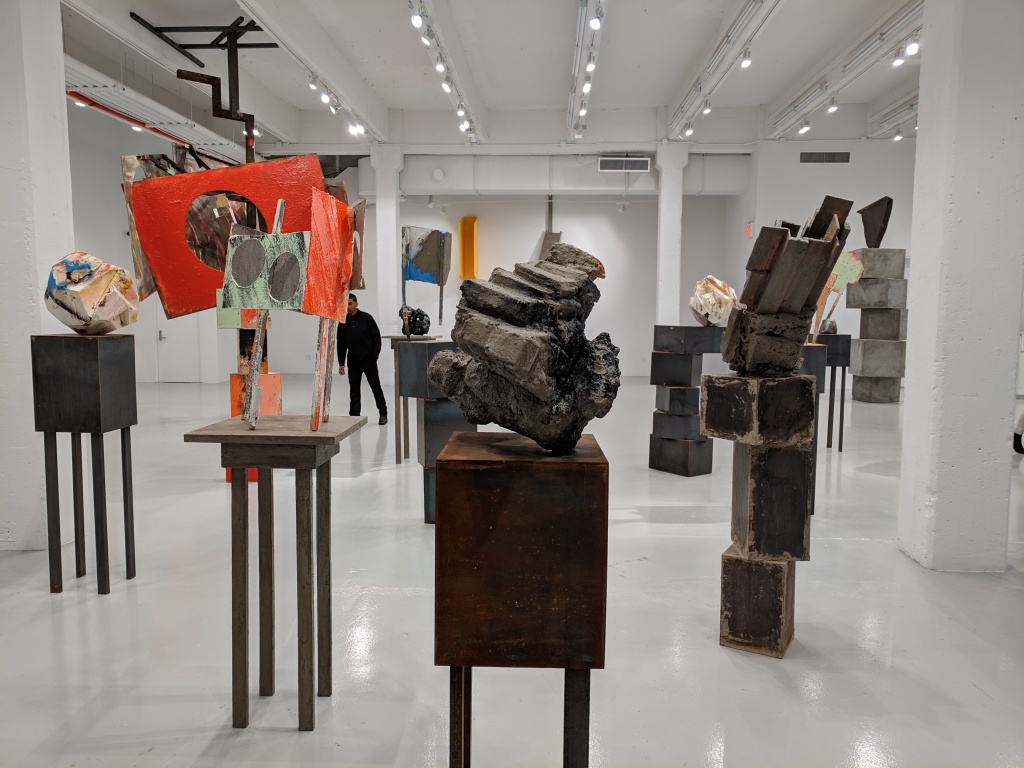
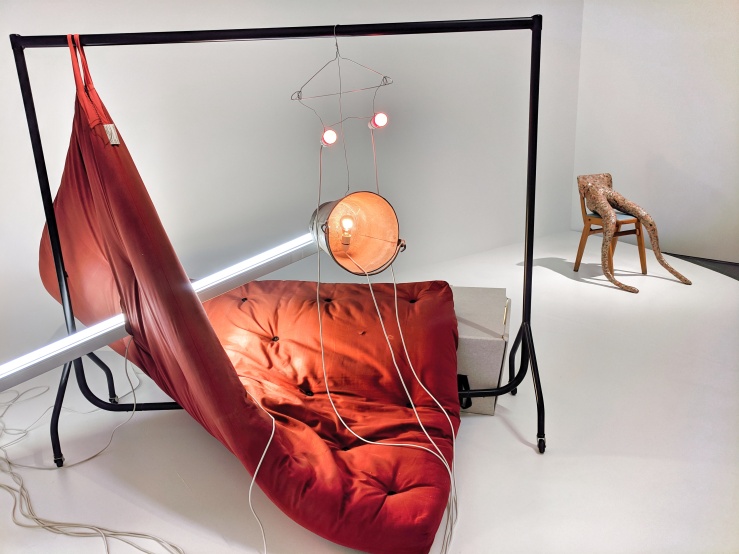
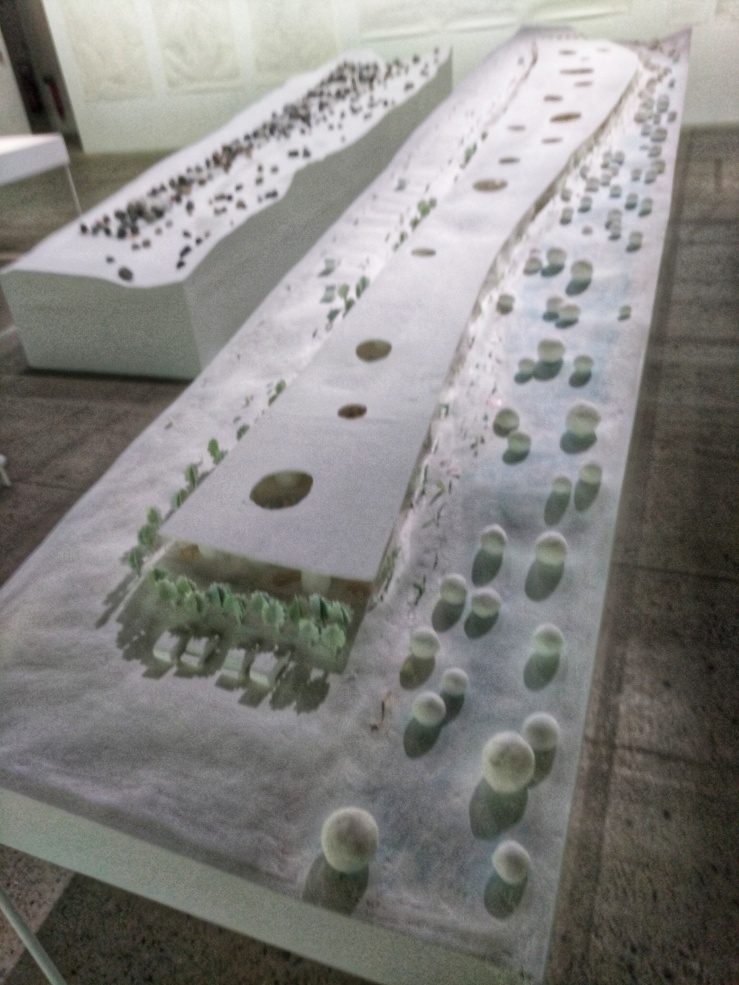
  • Various Artists, Partially Buried: Land Art in Ohio 1970-Now (Columbus Museum of Art) – Another thing I chafed at through its Ohio ubiquity as a kid? “Indian mounds.” Which I lumped land art in alongside. It took my fine arts major roommate, who idolized Andy Goldsworthy, to not only shake me out of that but show me how lucky we were to have such a tradition of it in Ohio. Anne’s enthusiasm for it later fully unlocked my appreciation, and this synthesized the tradition in a way I came back to soak in more than once. Anna Talarico’s curation drew deep lines from Robert Smithson’s seminal work that gave the exhibit its name to contemporary work like my pal Brian Harnetty’s sound piece “Forest Listening Rooms.” This was a stunning slice of history reminding us of the Faulkner line “The past is never dead, it isn’t even past.” 
Alun Be, CAM Raleigh
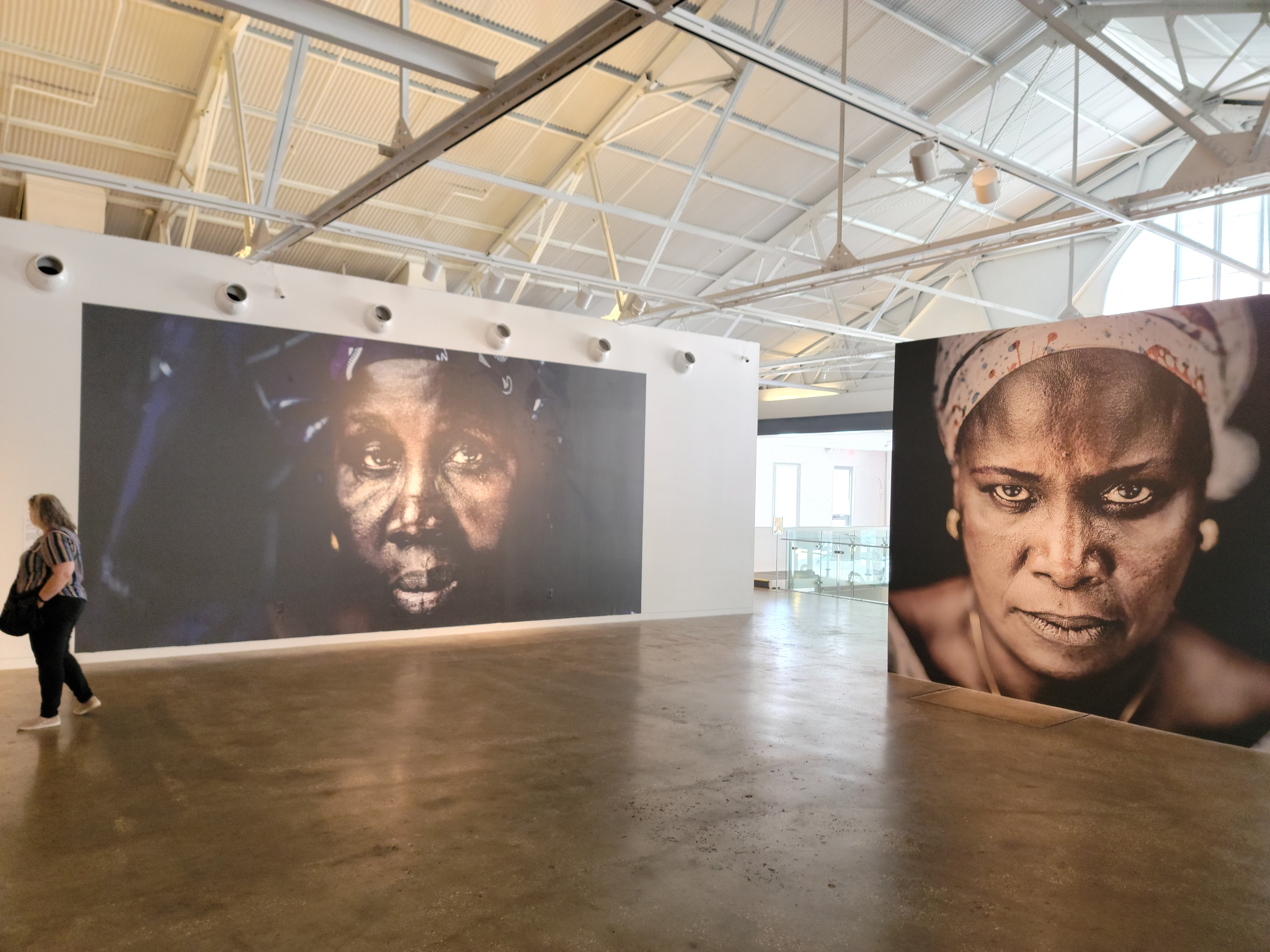
  • Alun Be, Perseverance, Pride, Power (CAM, Raleigh) – These enormous photos, in close up, of women by Senegalese photographer Alun Be, knocked the wind right out of my lungs. Taking up whole walls at Raleigh’s Contemporary Art Museum, the June sun filtered by clouds through the giant windows, gave a glimpse of a whole world, whole stories these women inhabit and embody. It made the museum glow like a holy temple and a reminder of how connected we are and how important it is to hold to that connection without falling into some namby-pamby “We’re all alike” bullshit. This was a crucial reminder to respect and understand other people’s differences, their different paths, their different dreams. And a reminder to try to start with love and with a desire to understand. 
  • Kennedi Carter, Flexing/New Realm (CAM, Raleigh) – One of the other two exhibits at CAM, Carter’s work was new to me and hit me almost as hard. Sharing some commonalities with Kehinde Wiley’s paintings linking contemporary black culture with classical portraiture of European royalty, there’s a deeper psychological cant to her photographs I had a hard time looking away from. 
  • Lynn Hershman Leeson, Twisted (New Museum, NYC) – All three exhibits at the New Museum this trip made an impression on me, but Leeson’s mixed media pieces reminded me of all the promise of science fiction growing up, a truly speculative art that centers people. Enraptured by the promise of new discoveries and spectacular frontiers but with an eye toward the way the future can widen and exacerbate pain and inequality, and the entropic tendency of it to do just that if we let the same bastards hold the wheel. 
Alice Neel, Metropolitan Museum
  • Yayoi Kusama, Cosmic Nature (New York Botanical Garden, NYC) – I raved about Kusama a couple years ago in Cleveland, and many years back at the Whitney. She’s the kind of blockbuster, crowd-pleasing artist with so many layers and such a love of things that are messy, are complicated, that there’s always something to unpack. Pairing her work with the Bronx’s beautiful New York Botanical Garden was a perfect fit, the art and the nature vibrating together, feeding each other, giving enough surface for the selfies but enriching for the rest of us. 
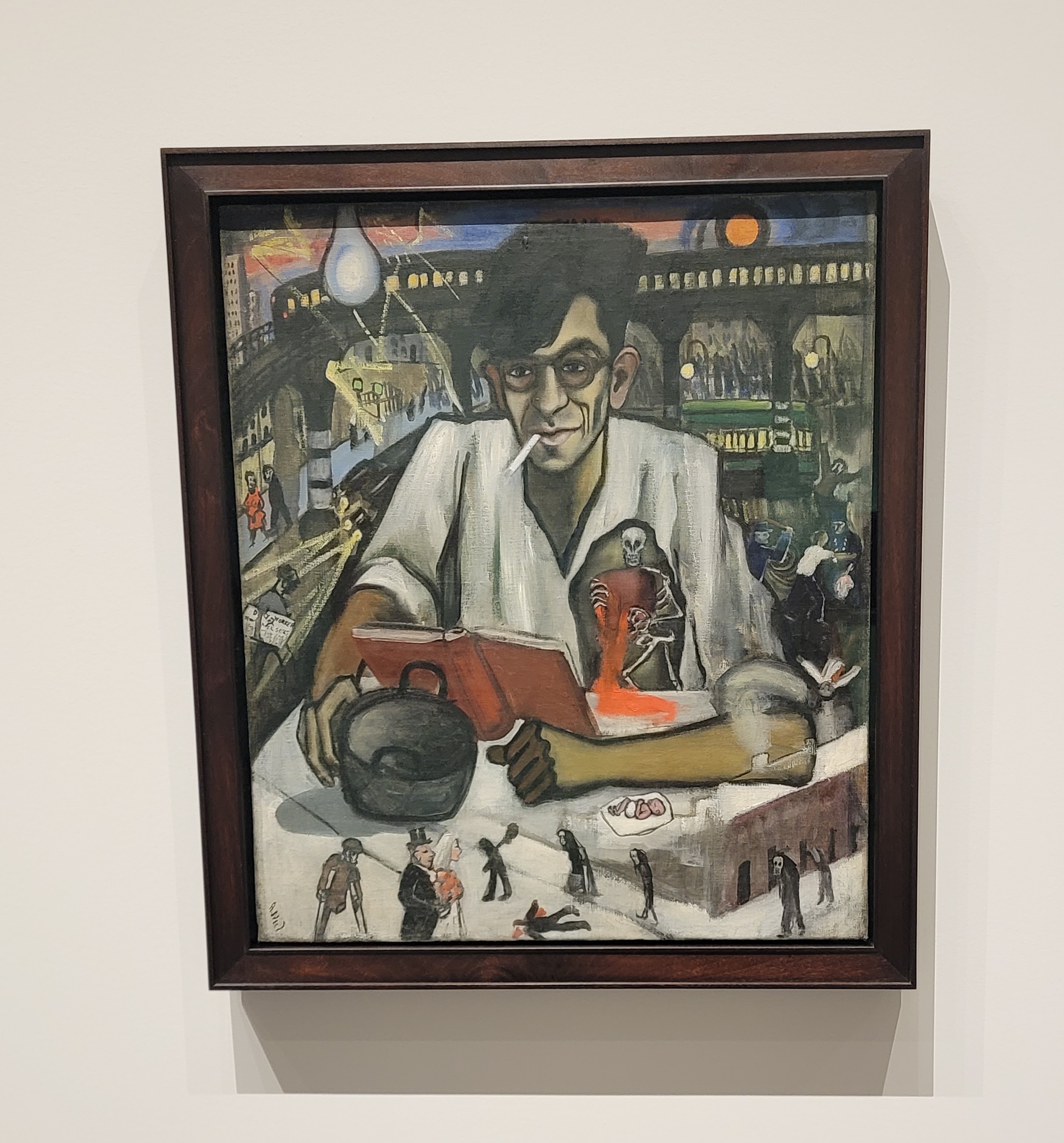
  • Alice Neel, People Come First (Metropolitan Museum of Art, NYC) – I don’t remember the first time I saw Alice Neel’s work, but my fandom bloomed with Hilton Als’ retrospective focusing on her time in upper Manhattan at David Zwirner a few years ago and hit overdrive when I read the terrific biography by Phoebe Hoban (or did those go in the other order?). This retrospective was exactly what I go to the Met for, the kind of expansive, deep dive I’ve loved since my first trip to this temple of art to see El Greco. Neel’s ability to center people in her art and her life, to make sure her subjects are seen without judgment, is a benchmark I sometimes fuck up but always try to shoot for. And the work is gorgeous beyond reckoning.  
Julie Mehretu, Whitney Museum
  • Julie Mehretu, Julie Mehretu (Whitney Museum, NYC) – I’d seen a couple pieces by Ethiopian artist Julie Mehretu before, but this dazzling retrospective shone light on her unique style of abstraction and her way of viewing the world as a collection, a melange, maps that feel right but don’t draw a linear story. One of the most vital, vibrant abstract painters I’ve been turned onto in many years. 
  • Dawoud Bey, An American Project (Whitney Museum. NYC) – Another vital eye on the current moment, Dawoud Bey’s work struck me as soon as I saw it. This retrospective showed his incisive, open-hearted approach from his ‘70s portraits in Harlem to the mysterious, speculative landscapes evoking underground railroad passages from 2018. Seeing this the day after Alice Neel and these artists decades apart, though they overlapped, finding ways to center humanity in their art, was awe-inspiring. Anne and I posted up at Radio Bar and talked about this for an hour after. 
  • Various Artists, Ashcan School Prints and the American City: 1900-1994 (Cleveland Museum of Art, Cleveland) – I overloaded on the Ashcan school as a kid, partly because of Columbus native George Bellows’ prominence in it and partly because I was drawn to a level of social realism. Some time away from that let me see this terrific retrospective at the Cleveland Museum with fresh eyes and I was stunned by the breadth and intensity of that work and its uniquely American patina.  
Axis Mundo, MOCA Cleveland
  • Various Artists, Axis Mundo: Queer Networks in Chicano LA (MOCA, Cleveland) – This MOCA exhibit made a series of puzzle pieces fall into place in my head. I knew how impactful the Latinx communities were on Los Angeles history and especially that punk scene I grew up idolizing. Until this, I hadn’t seen something that tied the various LA art scenes together so sharply (in the way I’ve seen a million books/exhibits/articles do for New York of the same time period) and emphasizing seeing these scenes through a Chicano lens, immaculately curated by C. Ondine Chavoya and David Evans Frantz. This set my hair on fire. 
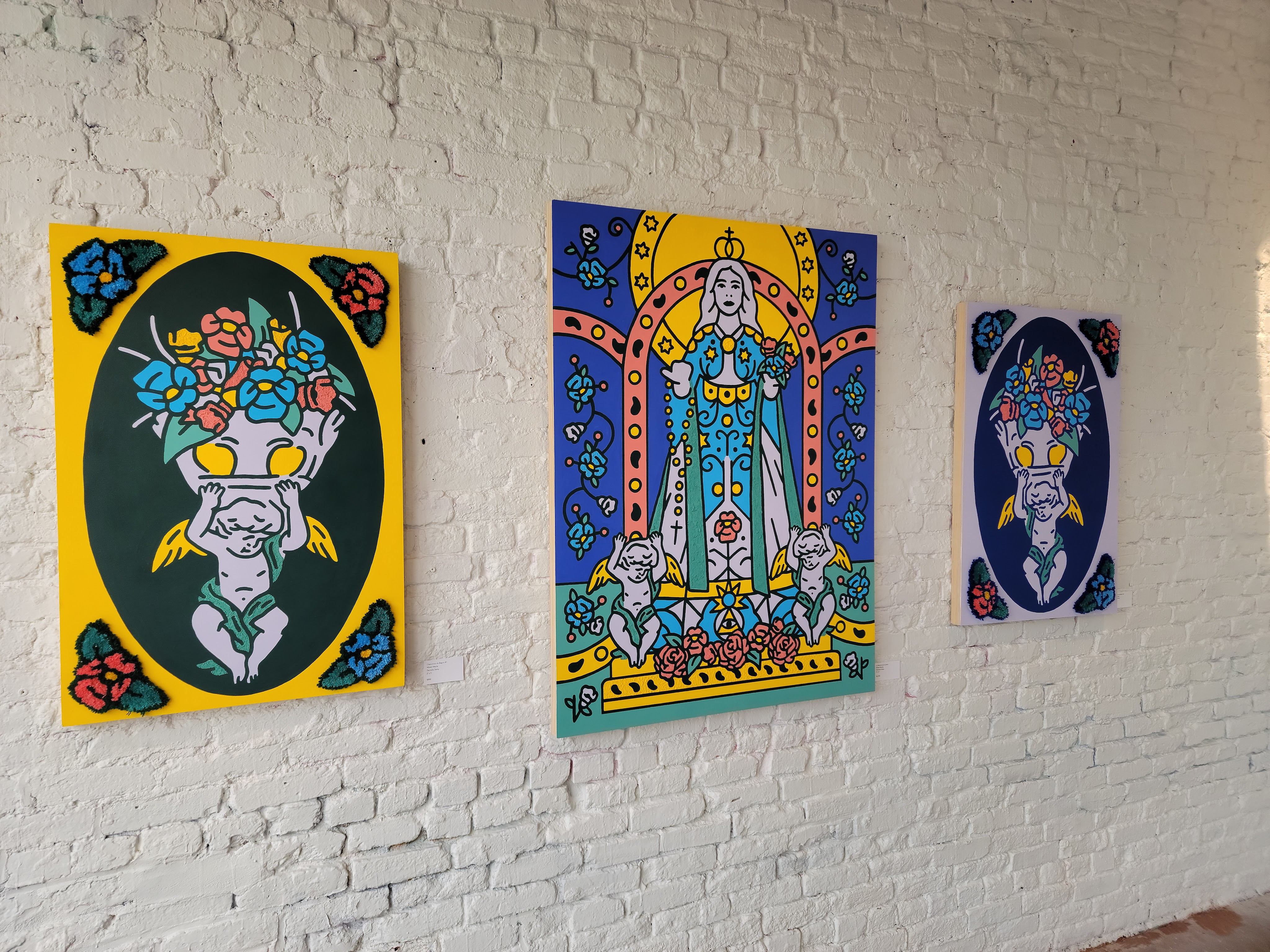
  • Danielle Deley and Allison Baker, Home (934 Gallery) – 934 Gallery is one of the Columbus gems and when I stopped at their 934 Fest I had the chance to check out a fantastic exhibit – Home – that placed Danielle Deley’s huge-canvas explorations of her Catholic background in dialogue with Allison Baker’s razor-edged investigations of what we think of as domesticity and women’s work in dialogue with each other and the space. 
Danielle Deley, 934 Gallery
  • Wayne Thiebaud, Wayne Thiebaud at 100: Paintings, Prints, and Drawings (Dixon Gardens and Gallery, Memphis) – In all my trips to Memphis, including repeated visits to the botanical garden, Anne and I hadn’t yet made it to Dixon Gardens and Gallery. We corrected that this trip – it reminded me of a Southern Frick – with a stunning retrospective of Wayne Thiebaud. His looks at urban landscapes, the sensual pleasures of food, and the rapidly changing 20th century struck a particular pleasure center for me I’m not sure any other art did this year. 
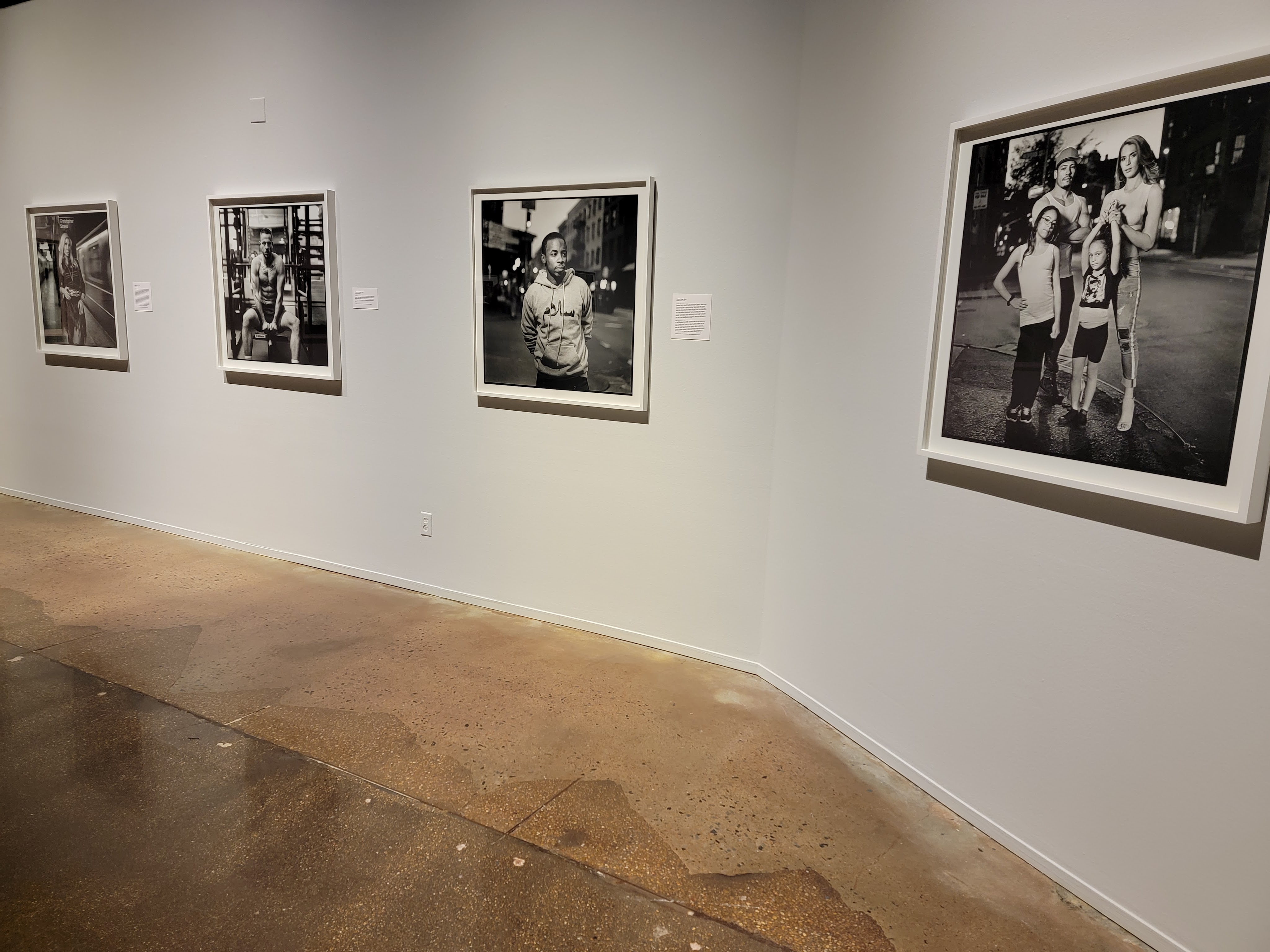
  • Mark Selinger, On Christopher Street: Transgender Portraits (Brooks Museum, Memphis) – The Brooks has become one of my favorite museums over repeated treks to Memphis and they’ve got a particularly good eye for photography exhibitions. This year, Selinger’s (whose work I knew from GQ) contemporary look at the storied cobblestones of Christopher Street and its transgender residents and visitors blew me away. A moving look at connection without trying to underplay their differences, another reminder at the powerful capacity for empathy visual art possesses. 
Mark Selinger, Brooks Museum, Memphis
  • Nina Katchadourian, To Feel Something That Was Not Of Our World (Pizzuti Collection of the Columbus Museum of Art) – This fascinating exhibit delved into the survival memoir Survive the Savage Sea, with translations of the book, excerpts, life-size drawings of tortoises and whales, audio recordings, and printed messages exchanged between the artist and the family. It’s a beguiling look at what makes us survive, what keeps people from giving up, and family in the best sense, atomized and displayed in ways I didn’t expect. 
  • Bruce Robinson, Flutterby (Pizzuti Collection of the Columbus Museum Art) – The other exhibit in the Pizzuti Collection was longstanding CCAD professor Bruce Robinson’s work. Motion is at the center of all these pieces, some abstract, and this had an interesting resonance for me with the other people-centered exhibits I saw this year. There’s a special bravery and a special open-heartedness in including your friends, your community, in your work that has to encompass your feelings for them but also stand outside of your specific experience. This helped reinforce all the feelings I grasped for all year. 
Bruce Robinson, Pizzuti Collection of the Columbus Museum of Art
  • Carol Stewart and Janice Lessman-Moss, Still Is Still Moving (Hammond Harkins Gallery) – I don’t stop at Hammond Harkins that often but the sunny Saturday afternoon I popped in wowed me. These two carefully chosen artists, both of whom have histories with the gallery and with Columbus, sparked against each other, leading me on a long, fascinating conversation with the gallery employee/attendant/manager who was there at the time. Lessman-Moss’s textile pieces used metallic thread for contrast in stunning geometric patterns. Stewart’s still lifes actually made the artifice in any still life concrete for me in a way I’m not sure I’ve ever seen – the deliberate placement of everything in the picture frame was done with intention and deliberation but – like Jeff Wall’s photographs – that artifice makes them more intriguing and more full of life, not stiffer. These two approaches, talking to each other across the room, under the banner of the Willie Nelson lyric the show is named for, left me chewing on them for weeks. 
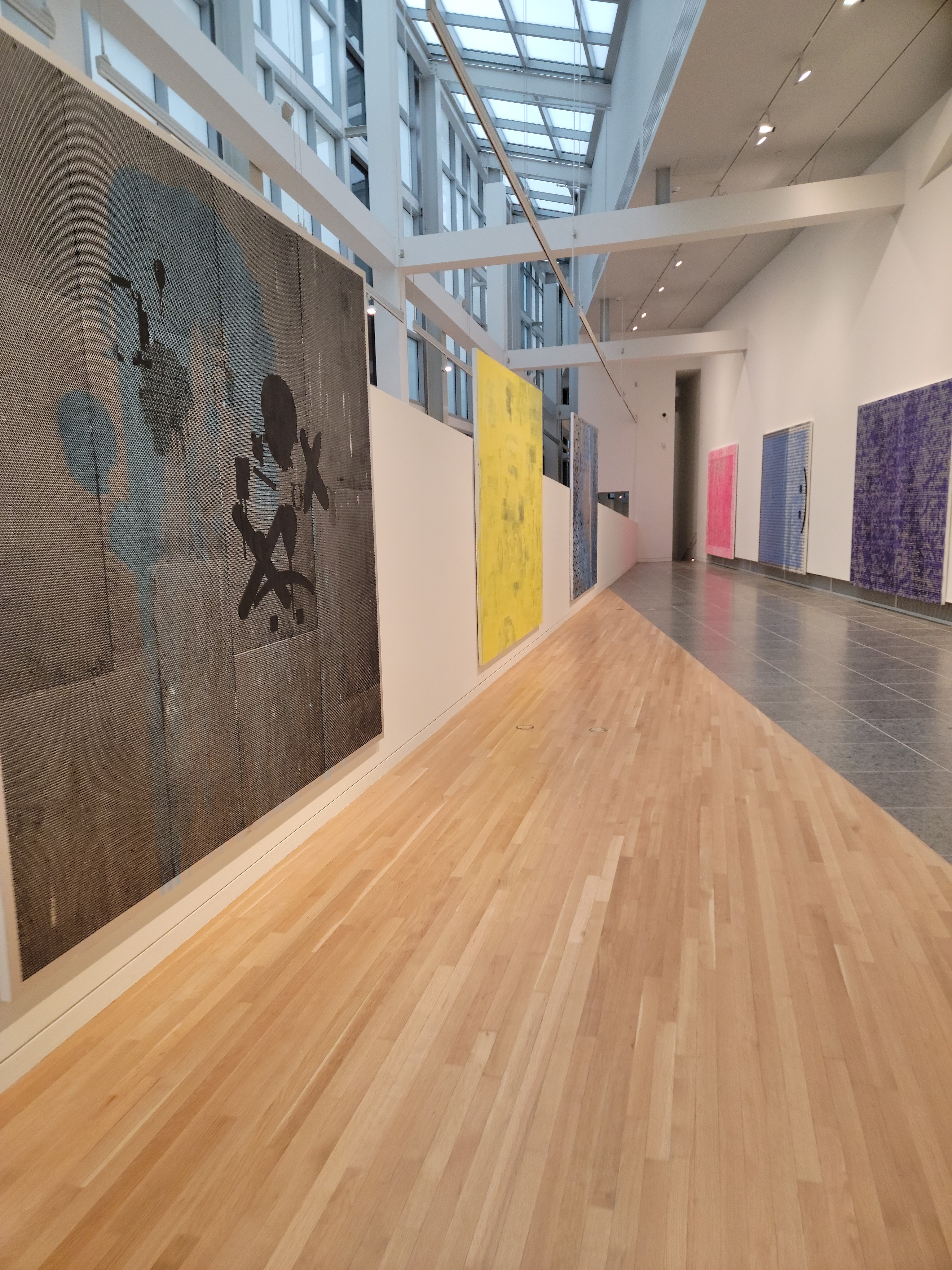
  • Jacqueline Humphries, jHΩ1: ) (Wexner Center) – I went to see this stunning Humphries retrospective four times and I’m still not sure I got it but I loved it. I said to a friend who saw it a different time, “I felt like I was drowning but not in an unpleasant way.” These expansive abstractions of the data and metaphor we’re all swimming in are as messy and as orderly, as intense, as my first impressions of Kusama or Rothko or Agnes Martin. It’s a knockout blow to end the year on. 
Jacqueline Humphries, Wexner Center for the Arts
Categories
Best Of visual art

Best of 2019 – Visual Art

Henry Taylor, Venice Biennale

“If you notice anything,
It leads you to notice
more
and more.”
– Mary Oliver, “The Moths”

In this year – by turns more magnificent than I could hope and immeasurably shitty – visual art continued to be a balm, a lifeline, and a reminder to wake up and try harder. I was lucky enough to catch 75 exhibits over 9 cities in two countries. I left this one ranked – unlike the two performance lists which I put in (mostly) chronological order – we’ll see if I stay comfortable with that.

Everything below is in Columbus unless otherwise noted. All photos have been taken by me for reference for discussion with no claim on the original work, unless otherwise noted.

Natalia Goncharova, Palazzo Strozzi
  1. Various Artists, 2019 Venice Biennale: May You Live in Interesting Times (various locations, Venice) – It’s hard to compete with new – my memories of the first Whitney Biennial I was lucky enough to visit are stronger than my memories of this year’s (for more reasons than one) – so it’s not surprising I was so dazzled by my first Venice Biennale. That said, my eyes almost popped out of my head, from the main exhibit curated by Ralph Rugoff with the best overview of artists grappling with the current shifting, chaotic moment, to the various national pavilions haunting and inspiring, to the satellite exhibitions (a storefront dedicated to Sierra Leone knocked me over), this took me back to the best parts of that childlike state where everything’s new and I’m hungry for all of it.
  2. Barbara Hammer, In This Body (Wexner Center for the Arts) – Barbara Hammer’s work has always fascinated me and the Wex – led by its curator, Film/Video Studio Program Curator Jennifer Lange – outdid themselves with this exhibit put together up to Hammer’s death this year. The kind of grappling with mortality that doesn’t come easy, a fusing of rigor with the sensuality her work reminded us can never been separated from politics and society. I spent hours in the main installation, walking through X-Ray negatives bathed in a haunting film, I even went the day after my stepsister’s funeral, and it comforted and challenged me every time.
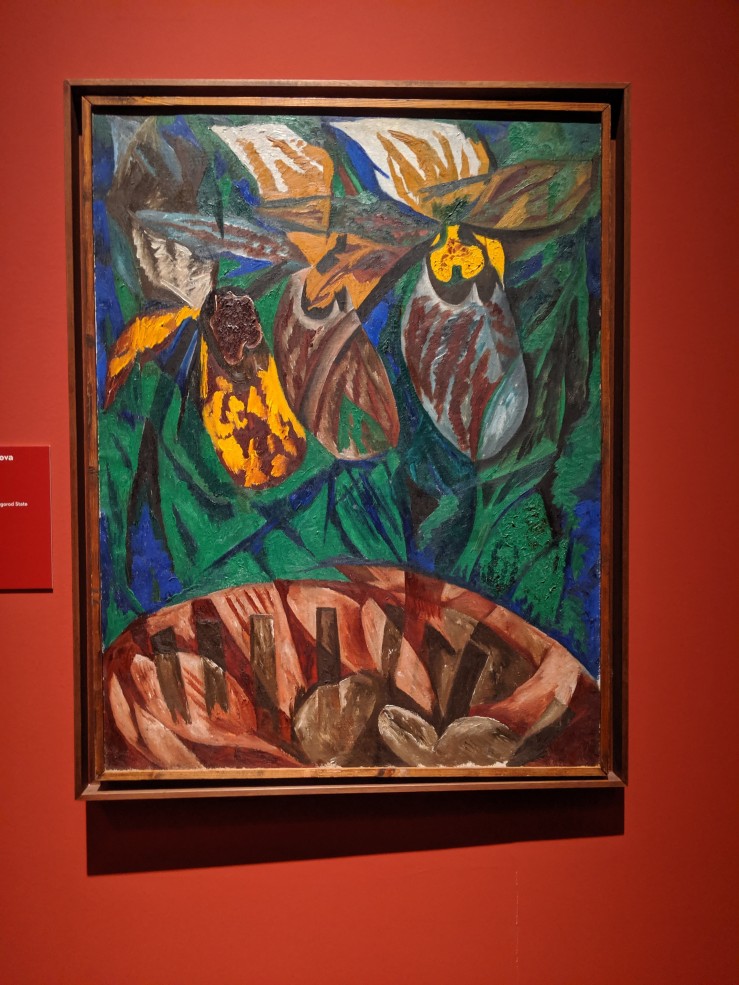
  3. Natalia Goncharova, Natalia Goncharova (Palazzo Strozzi, Florence) – This was a happy surprise for my first trip to Florence and a source of immense chagrin that the only thing I know of Goncharova previously was her costumes for Dhagliev. A cornucopia of classic high modernism practiced at a level almost no one could match. Masterpieces in dialogue with all the better known names of her time – Picasso, Chagall – while never feeling like she was trying on techniques. A time that felt like the end of the world mapped out and sung in a voice I couldn’t forget.
Joan Mitchell, David Zwirner
  1. Suzanne Lacy, We Are Here (SFMOMA and Yerba Buena Center for the Arts, San Francisco) – Suzanne Lacy’s a brilliant example of an artist who works directly with society, never content to only let her work be uplifting. This retrospective, spread across downtown San Francisco’s two main institutions, reminded me how vital her work still is and how inspiring her mission).
  2. Joan Mitchell, I Carry My Landscapes Around With Me (David Zwirner, NYC) – Joan Mitchell’s been one of my favorite painters since I first saw her work; some days, she’s easily my favorite of the Abstract Expressionists. This retrospective of her large-scale paintings at David Zwirner was earth-shattering for me; taking that fusion of abstraction and landscape many of us associate with Kandinsky and exploding it into other worlds. A crystallized moment of the 20th century and a reverberation through the foreseeable future.
  3. Jason Moran, Jason Moran (Wexner Center for the Arts) – Moran’s one of my heroes since I first heard Black Stars when I was in college. His appearance with the Bandwagon is one of my all-time top five concert experiences at the Wexner Center. This look at his – often collaborative – visual art was stunning. The detail-rich replicas of key spots from jazz history loom in the middle, heavy with history as tombs but also vibrating to be reactivated. His video work with Carrie Mae Weems and Stan Douglas hinted at secret histories. I had some issues with the selection of the live performance aspects – would have liked more things like the opening Ogun Meji – but I kept visiting and unpacking this.
Jason Moran, Wexner Center
  1. Various Artists, Everything is Rhythm: Mid-Century Music and Art (Toledo Museum of Art, Toledo) – 40s-60s contemporary art and music are obsessions of mine, still, and this multimedia presentation in the always excellent Toledo Museum was the best, most approachable tying-together of those threads I’ve ever seen.
  2. Lorna Simpson, Darkening (Hauser and Wirth, NYC) – I knew Lorna Simpson’s photography work a little but this selection of layered, gripping paintings felt revelatory. The light growing dim so you have to lean in and then the cold opens you up.
  3. Various Artists, Detroit Collects: Selections of African American Art from Private Collections (Detroit Institute of Art, Detroit) – Private collectors in museum contexts are problematic but everything about this warmed me up, members of Detroit’s black community talking about collecting black art and fascinating examples of what draws them to it and keeps them going. A deep dive into the best parts of collection and curation – paying tribute, keeping voices alive, giving you something to pass onto your children.
Anselm Kiefer, German Abstraction After 1950, SFMOMA
  1. Various Artists, Leonard Cohen: A Crack in Everything (Jewish Museum, NYC) – Various artists taking on Leonard Cohen, one of the most imagistic lyricists of the 20th century made this lifelong Cohen fan’s heart grow three sizes. The variety of work, from an amateur men’s choir doing “I’m Your Man” in multichannel video to an organ that played a word with each key to an installation where “Famous Blue Raincoat” synchronizes with a flood of iconography, there was so much to love here.
  2. Various Artists, Artistic License: Six Takes on the Guggenheim Collection (Guggenheim, NYC) – Celebrating an anniversary, the Guggenheim turned to artists to contextualize the parts of the massive modern art collection and it’s the best use of the iconic Frank Lloyd Wright building and the best use of a giant collection of holdings I’ve seen in years.
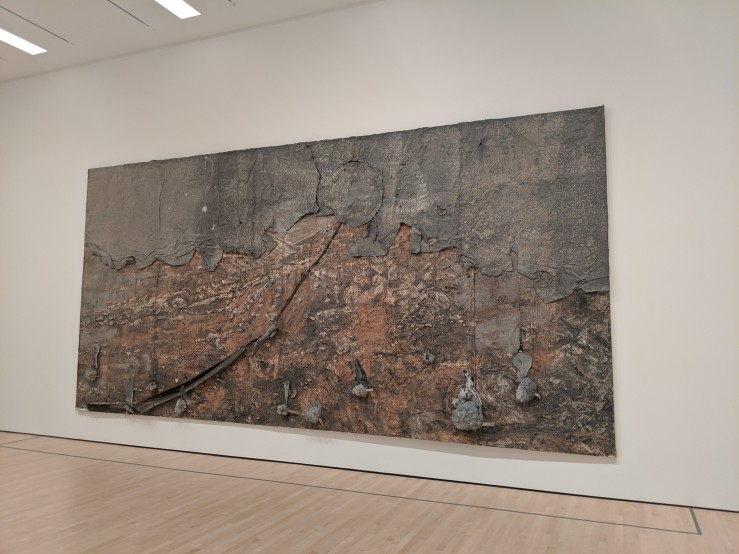
  3. Various Artists, German Abstraction After 1950 (SFMOMA, San Francisco) – This era – Kiefer, Richter, et al – is a personal favorite of mine and this was an embarassment of riches I couldn’t believe I was seeing all in one place.
Nancy Spero, MoMA PS1
  1. Peter Hujar, The Speed of Life (Wexner Center for the Arts) – I loved the John Waters piece that ran in parallel with Hujar, and I loved seeing the two dialogue with one another but the Hujar wrecked me every damn time. A reminder how potent portraiture can be in letting us see and a reminder to be grateful for our networks and the love around all of us.
  2. Simone Fattal, Works and Days (MoMA PS1, NYC) – An artist I knew nothing about before this trip to PS1 knocked me sidewise. Sculptures and watercolors working through the consequences of archaeology and imperialism, knowledge and the stories we tell ourselves. I needed far more hours than I had to properly appreciate this but it’s still with me.
  3. Walid Raad, Walid Raad (Paula Cooper, NYC) – Walid Raad’s alternate history work reminds us all how science fiction tropes can illuminate real world pain and challenge. His puzzles dare you to tease out the facts from the greater truth and complicate your own feelings as you work through them.
  4. Nancy Spero, Paper Mirror (MoMA PS1, NYC) – Spero’s work benefited from the volume and the jumble of this perfect PS1 show, words coming at the viewer like daggers but so many you can’t focus on any one, you have to give into the flood.
Huma Bhabha, Gagosian Rome
  1. Gordon Parks, The New Tide: Early Work 1940-1950 (Cleveland Museum of Art, Cleveland) – Gordon Parks’ social realist photography is always a wake up call to being alive and this tight, well-curated collection in Cleveland was exactly what I needed in a summer of too much feeling sorry for myself.
  2. Sondra Perry, A Terrible Thing (MOCA Cleveland, Cleveland) – Perry’s video work dug deep into infrastructure and invisible labor in a biting, potent critique that sung.
  3. Various Artists, arms ache avid aeon (CCAD’s Beeler Gallery) – Jo-ey Tang’s work with the Beeler Gallery is coming into its own; I love his specialty of slow exhibitions that evolve over periods of time and this look back on the fierce pussy collective, capped by a symposium that was the most energized I felt all year, was a dazzling, meditative explosion.
  4. Huma Bhabha, The Company (Gagosian, Rome) – In a trip spent gorging ourselves on old masters and antiquity, Bhabha’s sardonic looks at the modern age was the perfect palate cleanser.

Categories
Best Of visual art

Best of 2018 – Visual Art

“Attention is the beginning of devotion.”
-Mary Oliver

Delacroix, Metropolitan Museum of Art

This has been a year of incredible highs and incredible lows, the latter all self-inflicted. Wearing myself so far down I was susceptible to a week in the hospital with pneumonia. To spraining an ankle so hard I was in a boot for two weeks. But one thing that always helps center me, that lights and maintains the fire called wanting to go on, is attention. And no cultural activity centers me more, nothing puts me in my place, nothing bows the strings in my soul like trying to focus on visual art.

And I will say this in all three posts but the best macro-gratitude exercise I undertake every year is keeping track of what I see/listen to (I need to be better about tracking what I read) and going over it at the end of the year. I took in around 75 exhibits this year and narrowing it down to 20 was hard. I am, always, very, very lucky.

Anyone else sparked by this or who bothers to read these, I appreciate you . Drop me a line, let’s talk about what we both saw or what I’m an idiot for leaving off. Everything here is in Columbus and any photo is taken by me unless stated otherwise.

Mickalene Thomas, Afro Goddess Looking Forward, 2015, Courtesy of the artist via the Wexner Center, Copyright Mickalene Thomas / Artists Rights Society (ARS), New York

1. Mickalene Thomas, I Can’t See You Without Me (Wexner Center for the Arts) – I can’t think of an artist who better epitomizes taking all of art history and synthesizing it into a voice utterly, unmistakably hers, than Mickalene Thomas. The bounty of riches presented with I Can’t See You Without Me was like tapping into a deep vein and realizing it’s full of stars: completely personal, in touch with the world (and worlds behind the world) and full of monumental, magic beauty. Everything I love in art was in this show and while I visited it five or six times, I regret not seeing it seven or eight more.

David Wojnarowicz, Whitney Museum of Art

2. David Wojnarowicz, History Keeps Me Awake at Night (Whitney Museum of Art, NYC) – Dispatches from one era when the world was on fire still shone brightly in this dazzling retrospective of one of American art’s foremost poets of ecstasy and rage.

3. Yayoi Kusama, Infinity Mirrors (Cleveland Museum of Art, Cleveland) – I still remember the first time I saw one of Kusama’s Infinity Mirror Rooms, at my first Whitney Biennial. It was an eye-opening reminder of the power of repetition to unlock a world and a potent mix of serenity and discord. I came to love the permutations of her varied work over time, most prominently in a stuffed, ranging retrospective at the Whitney. but this hyper-focused touring show was a concentrated dose of the mix of sensations that first drew me in.

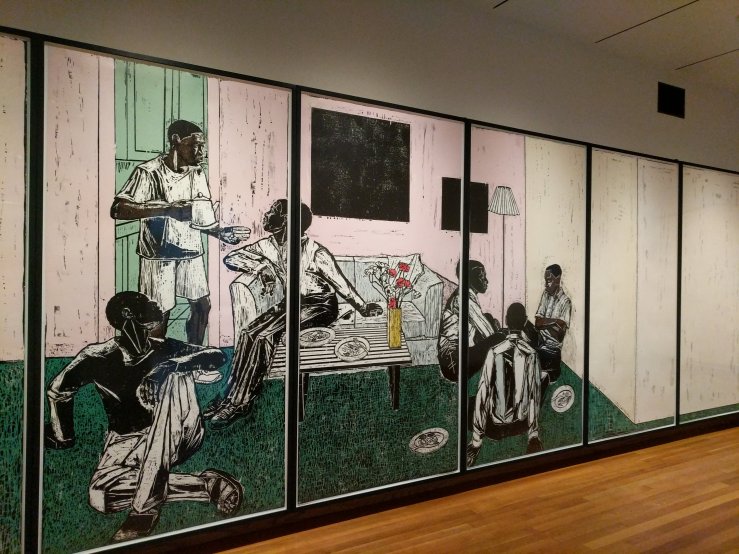
4. Kerry James Marshall, Works on Paper (Cleveland Museum of Art, Cleveland) – An epic-scaled domestic scene in panels fragmenting it like a comic strip and also recalling large Renaissance triptychs, was surrounded by other drawings in this tight, sharp show of an artist who only gets better.

5. Various Artists, Trigger: Gender as a Tool and Weapon (New Museum, NYC) – This ferocious trip through depictions of gender ended a January New York trip on a head-spinning succession of high notes, including Ulrike Muller’s jagged abstractions, a dazzling Mickalene Thomas video collage. This summed up everything I love about the New Museum when it’s clicking, work within the last 10 years – without cheaply valorizing youth – that summed up and exploded 40 years of the institution. A good sign for the future of the Wexner Center as the curator of this spectactular exhibit is the new director to succeed Sherri Geldin as director.

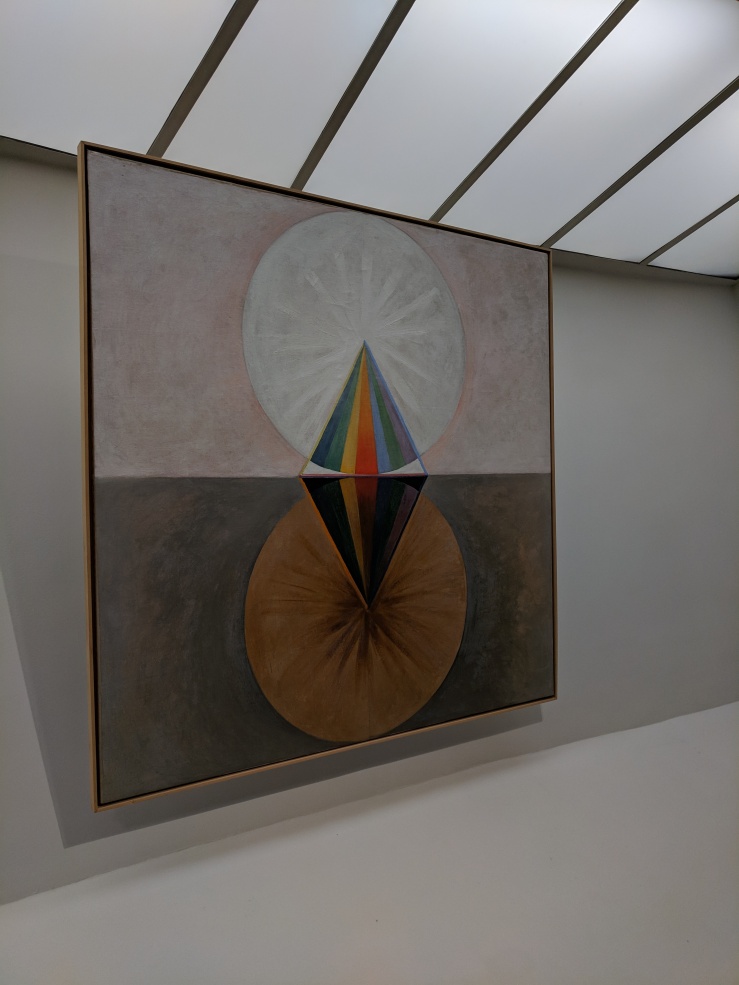
6. Hilma af Klint, Paintings for the Future (Guggenheim, NYC) – This hypnotic, transfixing, spiritual show cemented another contender for an originator of abstraction and opened my eyes to a voice I knew almost nothing about. A paean to the magic of drilling down into oneself with specific instructions not to show most of her work until 20 years after her death, working on instructions from spirits she communed with through a seance group. You couldn’t write af Klint’s story in a way that seemed believable but the art was as accessible as layered and elusive.

A Color Removed, SPACES Gallery

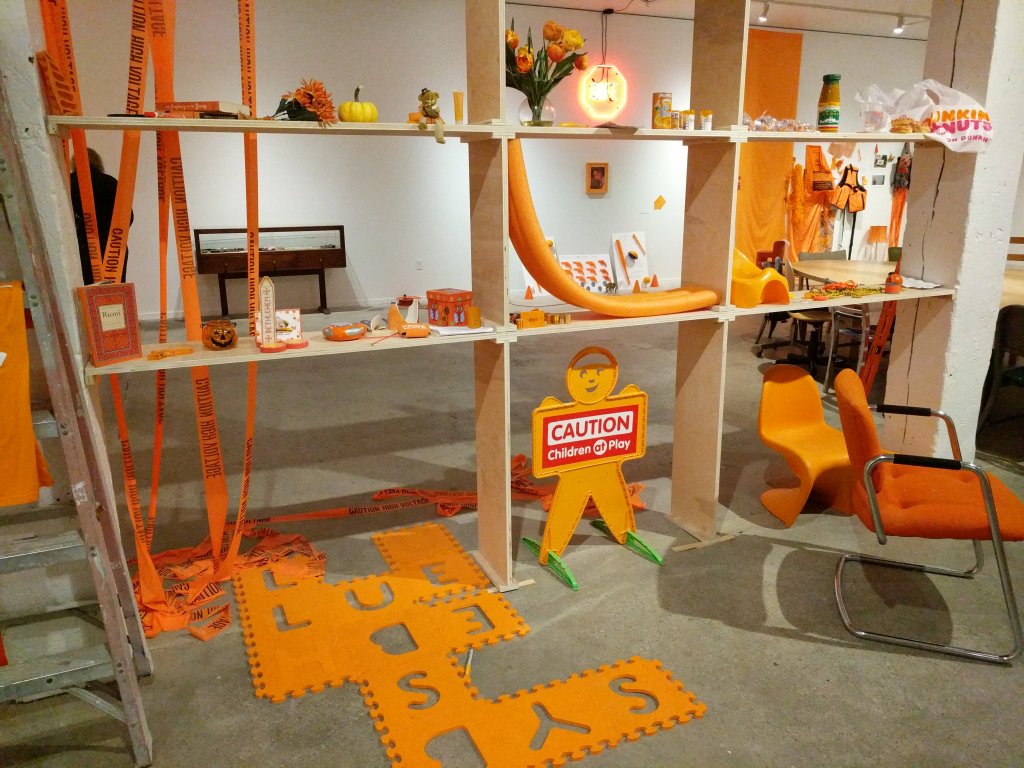
7. Michael Rakowitz with Amber N. Ford, M. Carmen Lane, RA Washington, and Amanda King with Shooting Without Bullets Youth Photographers; A Color Removed (SPACES Gallery, Cleveland) – Rakowitz in collaboration with a variety of local artists created an assemblage of the color orange, underlining the irony of trying to blame the deaths of children on the warning color or lack thereof. And it was one of the most devastating things I’ve ever seen in my life. A quiet temple to absence, loss, and rage.

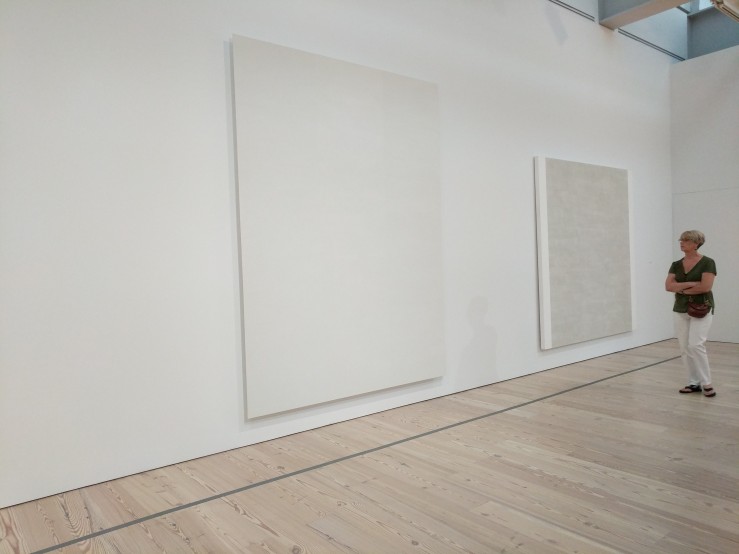
8. Mary Corse, A Survey in Light (Whitney Museum, NYC) – I walked into the Whitney that sweltering July day knowing I loved Wojnarowicz, steeped in him since I was a teenager. I had no such knowledge or preconceptions of Corse and her deceptively simple canvases pulled my breath right out of my body. Working with the most fundamental element not just of painting but of sight – light – she made me look at it in a different way that recalled the meditative work of so many earlier artists but was still like nothing I’d seen.

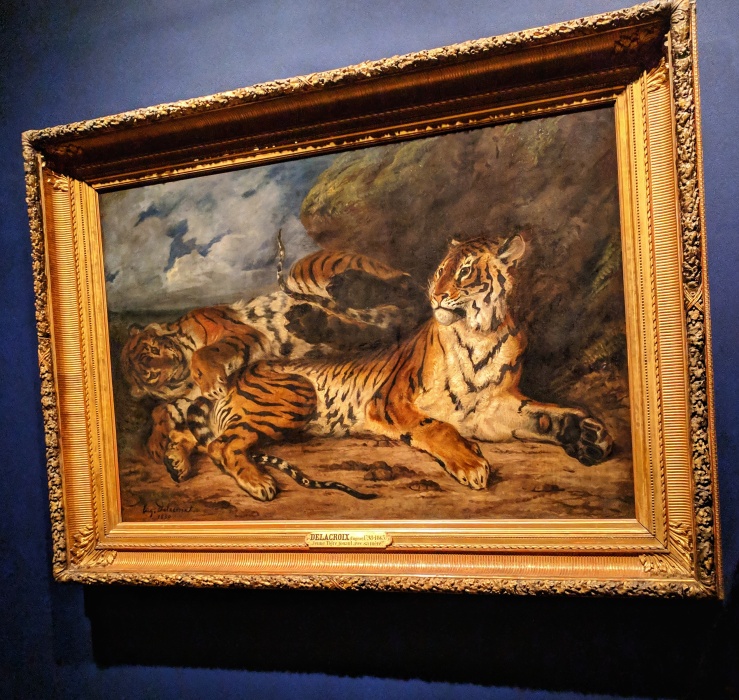
9. Eugene Delacroix, Delacroix (Metropolitan Museum of Art, NYC) – This presentation of one of the old masters I knew the least about was refreshing in a way art of that vintage doesn’t usually affect me. The breadth of his literary influences and the wide range of stylistic techniques were dazzling; a self-portrait casting himself as the main character in Scott’s Bride of Lammermoor led me to dub him the creator of the cosplay selfie. And it was not just the Musee de Nancy frame that led me to say, and my companions to repeat the rest of the weekend, “Delacroix is lit.”

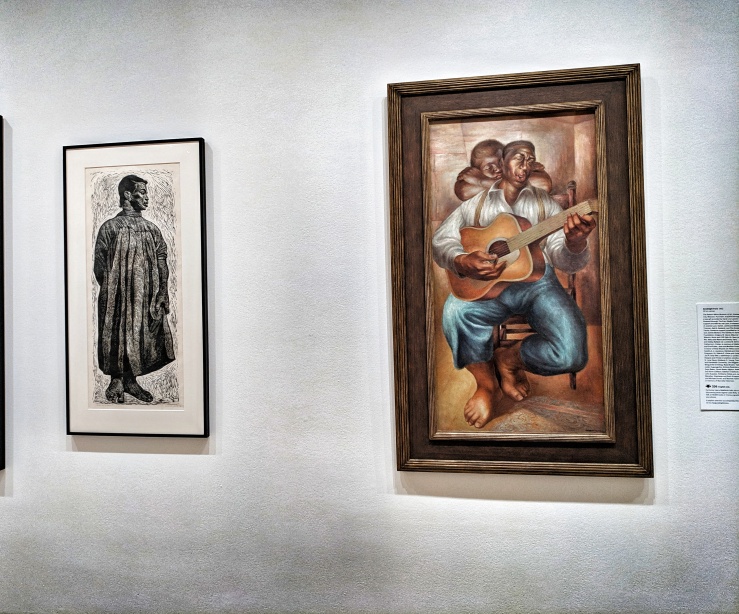
9. Charles White, A Retrospective (Museum of Modern Art, NYC) – Another artist I wasn’t as familiar with as I should have been, a 20th-century American, this selection of White’s work was the perfect thing to see upon first arriving in the city. Enormous, dazzling, powerful and rich with the contradictions and terror still reverberating through the fabric of daily life. Almost impossible to take in but refusing to let me go, demanding and not letting me off the hook.

10. Various Artists, Inherent Structure (Wexner Center for the Arts) –  The Wex hit a home run with this vibrant look at the ways contemporary artists continue to suck the marrow out of traditional concerns of abstract painting while tweaking and subverting it. One of the best-arranged exhibits I saw all year, where every corner I turned revealed something else about what I’d seen and what I was about to see without pandering to the obvious. Artists I already loved like Amy Sillman illuminated a gateway toward those I knew less (Angel Otero) and those completely new to me (Channing Hansen).

11. Carolee Scheenman, Kinetic Painting (MoMA PS1, NYC) – This expansive retrospective, going back to the ’50s, was a lesson in how not to weaken in rigor, in curiosity, in feeling. Scheenman did almost everything and did it all with blinding heat and depth that continually revealed itself. Shaming and inspiring and astonishing.

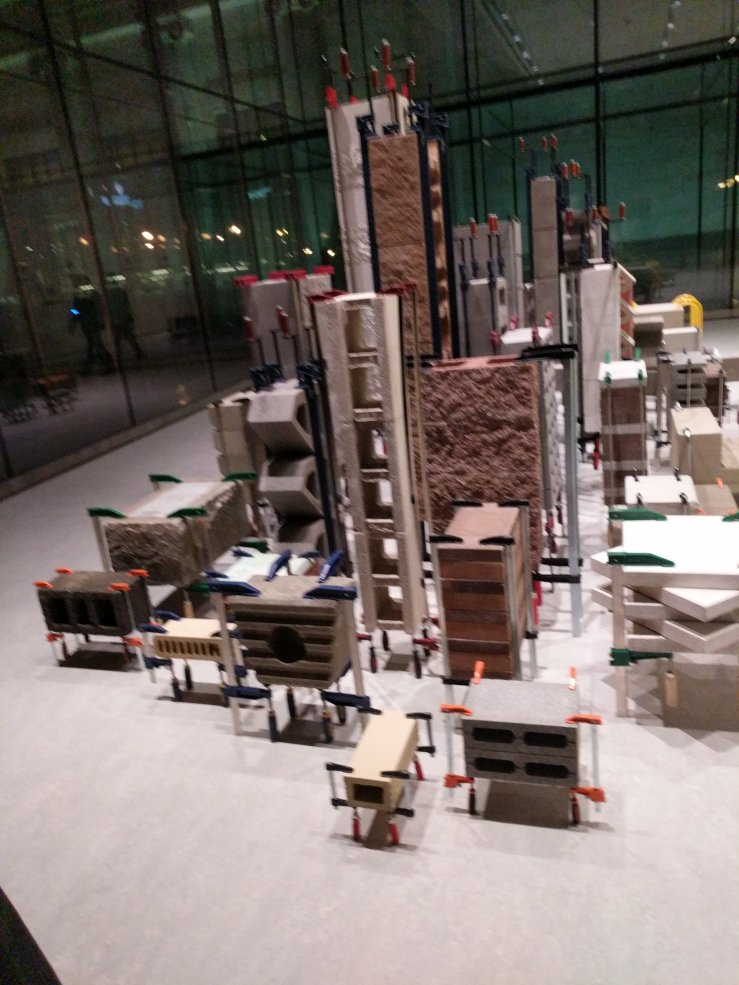
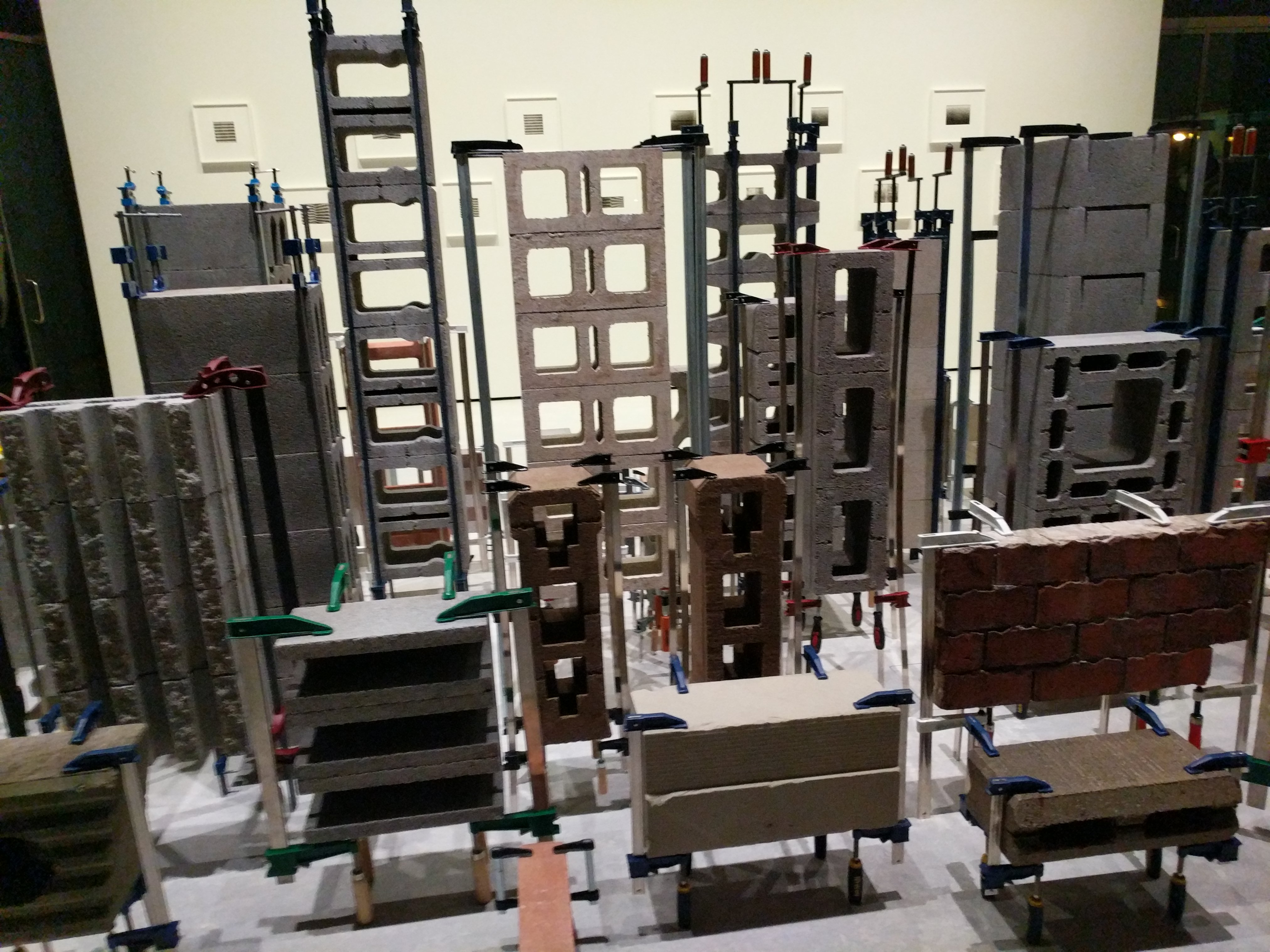
12. Marlon de Azambuja and Luisa Lambri, Brutalismo-Cleveland (Cleveland Museum of Art, Cleveland) – Another piece in the fantastic Front triennial, this collection of local materials in an iteration of de Azambuja’s ongoing series investigating Brutalism paired with Lambri’s photographs in something that was unsettling and perfectly in keeping with its surroundings (not just the Breuer wing of the CMA but Cleveland itself).

Phyllida Barlow, Hauser and Wirth

12. Phyllida Barlow, Tilt (Hauser and Wirth, NYC) – There was no shortage of art I saw this year that grappled with the way we in more privileged vantage points have realized the world doesn’t sit on its axis as comfortably as we once thought. Very little did it with the same arresting punch as British artist Barlow. A queasy circus singing a melody in its own voice, a voice that haunts me weeks later and I want to hear more of. Seeing the nods to Brutalism in these pieces transported me to the de Azambuja earlier on the list and the way those two artists of different nationalities exhibiting in different cities and different seasons spoke to one another in my head was a tribute to trying to see as much art as possible.

13. Sarah Lucas, Au Naturel (New Museum, NYC) – There’s a recurring theme in what shook me this year: artists I damn sure should have known better. Sarah Lucas epitomizes this, storied career as a sculptor I mostly knew as a name, one of the Young British Artists, with Hirst and Emin. This intense, witty, beautifully vulgar retrospective was everything I want art to be – speaking not just truth to power but a specific, personal, idiosyncratic truth.

14. Junya Ishigami, Freeing Architecture (Cartier Foundation, Paris) – Most of my first trip to Paris was spent doing exactly what you’d expect – the Louvre, D’Orsay, Centre Pompidou, Shakespeare and Company, wandering boulevards, drinking wine, all spectacular. So I was surprised by how affecting I found this show of a visionary Japanese architect. Breathable open spaces that feel like the future; echoes of ’70s science fiction movies like Silent Running but also evocative of the flowing purity of a Basho line or the meditative canvases of Agnes Martin. I wanted to live here. Paris, sure, but also inside these models.

15. Cyprien Galliard, Nightlife (MOCA, Cleveland) – I’ve been a fan of Galliard’s since the Wex showed his photographs but I’ve never been as enchanted as by the swirling dive into the after-dark of this video installation. Rodin’s The Thinker shattered by a bombing (the version in Cleveland), a tree planted to celebrate Jesse Owens also in Cleveland, fireworks over the site of the 1936 Berlin Olympics where Owens, shuddering plant life around Los Angeles streets, all throbbing to a looped sample of the Alton Ellis classic Blackman’s Song, the original chorus of “I was born a loser” melting into the re-release of “I was born a winner.” I could have stayed there for hours

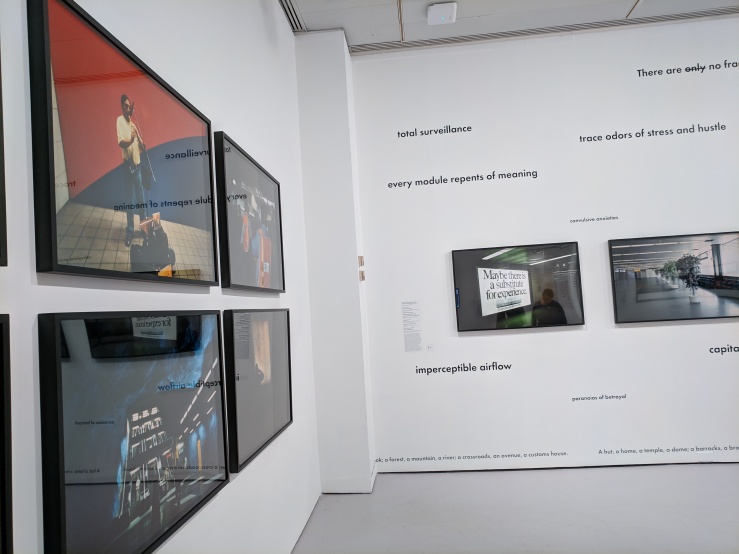
16. Martha Rosler, Irrespective (Jewish Museum, NYC) – Martha Rosler’s acerbic retrospective at the Jewish Museum was the kind of fresh air and reawakening to the atmosphere of terror around us I needed. Steeped in language and sharply aware of the limitations and obfuscations of every vocabulary, this was as immediate and accessible as a slap in the face but also layers upon layers.

17. Susan Phillipsz, A Single Voice (Tanya Bonakdar, NYC) – Phillipsz is the master of the subtle, disorienting environment and one of the finest artists at using sound in a gallery setting. An installation with film of a violin player playing a snatch of score from a Karl-Birgir Blomdahl opera, with 12 speakers bouncing the violin tones through the room and surrounded by canvases caked in salt and named after the Lachrimae. Defying description and intoxicating at the same time.

18. Jennifer Packer, Quality of Life (Sikkema Jenkins & Co, NYC) – Packer achieves a balance of the intimate and the explosive that’s unlike any work I’d ever seen. These breathtaking canvases all had an interiority that I found beguiling, coupled with potent colors and surprising juxtapositions that grabbed me by the collar and forced me in off the street.

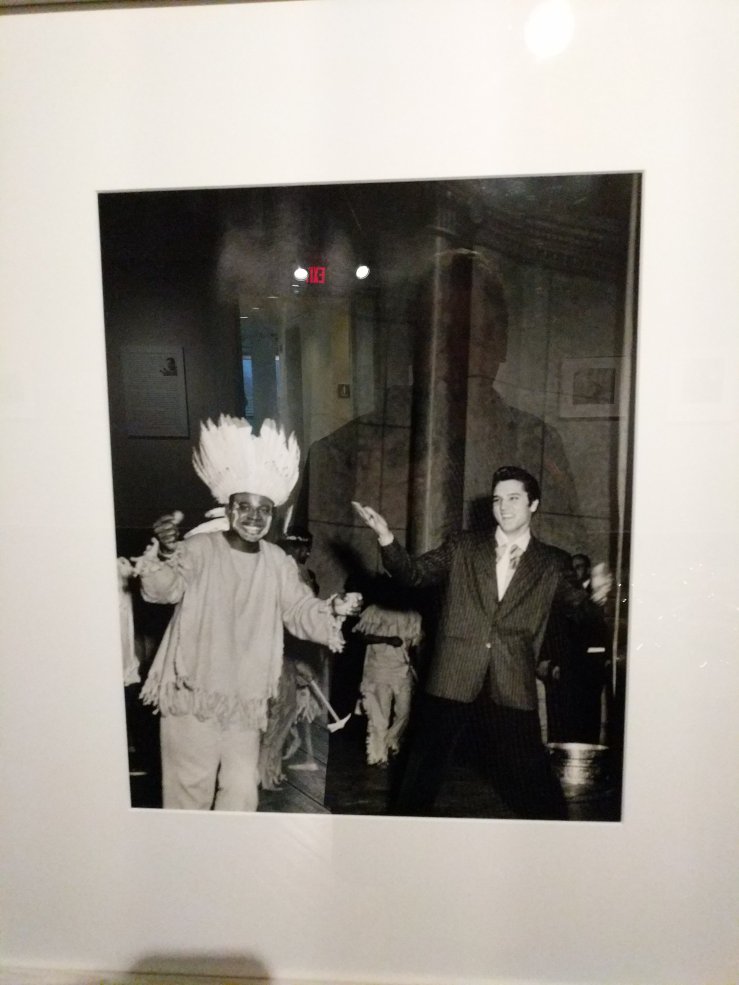
19. Ernest Withers, A Buck and A Half A Piece (Brooks Museum, Memphis) – Everything at the Brooks Museum this trip reminded me why it’s a must-stop in Memphis, the Jaume Plensa work very nearly made this list. But that slice of Memphis photographic history on the main floor wouldn’t let me go. Withers was a master at documenting cultural life (like the photo of Rufus Thomas and Elvis Presley above), civil life (with arresting images of the civil rights movement like the SCLC conference) and day-to-day “ordinary” life the way we should always see them: as parts of the same fabric, not discrete plants grown in their own pots.

20. Various Artists, All Too Human: Bacon, Freud, and a Century of Painting Life (The Tate, London) – It’s no surprise Francis Bacon and Lucian Freud were massive to me from the moment I was first aware of them; so seeing this retrospective on their home turf in my first trip to London was amazing. But more than that, this retrospective accomplished the tricky feat of showing these names as the nucleus of a burgeoning movement without overly inflating or denigrating the lesser-known student works. It painted the kind of picture that normally I’d have to buy the catalog to come close to.

Categories
live music

Things I’ve Been Digging – 06/24/18

Every holiday is really about the passing of time but I’m a particular sucker for days that explicitly honor time. Case in point: the Summer Solstice. As the local Community Festival drifts away from me as a demographic (there’s no bitterness there: events should change or they wither and die) there’s been a rising of other options that sing with summer’s sticky sweetness.


photo_20180621_235034-01
Megan Palmer and Band at Dick’s Den


Megan Palmer (June 21, 2018, Dick’s Den)

One of my favorite singer-songwriters, bandleaders, and artistic expats, it’s always a joy when Megan Palmer comes back to Columbus. The nights at Dick’s Den are extra special because it’s where she first bowled me and so much of this town over. The gloriously loose – on stage and in the crowd – late set we caught at that home reaffirmed that power.

Palmer still puts together a righteous, crack band whenever she’s in town, including usual suspects guitarist Brett Burleson, longtime vocal foil Jen Miller, and drummer of all trades Jimmy Castoe. That selection of players highlights the beautiful, quicksilver quality to slip between genres and times, tying everything together with her voice. Over the years, Palmer’s sharpened her lyric writing into one of the finest examples of open-hearted empathy without that understanding ever turning to weakness or a mealy-mouthed exercise in “both sides.” At the same time, her melodies grew looser and harder to define, amplifying their shimmering quicksilver qualities and leaving more space for other players.

Burleson’s fills attacked the same “problem” as Luther Perkins but approached them in a surprising, refreshing way. At one point, on one of my favorite of her older songs, “Please Don’t Come Back,” it clicked that the arrangement took Bob Wills as a starting block then opened to embrace everything Wills influenced in the idiosyncratic wing of the 20th century’s popular music including Willie Nelson and even a little Ornette Coleman. This music was washing my face in the fountain of life (or as Tom T. Hall said, the morning dew).


attach904_20180623_144930-01
This Moment in Black History at Happy Dog (photo by Anne Courtney)


Cold Sweats and This Moment in Black History (Happy Dog, Cleveland, June 22, 2018)

Every few years, Cleveland gives the world one of the greatest rock and roll bands we’ve ever seen. Currently holding the crown – though I’m not discounting there could be a bunch of kids I haven’t see yet – is Bim Thomas’ crowning achievement Obnox. One of my all-time favorites also features Bim, on drums, This Moment in Black History. I hadn’t seen them in probably six or seven years and in the periodic reunion we saw at the Happy Dog to kick off our flying Cleveland weekend.

Hooky, vibrant, righteous, full of intertwining hooks and sticky grooves. The kind of late night dance floor riot most of us search for from dancefloor to bar room and back. Opening, Cold Sweats from NYC did a modern take on post-hardcore with lacerating guitar and a swinging bounce that got the crowd dancing.


photo_20180624_000229-01
Pierre Kwenders and Band at the Cleveland Museum of Art


Summer Solstice 2018 (Cleveland Museum of Art, Cleveland, June 23, 2018)

Anyone who wants to throw a museum fundraiser should look to the Cleveland Museum of Art. A and I went about five years ago and had a blast, including spontaneously running into American treasure Baby Dee. The next year it sold out at the member presale and has ever since.

This year I finally bit the bullet and got a membership and I’m pleased to report every change they’ve made since made it better. Manageable lines, reasonable (for a benefit) drink prices, and splitting the bands between (mostly) live acts on the terrace and (mostly) electronic in the atrium for a better dance floor, we were here for four hours and I loved every minute of it. There’s a special magic in ducking in from a sweaty dance floor and realizing you’re the only two people in a room full of Van Gogh and Cezanne. Or you’re in a politely humming crowd grappling with Danny Lyon’s photographs of the human and aesthetic cost of gentrification or Kerry James Marshall’s massive, encompassing woodcuts.

Moroccan electronic artist HAT (Hatim Belyamani) wove music out of film footage shot by his collective, remix ←→ culture, remixed to highlight the individual cultures they were taken from and into something spine shifting and hip-swaying. HAT made it impossible to ignore the cultural building blocks that gave birth to these pulsing club tracks and worked it into something easily graspable and that resisted being nailed down. His work echoed the Brutalismo-Cleveland exhibit upstairs by Spanish artist Marlon de Azambuja which also used locally sourced materials to comment on brutalism and society.


photo_20180623_214026
Yemen Blues at Cleveland Museum of Art

Yemen Blues was one of the finest dance bands I’ve ever seen. Led by Ravid Kahalani, the six piece band wove funk and salsa together with traditional North and West African melodies in a refreshing, wild party. Hello Psychaleppo came at traditional music, the ecstatic Syrian music Samer Saem Eldahr grew up with, with a similar mix of reverence for the original and delight in reinvention that kept the dancing audience in the palm of his hand. Pierre Kwenders blew my hair back, he’s one of the greatest soul singers I’ve ever seen. He and his quartet cooled it down a little and turned up the level of sexy as they closed the night with a blend of Congolese rumba and the current wave of stiletto sharp, introspective R&B


photo_20180623_231800
Marlon de Azambuja: Brutalismo-Cleveland