I repeatedly say that these year-end lists are foremost an exercise in gratitude, and, as I said in 2021, visual art was the thing I missed most during the lockdown and one of the great boons of the travel we did this year. Visual art slows me down, at least a little, and reminds me of the Mary Oliver line, “Attention is the beginning of devotion.” It’s become one of the main tenets of my art diet, and something dazzled me everywhere I turned.
All of these are in chronological order and in Columbus unless otherwise noted. All photos were taken by me unless otherwise noted.

Diane Fox, Unnatural History (Red Gallery, Knoxville) – The return to Big Ears was the indisputable highlight of my musical calendar (Winter Jazzfest was canceled due to the surge, Gonerfest returned in late 2021) and I was overjoyed to see an enhanced visual art element, both in official venues (some really strong work in my hotel lobby) and at other spots around downtown and Old City Knoxville. My favorite was at the Red Gallery along Jackson Avenue. Diane Fox takes photographs of dioramas in natural history museums to create a look at how we frame anthropological history and our relationships to animals over the years that I couldn’t get out of my head.
Various Artists, Black Life As Subject Matter II (Riffe Center Gallery) – The Ohio Arts Council gallery in the Riffe Center is one of Columbus’s most underrated gems and early May’s group show, curated by Willis “Bing” Davis and produced/circulated by Ebonnia Gallery was a kaleidoscopic work at not just black art but the way white America and the “mainstream” art world have given their lives a fair shake, and pointing at ways a more equitable and sane narrative is possible. And the opening had a warmer, more community oriented feeling than art openings almost ever do, aided by music by Derek Dicenzo on bass and Chris Brown on piano.
Terry Adkins, Terry Adkins (Paula Cooper Gallery, NYC) – This first retrospective of artist Terry Adkins since Adkins passed away in 2014 gave me a brilliant jolt of energy and shamed me for not knowing this artist’s work first. Sculptures and videos actively reshaping history and the world around Adkins.

Frédéric Bruly Bouabré, World Unbound (MoMA, NYC) – Another artist I sadly didn’t know anything about and a breath of fresh air, the kind of show MoMA’s scholarship really shines with. This late artist (died in 2014) from Cote d’Ivoire, tried to summarize and preserve every piece of information about the known universe, including creating his own alphabet. It’s a magic-drenched tribute to the power and beauty of observation, of looking as deeply as you can.
Henri Matisse, The Red Studio (MoMA, NYC) – Another exhibition that uses MoMA’s scholarship to its fullest and a rare new look at perennial MoMA artist Matisse by assembling the pieces Matisse painted in his masterwork The Red Studio. It’s another tribute to seeing, to really understanding, to collecting the things that help feed our own art and keep them close.
Faith Ringgold, American People (New Museum, NYC) – Probably my favorite show of the entire year. I knew Ringgold’s work and I’d seen what I thought was a pretty strong cross section over the years but this cornucopia of her potent, dazzling work, recontextualizing and re-visioning American history was so beautiful and such a punch in the gut that I did the full court press to get Anne to see it on a later day of our trip and so saw it twice, which has only happened once or twice before in 20 years of going to New York on relatively brief trips.
Clarence Heyward, Unseen (CAM, Raleigh) – There’s always something at CAM that turns me sideways, even when we’ve only been in Raleigh for a few hours I go out of my way to make a trip. Clarence Heyward’s portraits looked at his family, what being a black man and having expectations of filling those roles of protector and provider, in the face of lockdown and the high-attention murder of George Floyd as burning reminders of inequity and cruelty that have always been there. The expression on his daughter’s face in more than one of these still haunts me.
Various Artists, Ain’t I A Woman? (Museum of Contemporary Art, Madison) – My first trip to Madison, Wisconsin, since college was delightful front-to-back with a million great dive bars and a killer show commemorating punk label Dirtnap Records’ 20th anniversary. Their Museum of Contemporary Art provided a beautiful stop in the middle of the day with this group show, part of their Wisconsin Triennial, which took its title from the Sojourner Truth quote used as a bell hooks book title. Curated by Fatima Laster, this introduced me to so many great artists I didn’t already know.
Various Artists, Portal For(e) the Ephemeral Passage (Wexner Center for the Arts) – jaamil olawale kosoko was one of my favorite interviews I’ve ever done, in advance of his poetic dance peace Séancers, and his curatorial work on this piece, bringing together artists whose work I knew well like nora chipaumire and Keioui Keijaun Thomas with those I didn’t know at all, like Jasmine Murrell, tied together with kosoko’s powerful installation at the end, in one of the most satisfying overall exhibits I took in this year.
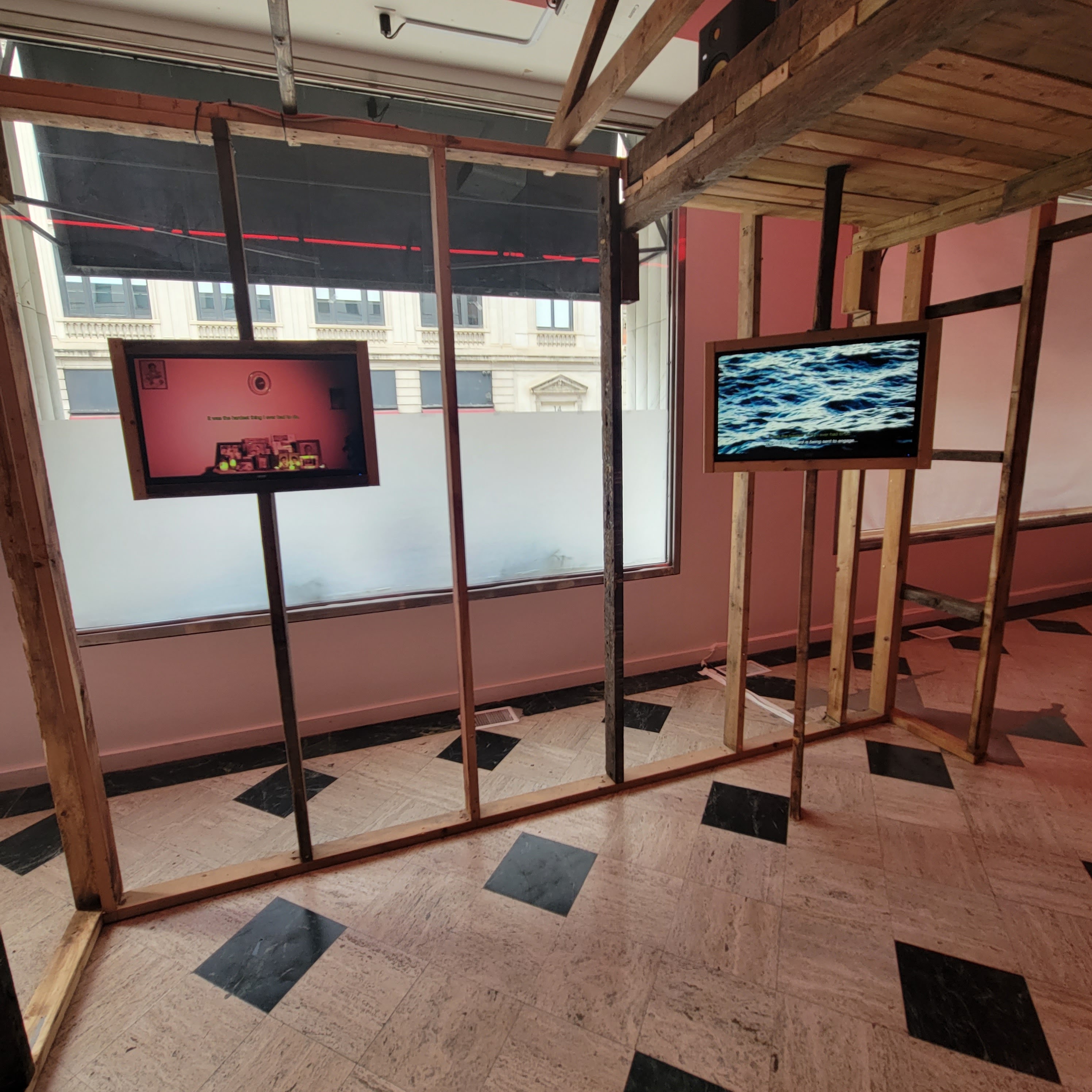
Cameron Granger, Heavy As Heaven (No Place Gallery) – No Place Gallery had a great year, building on a streak of great years. I’m sure I missed a couple of exhibits over the course of the year, but anytime my schedule lined up with their open hours, I was there, and it always paid dividends. My favorite thing I saw in that space – I’m not alone – and if I were doing more of a ranking, one of my three or four favorite things all year, was this excavation of Granger’s own past and the wider world – the frame of a small house inside the gallery leading to a devastating short film but also with texts lying nearby and a separate film specifically about gentrification in the gallery’s side room. I think I snuck in to see this three times before it closed, and it broke my heart and uplifted me every time.

Various Artist, Split My Sides (The Luminary, St Louis) – It felt really good getting back to St Louis this year for the joyous occasion of my good friend John Wendland’s wedding and it did my heart good to see my favorite art space – in a town full of a lot of my favorite art – The Luminary is still holding it down on Cherokee Street. Amina Ross and Lola Ayisha Ogbara delve deep into black trans and feminine experience with a variety of mixed media work that don’t make anything obvious, work that’s visceral and gripping but that rewards further meditation. That huge Ross installation/film nagged at me for days.
Gala Porras-Kim, Correspondences Toward the Living Object (Contemporary Art Museum, St Louis) – Gala Porras-Kim’s elegantly wielded daggers turn on the problematic process of museum collections of sacred or beloved artifacts avoids easy answers for layers of complication upon complication, in a way that uses and benefits from the amount of space and the curatorial structure of a museum exhibit instead of some other gallery spaces.

Various Artists, Front 2022 Triennial (Various Spaces, Cleveland) – I loved the earlier iteration of Cleveland’s multi-venue Front Triennial and was a little afraid the pandemic would have been its death knell but it returned strong in 2022 and the sampling Anne and I did, on a quicker than usual trip centered around a great Compulsive Gamblers reunion show at the Beachland gave me Renee Green’s work interspersed with other artists at MOCA, Julie Mehretu’s architectural explosive drawings in direct dialogue with the CMA collection, SPACES’ international work in Oh, Gods of Dust and Rainbows and so much more.
Various Artists, New York 1962-64 (Jewish Museum, NYC) – I’m a huge fan of this transitional period of post-war modernism and the Jewish Museum always does a great job of zooming in. In this case, they simultaneously shone a light on a window where New York was at the very center of the art world but also on Alan Solomon’s tenure as director, helping shape the Jewish Museum into the powerhouse of contemporary art it is today. A moving reminder of how much community matters and how one person can shift a narrative, can change the course of time.
Lorna Simpson, 1985-92 (Hauser and Wirth, NYC) – I thought I knew photographer Lorna Simpson’s work pretty well but this deep dive into her early work was revelatory. The way she looks at masks from the inside, from hair, from the way we invent ourselves and, in particular, how black feminine identity gets shaped was exactly the kind of stab in the heart I needed. Powerful, every-more-relevant work.
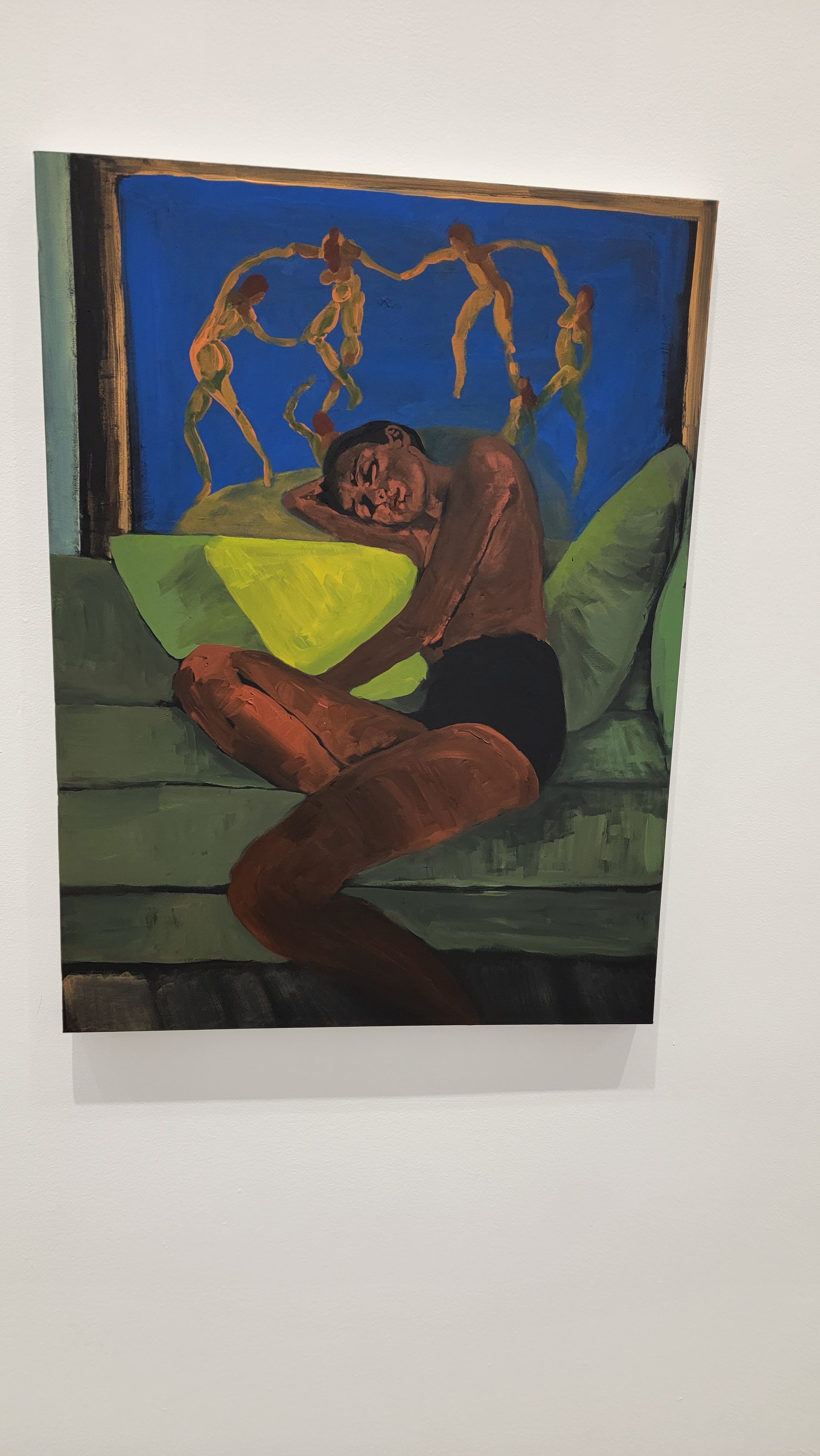
Danielle McKinney, Golden Hour (Marianne Boesky Gallery, NYC) – McKinney’s work made me think about portraiture in a different way, looking at black women in quiet, intimate moments but undercutting the thought that it’s natural, reminding me that everything in art comes through layers of thought and intention, in some cases directly – like placing one figure under Matisse’s The Dance – and in others with subtler hints at patterning and shapes. The brush strokes hint at a throb, electricity going through everything and illuminating the world.
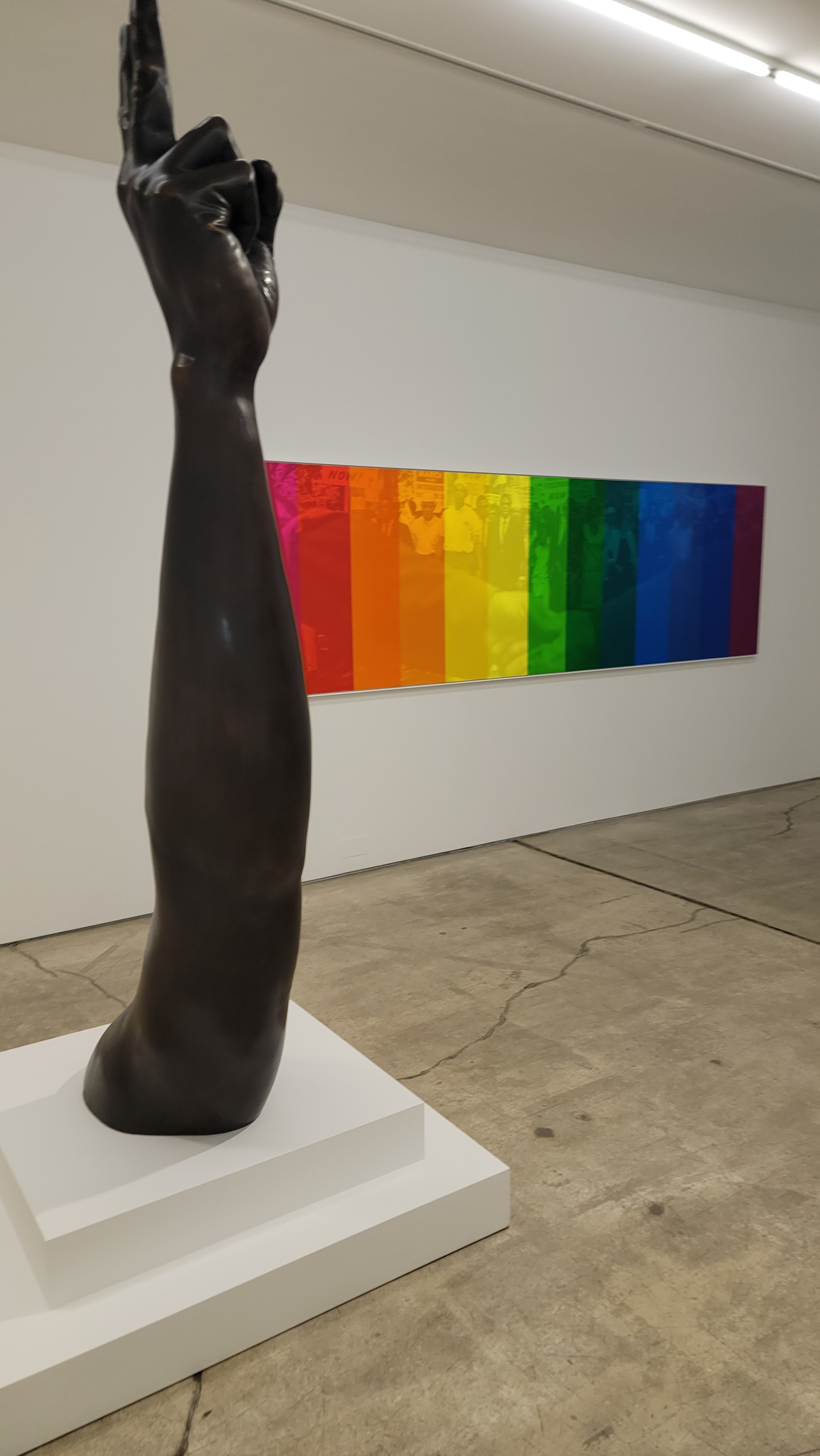
Hank Willis Thomas, Everything We See Hides Another Thing (Jack Shainman Gallery, NYC) – I’ve been a sucker for the images that hide and reveal at the same time – I read Kenneth Koch’s “One Train May Hide Another” as a teenager – for a long time, and Thomas does that beautifully as well as engaging with technology in a way I don’t think I’d ever quite scene, engaging with cell phone photographs to expose pain and turmoil – and hope – underneath placid, accepted reality, almost banality, of test patterns and color fields.
Tania Pérez Córdova, Generalización (Museo Tamayo, Mexico City) – I loved Mexico City so much it’s almost impossible to pick a single favorite moment, but the Tamayo, one of the best contemporary art museums – from layout to curation to the building itself – I’ve ever been to, and the solo morning I spent there, is high on the list. I felt the vibration of Córdova’s work almost immediately and realized I’d first encountered the Mexico City-born artist at the MCA Chicago about six years ago. This larger retrospective about changing our perceptions of the world – melting down musical instruments and reconstructing them, melting ice in concrete blocks with the molds of people’s faces like death masks… as powerful and poetic a voice as I can think of.
Carlos Motta, Your Monsters, Our Idols (Wexner Center for the Arts) – I knew Motta’s work a little, but the panoply of visions with this strong, surging voice at the top of the Wex ramps killed me. Linking body horror and S&M with liberation and claiming space for oneself and always in a way that was beautiful, no matter how unsettling.
Katie Forbes, Documenting a Movement (Bridge Gallery) – Katie Forbes’ work around the Black Lives Matter protests is a testament to putting in the time and bringing her craft to something that’s important. Her willingness to be vulnerable and be on the ground – some of the photos, like a police officer pepper spraying someone whose hands are up, are uncomfortably close – and her empathy, the desire to know the people here without salaciousness, is an astonishing gift to this town.




 Screen of Distance