Categories
Best Of live music

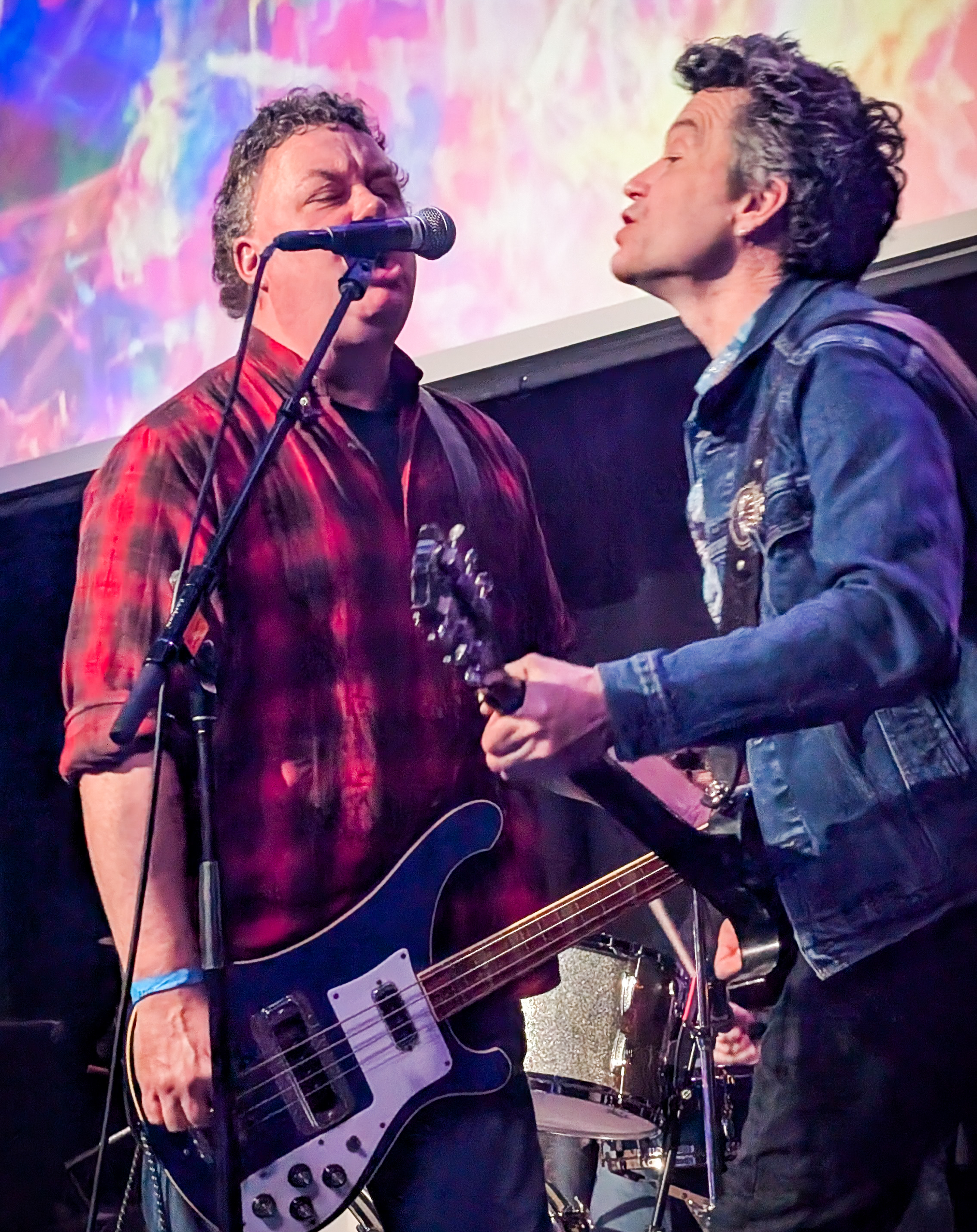
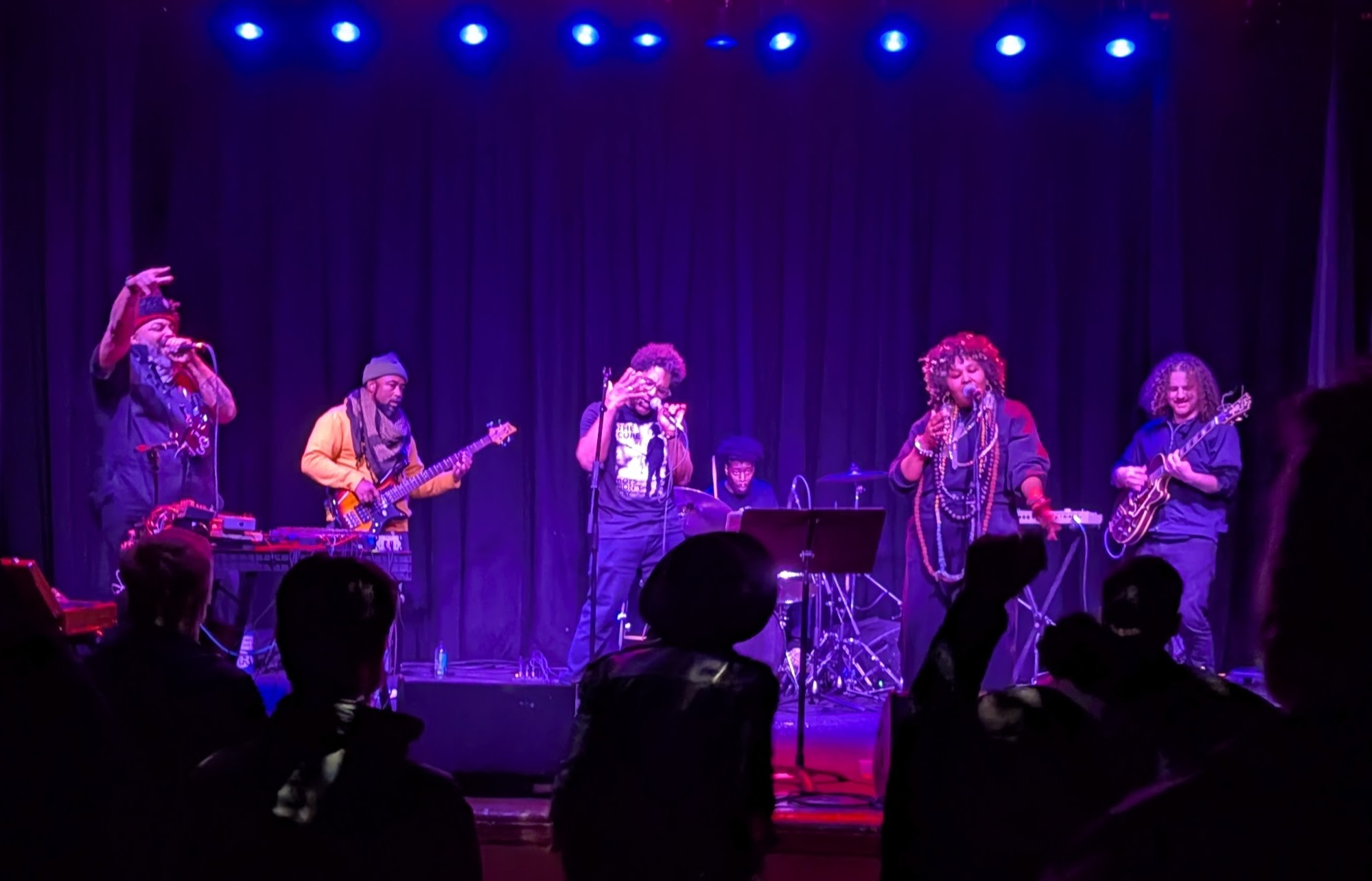
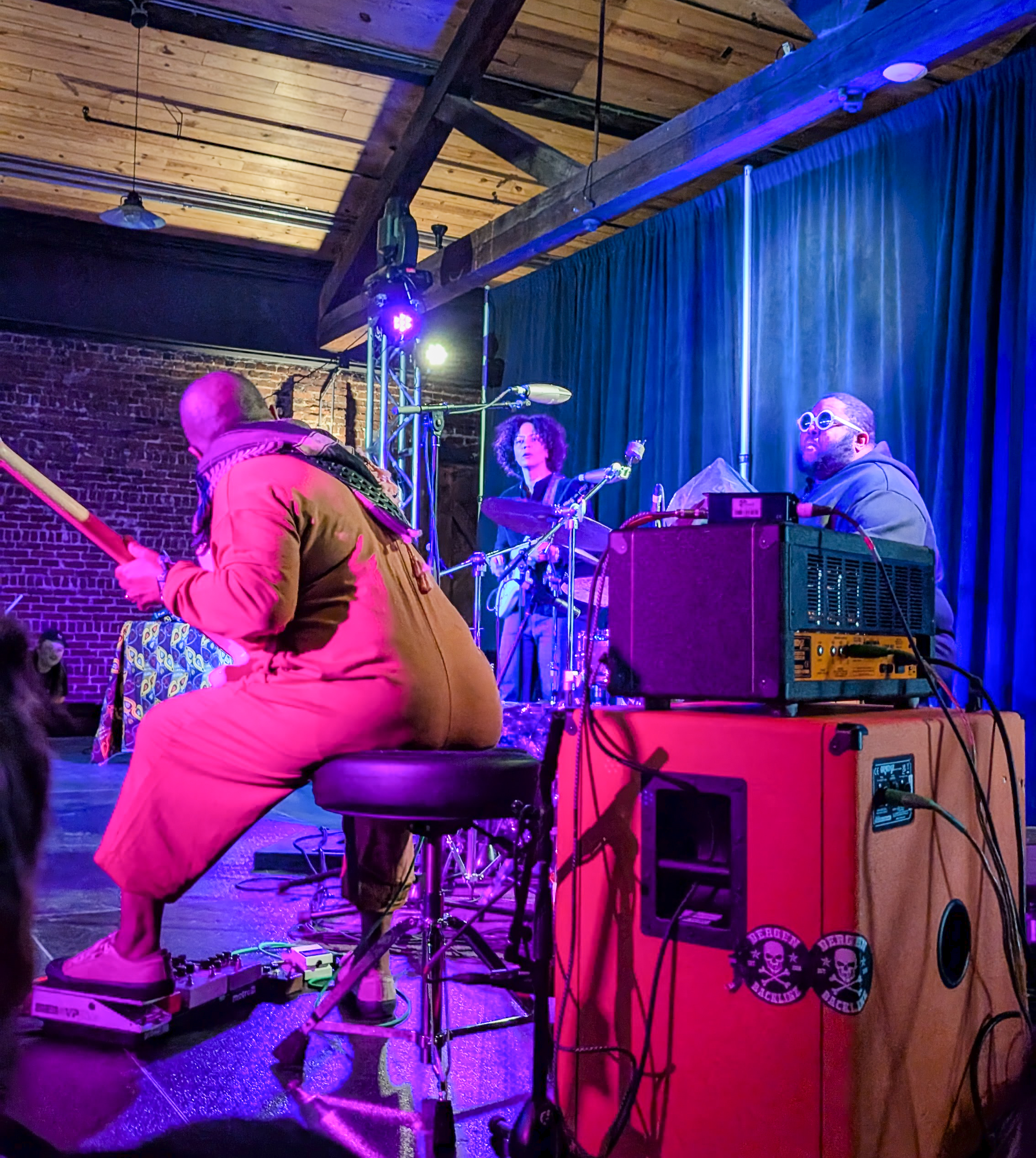
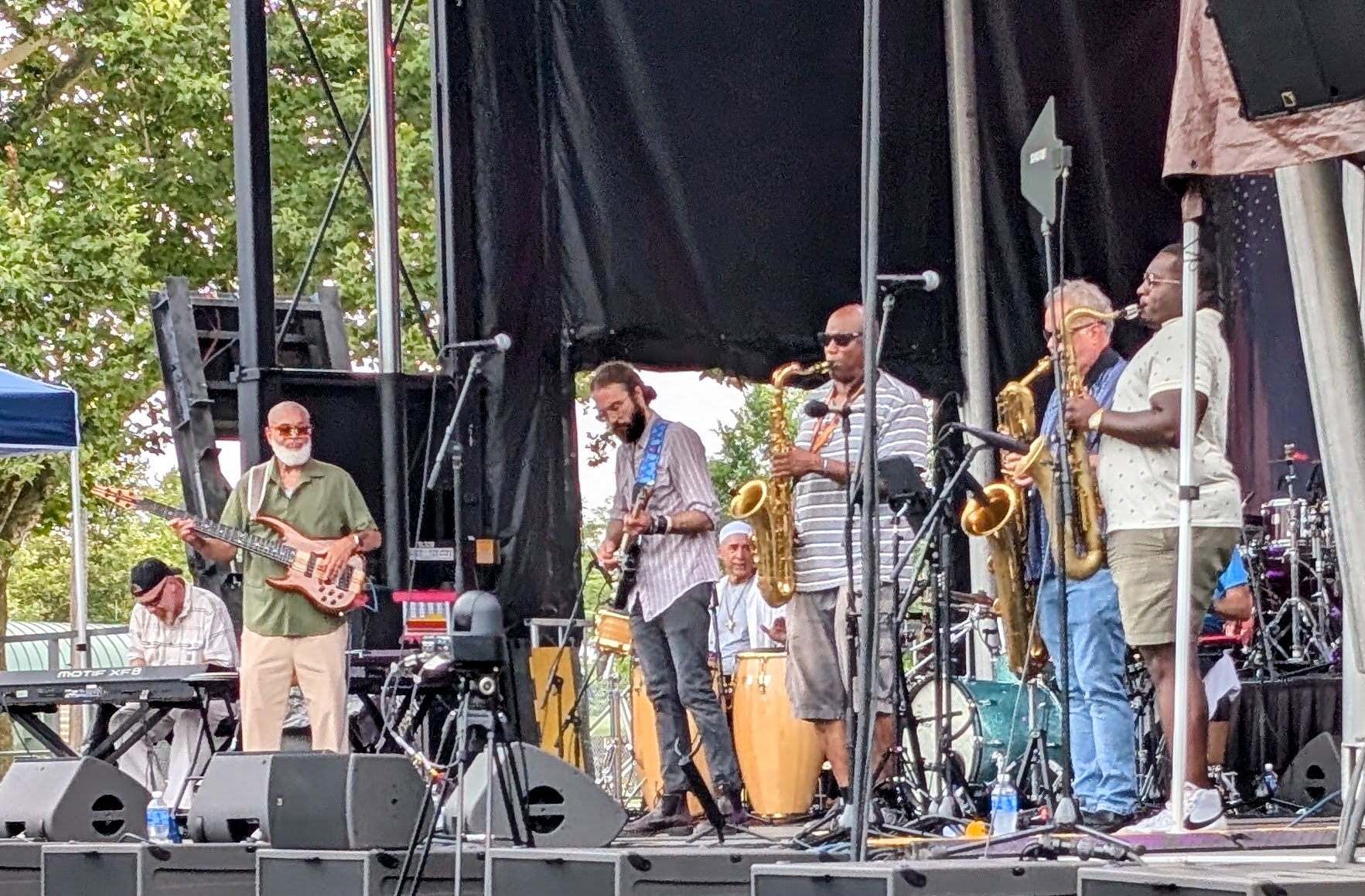
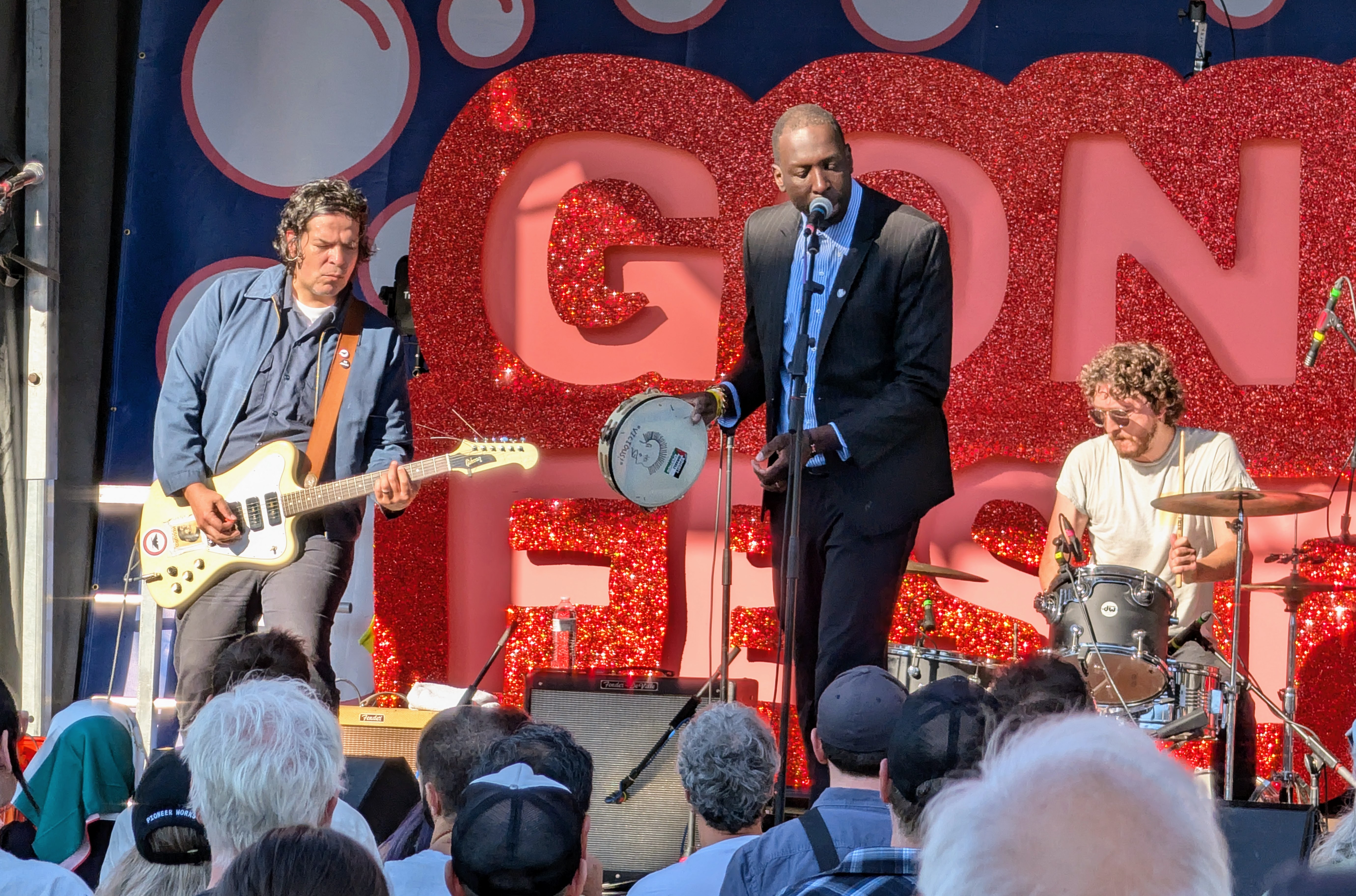
Best of 2025: Live Music

In a world that felt even more on fire than usual – by which I mostly mean the fire was closer to me personally – I found a lot to be grateful for: my friends, my partner, my family, my jobs. My most often source for solace was, as it has been since I was a teenager, live music.

Across nine cities, I saw about 150 shows (expect that to be fewer next year; I’m trying to be more intentional and include more deliberate days of rest each week). Unsurprisingly, Dick’s Den was at the top of my list, hitting an average of once every two weeks, with Natalie’s Grandview and Cafe Bourbon Street tied for second place at 12, and Ace and Rumba also tied at 7. Interestingly, the Columbus Museum of Art and the Wex tied at 4 each, and all of which were terrific. Because there was so much good stuff, I interpreted “Festival” a little more liberally, as anything with multiple stages or days.

No way of knowing what’s next, but there are already some shows I’m very excited for in the upcoming year, and choosing to set my eyes with hope rather than leap to despondency.

All photos are by me, everything is in Columbus unless stated otherwise, and the listings are in chronological order
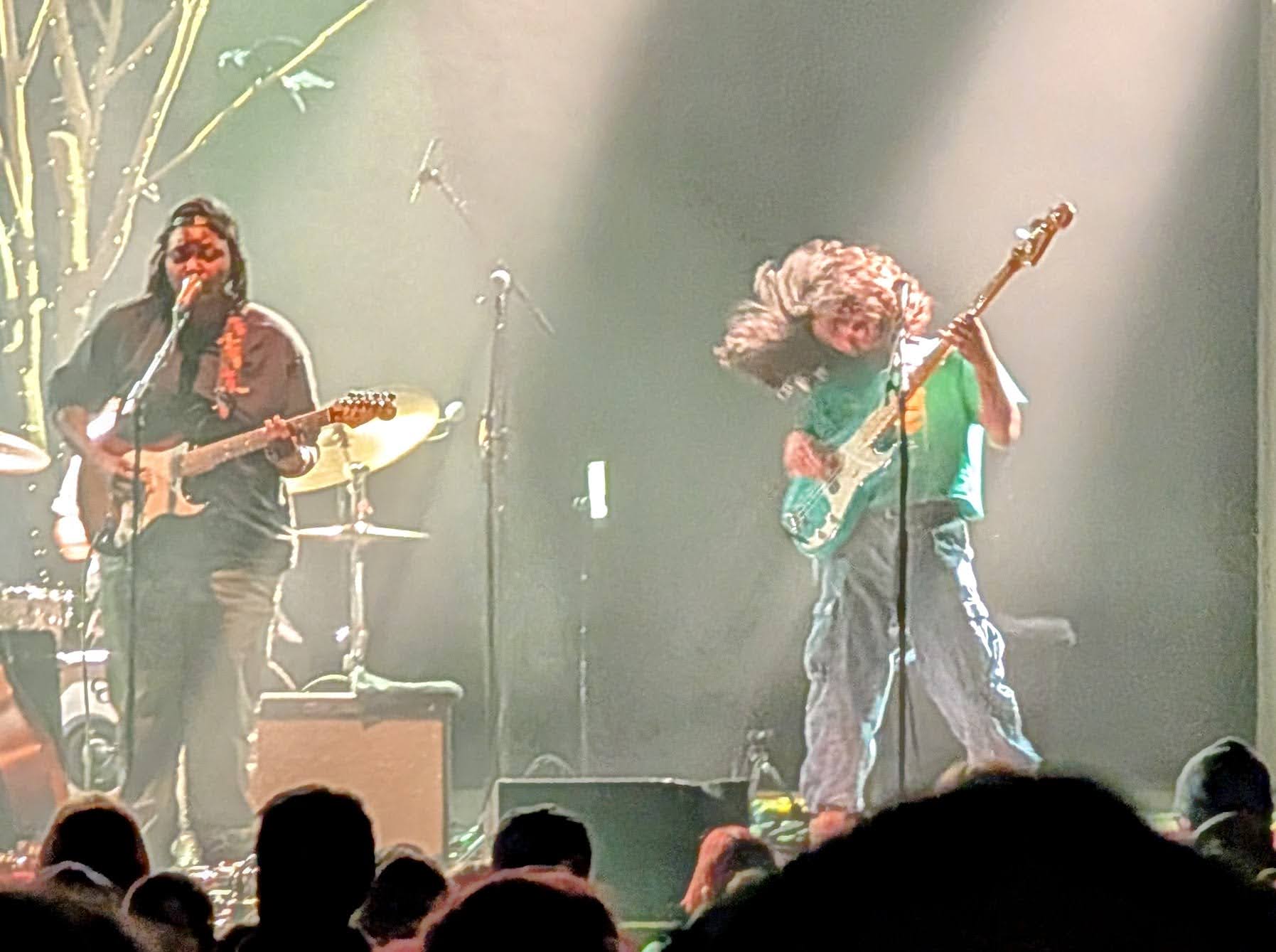
Joy Oladokun at Newport Music Hall

Top 25(ish) Shows

  • Joy Oladokun (Newport Music Hall, 01/21/2025) – Not quite the first show of the year I saw, or even exactly the first touring show (John Calvin Abney, who had a banner this year supporting SG Goodman as well as putting out a stellar EP, did a joint show with Lydia Loveless at Secret Studio a little earlier), but in many ways finally getting to see Joy Oladokun after being a massive fan of her last two records in the room that held so many of my favorite shows of all time (Wilco, Morphine, The Cramps, Sonic Youth, Medeski Martin and Wood/Chocolate Genius, X/The Detroit Cobras) set the tone perfectly and gave me a shot of burning resolve right after the inauguration. I thought the mix of solo acoustic and full-band numbers highlighted both sides of her work in a way I’ve seen a lot of singer-songwriters try but very rarely pull off anywhere nearly as well, and made some of the textures – revealing a surprising (to me) contextual thread between her Observations From a Crowded Room and Don Henley’s Building a Perfect Beast – appear in greater detail and relief.
  • Chuck Prophet and his Cumbia Shoes (Natalie’s Grandview, 02/05/2025) – I’ve never seen a bad Chuck Prophet show – the rare universally acclaimed songwriter who’s every bit as powerful a bandleader – but this flourishing of his merging a couple of members of his longstanding unit Mission Express with Cali cumbia band ¿Qiensave? into Cumbia Shoes hit another level of powerful catharsis, nuance, and unbridled fun.
Chuck Prophet and his Cumbia Shoes at Natalie’s Grandview
  • Joel Ross’s Good Vibes (Wexner Center for the Arts)/Joel Harrison’s Anthems of Unity (Natalie’s Grandview), both 03/06/2025 – Talking to a good friend and stalwart of the NYC and, now, LA, jazz scene about how the touring climate was in town, I brought up this particular evening when I got to see the first set of vibes maestro Joel Ross’s crushing current Sextet (that interplay of Maria Grand on alto and Josh Johnson on tenor in the frontline seared my eyebrows off), an unbroken suite of music blending Ross’s originals and standards that turned my head around then drive 10 minutes and see the astonishing guitarist Joel Harrison do his Anthems of Unity book with two of our local heroes, organist Tony Monaco and drummerr Louis Tsamous. These two approaches to jazz/improvised music/the history of American music, and the way both of these artists approached the canon and the way music can be about the rest of the world instead of being hermetic or closed reverberated hard against each other in my chest.
  • Deli Girls with Deionyx (Cafe Bourbon Street, 04/04/2025) – Over the last couple of years, Bobo has reclaimed the throne as my favorite place to see noisy, edgier rock and roll and one of my favorite places to see more underground-leaning DJs. This show scratched both of those itches hard and deep – NYC’s Deli Girls’ mix of grinding, throbbing rave beats, acid-singed noise, and in-your-face punk and Deionyx’s bleeding edge soulful-at-an-angle set of surprising and powerful records both made my heart incredibly full, as did the room packed full of people 15-25 years younger than I am.
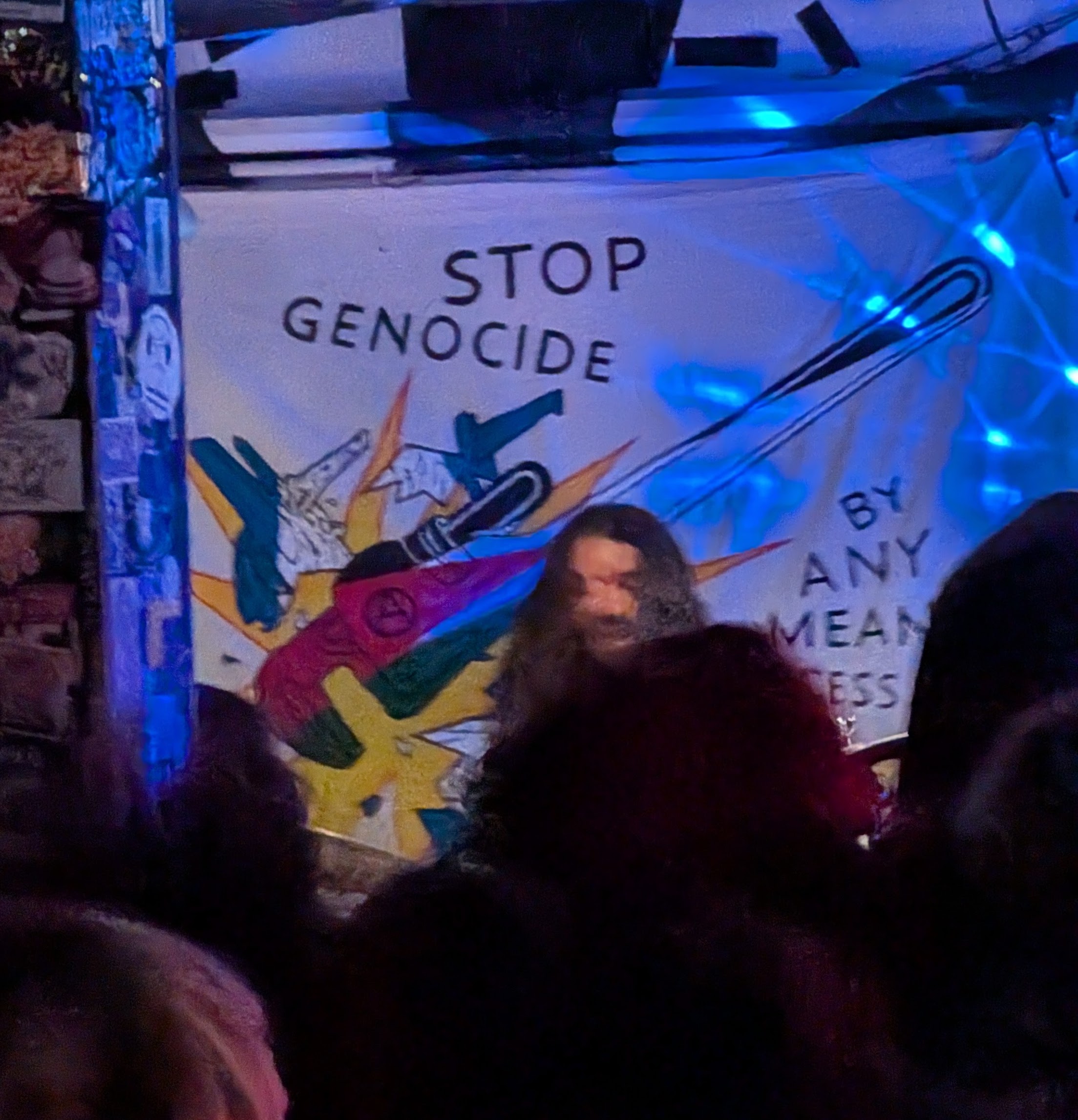
Deli Girls at Cafe Bourbon Street
  • Greater Columbus Community Orchestra with Brian Harnetty, The Visitor (Hilliard Presbyterian Church, 04/06/2025) – Banner year for composer Brian Harnetty, who released a remarkable memoir, Noisy Memory, and put out a gorgeous recording of string quartet and samples The House, and a visual installation This Was Once a Forest, This Was Once a Sea, as well as premiering this rich, sparkling brass ensemble piece with the Greater Columbus Community Orchestra that I’m still feeling vibrate through me.
  • Nikhil P. Yerwadekar and Living Language (Barbes, NYC, 04/11/2025) – Because the sole New York trip this year was to celebrate my 45th birthday with a gang of my favorite people in the world, there were fewer distinct cultural items on the calendar. But this was an extreme highlight: Yerwadekar, whom I last saw backing Hailu Mergia at a Big Ears, leading a ferocious band through Afrobeat classics and originals in a wall-to-wall-packed Barbes back room where no one stopped moving. Made even sweeter as my great friend Andrew Patton’s inaugural visit to one of my temples of music.
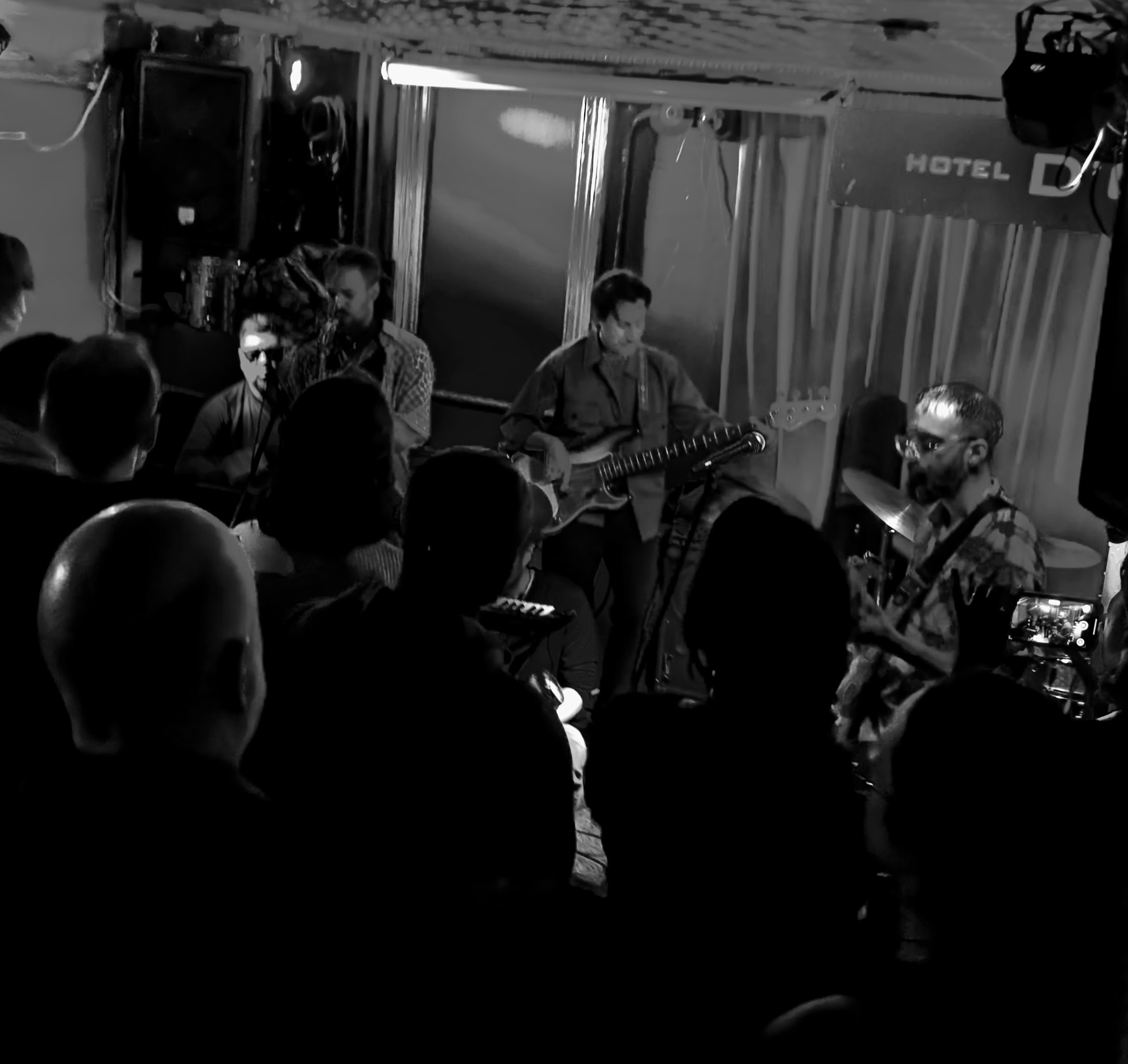
Nikhil P. Yerwadekar and Living Language at Barbes
  • The Lilybandits with Two Cow Garage (Natalie’s Grandview, 06/05/2025) – I think anyone who’s read ten lines I’ve written or spent ten minutes in my presence knows I think Todd May’s the greatest songwriter Columbus has ever produced. They culminated an important reissue project of his first mature band, The Lilybandits with At Thirty Three and a Third this year, and lost its drummer and their lifelong friend Keith Smith last year. This extremely rare reunion of the original core members (May, Trent Arnold, Jose Gonzalez, Bob Hite) with longtime friend Keith Hanlon filing in on drums, Bob Ray Starker providing the horn lines he gifted them with on those records, and Smith’s son joining on a few vocals, was probably the biggest reminder of how much I love my town all year, wrapped up in a rock show that made hard to believe they’d only gotten together to run through the songs once. Two Cow Garage, long influenced by the Lilybandits (the first time I ever saw Two Cow, they did a Todd May song and dedicated it to “The genius of Bernie’s”) set the tone with a set of jubilant catharsis.
  • Charles “Wigg” Walker (ACME Feed and Seed, Nashville, 06/14/2025) – My eyebrows shot up when I saw Charles Walker – who I knew from his days with the Dynamites (who the Funkdefy collective, at the time including the above-mentioned Andrew Patton, booked in Columbus more than once, and my great friends in St Louis, at the time including fellow Columbus legend Matt Benz booked at Twangfest – was doing a regular brunch gig when Anne and I already planned to be in Nashville. We juggled our schedule to make sure we were in town in time for this and stayed for two sets: Walker still in perfect voice, backed by a sizzling organ trio led by his longtime Dynamites foil Charles Treadway, going through stone soul classics and gorgeous new originals.
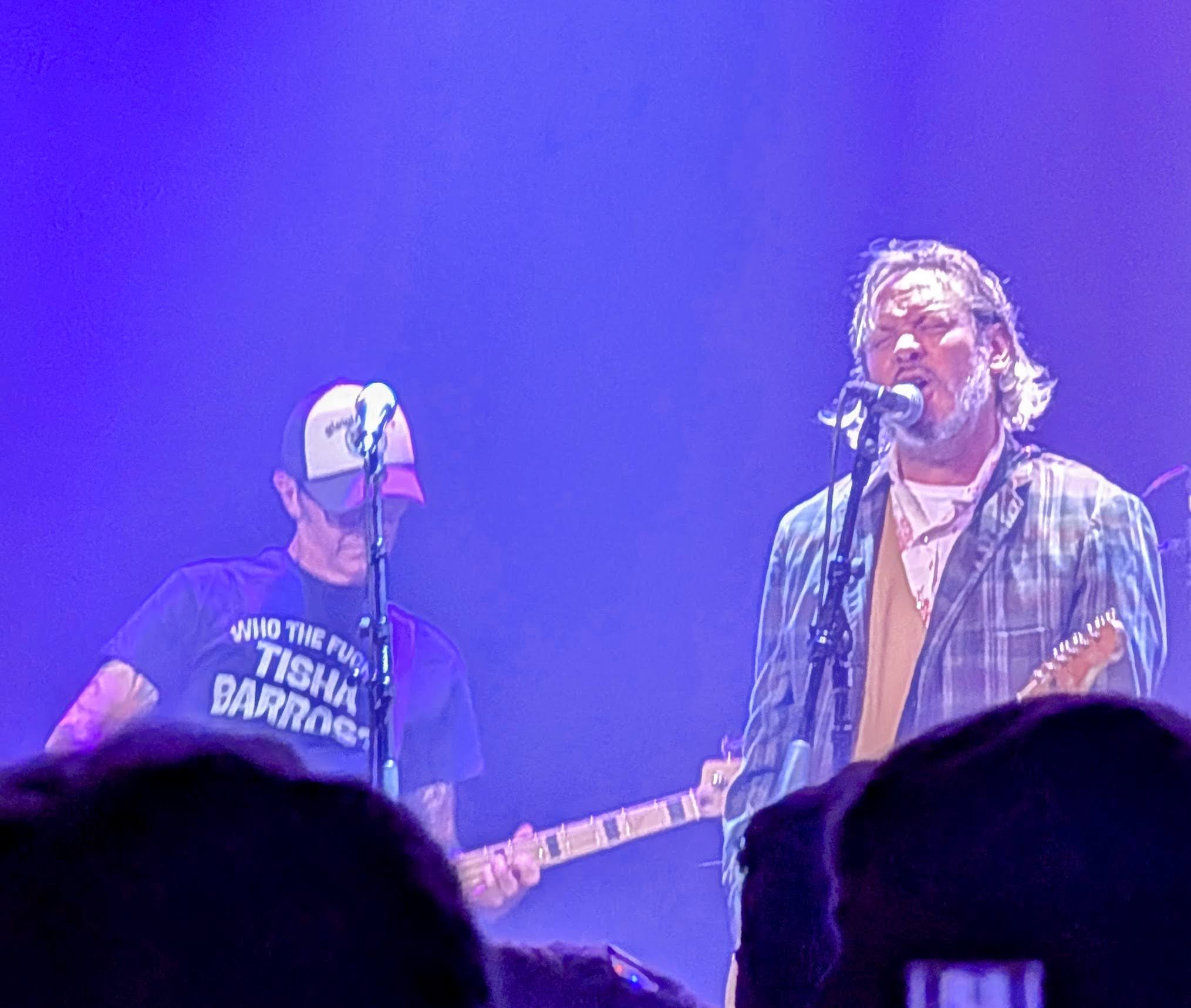
Lilybandits at Natalie’s Grandview
  • Dan Baird and Homemade Sin (Eastside Bowl, Nashville, 06/14/2025) – If the only thing this show gave us was the five minutes of Dan Baird and his killer band opening with the Open All Night highlight “Sheila,” with Baird’s grin and electric presence, it would have justified the six-hours drive each way, the hotel cost, all of it. But it gave us so much more. 45 minutes of blistering rock and roll, led by someone who, at 71, is outplaying and dancing rockers a third of his age. Also, this was a beautiful look in the way other scenes take care of their own, organized by Warner Hodges (Baird’s guitar foil in Homemade Sin, longtime lead player in Jason and the Scorchers), here leading his own band and sitting in with every other set in a benefit for his former Scorchers bandmate Jeff Johnson.
  • Sam Johnson and Noah Demland, Contrary Motion (Wild Goose Creative, 06/20/2025) – The second or third year in what I hope continues as a series exploring the history of Queer chamber music/new music featured new originals from organizers Sam Johnson and Noah Demland, classics of the canon from Pauline Oliveros and John Cage, and contemporary pieces from Caroline Shaw and Leilahua Lanzilotti by a tight ensemble of some of our best players. A brilliant glimpse of where this music is, how it got here, and how relevant it still is.
  • Say She She (Woodlands Tavern, 06/20/2025) – Finally got to see my favorite of the current neo-disco bands, NYC’s Say She She, and they tore the roof off Woodlands in a crowd full of people I mostly didn’t know (besides Anne and my Providence-based friend Daria, maybe we knew two other people in a nearly sold out room) all dancing in a sweaty, delirious mess. The reason I went from the show above to this show, but they got separate listings, is that they felt like very distinct events to me; they didn’t resonate against one another like the couple of shared line items.
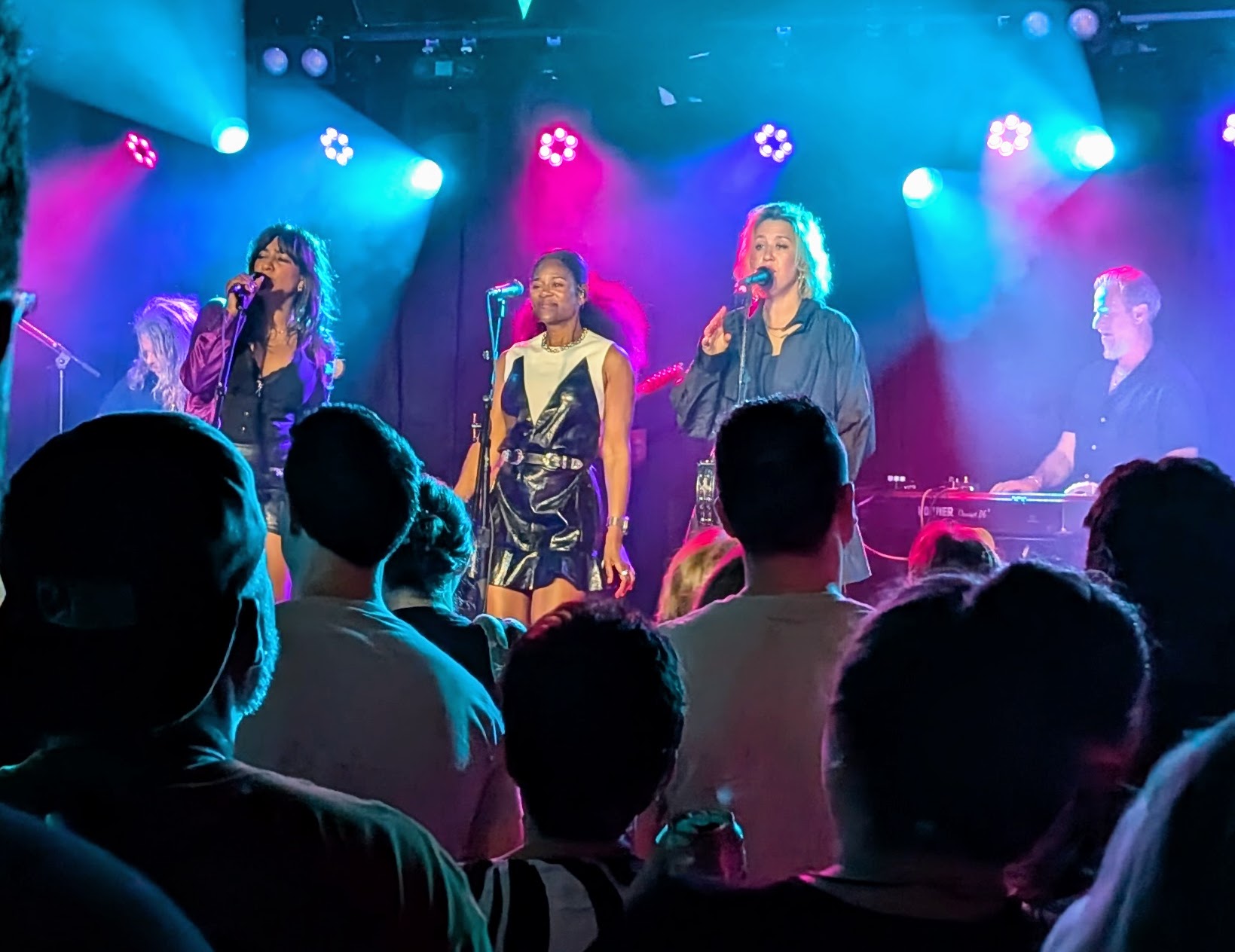
Say She She at Woodlands
  • Budos Band with Benny Trokan (Woodward Theatre, Cincinnati, 07/15/2025) – One of the great live bands I’ve seen in 30 years of seeing live music, Budos Band, retained their crown on a gorgeous summer night in a venue I hadn’t made it to in Cincinnati previously. Icing on the cake was Benny Trokan – who Anne introduced me to in his days with Robbers on High Street – with a tight, swinging four-piece going through the lovely smooth soul of his recent solo record.
  • Mike Dillon’s Punkadelick (Dick’s Den, 07/18/2025) – Columbus is lucky to get percussionist Mike Dillon coming through our fair city a decent amount, but what made this show special was the presence of New Orleans drummer Nikki Glaspie, who’s shared the stage with Beyonce, Ivan Neville, Snarky Puppy, and Nth Power. That powerhouse sense of the multiplicity of groove and the emotional content of the song took both sets I stayed for into outer space.
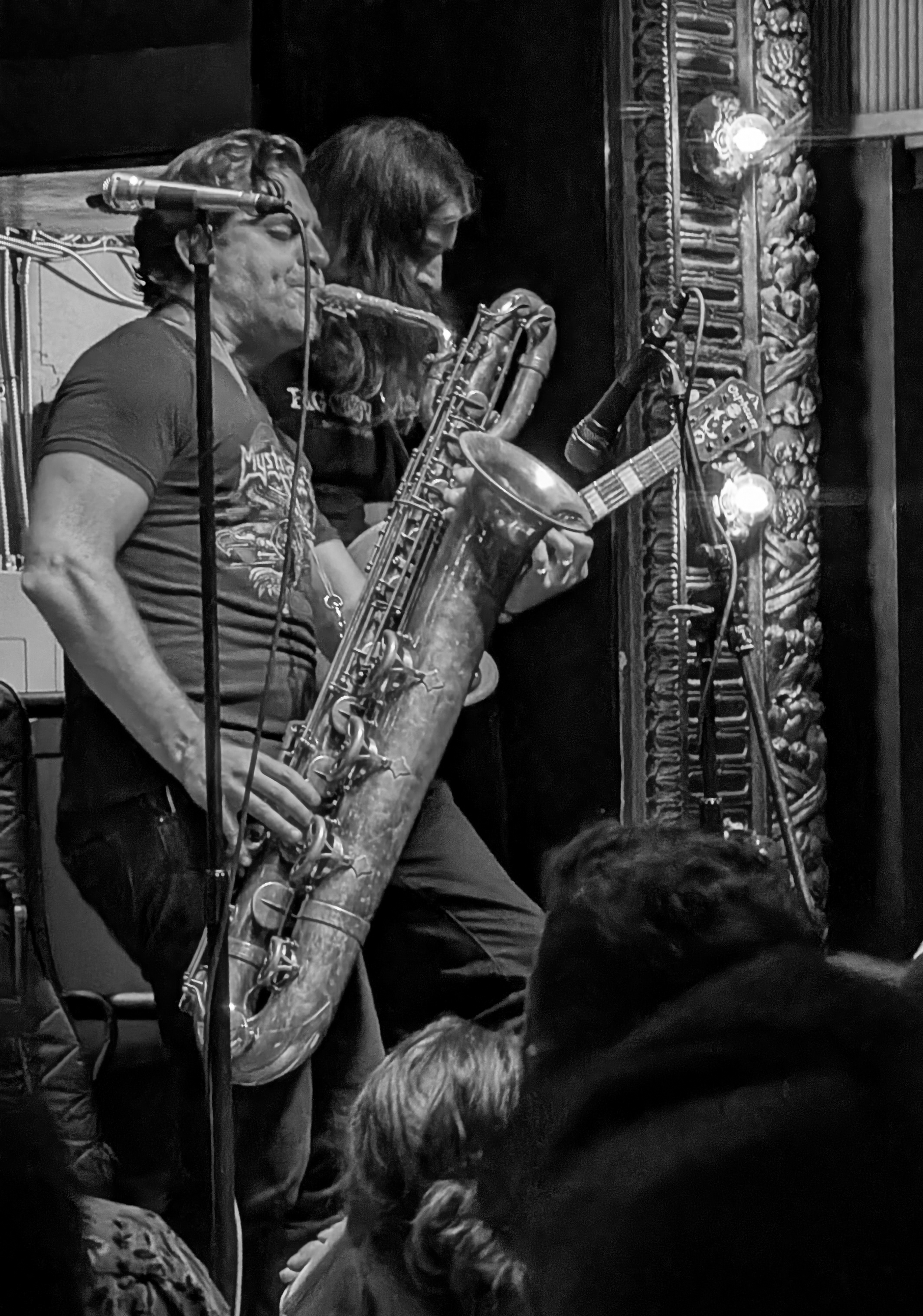
Budos Band at Woodward Theatre, Cincinnati
  • Vandoliers (Rumba Cafe, 08/12/2025) – I’d been a fan of the Vandoliers since their 2019 breakthrough Forever and this year’s Life Behind Bars was a revelation: simultaneously a reminder of what drove me so crazy about the alt.country/Americana scene in my teens and 20s and a broadening in the same sense as their Dallas forebears’ Old 97s’ Fight Songs and Satellite Rides. Similarly, this show was a gleeful, textured statement of purpose, with lead singer Jenni Rose’s songs detailing her coming out the other side of addiction and gender dysmorphia into a brighter place without sugarcoating any of the challenges, and the band – with one exception – having been with her the entire ride and still shouting together. As Anne said, “This is what all protest music should sound like: a party that also makes you want to smash shit.”
  • Mark Lomax II (Streetlight Guild, 08/28/2025) – I was lucky to see a few examples of one of our finest composers and drummers, Mark Lomax, in action this year, including a reunion with Scott Woods and his trio, and also missed a big premiere at the Wexner Center because I lost track of my schedule and didn’t buy before it sold out. But this rare solo drum recital, directly inspired by Tiffany Lawson’s What If I Told You It Was Freedom (look for more on that in my Art Exhibits Best Of) in Streetlight Guild’s smaller upstairs gallery space was a direct injection into my veins of his compositional strategies, his fingerprint-distinct approach to the drums, and about creativity in general as he discussed the pieces and personal history with Lawson and Woods.
Mark Lomax II at Streetlight Guild
  • Etienne Charles and Creole Soul (Wexner Center for the Arts) and Quintron and Ms. Pussycat with DANA (Cafe Bourbon Street), both 09/18/2025 – Two approaches to blending cultures and styles through a distinct lens of a life in art, both made exciting shows on this September night. Trumpeter/composer Etienne Charles led his phenomenal band through a selection of compositions drawing from jazz and funk traditions and his Trinidadian heritage to a rapturous crowd at the Wexner Center Performance space. A five minute drive away – we sadly missed Mutha Funk though I heard great things – Quintron and Ms. Pussycat celebrated their 30th anniversary as a rock-and-roll puppet show with homemade drum machines, greasy organ, and garage-rock hooks that’s had me in its hooks for decades and is still a show like nothing else and one I’ll never miss if I can help it.
  • Kid Congo Powers with Cheater Slicks (Grog Shop, Cleveland, 09/20/2025) – I did a lot of thinking about memory this year – I often do, but at 45 it felt pronounced – and seeing the great Kid Congo, a throughline of so much music I loved play a set bursting with memories of friends and colleagues he’d lost, including “The Boy Had It All,” “Sean DeLear,” “La araña,” “He Walked In,” and songs he’d played with bands many of whose members have slo passed on like The Cramps and The Gun Club, vibrated with those feelings and reminded me that you can carry those people with you in a jubilant way without diminishing how much it hurts. In addition, Cheater Slicks (longtime friends and mutual admirers of Powers) who have been on a streak the last two years, played one of the best sets I’ve seen them do in 30 years of seeing them semi-regularly.
  • Lorette Velvette with Deerfrance (Bar DKDC, Memphis, 09/26/2025) – The best musical side quest we’ve had in over a decade of going to Memphis with Gonerfest as the main course: Panther Burns legend Lorette Velvette on a double-bill with linchpin of John Cale’s Sabotage era Deerfrance in the intimate confines of Bar DKDC. Killing new songs from both artists, excellent bands including members of the Reigning Sound, Panther Burns, and the Memphis Symphony, and a gorgeous clinic of song.
Lorette Velvette at Bar DKDC, Memphis
  • Talisha Holmes and the Stardust (Dick’s Den, 10/03/2025) – I’ve been a fan of Talisha Holmes’ voice since High School and her singing and repertoire for almost 20 years, but the first show with the band she dubbed Stardust felt like a new chapter opening with ecstatic/spiritual jazz and folk textures into the thorny, dense R&B she does better than anyone else in town. It was an eye opening evening that got me extremely excited to see what’s coming next.
  • DANA with Messrs and DJ Adam Scoppa (Ace of Cups, 10/17/2025) – As seen in my records of the year, I thought DANA’s Clean Living was a triumph, and their constant touring schedule honed their most nuanced and powerful set of songs into a ferocious live set. Here, along with a rare reunion set from Columbus’ deconstructed hardcore heroes Messrs (including drummer Mat Bisaro playing like a monster while also going through a grueling round of chemo) and the sweet sounds of Adam Scopp’s Heatwave dance night made one of the most satisfying reminders of what I love about Columbus.
DANA at Ace of Cups
  • Robbie Fulks (Natalie’s Grandview, 10/18/2025) – Robbie Fulks is another artist who is no stranger to anyone who’s read this or talked to me, but what made this appearance at Natalie’s special to me was a return to the four-piece rock band format that made me fall hard in the first place, with drummer Gerald Dowd, bassist KC McDonough, and guitarist Robbie Gjersoe doing a setlist that returned to the first three records – and the excellent new one, Now Then – with one highlight after another.
  • Micah Schnabel and Vanessa Jean Speckman (Rumba Cafe, 10/23/2025) – A valedictory show for two artists who have done so much for Columbus in their performance home, Rumba, and a set that made my heart almost burst out of my chest.
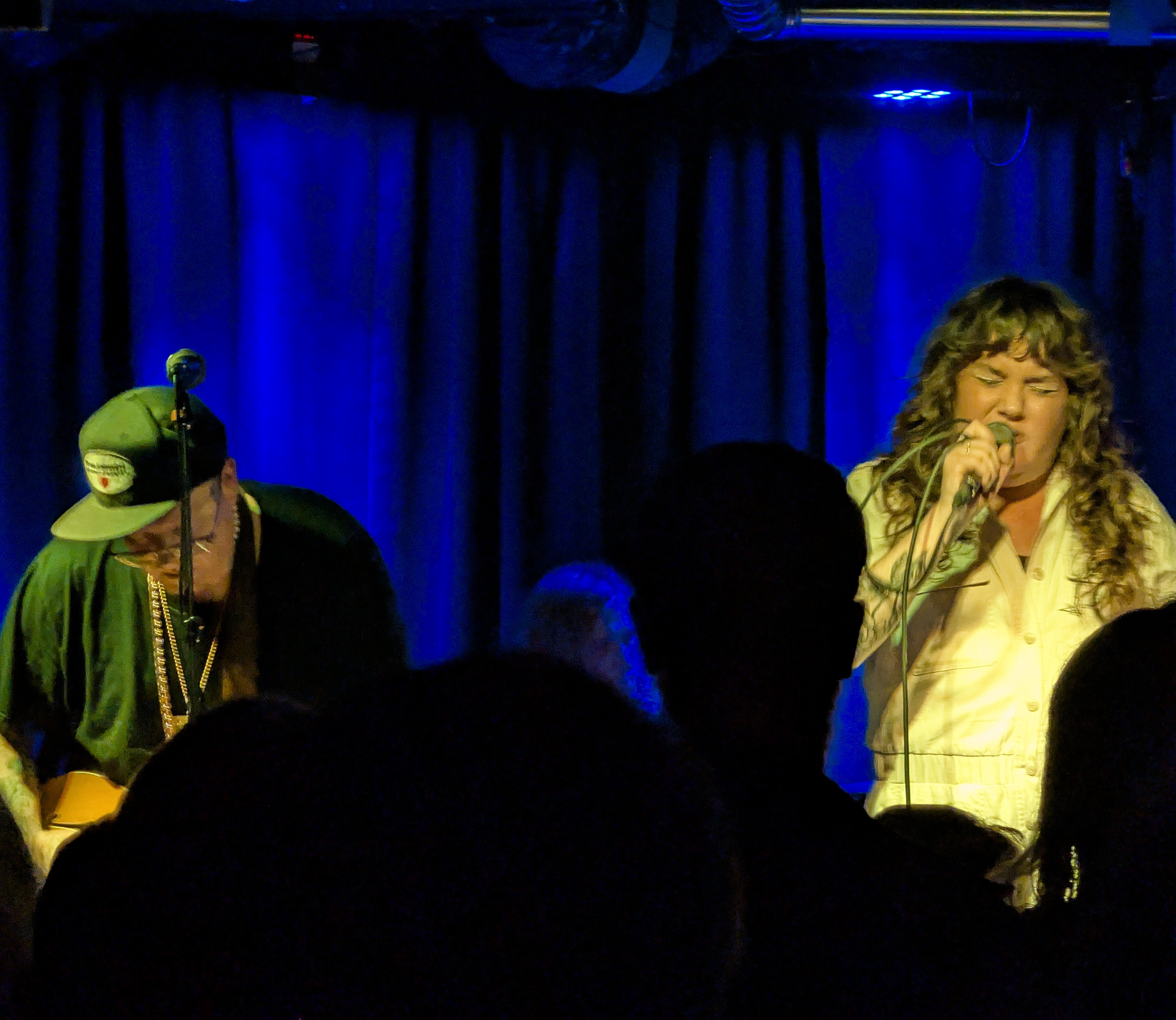
Micah Schnabel and Vanessa Jean Speckman at Rumba Cafe
  • Worthington Chamber Orchestra, Frontiers of Sound (Worthington United Methodist Church, 11/07/2025) – The Worthington Chamber Orchestra has a great series, and they continued to cement their place in the creative firmament of Columbus with commissioning the first violin concerto from Columbus native (now based in New York) Aaron Quinn, played by Devin Copfer (WCO concertmaster, Chamber Brews co-founder, Devi and Liz, Urban Art Ensemble) and the orchestra. The piece planted its flag in a truly American continuum, textures that felt like Ives and Copland, cascading harmonies that recalled some of the sticky synth layers of vintage Detroit techno, and a soulful bluesiness in the central violin line that still had all rigor you’d want to see from classical music.
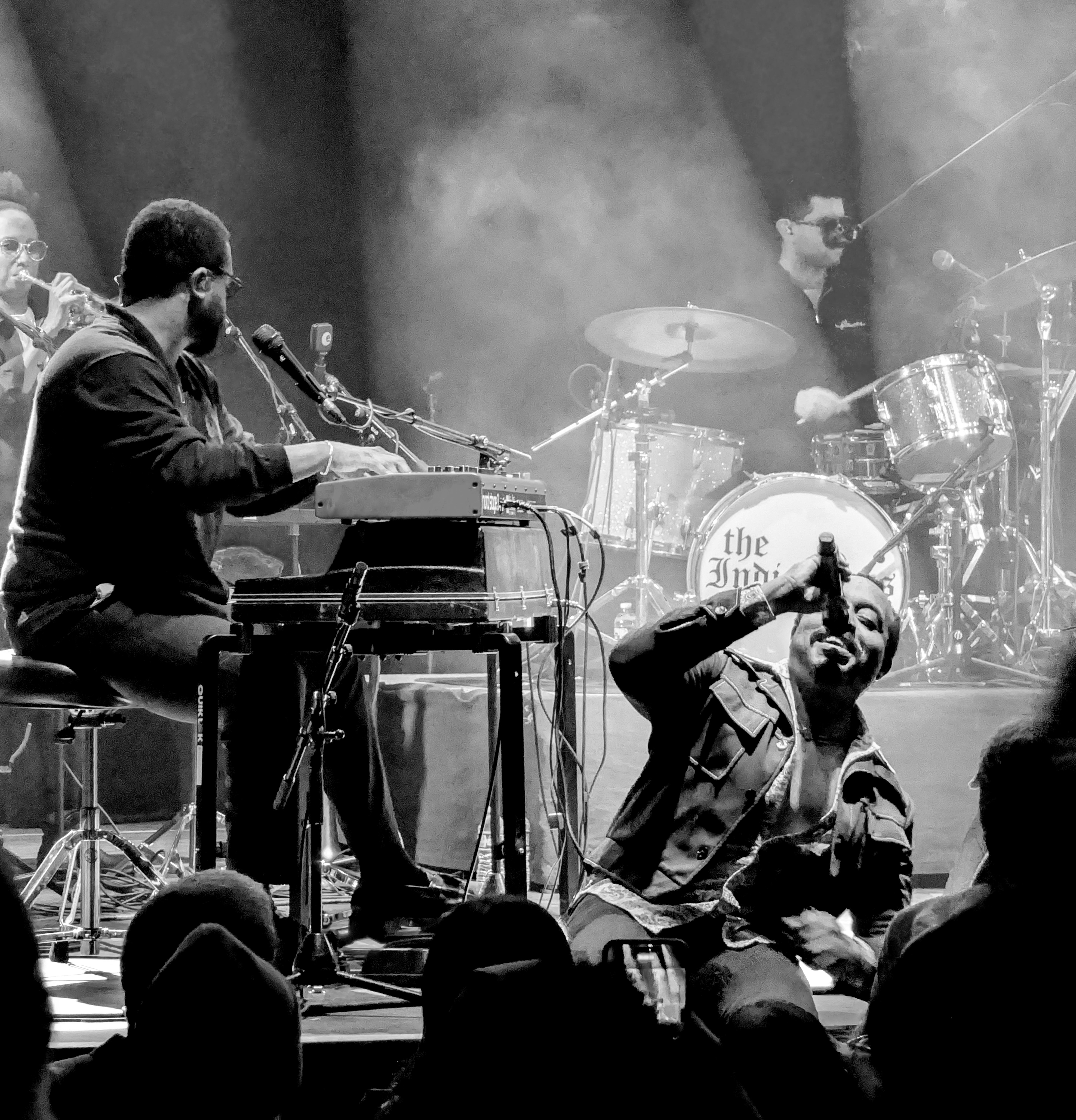
  • Durand Jones and the Indications with Psycodelics (Newport Music Hall, 11/09/2025) – The smooth soul of Durand Jones had a packed crowd at the Newport eating out of their palms with a sweaty, vibrant show that summed up what so many of us love about the genre while also serving as the entry point for so many younger people. Psycodelics did a muscular, fiery take on vintage sounds like EWF, Sly, and P-Funk that reminded me that music has a long future ahead of it.
  • Minibeast (Cafe Bourbon Street, 11/14/2025) – Peter Prescott’s Minibeast knocked me completely over, with sparking noise and 10,000-league-deep grooves. Also a reminder of how good Bobo sounds these days. Every nuance of that powerful, multifaceted sound washed over everyone in the room.
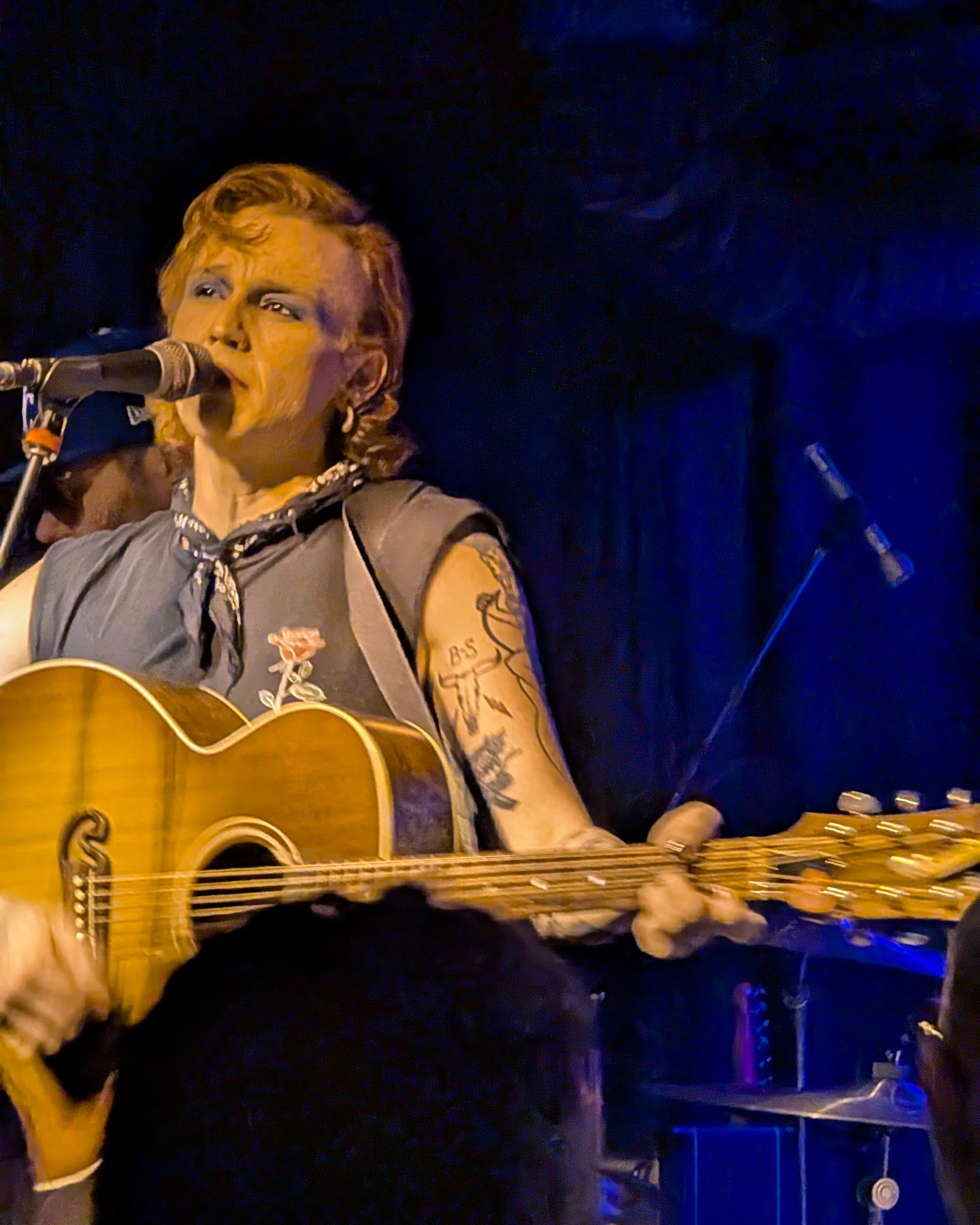
Vandoliers at Rumba Cafe

Top 20 Festival Sets

Ugly Stick at Natalie’s Grandview
  • Beachland’s 25th Anniversary (Beachland Ballroom and Tavern, Cleveland)
    • Mourning [A] BLKStar
    • Pull Chains
Mourning [A] BLKStar at Beachland Ballroom
  • Lost Weekend Records’ 22nd Anniversary (Natalie’s Grandview)
    • Ugly Stick
    • Thomas Jefferson Slave Apartments Featuring Mickey Mocnik
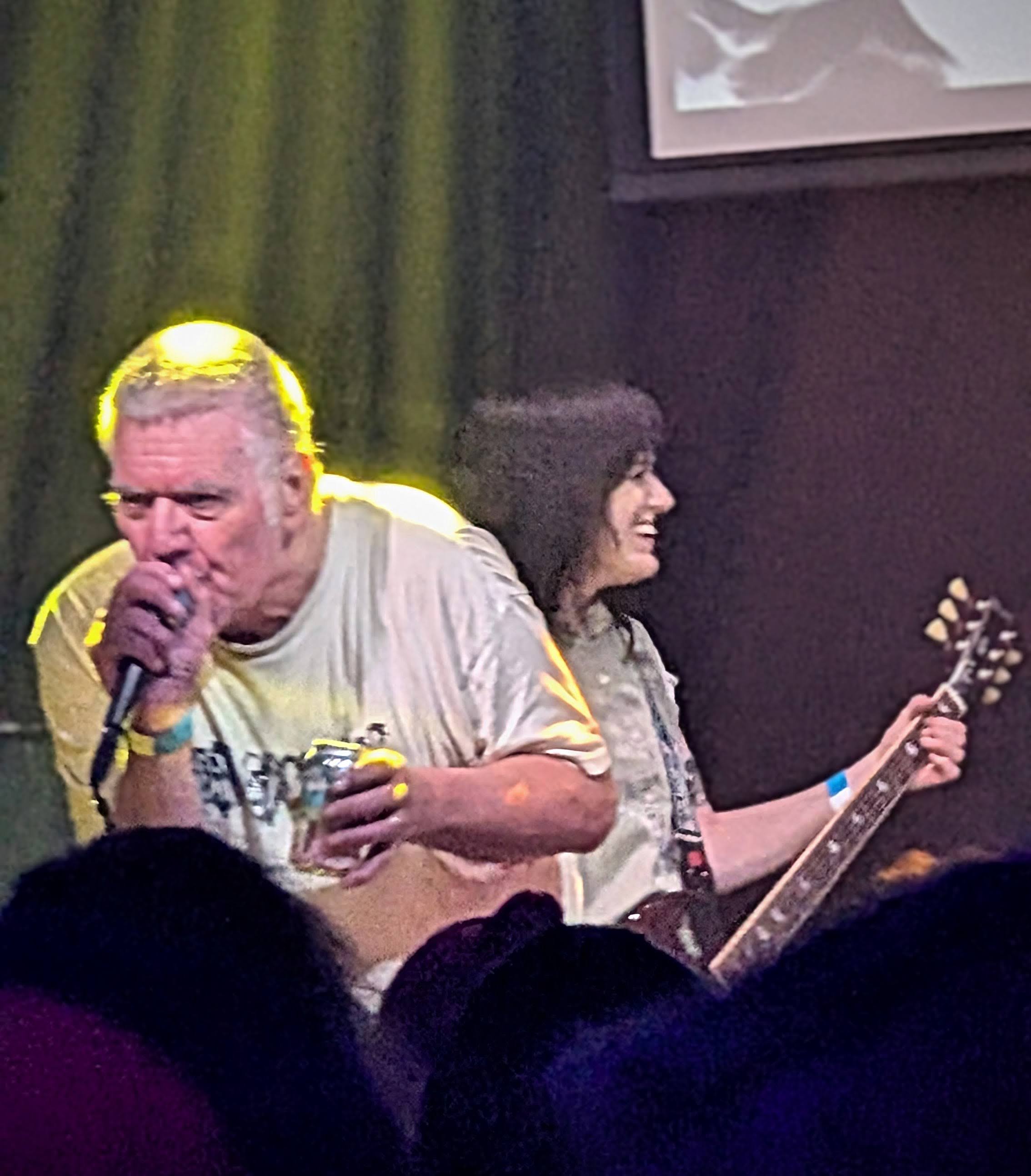
TJSA with Mickey Mocnik at Natalie’s Grandview
  • Big Ears Festival (Various Venues, Knoxville)
    • Kate Soper and Wet Ink Ensemble, Ipsa Dixit (Bijou Theatre)
    • Joy Guidry (The Point)
    • Tyshawn Sorey and DACAMERA, Monochromatic Light (Afterlife) (St. John’s)
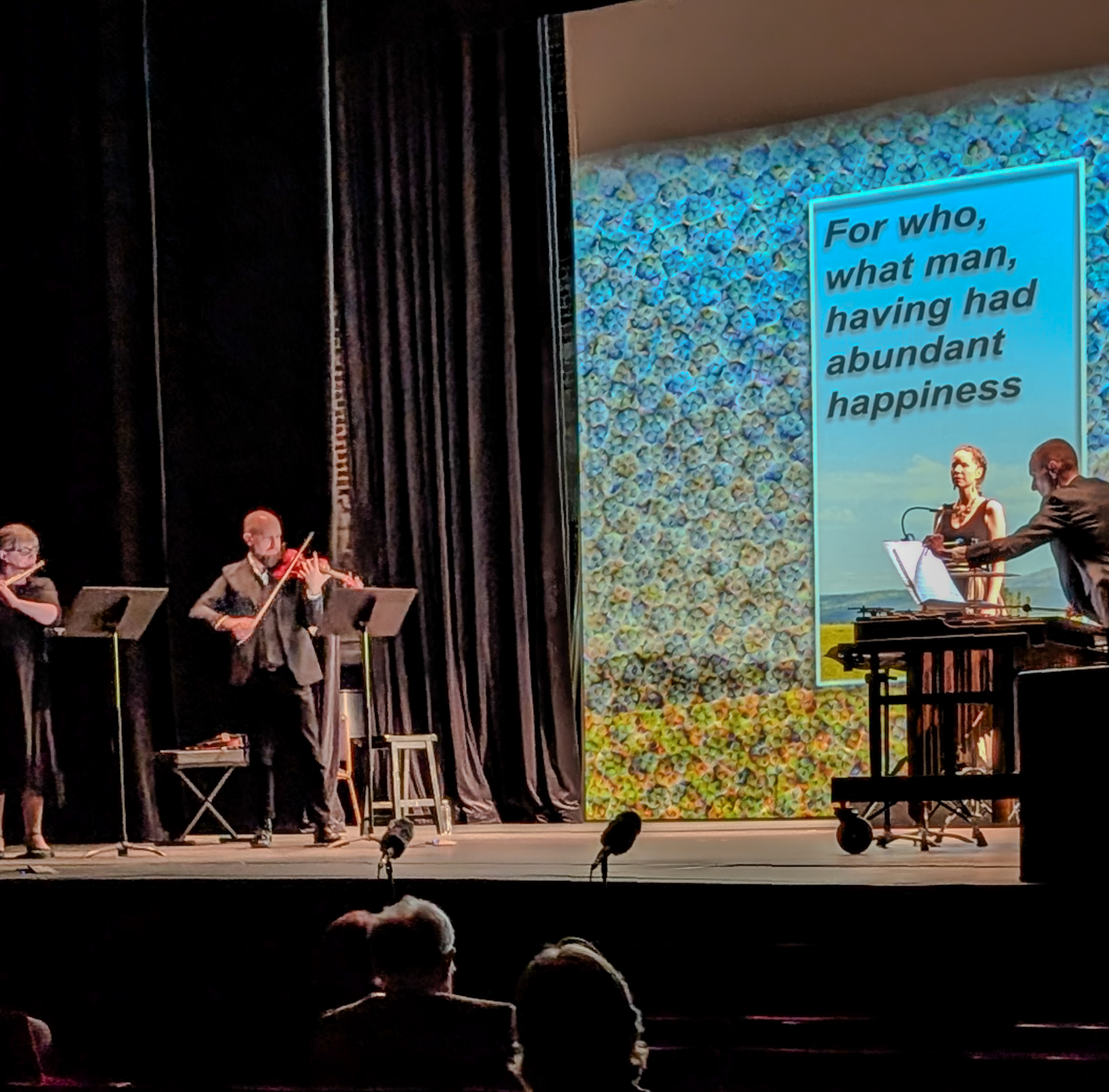
Kate Soper and Wet Ink Ensemble, Big Ears
  • Lee Bains III and Lonnie Holley (Barley’s)
  • King Britt/Tyshawn Sorey/Meshell Ndegeocello/Melz (Jackson Terminal)
  • SML (The Standard)
King Britt/Tyshawn Sorey/Meshell Ndegeocello/MELZ at Big Ears
  • Future Salad Days Opening (Blockfort Parking Lot)
    • Juanita and Juan
    • Clickbait
    • Cheater Slicks
Juanita and Juan at Future Salad Days
  • Jazz and Ribs Fest
    • Ron Holmes’ Eclecticism
Ron Holmes Eclecticism, Jazz and Ribs Fest
  • Gonerfest (Wiseacre Brewing, Memphis)
    • Pylon Reenactment Society
    • Lightning Bolt
    • Lothario
    • Cheap Fix
    • Des Demonas
    • TINA!!!
Des Demonas, Gonerfest
Categories
Best Of Playlist record reviews

Playlist 2022 – Parting Gifts

Probably the most popular or “popular” of the playlists I’ve done in the last few years, this is an acknowledgment of gratitude for people who made an impact on how I think about music, how I listen to music, contributed in a tangible way to songs and situations that gave me comfort or uplifted me. I’m sure there are people whose deaths I missed – and people I’m sure were important, but I didn’t have something to say about them.

And I want to take a moment to underscore that streaming is only a subset of what exists – Johnny Rebel (Sean Groves), who fronted Columbus mainstay Th’ Flyin’ Saucers, didn’t have anything available on Tidal but he’s one of the two of three people who meant the most to me in this category who passed this year. Similarly, Todd Flegle, who I knew best as a Taco Ninja founder but also did some excellent work behind the kit for several Columbus bands. A lot of people important to me died – musically, but also otherwise – this year, so let’s get down to it.

https://tidal.com/browse/playlist/bc999668-041a-4001-ba76-d0b33b32b2a8

  • Jaimie Branch, “Prayer for Amerikkka Pt 1 and 2 (Live)” (Jaimie Branch) – As I said on the earlier lists, each of them this year starts with Jaimie Branch. In the month after her death, I reached for this instant classic, this raging hymn, this unstoppable groove, this cri de coeur so potent you could see it from the moon. I reached out for comfort and catharsis. Just as I did when it came out. Just as I’m doing right now. We’ll miss you, breezy; I wish I’d gotten to know you better, and I’m grateful for that little time and for your work. “This is a warning, honey.”
  • The Spinners, “Rubberband Man” (Thom Bell) – I came late to the Philly soul stuff – my Mom grew up as mostly an R&B (with country a close second) fan, but it was mostly Motown and Stax around my house as a kid. But in interviews with Elvis Costello and other people, my young self was a big fan of talking about the Spinners and Harold Melvin and the Blue Notes, and especially on David Byrne’s Look Into the Eyeball that came out when I was 21, and my favorite songs were by the arranger I didn’t know well, Thom Bell, I went down a rabbit hole. Bell – with co-writers like the great Linda Creed on this song – created a whole sound world that feels familiar but also beautifully strange, and this extended track is a perfect example. The soaring melody and percussion fit together like silk cut into shapes that defy easy description.
  • Quincy Jones and his Orchestra, “Mohair Sam” (Dallas Frazier) – The great country songwriter Dallas Frazier was a constant presence through radio and my Grandmother’s record collection when I was a kid, especially the tribute to the funny pages’ time-traveling caveman “Alley Oop” and Oak Ridge Boys’ earworm “Elvira” but I always had an especially soft spot for the playboy anthem “Mohair Sam,” in its original recording by Charlie Rich, seeing the Texas band The Derailers do it at Little Brothers in my early 20s and a dozen other versions over the years. But this swinging instrumental adaptation from Quincy Jones might be the perfect distillation of the winking swagger and interesting twists and turns of the song.
  • The Supremes, “Love Child” (R. Dean Taylor) – I mentioned growing up with a lot of Motown as a kid, and then and now, some of my favorite stuff is the late ’60s and on, when they started venturing down new paths and fragmenting. This social justice tune from The Supremes was one of the songs I kept returning to on the Best Of, trying to make sense of it, and one of my perennial jukebox plays, written and produced by The Clan, including Taylor. (“Indiana Wants Me” damn near took this spot on the playlist)
  • Dean Martin, “Sleep Warm” (Marilyn Bergman) – After hearing Sinatra would sign off phone conversations with the exhortation to “Sleep warm,” I started doing the same in my late teens. I could have picked any of a dozen Marilyn Bergman songs written with her husband Alan and a variety of musical collaborators (Lew Spence here), but this original  (I think) Dean Martin version is a template for smooth ballads, of which few people ever came within striking distance.
  • Ronnie Spector, “You Can’t Put Your Arms Around a Memory” (Ronnie Spector) – Someone else whose voice defined American music for generations, and one of my most treasured memories was seeing her make a surprise appearance at Ponderosa Stomp for two of those classics. But when I think of her, my mind goes early to this Joey Ramone/Daniel Rey-produced EP that came out in the 80s and blew me away. For me, this is the definitive version of one of my all-time favorite Johnny Thunders songs, finding depths of heartbreak and swagger that no one else quite has.
  • Mtume, “So You Wanna Be a Star (12″ mix)” (James Mtume) – Someone who defined large swaths of music closer to my growing up, James Mtume. First from rippling percussion work on the ’70s Miles Davis records I love, then with his eponymous band doing some of the best disco and post-disco R&B work of anyone, and through sampling, into the hip-hop records I was buying as a young teen, most prominently the Notorious BIG’s “Juicy”‘s use of “Juicy Fruit.” I love everything on that Mtume best of what I picked up used as a kid, but this song was always my favorite from a career that gave me a lot to choose from. That bass/synth/drums breakdown toward the end excites me every time.
  • Stanley Turrentine with Milt Jackson, “Sister Sanctified” (Creed Taylor) – I’m not overstating things when I say we lost some heavyweights this year. Producer/label head Creed Taylor signed John Coltrane to Impulse, introduced bossa nova to America with the Getz/Gilberto collaboration in his time with Verve, and reoriented jazz toward funk without selling out either impulse in his brilliant ’70s run of CTI records. I hit up pally and funk whisperer Andrew Patton to suggest some of those funky CTI selections to choose from, as he knows the catalog better than I do, and he came back with a tight ten-song playlist that included this smoking version of a Weldon Irvine tune, led by soul jazz sax virtuoso Turrentine and vibes player Jackson over a fiery rhythm section of Bob James on piano, Cornell Dupree on guitar, Ron Carter on bass, and Billy Cobham on drums. The perfect example of its genre and still a dance floor filler.
  • Roland Shannon Jackson’s Decoding Society, “Dancers of Joy” (Charles Brackeen) – Leaning a little more toward the rocking/noisy side of the spectrum but another case of a jazz group pushing against the boundaries of genre at every turn. I’m sorry I never got to see drummer-leader Roland Shannon Jackson, or the stunning sax player we’re highlighting here, Charles Brackeen, but these records hit me like a bomb and brought together so many artists I did go onto see and follow like Melvin Gibbs, Billy Bang, and Vernon Reid.
  • Funkadelic, “Standing on the Verge of Getting it On” (Calvin Simon) – The early, anarchic Funkadelic was the part of George Clinton’s catalog I gravitated toward first, and the unhinged wildness with silky smooth vocals was the principal animating element for me. One of the key vocalists on these wild early records was the great Calvin Simon.
  • Sounds of Liberation, “New Horizons (Back Streets of Heaven)” (Khan Jamal) – Vibraphonist Khan Jamal walked a similar line between fiery free jazz and an unshakable sense of melody, exemplified by this spiritual jazz/R&B classic with the collective Sounds of Liberation.
  • Bloodstone, “Never Let You Go” (Charles McCormack) – On the smoother side of the early black rock movement, these Bloodstone singles are still some of the freshest R&B, led by singer Charles McCormack. The crunch under the sweetness of this song epitomizes what I love so much about this band.
  • Force MDs, “Tender Love” (Jessie Lee Daniels) – This super-soft R&B ballad written by Jam and Lewis with doo-wop style throwback harmonies felt out of place on the Krush Groove soundtrack, but it still holds up as does, for me at least, the first few Force MDs records. I’m delighted whenever I hear them on a jukebox or the radio.
  • Detroit Cobras, “Baby, Let Me Hold Your Hand” (Rachel Nagy) – Rachel Nagy was a force of nature, one of those lead singers you couldn’t take your eyes off; you couldn’t forget from the first moment you saw her. And her band, the Detroit Cobras, with guitarist Mary Ramirez and a rotating cast around the two-woman core, hit a particular sweet spot for me with roughed-up rock and roll versions of classic R&B you weren’t likely to hear anywhere else live. This take on a Hoagy Lands chestnut written by Bert Russell and Wes Farrell immediately became my definitive version.
  • Ohio Players, “Funky Worm” (Greg Webster) – From the Dayton soul and funk axis, the Ohio Players made the biggest and most long-lasting impact. Original drummer Greg Webster left before the band’s biggest chart successes, but this early classic shows off the humorous irreverence of the band fused to tight interplay and the rhythmic template, the shifting, and supple drums, that launched them into the collective musical consciousness.
  • Meat Loaf, “Two Out of Three Ain’t Bad (Hot Summer Night)” (Meat Loaf) – Bat Out of Hell was – may still be – one of my Mom’s favorite records and I remember driving in her car listening to this cassette a lot when I was young. The Jim Steinman songs and Todd Rundgren production created a dazzling Las Vegas revue of a Springsteen burlesque and my favorite songs off it are the most overheated, the most audacious in their heart-on-my-sleeve gushing and boldness; this one, with the hilarious spoken word intro, is probably first among equals on this record that does exactly what it’s trying to do and provides a perfect showcase for Meat’s inimitable voice at the crossroads of musical theater and ’70s arena rock.
  • Little Willie John, “I’m Shakin'” (Philip Paul) – Cincinnati’s King Records produced some of the definitive statements of R&B and country music on the cusp of the two giving birth to rock and roll, and after, and it doesn’t get much more definitive than this Little Willie John lust anthem that still leaves 90% of records on this subject matter back in the dust. A big reason for that energy and staying power is drummer Philip Park who provides the engine behind so many classics out of the King studios, like Hank Ballard’s “Sexy Ways” and Freddie King’s “Hide Away.” He set the standard for drums, making it almost impossible to stay in your seat.
  • The Lilybandits, “(Oblige Me) Mrs. Wilson” (Keith Smith) – Another drummer who moved the world for me personally and in my localized scene is Keith Smith. The Lilybandits galvanized a growing alt.country/Americana movement when Columbus had a load of those bands and provided a key conduit connecting the scenes of various towns; the Drive-By Truckers still name-check this band. The great songs of Jason “Jose” Gonzales and Todd May, May’s wrenching lead vocals, and Bob Hite’s history-of-all-music piano all sat on top of one of our finest rhythm sections, with Trent Arnold on bass and Keith Smith on drums. I’m still proud to call Todd and Trent my friends and the great sounding reissue of their perfect first record Shifty’s Tavern (which I couldn’t find for years, only the damn fine second album 33 1/3 until I stumbled upon a used CD in St Louis) hit sadly just in time for Smith’s untimely death. This track is rich with his idiosyncratic but rocking approach with surprising fills and left turns.
  • Roy Hargrove Big Band, “Mambo for Roy” (Montez Coleman) – Continuing the playlist’s drummer streak, St Louis-born drummer Montez Coleman held down the drum chair for Roy Hargrove during some of the trumpeter’s most thrilling work as well as providing exquisite drumming on great records by Rufus Reid, Russell Malone, Bruce Barth, and others. This big band record felt like a revelation to me when I heard it in the late 2000s, and a big part of the reason is Coleman’s intense rhythmic footprint.
  • The Five Satins, “A Night Like This” (Fred Parris) – As lead singer, high tenor, and writer of most of their big hits, Fred Parris made the Five Satins superstars in the late 50s doo-wop scene, and these records still sound so beautiful.
  • Grandmaster Flash and the Furious Five featuring Melle Mel, “The Message” (Duke Bootee) – Songwriter Duke Bootee crafted this song that, in Melle Mel, is one of those all-time perfect pairings of vocalist and composer, and created a towering classic and one of the first hip-hop social commentary records, broadening the perceptions of the then-nascent genre.
  • Miles Davis, “Ife” (Badal Roy) – Badal Roy helped bring the tablas into jazz with his work on the Miles Davis sessions that produced On the Corner, Big Fun, and Get Up With It. This track off Big Fun, a personal favorite of mine, shows the melodic drums used as a color and as key syncopation, a foil for Michael Henderson’s bass in particular and the two drummers as well as James Mtume’s percussion.
  • John Cale, “Dying on the Vine” (Bob Neuwirth) – Bob Neuwirth’s Zelig-like career is begging for a full biography, connecting Bob Dylan, the Warhol crowd, later inheritors like Patti Smith and John Cale, co-writing the Janis Joplin classic “Mercedes Benz.” My favorite piece of his recorded work is this collaboration with Cale, which I first heard on a similar solo tour that gave us the beautiful Fragments of a Rainy Season and went back to check out Last Day on Earth. This song landed hooks in me as a teenager, and with every phase of my life, it speaks to me.
  • Bosq Y Candela All Stars, “Balancea” (Hector “Tito” Matos) – The great percussionist Tito Matos isn’t as well recorded as you might suspect, but everything I’ve heard of him is fantastic. This Matos co-write with producer Ben Woods from this supergroup comp is a highlight to set any party off with Matos’ various percussion as the beating heart of a horn-drenched rager.
  • Theotis Taylor, “Something Within Me” (Theotis Taylor) – Georgia-based preacher, pianist, and singer Brother Theotis Taylor started recording in the ’70s, but I wasn’t aware of his work until the beautiful record on Big Legal Mess this stands as the title track of, sensitively produced by Bruce Watson with playing from Jimbo Mathus, Will Sexton, and Liz Brashear among others, it’s a shining example of deep gospel.
  • Syl Johnson, “One Way Ticket to Nowhere” (Syl Johnson) – It’s almost impossible to pick a single song from one of the 20th century’s greatest soul singers, Chicago’s Syl Johnson. As much as I love classics like “Different Strokes” and “Is It Because I’m Black”, I knew I had to choose something from his own Twinight records because the Numero box set exposing me to more of that material took me from being a fan to a superfan, and the Numero revue the Wexner Center brought to the Lincoln with JC Brooks and the Uptown Sound as the backing band is still one of my most treasured live musical experiences.
  • Elza Soares, “Saltei De Banda” (Elza Soares) – I found Brazilian samba legend Elza Soares a little later than Caetano Veloso, Gilberto Gil, Gal Costa (also sadly on this list) but as soon as I heard her funky samba fusion records and her punchy, conversational vocal delivery I understood the BBC calling her one of the two female singers of the millenium. A singer and bandleader for all times, with a plethora of great songs like this party starter.
  • To Live and Shave in LA, “Song of Roland and A Single Thumbscrew Curl” (Tom Smith) – Through my college years and a little after, the noise scene was really popping off in Columbus, and Tom Smith’s wide-ranging collective To Live and Shave in LA were seen as spiritual forefathers by several people I talked to in that scene. Records that still feel as vibrant and exciting to me as they did then and I treasure the one time I was able to see a lineup of them live.
  • Fred Van Hove, “Suite 1.2.3/2 Het Steven om niet vertrapt te worden” (Fred Van Hove) – I believe I first heard about the Belgian pianist and free jazz pioneer Fred Van Hove through the Chicago writer John Corbett’s Extended Play, maybe my musical bible for a number of years, and once I found the work I fell in love with it instantly. A touch and an approach to organizing ideas not quite like any piano player I’ve ever heard and just as fresh as the first time I heard him and he blew my mind.
  • George Crumb, “Variazioni” (George Crumb) – I wanted to include Crumb’s landmark string quartet “Black Angels” which I saw a few years ago at the VIVO festival and it still retained its power to shock and stun as it had in the ’70s, but every streaming version I could find was broken into such small chunks I didn’t think it gave the right picture. So in digging, I fell in love with this recording of Variazioni by the Louisville Symphony and I think it’s a magical, mysterious work, using dynamics to really lead the listener on a journey.
  • The Ventures, “Walk Don’t Run” (Don Wilson) – Another marvel in dynamics and the power of using limited elements to maximum effect, the indelible riff of this standard-bearer for instrumental rock and the swinging, loose rhythm still rocks as hard as anything I can think of, propelled by co-founder Don Wilson’s perfect rhythm guitar.
  • Bob Dylan, “Maggie’s Farm (Live)” (Sam Lay) – Drummer Sam Lay was among a handful of musicians who established what I think of as the rhythmic conception of Chicago blues. I love his Howlin’ Wolf singles and his long relationship with Muddy Waters but I really wanted to draw from the Magic Sam Live record on Delmark which I heartily recommend and applaud the label’s decision to only have a couple of tracks available for streaming but I don’t love either of those two songs – then it hit me, this righteous live read of “Maggie’s Farm” from the soundtrack to Scorsese’s Dylan documentary No Direction Home. That beat, between a train beat and a shuffle, is iconic and gives this song I love in most of its forms a raw, raucous energy not found in most of the other occurrences.
  • John Patton, “Memphis” (Leroy Williams) – I love soul jazz, particuarly the work of organist John Patton who always had killer bands and let everyone playing with him shine. Drummer Williams also enlivened great records by Junior Cook, Barry Harris, the underrated ’70s Andrew Hill albums, but this session weirdly not released until the ’90s is a brilliant showcase as he locks in behind Patton’s B3, James “Blood” Ulmer’s guitar, and Marvin Cabell’s sublimely greasy tenor.
  • Tom T. Hall, “Mama Bake a Pie, Daddy Kill a Chicken” (Hargus “Pig” Robbins) – Another player whose piano work defines the sound of so much American music I love it’s impossible to imagine the landscape of music without it, Pig Robbins features in popular music to a deserved but surprising degree from great digressions from Bonnie “Prince” Billy in the Alan Licht book (and I probably would have drawn from Sings Greatest Palace Music if it were on this streaming service). His work on Tom T. Hall’s 100 Children album is a high water mark for music serving the song and his delicate background piano work accentuates the heartbreak on this quintessential Vietnam protest song.
  • Susan Graham, “For Poulenc” (Ned Rorem) – I knew Ned Rorem’s commentary and published diaries before I heard any of his prolific output as a composer, but once I redressed that error I knew why he was considered one of the greatest practitioners of the art song in American history. This piece, with a lyric written specifically for Rorem by his friend Frank O’Hara for another friend of his, Francis Poulenc, is interesting in how it sidesteps a lot of obvious French tropes and its bone-deep intimacy, given a magical reading by Susan Graham from what’s still my favorite collection of Rorem songs.
  • Norma Waterson, “Strange Weather” (Norma Waterson) – I’m as big a fan of Norma Waterson’s, of the first family of British folk music, interpretations of traditional music as anyone. One of my favorite musical moments of all time was seeing her as part of Waterson:Carthy which included her husband Martin Carthy and their daughter Eliza at the old Thirsty Ear club. But I have a special love for those cases where she finds a contemporary song she loves as much as those classics and really digs her teeth into it, and this duende-drenched take on Tom Waits’ “Strange Weather” from her duo record with daughter Eliza is a favorite example of her working in that mode.
  • Mark Lanegan, “Methamphetamine Blues” (Mark Lanegan) – Using a little more machine colors to dig into a similar tempo and a variation on the same existential melancholy as the last couple of tunes, this was one of my two or three favorite songs off my favorite Lanegan solo album, Bubblegum.
  • Betty Davis, “If I’m in Luck I Might Get Picked Up” (Betty Davis) – Betty Davis’ off-kilter, hard as nails funk records are always good for revving up a party and for marveling that the major label system let such a strong, individual voice break through even if it didn’t know what to do with her.
  • The Sadies featuring Kelly Hogan, “1,000,002 Songs” (Dallas Good) – The Sadies were one of the greatest live bands I ever saw, in venues from New York’s Mercury Lounge to Cleveland’s Beachland to Columbus’s Rumba they never phoned a damn note in. Singer-guitarist Dallas good shines on this charming, bitter duet with the great Kelly Hogan on a record that set a benchmark for live  rock albums, In Concert.
  • Missing Monuments, “Another Girl” (King Louie Bankston) – King Louie got most of his acclaim in supporting roles – the band Bad Times with Jay Reatard and Eric Oblivian, drumming in the rockingest version of Nola institution the Royal Pendletons, co-writing most of the Exploding Hearts’ classic Guitar Romantic, and sitting in with countless people (I fondly remember a terrific set by Greg Cartwright in the Cooper-Young Gazebo with Louie on drums for most of it). And any of us in or around the garage punk scene have a great Louie story: he showed up for other bands, he showed up for the party, he always had a kind word for you. I always loved the projects where he came out front and center, especially the Missing Monuments of the last decade. This single on Hozac, with  their core lineup of Aaron Hall from EyeHateGod and Julien Fried from Detonations, is a particular favorite of mine (though my favorite of their records, Painted White, is not on this streaming service – go find that if you don’t already know it), his pop sensibility coming to the fore with enough punk roughness to make it move.
  • Bobby Rydell, “The Joker” (Bobby Rydell) – I have an enormous soft spot for overly dramatic early ’60s pop – another holdover from my Grandmother who probably would have said “Volare” was her favorite Rydell but I definitely heard this song as a kid around her house – and no one did it better than Bobby Rydell.
  • The Temptations, “Ain’t Too Proud to Beg” (Joe Messina) – Anne’s favorite Motown song and definitely in my top five. I remember the year it felt like everyone I knew saw Standing in the Shadows of Motown in the theater and came back talking about the Funk Brothers, with good reason. Obviously, the James Jamerson bass line is the star of this production – neck and neck with David Ruffin’s scorching vocal – but it’s a perfect case study in how important every single element is, if you took away Messina’s tight rhythm guitar, everything would fall apart, and he did that on more songs than I even know about.
  • Timmy Thomas, “I’ve Got to See You Tonight” (Timmy Thomas) – One of the templates for the southern soul subgenre, going from playing keys with Donald Byrd and Cannonball Adderly to writing and producing ’90s R&B classics for LaFace and writing and singing one classic after another over the years. This is a prime example of his flexible, dipping and surging voice using the tension with the straight-time drum machine in a really interesting way.
  • Traci Braxton, “Last Call”  (Traci Braxton) – I grew up knowing Traci Braxton as a backing vocalist on her singer Toni’s record, singles I loved, but it didn’t know her own work until I heard this and it blew me away. The way her voice plays with that rhythm, working toward a perfectly calibrated effect, is like watching a beautiful magic trick with heartbreak at its center. “So baby, how we gonna do this? Why you got me so elusive?”
  • Dennis Gonzalez and New Dallas Sextet, “Hymn for Mbizo” (Dennis Gonzalez) – Trumpeter-composer Gonzalez coaxed some giants out of the woodwork for this 1987 album, including saxophonist Charles Brackeen. With an all time rhythm section of Malachi Favors and Alvin Fielder, this is one of the strongest counterarguments to the received wisdom that the young lions, the burgeoning downtown scene, and the last gasps of fusion were the entirety of jazz in the ’80s. And beyond that counternarrative, it’s stil stirring, remarkable music.
  • Ron Miles, “Darken My Door” (Ron Miles) – I first knew trumpeter Ron Miles through his work with the Bill Frisell Quartet when I was in High School and every record he every put out – as a leader or a sideman – was something to treasure, and I was extremely lucky to see him several times over the years, including a jaw-dropping set at the Wexner Center with Still Dreaming alongside Joshua Redman, Scott Colley, and Brian Blade; and a dazzling trio Bangs with Jason Moran and Mary Halvorson at Big Ears (and was sorry to miss the impromptu tribute set at Big Ears this year though I was glad it was because every seat in that theater was filled). This 2016 record, I Am A Man is a personal favorite of his later work, with a quintet of players he knew extremely well – Frisell, Moran, Blade, and Thomas Morgan – sinking into these rich, heartbreaking compositions.
  • Mira Calix, “Le Jardin De Barbican” (Mira Calix) – In my early 20s I went deep into the rabbit hole of electronic music, especially almost anything the Warp label released. Early in that rabid fandom I saw Mira Calix open for Plaid at the Wex and her set was so breathtaking I barely remember Plaid playing; I already had the one record of hers that was out at the time but I kept watching for anything she did going forward. She was also one of the early examples I was aware of, of artists working in multiple media, picking up the torch of a lot of examples I grew up reading about but with a contemporary slant. This piece – from the 2004 record 3 Commissions – was commissioned for the reopening of the gallery space in the Barbican and when I finally visited London some 14 years later – thank you to Anne for that final push – walking up to the Barbican stirred up some nascent memories of this beautiful piece, and I was down the rabbit hole again.
  • Philip Jeck, “Pilot/Dark Blue Night” (Philip Jeck) – Another composer who mainly worked with electronics and turntables, and who did much of his work with dance pieces, installations, galleries, those Philip Jeck records in my late teens and early twenties opened up whole possibilities of music for me, and he kept making dark, intriguing, sui generis records the rest of his life.
  • Radu Lupu, “Brahms: Op. 119 – Intermezzo In B Minor” (Radu Lupu) – Classical music was a later in life thing for me, I spent too much of my life being intimidated by it, feeling like I had to know something. Once I started to get past that, one of the first piano players I gravitated toward was Radu Lupu. This Brahms recording has – for me – some of the same mystery as the Calix and the Jeck I placed it after, though I’ll never know enough to say if it was an influence.
  • Kenny Garrett, “Night and Day” (Charnett Moffett) – Growing up, Kenny Garrett was one of my favorite alto players, discovering him in the ’90s and working backwards – these late ’80s record always seemed to be in various used record stores – and this Triology blew me away. I want to saw I got it at the same time as Ornette Coleman’s At The Golden Circle Vol. 1, not realizing the bassist on most of the Garrett, including this beautiful take on one of my favorite Cole Porter songs, was the son of Charles Moffett who played drums on the Coleman. I never heard a bad Charnett Moffett bass line – ever – but the melodic groove he kicks up on this, and the hookup with Garret’s alto and Brian Blade’s drums is so gorgeously heavy, it still blows me away.
  • Alarm Will Sound, “Carmen Arcadiae Mechanicae Perpetuum” (Harrison Birtwistle) – I got into 20th century classical/new music far before the canonical greats; the use of dissonance and rhythms that sounded like life when I walked outside were easier for me to grasp at first. Almost no group did more to turn me onto some of my favorite composers than Alarm Will Sound and their take on this 1977 piece by the great Harrison Birtwistle is a masterclass in repetition and transformation.
  • Klaus Schulze, “Minority Report” (Klaus Schulze) – The early German electronic music was always intoxicating and perplexing – it evokes an emotional response, a sense of dread and also hope – that I don’t get out of the new age music it shares a lot of tonal commonality with, and high on that list for me was always Klaus Schulze. Part of the appeal was the science fiction references he played with; I found his work while reading a lot of that stuff, like the Philip K. Dick story this title references but the music still holds up in a way most of the work that signifies those childhood heroes of mine does not.
  • Kid and Khan and Julee Cruise, “Say Good Bye (Losoul Mix)” (Julee Cruise) – Kid Congo Powers is a constant inspiration for the way he keeps moving from project to project, guided by working with people he loves and his enthusiasms. I love these electronic collaborations with Khan but this has a special place in my heart because the one time I got to see the great Julee Cruise live was at a Kid Congo release show at Tonic where he played taffy-like slide guitar pieces behind her (and another accompanist with a laptop); not only did I get to hear a voice I’d loved since getting turned onto David Lynch as a kid but I got to understand something about camaraderie just a little bit better.
  • NG la Banda, “La Bruja” (José Luis “El Tosco” Cortés) – Continuing the uphill slide into dance music, flutist Cortés led this Cuban group after leaving international sensations Irakere and invented an entire genre, timba music.
  • Earth Wind and Fire, “Africano” (Andrew Woolfolk) – I love the EWF hits (I’ve said repeatedly that jukebox staple single disc Greatest Hits is probably single greatest Greatest Hits comp of the 1970s, among stiff competition) but I love an excuse to go into the albums and find some deeper cuts. This groove monster from That’s The Way of the World is a brilliant showcase for sax player Andrew Woolfolk, crucial on almost all of their records from the classic period but particular featured here, check that solo.
  • The Judds, “Mama He’s Crazy” (Naomi Judd) – Nobody cast a longer shadow over country music when I was a kid than the mother and daughter duo of Naomi and Wynonna, The Judds. This Kenny O’Dell-penned molasses-slow ballad seemed like it was on the radio constantly as a child (it came out when I was 4, on their first record) and set a standard for one massive hit after another that I love and still remembered every lyric to when I went looking for a song for this playlist.
  • The Saints, “Swing For The Crime” (Chris Bailey) – The Saints are among the million bands my friend Blue turned me onto over the years. I already had and liked Stranded but the more expansive Eternally Yours and especially the horn-soaked Prehistoric Sounds this swinging rager leads off, blew my mind. I could probably count the number of party mixes that didn’t include this or the same album’s “Every Day’s a Holiday” and Bailey’s sneering punk lounge lizard voice retained its power through my seeing him front a later version of The Saints in the early 2000s.
  • Mickey Gilley, “Don’t the Girls All Get Prettier at Closing Time” (Mickey Gilley) – Gilley didn’t cast quite as large a shadow on music as his cousin Jerry Lee Lewis but he brought a kind of citified sophistication in his records, his stage show, and the club that bears his name kicking off the Urban Cowboy movement, and made a slew of phenomenal neo-honky tonk records that still sound good when the lights are coming up and the bartender’s ready for you to be gone.
  • 2Pac featuring the Outlawz and Jewell, “Thug Passion” (Jewell) – Jewell was one of the unsung weapons of Death Row Records and a key voice on a much of the chart-topping rap of my youth. She was never quite used to her fullest extent on the label but hooks like this, over a smooth Johnny J beat built around a Zapp sample, are indelible.
  • D Generation, “No Lunch” (Howie Pyro) – It took me a minue for D Generation, the production didn’t sit right when I first heard these records; when I finally came back I realized just how much I missed. One of the great fun-focused rock bands of the late ’90s/early ’00s, with every element clicking. Howie Pyro’s thick punk bass lines and co-writing, as well as his aesthetic inspiration, are key to this potent stew, and I knew him more as a DJ but anything he touched is worth hearing.
  • The Locust, “Wet Dream War Machine” (Gabe Serbian) – The first time I saw The Locust, I was in love – the conciseness and deep-drilled intensity of early Napalm Death with the punchiness of classic hardcore and an extra serving of noise, and I couldn’t take my eyes off them the half a dozen times I was lucky to see them. Gabe Serbian’s drums were key to that effect and he was always exciting to watch.
  • Bernard Wright, “Master Rocker” (Bernard Wright) – This opening salvo off Wright’s debut record ‘Nard still holds up with a crisp, flexible groove highlighting Wright’s subtle and decisive keyboards (that solo toward the end, good lord) and half-whispered vocals.
  • Ronnie Hawkins, “One More Night” (Ronnie Hawkins) – I grew up knowing Ronnie Hawkins as the big Canadian star who gave The Band their start as the Hawks, but years later I found a post-Band breaking off records at a record fair and realized there was more to dig into. This lovely read on a Bob Dylan ballad is a damn fine example of his country rock tendencies.
  • Grachan Moncur III, “When” (Grachan Moncur III) – Trombonist Grachan Moncur III helped define hard bop and push at its edges with two immaculate Blue Note records, and great work on records by label mates like Larry Young, Jackie McLean, and Wayne Shorter, but my favorite period, where he started to embrace noise and messiness, started to fully flower with this BYG Actuel record New Africa, that finds his horn in concert with Roscoe Mitchell (and, on this track, Archie Shepp) over a sizzling rhythm section of Dave Burrell, Alan Silva, and Andrew Cyrille.
  • The McCrary Sisters, “Hum and Moan (Live)” (Deborah McCrary) – The McCrary sisters are one of the finest examples of second generation gospel royalty, descended from a founding member of the Fairfield Four, and I was first turned onto them through their appearances on secular records like Margo Price but I go back to this live record regularly. Just beautiful.
  • George Cables, “Quiet Fire” (John Heard) – Bassist John Heard added magic to records by Cal Tjader, Count Basie, BB King, but my favorite work was his hookup with the great New York pianist George Cables and this live 1980 date with Sherman Ferguson and Eddie Henderson is a beautifully recorded example of that telepathy the two of them had.
  • Gran Combo, “El Problema Esta En El Coco” (Willie Sotelo) – Every iteration of Gran Combo is worth hearing but for me, Willie Sotelo’s introduction on piano re-energized them in the mid ’00s and this from, I think, the first record featuring him, crackles with warmth and energy.
  • Phreek, “Weekend (12″ Version)” (Patrick Adams) – Producer Patrick Adams provided a bridge between classic hard New York disco like Inner Life and early-mid period hip-hop like Salt-N-Pepa. This production from studio creation Phreek has always been one of my favorites and exemplifies what I love about this slice of disco before it got all the edges scrubbed off.
  • Depeche Mode, “I Feel You” (Andy Fletcher) – Depeche Mode is a band I love that shares traits with huge swaths of music I actively dislike. Songs of Faith and Devotion was the first of their records I bought myself, when I was 13, and I still remember how the ominous, sexy stomp of this opening track made me feel. And I always have a lot of love for Andy Fletcher’s ambiguous role in this period of the band – additional keyboards? – but he’s clearly adding something to that special vibration.
  • Goblin, “Suspiria” (Massimo Morante) – As a movie nerd, soundtrack music was my gateway to a lot of genres and artists I wouldn’t have stumbled on myself, and as a kid who had a subscription to Fangoria at 12 I clearly loved Dario Argento movies which meant being blown away by those Goblin soundtracks. I think a Goblin best of was the second “score music but not a specific movie’s soundtrack” release I ever bought, after a two disc Ennio Morricone. Morante’s guitar and writing are key to the constructions of all of these, and his empathy and listening helps set them apart from other proggy bands of the era.
  • Miles Davis, “Sivad” (Michael Henderson) – I mentioned my love for Miles Davis’ ’70s work above and Live-Evil might be the record I reach for the most. This rocking workout from Washington’s Cellar Door club (heavily edited I suspect) is an amazing showcase for Michael Henderson’s liquid bass, anchoring a rhythm section with Keith Jarrett on electric piano, Jack Dejohnette on drums, and Airto Moreira on percussion.
  • Charles Mingus, “The Shoes of the Fisherman’s Wife Are Some Jive Ass Slippers” (Sy Johnson) – Growing up as kind of a jazz head, it seems shameful I only know a handful of jazz arrangers without having to break out books or liner notes: Bob Brookmeyer, Gil Evans, Overton Hall.. and Sy Johnson. The sad news of his death gave me a reason to break out Johnson’s gorgeous arrangements for one of the great jazz composers, Charles Mingus, on Let My Children Hear Music and the live At Philharmonic Hall, and the twists and turns of this piece, the sense of dynamics and space, are as riveting as ever.
  • The Delfonics, “La La Means I Love You” (William “Poogie” Hart) – A different kind of lushness,  courtesy of Thom Bell mentioned above, evnelopes this slow dance classic for the ages, cowritten by Bell and the Delfonics’ lead singer William Hart. That falsetto marks it as timeless and exactly of its time, the moment where he moans “The things that I’m saying are true, and the way I explained it to you,” before the other voices rejoin him, shatters me every time.
  • The Mar-Keys, “After the Affair” (Sidney Kirk) – Memphis’s Sidney Kirk is best known for his long association on keys with Isaac Hayes but I have a special love this Mar-Keys record with that snaking, vibrating keyboard solo.
  • Ramsey Lewis, “The ‘In’ Crowd” (Ramsey Lewis) – There aren’t really words for a lot of people on this list but that’s especially true for Ramsey Lewis who brought jazz to millions of people who’d have no interest otherwise – my friend Darryl said a Ramsey Lewis 45 was the first record he ever bought as a child – and continued playing with vigor and charm until the end of his life. This spirited, catchy take on the Billy Page song, with Eldee Young on bass and Redd Holt on drums, still sounds like a party, bottled up at prime excitement.
  • The Impressions, “It’s All Right” (Sam Gooden) – Sam Gooden was one of the original Impressions, before the addition of Curtis Mayfield and Jerry Butler who both went onto significantly more fame. While Gooden didn’t do a lot of leads in the classic Impressions’s golden years he and Curtis Mayfield toss lines back and forth on this stone classic of laid-back soul.
  • Teenage Head, “Let’s Shake” (Gord Lewis) – The first two records by Ontario band Teenage Head are about as pure and perfect an example of classic punk as I can imagine, fast, snotty, full of youthful energy and angst, and still catchy and swinging. This single off Frantic City might be what I’d give the aliens if they landed and asked “What’s punk rock sound like?”
  • Buddy Holly, “That’ll Be The Day” (Jerry Allison) – And shifting from that early-second generation punk to the late first generation of rock and roll, as Buddy Holly and the Crickets added the Texas shuffle to the burgeoning rock of The Clovers, Louis Jordan, and Ike Turner to create a rhythm that’s still reverberating. Drummer Jerry Allison co-wrote several of the big hits, including this one, and helped make that rhythm sing, and kept the Crickets going after Holly’s death including success backing the Everly Brothers and Waylon Jennings.
  • The Pogues, “Thousands are Sailing” (Darryl Hunt) – One of my favorite bands since Tun Kai Poh loaned me the Best Of when I was 16, The Pogues are song-oriented but always a dance band, and that relies on a great bass player, especially live as I confirmed when Anne and I finally got to see them in 2008. After the first couple of records steered by the great Cait O’Riordan, they got the perfect replacement with Darryl Hunt who stayed with them for the rest of the run. His melodic but propulsive playing on anthems like this – hands down, probably my favorite song about New York – is always the biggest thing getting my to lift my glass and sing along.
  • Olivia Newton-John, “Soul Kiss” (Olivia Newton-John) – There are few singers my Mom loves like Olivia Newton-John, Grease is probably her favorite movie, but my favorite work of hers is the later, lower-to-the-ground R&B inflected material like this.
  • Four Tops, “Standing in the Shadows of Love” (Lamont Dozier) – It’s almost impossible to pick just one Holland-Dozier-Holland song, I could have almost filled a playlist this long with my favorite songs by the writing team. The drama in this, the perfect crafting for the vocals of Levi Stubbs and his Tops companions, I don’t think another writing team could have come close to.
  • Idris Muhammad, “Hard to Face the Music” (Ronnie Cuber) – This is another of those funky CTI jazz records I mentioned earlier and another I found through Andrew Patton. Ronnie Cuber owned every style of music he graced with his baritone saxophone and while most of my favorite examples of him as a leader weren’t found on the streaming service, he tears up this excellent version of an Ashford and Simpson R&B classic on this session led by drummer Idris Muhammad.
  • Julius Hemphill and Abdul Wadud, “Pensive” (Abdul Wadud) – Cleveland jazz cellist Abdul Wadud made great records as a leader and with other players like Frank Lowe and Arthur Blythe, but made arguably the biggest mark through his affiliation with composer and reeds player Julius Hemphill. I bow to no one in my estimation for Dogon AD, one of the finest jazz (or anything else) records ever made, but my personal favorite work of the two of them is this unvarnished, vulnerable duets record Live in New York.
  • Slobberbone, “Meltdown” (Jess Barr) – [Full disclosure, I accidentally left this off the first posting, there won’t be any more additions to the playlist] Slobberbone were one of my favorite alt.country bands, who always seemed to deliver even when the other bands on the bill were having a rough night. Beyond Brent Best writing some of the finest, most sharply observed songs of anyone, Jess Barr’s guitar (in your face when it needed to be but subtle here) was a key component of that magic.
  • Peggy Lee, “I Wanna Be Around” (Bill Pitman) – Bill Pitman was such a legendary LA session guitarist Phil Spector named a record after him, but it’s frustratingly hard to find which of the Wrecking Crew sessions he’s actually on instead of the handful of other guitarists in the rotation. I hope I’ve got this right, the subtle comping on this song from a record he’s listed as appearing on sure sounds fantastic.
  • Monette Sudler, “All Blues” (Monette Sudler) – Another influential guitarist from the always rich Philadelphia scene, Sudler played with a who’s who, mostly live, and cut a handful of classic records in the ’70s for SteepleChase (not on this streaming service) and some excellent revival records in the ’00s. This standard has never sounded better; her solo manages to surprise while enhancing but not throwing out anything essential about the tune.
  • Windbreakers, “All That Stuff” (Bobby Sutliff) – The ’80s jangling underground has been getting more of a fair shake lately, especially with the 2020 compilation Strum and Thrum which also included my friends in Great Plains, one of whom Mark Wyatt, introduced me to Tim Lee and Bobby Sutliff, and their former (by that time) band the Windbreakers. Bobby relocated to Delaware Ohio and I think I saw him play only once though I met him a couple of times, and these records (and the later solo work) still sound as good as ever.
  • Dirtball, “3 Am” (Wes Freed) – Another artist who made a profound impact on me but I only met a couple of times and probably knew less well than 100 of my friends. Wes Freed first made the impression on me with his art defining the universe of the Drive By Truckers, and he booked, did shows with, created original art for, many of my friends’ bands over the years while also running on a parallel track with his and his wife Jyl’s own great dark-Americana band Dirtball.
  • Classie Ballou, “Classie’s Whip” (Classie Ballou) – One of the great early rock and roll instrumentals, low, and mean, and sexy, with an infectious guitar hook that’s almost impossible to shake. One of my most treasured memories from Ponderosa Stomp – in a festival specifically built for those kinds of memories – was getting to see Ballou, sitting down and in his ’70s, playing this with the same uncanny, deep power.
  • Loretta Lynn, “Rated ‘X'” (Loretta Lynn) – One of the greatest songwriters of the 20th century, inarguably, full stop, and an artist who did more to modernize country music than literally anyone else, without every sacrificing what made her fans fall in love with her. I regret that I was in the Philippines for work and missed Loretta Lynn’s live appearance at Nelsonville Music Festival and never worked hard enough to see her elsewhere.
  • Jerry Lee Lewis, “Your Cheating Heart” (Jerry Lee Lewis) – A classic example of separating the art from the artist; I’m not sure if I’d have patience of Jerry Lee Lewis if he appeared today, I’m not sure the music could have penetrated through what I know about the biography. But he helped define rock and roll, gave it a persona of unhinged wildness, and then put out some of the most heartbreaking hard country records and in between gave us this, one of the great live records of all time, Live from the Star Club.
  • Mable John, “Your Good Thing (Is About to End)” (Mable John) – Another slow creeping ballad delivered as though by a hammer. Blues goddess Mable John didn’t spend much time on Stax but this reading on a classic David Porter-Isaac Hayes song is as good as it gets, a perfect marriage of singer and song, of delivery and material. Her other records are damn good also, I’ve never heard a bad one – but this makes time stop.
  • Pharaoh Sanders, “Upper Egypt and Lower Egypt” (Pharaoh Sanders) – Another legend who came out of John Coltrane’s orbit with a questing spirit and helped redefine how we think about the tenor saxophone. Any spiritual jazz and almost any free jazz you hear owes an unpayable debt to Sanders, and his handful of Impulse records are just bottled magic.
  • Golden Palominos, “Boy (Go)” (Anton Fier) – I was lucky to see Anton Fier – one of the finest exports from Cleveland and that’s a stacked list – a couple of times, and we had a few friends in common. He’s someone else it’s impossible to choose one track that sums up a career that careened from the Lounge Lizards to the Feelies to Herbie Hancock, but the first best of I got of the Golden Palominos had this perfect, cracked pop song with vocals by Michael Stipe, and written by Fier and Stipe with guitarist Jody Harris who I knew best as a member of the Contortions, and it still makes me want to pump my fist and dance around the room.
  • Coolio, “Fantastic Voyage” (Coolio) – It’s difficult to remember now but I grew up when it still common to hear people in the school hallways say they liked ‘everything but rap.’ Coolio was one of the few exceptions for those people of my acquaintance in High School. This was my first exposure to one of my favorite Dayton funk bands, Lakeside, through the big sample on the chorus, so it opened up that world to me but I also still love it as its own piece of work.
  • Robert Gordon and Chris Spedding, “I’m Left, You’re Right, She’s Gone” (Robert Gordon) – By bringing contemporary New York attitude and a punk-approriate snarl, and one of the great voices, to classic early rock and roll, Robert Gordon helped make classics like this ’55 Elvis single feel fresh and alive to an entire generation. These live records with he and Chris Spedding – I kick myself for not only getting to see him once – are my favorite artifacts of that powerful combination.
  • Ego Summit, “Novacaine” (Tommy Jay) – Tommy Jay was one of the guiding lights for every bit of underground music I’ve grown up loving here in Columbus, using his barn in Harrisburg just outside of town to record bands, playing drums most notably with Mike Rep and the Quotas, and his own idiosyncratic, moving songwriting. Growing up, the only often available evidence of that was this Columbus supergroup Ego Summit – Jim Shepard, Ron House, Don Howland, Mike Rep, and Tommy Jay – and this mysterious Jay original was one of my immediate favorites on a record stacked with other songwriters whose work I already knew and loved.
  • Dead Kennedys, “This Could Be Anywhere” (DH Peligro) – As much as I love the first two records, the Dead Kennedys material that really clicked for me came with DH Peligro’s appointment to the drum chair, Frankenchrist might be my favorite of their records and his pummeling but swinging assault driving this song is a big part of why.
  • Redman featuring Hurricane G, “We Run NY” (Hurricane G) – Puerto Rican New Yorker rapper Hurricane G didn’t get nearly the credit she was due – I loved this duet with Redman immediately when I heard his classic album Dare Iz a Darkside but didn’t even know she had a solo record a few years later – but she made an impression all around.
  • Dr Feelgood, “All Through the City” (Wilko Johnson) – A similar swaggering look at a different city almost 20 years earlier, that first Dr Feelgood record didn’t just set a template for pub rock, it created a path for all the rough around the edges rock and roll my friends and I grew up loving, in large part due to those huge riffs by writer and founding guitarist Wilko Johnson.
  • Gal Costa, “Divinio Mavarvilhoso” (Gal Costa) – One of my favorite voices. I’m not sure how many times I’ve said that writing this, but it’s been true every single time. One of my favorite memories is taking Anne to the Blue Note in New York to see Costa with Romero Lubambo on guitar and those songs worked just as well for just voice and guitar as they do with the lush arrangements of her classic ’60s and ’70s records (you can’t go wrong with any of them); one of the very few times that tourist trap of a venue felt like church (in the best way).
  • Roland Johnson, “Can’t Get Enough” (Roland Johnson) – I came to Roland Johnson just this year when pal Roy Kasten booked him for dear friend John Wendland’s bachelor party, and when John said “He has a lot of great originals,” coupled with the few he did in that set, I knew I had to dig into the records and, as usual, John didn’t steer me wrong. A killer soul singer still making fantastic records into the last decade.
  • Fleetwood Mac, “Say You Love Me” (Christine McVie) – Fleetwood Mac is a band I almost never put on just because I heard them so often as a kid, but there’s a reason they were still ubiquitous on the radio into the ’80s and ’90s, it’s unassailable. And my favorite songs of theirs are all Christine McVie compositions, the piano bounce and the gleaming chorus on this never fail to make me smile.
  • Roddy Jackson, “Moose on the Loose” (Roddy Jackson) – Another piano-driven rocker from Roddy Jackson, a rare rockabilly artist on one of the labels that charted the changing course of R&B starting in the ’50s, and his best work, including this, has the same power and vibrancy of all the Specialy Records I knew better. I’d also like to take this opportunity to remember label head Art Rupe who also passed away this year.
  • The Clean, “Anything Could Happen” (Hamish Kilgour) – My love of the Clean is mostly owed to Mark Wyatt and Shirley Tobias – and I should mention my friend Kellie Morgan who worked with Ace of Cups to bring them here for a (no one’s fault but the weather) insanely packed show a number of years ago. This early song has a bounce that makes the best use of Hamish Kilgour’s drumming.
  • Fatal Hussein and Tame One, “Ghetto Star” (Tame One) – I got into Tame One in the early ’00s when I would buy just about anything by Eastern Conference Records (and never really got steered wrong) but this crackling collaboration with his fellow New Jersey MC Fatal didn’t hit my radar until, well, my pal Andrew Patton told me he’d passed away.
  • 3rd Bass, “The Gas Face” (Don Newkirk) – Don Newkirk made a huge impact, mostly appearing in the background, collaborating with Prince Paul on film scores, beats, and other collaborative records. He makes a mic appearance as the host on this classic; I still occasionally use the phrase “That gets the gas face.”
  • The Stranglers, “Death and Night and Blood (Yukio)” (Jet Black) – That first lineup of The Stranglers, especially the first three records, still hold up as prime examples of the post-punk and first wave punk coincided at precisely the same time in London – the cooler, meancing drumming of Jet Black and the swirling keyboards of Dave Greenfield fly in the face of any loud-and-fast purist.
  • The Specials, “Ghost Town” (Terry Hall) – The Specials cut this loose, swinging, sensual poison pen letter of a song (written by keyboardist Jerry Dammers) in tribute to the struggling English towns they toured through and, behind Terry Hall’s low-key and venomous vocal, it’s still one of the finest protest songs of the ’80s.
  • Combustible Edison, “Bluebird (Buddy Mikro Mix by Sait Etienne)” (Brother Cleve) – Brother Cleve made an impression on me visiting Boston during my college years, especially when I hit 21, as someone who was helping revive a bygone cocktail culture with the same sense of irreverence and wit he brought to bands like the Del Fuegos and especially Combustible Edison, and everyone of those cocktail bars he had a hand in, up through Manhattan’s Lullaby, that I’ve visited had that same easy charm coupled with a deep dedication to the craft of the drink. He produced and wrote – at least I hope those credits are true – this song from the period when he was the keyboard player and it’s a reminder that you can move people in multiple ways throughout your life.
  • Ichirou Mizuki, “Mazinger Z [Infinity Version, Opening Edit]” (Ichiro Mizuki) – As a child I grew up loving the anime that was translated for these shores, my favorite not-seen-very-often was Tranzor Z, a translation of Mazinger Z, which kick started a lifelong love of artist Go Nagai and, years later, when I got into more subtitled and sophisticated anime – and friends of mine did a parody subtitle of the crossover Mazinger Z Vs. Devilman, I also started getting into soundtracks. And the voice of the opening credits of Mazinger Z, heard here, Ichirou Mizuki, did around 1,200 of these openings, setting the standard for the big, brassy vocalist that let you know something exciting was about to happen – and he still sounds like that.
  • Ash Ra Tempel, “Daydream” (Manuel Göttsching) -Göttsching and his Ash Ra Tempel band mates – sometimes including Klaus Schulze who shows up elsewhere on this list – helped birth a scene of gentle but deceptively barbed psychedelia that created scenes reverberating through bands I found and loved in my 20s and beyond, like Acid Mothers Temple, Harsh Jar Tempo, and most of the Terrastock scene.
  • Angelo Badalamenti, “Akron Meets the Blues” (Angelo Badalamenti) – As soon as I saw Twin Peaks – and I suspect it was within that same year I (too young) saw Blue Velvet on video – the music spoke to me just as strongly as the images (and the narrative took a few years before I learned to love its disjunctions and dream logic as much as those elements) and went crazy for Badalamenti when I started buying soundtracks. This chunk of the Blue Velvet soundtrack showcases his mastery of blues idioms and his signature, woozy string writing.
  • Peter Cooper, “Much Better Now” (Peter Cooper) – Peter Cooper’s long been one of my inspirations as someone writing about music and especially writing about the scene he lives in. The impact Cooper made on the artists he wrote about – sometimes pissing them off but also lots of declarations of love – through his time at the Tennessean and transitioning to the Country Music Hall of Fame – is a guiding light for me. And his music, which I knew about but it took me too long to actually get around to, is written and played with that same care, balancing his own damn fine songs, like this one, with songs by the greatest songwriters that leave him something to say about them.
  • Jesse Winchester, “Sham-a-Lam-Dong-Ding” (Bill VornDick) – Another limitation of streaming, I really wanted to pay tribute to the legendary bluegrass producer Bill VornDick with his crystalline work on my favorite record from one of my all-time favorite Columbus bands, One Riot One Ranger, Side Tracks. And if you don’t already have it, seek it out: that version of Great Plains’ “Long and Slow Decline” is worth the price of admission alone and there are at least ten performances that good on it. But when that wasn’t available, I immediately wanted to use this final, gorgeous Jesse Winchester record, Love Filling Station. This record focuses on every nuance of Winchester’s voice provides the right, warm accompaniment, especially on this song, both a swan song and a benediction about what keeps all of us who love music coming back again and again.
  • Low, “When I Go Deaf” (Mimi Parker) – I saw Low half a dozen times, probably, over the years, and they were never less than excellent. But the tour at the Wexner Center’s performance space for this record The Great Destroyer just broke me. On this song, which I think I called “like an inside out George and Tammy duet,” with its sweet, low harmonies that explode into a whirling, fiery mass of guitar I just started sobbing. I’m still kicking myself for not seeing Low at Big Ears because I thought there’d be time. But I think about that beautiful moment every time I’m debating going out to a show, about how fleeting all of this is. And, as usual, I end with a prayer. Thank any of you who read through this. I love you.