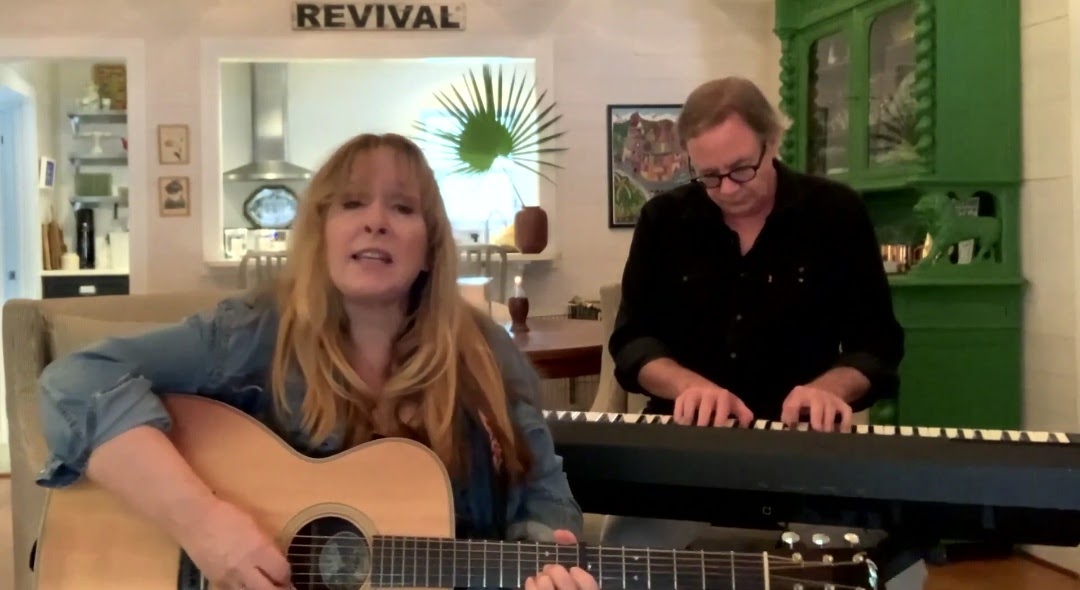
Zeppelin Productions Tribute to Natalie’s
Unlike most of what I write about, this is still up through February 28. Donate and watch here: https://nataliesgrandview.com/events/zeppelin-productions-benefit-for-natalies/
I unabashedly want every venue to make it through to the other side of this. I want the places in my neighborhood that are clubhouses for other musicians, for loudmouths like me, where I’m likely to randomly stop in and discover something thrilling, like Dick’s Den and Ace of Cups to still welcome us all with a heavy pour and friendly faces. I want the places that make me feel old and bring stuff that’s setting kids’ hair on fire to keep giving us all hell – Cafe Bourbon Street, No Place Gallery (give to their fundraiser to relocate), all the house shows.
But it’s no secret there’s a special place in my heart for the Natalie’s family, Natalie and Charlie Jackson, but also their fantastic staff. As soon as they opened the first location in Worthington, this was a model of venue we just didn’t have in Columbus: the closest comparisons were to City Winery (at the time only in NYC) or the Jazz Standard, where sound and the listening environment were given the same kind of care as excellent food and service.
And within six months, it became apparent we were on the roadmap of acts that hadn’t come to town since Dan Dougan’s Little Brothers closed: Big Sandy, Robbie Fulks, Scott Miller, Barrence Whitfield. Artists raved about it to other people. Soon, they established synchronicity with another booker I’ve talked about as the only reason Columbus is such a strong market for the kind of storytelling roots music I love: Alec Wightman and his Zeppelin Productions.
I’d follow what Wightman books anywhere, and I have, through the uncomfortably tight Columbus Music Hall to the booming Mannerchor, dancing with ghosts in the Valleydale Ballroom, all some of the best shows I’ve seen anywhere, in any city. But there was a unique and comfortable magic when he started bringing things to Natalie’s, even when I had to be on my game to ensure I wasn’t shut out of a seat.
Natalie’s was also hit harder than many venues because the pandemic came only a few months after they expanded into a second, larger, more flexible location. And while there were a few new-venue jitters, seeing a Zeppelin show – Chuck Prophet solo acoustic – early in 2020 made me hungry to watch this venue grow into the same kind of love I have for their Worthington room.
The pivot to live streams has been well-done in this climate, keeping the high sound and production values standards we know and love from their venues. And it speaks to the sterling reputation of both booker and room that Zeppelin assembled a who’s who of towering figures in roots rock and Americana to donate a short video to help out Natalie’s.
These songs usually came accompanied with sweet words about the space. Many artists – including Tom Russell, who started Alec Wightman booking shows – brought brand new work. Artists did huge hits: Kevin Welch with a song he wrote for Chris Stapleton in a stripped-down, tough, and lovely version. Artists known for their high energy rocking, like Sarah Borges and Rosie Flores, brought more nuanced, shaded sides of their personae.
A couple of artists brought gleeful, surprising covers. Chuck Prophet and Stephanie Finch did “The Little Black Egg,” known to most music fans for its inclusion on Nuggets but with extra resonance as Ohio was one of the few markets it was a real hit. Ward Hayden and the Outliers romped through a joyful, winking version of Ernest Tubb’s “Thanks a Lot.”
And it’s maybe not surprising the performance reverberating in my bones a couple days later as I write this was by Bruce Robison and Kelly Willis. They did Robison’s song “Lifeline” off their first duo record, Cheaters’ Game.

As soon as I heard it, it was one of my favorite songs in a catalog packed with contenders. It’s prime Robison, a story song with enough left unsaid for magic to get in, about the ways we connect, like it or not – “There was a crackdown in the street tonight: the stars and the boys ended up in a fight. One step over the line, he says that his Daddy knows mine.” The ways we hunger to connect, “True love comes in the dark, by the rocks and the trees and the rocks in the dark.” The ways we fail to connect, studded with indelible images, “She used to curl up like the steam from a train.”
The taunting darkness as the last verse ends and the final chorus opens were what stuck with me, the tricky balancing act of hope as an act of survival. The way Robison and Willis sing “So damn hard to find…” with a delicate enjambment change the meaning into “Find you” then repeat “Find you” until the previous line almost falls away, getting louder and more powerful, no longer “Find a little lifeline but “Find you a little lifeline – a little bit of hope. In the deep, dark night, need a little bit of rope.” None of us can wholly save each other, and we can’t save ourselves alone, but we can all provide a little rope, in one way or another.
Thank you, Natalie and Charlie and Alec – and Bruce Robison and Kelly Willis and all the other artists – for reminding me of that. I hope my small contribution added to that hope.

Tyshawn Sorey/Joe Lovano/Bill Frisell at the Village Vanguard
I’ve waxed rhapsodic about the live streams coming from the legendary Vanguard before, but this weekend’s performance exceeded even my outsized expectations.
I discovered tenor saxophonist Joe Lovano and guitarist Bill Frisell when I was in High School, a solid 15 years into their active careers. They hit creative strides – Lovano on Blue Note Records and Frisell with Nonesuch, as leaders – that period. My burgeoning love for their work led me to the first time I ever heard the drummer Paul Motian: a trio record in this same location that came out a couple of years earlier when I was 15.
This trio date at the Vanguard links these two giants with one of the brightest lights in jazz and chamber music on drums. Tyshawn Sorey’s playing carries the torch of Motian along with a hundred other influences he distills into something fresh, astonishing, and unmistakable.
The same childhood friend who hipped me to Frisell, Mike Gamble, turned me onto Sorey right after college. I was an immense, drooling fan – anyone who’s read my work has seen him dot year-end lists in almost any year I managed to overlap an NYC trip with a performance of his: Fieldwork at the old Jazz Gallery with Gamble and our other High School buddy, poet Dave Gibbs; Paradoxical Frog at Cornelia Street; as a leader at the Vanguard.
This set vibrated with the spacious, organic magic that’s a trademark of these players. I frequently have a more challenging time paying attention to a live stream than being there in the room – too many distractions – this set had the opposite effect: I couldn’t pay attention to anything else except to write some notes down.
Moments that left my jaw agape, and me gasping came in torrents and also with the perfect, mesmerizing placement of a night’s sky full of stars. Sorey hitting three notes on the vibes, playing off Frisell’s comping, between some skittering, delicate and intense cymbal work, changed the whole texture of Lovano’s dark, lush melody. An unaccompanied Lovano rolling around a theme to amplify the right textures until the band comes in with a clatter and the tune turns into a tightrope knife dance.
A breathtaking set as good as I’ve ever seen anywhere, and something that makes me lucky for the few pleasures we have in these times, and so fortunate people make art despite it all.
 Screen of Distance