Categories
Best Of visual art

Best of 2021 – Visual Art

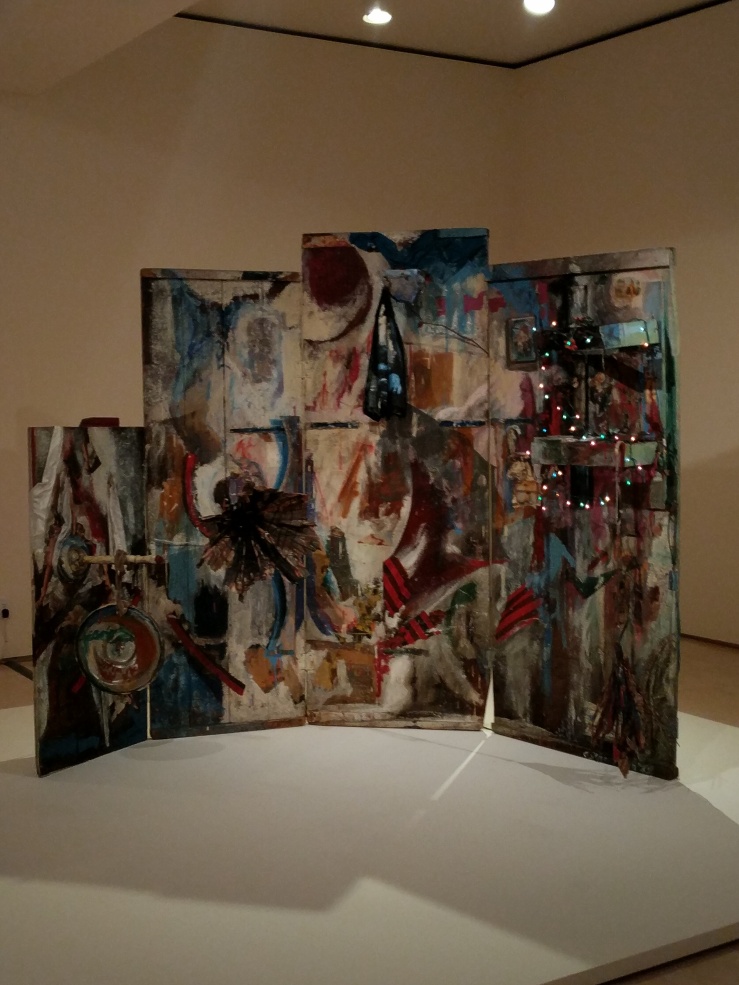
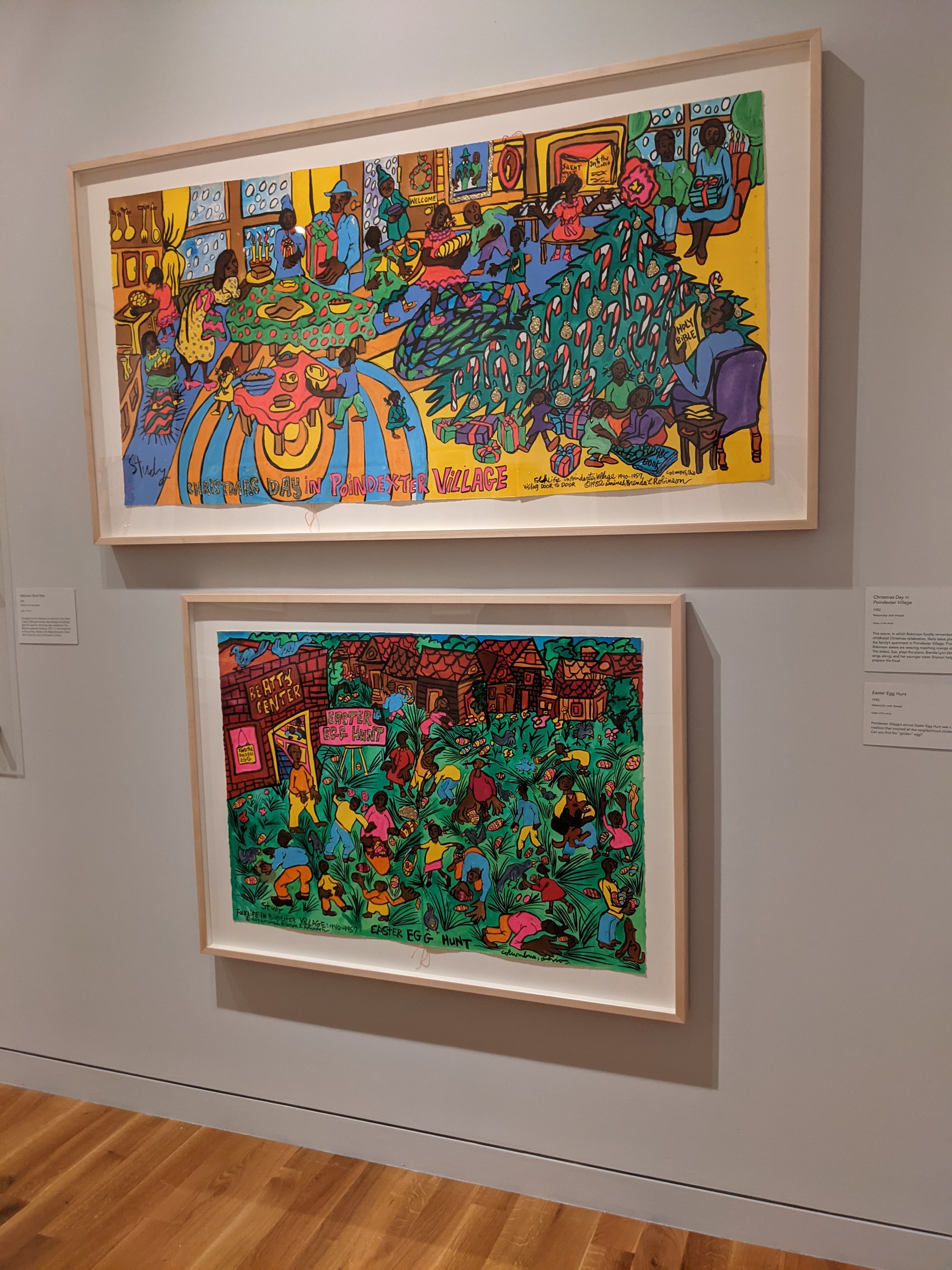
Aminah Robinson, Raggin’ On, Columbus Museum of Art

Interestingly – and don’t get me wrong, I greatly appreciate the efforts to shift to digital, distanced forms of presentation – the one medium of art I couldn’t really connect with online while we were locked down was visual art. Painting, sculpture, mixed-media all get the lion’s share of their impact on me from being in the room, breathing in the same space, seeing how much weight and density the work has, its presence.  

So, the combination of not being as worried breathing in the same air as my fellow people – though I always took precautions – and the connected relief of being able to travel again, along with reconnecting with my town, meant I saw about 55 exhibits over six cities. These are the 20 that made my heart sing, my blood run cold, or both; that wouldn’t let me go. These are unranked and in chronological order. 

Everything below is in Columbus and any photo is taken by me, unless otherwise noted. 
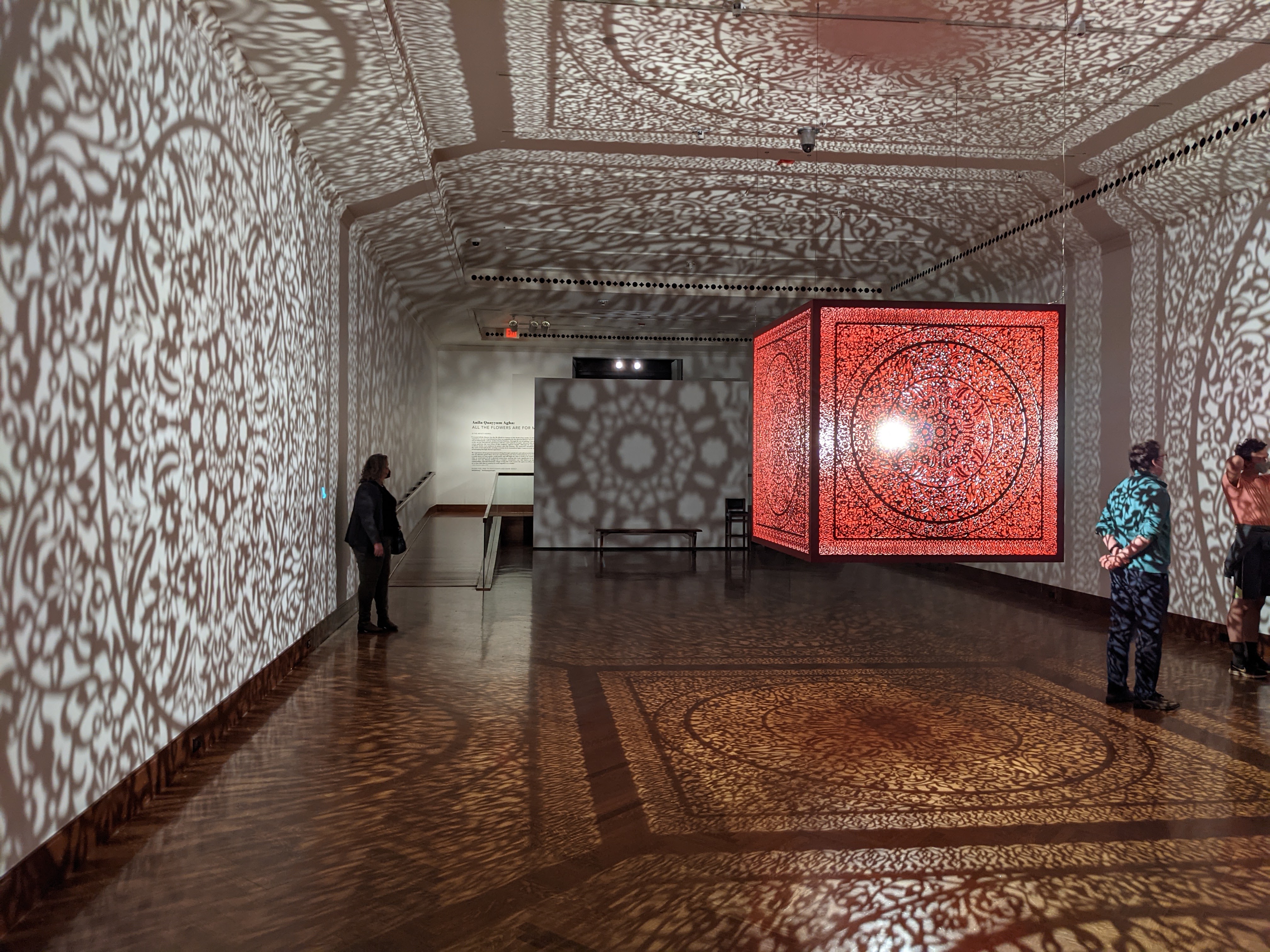
Anila Quayyum Agha, Cincinnati Museum of Art
  • Various Artists, November (Beeler Gallery) – The Beeler is one of my favorite spaces in Columbus and too often gets left out of the conversation, with consistently provocative commissions and group shows that benefit from the thoughtful combustion of the various works in conversation with themselves, with the CCAD Institution, with Columbus, and the world. Curator Dean Taylor exemplified all these qualities, suffused with a dread and uncertainty created for 2020 and still reverberating into February where my visit, my grappling with these deep feelings, made a sheet of ice crack inside of me. 
  • Anila Quayyum Agha, All The Flowers Are For Me (Cincinnati Art Museum, Cincinnati) – Stil only partially vaccinated, we went to Cincinnati for my birthday, as much outdoor and distant fun as we could muster in late March. Even under some constraints, it felt good to be out of town, dining on patios, and going to a couple of my favorite museums. Of everything Anne and I saw, I mulled over Pakistani-American artist’s meditative, expansive work, a steel-cut cube created to slice light in shadows inspired by Islamic architecture and classical art. 
  • Aminah Robinson, Raggin’ On (Columbus Museum of Art) – Sometimes it’s too easy to take the giants in our midst, the legends we grew up with, for granted. For too much of my youth I bristled at hearing about Aminah Robinson or James Thurber or George Bellows, though I loved their work, because I worried about how Columbus looked under a reductive lens. I’ve gotten over most of that but there are still some lingering “I know all there is to know” feelings. Within five minutes of walking into this gorgeous, immaculately curated (by Carole Genshaft and Deidre Hamlar) retrospective of one of our great artists, I was reminded I was a fucking idiot to even think that. This first retrospective since Robinson’s death hit her principal preoccupations, her recurring themes, and highlighted both the variations, the deep studies of character and place, the chimerical and literary qualities of her work, as well as the consistency of her work, in quality and thematically. I went to this three times and kicked myself for not going a dozen more. In a better world, this would have toured ten cities on three continents – as it is, it’s a stunning testament to the value of donating your estate to your local art museum. 
  • Various Artists, Partially Buried: Land Art in Ohio 1970-Now (Columbus Museum of Art) – Another thing I chafed at through its Ohio ubiquity as a kid? “Indian mounds.” Which I lumped land art in alongside. It took my fine arts major roommate, who idolized Andy Goldsworthy, to not only shake me out of that but show me how lucky we were to have such a tradition of it in Ohio. Anne’s enthusiasm for it later fully unlocked my appreciation, and this synthesized the tradition in a way I came back to soak in more than once. Anna Talarico’s curation drew deep lines from Robert Smithson’s seminal work that gave the exhibit its name to contemporary work like my pal Brian Harnetty’s sound piece “Forest Listening Rooms.” This was a stunning slice of history reminding us of the Faulkner line “The past is never dead, it isn’t even past.” 
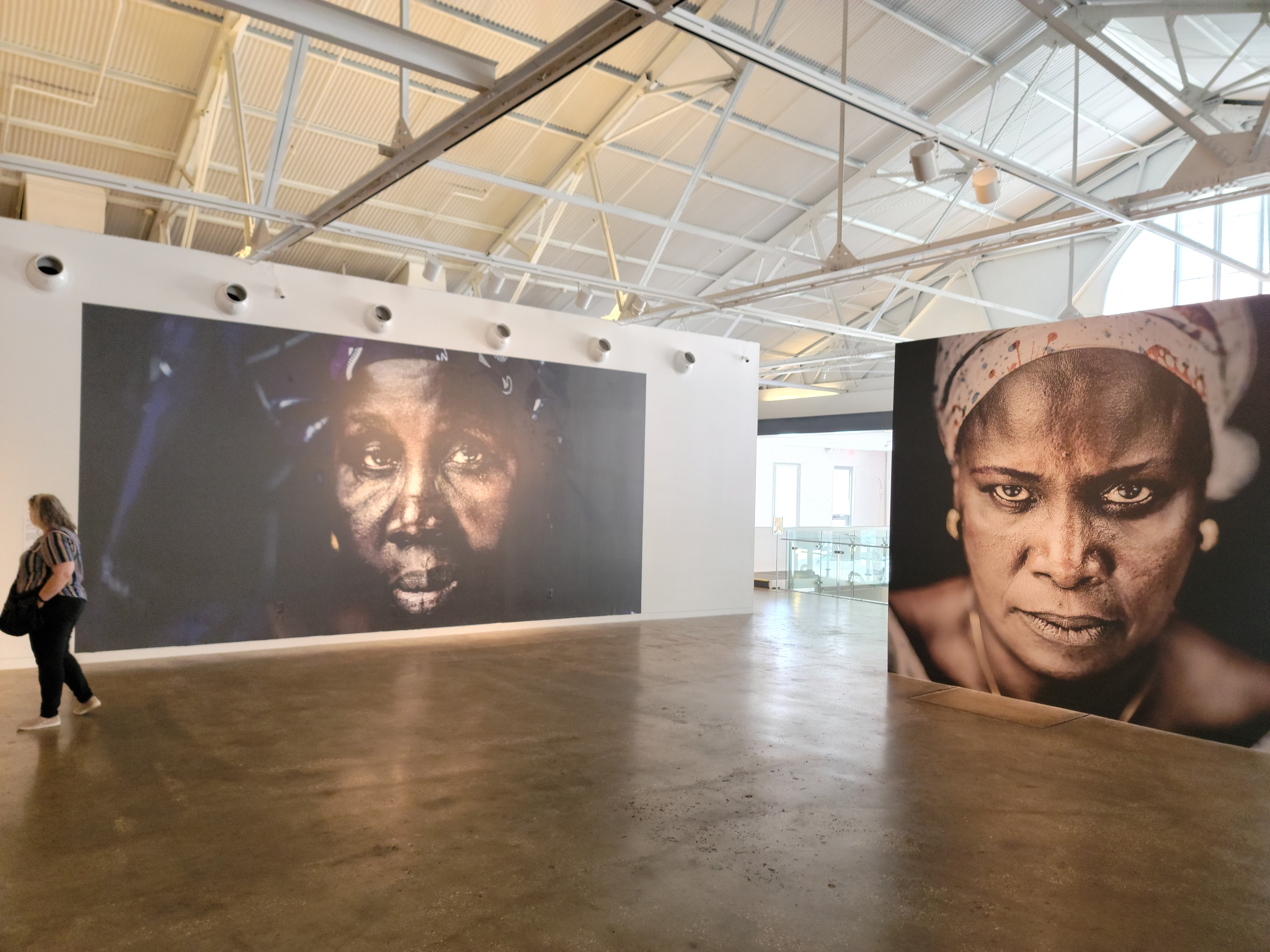
Alun Be, CAM Raleigh
  • Alun Be, Perseverance, Pride, Power (CAM, Raleigh) – These enormous photos, in close up, of women by Senegalese photographer Alun Be, knocked the wind right out of my lungs. Taking up whole walls at Raleigh’s Contemporary Art Museum, the June sun filtered by clouds through the giant windows, gave a glimpse of a whole world, whole stories these women inhabit and embody. It made the museum glow like a holy temple and a reminder of how connected we are and how important it is to hold to that connection without falling into some namby-pamby “We’re all alike” bullshit. This was a crucial reminder to respect and understand other people’s differences, their different paths, their different dreams. And a reminder to try to start with love and with a desire to understand. 
  • Kennedi Carter, Flexing/New Realm (CAM, Raleigh) – One of the other two exhibits at CAM, Carter’s work was new to me and hit me almost as hard. Sharing some commonalities with Kehinde Wiley’s paintings linking contemporary black culture with classical portraiture of European royalty, there’s a deeper psychological cant to her photographs I had a hard time looking away from. 
  • Lynn Hershman Leeson, Twisted (New Museum, NYC) – All three exhibits at the New Museum this trip made an impression on me, but Leeson’s mixed media pieces reminded me of all the promise of science fiction growing up, a truly speculative art that centers people. Enraptured by the promise of new discoveries and spectacular frontiers but with an eye toward the way the future can widen and exacerbate pain and inequality, and the entropic tendency of it to do just that if we let the same bastards hold the wheel. 
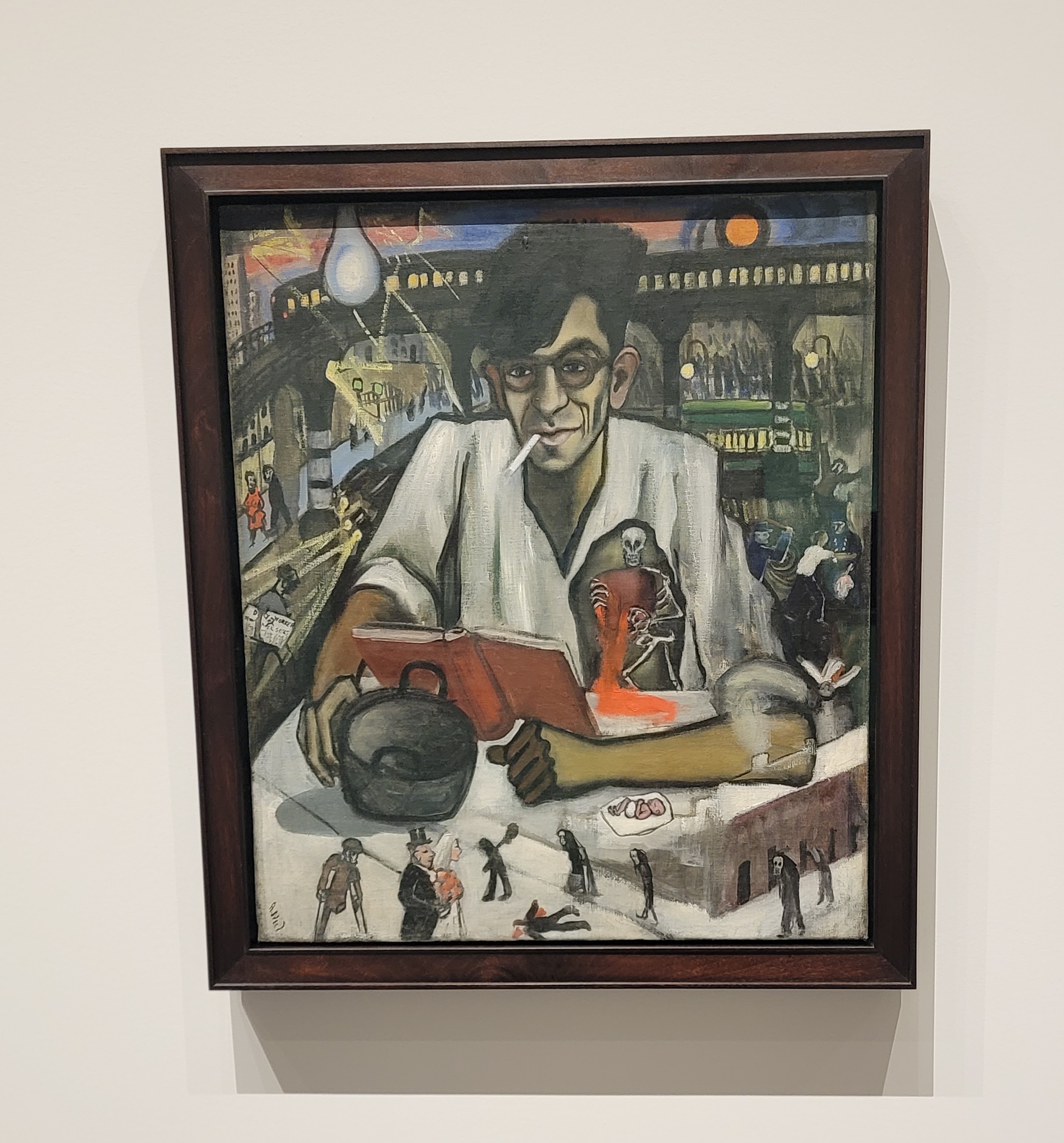
Alice Neel, Metropolitan Museum
  • Yayoi Kusama, Cosmic Nature (New York Botanical Garden, NYC) – I raved about Kusama a couple years ago in Cleveland, and many years back at the Whitney. She’s the kind of blockbuster, crowd-pleasing artist with so many layers and such a love of things that are messy, are complicated, that there’s always something to unpack. Pairing her work with the Bronx’s beautiful New York Botanical Garden was a perfect fit, the art and the nature vibrating together, feeding each other, giving enough surface for the selfies but enriching for the rest of us. 
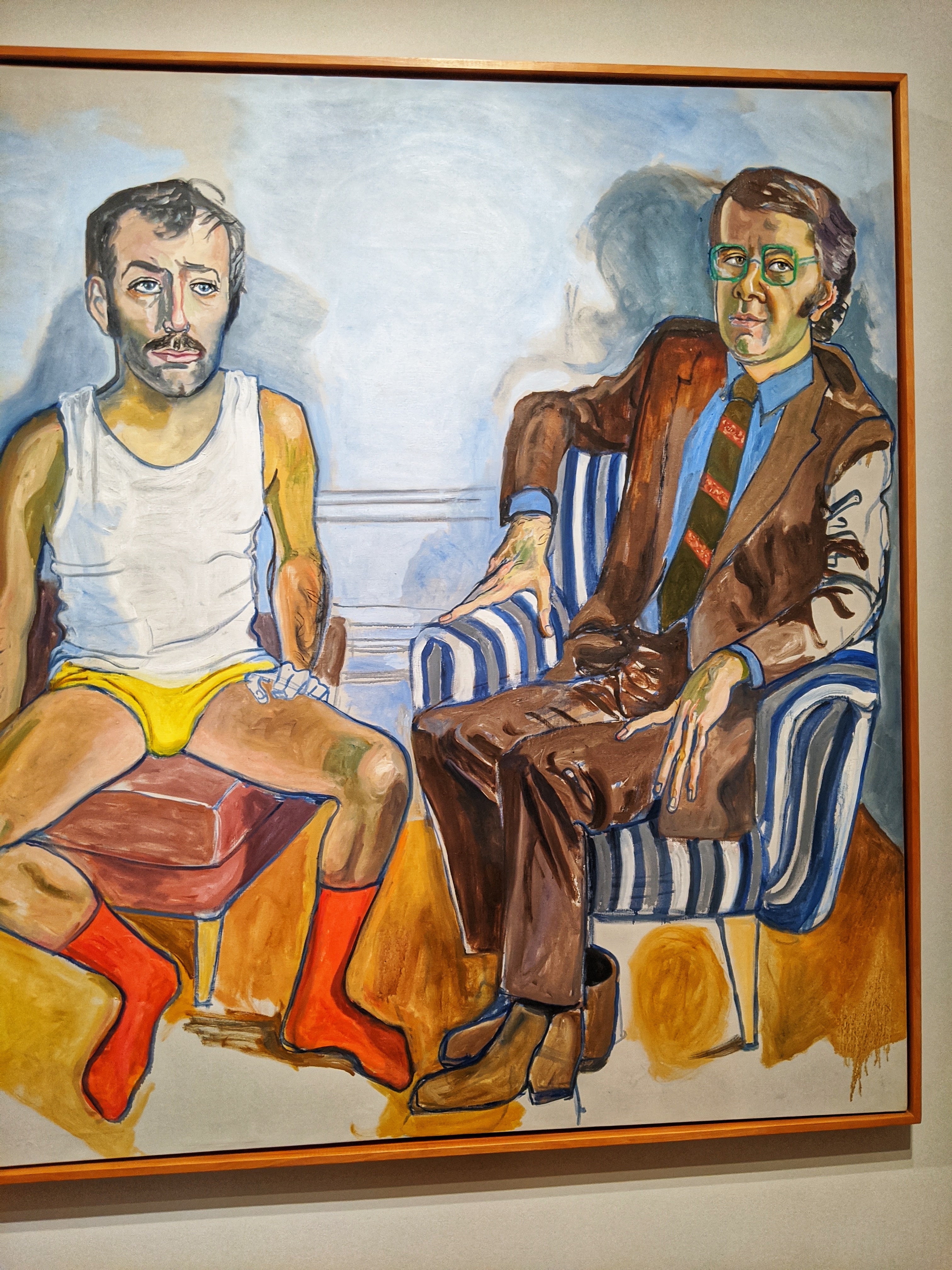
  • Alice Neel, People Come First (Metropolitan Museum of Art, NYC) – I don’t remember the first time I saw Alice Neel’s work, but my fandom bloomed with Hilton Als’ retrospective focusing on her time in upper Manhattan at David Zwirner a few years ago and hit overdrive when I read the terrific biography by Phoebe Hoban (or did those go in the other order?). This retrospective was exactly what I go to the Met for, the kind of expansive, deep dive I’ve loved since my first trip to this temple of art to see El Greco. Neel’s ability to center people in her art and her life, to make sure her subjects are seen without judgment, is a benchmark I sometimes fuck up but always try to shoot for. And the work is gorgeous beyond reckoning.  
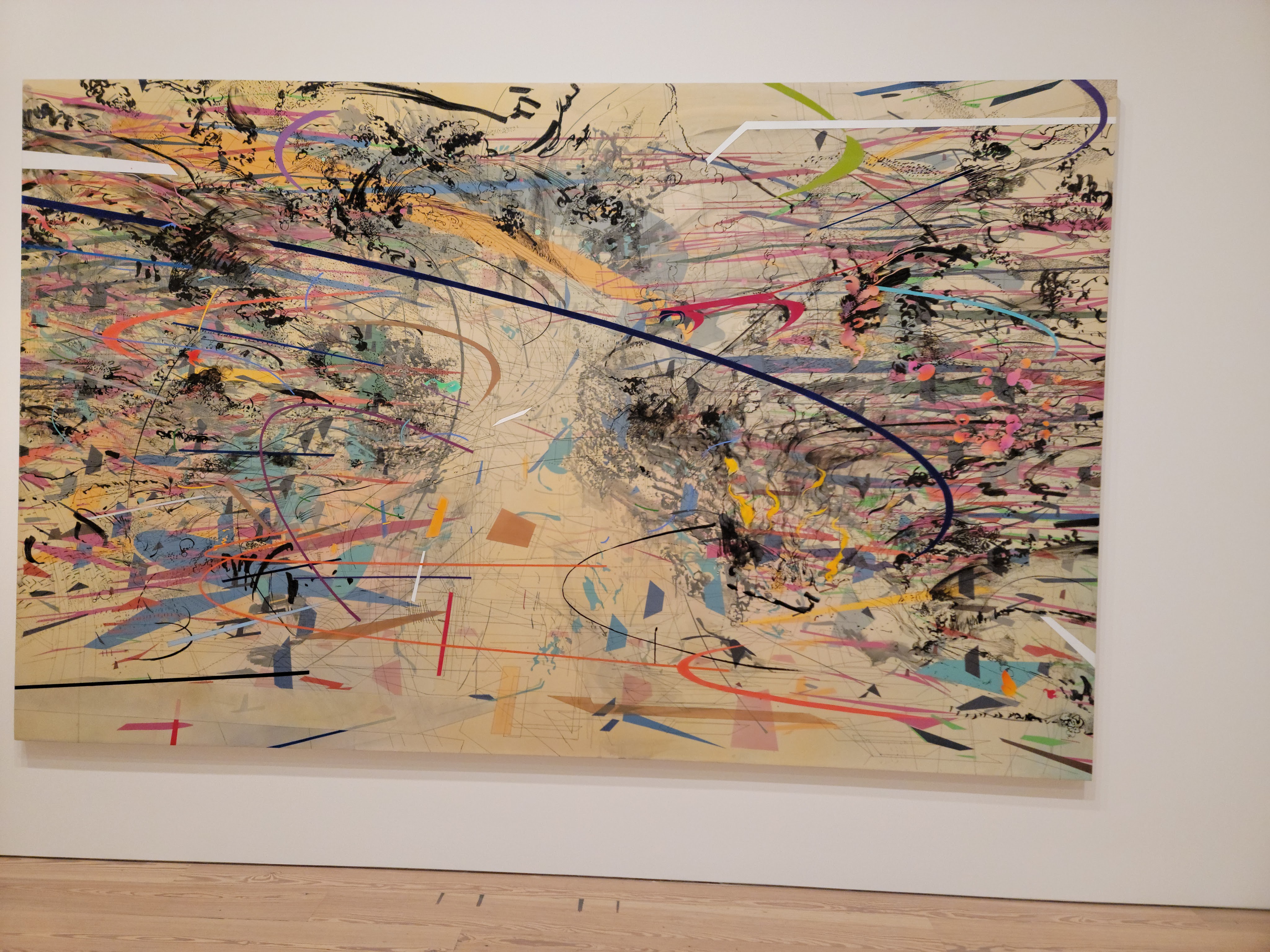
Julie Mehretu, Whitney Museum
  • Julie Mehretu, Julie Mehretu (Whitney Museum, NYC) – I’d seen a couple pieces by Ethiopian artist Julie Mehretu before, but this dazzling retrospective shone light on her unique style of abstraction and her way of viewing the world as a collection, a melange, maps that feel right but don’t draw a linear story. One of the most vital, vibrant abstract painters I’ve been turned onto in many years. 
  • Dawoud Bey, An American Project (Whitney Museum. NYC) – Another vital eye on the current moment, Dawoud Bey’s work struck me as soon as I saw it. This retrospective showed his incisive, open-hearted approach from his ‘70s portraits in Harlem to the mysterious, speculative landscapes evoking underground railroad passages from 2018. Seeing this the day after Alice Neel and these artists decades apart, though they overlapped, finding ways to center humanity in their art, was awe-inspiring. Anne and I posted up at Radio Bar and talked about this for an hour after. 
  • Various Artists, Ashcan School Prints and the American City: 1900-1994 (Cleveland Museum of Art, Cleveland) – I overloaded on the Ashcan school as a kid, partly because of Columbus native George Bellows’ prominence in it and partly because I was drawn to a level of social realism. Some time away from that let me see this terrific retrospective at the Cleveland Museum with fresh eyes and I was stunned by the breadth and intensity of that work and its uniquely American patina.  
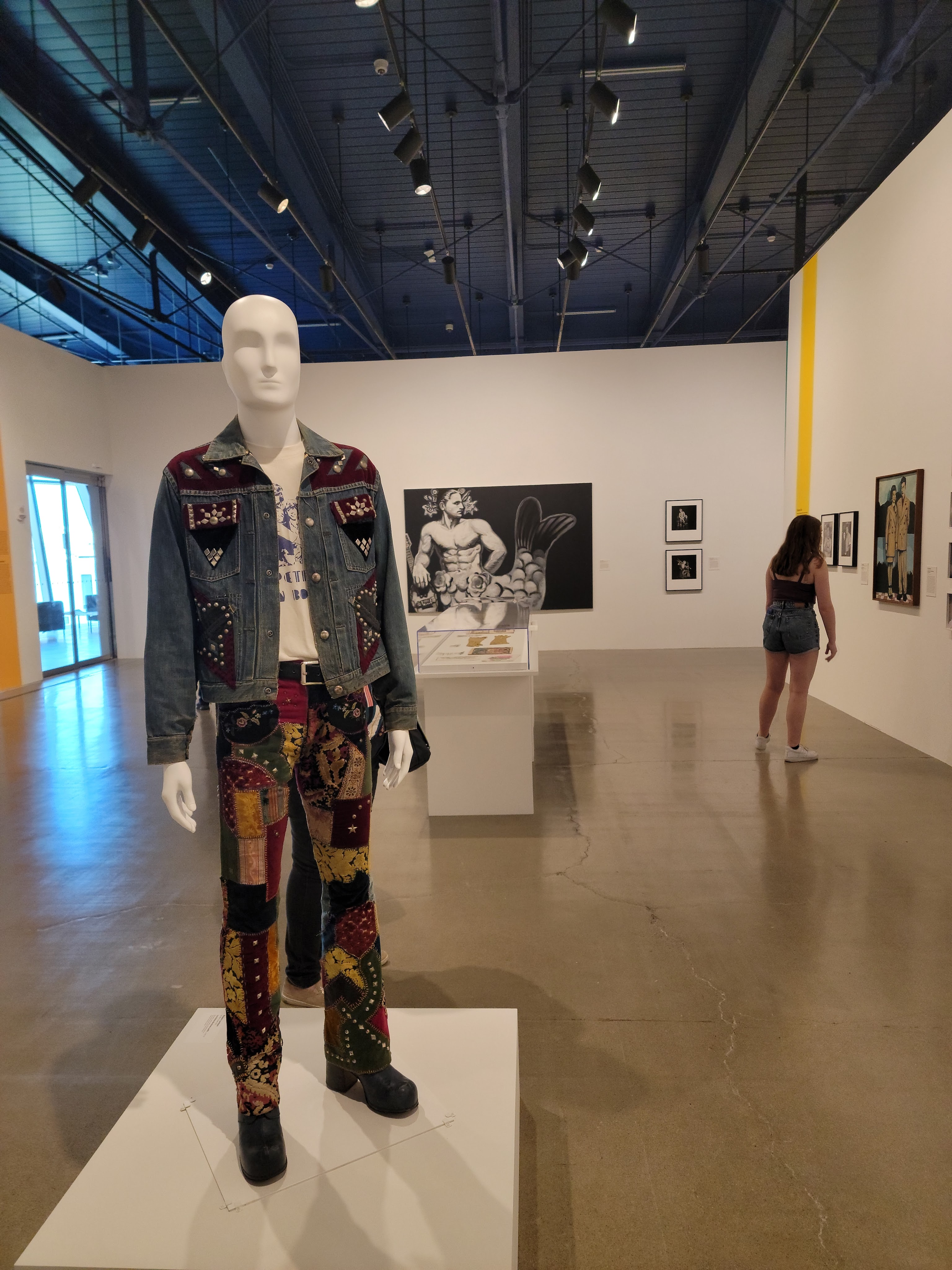
Axis Mundo, MOCA Cleveland
  • Various Artists, Axis Mundo: Queer Networks in Chicano LA (MOCA, Cleveland) – This MOCA exhibit made a series of puzzle pieces fall into place in my head. I knew how impactful the Latinx communities were on Los Angeles history and especially that punk scene I grew up idolizing. Until this, I hadn’t seen something that tied the various LA art scenes together so sharply (in the way I’ve seen a million books/exhibits/articles do for New York of the same time period) and emphasizing seeing these scenes through a Chicano lens, immaculately curated by C. Ondine Chavoya and David Evans Frantz. This set my hair on fire. 
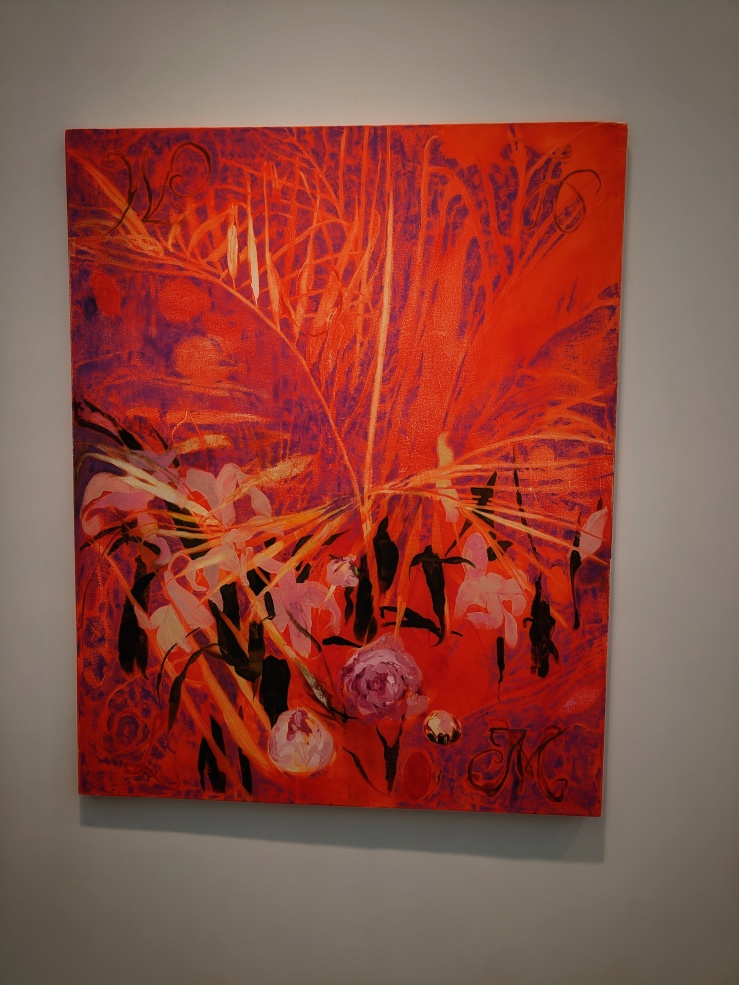
  • Danielle Deley and Allison Baker, Home (934 Gallery) – 934 Gallery is one of the Columbus gems and when I stopped at their 934 Fest I had the chance to check out a fantastic exhibit – Home – that placed Danielle Deley’s huge-canvas explorations of her Catholic background in dialogue with Allison Baker’s razor-edged investigations of what we think of as domesticity and women’s work in dialogue with each other and the space. 
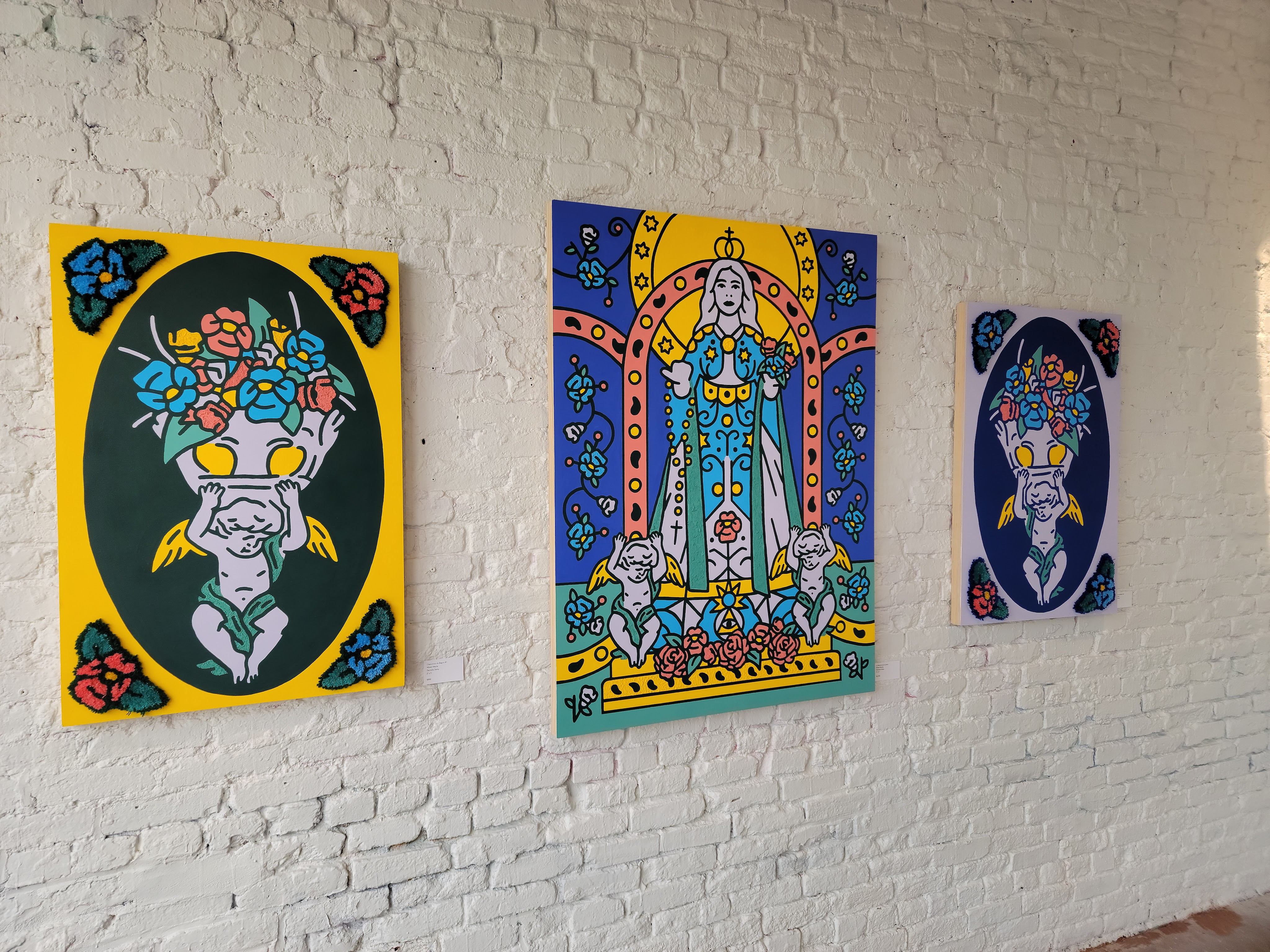
Danielle Deley, 934 Gallery
  • Wayne Thiebaud, Wayne Thiebaud at 100: Paintings, Prints, and Drawings (Dixon Gardens and Gallery, Memphis) – In all my trips to Memphis, including repeated visits to the botanical garden, Anne and I hadn’t yet made it to Dixon Gardens and Gallery. We corrected that this trip – it reminded me of a Southern Frick – with a stunning retrospective of Wayne Thiebaud. His looks at urban landscapes, the sensual pleasures of food, and the rapidly changing 20th century struck a particular pleasure center for me I’m not sure any other art did this year. 
  • Mark Selinger, On Christopher Street: Transgender Portraits (Brooks Museum, Memphis) – The Brooks has become one of my favorite museums over repeated treks to Memphis and they’ve got a particularly good eye for photography exhibitions. This year, Selinger’s (whose work I knew from GQ) contemporary look at the storied cobblestones of Christopher Street and its transgender residents and visitors blew me away. A moving look at connection without trying to underplay their differences, another reminder at the powerful capacity for empathy visual art possesses. 
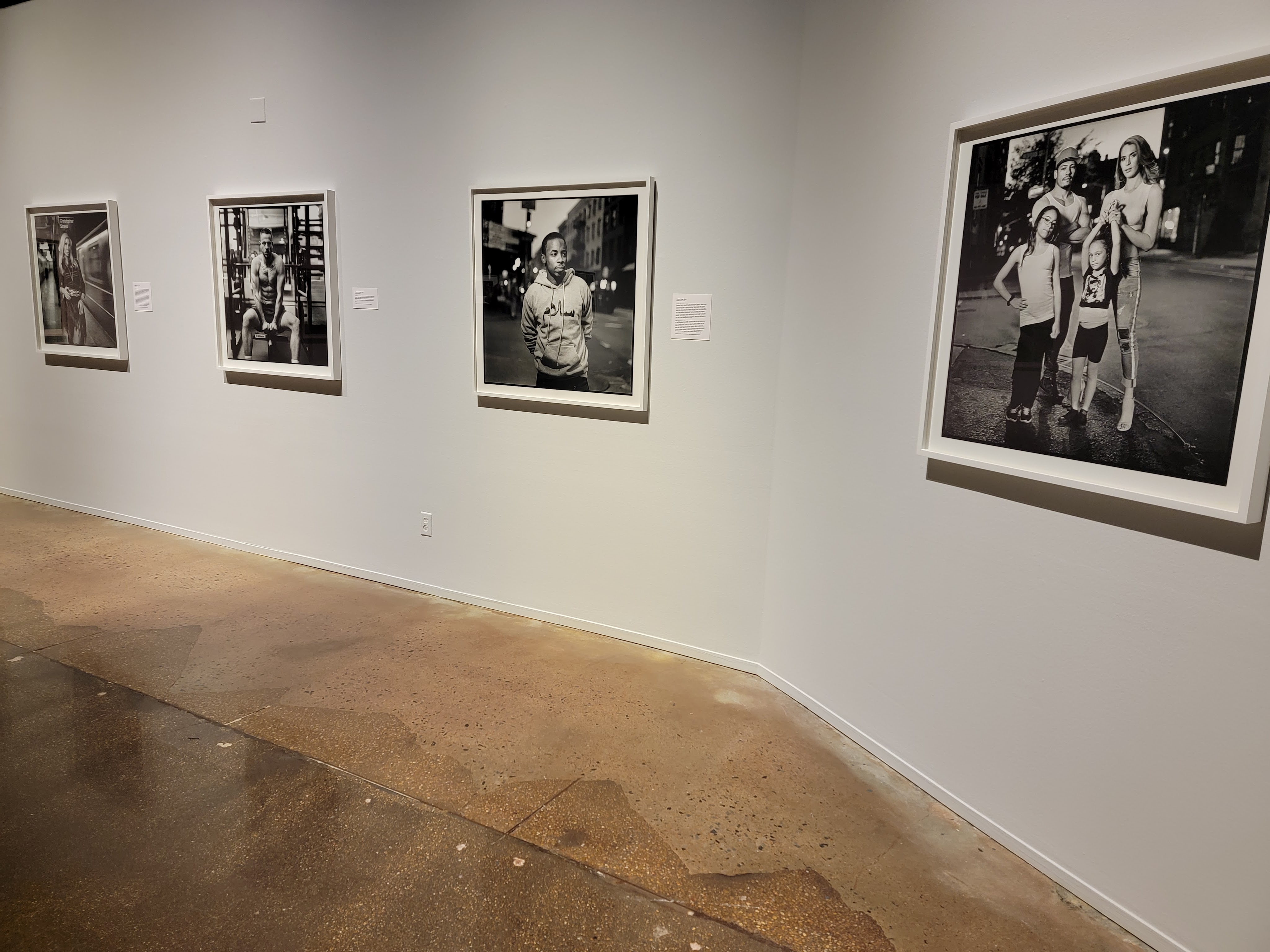
Mark Selinger, Brooks Museum, Memphis
  • Nina Katchadourian, To Feel Something That Was Not Of Our World (Pizzuti Collection of the Columbus Museum of Art) – This fascinating exhibit delved into the survival memoir Survive the Savage Sea, with translations of the book, excerpts, life-size drawings of tortoises and whales, audio recordings, and printed messages exchanged between the artist and the family. It’s a beguiling look at what makes us survive, what keeps people from giving up, and family in the best sense, atomized and displayed in ways I didn’t expect. 
  • Bruce Robinson, Flutterby (Pizzuti Collection of the Columbus Museum Art) – The other exhibit in the Pizzuti Collection was longstanding CCAD professor Bruce Robinson’s work. Motion is at the center of all these pieces, some abstract, and this had an interesting resonance for me with the other people-centered exhibits I saw this year. There’s a special bravery and a special open-heartedness in including your friends, your community, in your work that has to encompass your feelings for them but also stand outside of your specific experience. This helped reinforce all the feelings I grasped for all year. 
Bruce Robinson, Pizzuti Collection of the Columbus Museum of Art
  • Carol Stewart and Janice Lessman-Moss, Still Is Still Moving (Hammond Harkins Gallery) – I don’t stop at Hammond Harkins that often but the sunny Saturday afternoon I popped in wowed me. These two carefully chosen artists, both of whom have histories with the gallery and with Columbus, sparked against each other, leading me on a long, fascinating conversation with the gallery employee/attendant/manager who was there at the time. Lessman-Moss’s textile pieces used metallic thread for contrast in stunning geometric patterns. Stewart’s still lifes actually made the artifice in any still life concrete for me in a way I’m not sure I’ve ever seen – the deliberate placement of everything in the picture frame was done with intention and deliberation but – like Jeff Wall’s photographs – that artifice makes them more intriguing and more full of life, not stiffer. These two approaches, talking to each other across the room, under the banner of the Willie Nelson lyric the show is named for, left me chewing on them for weeks. 
  • Jacqueline Humphries, jHΩ1: ) (Wexner Center) – I went to see this stunning Humphries retrospective four times and I’m still not sure I got it but I loved it. I said to a friend who saw it a different time, “I felt like I was drowning but not in an unpleasant way.” These expansive abstractions of the data and metaphor we’re all swimming in are as messy and as orderly, as intense, as my first impressions of Kusama or Rothko or Agnes Martin. It’s a knockout blow to end the year on. 
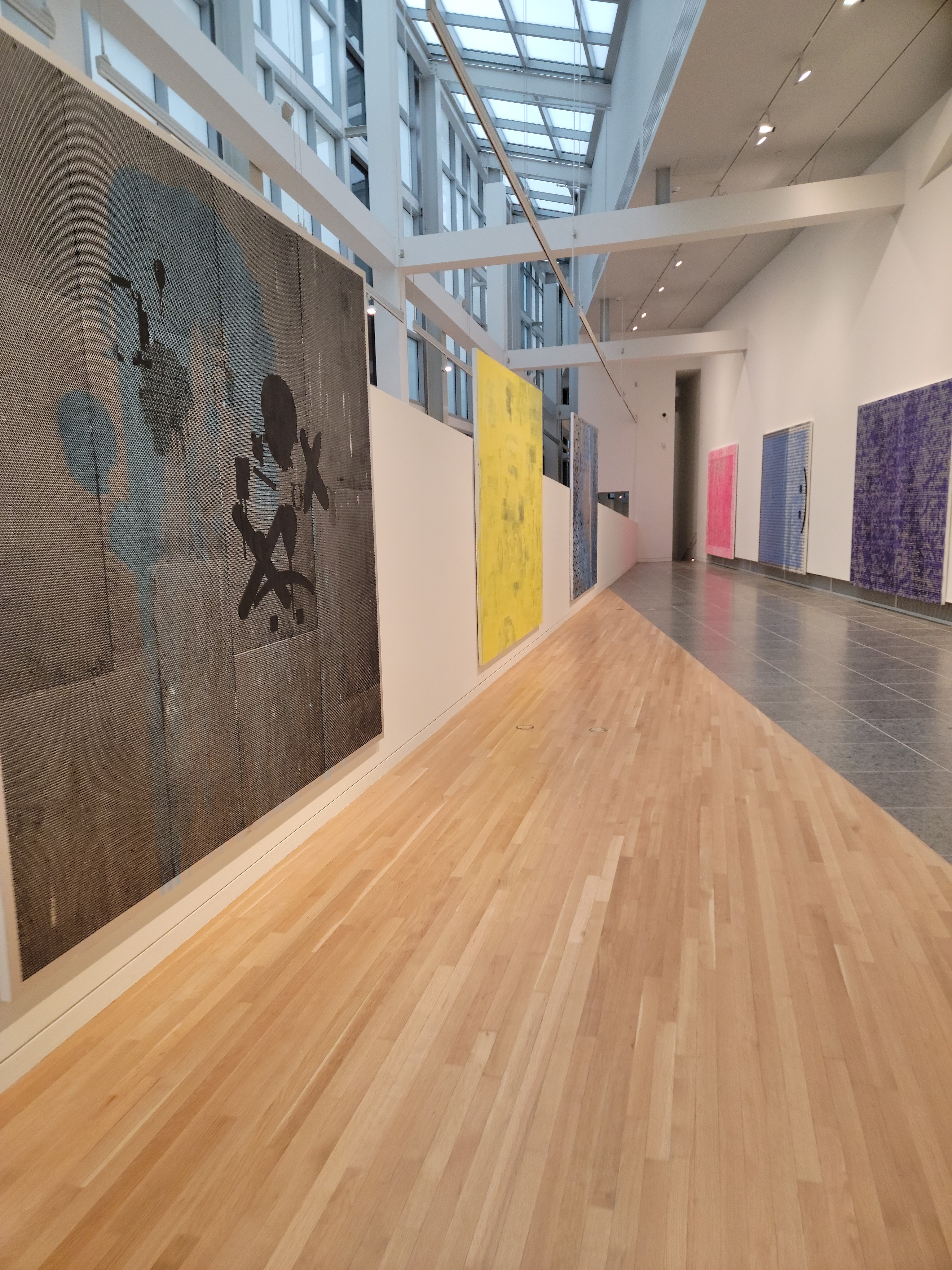
Jacqueline Humphries, Wexner Center for the Arts
Categories
Best Of visual art

2020 Best Of – Visual Art

Vija Celmins, Met Breuer

This year was a reminder not to wait to do things – tell people you care about them, start on that project, go to that exhibit. With the other three categories I’ve used on these memory exercises for the last 20ish years, there were digital workarounds that gave me a taste of what I was missing, tiding me over. Visual Art didn’t work that way for me.

I sampled, and I’m thrilled so many galleries and museums transitioned to or enhanced their existing online presence, with exciting work from David Zwirner, the Frieze fair, all manner of things in Europe. Still, I had a hard time connecting with it. It was like flipping through Artforum to me, good to know what’s going on that I can’t see, but I never felt like I experienced the pieces.

The impetus of the Available Light motto “don’t wait” came to light. When things shut down, I was glad in ways I can barely articulate that I spent the time and money on a New York trip for APAP and trips to Cleveland and Louisville (neither of which were primarily for visual art but I worked some in) all before March. At the same time, I hesitated a month for the new Wexner exhibits, and the window slammed shut when I wasn’t expecting (and they were things I desperately wanted to see). So, as usual, whenever things open again, don’t wait. Find what you’re interested in and lunge at it.

Everything is in Columbus unless otherwise noted. Photos were taken by me unless otherwise noted.

  • Various Artists, Art After Stonewall (Columbus Museum of Art) – This tracing of the aftershocks of the Stonewall Riot, through early Gay Liberation and the darkest, most enveloping days of the AIDS crisis was a monumental undertaking and the finest use yet of the CMA’s new wing. For me, one of the highlights was the prominent placement of Columbus’s role in the gay art movements being documented here, including a lump-in-my-throat wall of Corbett Reynolds, his busts, and ephemera from his nightclub and his Red parties.
  • Vija Celmins, To Fix The Image in Memory (Met Breuer, NYC) – The Metropolitan Museum of Art’s rental and repurposing of the previous Whitney Museum never quite found its footing but presented some spectacular exhibitions. Maybe my favorite was the last time I’ll ever get to visit – they announced in June the satellite building will not reopen after lockdown – this jaw-dropping retrospective of Vija Celmins. To Fix The Image in Memory took us through luminous renderings of household objects, as though lit from within, to intricate studies of the night sky. Whispered words of apocalypse and hymns to understanding, reminding me again and again of Mary Oliver’s maxim that “Attention is the beginning of devotion.”
  • Expanded Museum of Modern Art (NYC)- I’m always skeptical when something I love – even when it has problems I’ve grumblingly come to live with – changes. But my heart sang when that skepticism burned off scant minutes after walking into the reconfigured MoMA. The flow between the collection crackles and sparks conversation in ways it seemed to restrict or calcify before. The various rooms assembled by artists sizzled with panopticon energy (on my visit I especially loved the Amy Sillman). I want to get back to my favorite city for at least 100 reasons but the biggest one is to luxuriate in the new MoMA some more. 
Rachel Feinstein, Jewish Museum
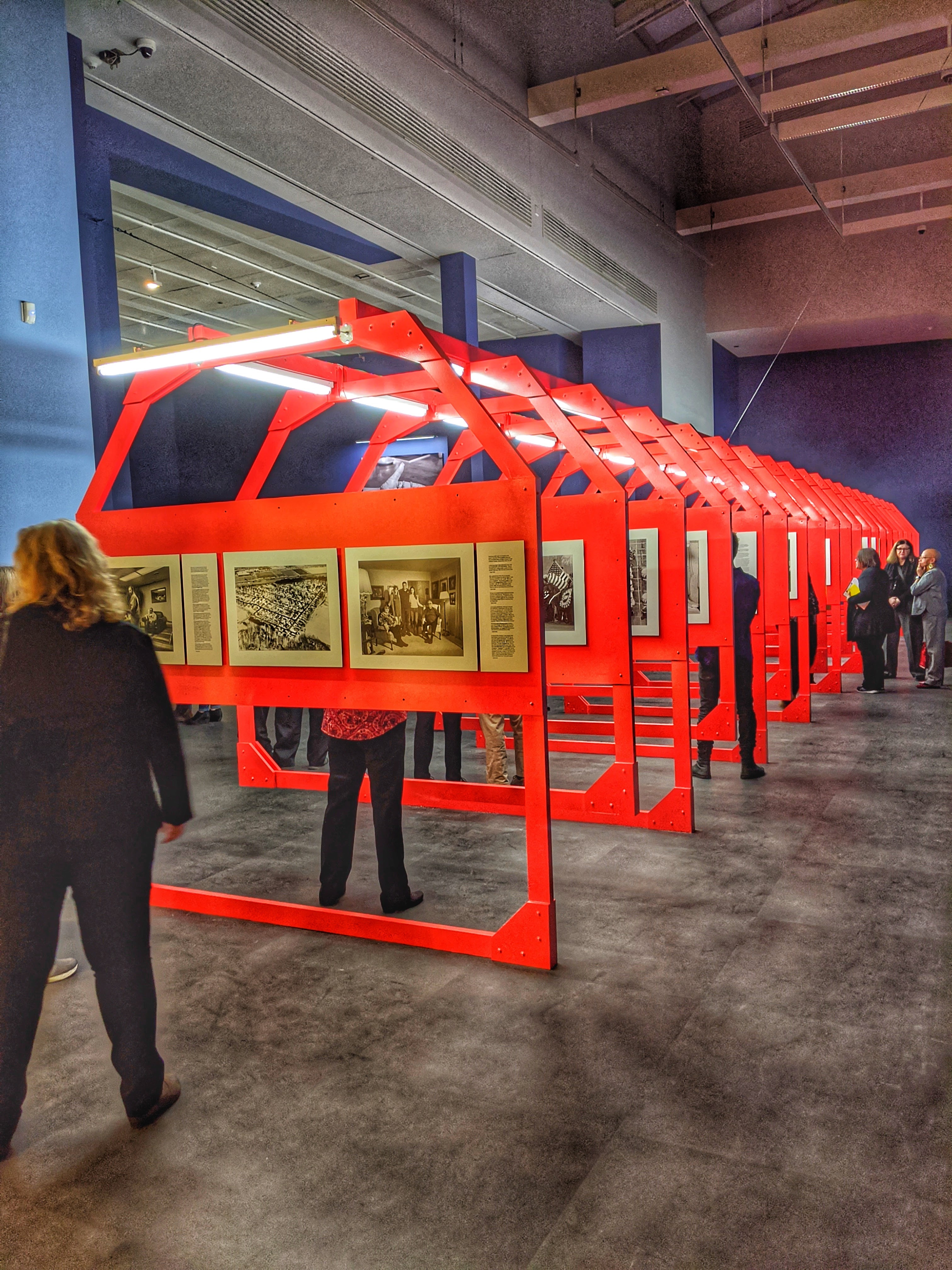
  • LaToya Ruby Frazier, The Last Cruze (Wexner Center for the Arts) – LaToya Ruby Frazier is a shining, fascinating example of how an artist can pay witness, how empathy and a willingness to take a community seriously, always pays off. This look at the Lordstown, Ohio, GM plant and its workers dazzled me. I was touched watching some of the workers documented here walking through the exhibit and thought about how art institutions can serve multiple functions at the same time.
  • Margaret Kilgallen, that’s where the beauty is (MOCA, Cleveland) – My last trip to another city before lockdown found Cleveland as enriching as ever – you’ll also see it on the Live Music list – and this Kilgallen retro exploded her celebration of niche scenes and an endangered love of what’s hand-crafted and unique. A wild party and a thoughtful call to introspection.
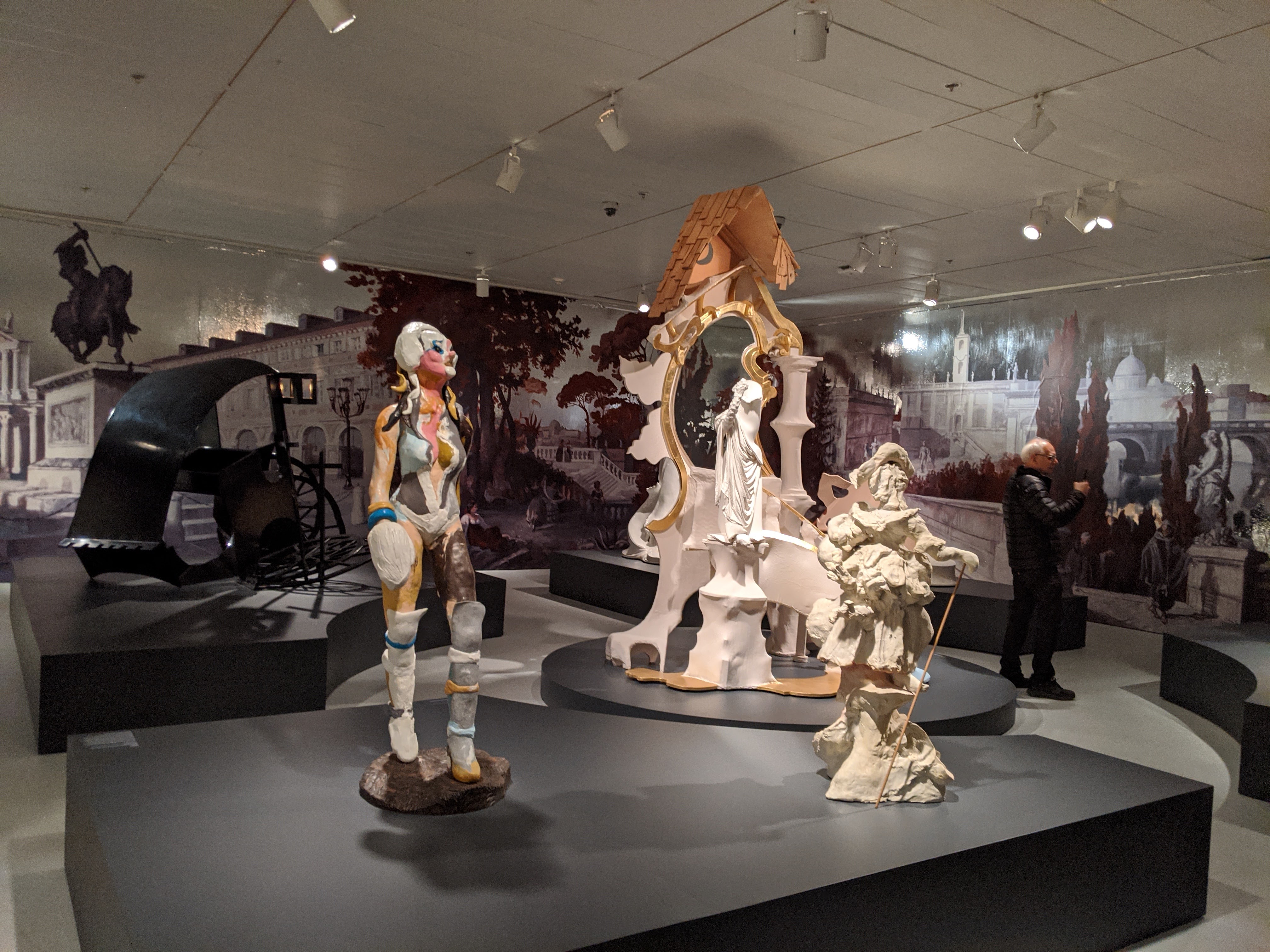
  • Rachel Feinstein, Maiden Mother Crone (Jewish Museum, NYC) – This Feinstein survey dug deep into myth, desire, and narrative in ways that repelled easy answers and snap judgments. Huge sculptures and sparkling installations, bouncing their energy off each other and absorbing what the observes walking through the Jewish Museum had to give, then throwing it back at us, reshaped and a little more alive.
Rashid Johnson, Hauser & Wirth
  • Rashid Johnson, The Hikers (Hauser & Wirth, NYC) – Hauser & Wirth rarely disappoints me – even more so with their excellent new cafe and bookshop – and when I entered on a sunny January day for the (very good) Mike Kelley pieces, I was knocked sideways by my first real exposure to Rashid Johnson. These massive tile mosaics and collages, which reminded me a little of Jack Whitten, captured a dread and anxiety in a way I found moving but also somehow uplifting. 
  • Felix Valloton, The Painter of Disquiet (Metropolitan Museum of Art, NYC) – Valloton struck me as a cross between Bonnard and Toulouse-Lautrec and it was fitting seeing this look at his work in the same room where I really got Bonnard for the first time. Rich, narrative work, unsparing in its judgment of its characters and their desires but enraptured by them at the same time. I spent most of my time at Bemelmans after walking through this writing about it and trying to make sense of how deeply it spoke to me.
  • Burt Hurley, Loose Nuts: Burt Hurley’s West End Story (Speed Museum, Louisville) – I’m an incredible sucker for genre work before the genre is supposed to have existed. Hurley’s satire of urban Louisville assumed later comic book styles we take for granted and found its own solution to those same storytelling problems in ways I’ve never seen before.
Rachel Harrison, Whitney Museum
  • Rachel Harrison, Life Hack (Whitney, NYC) – I’m ashamed to admit I knew very little of Harrison’s work when I walked into the Whitney trying to squeeze the most into this last day of the trip but these vibrant, brutal surreal pop explosions shook me and reverberated against everything else I saw that Sunday (it makes appearances on both the theatre and music lists).
  • Various Artists, Edith Halpert and the Rise of American Art (Jewish Museum, NYC) – No exaggeration: I cried four or five times doing this. This kind of tracing movements through one or more focal points is a unique speciality of the Jewish museum and this look at how a collector and gallerist can be a focal point in making people sit up and care and a linchpin of a community that didn’t really exist until she stood up and made it exist was a reminder I deeply needed at the moment. And a reminder I always need.
  • Sadie Benning, Pain Thing (Wexner Center for the Arts) – Sadie Benning’s previous exhibit at the Wex is one of my favorite things I’ve ever seen in 25 years of regular patronage and these tiny images, implying film at one minute and suggesting the twists of a kaleidoscope, resisting any simplisticy reduction, beguiled and baffled me. I wished I could have seen this another dozen times.
  • Various Artists, Songs in the Dark (Tanya Bonakdar, NYC) – Tanya Bonakdar is a gallery I make a point to hit every trip if something’s up and this group show reaffirmed everything I love about its stable of artists and its curatorial practice. A look at the current fraught moment and its complicating factors without – in accordance with Brecht who it references in the title – ever making the viewer despair. Work by artists I already loved like Ernesto Neto, Rivane Neuenschwander, and Olafur Eliasson bumped up against new to me art by Hannah Starkey and Mehschach Gaba.
  • Jessica Segall, 100 Years, All New People (SPACES, Cleveland) – This look at immigration, composed of elements Segall collected at the borders, was a tomb and a monuument to human ingenuity, our ability to rise above anytthing that would hold us down or keep us still, but also an installation drenched in stillness and the terrible price these systems would exact from us.
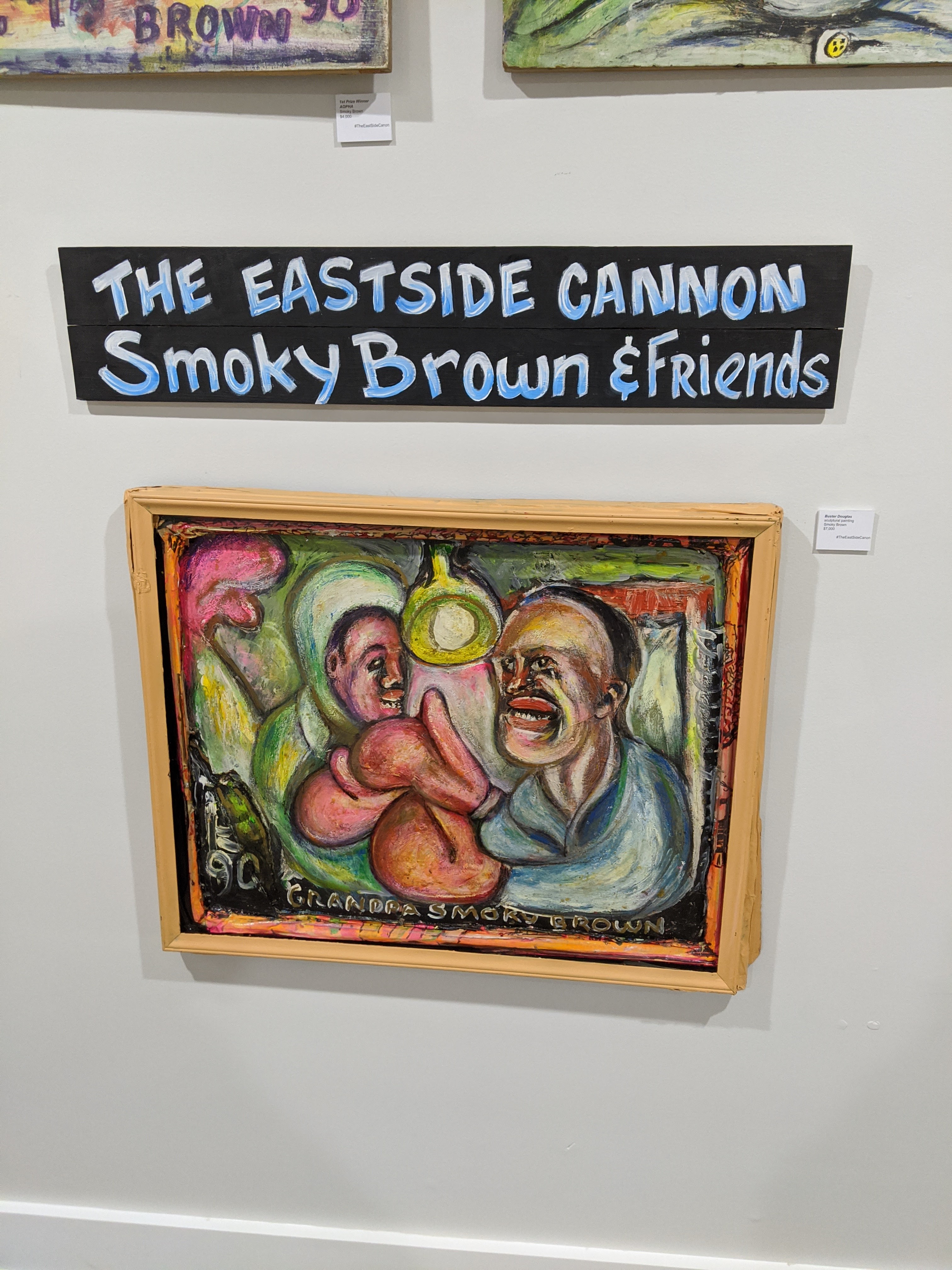
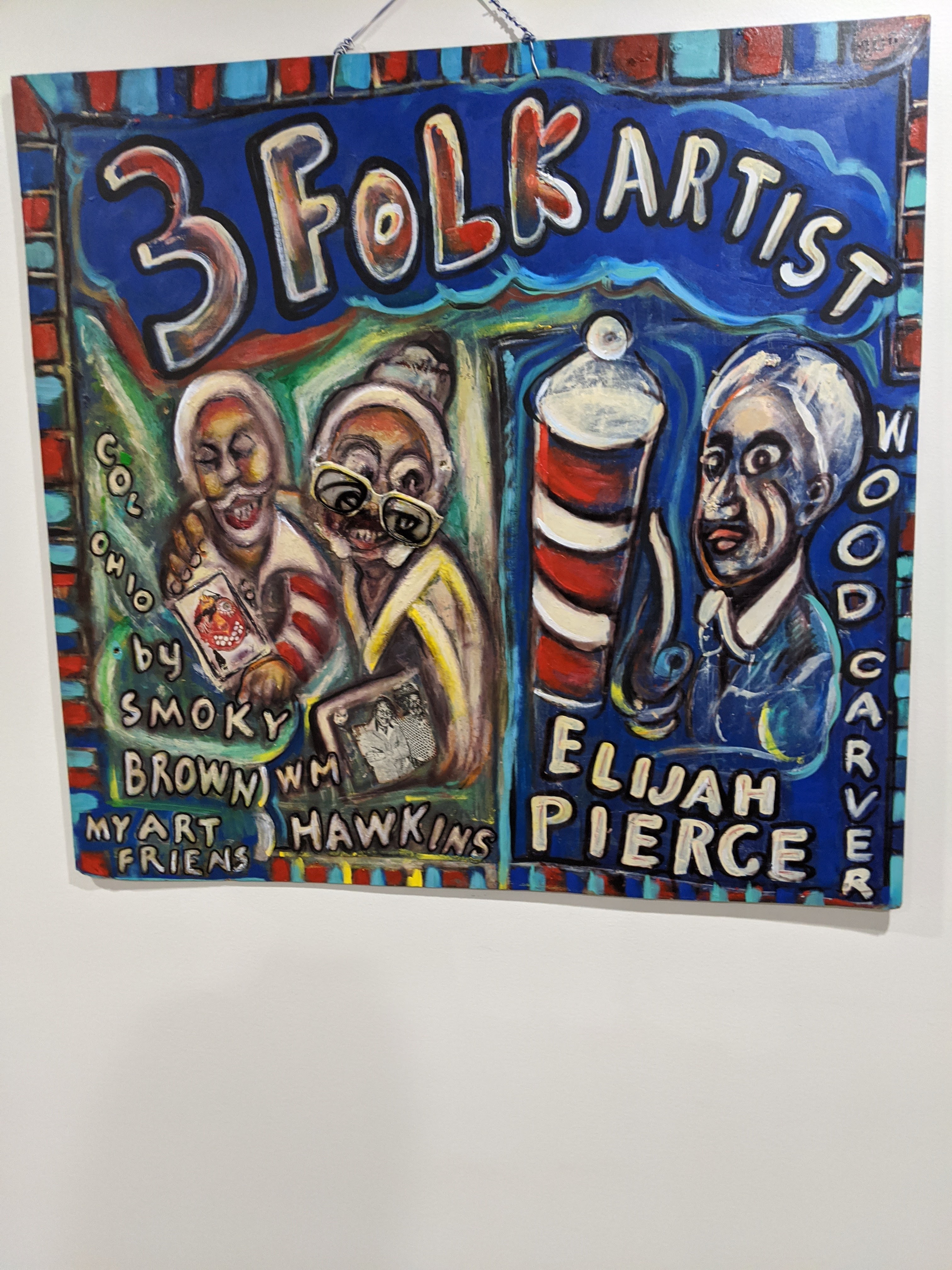
  • Smoky Brown and Friends, The Eastside Canon (Streetlight Guild) – Streetlight Guild, under the guidance of Scott Woods, has been the most exciting single Columbus art development in the last few years. The gallery exhibits are always worthwhile but this was special. One of the great guiding lights of local art, Smoky Brown, given a museum-quality show of work that was new even to someone like me who grew up here and thought I’d seen a lot of his work. Coupled with a selection of work from his collection. A lesson in valuing what’s around you and appreciating your friends and community.
LaToya Ruby Frazier, Wexner Center

Categories
Best Of visual art

Best of 2018 – Visual Art

“Attention is the beginning of devotion.”
-Mary Oliver

Delacroix, Metropolitan Museum of Art

This has been a year of incredible highs and incredible lows, the latter all self-inflicted. Wearing myself so far down I was susceptible to a week in the hospital with pneumonia. To spraining an ankle so hard I was in a boot for two weeks. But one thing that always helps center me, that lights and maintains the fire called wanting to go on, is attention. And no cultural activity centers me more, nothing puts me in my place, nothing bows the strings in my soul like trying to focus on visual art.

And I will say this in all three posts but the best macro-gratitude exercise I undertake every year is keeping track of what I see/listen to (I need to be better about tracking what I read) and going over it at the end of the year. I took in around 75 exhibits this year and narrowing it down to 20 was hard. I am, always, very, very lucky.

Anyone else sparked by this or who bothers to read these, I appreciate you . Drop me a line, let’s talk about what we both saw or what I’m an idiot for leaving off. Everything here is in Columbus and any photo is taken by me unless stated otherwise.

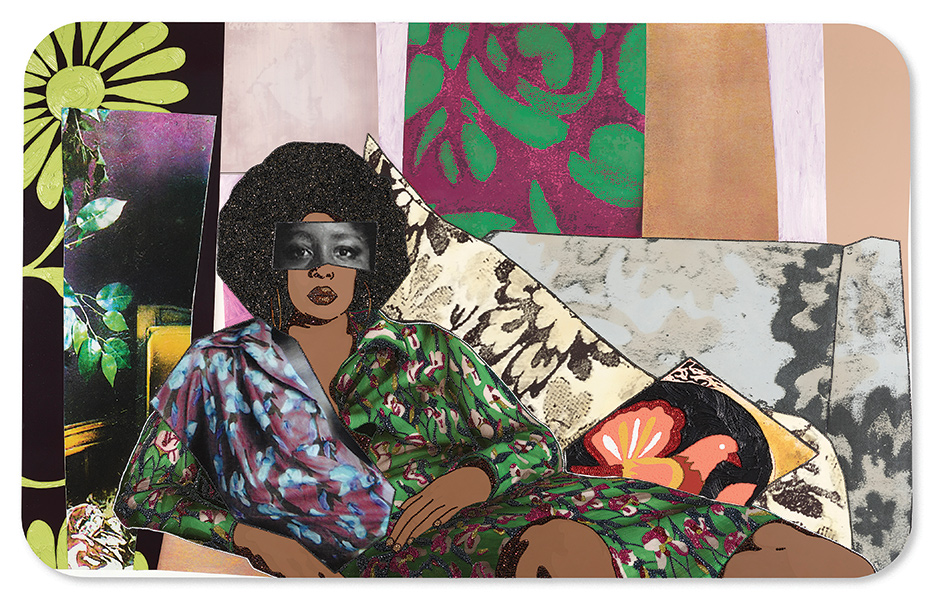
Mickalene Thomas, Afro Goddess Looking Forward, 2015, Courtesy of the artist via the Wexner Center, Copyright Mickalene Thomas / Artists Rights Society (ARS), New York

1. Mickalene Thomas, I Can’t See You Without Me (Wexner Center for the Arts) – I can’t think of an artist who better epitomizes taking all of art history and synthesizing it into a voice utterly, unmistakably hers, than Mickalene Thomas. The bounty of riches presented with I Can’t See You Without Me was like tapping into a deep vein and realizing it’s full of stars: completely personal, in touch with the world (and worlds behind the world) and full of monumental, magic beauty. Everything I love in art was in this show and while I visited it five or six times, I regret not seeing it seven or eight more.

David Wojnarowicz, Whitney Museum of Art

2. David Wojnarowicz, History Keeps Me Awake at Night (Whitney Museum of Art, NYC) – Dispatches from one era when the world was on fire still shone brightly in this dazzling retrospective of one of American art’s foremost poets of ecstasy and rage.

3. Yayoi Kusama, Infinity Mirrors (Cleveland Museum of Art, Cleveland) – I still remember the first time I saw one of Kusama’s Infinity Mirror Rooms, at my first Whitney Biennial. It was an eye-opening reminder of the power of repetition to unlock a world and a potent mix of serenity and discord. I came to love the permutations of her varied work over time, most prominently in a stuffed, ranging retrospective at the Whitney. but this hyper-focused touring show was a concentrated dose of the mix of sensations that first drew me in.

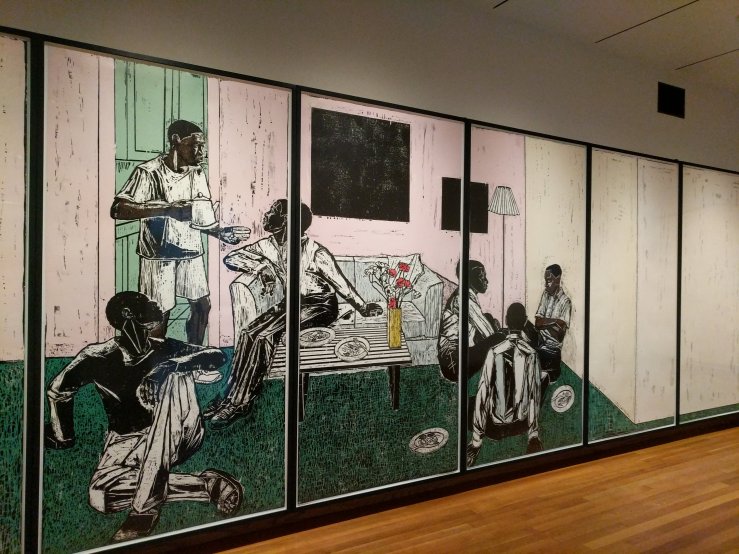
4. Kerry James Marshall, Works on Paper (Cleveland Museum of Art, Cleveland) – An epic-scaled domestic scene in panels fragmenting it like a comic strip and also recalling large Renaissance triptychs, was surrounded by other drawings in this tight, sharp show of an artist who only gets better.

5. Various Artists, Trigger: Gender as a Tool and Weapon (New Museum, NYC) – This ferocious trip through depictions of gender ended a January New York trip on a head-spinning succession of high notes, including Ulrike Muller’s jagged abstractions, a dazzling Mickalene Thomas video collage. This summed up everything I love about the New Museum when it’s clicking, work within the last 10 years – without cheaply valorizing youth – that summed up and exploded 40 years of the institution. A good sign for the future of the Wexner Center as the curator of this spectactular exhibit is the new director to succeed Sherri Geldin as director.

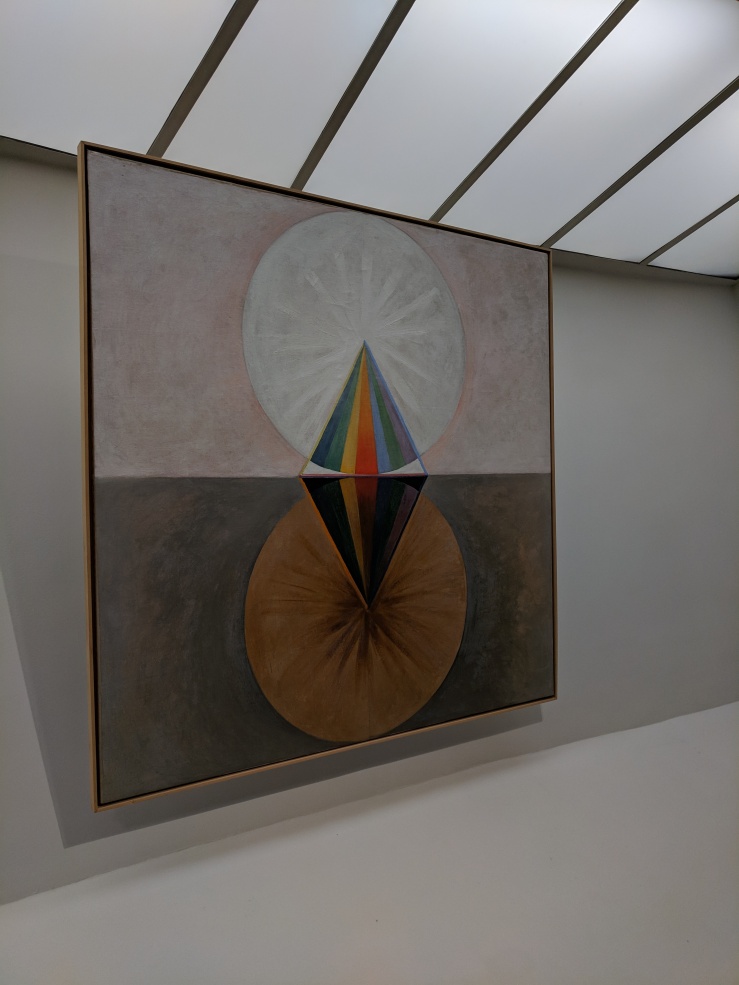
6. Hilma af Klint, Paintings for the Future (Guggenheim, NYC) – This hypnotic, transfixing, spiritual show cemented another contender for an originator of abstraction and opened my eyes to a voice I knew almost nothing about. A paean to the magic of drilling down into oneself with specific instructions not to show most of her work until 20 years after her death, working on instructions from spirits she communed with through a seance group. You couldn’t write af Klint’s story in a way that seemed believable but the art was as accessible as layered and elusive.

A Color Removed, SPACES Gallery

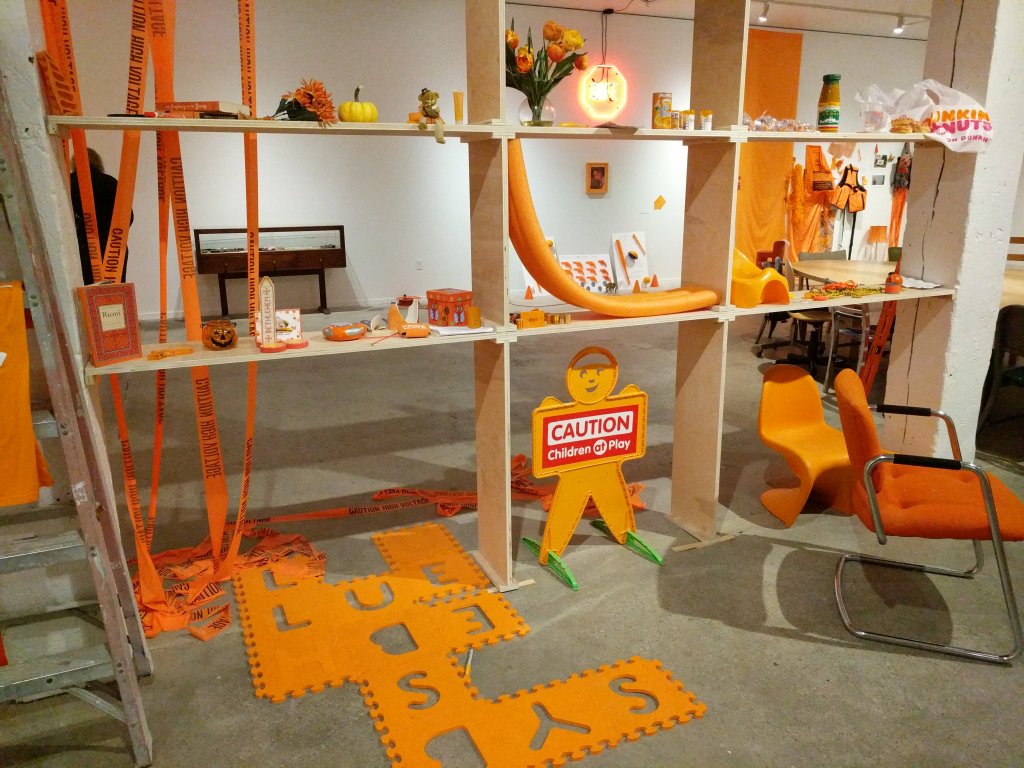
7. Michael Rakowitz with Amber N. Ford, M. Carmen Lane, RA Washington, and Amanda King with Shooting Without Bullets Youth Photographers; A Color Removed (SPACES Gallery, Cleveland) – Rakowitz in collaboration with a variety of local artists created an assemblage of the color orange, underlining the irony of trying to blame the deaths of children on the warning color or lack thereof. And it was one of the most devastating things I’ve ever seen in my life. A quiet temple to absence, loss, and rage.

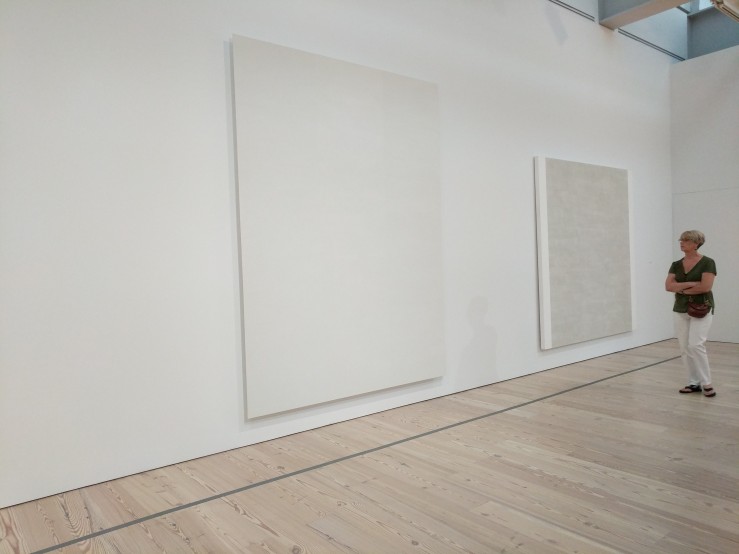
8. Mary Corse, A Survey in Light (Whitney Museum, NYC) – I walked into the Whitney that sweltering July day knowing I loved Wojnarowicz, steeped in him since I was a teenager. I had no such knowledge or preconceptions of Corse and her deceptively simple canvases pulled my breath right out of my body. Working with the most fundamental element not just of painting but of sight – light – she made me look at it in a different way that recalled the meditative work of so many earlier artists but was still like nothing I’d seen.

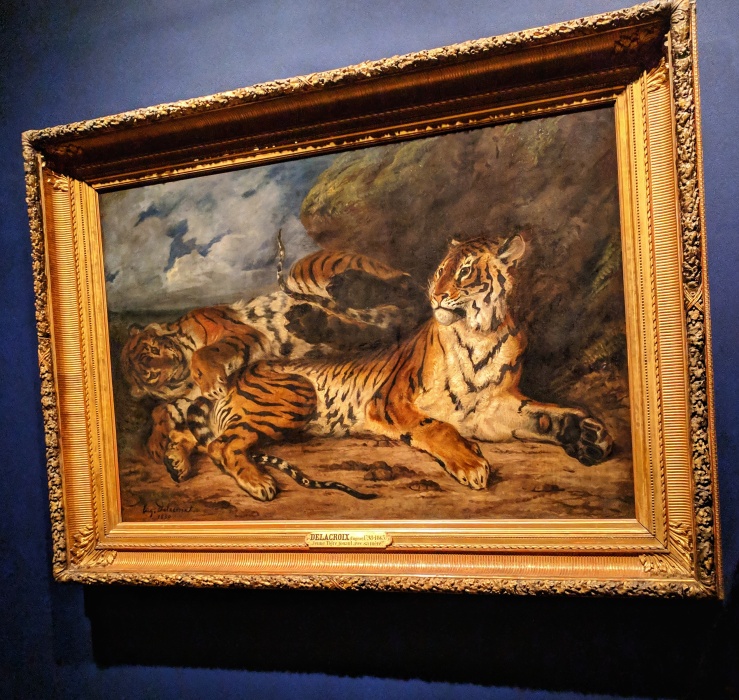
9. Eugene Delacroix, Delacroix (Metropolitan Museum of Art, NYC) – This presentation of one of the old masters I knew the least about was refreshing in a way art of that vintage doesn’t usually affect me. The breadth of his literary influences and the wide range of stylistic techniques were dazzling; a self-portrait casting himself as the main character in Scott’s Bride of Lammermoor led me to dub him the creator of the cosplay selfie. And it was not just the Musee de Nancy frame that led me to say, and my companions to repeat the rest of the weekend, “Delacroix is lit.”

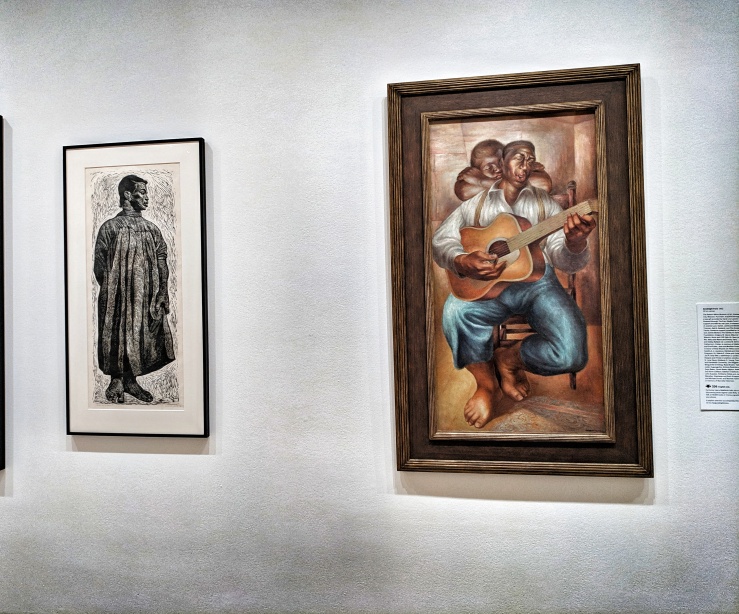
9. Charles White, A Retrospective (Museum of Modern Art, NYC) – Another artist I wasn’t as familiar with as I should have been, a 20th-century American, this selection of White’s work was the perfect thing to see upon first arriving in the city. Enormous, dazzling, powerful and rich with the contradictions and terror still reverberating through the fabric of daily life. Almost impossible to take in but refusing to let me go, demanding and not letting me off the hook.

10. Various Artists, Inherent Structure (Wexner Center for the Arts) –  The Wex hit a home run with this vibrant look at the ways contemporary artists continue to suck the marrow out of traditional concerns of abstract painting while tweaking and subverting it. One of the best-arranged exhibits I saw all year, where every corner I turned revealed something else about what I’d seen and what I was about to see without pandering to the obvious. Artists I already loved like Amy Sillman illuminated a gateway toward those I knew less (Angel Otero) and those completely new to me (Channing Hansen).

11. Carolee Scheenman, Kinetic Painting (MoMA PS1, NYC) – This expansive retrospective, going back to the ’50s, was a lesson in how not to weaken in rigor, in curiosity, in feeling. Scheenman did almost everything and did it all with blinding heat and depth that continually revealed itself. Shaming and inspiring and astonishing.

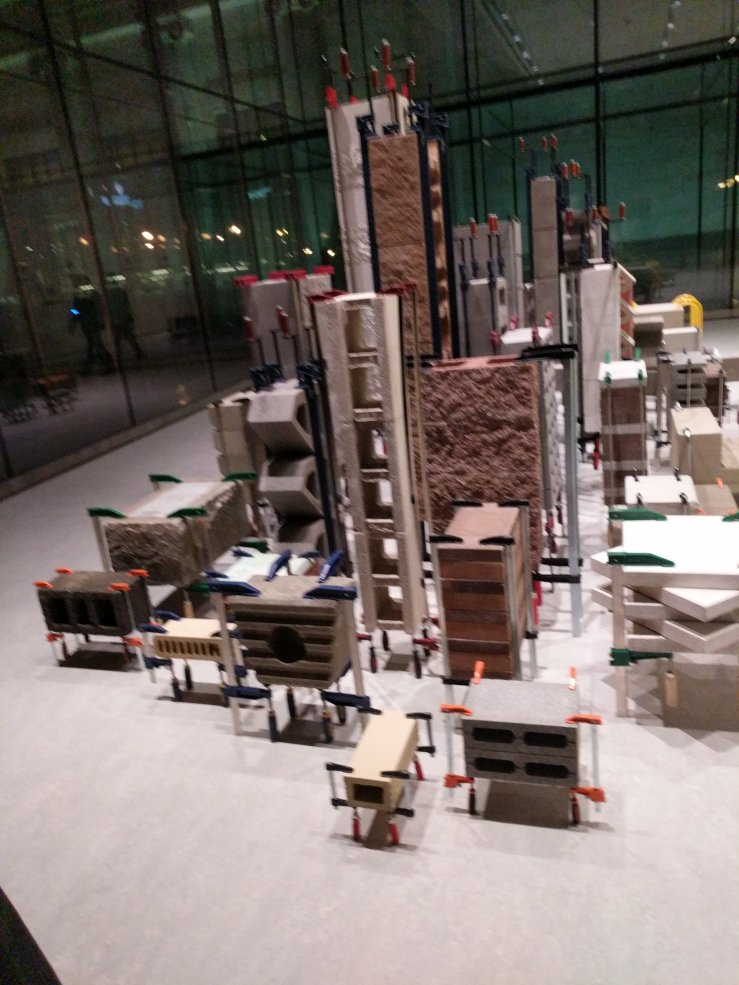
12. Marlon de Azambuja and Luisa Lambri, Brutalismo-Cleveland (Cleveland Museum of Art, Cleveland) – Another piece in the fantastic Front triennial, this collection of local materials in an iteration of de Azambuja’s ongoing series investigating Brutalism paired with Lambri’s photographs in something that was unsettling and perfectly in keeping with its surroundings (not just the Breuer wing of the CMA but Cleveland itself).

Phyllida Barlow, Hauser and Wirth

12. Phyllida Barlow, Tilt (Hauser and Wirth, NYC) – There was no shortage of art I saw this year that grappled with the way we in more privileged vantage points have realized the world doesn’t sit on its axis as comfortably as we once thought. Very little did it with the same arresting punch as British artist Barlow. A queasy circus singing a melody in its own voice, a voice that haunts me weeks later and I want to hear more of. Seeing the nods to Brutalism in these pieces transported me to the de Azambuja earlier on the list and the way those two artists of different nationalities exhibiting in different cities and different seasons spoke to one another in my head was a tribute to trying to see as much art as possible.

13. Sarah Lucas, Au Naturel (New Museum, NYC) – There’s a recurring theme in what shook me this year: artists I damn sure should have known better. Sarah Lucas epitomizes this, storied career as a sculptor I mostly knew as a name, one of the Young British Artists, with Hirst and Emin. This intense, witty, beautifully vulgar retrospective was everything I want art to be – speaking not just truth to power but a specific, personal, idiosyncratic truth.

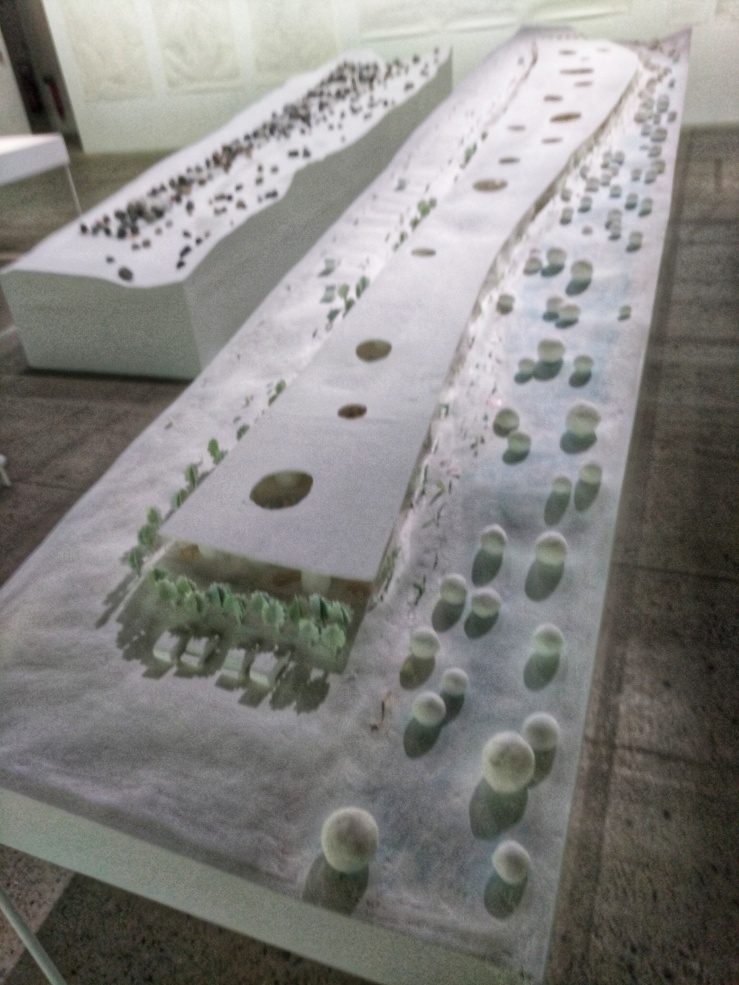
14. Junya Ishigami, Freeing Architecture (Cartier Foundation, Paris) – Most of my first trip to Paris was spent doing exactly what you’d expect – the Louvre, D’Orsay, Centre Pompidou, Shakespeare and Company, wandering boulevards, drinking wine, all spectacular. So I was surprised by how affecting I found this show of a visionary Japanese architect. Breathable open spaces that feel like the future; echoes of ’70s science fiction movies like Silent Running but also evocative of the flowing purity of a Basho line or the meditative canvases of Agnes Martin. I wanted to live here. Paris, sure, but also inside these models.

15. Cyprien Galliard, Nightlife (MOCA, Cleveland) – I’ve been a fan of Galliard’s since the Wex showed his photographs but I’ve never been as enchanted as by the swirling dive into the after-dark of this video installation. Rodin’s The Thinker shattered by a bombing (the version in Cleveland), a tree planted to celebrate Jesse Owens also in Cleveland, fireworks over the site of the 1936 Berlin Olympics where Owens, shuddering plant life around Los Angeles streets, all throbbing to a looped sample of the Alton Ellis classic Blackman’s Song, the original chorus of “I was born a loser” melting into the re-release of “I was born a winner.” I could have stayed there for hours

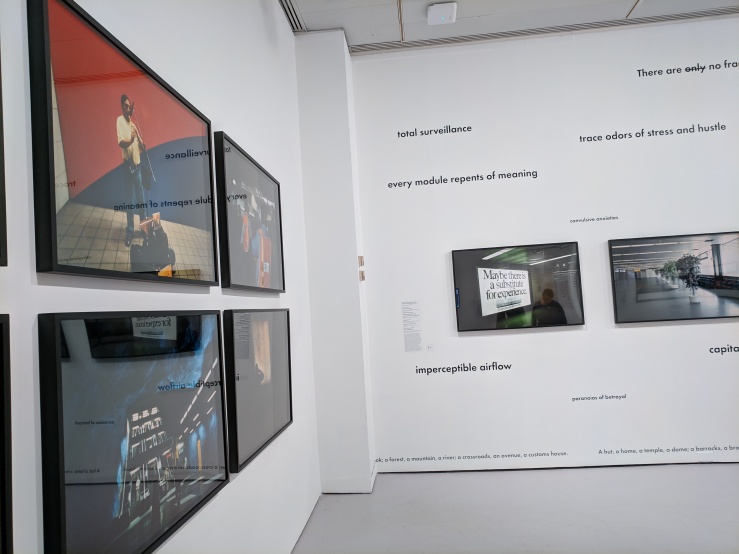
16. Martha Rosler, Irrespective (Jewish Museum, NYC) – Martha Rosler’s acerbic retrospective at the Jewish Museum was the kind of fresh air and reawakening to the atmosphere of terror around us I needed. Steeped in language and sharply aware of the limitations and obfuscations of every vocabulary, this was as immediate and accessible as a slap in the face but also layers upon layers.

17. Susan Phillipsz, A Single Voice (Tanya Bonakdar, NYC) – Phillipsz is the master of the subtle, disorienting environment and one of the finest artists at using sound in a gallery setting. An installation with film of a violin player playing a snatch of score from a Karl-Birgir Blomdahl opera, with 12 speakers bouncing the violin tones through the room and surrounded by canvases caked in salt and named after the Lachrimae. Defying description and intoxicating at the same time.

18. Jennifer Packer, Quality of Life (Sikkema Jenkins & Co, NYC) – Packer achieves a balance of the intimate and the explosive that’s unlike any work I’d ever seen. These breathtaking canvases all had an interiority that I found beguiling, coupled with potent colors and surprising juxtapositions that grabbed me by the collar and forced me in off the street.

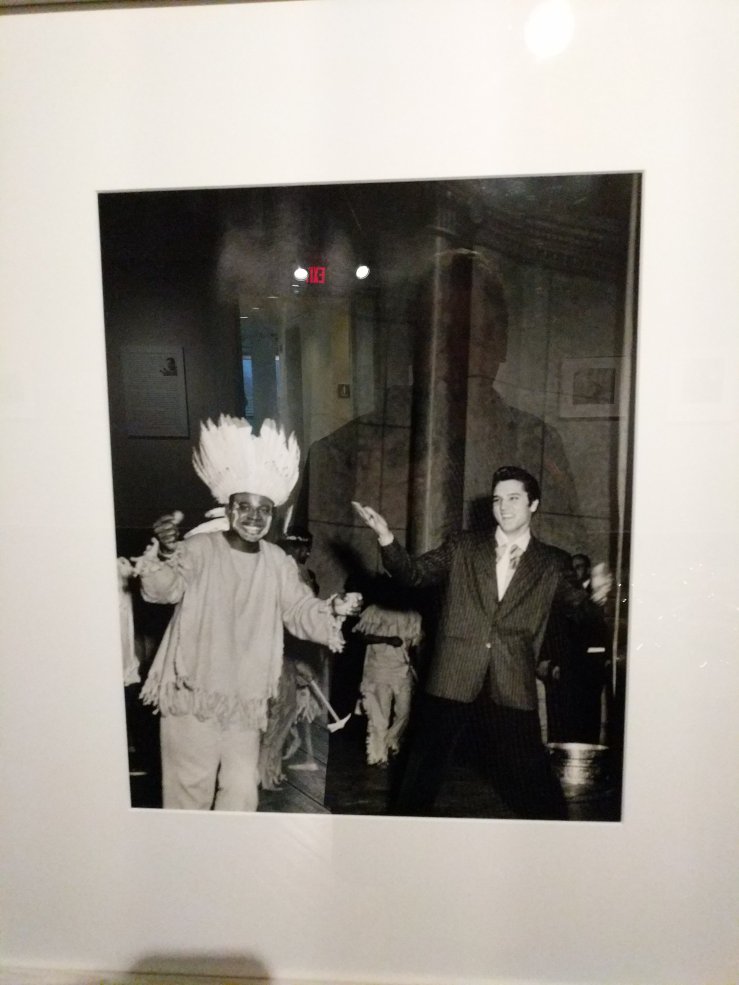
19. Ernest Withers, A Buck and A Half A Piece (Brooks Museum, Memphis) – Everything at the Brooks Museum this trip reminded me why it’s a must-stop in Memphis, the Jaume Plensa work very nearly made this list. But that slice of Memphis photographic history on the main floor wouldn’t let me go. Withers was a master at documenting cultural life (like the photo of Rufus Thomas and Elvis Presley above), civil life (with arresting images of the civil rights movement like the SCLC conference) and day-to-day “ordinary” life the way we should always see them: as parts of the same fabric, not discrete plants grown in their own pots.

20. Various Artists, All Too Human: Bacon, Freud, and a Century of Painting Life (The Tate, London) – It’s no surprise Francis Bacon and Lucian Freud were massive to me from the moment I was first aware of them; so seeing this retrospective on their home turf in my first trip to London was amazing. But more than that, this retrospective accomplished the tricky feat of showing these names as the nucleus of a burgeoning movement without overly inflating or denigrating the lesser-known student works. It painted the kind of picture that normally I’d have to buy the catalog to come close to.