We’re in both a golden age and a glut of music documentaries right now. The most moving example I’ve seen in a while, and I fully admit to my biases here, is Tamara Saviano’s gripping, intimate portrait of songwriting guiding star Guy Clark, Without Getting Killed Or Caught.
Saviano logged many hours in Clark’s world writing her excellent biography of the same name. She made the brilliant choice to tell his story through the voice of Susanna Talley Clark (also an acclaimed songwriter with big hits like “Come From the Heart” and “Easy From Now On,” along with being a painter and writer). Saviano uses Susanna’s audio diaries and her written diaries narrated by Sissy Spacek to capture that vital voice.
Because Susanna’s voice is so prominent, much of the movie focuses on the inseparable trio rounded out with Guy and Townes Van Zandt. Still, Saviano never lets it turn into a Townes movie. The impeccable editing keeps the focus without ever getting mired in minutiae.
Saviano also avoids the trap of too many talking heads. Every person in the film is someone Guy loved and who loved Guy and Susanna. The closest thing to a record label suit is Barry Poss from Sugar Hill, who helped resurrect Guy’s career at a low point. He adds vital color to Guy’s place in the burgeoning Americana scene. There’s no bending over backward to prove the subject of the film is important.
Everyone who appears – Steve Earle, Vince Gill, Verlon Thompson – knew Guy’s love up close. Nowhere is that more clear than Rodney Crowell, who almost serves as a joint narrator. The quick cutting from one of these almost invariably laughing voices to another reminds us of how art and personalities can bring people together. A scene which epitomized this feeling came with the clip of Guy taking a long drag of wine and pointing to a very young Steve Earle and saying “You need to hear this” to the camera from Heartworn Highways echoed through Rodney Crowell talking about writing the last song with Guy almost 40 years later.
There were more of those moments in this film than I could keep track of. One that echoes with me a couple of days after seeing this was the revelation he wrote “She Ain’t Going Nowhere, She’s Just Leaving” for Bunny Talley, Susanna’s sister, who killed herself. Then the hammer drop of Guy’s recorded voice recounting the story with the line, “Part of being alive is going through that veil of tears.”
Anyone with the slightest interest should check this out in its staggered digital screenings and whenever it finds a more permanent home. Without Getting Killed Or Caught reminded me how much I love my friends and was an incitement to be better.
Amina Claudine Myers, taken from livestream and edited
Amina Claudine Myers Solo
Keyboardist Amina Claudine Myers is the beating heart of the soulful Chicago avant-garde that enraptured me as a teenager and shaped so much of my tastes then and since. Arts For Art, the organization that helps present Vision Festival, has done more to keep the flame of this music strain alive when we can’t gather than anyone else. They outdid themselves with a birthday set by the great one herself on solo piano.
In the same room they’ve used for other streams, Arts for Art deployed their typically excellent sound design and production values. Every vibrant note rang out of the piano and washed over me, almost making me forget I was so many miles away, watching it on Youtube.
A long ballad with sparse, affecting lyrics floated on chords that seemed to play in the dappled Sunday sunlight when I watched this. A speedier, percussive, swinging piece used clusters of notes to make me feel the pounding in my chest a little more deeply.
For this hour of her birthday, Myers treated us to gorgeous conversations with the universe, her intense history of the piano, and with the core goal of turning personal expression into a deeply felt sense of connection with her chosen community. I was lucky to even be in the room, virtually, for this reminder of everything I love about music.
L-R: Ashton Lambert and William Porter in the Otterbein Departments of Theatre & Dance and Music production of “Into a Lamplit Room: the Songs of Kurt Weill.” Photo By: Mark Mineart; provided by Otterbein
Into a Lamplit Room: The Songs and Life of Kurt Weill produced by Otterbein University
I hadn’t checked in with Otterbein University’s virtual offerings this season until now, and I regret I wasn’t able to make my schedule such to write a full preview of their delightful Kurt Weill tribute, which aired last week.
I’ve long been a fan of Weill, in my case going back to a Grandmother who loved standards (and placed “September Song” so high it was practically the star on the Christmas tree) and the Hal Willner compilation Lost in the Stars I found on a campus record store run during High School.
And I love what Otterbein does. Their focus on very traditional, entertaining storytelling with rock-solid standards for singing and dancing occasionally lines up with my more idiosyncratic tastes for some of my favorite experiences in town – in recent years they gave us a Top Girls and a Fiddler on the Roof I still talk about.
Into a Lamplit Room, a 2013 revue devised by CCM Musical Theatre chair Aubrey Berg with arrangements by Julie Spangler, soars. I hadn’t realized how much I missed what they do until watching this a stellar young cast of Emily Baggarly, Lucy Breedlove, Nijah Dent, Ashton Lambert, Kate Maniuszko, Victoria Mesa, William Porter, Max Pinson, Hannah Schmidt, Tru Stites, and Dean Yurecka splash a new coat of paint on these time-worn chestnuts. I apologize I didn’t capture who sings what – my press data just says there are no named characters. If someone wants to fill me in with the comments or in an email, I’d appreciate it.
Under the expert hands of director Thom Christopher Warren and musical director Lori Kay Harvey, Into a Lamplit Room balances the rat-a-tat-tat percussiveness and wordplay of these songs with a necessary acid irony befitting the times they were written and just as useful a tonic today.
The former glows like a knife on finger-snapping romps through “Schicklgruber” (with expert use of split-screen), “Economics,” and a riotous “The Trouble With Women” sung by the women in the cast.
Not every experiment works. There’s an off-kilter “Mack The Knife” that tries too hard to put the sociopathic narrator in a social context and falls flat – though the gorgeous black and white footage of the cast at Westerville hotspot Asterix made me miss that bar with a visceral pang.
At its best, Into a Lamplit Room summed up what I love about these songs and gave me fresh ears. The cast’s women harmonizing and trading off on a brittle, wrenching “The Soldier’s Wife” stunned me. A breathtaking “Pirate Jenny” made the line “And you yell, ‘Why the hell do they spare that one?’” hit like an acid-tipped dagger. A duet on “Moon Faced, Starry Eyed” was ribald perfection and a crackling showcase for Stella Hiatt Kane’s always dazzling choreography. A bravura “Cry. The Beloved Country” excellently used footage around the Short North without detracting from the jaw-dropping singing.
I want to take a moment to highlight the stellar production values. Otterbein takes deserved pride in the technical side of their theatrical education department and Warren, Harvey, Kane, scenic designer Rob Johnson, and costume designer Rebecca White, with special attention to Avery Barrett’s stage managing, T. J. Gerckens’ lighting and the sound design team of Doc Davis and Kailey Miller, made something that sounds and looks every bit as good as it does in their big concert hall. It’s a tremendous achievement and a hell of a lot of fun.
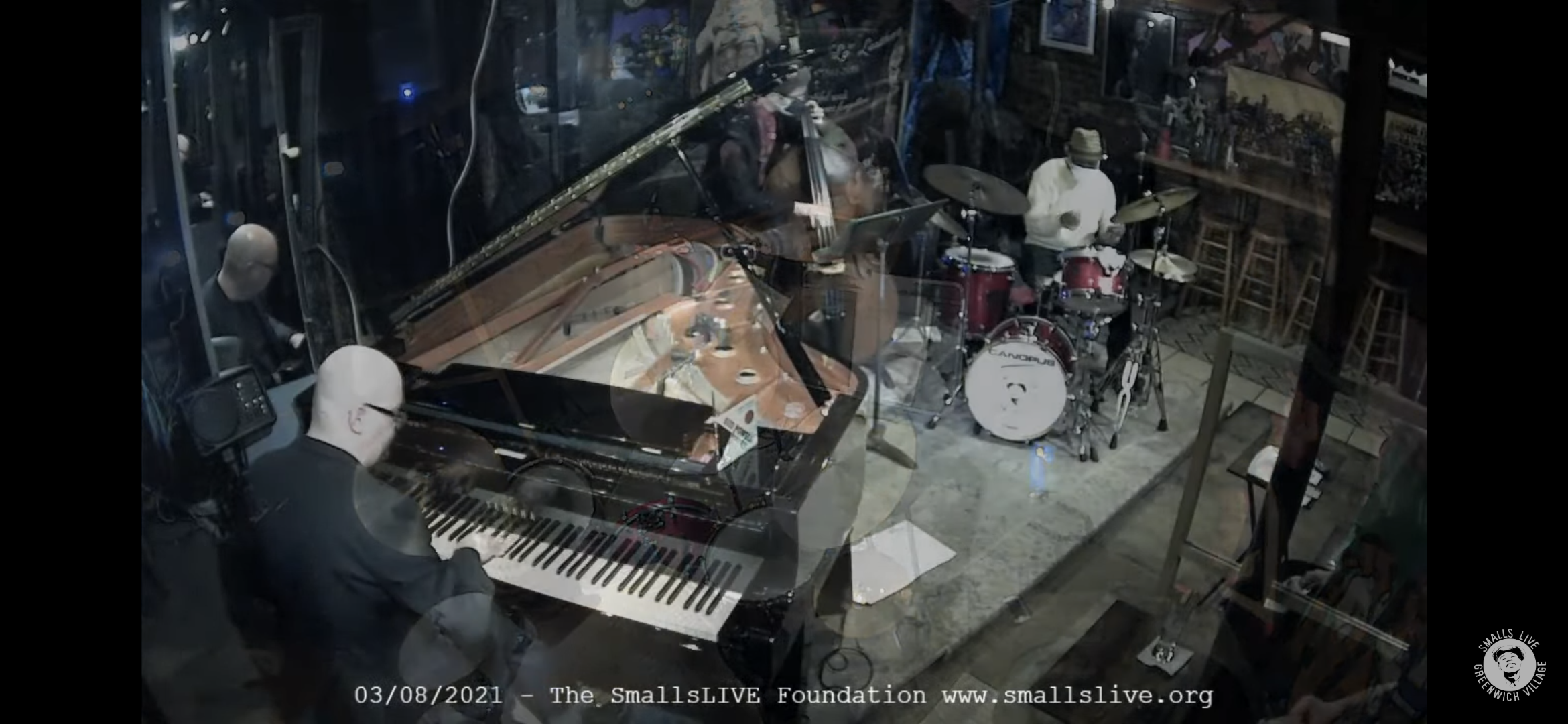
From left: Ethan Iverson, Thomas Morgan, Andrew Cyrille. Taken from stream and edited.
Ethan Iverson Trio at Smalls
I raved about Ethan Iverson’s vibrant new record Bud Powell in the 21st Century in last month’s playlist. In place of a record release, Iverson convened a top-tier rhythm section to play one of the temples of classic bop, Smalls, in a set of almost entirely Powell and Thelonious Monk compositions.
Andrew Cyrille on drums, 81, is an inspiration. I’ve been a fan for almost as long as I’ve cared about jazz – my gateway came from his work with Cecil Taylor, especially buying Unit Structures at 18 and hearing him power the rhythm of the massive, undulating machine – and he’s blown me away with reeds players like John Carter and Bill McHenry. Still, there’s a particular delight watching him lock in with a piano player. Thomas Morgan on bass brought vital color and dancing propulsion to recent Bill Frisell and Henry Threadgill records.
The two sets here are a clinic in how much life there is in these songs. It’s no exaggeration to say I probably own 30 versions of the opening tune here – Monk’s “Well You Needn’t” – and I’ve heard it at least 200 times over 20+ years of assiduous show-going. Those first notes brushed any preconception away, and I listened with grinning, childlike glee like the first time.
At once point, Iverson says, “It feels great to play,” and that joy suffuses everything in these sets: the interlocking handoffs on “Bouncing With Bud;” the long solo piano intro building to a luxurious simmer of “I’ll Keep Loving You;” the explosive, contained cacophony on “52nd Street Theme” with Iverson’s gleaming, sharpened attack rubbing up against Morgan’s thick, declarative notes and Cyrille’s hooky patterns.
Smalls has reopened to limited capacity audiences, and as great as the no-audience streams are, as lucky as I feel to have them, there’s a distinct difference in the vibration of these shows, even having ten people in the audience creates the feedback loop I’m missing and, as I see it close on the horizon, makes me miss being in the room with the music very much.
I unabashedly want every venue to make it through to the other side of this. I want the places in my neighborhood that are clubhouses for other musicians, for loudmouths like me, where I’m likely to randomly stop in and discover something thrilling, like Dick’s Den and Ace of Cups to still welcome us all with a heavy pour and friendly faces. I want the places that make me feel old and bring stuff that’s setting kids’ hair on fire to keep giving us all hell – Cafe Bourbon Street, No Place Gallery (give to their fundraiser to relocate), all the house shows.
But it’s no secret there’s a special place in my heart for the Natalie’s family, Natalie and Charlie Jackson, but also their fantastic staff. As soon as they opened the first location in Worthington, this was a model of venue we just didn’t have in Columbus: the closest comparisons were to City Winery (at the time only in NYC) or the Jazz Standard, where sound and the listening environment were given the same kind of care as excellent food and service.
And within six months, it became apparent we were on the roadmap of acts that hadn’t come to town since Dan Dougan’s Little Brothers closed: Big Sandy, Robbie Fulks, Scott Miller, Barrence Whitfield. Artists raved about it to other people. Soon, they established synchronicity with another booker I’ve talked about as the only reason Columbus is such a strong market for the kind of storytelling roots music I love: Alec Wightman and his Zeppelin Productions.
I’d follow what Wightman books anywhere, and I have, through the uncomfortably tight Columbus Music Hall to the booming Mannerchor, dancing with ghosts in the Valleydale Ballroom, all some of the best shows I’ve seen anywhere, in any city. But there was a unique and comfortable magic when he started bringing things to Natalie’s, even when I had to be on my game to ensure I wasn’t shut out of a seat.
Natalie’s was also hit harder than many venues because the pandemic came only a few months after they expanded into a second, larger, more flexible location. And while there were a few new-venue jitters, seeing a Zeppelin show – Chuck Prophet solo acoustic – early in 2020 made me hungry to watch this venue grow into the same kind of love I have for their Worthington room.
The pivot to live streams has been well-done in this climate, keeping the high sound and production values standards we know and love from their venues. And it speaks to the sterling reputation of both booker and room that Zeppelin assembled a who’s who of towering figures in roots rock and Americana to donate a short video to help out Natalie’s.
These songs usually came accompanied with sweet words about the space. Many artists – including Tom Russell, who started Alec Wightman booking shows – brought brand new work. Artists did huge hits: Kevin Welch with a song he wrote for Chris Stapleton in a stripped-down, tough, and lovely version. Artists known for their high energy rocking, like Sarah Borges and Rosie Flores, brought more nuanced, shaded sides of their personae.
A couple of artists brought gleeful, surprising covers. Chuck Prophet and Stephanie Finch did “The Little Black Egg,” known to most music fans for its inclusion on Nuggets but with extra resonance as Ohio was one of the few markets it was a real hit. Ward Hayden and the Outliers romped through a joyful, winking version of Ernest Tubb’s “Thanks a Lot.”
And it’s maybe not surprising the performance reverberating in my bones a couple days later as I write this was by Bruce Robison and Kelly Willis. They did Robison’s song “Lifeline” off their first duo record, Cheaters’ Game.
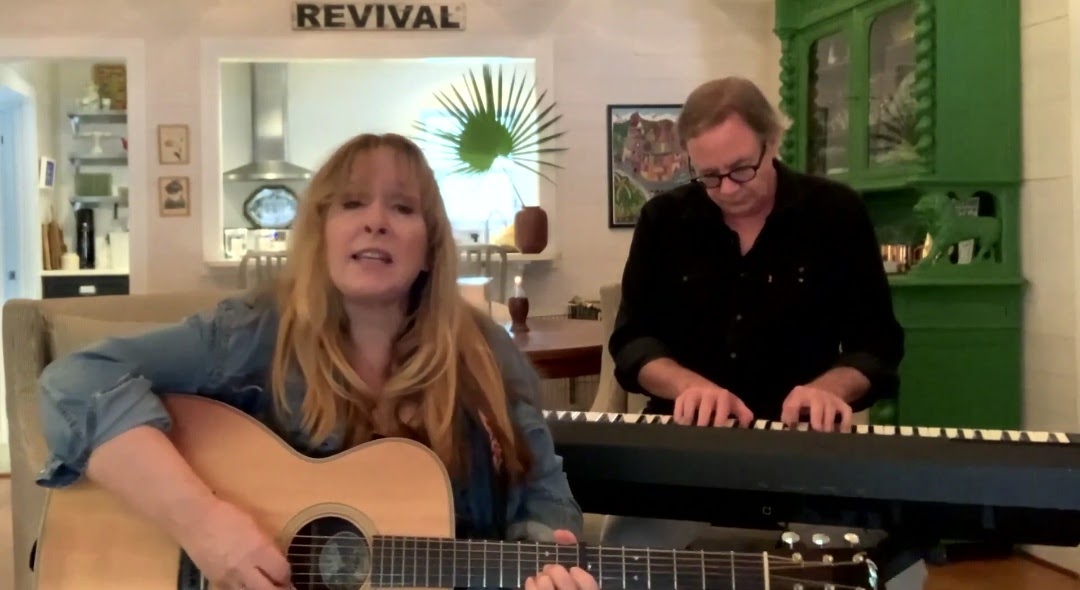
Bruce Robison and Kelly Willis, taken from stream and edited
As soon as I heard it, it was one of my favorite songs in a catalog packed with contenders. It’s prime Robison, a story song with enough left unsaid for magic to get in, about the ways we connect, like it or not – “There was a crackdown in the street tonight: the stars and the boys ended up in a fight. One step over the line, he says that his Daddy knows mine.” The ways we hunger to connect, “True love comes in the dark, by the rocks and the trees and the rocks in the dark.” The ways we fail to connect, studded with indelible images, “She used to curl up like the steam from a train.”
The taunting darkness as the last verse ends and the final chorus opens were what stuck with me, the tricky balancing act of hope as an act of survival. The way Robison and Willis sing “So damn hard to find…” with a delicate enjambment change the meaning into “Find you” then repeat “Find you” until the previous line almost falls away, getting louder and more powerful, no longer “Find a little lifeline but “Find you a little lifeline – a little bit of hope. In the deep, dark night, need a little bit of rope.” None of us can wholly save each other, and we can’t save ourselves alone, but we can all provide a little rope, in one way or another.
Thank you, Natalie and Charlie and Alec – and Bruce Robison and Kelly Willis and all the other artists – for reminding me of that. I hope my small contribution added to that hope.
From left: Joe Lovano, Tyshawn Sorey, Bill Frisell. Taken from stream and edited
Tyshawn Sorey/Joe Lovano/Bill Frisell at the Village Vanguard
I’ve waxed rhapsodic about the live streams coming from the legendary Vanguard before, but this weekend’s performance exceeded even my outsized expectations.
I discovered tenor saxophonist Joe Lovano and guitarist Bill Frisell when I was in High School, a solid 15 years into their active careers. They hit creative strides – Lovano on Blue Note Records and Frisell with Nonesuch, as leaders – that period. My burgeoning love for their work led me to the first time I ever heard the drummer Paul Motian: a trio record in this same location that came out a couple of years earlier when I was 15.
This trio date at the Vanguard links these two giants with one of the brightest lights in jazz and chamber music on drums. Tyshawn Sorey’s playing carries the torch of Motian along with a hundred other influences he distills into something fresh, astonishing, and unmistakable.
The same childhood friend who hipped me to Frisell, Mike Gamble, turned me onto Sorey right after college. I was an immense, drooling fan – anyone who’s read my work has seen him dot year-end lists in almost any year I managed to overlap an NYC trip with a performance of his: Fieldwork at the old Jazz Gallery with Gamble and our other High School buddy, poet Dave Gibbs; Paradoxical Frog at Cornelia Street; as a leader at the Vanguard.
This set vibrated with the spacious, organic magic that’s a trademark of these players. I frequently have a more challenging time paying attention to a live stream than being there in the room – too many distractions – this set had the opposite effect: I couldn’t pay attention to anything else except to write some notes down.
Moments that left my jaw agape, and me gasping came in torrents and also with the perfect, mesmerizing placement of a night’s sky full of stars. Sorey hitting three notes on the vibes, playing off Frisell’s comping, between some skittering, delicate and intense cymbal work, changed the whole texture of Lovano’s dark, lush melody. An unaccompanied Lovano rolling around a theme to amplify the right textures until the band comes in with a clatter and the tune turns into a tightrope knife dance.
A breathtaking set as good as I’ve ever seen anywhere, and something that makes me lucky for the few pleasures we have in these times, and so fortunate people make art despite it all.
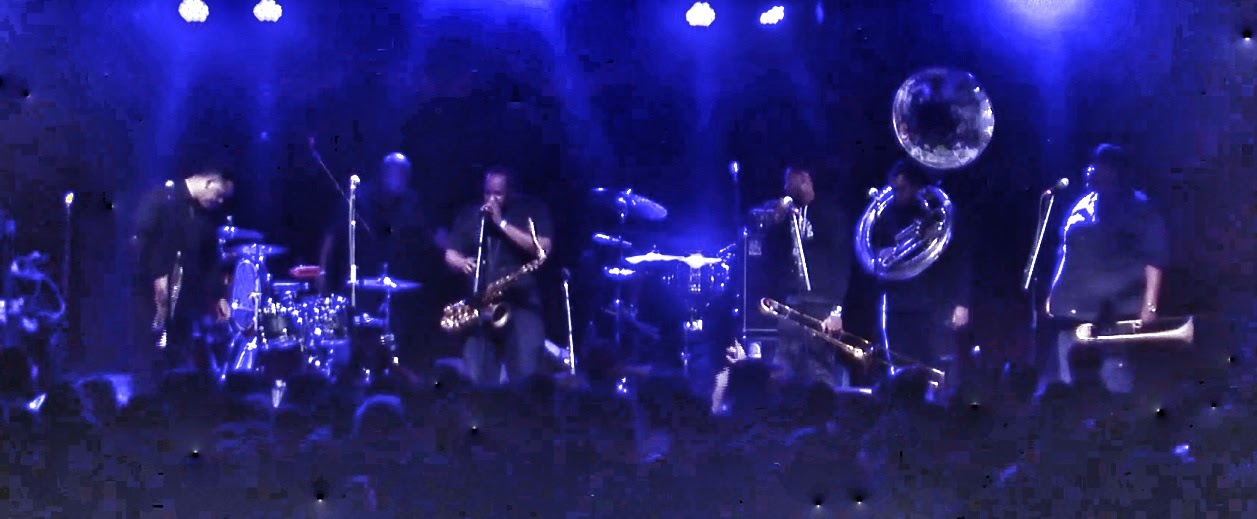
Soul Rebels Brass Band, taken from stream and edited
Soul Rebels Brass Band featuring Roy Hargrove at Brooklyn Boowl, presented by FANS
FANS’ streaming arrangement with Brooklyn Bowl and jamband outlet Relix has given many of us the opportunity to see killing archival sets and throw some money at hurting bands and venues right now.
This 2015 end of a three-night run that paired New Orleans funk titans the Soul Rebels with trumpet master Hargrove was sticky, sweaty rapture. Nothing’s ever as good as being in a room with those slurred, fiery notes washing over a crowd that feels like one undulating body but the sound and videography here gave a hell of a taste.
Watching this, I flashed back to a visceral, burning memory of seeing Soul Rebels Brass band take the Newport to church opening for Trombone Shorty, on a December night, as they raged through tunes like Michael Jackson’s “Rock With You,” D’Angelo’s “Spanish Joint” and originals like “Turn It Up.”
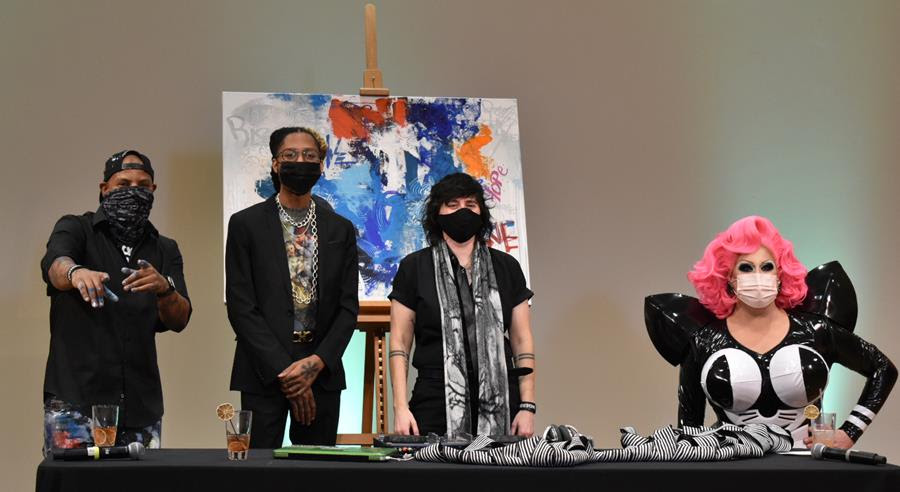
From left: Lance Johnson, Hakim Callwood, Moxy Martinez, and Nina West; promotional image provided by Columbus Museum of Art
Wonderball at the Columbus Museum of Art
For the last few years, Wonderball has been one of the best parties in town. The CMA is setting the standard for museum fundraisers with integration of the work in the galleries, multidisciplinary performances, and outreach to the various corners of the vibrant Columbus scene.
Their digital pivot this year, born of sad necessity, had the same homespun charm and brilliant execution of past years and I was overjoyed to watch it in the backyard of a couple good friends. Fantastic co-hosts Hakim Callwood and Nina West (in a jaw-dropping Felix The Cat Clock dress) kept the show running live with Lance Johnson doing a live painting and Moxy Martinez providing beats.
Mixing live and pre-recorded pieces, they treated us to a gorgeous poem by Cynthia Amoah. They filmed myriad genres of dance throughout the galleries including Amelia Gondara & Micaela Gonzalez, Griset Damas-Roche, and my favorite, Shades of Color with Donald Isom and Brianna Rhodes dancing a duet to Jason Moncrief’s flute playing in dialogue with one of my favorite Kehinde Wiley pieces.
As one of the friends we were in person with said, “An advantage of doing it this way is you can really watch a full performance. There’s no pressure to get out of people’s way to let them see or feeling like you have move on quickly so you don’t miss something else.” And it really was a great side effect of this change.
Many of the DJs who make Wonderball such a terrific party brought their A game. Trueskillz and Aloha spun a vibrant worldbeat set. Heatwave’s DJ Adam Scoppa and DJ Lady Sandoval tore through some classic soul 45s. Ty “Nordiq” Williams laid blissful, throbbing electronica on us.
Nothing is the same as when we can all be together but anything that lets us mark these important events while staying safe is to be applauded. Anything that does it with this kind of aplomb, grace, and sense of fun is a damn miracle.
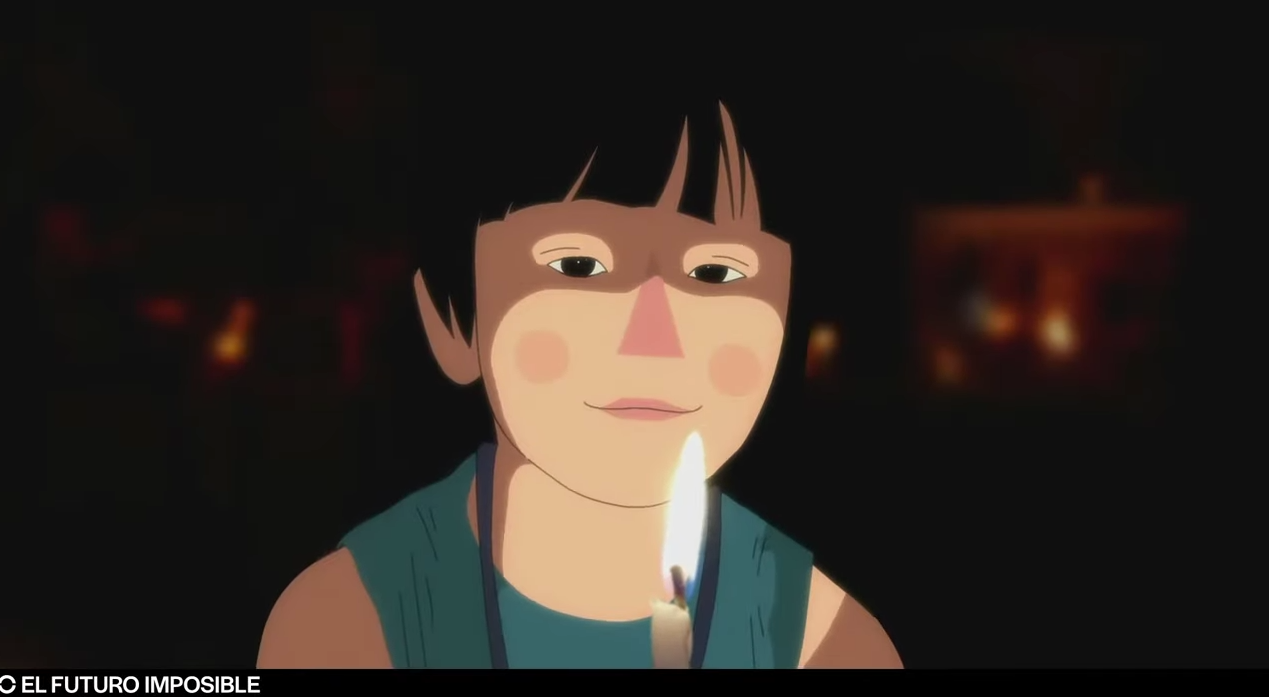
El Futuro Imposible, taken from stream of The World Around Summit 2021
The World Around Design Summit presented by the Guggenheim
One of my favorite things is hearing smart people take on the world, especially in a field I know very little about. The Guggenheim put together an international virtual festival of architecture and design and it made my heart soar to watch people actively engaged with where we are and where we’re going.
Lines from this sent me to my notebook and kept nagging at me throughout the weekend.
Alice Rawsthorn said, “By sharing constructive design issues on Design Emergency, we can persuade more people, decision-makers especially, to see design as we do: as a powerful tool to address social, political, economic, ecological challenges and to place it at the forefront of the post-pandemic reconstruction. Design isn’t a panacea for any of [our] challenges but it is one of our most powerful tools with which to tackle them if – and it’s a big if – it’s deployed intelligently, sensitively, and responsibly.”
That attitude that everything can be a tool to address the world and make things better for people with creative thought is something I try to carry with me and I’d never had it crystallized like so clearly.
I’ve thought about the Anthropocene a lot lately, it showed up in the Under The Radar pieces I wrote about a while ago, and Feral Atlas added fuel to the fire with “The great programs for the conquest of the Earth promised modern ease and happiness but in their inattention gave us a heap of terrifying, if unevenly spread disasters.”
How do we see things at the level of impact they are without crumbling into despair? I don’t know an answer but I know we have to. I’m still unpacking these three sessions and luckily they’re on Youtube indefinitely, another side benefit of all of us being stuck in our homes:
My TimeHop reminded me that last year, and three years ago, I was in NYC for festivals around APAP, which is always one of the most invigorating parts of any year I work it in.
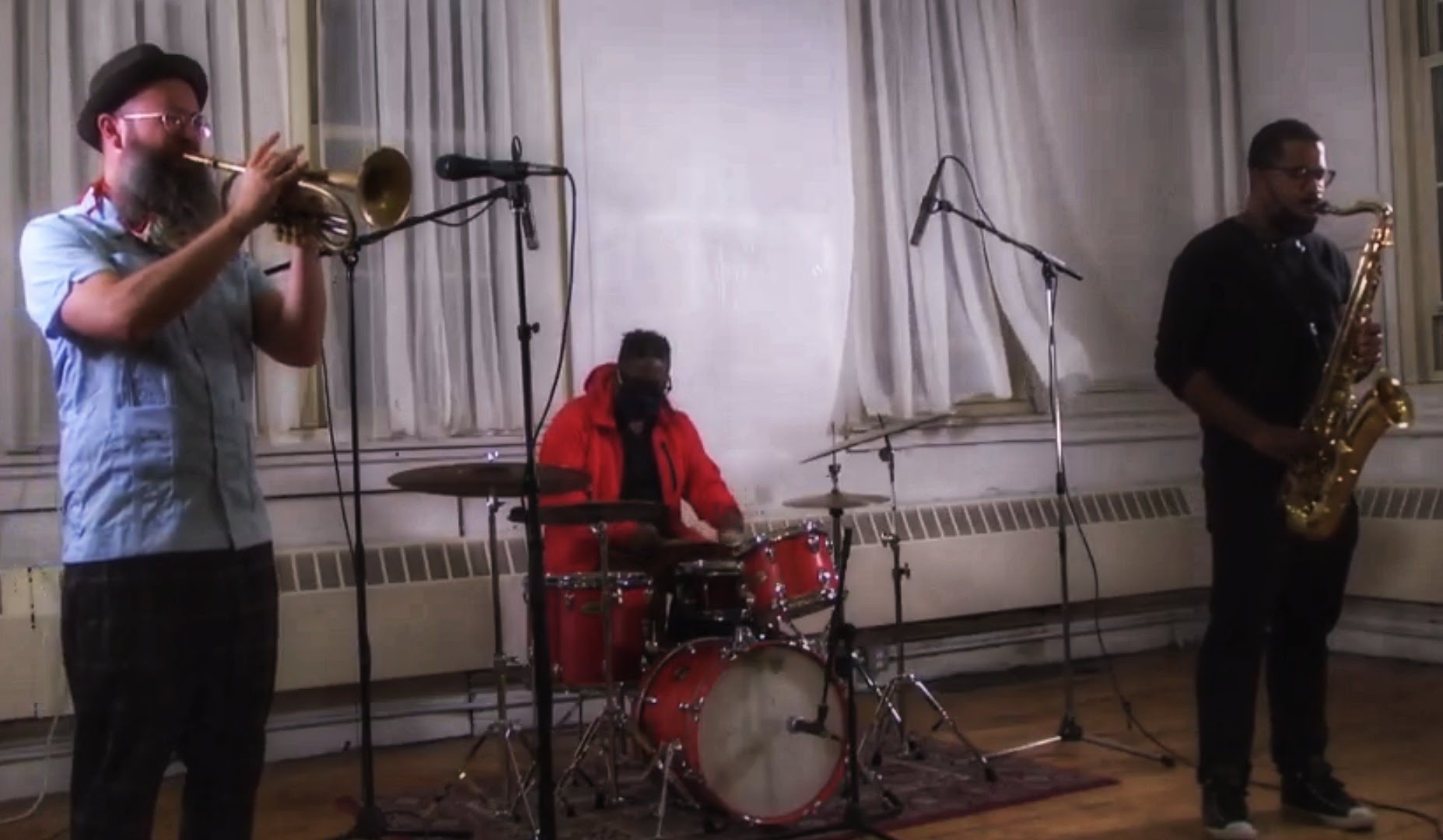
From left: Kirk Knuffke, Gerald Cleaver, James Brandon Lewis, taken from stream and edited
James Brandon Lewis, Kirk Knuffke, and Gerald Cleaver at Arts for Art Inc, 01/06/2021
Of the overlapping black music traditions, relatively few hands dig into the fertile intersection between R&B and free jazz. Arts for Art – a storied non-profit that hosts the annual Vision Festival among other services to the culture – kicked off their 2021 with one of the finest examples of the sparks that fly when those two forms hit one another: a trio of sax player James Brandon Lewis, cornet player Kirk Knuffke, and drummer Gerald Cleaver.
As Lewis said in the post-set discussion, “Charles Gayle and Grover Washington, Jr. both came from the same place I did, Buffalo.” This trio wove excerpts of the Bill Withers classics “Ain’t No Sunshine,” and “Just the Two Of Us,” the latter a collaboration with Washington and a massive hit, along with Donny Hathaway’s “Someday We’ll Be Free” into an unbroken 45-minute meditation and exultation.
Lewis’s liquid tone and Knuffke’s sharp, jabbing punctuation aligned on deep hooks like the revolving “I know” section of “Ain’t No Sunshine,” building up the tension and exploding that feeling into a bonfire of abstraction. That jousting coiled into a mournful funeral march before clicking into a more urgent, insistent gear.
Through all of these changes, Cleaver’s drums commented and steered the ship. The one section where he slid into head knocking funk beats felt like an unexpected blast of sun cracking velvet clouds, then as soon as I grasped it, he and the trio were onto something else.
Everyone in this trio intimately understood both musical forms and used the tropes for their cathartic power as well as misdirection. They didn’t shuffle free playing and dance music; they burned them into something fresh and personal.
Under the Radar, presented by The Public Theater
One of the brightest lights in my personal APAP – and the conduit for many of my favorite things at the Wexner Center every year – is the Public’s Under The Radar fest. This international sampling of moving, riveting performance art and theater pivoted brilliantly to online this year. I’ve checked about half of it so far and there hasn’t been a dud in the bunch.
From the innovative Instagram component of Rich Kids
Rich Kids: A History of Shopping Malls in Tehran by Javaad Alipoor
This two hander – which won a prize at the Edinburgh Fringe Festival – featured Alipoor and Kirsty Housley narrating – with dazzling imagery the self-destructive microcosm of the idle rich in Tehran. In doing so, they draw out heartbreaking truths about the decline of civilizations, the scars of colonialism, and the blur between long-term consequences and immediate decisions.
Full of poison-dagger lines I was still chewing over days later like “There isn’t an anthropocene that connects us, there’s a scar that divides;” vaporwave summed up as “A ghost made of bits and pieces of a past that never quite was;” and a description of Dubai as “It’s like long generations of the past returning eternally to party with them.”
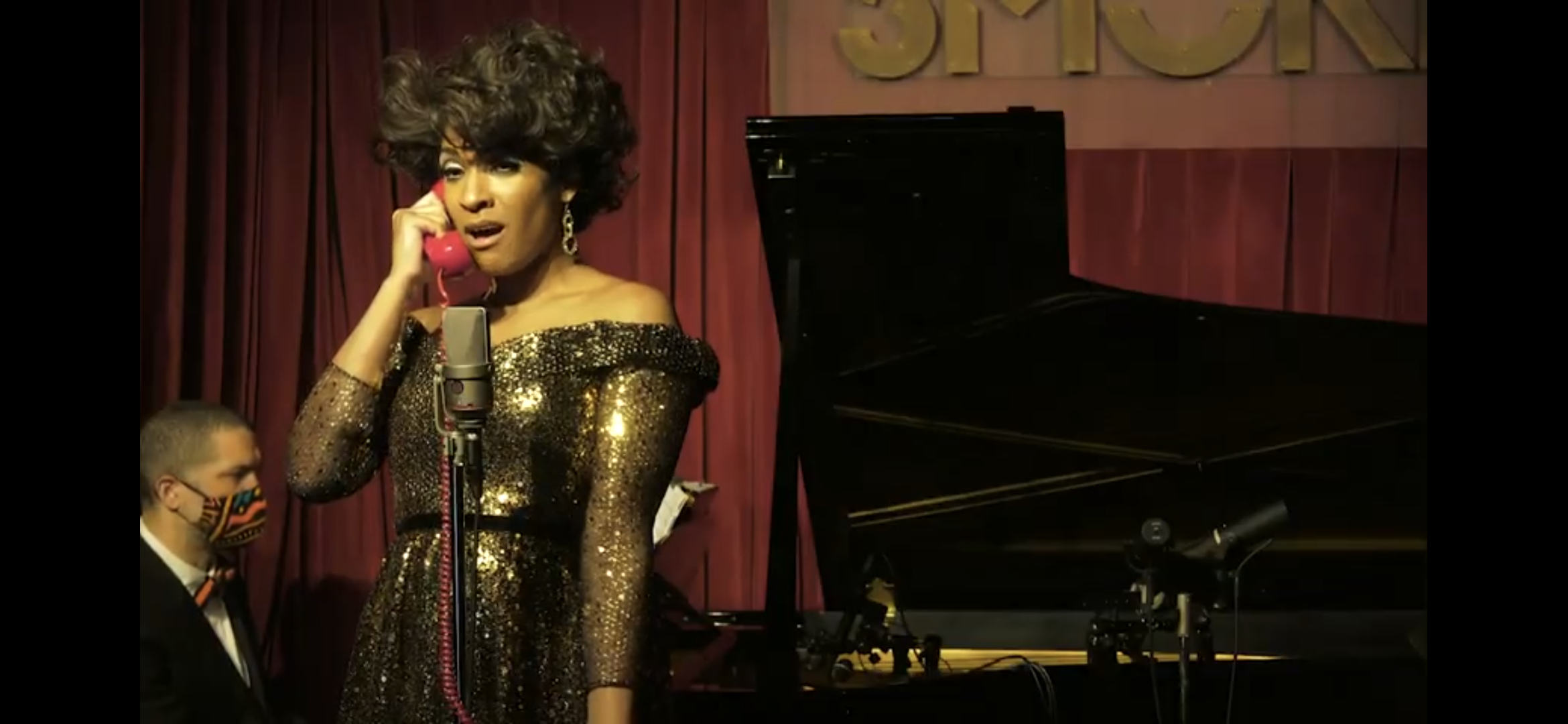
From left: Jason Moran and Alicia Hall Moran. Taken from stream and edited
the motown project by Alicia Hall Moran.
One of our finest American singers, plumbing the rich terrain between Opera and popular music, Alicia Hall Moran assembled a ferocious band for this, including her husband Jason Moran on piano, Reggie Washington on bass, LaFrae Sci on drums, and Thomas Flippin on guitar, alongside fellow powerhouse singers Barrington Lee and Steven Herring.
Moran drew connections between the Motown songbook and classical “art music,” giving both sides equal weight without sanding down either’s essence, and wove them into a crushing portrait of desire. An aria from The Magic of Figaro sparked off the Holland-Dozier-Holland classic “Sugarpie, Honeybunch.”A torturously slow “Heat Wave” was a languid blast from better seasons. A “Signed, Sealed, Delivered,” drew every nuance out of that Stevie Wonder classic without bogging it down. If I see something better this year – even after theatres open – it’s been a good damn year.
Another excellent month for records and I remain glad I’m doing this. I hope a couple of you enjoy the playlists and find one or two things you didn’t know existed. Next monthly hodgepodge is tentatively slated for January but I’m going to work up a playlist to go along with my favorite records of the month blog post sometime in December. Be well.
The weirdness continued unabated in this season with distant Thanksgiving – which itself has problems, like everything in American society birthed in blood and torture and the positive feelings we’ve imbued it with come partially despite that history and partially resting on the pedestal of it – but I found things to love and hope you did too.
Probably the last of these for a while; my plan for the next four weeks is to put up my best of the year posts.
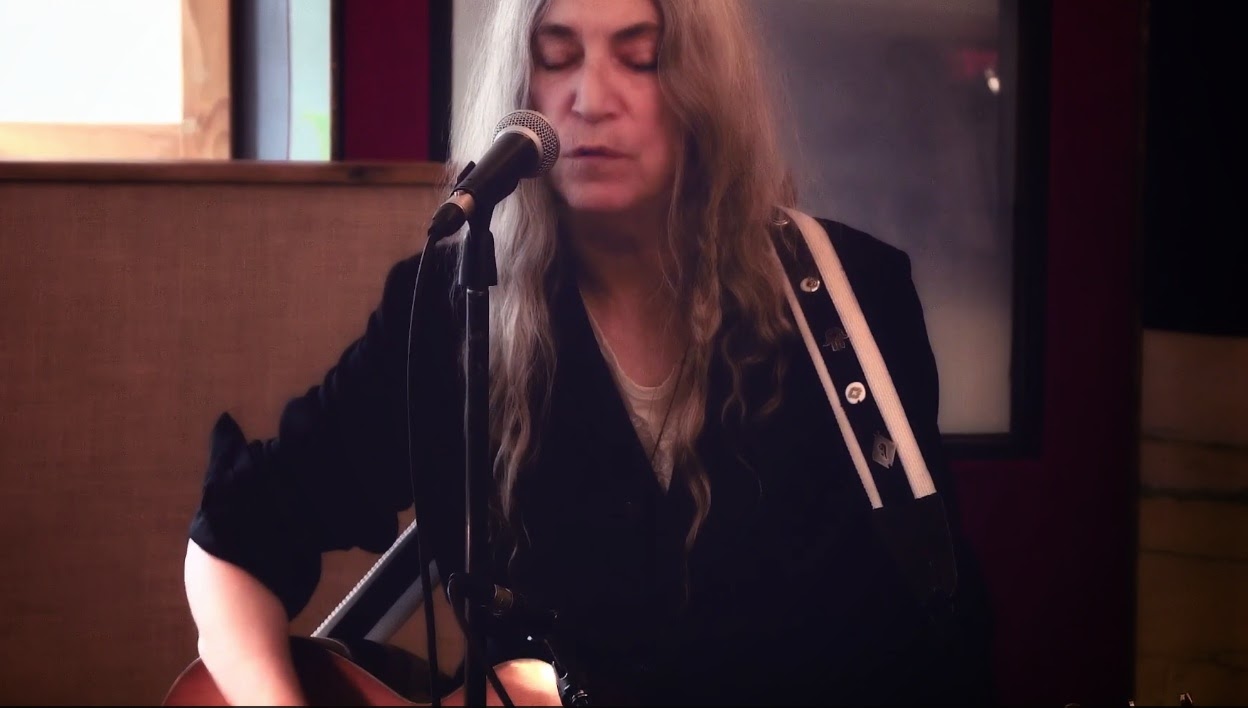
Patti Smith, taken from stream and edited
Music: Patti Smith, presented by Fans.
Weeks from the 45th anniversary of her landmark record that broke so much open for so many of us, Smith reminded me of her unique blend of the intimate and the expansive and took me to the church I desperately needed.
Accompanied by long-time collaborator Tony Shanahan and her daughter Jesse Paris Smith, Smith led us on an hour trip through highlights of her catalog, including readings of a new piece and a delightful chunk of Year of the Monkey, and one cover, a beautiful read of Neil Young’s “After the Gold Rush” (with a nod to its own 50th anniversary and Young’s 75th birthday) that highlighted its fragility.
Smith found new contours, new crevices between the notes, new facets to shine her light of today through on songs she’s played thousands of times. “Dancing Barefoot,” dedicated “to the women” crackled with benediction and absolution; “Pissing In a River” circled its prey, building up to the incandescent flare-ups of “Come on, come on” and “What about it?”
The opening “Grateful” from maybe my favorite of her records, Gung Ho, set the tone – “Ours is just another skin that simply slips away” for a sunny afternoon of true gratitude, radical acceptance and taking stock, without blindness. That song faded into the righteous incantation: “Throw off your stupid cloak; embrace all you fear. For joy will conquer all despair in my Blakean year.”
She introduced “Southern Cross” with “This is a song about remembrance; it’s a song about life, really,” and more than anything else, this set reminded me that all remembrance can be, should be, must be, a celebration of life.
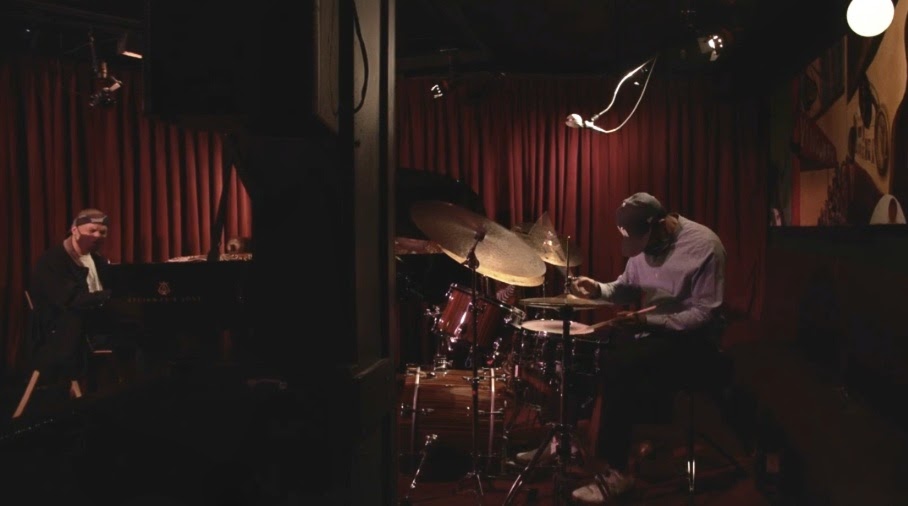
From left: Jason Moran and Nasheet Waits, The Bandwagon. Taken from stream and edited.
Music: Jason Moran’s Bandwagon at the Village Vanguard.
I’ve never been in NYC around Thanksgiving – not a parade guy – but I’ve always been jealous of many traditions for the locals, including that full week stand of the Bandwagon at the Vanguard.
There are a handful of shows that burn into my memory and I still recall with surprising clarity Jason Moran on piano, with Nasheet Waits on drums, and Tarus Mateen on bass, blowing the top of my head off at the Wexner Center in 2003. With no exaggeration, those 90 minutes blew open what I thought jazz could be, it expanded my parameters for thinking about music. I was vibrating with excitement when I walked in – having been a fan of the records for several years – and I could barely hold my molecules in one gravitation field after.
In the ensuing 17 years, I’ve seen all three of them multiple times – Winter Jazzfest and Big Ears, back at the Wex and late night at Jazz Standard – but never quite managed to catch another trio set. So even through a screen from miles away, I almost cried.
This was the music of conversation, argument, emphatic declaration, at the highest possible standard. Jittery, powerful abstractions melted into standards like “Body and Soul.” They paid tribute to the legendary Geri Allen with one of her classics “Feed The Fire” and they tore into a greasy honky-tonk stomp. This was the kind of music that made the world make more sense and made gratitude swell up in me.
The Maria Schneider Orchestra – Taken from stream and edited
Music: Maria Schneider’s Orchestra at the Jazz Standard.
Another of those legendary jazz Thanksgiving traditions is the great Maria Schneider leading her Orchestra at Jazz Standard. This would have been her 16th year on this week at the Standard, and with possibly her best record Data Lords released so recently, I’m overjoyed she found a way to mark the occasion.
She put together a limited run stream of clips of her band from the past couple years – including trying out some of the dark, knotty Data Lords pieces like “CQ CQ, Is Anybody There?” – outtakes from the studio sessions, and a Zoom conversation capturing a little bit of the all-important “hang” that happens whenever that many musicians gather.
Like the Moran, I almost cried a few times. These perfect solos rising out of this massive, inviting but awe-inspiring architecture. The band breathing as one and fragmenting into the night’s sky or a city street.
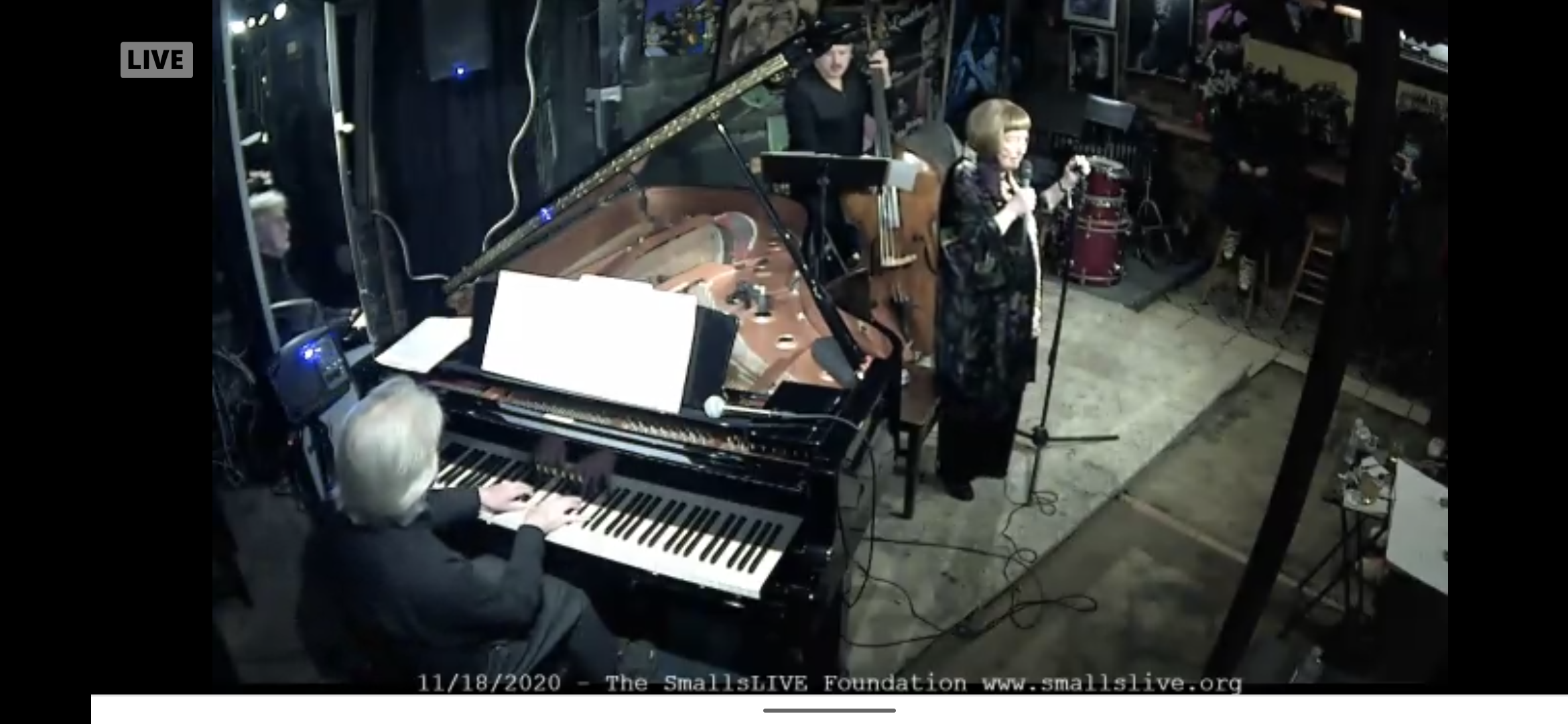
From left: Alan Broadbent, Sheila Jordan, Harvie S. Taken from stream and edited
Music: Sheila Jordan Trio at Smalls Live
I’ve waxed rhapsodic here about Smalls constant creativity and persistence to bring musicians together to play. In the last few weeks, they’ve carefully and strategically brought in small audiences and I almost wept hearing – from my kitchen, many miles away, missing New York in a week where Timehop reminds me I was at least three of the last six years – the great Sheila Jordan celebrate her 92nd birthday in this storied club.
A direct line to Charlie Parker, Lennie Tristano, and Charles Mingus – one of few left – Jordan took us to school with this survey of the great American songbook and this reminder of the glory of following one’s interests, wherever they land.
Backed by her longtime bassist Harvie S and New Zealand native Alan Broadbent, two of the most sympathetic vocal-accompanists alive, she reminded us how ineffable, fleeting, and indelible beauty can be in song. Definitive, forged in years of experience, versions of “Autumn in New York” and “I Concentrate on You” were highlights in this delightful rain of gems.
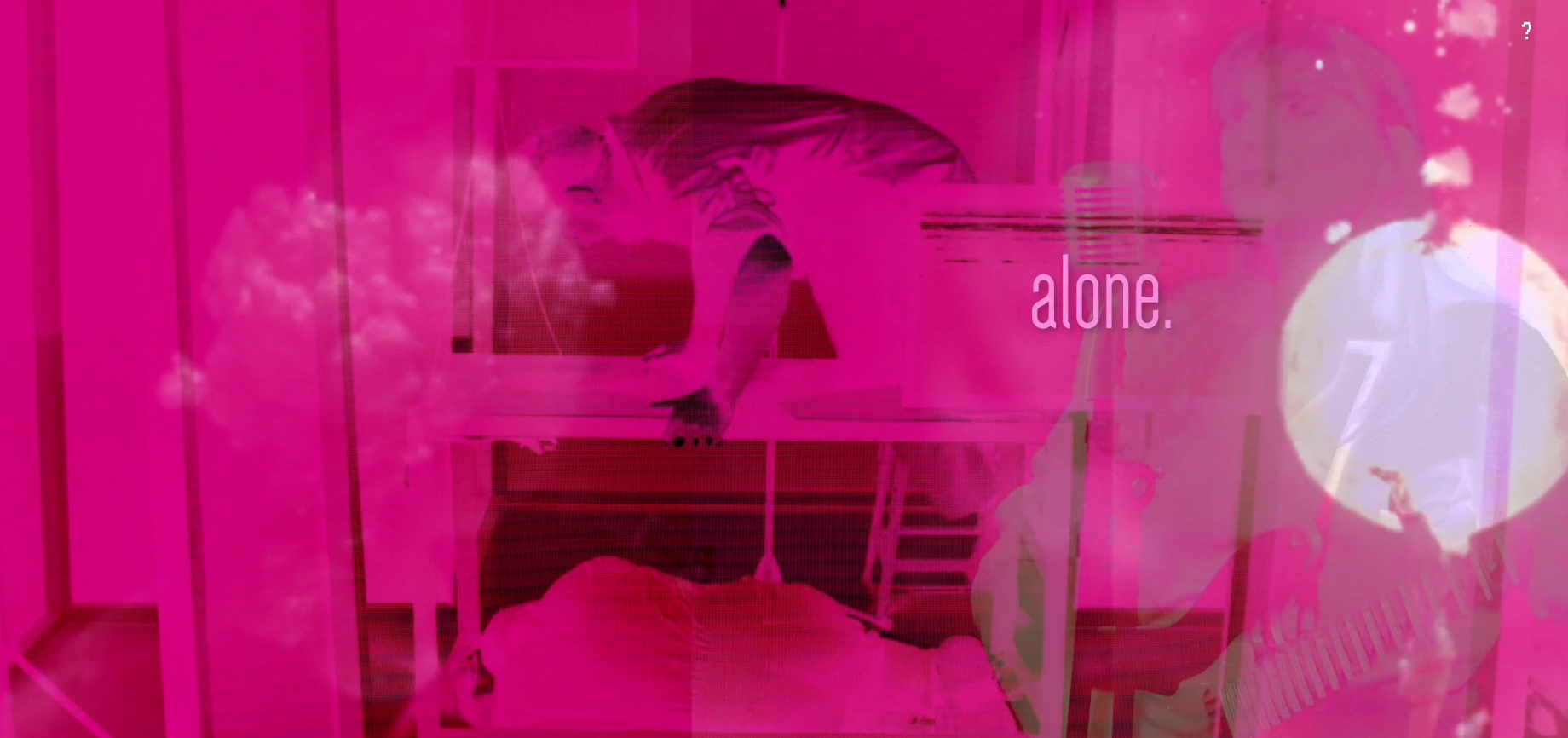
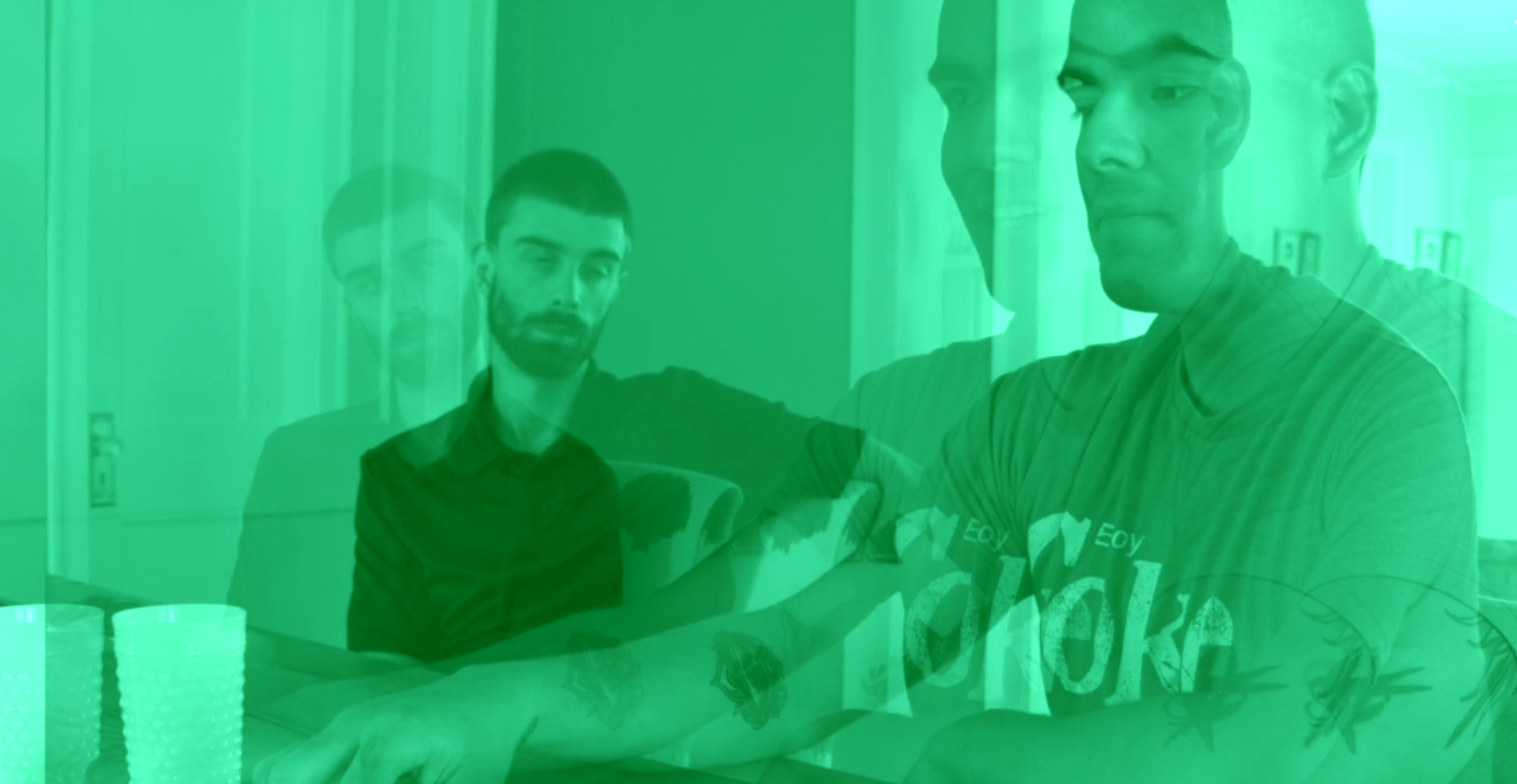
</remnant> presented by NYTW, screenshots taken from livestream and edited
Theater: </remnant> by Theatre Mitu, directed by Rubén Polendo.
What’s memory mean to us? How do we piece these fragments together? Where does religion fit? How do we survive war? How do we stay connected with ourselves and a collective humanity? Cacophonies of voices and images fracture and coalesce in Theatre Mitu’s </remnant>, presented with New York Theatre Workshop, burning fragments into my brain.
This riveting exploration of memory – including memory as a feeding trough for trauma and the evolution of PTSD over the last century-plus set a high bar for these new digital hybrids that still felt like theater, that I was in the dark with other people even if I couldn’t see them, and with the fiery immediacy of something happening now even with the degree of editing and post-production visible.
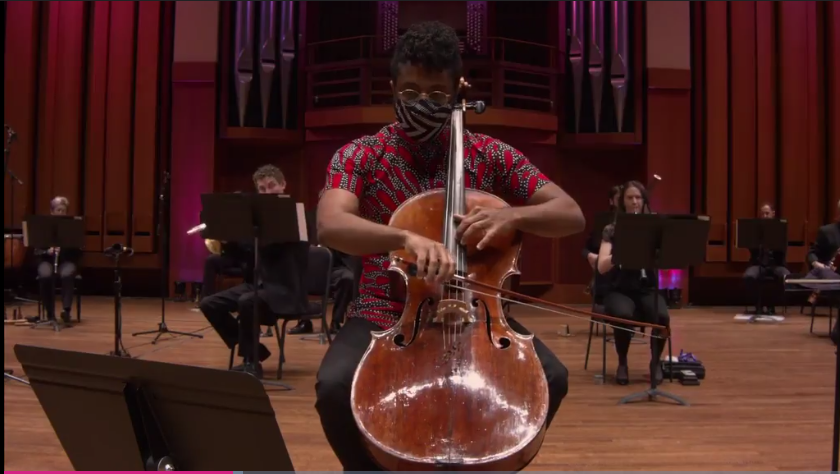
Seth Parker-Woods (foreground) with members of Seattle Symphony. Taken from livestream and edited
Music: For Roscoe Mitchell by Tyshawn Sorey, performed by Seth Parker-Woods and Seattle Symphony Orchestra.
Anyone with evening a passing glimpse of my taste over the years knows I’m an unabashed admirer of Tyshawn Sorey’s work as a drummer and composer. He continues a streak of astonishing large-format pieces with an astonishing cello concerto, For Roscoe Mitchell, performed by the Seattle Symphony.
The dazzling piece conjured Mitchell’s luminescent compositions without using any of his moves directly. Played beautifully by the orchestra and soloist Parker-Woods under the baton of David Robertson, I don’t even have words for how grateful I am for this remarkable series from Seattle Symphony in these trying times.
Some deeply needed good news came out on Saturday and there wasn’t much better than playing classic Kenny Gamble, Spinners, Funkadelic, and Dirtbombs off our porch, bouncing between the sunlight and the champagne and friends. I hope we all remember the lesson that this success isn’t it and we keep working, but part of that work is rest and celebration. I found some art to love in that uncertainty before the news.
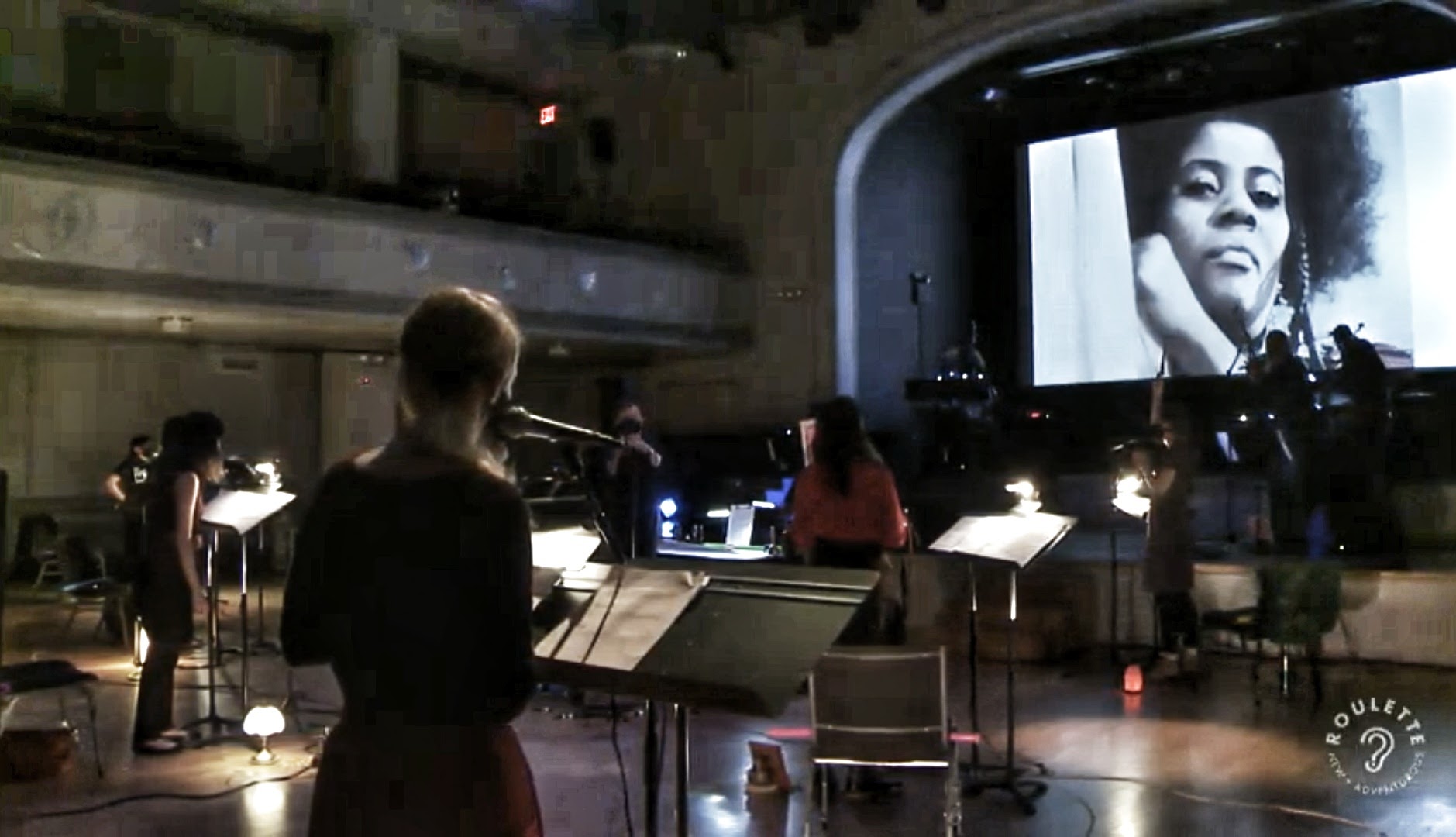
Darius Jones and band with singers and conductor at Roulette, taken from stream and edited
Music: Darius Jones: We Can Change This Country! presented by Roulette
In a time of perpetually scattered attention, I needed Darius Jones’ sweeping composition broadcast from one of the temples to new music that’s helped ground my life: Roulette from NYC.
Inspired by the James Baldwin essay of the same name, Jones assembled a riveting quartet of Cooper-Moore on flute and banjo, Tanya Kalmanovitch on violin, Sean Conley on bass, and Gerald Cleaver on drums, and a who’s who of the best vocalists working in jazz, new music, and the avant-garde today: Gelsey Bell, Amanda Ekery, Jean Carla Rodea, Sara Serpa, Amirtha Kidambi, Yoon Sun Choi, Aviva Jaye, Charlotte Mundy, Fay Victor, Stephanie Lamprea, with heartbreaking film work from Laura Sofia Perez, under the baton of Darcy James Argue (whose sadly-even-more-relevant Real Enemies got a brilliant digital makeover from Cal Performances last month).
Darius Jones and his players/singers meet our tumultuous times with a steely gaze and a combined intensity and integrity. Wisps of shadowy flute melody and skittering drums surf on and get subsumed by wordless vocals, chilling laughter and sheep noises. Collaged snatches of dialogue reminded me of Rauschenberg and Nina Chanel Abney.
We Can Change This Country! honors the Baldwin essay as a furious representation of a specific, unapologetic point of view, but avoiding the artless reportage that kind of polemic can get mired in. Jones uses all of his power as one of our finest composers and reed players to sculpt with the fire we’re living in and the fire it inspires inside him.
Jones moved me to tears when these voices, all held to the light with their distinctive facets and juxtaposed without smoothing the transitions, rose together on chants (most prominently “Vote him out”). More than any specific message – though the message is clear – that power when we rise together resonated through the bones of this piece and the blood of its viewers. I’m still unpacking this monumental work but it’s one of the finest things I’ve seen in years.
Mic Harrison and Don Coffey Jr, taken from the stream and edited
Music: Mic Harrison and the High Score at the Bijou Theatre
Friday night found me in touch with one of my favorite singer-songwriters in one of my favorite rooms. Anne said, as we were watching, that Mic Harrison is the perfect example of why someone would be in a scene. A vital utility player who stepped into two legendary Knoxville bands: classic alt.country unit The V-Roys (as they transitioned away from being The Viceroys) and powerpop juggernauts Superdrag, for the last 15 years Harrison has put out one classic, crisp record as a leader after another.
Harrison’s properly celebrated his latest, Bright Spot, in this 100-year-old theater with a barbed-wire-tight version of The High Score including his Superdrag collaborator Don Coffey Jr on drums, for a stream that sounded as good as I’ve heard that room sound and I’ve been in every corner for most of my favorite Big Ears Festival performances.
Harrison and the High Score doled out meaty, lithe roots-rock featuring some of the biggest hooks Harrison has ever written – the gang chorus on “Used to Be Somebody” was an arrow struck right into my chest – and soulful slow burns like the aching “Back to Knoxville.” He also took time to highlight songs by guitarists Robbie Trosper and Kevin Abernathy.
By the time they slid into the encore with Harrison’s classic The V-Roys Beatles homage “Sooner or Later,” there were tears in my eyes.
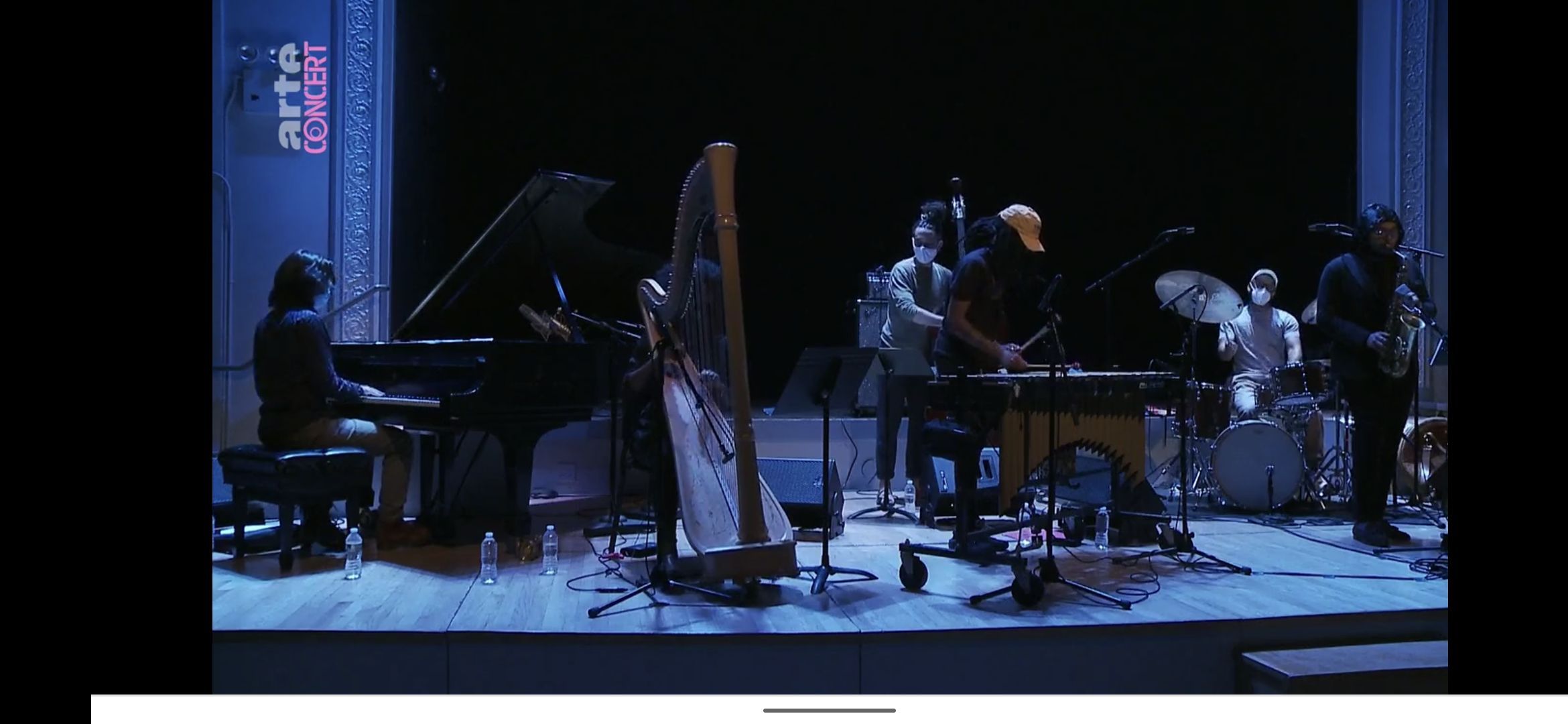
Joel Ross and band, taken from livestream and edited.
Music: Joel Ross’ Good Vibes at Berlin Jazzfest
Joel Ross is killing it this year: he released one of my favorite jazz records, in a crowded field, earlier this fall; he was a highlight in the mind-blowing Makaya McCraven show I was lucky enough to see at Webster Hall in January; he’s brightening so many other artists’ work.
While it’s never the same as being in the room, Berlin Jazzfest did a spectacular job partnering with Roulette (mentioned above) for paired sets from both shores. Ross and his band wove intricate magic, undulating conversations, burning dialogue and cut-crystal ballads, tossing between the immaculate melodic bass lines of Kanoa Mendenhall through the intertwined lines of Ross’ vibes and Jeremy Cohen’s piano into Brandee Younger’s harp, Immanuel Wilkins’ alto and Jeremy Dutton’s gravitational pull drums. This was the perfect thing for me to hear right before the election got called.









 Screen of Distance