Welcome back, anyone still reading this. I appreciate the kind words about the year-end wrap-up posts more than I can ever say, and I always appreciate all of you. Hoping we’re only a few months away from easing into my bending some of your ears in person, but I hope and intend to keep this up even when most of the things I love in a week are back out in the world. Keep the faith, stay safe, burn your lanterns of hope.
I started 2021 strong on the New Year’s Eve weekend with three shows that reminded me that music and storytelling are frequently social forms. Instead of making me despair at being so far away from the people I’d be seeing shows with – and the bands I’d be dancing to – it made me feel warm and close to that vibration.

Jason Isbell and the 400 Unit, Brooklyn Bowl Nashville, 12/31/2020
I prepped for a round of Zoom New Year’s Eve celebrations by getting dressed and dancing in the living room to Isbell’s finely tuned band’s perfect mix of rocking wistfulness, ass-shaking melancholy, soulful empathy, and hope for the world.
Isbell’s 2020 record Reunions played with cleaner, shimmering textures and rhythms than his last few and continued the more open arrangements and space for the band to make their mark started with The Nashville Sound. For many of us, even those of us who are sick of that sparkling Dire Straits guitar, those tones cut a distinct tunnel to nostalgia, and Isbell used that with a perfect set of songs about his (and our) growing up and also about living in the world now.
For someone who’s written so many stirring crowd-pleasers, I enjoyed seeing how these new songs held their own and made space in dialogue with tunes we’ve been singing along to for years. Wrapping the encore with his surging anthem to questioning and rejecting complacency, to the implacable sense we can all always be doing better, “What Have I Done To Help,” felt like a perfect hymn for the coming year. It also felt like the character’s direct evolution from his breakout hit “Cover Me Up” played right before.
The melancholy of nostalgia and longing for absent friends in songs like “Dreamsicle” and “Only Children,” bloomed in three dimensions, a reminder that memory and paying witness are celebrations even when we’re sad. The surge of the rhythm section helped keep anything – even songs in a quieter space like “Something More Than Free” – from being staid or stiff, and there was always air for the melodic flights of Amanda Shires’ violin and Sadler Vaden and Isbell’s dueling guitars to spark off one another.
Weird as it was seeing the full Brooklyn Bowl light show cut through the shadows of their cavernous, empty Nashville outpost, this never felt like a rehearsal. Nothing seemed phoned in or rushed, nor was it too slick. This set reminded me of the promise of a great, muscular rock band on a good night. It made me hungry to be in the room for the real thing but grateful for this marker until we can do that.

Maceo Parker, SFJAZZ, 01/01/2021 (archival from 2015)
Maceo’s horn has defined American music from the early 1960s on. I was lucky enough to see him with Prince, with Ani Difranco (in a double bill that still feels like the most fun I’ve ever seen two bands have on stage with one another), and tearing up the Scioto Mile on a ferocious free summer set.
I’ve rhapsodized about the SFJAZZ streams for members in this space, and we were treated to an exquisite example from Parker’s 2015 NYE run. I marveled at the way Parker builds and sustains these relationships, how much gratitude he brings to this band, and in return, how tight they are as a unit, following through the kaleidoscopic range of moods and tones he calls out.
He reached back through pieces of his (and the nation’s) history in a tight hour and ten set. He briefly touched on the jazz of the booking’s name with a sweet duet on the Ellington classic “Satin Doll” as a duo with keyboardist Will Boulware. His JBs days got sultry, hard-edged workout on “Make It Funky,” featuring a flame-licked trombone solo from Greg Boyer (who he met in his days with George Clinton) and a closing tent-revival version of “Pass the Peas.”
Nikki Glaspie from Dumpstaphunk and the Nth Power kicked Parker’s classic Prince collaboration “Baby Knows” from Dial M-A-C-E-O into high gear with a crackling drum intro. She threw that same explosive energy into the slightly smoother shine of their arrangement on The Meters’ “Hey Pocky A-Way.”
Her hookup with P-Funk bassist Rodney “Skeet” Curtis shone throughout the set, especially on moments like her perfect, surprising comping behind his melodic slap solo on the Parker original “Off The Hook.” The band worked just as well when the energy slipped into a simmer, especially on an instrumental cover of Marvin Gaye’s classic “Let’s Get It On” the let Parker show off that sweet but never too sugary tone in full undulating pillow talk mode.
In addition to shouting out the band and creating showcase spots for them, Parker even made time to shout out and thank the crew from the stage, many of them by name. That love for people lit up the band and the music, bringing a tear to my eye.

Various Artists, Hank-O-Rama, Bowery Electric, 01/01/2021
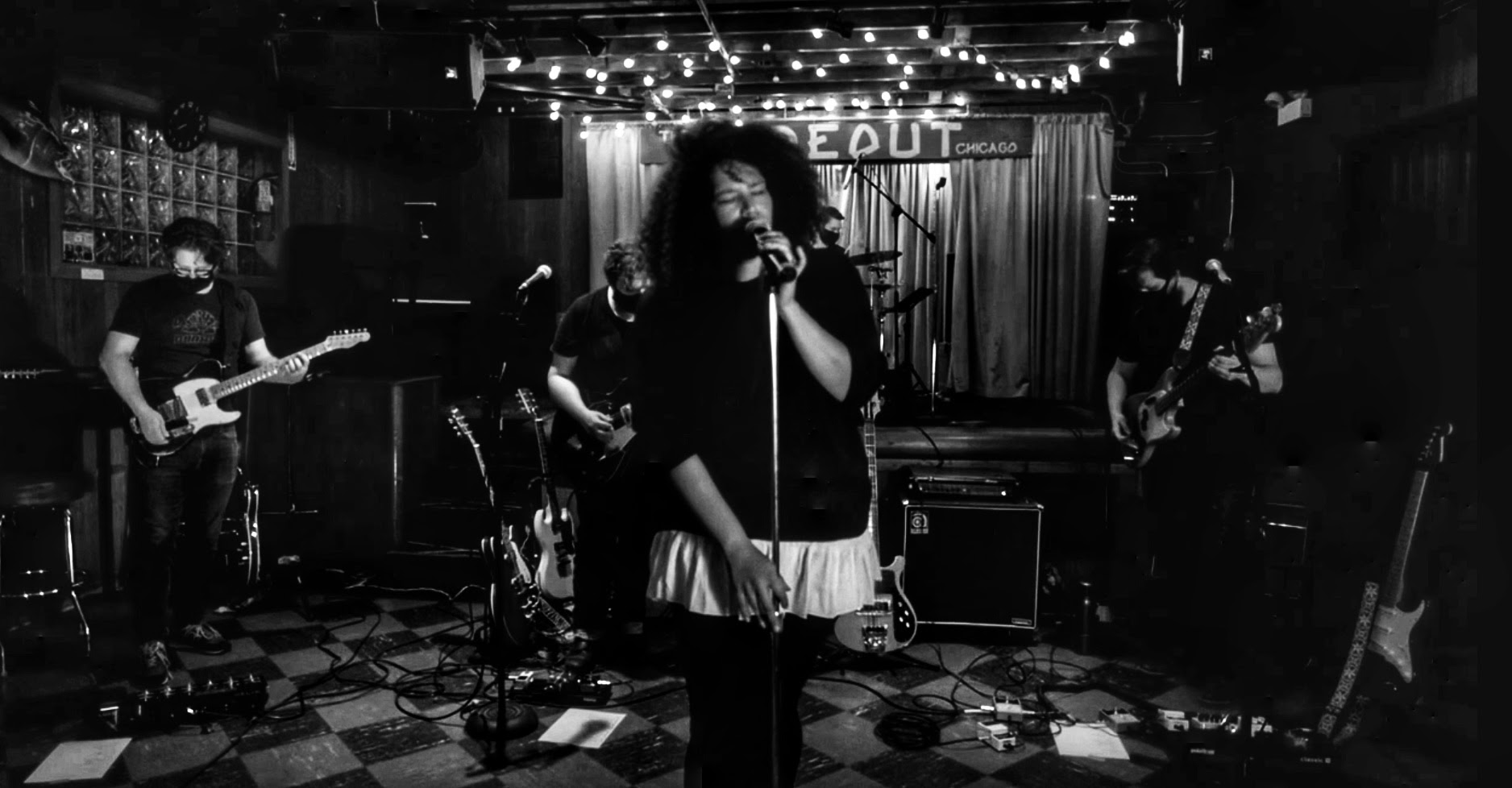
For the last 17 years, Brooklyn roots band The Lonesome Prairie Dogs have honored Hank Williams with a set on the day he died, making up for the Canton Ohio show he missed. This year, they marked the anniversary with a stream from Bowery Electric.
Lenny Kaye played pedal steel on almost everything. The Lonesome Horns (a trio of brass players from Antibalas led by Jordan McLean) augmenting several songs enhanced this hard-swinging four-piece core. This seasoned NYC institution tore through raging party classics like “Settin’ The Woods On Fire” and aching ballads like “Cold, Cold Heart” with equal aplomb.
A rotating set of other lead singers fleshed out the visions of Hank here, with East Village organizer and singer-songwriter Tom Clark, MC Lindy Loo, and Sean Kershaw all taking turns at the mic, along with Kaye stepping out from behind the steel for his tribute to Williams’ alter ego Luke the Drifter (from his 1984 Lenny Kaye Connection record) and the Lonesome Horns’ rotating lead vocals on “I’m So Lonesome I Could Cry.”
These Bowery Electric shows always remind me of what I love most about New York, the way scenes feel malleable and overlap and this sense of “Kids putting on a show” but with the highest caliber of musicians you’ll find anywhere. Even some technical rough spots – moments where multiple singers worked together, as the finale “I Saw The Light” exposed some serious monitor problems – made this feel like home.



 Screen of Distance