Categories
"Hey, Fred!" live music theatre

Things I’ve Been Digging – 01/11/2021

My TimeHop reminded me that last year, and three years ago, I was in NYC for festivals around APAP, which is always one of the most invigorating parts of any year I work it in. 
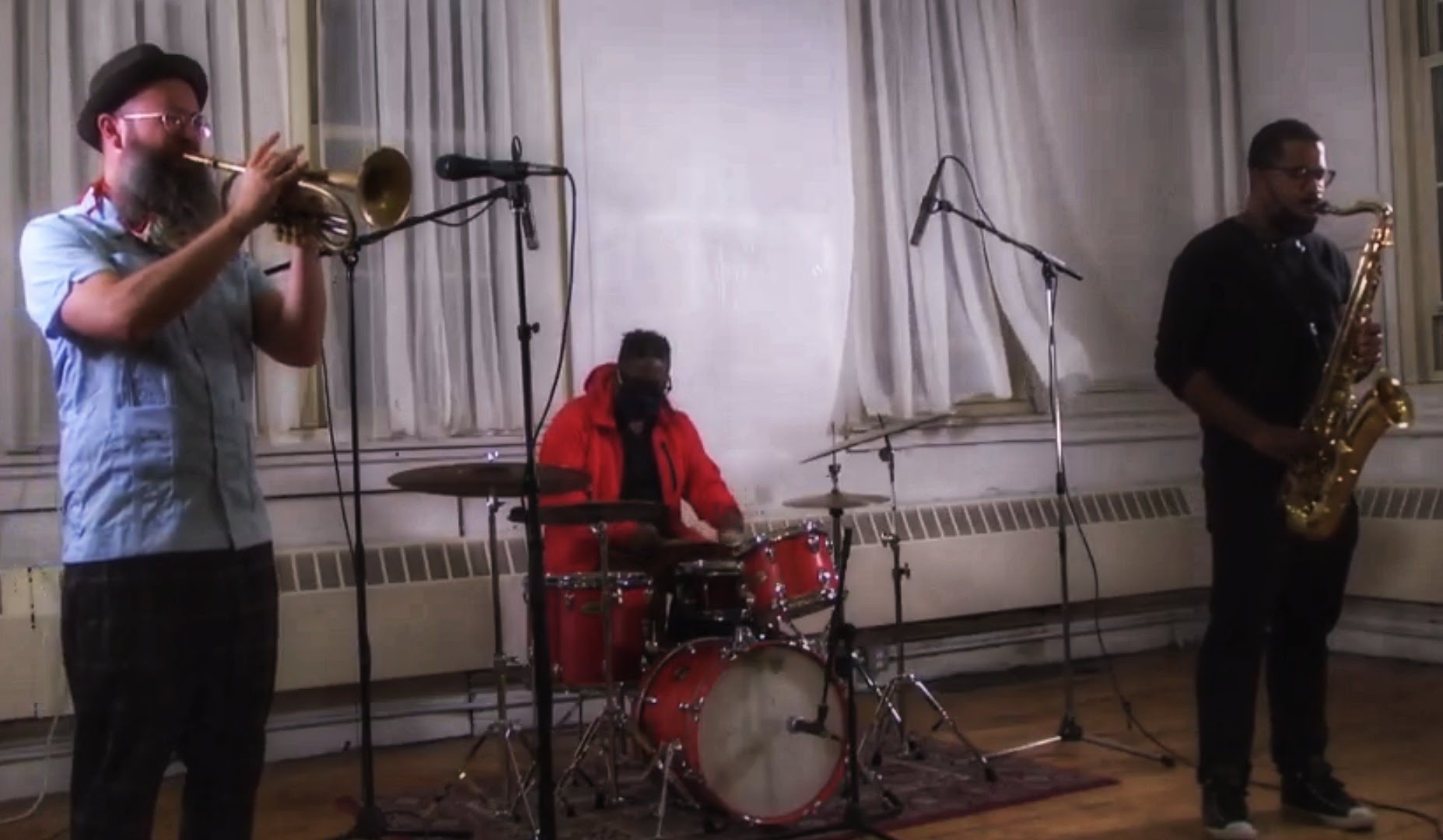
From left: Kirk Knuffke, Gerald Cleaver, James Brandon Lewis, taken from stream and edited

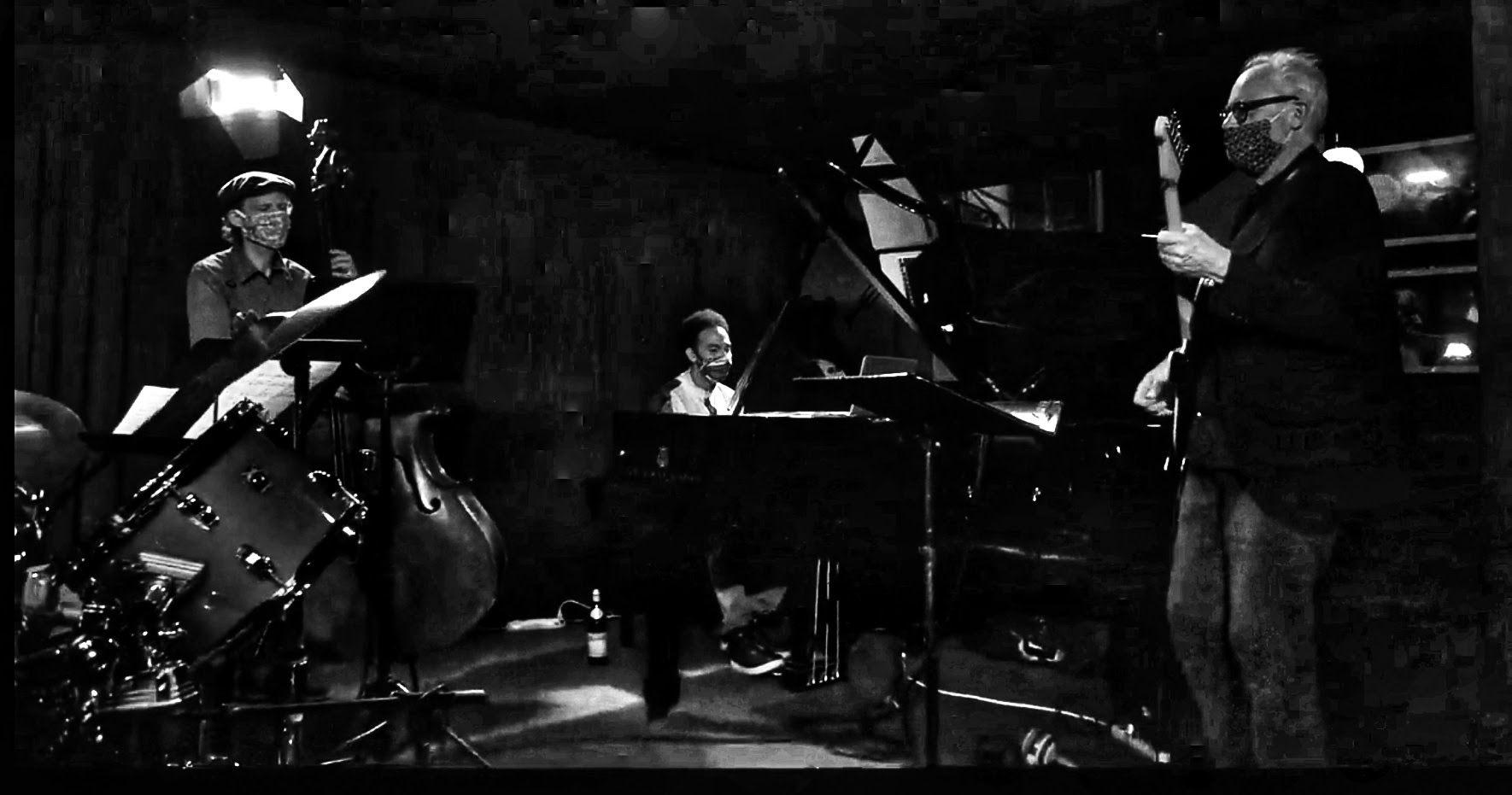
James Brandon Lewis, Kirk Knuffke, and Gerald Cleaver at Arts for Art Inc, 01/06/2021

Of the overlapping black music traditions, relatively few hands dig into the fertile intersection between R&B and free jazz. Arts for Art – a storied non-profit that hosts the annual Vision Festival among other services to the culture – kicked off their 2021 with one of the finest examples of the sparks that fly when those two forms hit one another: a trio of sax player James Brandon Lewis, cornet player Kirk Knuffke, and drummer Gerald Cleaver.

As Lewis said in the post-set discussion, “Charles Gayle and Grover Washington, Jr. both came from the same place I did, Buffalo.” This trio wove excerpts of the Bill Withers classics “Ain’t No Sunshine,” and “Just the Two Of Us,” the latter a collaboration with Washington and a massive hit, along with Donny Hathaway’s “Someday We’ll Be Free” into an unbroken 45-minute meditation and exultation.

Lewis’s liquid tone and Knuffke’s sharp, jabbing punctuation aligned on deep hooks like the revolving “I know” section of “Ain’t No Sunshine,” building up the tension and exploding that feeling into a bonfire of abstraction. That jousting coiled into a mournful funeral march before clicking into a more urgent, insistent gear.

Through all of these changes, Cleaver’s drums commented and steered the ship. The one section where he slid into head knocking funk beats felt like an unexpected blast of sun cracking velvet clouds, then as soon as I grasped it, he and the trio were onto something else. 

Everyone in this trio intimately understood both musical forms and used the tropes for their cathartic power as well as misdirection. They didn’t shuffle free playing and dance music; they burned them into something fresh and personal.

Under the Radar, presented by The Public Theater

One of the brightest lights in my personal APAP – and the conduit for many of my favorite things at the Wexner Center every year – is the Public’s Under The Radar fest. This international sampling of moving, riveting performance art and theater pivoted brilliantly to online this year. I’ve checked about half of it so far and there hasn’t been a dud in the bunch. 

Best of all, these are available on demand through the 14th, at https://publictheater.org/programs/under-the-radar/under-the-radar-2021/

Highlights for me so far:

From the innovative Instagram component of Rich Kids

Rich Kids: A History of Shopping Malls in Tehran by Javaad Alipoor

This two hander – which won a prize at the Edinburgh Fringe Festival – featured Alipoor and Kirsty Housley narrating – with dazzling imagery the self-destructive microcosm of the idle rich in Tehran. In doing so, they draw out heartbreaking truths about the decline of civilizations, the scars of colonialism, and the blur between long-term consequences and immediate decisions. 

Full of poison-dagger lines I was still chewing over days later like “There isn’t an anthropocene that connects us, there’s a scar that divides;” vaporwave summed up as “A ghost made of bits and pieces of a past that never quite was;” and a description of Dubai as “It’s like long generations of the past returning eternally to party with them.”
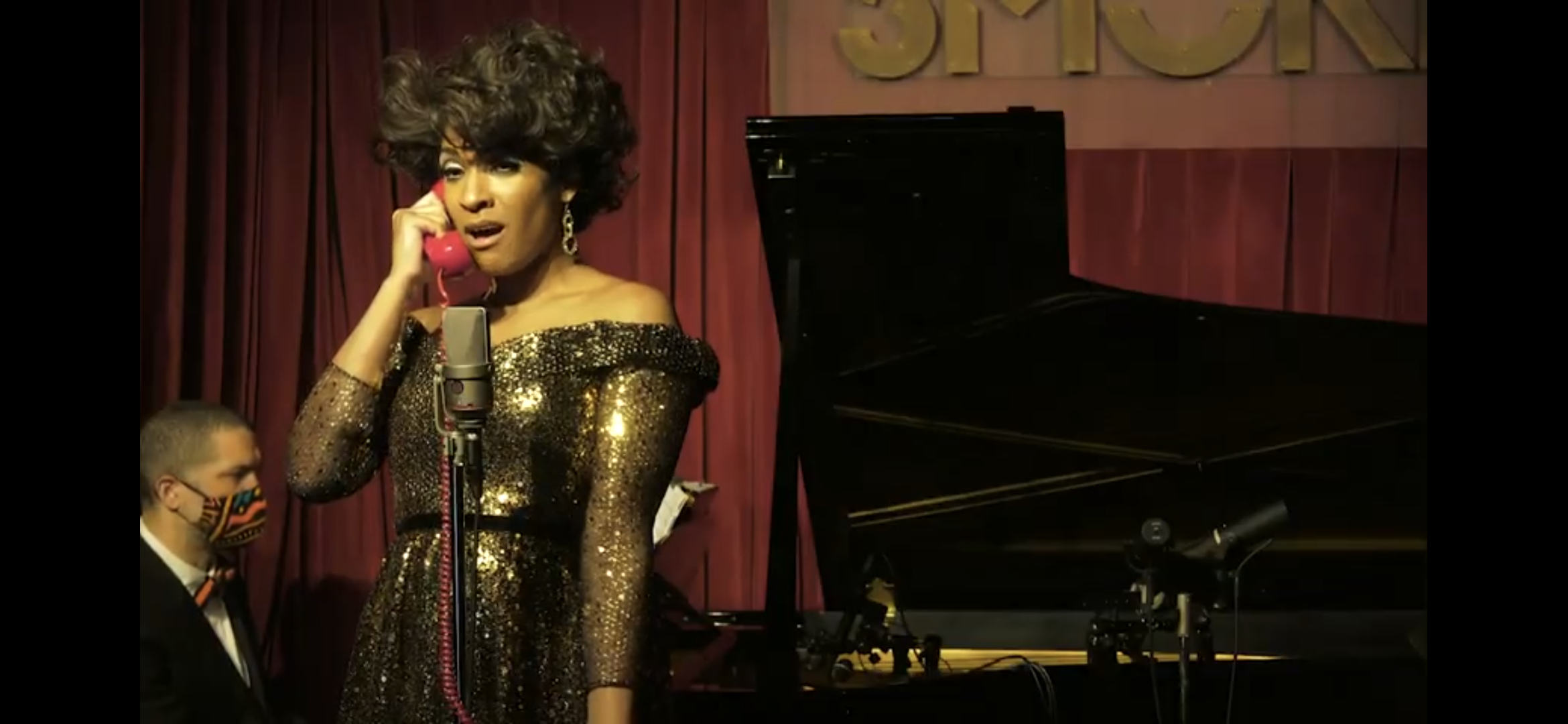
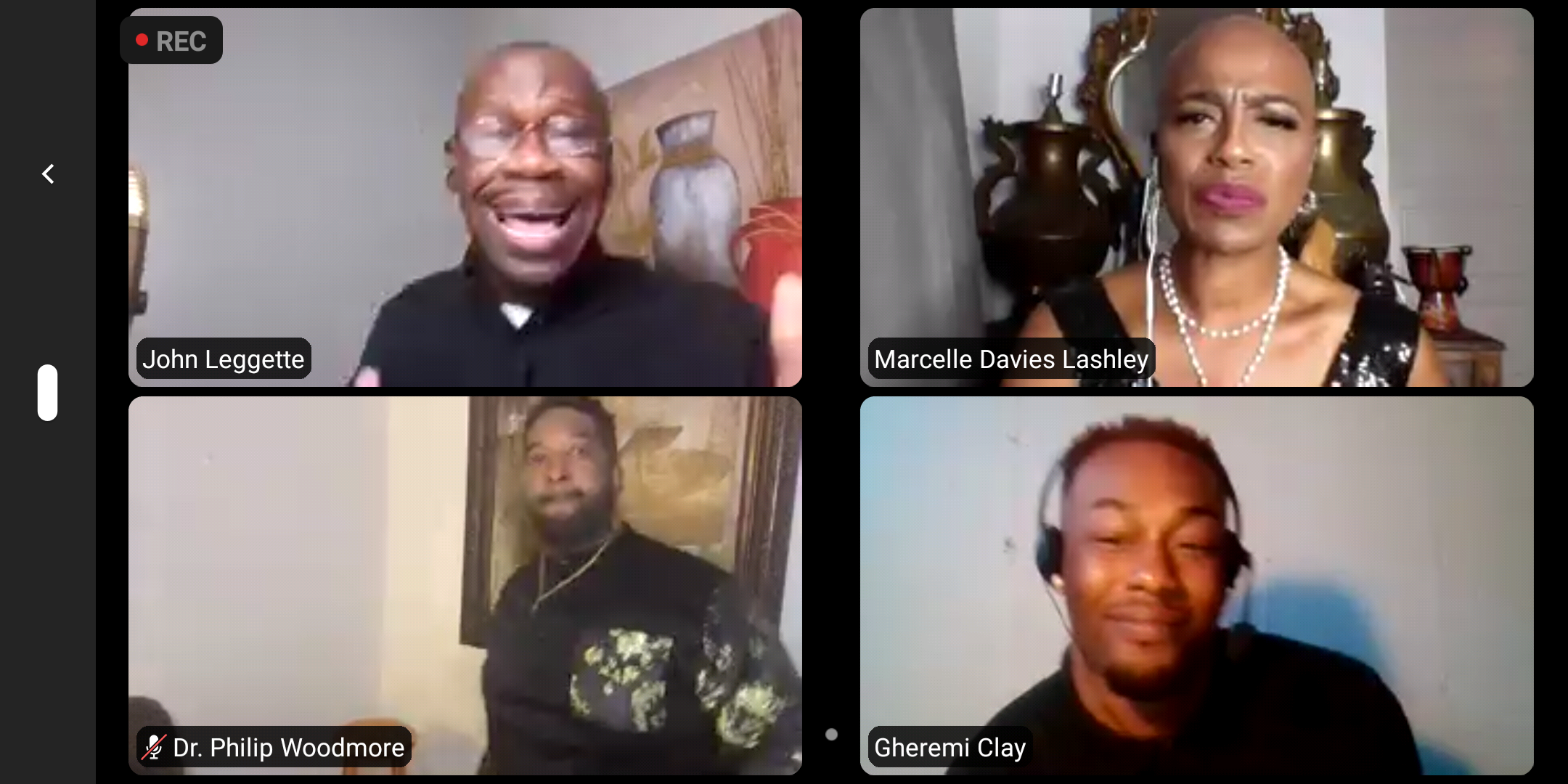
From left: Jason Moran and Alicia Hall Moran. Taken from stream and edited

the motown project by Alicia Hall Moran. 

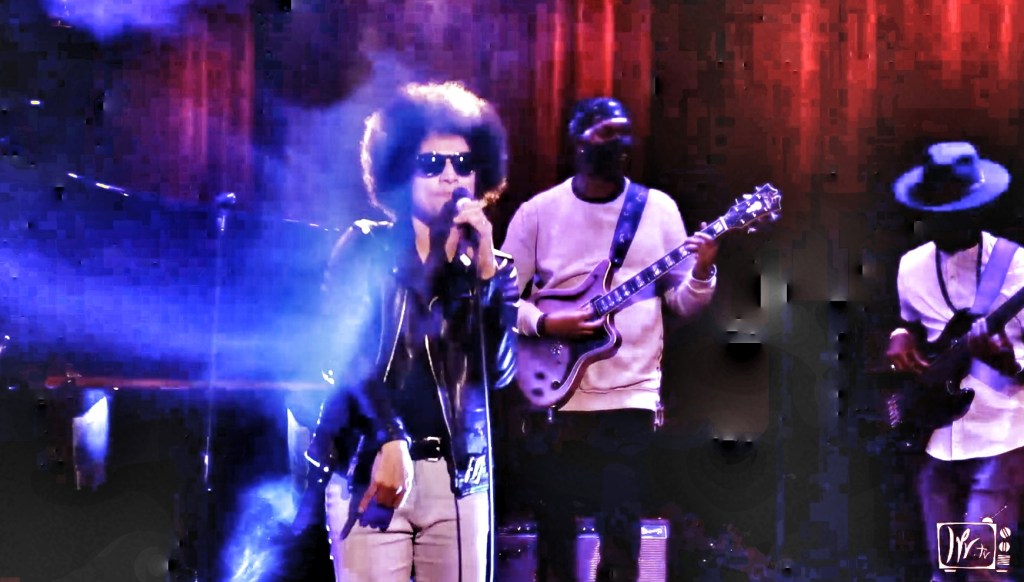
One of our finest American singers, plumbing the rich terrain between Opera and popular music, Alicia Hall Moran assembled a ferocious band for this, including her husband Jason Moran on piano, Reggie Washington on bass, LaFrae Sci on drums, and Thomas Flippin on guitar, alongside fellow powerhouse singers Barrington Lee and Steven Herring.

Moran drew connections between the Motown songbook and classical “art music,” giving both sides equal weight without sanding down either’s essence, and wove them into a crushing portrait of desire. An aria from The Magic of Figaro sparked off the Holland-Dozier-Holland classic “Sugarpie, Honeybunch.” A torturously slow “Heat Wave” was a languid blast from better seasons. A “Signed, Sealed, Delivered,” drew every nuance out of that Stevie Wonder classic without bogging it down. If I see something better this year – even after theatres open – it’s been a good damn year.

Categories
Best Of theatre

Best of 2020 – Theatre/Opera/Dance

“Are you even here? You’re a relic of a dying empire. The ghost of a glorious future that never came.” 

-Sarah Gancher, Russian Troll Farm

Salt given me at Under The Radar’s Salt

Live:

I was lucky to see about 15 shows – almost all outstanding – before doors started slamming shut. These 8 grabbed me hard and wouldn’t let go. Their memories are still burned into my brain this many months later. Photos are taken from press either given directly to me or on the company/creator’s official website.

  • Salt by Selina Thompson, directed by Dawn Walton (01/11/2020 – Public Theatre, Under the Radar, NYC) – Sometimes – and this might be my favorite part of seeing theatre and especially my favorite part of Under the Radar, I see work by a playwright who’s new to me and the voice alone burns a layer of skin off me and makes me feel both more and differently. Selina Thompson’s personal-historical-poetic dive into the Transatlantic Slave Trade, Salt, masterfully acted by Rochelle Rose, did that to me this year. I walked out babbling and as hungry for more of her work as any writing of the last decade.
  • Body Comes Apart by Molly Lieber and Eleanor Smith (01/12/2020 – New York Live Arts, NYC) – This vivisection of expectations, trauma, and freedom balanced an unsparing dedication to truth with a supernova love for the world. Body Comes Apart was a physical hour of dance, and acting was a whirlwind from which I couldn’t look away. It avoided platitudes and simplification but burned with a clarity that made its unanswered questions cut even deeper. I could have seen this three times and still tried to grasp it. 
  • Medea by Simon Stone after Euripides, directed by Simon Stone (01/12/2020 – BAM, NYC) – I’m a sucker for the Greeks and I’d never seen Bobby Cannavale on stage. Something felt very fitting about seeing Stone’s ferocious, knives-out take on Euripides here in the same theatre I saw my favorite Hedda Gabler. The adaptations to the play were interesting, aided by vibrant video. My brain pinballed between the remarkable acting – Cannavale, Rose Byrne, Dylan Baker – and the wrenching image of ash falling on that pristine white stage, both stuck with me well after the next day’s flight home.
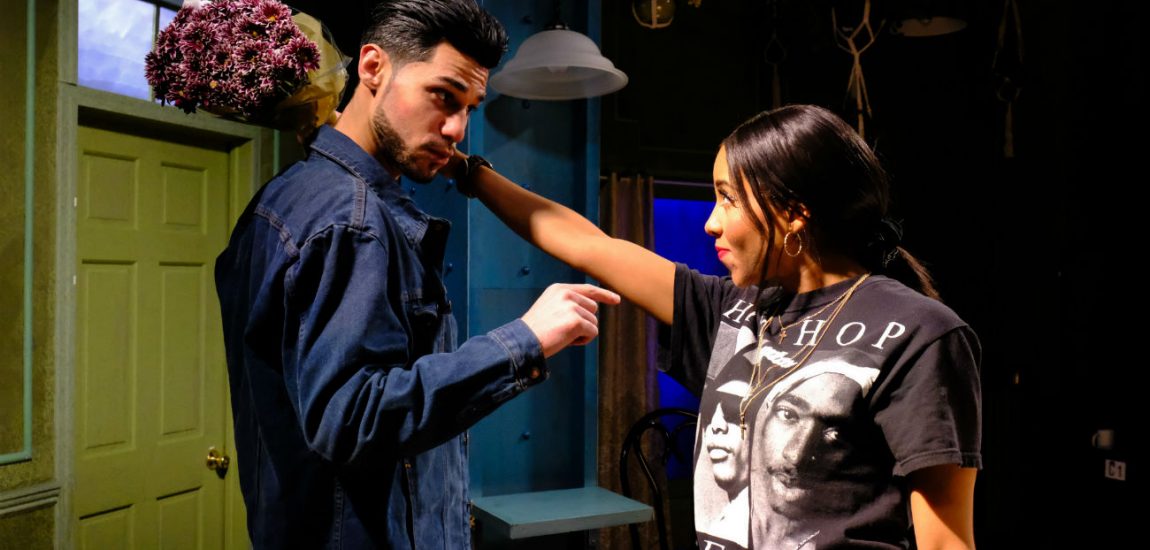
The Motherfucker With the Hat, photo by Nick Lingnofski
  • Or by Liz Duffy Adams, directed by Rowan Winterwood (01/17/2020 – Actors Theatre) – Actors Theatre’s relationship with MadLab for smaller-scale indoor plays continued to bear fruit this year, even as they had to cancel what looked like an exciting outdoor season. Or was a delightful drawing room sex romp around the fascinating historical character Aphra Behn (played brilliantly by Michelle Weiser) with crackling support from Andy Woodmansee and McLane Nagy as the other legs of the triangle. Winterwood’s sizzling direction made this a hot, funny winter diversion when I needed it most.
  • The Motherfucker With the Hat by Stephen Adly Guirgis, directed by Chari Arespacochaga (01/23/2020 – Short North Stage) – Short North Stage doesn’t always get enough credit for their dark, low-to-the-ground plays in the Green Room. Their Motherfucker With the Hat was another triumph in that lane. Arespacochaga directed it with the right mix of Greek tragedy and cage match, a stellar cast orbited around a volcanic Raphael Ellenberg.
  • The Bridge Called My Ass by Miguel Gutierrez (01/25/2020 – presented by the Wexner Center) – Gutierrez’s bilingual piece mixed puns, everyday action, and flights of fancy into something I’d never seen before. I didn’t always understand it but I was always enraptured.
The Shadow Whose Prey The Hunter Becomes, photo by Jeff Busby
  • A Doll’s House Part 2 by Lucas Hnath, directed by Michael Garrett Herring (01/30/2020 – Red Herring Theater) – There have been a few times I’ve seen a Columbus production I felt improved on New York, and this was the most recent example. Herring stripped away the ba-dum-bum sitcom rhythm that sank the Broadway version of this for me the night I saw it and made Hnath’s sequel to Ibsen glow like a bruise. All stellar performances, especially Sonda Staley’s for-the-ages take on Nora.
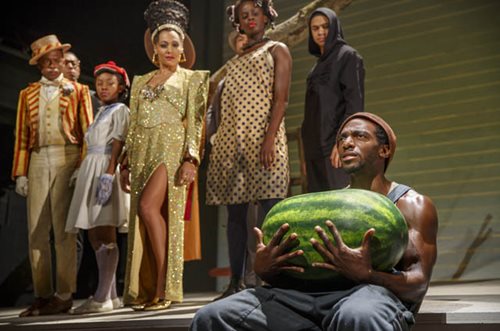
  • The Shadow Whose Prey The Hunter Becomes by Back to Back Theater (02/13/2020 – presented by the Wexner Center) – One of my favorite previews I’ve ever written. I was so glad I held off, skipping this at Under The Radar so I could go into it cold when it played my town. A more complicated bit of metatheatre than the first work of theirs I loved, Ganesh Vs The Third Reich, but brillant and arresting. A look at how much “acting” we all do in making our voices heard and how much marginalized people have to work past just to get their voices heard, to not be seen as a monolithic interest. If this was the last live performance I saw, I went out high.

Online:

We Need Your Listening, screenshot from stream and edited

Theatre feels like a circuit between the stage and the audience, even more than music, to me. But for me, this immediate, physical art reaped the greatest rewards as companies tried to find ways to make work that still felt like theater while wholly embracing the new media. I deeply hope many of us can find ways to continue to make things accessible after we can all gather in a room again. 

It would be a true shame for these opportunities for people with disabilities or other reasons not to be part of the physical exchange of energy, to finally get a wider range of options and then have them taken away.

Things that moved and inspired me with virtual theatre:

Zoom readings run by local stalwarts Krista Lively Stauffer and Tim Browning with their Virtual Theatre Project gave me the chance to catch Douglas Whaley’s phenomenal The Turkey Men (I missed its premiere run when I was in Italy last year), revisit the terrific Red Herring two-hander Thicker Than Water, and dip into remarkable work from our astounding pool of talent.

Established companies pivoted with aplomb and grace: 

Abbey Theatre’s The Sissy Chronicles, photo provided by Joe Bishara
  • Short North Stage revisited shows they’d loved and couldn’t find space for in their schedule previously like the moving early Andrew Lippa John & Jen and the delightfully raunchy Off-Broadway hit by Howard Crabtree and Mark Waldrop When Pigs Fly. They also used their connections to get new material for these revivals while also building new work like Quarantine With the Clauses. 
  • New CATCO Artistic Director Leda Hoffmann met the challenge of her first season in town coinciding with the pandemic and excelled with marvelous Idris Goodwin shorts, Plays For an Antiracist Tomorrow, bringing in legacy CATCO artists as well as fresh blood, then acclaimed Julienna Gonzalez adapted her Detroit Christmas Carol into a Columbus version under Hoffmann’s direction.
  • Joe Bishara came into his own with Dublin’s Abbey Theatre giving life to exciting pieces from artists like Mark Schwamberger and Nikki Davis.
  • Red Herring provided astounding social dramas and made steps toward a hybrid experience.

The plethora of archival work was an embarrassment of riches, from American Conservatory Theatre’s take on Lydia Diamond’s Toni Stone to the Goodman’s hilarious and heartbreaking Jocelyn Bioh’s School Girls or The African Mean Girls Play.

The Elaborate Entry of Chad Deity, screenshot taken from stream and edited

The New Group, Play-Per-View, and more presented riveting reunion readings, giving new life to great plays from past seasons. I especially loved Beth Henley’s The Jacksonian, Kristoffer Diaz’s The Elaborate Entry of Chad Deity, and Suzan-Lori Parks’ Death of the Last Black Man in the Whole Entire World.

I was in awe of groups that created new work from tools not intended for this purpose. Magic came from relatively straightforward narrative work like Mona Mansour’s The Beginning Days of True Jubilation, Theatre of War’s Antigone in Ferguson, and Sarah Gancher’s Russian Troll Farm. to more ephemeral work like We Need Your Listening by Velani Dibba, Ilana Khanin, Elizagrace Madrone, Stephen Charles Smith, Bill T Jones and Arnie Zane’s Come Together Revisited, and Theatre Mitu’s </remnant>.

Antigone in Ferguson, screenshot taken from stream and edited

Even in the dark times, there was still joy if you looked, and I am as grateful as ever people took on these burdens to bring it to us.

Categories
"Hey, Fred!" dance theatre

Things I’ve Been Digging – 11/16/2020

Russan Troll Farm – From Upper Left, Haskell King, Ian Lassiter, Greg Keller, Danielle Slavick. Provided by TheatreWorks Hartford on their site.

Theater: Russian Troll Farm by Sarah Gancher, directed by Jared Mezzocchi and Elizabeth Williamson, presented by Theatreworks Hartford and TheatreSquared in association with The Civilians.

I still miss being in a theater, crammed around my fellow audience members, breathing as one, with an uncommon fire. But watching theatre artists – new jacks and veterans alike – mold today’s tools and limitations into beautiful things that feel like theater even split over different rooms. 

I saw one of my favorite examples of this 2020 alchemy this weekend. Long-standing champions of the new The Civilians teamed up with Fayetteville, Arkansas’ TheatreSquared, and Connecticut’s Theatreworks Hartford for a dazzling, incendiary romp through Sarah Gancher’s Russian Troll Farm.

Subtitled “A Workplace Comedy,” the play zooms in on a St Petersburg office to follow a team of trolls sowing discontent and confusion among Americans through Twitter. Former journalist Masha (Danielle Slavick) joins the established dynamic of laser-focused Egor (Haskell King), stunted throwback Steve (Ian Lassiter), and erstwhile artist Nikolai (Greg Keller), in the shadow of the manager: Soviet throwback Ljuba (Mia Katigbak). 

Gancher understands this low-level almost-tech job’s dynamics: the infighting, the jokes, the sourness, and sweetness. A vibrant scene of intense, flirtatious volleying between Slavick and Keller captures the adrenaline of being good at something, even something that feels both futile (from the inside) and evil (for those of us looking in), and Russian Troll Farm is littered with scenes this good. 

Gancher and her cast understand how similar the American and Russian psyches are but filter the characters through their environment’s specifics. Lassiter – recently very good in Gold’s uneven King Lear – has a ball playing the lusty, coarse Steve, bouncing off Slavick’s Masha and King’s brilliant, understated Egor. They create a world that feels like those little rooms for those of us who’ve done call center work or similar and makes us question how much of what we did for those hours and those years was just as morally questionable.

Directors Jared Mezzocchi and Elizabeth Williamson found ways to impose their stellar cast on one another with trickery that doesn’t lose its amateurish afterbirth completely but uses the seams we can see to its advantage. When Katigbak, in a heartbreaking soliloquy, says, “Are you even here? You’re the relic of a dying empire, the ghost of a glorious future that never came,” it snaps into sharp focus that we’ve been seeing ghosts all this time.

Russian Troll Farm was a triumph I’ll be thinking about for a very long time.

Bill Chats: Screenshot taken from livestream

Talk: Bill Chats – The Future is Present: A Casting The Vote Project. Bill T. Jones in conversation with Charlotte Brathwaite, Janani Balasubramanian, Justin Hicks, and Sunder Ganglani.

Bill T. Jones, through his New York Live Arts in association with Bard University, hosted a delightful, recharging conversation with four of the people behind The Future Is Present, a group running workshops at the intersection of performance and collective action.

It’s invigorating watching these ideas of what an artist means or even can mean bounce between people of color who came up in wildly different scenes, at different levels of outward acclaim and success. Jones said, “When I started in the art world, they said, ‘You wanna make art, make art. You want to do politics, do politics.’ And I thought the we was political…Trying to get to a ‘we’, many artists head for the door when that happens. An artist is trying to close the gap between this internal space here and the rest of the universe, and an artist finds a language, a form that lets them do that.”

That resonated deeply with me, who grew up steeped in the kind of late modernism Jones helped define before me, but I was enraptured by the way the younger people he’s talking to centered other people in the lens of their own languages. For instance, Justin Hicks said, “Even transcribing what [young people] want changed the ‘we’. I know lots of artists who don’t trouble themselves with the questions I do,” and “The concept of potential is much more important to us than certainty.”

After Jones posted the question “What are your dreams” to the panel, Sunder Ganglani said, “It’s not easy to imagine one’s self into a world in which you want to live. We have hopes, though,” and Janani Balasubramanian riposted, “You asked that question about certainty – I don’t think this project hinges on certainty, it’s actually present with discomfort, difficulty, and experimentation which is being cleared away in our society, through science, through catastrophe, through violence. In that space of clearing is a process of collective experimentation: sometimes difficult, sometimes joyful, sometimes both. I want to get to a place where people can verb it. Can ‘future’.”

Watching this clear-eyed group articulate a future worth fighting for and creating, while acknowledging the ambiguity it comes with, gave me more hope than anything I’ve seen, read, or heard, in quite a while. As Balasubramanian said, “Future making is about speculation but also about closing that gap between what’s speculative and what’s material – if we’re demanding something of the future, we’re demanding it of the present…Young people don’t need our encouragement for world-building.”

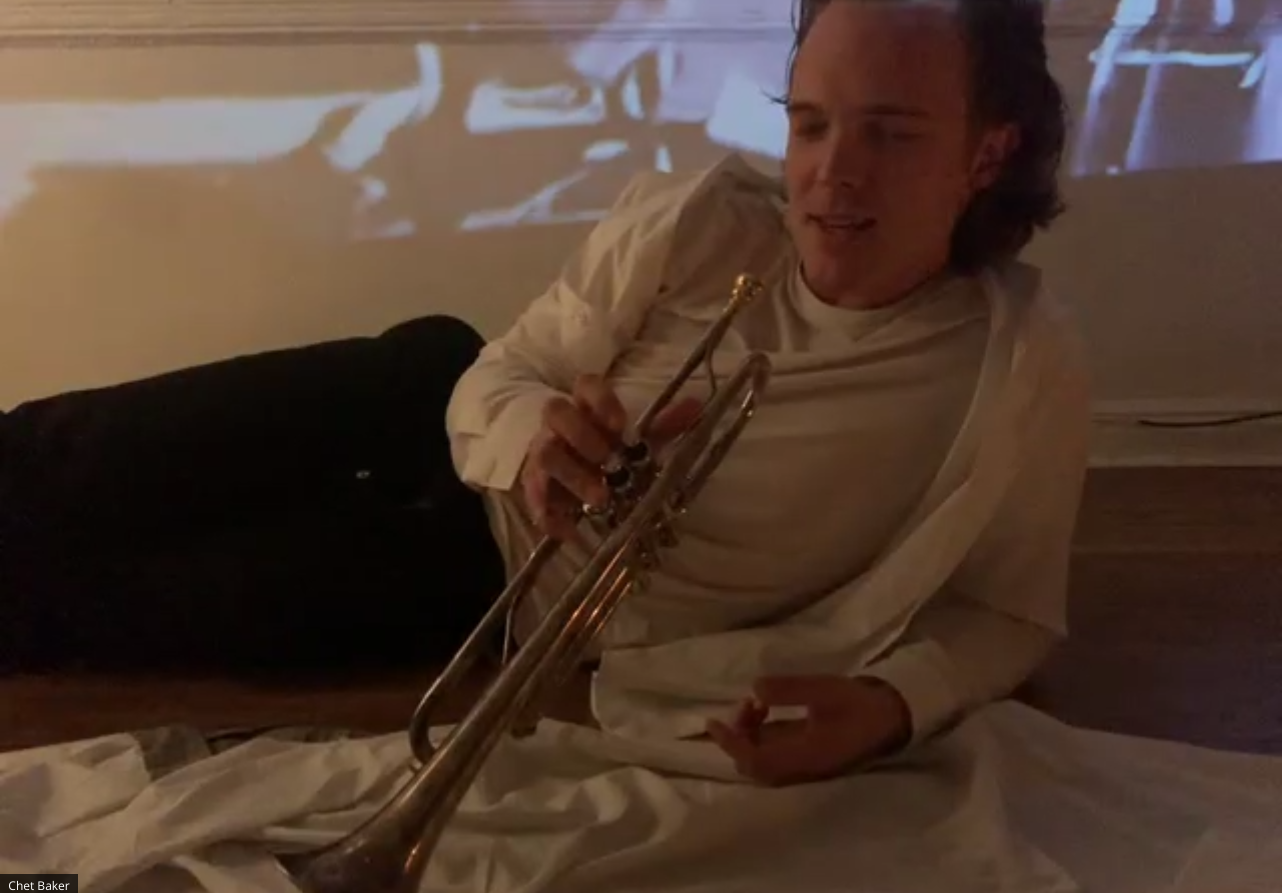
Theater: The Self-Combustion of a 30-Something-Year-Old Chet or, Icarus Tries to Catch the Sun by Keenan Tyler Oliphant, presented by New Ohio Theatre

Oliphant uses the raw material we all know about beautiful and damned Chet Baker and gives it new, molten life with Nicholas McGovern as the seductive wreck in a tiny apartment, old film clips playing on the wall like memories written on skin.

McGovern brings this his utter, unshakable commitment in the life Baker committed himself to, his ability to see magic where it confronted him – a gorgeous reverie about Charlie Parker “rising above us on corrupted wings,” snatches of songs – and his role as a self-identified truth-teller. His Baker is deep in the throes of “poetic self-destruction,” there to “remind [the audience] what it’s like to be awake.”

Somehow, in the crucible of this Zoom so intimate it’s like we’re eavesdropping these words distill into a hard crystal as the liquid boils off and they snap with the hard, sweet rhythm they need – with invaluable assistance from Jacob Robinson’s sound design. The text grows so large and thin we can see through it to the desire behind the words we’ve all heard too many times; the desire that’s all that matters here.

In lesser hands, this raving, this disappearing-ink last testament, could have been laughable, a plywood cartoon. But here it felt like that perfect tune on the jukebox as you order that one last drink you know you shouldn’t have.

Categories
"Hey, Fred!" live music theatre

Things I’ve Been Digging – 11/02/2020

Backyard Firepit with friends

Had a harder time connecting and concentrating this week, but some time with friends helped and I still found a few unalloyed joys.

Death of the Last Black Man in the Whole Entire World, promotional photo from Signature Theatre’s website

Theater: The Death of the Last Black Man in the Whole Entire World aka The Negro Book of the Dead by Suzan-Lori Parks, directed by Lileana Blain-Cruz reunion reading presented by Signature.

Suzan Lori-Parks was probably the first contemporary playwright I loved with the same fervor as the classics I grew up with. I read Topdog/Underdog at least a dozen times before getting my mind blown with CATCO’s visceral production in 2004 and I’ve been a rabid fan ever since. Most recently, I saw a riveting revival of her Death of the Last Black Man in 2016 right after the last election.

It gave me immense joy to revisit that work with a reunion of that cast under the same director, Liliena Blain-Cruz. Parks uses rich mythic language to revisit the death of the play’s eponymous black man, from different angles and with different emotional beats, and in doing so opens up and celebrates his life over and over again.

It felt as urgent in 2016 as it was when it premiered in 1990, and seeing it four years later with peril out in the open, shoved in the faces of those of us who might have had the luxury of looking away before, was a gorgeous volcano of our shared pain and joy.

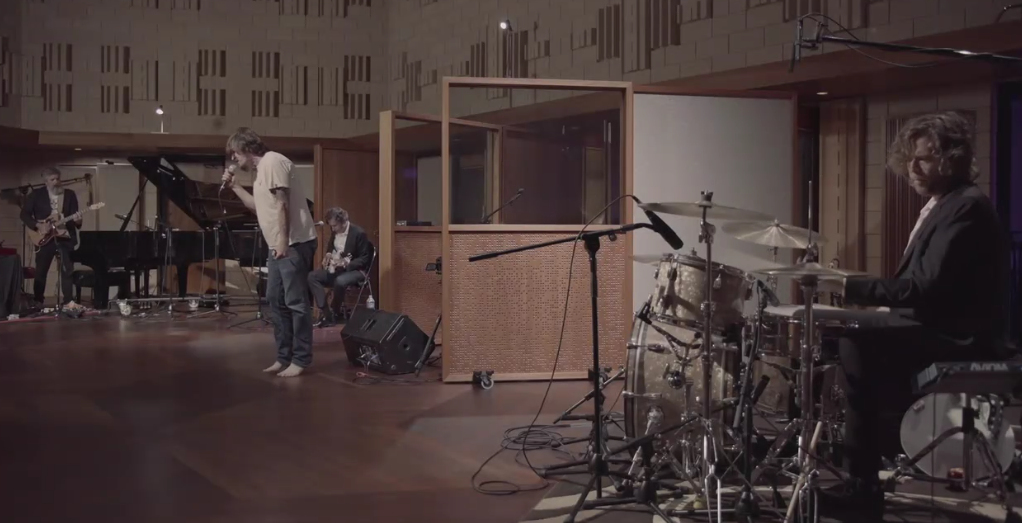
Mountain Goats, screenshot taken from livestream and edited

Music: Mountain Goats, presented by Noonchorus

Both full-band streams – the second was Thursday the 29th – from a studio in North Carolina to celebrate the release of their excellent Getting Into Knives record find John Darnielle’s Mountain Goats continuing their hot streak creatively and releasing the pent-up energy we’re all feeling at not being able to live the life they’ve grown into.

That Faulkner line about the only subject worth writing is man in conflict with himself and Mary Oliver’s line about paying attention as our endless and proper work always come to mind when I think about the Mountain Goats. He melds those impulses together and finds, in that conflict, in that attention, a way to celebrate. 

Both shows hit the wild extremes of emotion Darnielle crafts so well, and his brilliant use of the push-and-pull of a set list. The first stream, on the 22nd, was riddled with highlights. He paired two songs off Transcendental Youth, the gut-punch of shame in “Cry For Judas” with that terrible ambiguity wrapped in a sunny singalong hook, “Long black night, morning frost – I’m still here but all is lost,” sets us up for the celebration and encouragement of “Amy aka Spent Gladiator 1”: “Find limits past the limits, jump in front of trains all day, and stay alive. Just stay alive.” 

The second was full of highlights – a simmering “Stabbed to Death Outside San Juan”, a joyous, raging “Foreign Object” but two moments near the middle of the set still haunt me a couple days later. The low-at-the-heels vignette “Lakeside View Apartments Suite” hit this perfect note of devastation in the synchronicity of text and singing with “Ray left a message thumbtacked to the door. I don’t even bother trying to read them anymore,” and then this pause weighed down with regret that’s as bleak and beautiful as the “Scuse me while I disappear” on Sinatra’s best version of “Angel Eyes” or the stutter into smoke on Basinski’s “Disintegration Loops”. Not long after that, on “International Small Arms Traffic Blues” he delivers “My love is like a powder keg” with no wink or any bravado, it’s the perfect distillation of a character with nothing left to lose or offer but an earnest truth.

The encores – if you can call them that here – both ended with the closest thing he’s produced to a hit, the perennial, everyone-finds-their-meaning perfection of “This Year.” The first show followed it with another classic climax, “No Children” with jokes from the band about how odd it is to play it without people screaming along “I hope you die, I hope we both die.” The latter went into the more subdued “Spent Gladiator 2,” about shrugging off the expectations of a life and learning to live with them, finding some last bit of defiance in the throes of exhaustion.

Categories
"Hey, Fred!" live music theatre

Things I’ve Been Digging – 10/19/2020

David Murray Trio, screenshot taken from livestream and edited

Music: David Murray Trio and William Parker’s In Order to Survive Quintet

Free jazz holds a special place in my heart, no other music quite makes my nerves vibrate the same way. Like so many other traditions, William Parker’s fabled Vision Festival pivoted to online, and I was lucky enough to find out about it in time for the last day which featured two titans. 

David Murray and William Parker were both gateway drugs for me. Murray, I think I discovered through Zach Bodish making a suggestion at Singing Dog Records in high school or early college, Parker I learned about through John Corbett’s Extended Play (if there’s a Virgil to my journey through music fandom, it’s probably Corbett). For the last 20+ years, seeing them in places like The Iridium, The Stone, the basement of CBGB’s, I’ve always found something new and refreshing from these wells.

Murray’s new trio of Luke Stewart on bass and Ronnie Burrage on drums, painted supple, sinewy backdrops for Murray’s gorgeous tone. He’s refined the vocal, gospel-tinged attack and warm, organic melodies feel lived in without sacrificing their surprise. There were righteous shouts, low whispers, and a tangle of melancholy and joy in an extended weaving-together of songs by California friends of his. 

Parker’s In Order to Survive Quintet, one of my favorite of his smaller groups, did what they do: built universes out of engaged empathy and conversation. Rob Brown’s alto and James Brandon Lewis’s tenor jousted and danced, leaping into space and setting up landing pads for the rest of the band to play with. Parker’s thick, unmistakable tone seemed to create many centers of gravity at once, Gerald Cleaver’s chunky, melodic drumming and Cooper-Moore’s precious-stone-mosaic piano built towers for the music to run through.

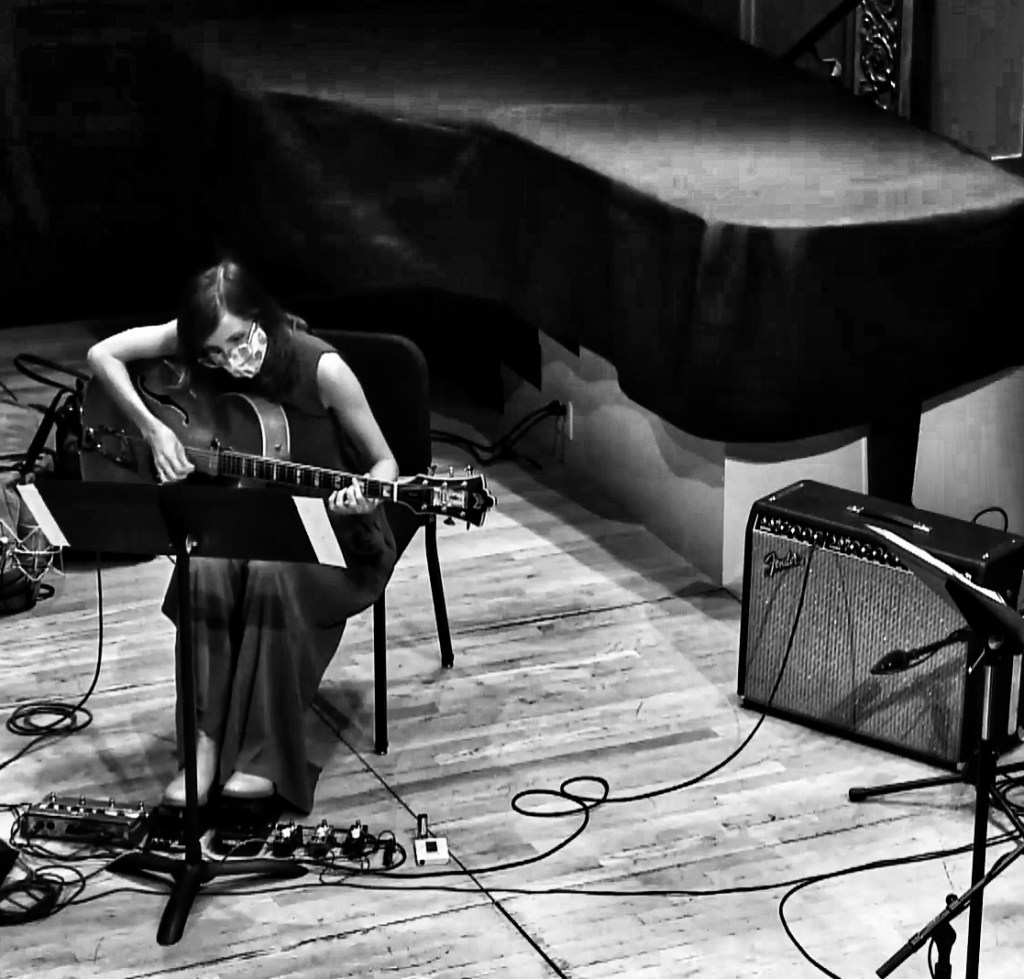
Mary Halvorson, taken from livestream and edited

Music: Thumbscrew, presented by Roulette

I’m sure I’ve told this repeatedly in blogs but I still distinctly remember the first time I saw Mary Halvorson, playing in Trevor Dunn’s Trio Convulsant at Bowery Poetry Club on a stuffed art rock bill that turned me onto so many other great bands – Dr. Nerve, The Zs, Friendly Bears – I was there to see my pal Mike Gamble play in Mike Pride’s great band Snuggle/Stencil but Halvorson’s playing was the main thing I took away with me into the night. 

I saw her two months later in one of Gerard Cox’s invaluable series, a duo with violist Jessica Pavone, at the much-missed ACME Art Company, cementing my fandom; she’s been one of my very favorite guitarist’s ever since. That rabid fandom still burns just as bright 15 years later.

Halvorson’s career is marked by immaculate taste, in her playing and in collaborators: the long-running collective trio Thumbscrew with bass player Michael Formanek and drummer Tomas Fujiwara is emblematic of this wide-ranging taste and approach.

To celebrate Halvorson’s 40th birthday, she and Thumbscrew played a gorgeous, riveting retrospective set at Brooklyn temple to the avant-garde, Roulette. It’s a tribute to the magic of improvisation and the intricate, organic writing of the trio that catchy cells of melody melted into rivers of cracked sound; mosaics slipped out of my grasp and new secrets blossomed in another light; wine-dark cascades parted to reveal silver melodies.

This was everything I want out of improvised and jazz-based music, and shows an artist with no signs of stopping. I hope to follow Halvorson’s guitar for another 30 years.

Nesba Crenshaw and Ro Boddie, taken from livestream and edited

Theater: Far Away by Caryl Churchill, directed by Cheryl Faraone, presented by PTP/NYC

Caryl Churchill has long been one of my favorite playwrights, but I’d never seen her 2000 short Far Away so this excellent streaming production from PTP/NYC was more than welcomed from me.

Far Away takes a variety of looks at a civilization crumbling, with Harper (Nesba Crenshaw) trying to explain to her niece Joan (Lilah May Pfeiffer as a child) and keep an unsteady balance with Todd (Ro Boddie) who also has a complicated relationship with Joan as an adult (Caitlin Duffy). 

Faraone gets excellent performances and masterfully turns up a simmering heat that belies the distance of zoom. Every one of these four cast members knows how to shift from absurd, almost surreal details hinting at their grim reality, into bright humor, and a tenderness bent and twisted by a life lived under a heavy shadow. Far Away is a beautiful tonic that reflects our tumultuous moment – despite being written twenty years ago in a different darkness – that never inspires despair even as it acknowledges the storm.

Categories
"Hey, Fred!" books dance live music

Things I’ve Been Digging – 10/05/2020

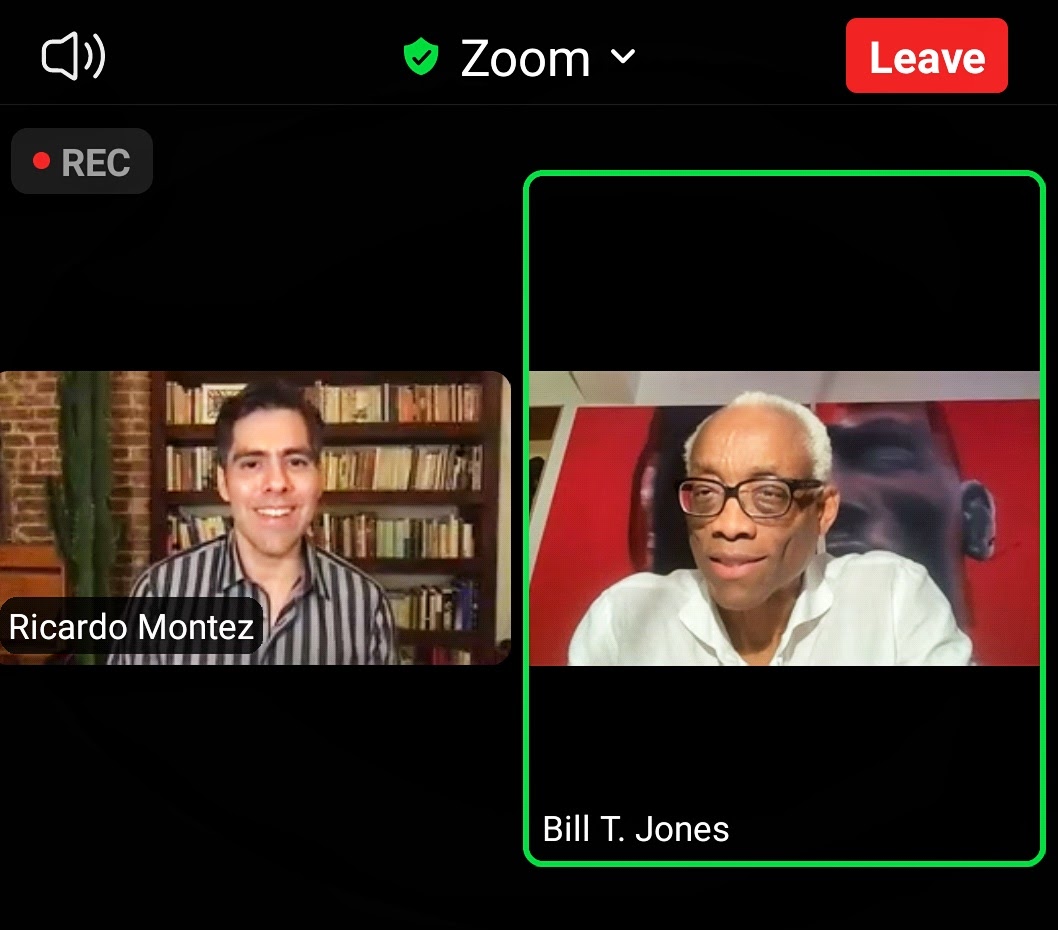
Talk: Virtual Bodies: Bill Chats – Ricardo Montez, Bill T. Jones in Conversation with Ricardo Montez, moderated by Joshua Lubin-Levy

I’ve been trying to stir in some more talks and workshops into the weekly diet of internet consumption, the same way I try to keep a rotation of weightier books and comfort food books. I struck gold this week with a conversation between the choreographer/organizer Bill T. Jones and professor/writer Ricardo Montez, sparked by Montez’s new book Keith Haring’s Line: Race and the Performance of Desire.

Jones’ early work is inextricably tied to the vibrant early ‘80s New York downtown milieu that captivated my peer group 15-20 years later and still feels fresh, striking, and full of life. Particular attention often focuses on Jones’ collaboration with his friend, the painter Keith Haring – the famous photo of Haring painting Jones’ nude body adorns the cover of Montez’s study.

Their conversation ranged from the intersection of race with abstraction, Jones reminiscing about the small number of black artists playing at The Kitchen in that era (“George Lewis, Douglas Ewart, maybe Bebe [Miller]”), and the need for irreverence and engaging with your own time.

Jones balancing his role as an elder statesman and a survivor, a witness, always inspires. Reflecting on his transition into his current roles and what keeps him motivated, he mused, “Do you still believe in beauty, Bill?” and sang a snatch of the standard, “Have I Stayed Too Long At The Fair,” his famous collaborator/companion/muse Arnie Zane’s favorite song.

There were so many lines here that struck me like a molten nail into grey flesh. Of the iconic cover image, he said, “Do I have the guts to do anything like that anymore? Can I be generous like that?” Jones described his goal as “How can I find the fervor of my Mother’s prayers in formalism?” And the thing I’m thinking about nailing like a thesis above my writing desk, his provocation to Montez, “Artists should always be in the face of academia saying, ‘You think you can capture this butterfly?’

John Hiatt and Lilly Hiatt, taken from the livestream and edited

Music: John and Lilly Hiatt, presented by Topeka

John Hiatt and his daughter Lilly have crafted catalogues of songs that dig as deep into the joy of connections and the reason we live as anyone else I can think of. Joy and pain aren’t discrete objects and neither are community and self for either of them. Hiatt’s career, at least since his ‘80s comeback Bring The Family is littered with gems, songs that make people want to sing (I promise, if your town has a bar with music back, someone is covering “Memphis in the Meantime” right this second). 

And especially with her last two records, Lilly is keeping him on his toes. As John said in this stream, “She just writes these amazing songs that make me try to keep up.” Their easy camaraderie, affection, and respect made this livestream deeply comfortable and exciting at the same time; that layer of familial affection didn’t create tension, but it also didn’t smooth out this classic guitar-pull style show.

Songs aren’t mirrors and they aren’t autobiography but it’s hard for a fan to not read a little of that even for those of us who are text essentialists. In that spirit, the father and daughter – who have been open about their struggles – singing together on two of the finest songs ever written about recovery moved me deeply. Lilly’s “Walking Proof,” the title track of her beautiful new album, had John’s authoritative and sweet growl rise to join hers on the chorus’s plea for acceptance and connection: “I could tell you that it’s easy but that wouldn’t be the truth; If you ever need to call me, well, you know there’s walking proof.” 

Later in the set, John’s anthem to those same materials of life, “Through Your Hands” shot into the stratosphere with a light injection of Lilly’s wry harmony as they danced through “And you ask, ‘What am I not doing?’ She said, ‘Your voice cannot command. In time you will move mountains. It will come through your hands.’”

They each had eight songs in the main set, with a two-song encore. John closed with the closest he’s written to a standard, “Have a Little Faith in Me,” that still jerks tears free when I’m not expecting it. With all the connotations of thirty years in our hearts and being covered by so many people, that sets a standard for the other encore.

Lilly met that energy with “Imposter,” a slow-burn highlight from her breakthrough Trinity Lane about her famous father. I loved “Imposter” before it finished the very first time I played it and I’m still beguiled by its ferocious empathy and its delicate power, its rock-solid sense of perspective even through its whip-crack shifting. It accomplishes an impressionistic, all-angles-of-a-perspective feat that makes me think of “Famous Blue Raincoat;” it’s one of the great songs of the 21st century so far.

Music: Jose James with Taali at Le Poisson Rouge

I’m keeping my fingers crossed for every venue I love to make it through to the end of this and watching with interest as they create alternative models to live. Without being privy to the finances of these places, I’m most heartened by the subscription efforts, treating a venue a little like public radio until we can pack in and buy beer. 

The big one here is Smalls which shows up in this column regularly but with October 1st, another of my favorite venues, Le Poisson Rouge in lower Manhattan, launched LPR.tv with an exciting slate that goes a long way to capture their diverse, open-ears booking. Saturday, I caught jazz singer Jose James (who also had Harlem Stage release the archived recording of his dazzling tribute to Billie Holliday to Youtube this week) with an opening set by Taali.

Taali’s spacious and incisive synth and vocal sculptures captivated me. She roamed from her finely wrought originals – “I’ll Meet You” haunted me with its sliding descent through the hook “I will take you home,” – to well-chosen covers. The latter included a lovely Regina Spektor piece, a mesmerizing version of Leonard Cohen’s “Hey, That’s No Way to Say Goodbye” that sounded like melting ice slipping off scaffolding onto concrete and slipping away into fractal patterns and steam on its way to return to water, and a gorgeous multi-tracked vocal on a Jewish hymn she introduced as “The song my parents walked down the aisle to.”

James brought a crack band to that stage I love so much to celebrate a 10th anniversary reissue of his breakout sophomore record Blackmagic. “Code” featured crisp keys from Big Yuki and a burst of acidic guitar by Marcus Machado before he broke down the repeated line “Don’t forget what my name is,” with a jazz singer’s improvisational excitement, a slam poet’s sense of digging up everything a word means through repetition and a DJ’s Burroughs cut-up sense of rhythmic possibility. The rest of the record got the same careful treatment, slow-burn ballads and dancefloor smashes and intriguing riddles.

Categories
live music theatre

Things I’ve Been Digging – August 31, 2020

Andrew Cyrille Quartet, taken from livestream and edited

Music: Andrew Cyrille Quartet, The Village Vanguard 

Drummer Andrew Cyrille, who I first became a fan of with his exciting work with Cecil Taylor, led a mysterious, beautiful Quartet this weekend from the Vanguard. 

Cyrille’s supple feel with bass player Ben Street buoyed these songs like an abstracted nature painting. Throughout, the interlocking front line of David Virelles on piano and Bill Frisell spun wildly original and wholly organic melodies and harmonies. Highlights included Cyrille’s shadowy ballad “Special People” turning into crashing waves; Frisell’s tantalizing slow-burn “Worried Woman;” Frisell’s “Drink” with its slinky melody, moves from a leisurely build to a classic 60s saloon groove littered with spikes and a barely sublimated frenzy.

Theater: The Jacksonian by Beth Henley, presented by The New Group

With this New Group production in 2013, Beth Henley proved her sharp, sweltering take on the South is as sharp as her heyday with Crimes of the Heart. As a benefit directed by Robert Falls, reunited most of its cast for a riveting return to the poisonous swamp of the human heart in 1964.

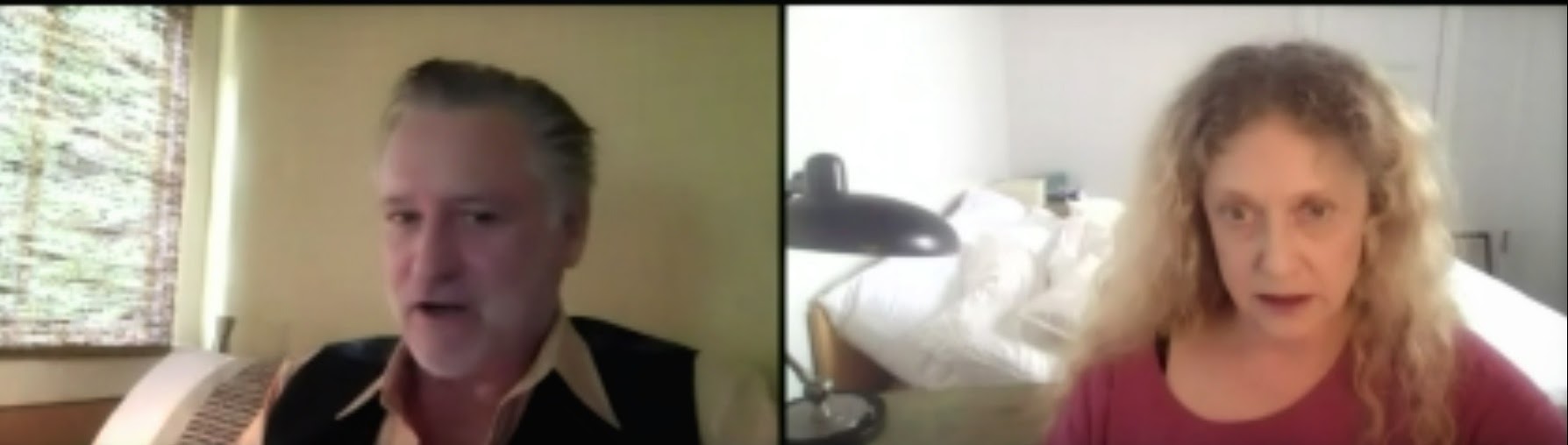
I can’t think of an American actor who does a better downward spiral than Ed Harris and Perch, the disgraced dentist making one last swing at getting his life together in the eponymous hotel, is a remarkable role for him to sink into. Amy Madigan as his estranged wife and Juliet Brett as his neglected, confused daughter are powerhouses. Bill Pullman, riffing on Flanner O’Connor’s Misfit, finds the sadness in a lifetime of malevolence, and Carol Kane (stepping into the shoes of the late, great Glenne Headly) is a vibrant, exciting foil. 

The Jacksonian is a classic potboiler with teeth and language that crackles and steams; this reading increased my regret at not catching it on a New York trip that year tenfold.

Optic Sink, Screenshot from Livestream

Music: Goner TV episode 3, featuring Optic Sink

Goner Records looms large in the landscape of music I enjoy. Through their record label and store, their friendships with and promotion of Columbus bands, and their annual festival, they’ve been my gateway to Memphis as a tangible reality I love every bit as much as the mythopoetic Memphis I grew up with as a vision and a dream.

They’ve done spectacular work keeping this international community I’m on the fringes of but love so much connected in these distanced times: teaming with other labels like Slovenly for day-long blowout livestream marathons and, more recently, their every other Friday Goner TV broadcasting from the store and giving us a glimpse into Memphis and what’s coming next on the label.

This week’s was my favorite yet, previewing the debut album from Optic Sink with a live in-store. In NOTS, one of my favorite, most exciting, cerebral without being dry, bands of the last 10 years, Natalie Hoffman’s guitar and vocals lead the band’s cracking, dark narratives and off-kilter, surprising, prickly earworms. 

With Optic Sink she moves to keys and the cracked-mirror science fiction vibe from the NOTS mix comes to the fore with longer, slower, murkier songs. But these new tunes still have a dancefloor punch and pop nougat wrapped in their intriguing mystery; based on this evidence, I’m very excited to hear the record. 

This Goner TV also featured Hoffman’s Optic Sink bandmate Ben Bauermeister in his solo electronic guise A55 Conducta which was even more what I didn’t expect from Goner – though I know the mutual affections run deep with Bauermeister’s work in bands like Magic Kids and Toxie – but it was a fucking party.

This also featured video from longtime Goner cohorts Quintron and Ms. Pussycat, multidisciplinary Memphis artist Don Lifted, and made me miss the city it’s based in terribly.

Categories
dance live music theatre

Things I’ve Been Digging – August 24, 2020

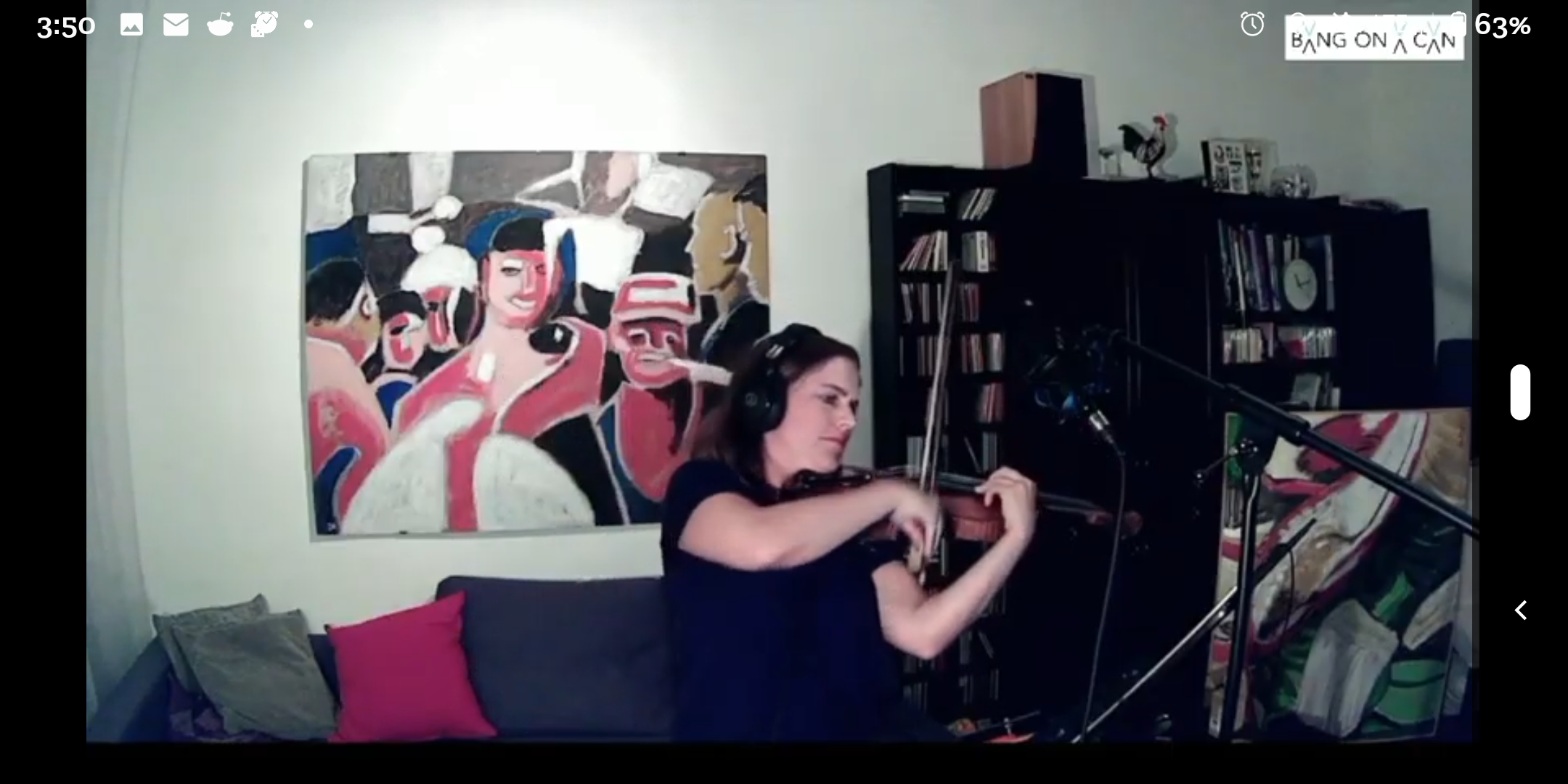
Music: Bang on a Can Marathon

Bang on a Can’s founding composers (Julia Wolfe, David Lang, Michael Gordon) have put on a marathon of new work since the mid ‘80s and the current climate changed the marathon’s form but didn’t diminish any of its vital joy, intensity or defiance.

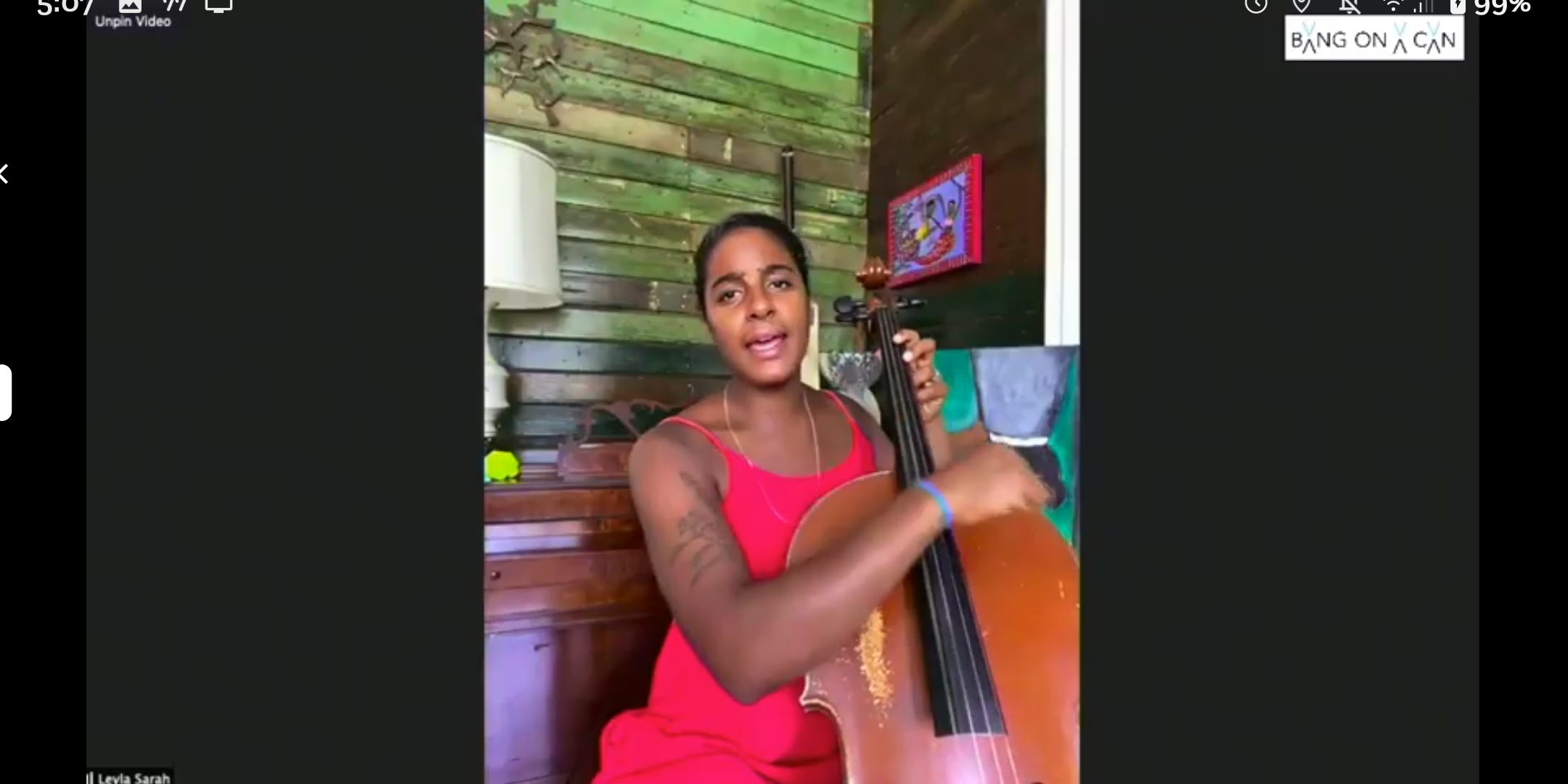
This, the third version I think, was as full of magic as anything I’ve been lucky enough to see since we’ve been shut inside. Highlights included Olivia de Prato’s dark and holy read of Missy Mazzoli’s Vespers for Violin, singer-cellist Layla McCalla’s songs inspired by Langston Hughes, Ken Thompson’s fiery world premiere of Nicole Mitchell’s A Much-Deserved Ass Whooping, and Jodie Landau’s beguiling version of Jacob Cooper’s Expiation.

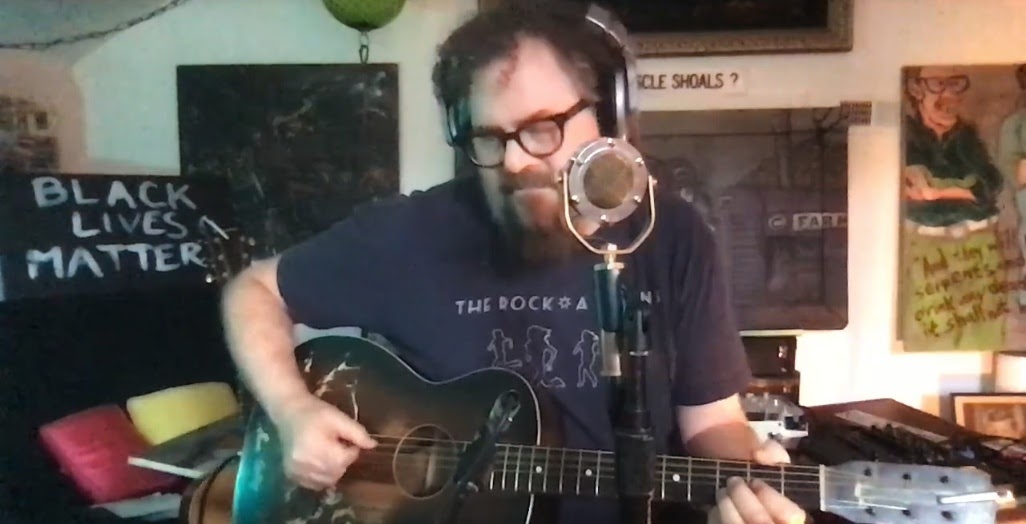
Patterson Hood, screenshot of livestream

Music: Patterson Hood

I think I first heard of the Drive-By Truckers when I was in college through the one-two punch of No Depression magazine and niche CD site Miles of Music (also where I got my first Marah records), around the time of Pizza Deliverance. I first saw them around 2000-2001 when I was down for an Anime Weekend Atlanta and it stands as one of the most electrifying live shows I’ve ever seen – for years I don’t think I missed them any time they were even close to me.

My fandom for DBT has ebbed and flowed, but they won me back big in the last two records. Patterson Hood (and partner/only other constant member Mike Cooley) has not only built one of the most consistent catalogs of songs, but he’s lit an example of how to grow up in rock-and-roll. He’s stayed true to his impulses and interests, but he left room for them to expand. He’s grown into his curiosity and let his empathy grow instead of shrink. His home-recorded livestreams during this pandemic have been a balm, like hearing from an old friend reporting back.

That said, it might make me an enormous hypocrite that my favorite of these streams so far and the one that nudged me to add it here was his delve back into “The Heathen Songs.” As he and Cooley were gestating their breakthrough Southern Rock Opera, they also wrote a flood of songs for what ended up being the next two records, Decoration Day, The Dirty South, and Hood’s first widely distributed solo disc Killers and Stars.

That was my favorite period of the band, when they shrugged off some thought-it-was-a-joke-song classic college rock feint of the first two and opened up the aperture of their view of the south, and only indulged the big guitar jamming sporadically, with songs that ripped my heart out at the same time I was partying with my friends on the dancefloor.

This trip back down memory lane had a clear eye for what those songs meant to him at the time – particularly on his “divorce trilogy”: “Hell No I Ain’t Happy,” “(Something’s Got to) Give Pretty Soon,” and “Your Daddy Hates Me” – and what the songs mean now. That delicate balance between catharsis and wryness gained new, slippery facets on the driving-hot-nails elegy of “Do It Yourself,” “And some might say I should cut you slack, but you worked so hard at unhappiness. Living too hard just couldn’t kill you, so in the end you had to do it yourself.”

The long – almost two hour – set hit his winking nods on “George Jones Talkin’ Cell Phone Blues” and “Uncle Disney” and a hilarious shaggy dog story wrapped around a talking blues about an early tour involving one of the Columbus’s greatest bands and my dear friends (and, clearly, Hood’s) The Lilybandits.

Hood also put in a plug for Lilybandits singer Todd May’s current gig with Lydia Loveless and spoke with love about Wes and Jyl Freed, the recently deceased Carl Dufresne and Todd Nance, and other friends – famous and not. That love littered the set like the confetti from the war we all should be lucky enough to fight and luckier to survive.

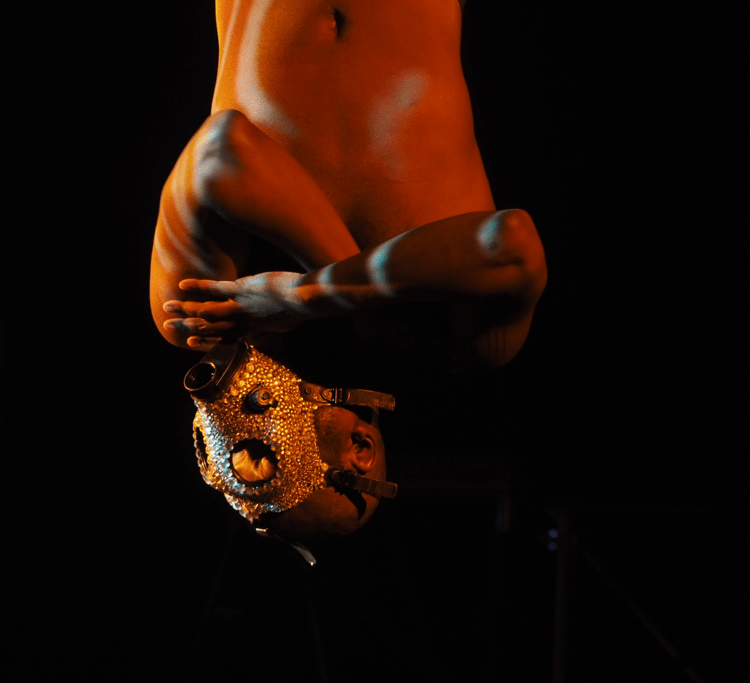
Jaamil Olawale Kosoko, from the artist’s official website

Dance/Theater: Chameleon: A Biomythography by Jaamil Olawale Kosoko

Kosoko was in Columbus in late 2018, touring his hypnotic epic of intimacy, Séancers, at the Wexner Center. While in Columbus, he took advantage of a Wex residency grant to help develop his new piece Chameleon. When I interviewed Kosoko for a preview of Séancers, we talked at length about Audre Lorde, a mutual inspiration of ours.

That inspiration flowers in Chameleon, subtitled a biomythography in a nod to Lorde’s Zami and delving into his ancestors, the pain and joy of his background and the vital chimerical work of making art and surviving as a queer, black man in the toxic nature of America. The power of memory, but also the vital, tragic tonic of forgetting.

Talking about his uncle, Kosoko reflects, “Once he told me, ‘The past will always leave a footprint,’…After his funeral, no one wanted to go inside; it was much easier to pretend he never happened. Although I had been the one to feed him, to clean him, to brush his hair, I was afraid. Not so much for him as I was for myself: for how fast my concerns shifted from keeping him alive to removing every infected memory of his existence. What scared me – and still does – is how successful I was. No one speaks his name: his voice, his laughter, are all questions; a black-bodied amnesia taken back by the ethers. Was he ever really here? On this earth? In that stank room? In that stank, angelic body? Was he ever here teaching me something about love?”

But the work isn’t just its lacerating words, it’s a melting, roiling collection of indelible images cracking the world open. And alongside that, Kosoko fully engaged interactivity, the internet and the moment, taking the snatched-away opportunities for this to premiere at Princeton and Tanz with a combination of Vimeo and Discord, context and community and dialogue. A masterpiece that left me looking for my throat and heart on the floor of this second-story room.

Categories
live music theatre

Things I’ve Been Digging – August 17, 2020

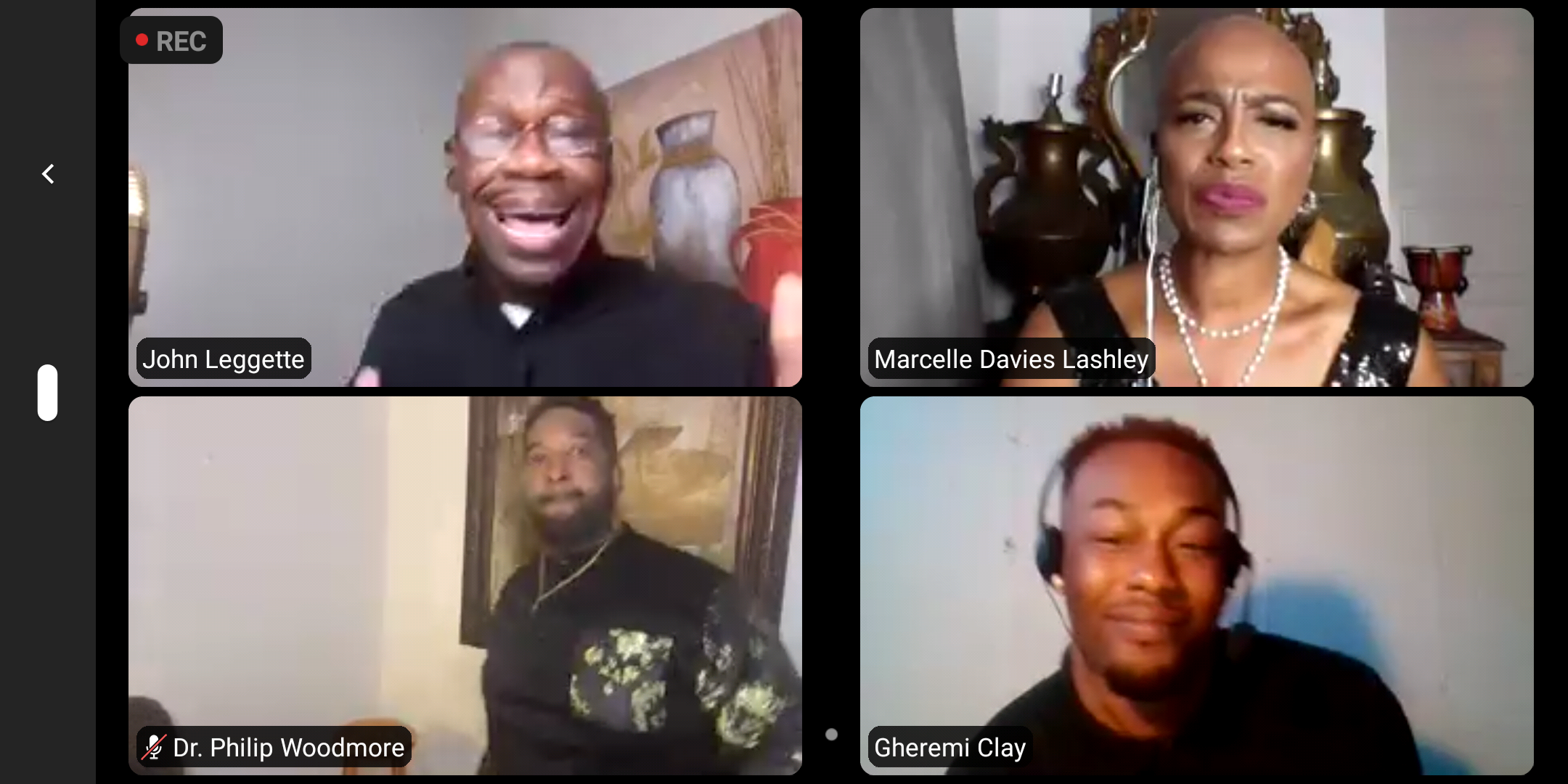
Theater: Antigone in Ferguson by Sophocles, translated and directed by Bryan Doerries with music by Phil Woodmore, presented by Theater of War.

Theater of War uses classical plays to essay contemporary social issues and their adaptation, by artistic director Bryan Doerries in collaboration with Phil Woodmore and a diverse choir, of one of the great tragedies of systemic power unchecked, Antigone in Ferguson had been on my radar for a while but this Zoom version was my first chance to see it as part of the moved-online 6th annual Michael Brown Memorial Weekend.

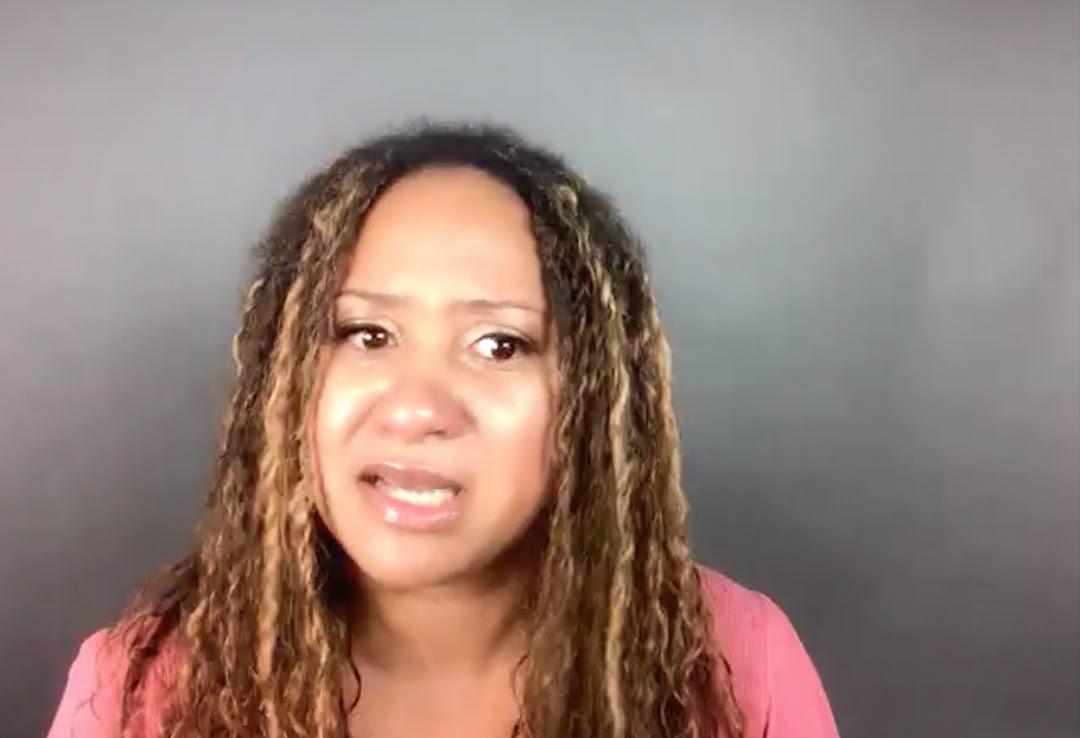
A stellar cast, led by Oscar Isaac as Creon and Tracie Thoms as Antigone, burn through this excellent take on Sophocles, modern enough without feeling like, as Anne summed it up, “You’re rapping to the kids about Shakespeare.” The production also made beautiful use of the contemporary choir, with soaring, earworm songs, in the place of the Greek choir.

Bokanté, screenshot from SFJAZZ Broadcast

Music: Bokanté, presented by SF JAZZ as part of their Fridays at Five Archival Series.

For me, getting glimpses into institutions, scenes, locales I either can’t visit or can’t visit as often as I’d like has been one of the few but big silver linings of this pandemic. High on that list is San Francisco’s SF JAZZ Center dipping into their recorded programming to present slices of their monumental work to the world at large for an extremely reasonable subscription fee.

Maybe my favorite of these end-of-the-work-week shows aired this week with the electrifying, joyous, and mysterious band Bokanté. Fronted by Guadaloupean by way of Montreal singer-songwriter Malika Tirolien with a crack band put together by Snarky Puppy’s Michael League, these hooky, dynamic songs highlighted the promise and glory of mixing elements with the song itself as your guiding light.

Roosevelt Collier’s snarling, sparkling lap steel guitar and a trio of percussionists including Jamey Haddad and Weedie Braimah were the main second voices throughout songs, weaving around and punctuating Tirolien’s French and Creole lyrics with thick grooves supplied by League and the Snarky Puppy guitarists. None of these felt like experiments or a cobbled-together mishmash. Everything hung together with beautiful tension and unity.

Screenshot from the broadcast of The Elaborate Entrance of Chad Deity

Theater: The Elaborate Entrance of Chad Deity written and directed by Kristoffer Diaz, presented by Play-Per-View.

Obviously no one can keep up with every single thing, even in art forms we feel like we specialize in but I was extra chagrined that this 2010 Pulitzer shortlisted play had missed me so completely. But going in cold, with just that knowledge and the reputation of Play-Per-View who have been a lifeline and a guiding light for high-quality theatre translated to this new virtual time, added to my unbridled delight.

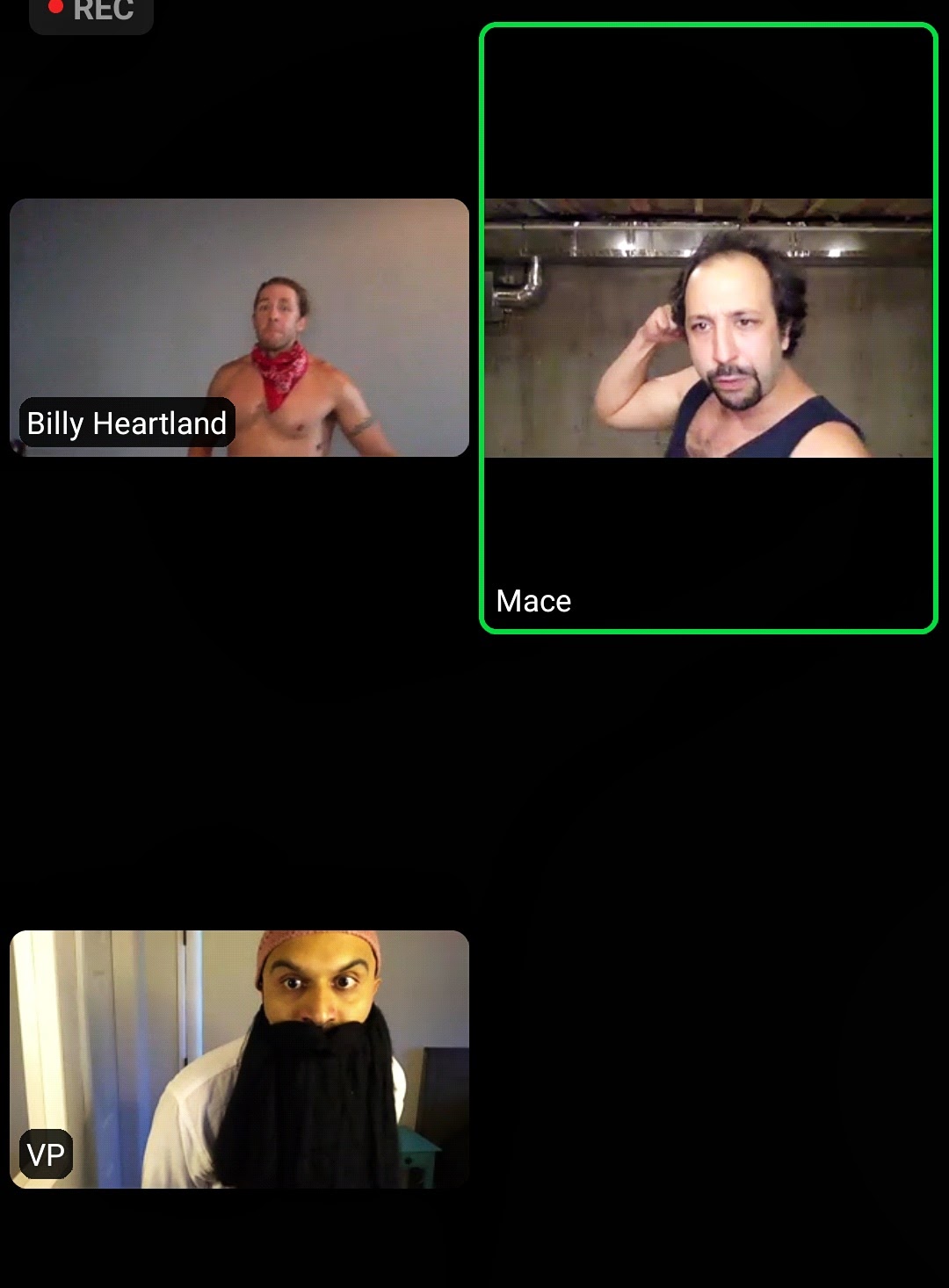
Diaz’s play takes on the promise and limitations of America, art, and the grinding terror of late-stage capitalism through the lens of professional wrestling. It features crackling performances, most of whom were involved in the Chicago premiere or the New York run. 

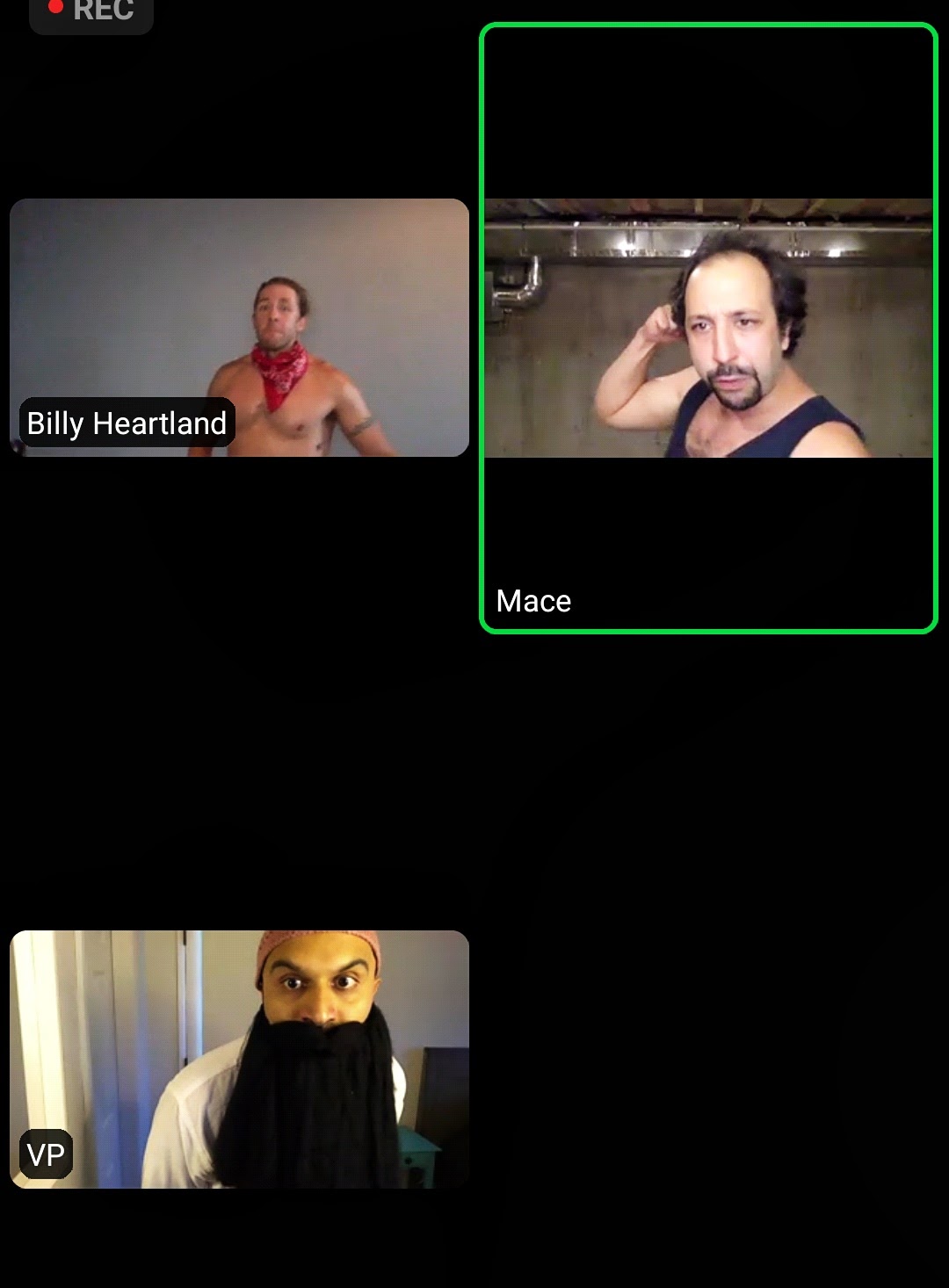
The work orbits around an astonishing, hilarious and heartbreaking Desmin Borges (You’re the Worst) as Macedonio Guerra, a true-believer wrestling fan who can’t seem to rise above the jobber level until he finally gets the chance as part of a racist double-team where his character is turned into “Che Chavez Castro,” sombrero and all, with fellow Brooklyn native VP (Usman Ally, full of crackling, witty energy) recast as “The Fundamentalist,” and given a shot against the reigning champ of the title (Terence Archie, with a perfect blend of self-awareness and ego run amok).

Two hours passed like nothing as I was completely enraptured by this smart, intense play, that keeps getting more relevant as safety nets get ripped away and inequality gets harder and harder to look away from.

Categories
live music theatre

Things I’ve Been Digging – August 3, 2020

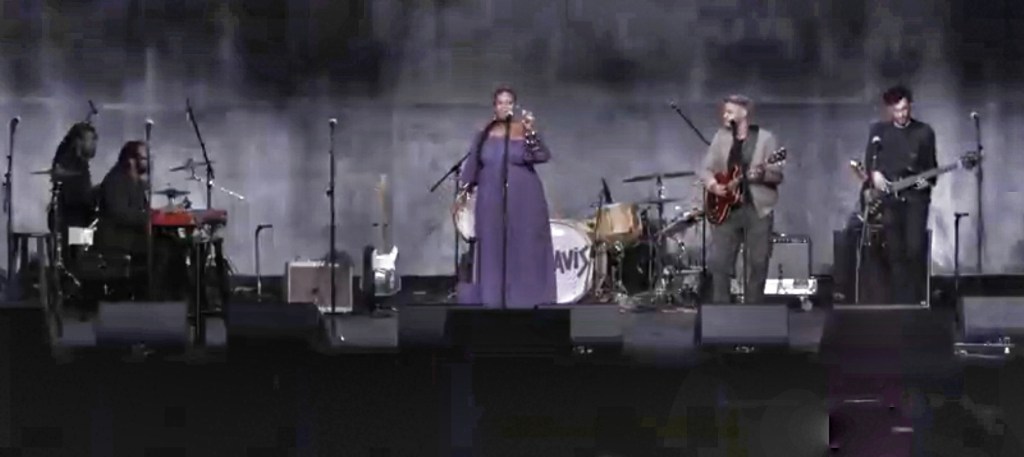
Deva Mahal and Son Little, Mavis 80, screenshot from broadcast

Music: Mavis 80, Mavis Staples’ 80th birthday celebration taped at the Ace Theater in LA and rebroadcast as a benefit for the Newport Folk Festival Foundation.

It’s hopelessly reductive to say any single voice is America but sometimes the temptation is irresistible. Since the 1960s, Mavis Staples has earned that voice if anyone has. Bringing gospel music into the contemporary world, enlivening rock and soul, and still making outstanding record after outstanding record, still hungry for the best new songs and the best players, she’s an inspiration on every level.

I got a lot of joy this weekend out of tuning into the Newport Folk Revival weekend streamed through WFUV (also giving me pandemic life with Binky Griptite’s Saturday slot), a perfect reminder of how great this institution has been for so many years and argument to archive everything.

I heard so much great stuff but the crown jewel was this rebroadcast of the third of Staples’ 80th birthday concerts, with a cross-section of great American voices approaching one of the finest canons in 20th century music with exactly the right amount of intensity, reverence, and play, and, course, even in such a stellar lineup – highlights for me included War and Treaty and Deva Mahal and Son Little – Mavis Staples wiped them all out of our minds within three notes.

We Need Your Listening screenshot

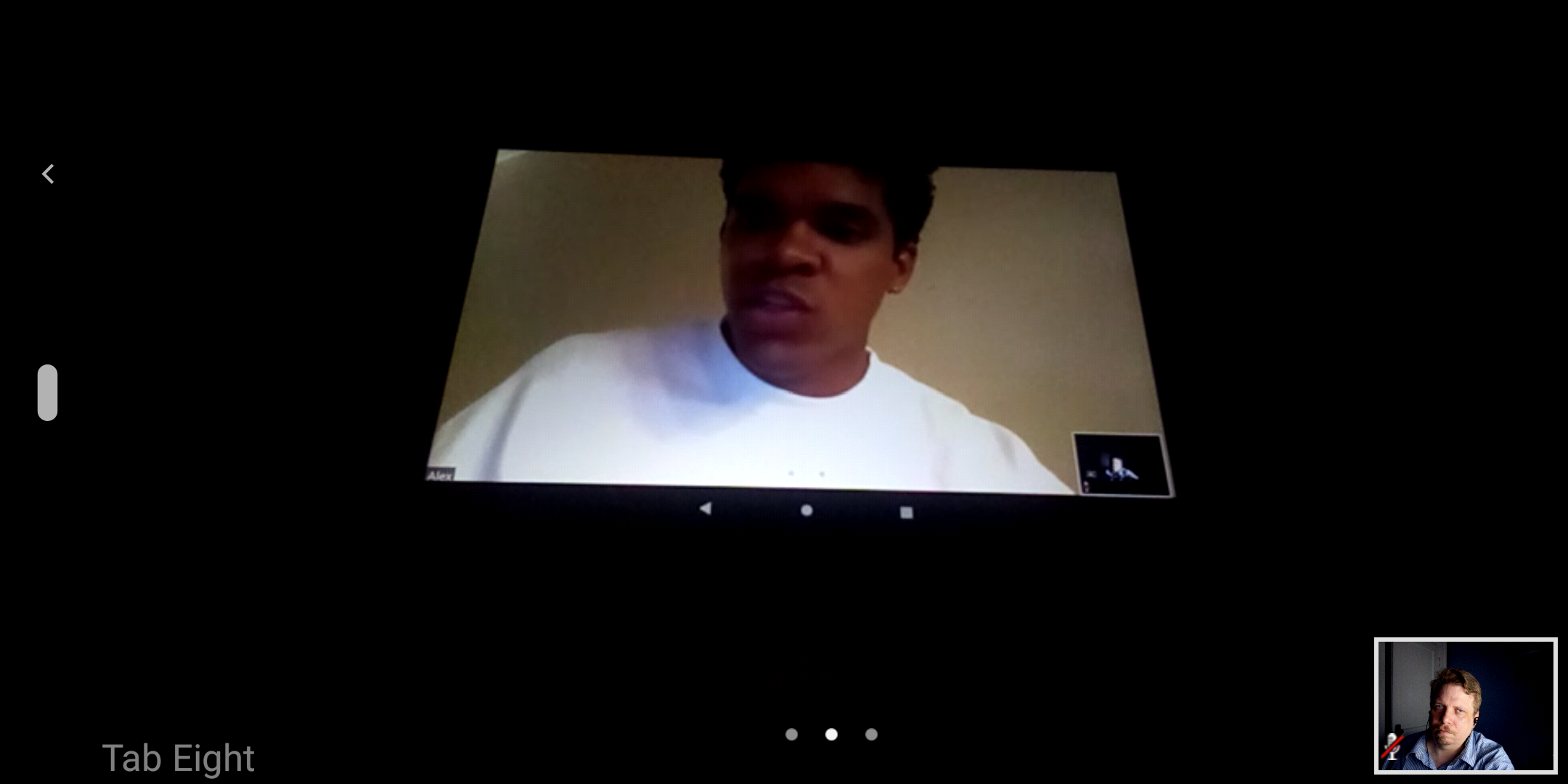
Theater: We Need Your Listening by Velani Dibba, Ilana Khanin, Elizagrace Madrone, Stephen Charles Smith, presented by New Ohio Theatre as part of the Ice Factory Festival.

Despite the sudden proliferation of Zoom readings and similar real-time grappling with the question of how to make theater in our new time of plague and worry, this tribute to human connection and study in “radical listening” came the closest to delivering on the age-gifted new double meaning of Aretha’s late-period classic “Who’s Zoomin’ Who.”

They ushered each viewer from the digital waiting room that irritates most of us into breakout sessions – after time scanning the slightly shabby West Village space where the New Ohio recently moved (that made me extremely nostalgic). Unseen hands led us through a solo journey (represented in space by a tablet or computer) from one other computer to the next, featuring a member of the ensemble: Hilary Asare, Alex Bartner, ChiWen Chang, Sam Gonzalez, Alice Gorelick, Julia Greer, Nile Assata Harris, Annie Hoeg, Sam Im, Bri Woods.

That fantastic ensemble, for a couple minutes, interacted with me, the viewer, to a greater or lesser degree (most impressively, one woman played an abbreviated “20 Questions” with me) while muted. There are layers of discomfort in not being able to say your piece and a heavy re-figuring toward listening, absorbing what the person is staying that was difficult to adjust to (even for those of us who have exercises and think we’re better at it, this puts the lie to that – addressed to my fellow men, mostly, probably).

These snippets of conversations – some responding to the same prompt: were two different people meant to talk about the three memories they’d take to a desert island or did someone get confused on the order – are provoking in themselves, for me the character who had a family friend say, “The least we can do is show up.” at her father’s funeral, a delectation-soliloquy about favorite sounds, and a fantasia about “Doing a knife dance to Nina Simone’s ‘Take Care of Business For Me’” all hit me hard.

But these vignettes accumulate weight, like a combine, from the objects in immediate proximity. And that underlined how we all accumulate meaning and resonance from one another. The hum of other conversations that periodically came through the edges made me so lonely for other humanity I almost cried.

There’s also an interesting, rough-hewn visual poetry in the movement. The not-perfect rise and walk when we’re picked up. The blur of lights and shaky faces, the theatre lit only by that blue light that will wreck all of our sleep.

I’ve had some wonderful one-person experiences – most prominently I remember a COIL Festival show called Hotel Goethe – and I’ve seen some brilliant theater since the lockdown. But this was the closest thing I’ve seen to feeling like I’m at the theater. And I can’t thank the company enough for it.

Beginning Days of True Jubliation Promo Photo from New Ohio Theatre site

Theater: Beginning Days of True Jubilation by Mona Mansour, directed by Scott Illingworth and conceived with SOCIETY, presented by New Ohio Theatre as part of the Ice Factory Festival.

Mona Mansour further cements her status as one of our most exciting playwrights, engaging with these confusing, melting-ice-floe times, with an expansive look at start-up culture Beginning Days of True Jubilation.

With a huge cast and sharp satire, I couldn’t help but picture what this would have looked like on a stage – and I hope that chance comes sooner than later – but Mansour’s voice and the brilliant players leaned into the format of Zoom (also tied in with the tech company they give us a cross-section of) and found diamonds throughout.

Monsour and the company conjure the implacable but easy-to-forget truth that a company is made up of people, and she carves the start-up here with sympathy for the burst of creativity at the heart of this cannonball and the people who end up as its cannon-fodder.