Categories
Best Of theatre

Best of 2023 – Theater/Opera/Dance

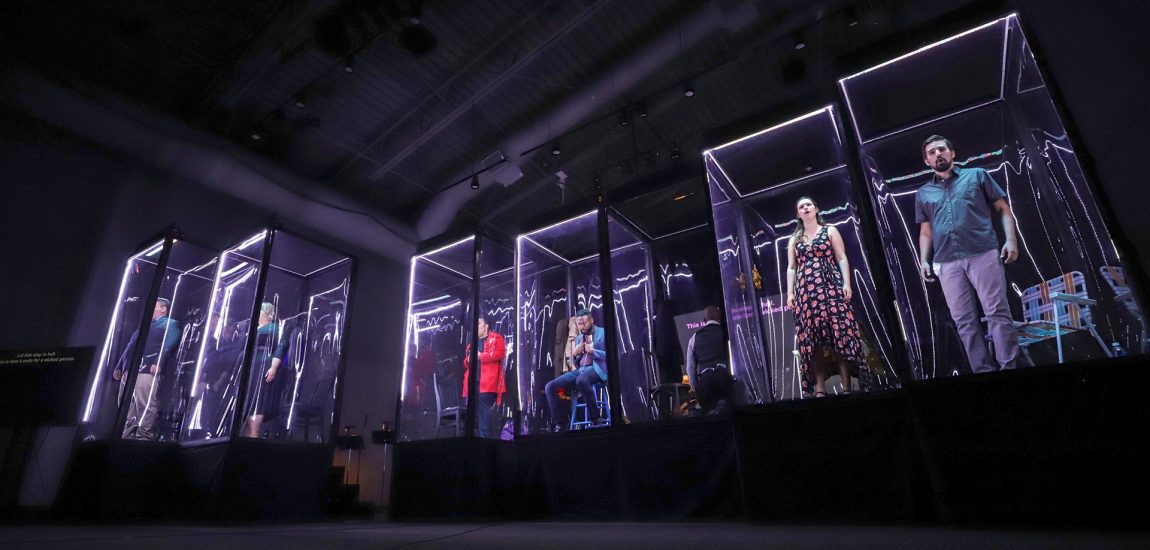
Brother/Hood/Dance, photo by Ryan Muir, courtesy of the Wexner Center

What a great year for theater – seeing 53 shows over four cities, with particularly good batting averages on the three New York trips. Also, every company in Columbus was hitting this year. Some of the best work I’ve seen in years from MadLab, Opera Columbus, and Evolution, lined up with front-to-back strong seasons from The Contemporary (formerly CATCO) and Available Light, a renewed interest in dance and theater from the Wexner Center, Short North Stage stretching its wings, all added up to more I wanted to see than I could make happen. Even when I didn’t love some of the work, almost every single thing I saw, I admired the effort and the swing they took. It’s a good time to be a fan of theater in town, get out and see as much as possible,

Everything listed here is in chronological order and in Columbus unless otherwise noted. The companies provided all photos for promotion, either sent to me directly or taken from websites.
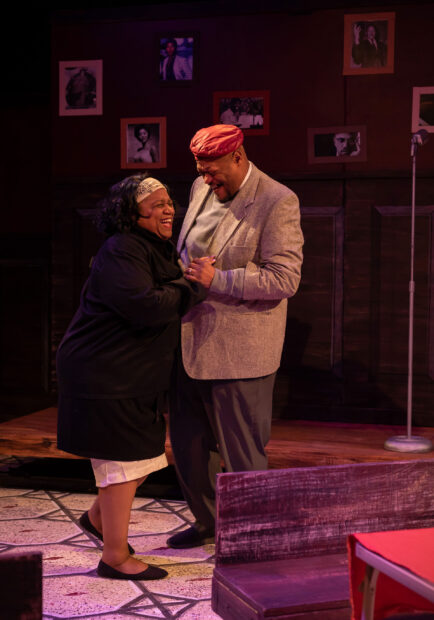
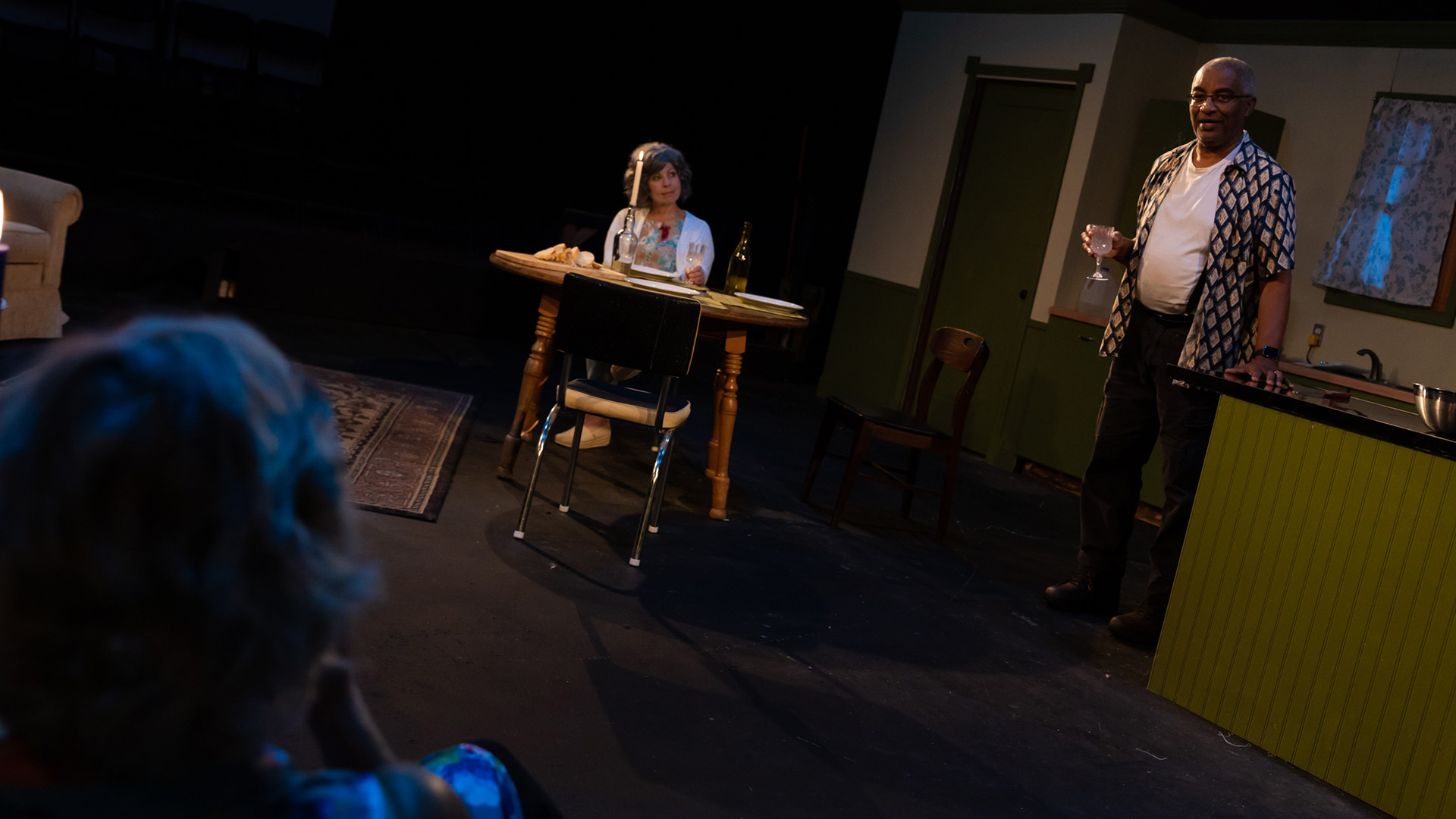
Wilma Hatton and Ricardo Jones in ‘Snowville Cafe’, photo by Steve Malone
  • KL II by Kaneza Schaal, directed by Kaneza Schaal and Christopher Myers (Under the Radar Festival, NYC) – I only made it to one thing out of the three I had booked at Under the Radar this year – one canceled early, one canceled while I was at the Public – but this reaffirmed what a great thing the festival is for those of us who love experimental theater. Kaneza Schaal braided the text of Mark Twain’s King Leopold’s Soliloquy with a personal history with Patrice Lumumba’s independence speech with personal history with so much else and fused it to a blue flame of a performance and fascinating design and direction choices.
  • Snowville Cafe by Julie Whitney-Scott, directed by James Blackmon (MadLab) – Julie Whitney-Scott, one of my favorite theater artists in town, had an astonishing year directing a regional premiere of Pulitzer Prize-winning writer Lynn Nottage, classics like Lorraine Hansberry’s Raisin in the Sun, leading her spectacular tradition of Columbus Black Theater Festival, writing her first novel, it was a dazzling record of work. But my favorite piece, the thing that I kept talking about months after it closed, was this luminous slice of life James Blackmon directed for MadLab. I called it “a poetic character study that also makes its setting a vibrant, fascinating character, with a real love for its characters but a sometimes unsparing eye for their faults. The empathy of the writing and direction are so perfectly in sync they almost seem invisible,” in my review for Columbus Underground.
  • Everybody by Branden Jacobs-Jenkins, directed by David Glover (Available Light) – Available Light continued their astonishing streak this year. Everything they did had the unshakable feeling of “I can’t picture anyone else doing this.” David Glover’s stunning production and brilliant cast were up to the challenge of fusing the technical difficulty – the main five actors pull their characters out of a hat – to the piece’s deep themes and rich humor. I said it, “[highlights the shifting volatility, the danger of using our friends as a mirror of ourselves, but the absolute necessity of friends,” in my review for  Columbus Underground.
  • Afro/Solo/Man by Orlando Zane Hunter, Jr. and Ricarrdo Valentine (Brother(hood) Dance, presented by Wexner Center for the Arts) – The Wexner Center also pulled itself up this year, drawing on some local talent and some far-flung relationships, to put out work I can’t picture any other presenting organization bringing to town. This gut-wrenching dance piece by Hunter and Valentine, about generational trauma and internalized shame but also abundant, bursting-at-the-seams joy, had me babbling about it for weeks after seeing it.
Monica Danilov-Marquez, Maria de Buenos Aires, Opera Columbus; photo by Terry Gilliam
  • Maria de Buenos Aires by Astor Piazzolla and Horacio Ferrer, directed by Christopher Darling (Opera Columbus) – Opera Columbus continues killing it and this Piazzolla operetta lined up with my tastes with sniper-like precision. I said, “The parallel singing and dancing choruses also set the world of the play, accentuating the collage aspects and the surging drama and eroticism. This riff on an opera-ballet with tango feels simultaneously organic and surprising,” in my piece for Columbus Underground.
  • Seven Guitars by August Wilson, directed by Ron OJ Parson (Playhouse in the Park, Cincinnati) – Finally got to see the last of the August Wilson Pittsburgh cycle with this sumptuous production at one of Ohio’s shining theaters, Cincy’s Playhouse in the Park. Bryant Bentley’s Red Carter and Dimonte Henning’s Schoolboy Barton are performances burned into my brain.
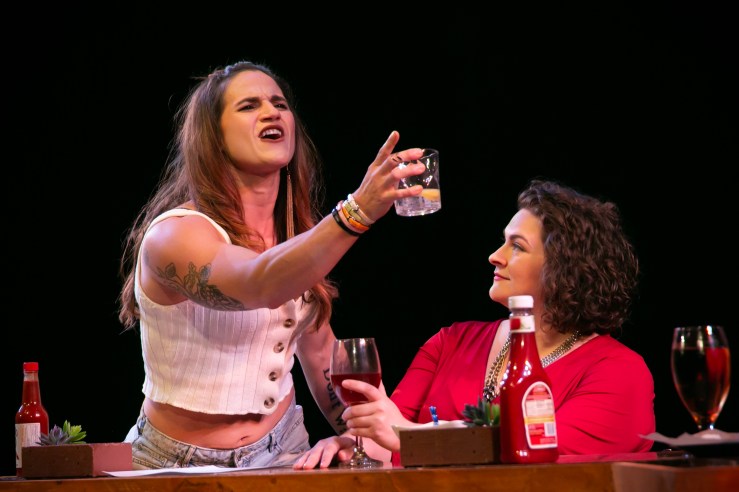
Sue Wismar in foreground, Elizabeth Girvin and Sydney Jordan Baker in background, When We Were Young and Unafraid, photo by Cat McAlpine
  • When We Were Young and Unafraid by Sarah Treem, directed by Michelle Batt (eMBer Women’s Theatre) – eMBer Women’s Theatre has come into its own over the last few years, and this year they blew me the hell away with a gorgeous, knife-twisting look at shifting social mores, pervasive sexual violence, the need to connect – and the way that can be a source of strength or twisted into something terrible, with astonishing performances, especially by Sue Wismar and Matthew Sierra. I said, “[The] characters’ arguments about the times changing and the chilling prescient words “They’ll change back,” resonate long after the lights go back on the play,” in my review for Columbus Underground.
  • The Wolves by Sarah DeLappe, directed by Aviva Helena Neff (The Contemporary Theatre of Ohio) – The second production of Sarah DeLappe’s magnificent coming-of-age play The Wolves I’ve seen in a few years, and I’m still knocked out by the play and the synchronicity in coming together and splitting apart personified by the cast hear left my jaw in my lap with awe and broke me in the right measures. For Columbus Underground, I said, “[It] reminded me of its ability to surprise through the quality and sharpness of its execution. It’s hard for me to picture seeing a better production of this beautiful, life-affirming, heartbreaking play.
  • Machinal by Sophie Treadwell, directed by Ryan Naughton (The Sound Company) – Ryan Naughton and Jessica Hughes gave the Columbus theatrical scene a powerful shot in the arm in their few years here, teaching at OSU, and their crowning achievement was a powerful production of landmark expressionist play Machinal by their Sound Company. I said, This production is rich with jagged beauty and a perfect example of how irony can be used to make something hurt more, not less. How much more potent can abstraction be at evoking a feeling than spelling something,” for Columbus Underground.
Jessica Hughes, Machinal, photo by Blake Mintz
  • Beautiful by Doug McGrath and the music of Carole King et al, directed by Dionysia Williams (Short North Stage) – I didn’t see a bad production by Short North Stage all year, but this jukebox musical – which might have had the hardest go with me walking in, given the depth of my familiarity and love of the Carole King-Gerry Goffin songs and the milieu around them, and this captured it so perfectly, anchored by brilliant performances by Britta Rae, Corbin Payne, and Nick Lingnofski. For Columbus Underground, I said, “The book has enough pain and richness to give ballast to the material, but Beautiful never lets anything get in the way of the power and beauty of these songs.”
  • The Comeuppance by Branden Jacobs-Jenkins, directed by Eric Ting (Signature Theatre Company, NYC) – Branden Jacobs-Jenkins is one of the playwrights I’ll see anything that comes out if I can at all make work. I was overjoyed that one of the last matinees overlapped with our middle trip to New York this year. I got there – after two hours a few blocks north of the Signature complex having some drinks and laughs at staple Rudy’s Bar and Grill- and was dismayed to find out the performance was over two hours with no intermission. I’m used to that meaning, “We don’t trust the material/we want to exert some dominance over the audience/people will leave.” But for 2:15, I was staggered, enraptured, blown away. Every tool Jacobs-Jenkins has carefully sharpened is deployed in heartbreaking, unsettling ways with a phenomenal cast in this mythopoetic riff on The Big Chill that tells a story about reckoning with youth, trauma, and who has the right to a story; to pain; that I haven’t heard before. I’m dying to see this again and have already pre-ordered the script in book form (coming out next summer). I saw a couple of things this year where I both immediately said, “This is the best thing I’ve seen,” and I still think that later in the year (you’ll see the other further down this list); this was one of them.
  • Sweeney Todd by Stephen Sondheim and Hugh Wheeler, directed by Thomas Kail (Lunt-Fontanne Theatre, NYC) – I’ve seen a good number of the recent Sweeney Todd revivals, the first Sondheim I loved thanks to an introduction to the taped George Hearn/Angela Lansbury performance from childhood friend Matt Porreca, and I love the attempts at realism, psychological or otherwise. But it was an unalloyed joy to see this Thomas Kail-directed version that focused on the sumptuous music, playing the original orchestrations and with a dynamite lead from Josh Groban, in almost a sharp-edged comic book interpretation. And as with the Sunday Anne and I saw a few years ago, Annaleigh Ashford’s Mrs. Lovett runs away with the whole goddam show, just a dynamite performance.
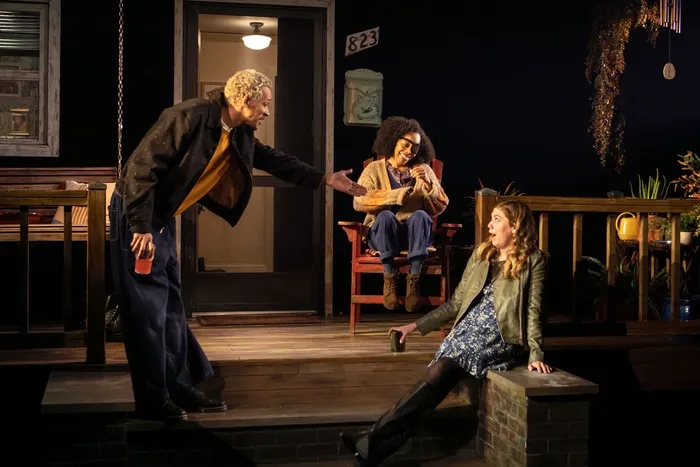
The Comeuppance photo by Monique Carboni
  • The Inheritance by Matthew Lopez, directed by Joe Bishara (Evolution Theatre Company) – Evolution has been swinging for the fences the last couple of years, and, in my eyes, it’s really paid off. The ambition of this huge cast recasting of Howard’s End to deal with the aftermath of the AIDS crisis, which was the play everyone was talking about when Anne and I were in London (and I couldn’t fit it into the schedule), follows great work Evolution has done with Lopez’s writing like the intimate character-driven Poz and gets to luxuriate in this over two three-hour parts. I called it, “About how we tell stories, how stories bring us together, give us a framework for living, and in the same breath – and sometimes the same story – let us delude ourselves and others, build walls, and slowly (or slowly-then-suddenly) rot us from the inside,” as I reviewed Part 1 and Part 2 for Columbus Underground.
  • POTUS by Selena Fillinger, directed by Leda Hoffmann (The Contemporary Theatre of Ohio) – Fresh off Broadway, POTUS affirmed Hoffmann’s commitment to brand new work and stewardship as CATCO transitioned into The Contemporary Theatre of Ohio. It’s a crackling burlesquing of the highest hallways of power and riotous, hilarious entertainment. It may have been the hardest I laughed all year. I said the production was “A springloaded machine of everything getting worse in ways we see coming, but at just enough of an angle, the wind is knocked from our lungs as a precursor to the following laughs. Hoffmann and her cast excel at this, ratcheting in the tension up, weaving in call-backs (if there’s another inflection you can put on “ass play” we don’t see in this play, I can’t think of it) so they embed in our brains and still getting that jolt of surprise when they detonate, with just enough release to make the pace feel frenzied without being exhausting,” in Columbus Underground.
  • What the Constitution Means to Me by Heidi Schreck, directed by Dakota Thorn (Available Light) – Dakota Thorn, who I’ve long admired as an actor, hit it out of the park with her first – I think – directing and Available Light member Michelle Schroeder-Lowrey is the perfect fit for this funny, intensely moving snapshot of a slice of America from Heidi Schreck. I said, “Hilarity – starting with the 15-year-old Heidi talking about the constitution in bodice-ripper terms (“a sweaty, steamy document”), deep dives into specifics of language, and abject horror bump right up against one another, without feeling unbalanced. In the late-play discussion of Town of Castle Rock v. Gonzales, the play draws a clear line between an abstraction being the point, the nitpicking of “shall” as a dodge, a way to avoid letting people into the argument being seen by the court, and the breathless, sometimes delirious love of words as a way to let people in, to truly see them, instead of shutting them out, as the play does,” in my review for Columbus Underground.
  • Infinite Life by Annie Baker, directed by James Macdonald (Atlantic Theatre, NYC) – I can’t think of a contemporary writer who burrows into the most banal – and simultaneously most intimate – spaces of modern life with more agility and a sharper knife than Annie Baker. This look at seven women in a spa/health retreat that’s not explicitly described is a master class in interweaving perspectives; the way we talk with the knob turned all the way up until it seems strange. Anne and I talked about this all the way down 8th Avenue to the Vanguard (see this year’s live music list), and I’m still turning it over in my head, trying to make sense of it in the best way.
Laurie Carter Rose, Arriah Ratanapan, Noelle Anderson, and Shanelle Marie, POTUS, photo by Terry Gilliam
  • Merrily We Roll Along by Stephen Sondheim and George Furth, directed by Maria Friedman (Hudson Theatre, NYC) – Everything you’ve heard about this is true. Easily the strongest, most fully realized version of this underdog of the Sondheim canon, directed with a sure hand and razor-sharp timing by Maria Friedman, who uses her storied history with Sondheim and her internalizing of those rhythms to make everything breathe and, crucially, peels back a little more of the onion on Franklin Shepherd (a stunning Jonathan Groff) to show the people pleaser quality at the heart of all that grasping – the first time I really believed that line, “I’ve only made one mistake in my life but I’ve made it over and over again: saying ‘Yes’ when I meant ‘No.’” Daniel Radcliffe kills me as the righteous purist Charley Kringus, and Lindsay Mendez, new to me, gives a more fleshed-out version of Mary Flynn, taking her out of the Dorothy Parker caricature while still nailing those lines than I’d previously seen.
  • Which Way to the Stage? by Ana Nogueira, directed by Edward Carignan (Short North Stage) – I didn’t realize how much I’d missed Short North Stage’s taste in non-musical plays until this breath of fresh air reminded me. It felt really good being back in the Green Room, laughing and thinking. In Columbus Underground, I said, “[It] treats these heavier themes with the gravity they need – how does this thing you love change, and what happens when it doesn’t? How do we look to other people? – but they never get in the way of the laughs. It’s a delightful comedy with a sniper-targeted sense of its audience.”
  • Ghost Quartet by Dave Malloy, directed by Drew Eberly (Available Light) – The other thing that stood out to me as the best thing I saw all year, a song cycle with theater running through its veins, that denied my easy understanding as much as it made me love it. For Columbus Underground, I said, “Malloy and the cast, under Eberly’s sure hand, dig into a purer emotional landscape, the way a song feels as it moves through you, and the late nights of wanting to one-up one another because you love the people you’re with so much; while still having all the insecurities and viciousness that makes us human.”
  • Good Grief by Ngozi Anyanwu, directed by Shanelle Marie and Alan Tyson (Contemporary Theatre of Ohio) – Shanelle Marie and Alan Tyson collaborated on directing this lovely meditation on loss, friendship, and growing up by Ngozi Anyanwu, a jewel in a very strong season from The Contemporary Theatre of Ohio. For Columbus Underground, I said, “The ability, starting in Anyanwu’s text and emphasized by Marie and Tyson’s direction, not to demonize anyone, to find drama without making anyone a villain, showing us people who are all doing their best is a rare gift and a pleasure I don’t get often enough in any medium.”
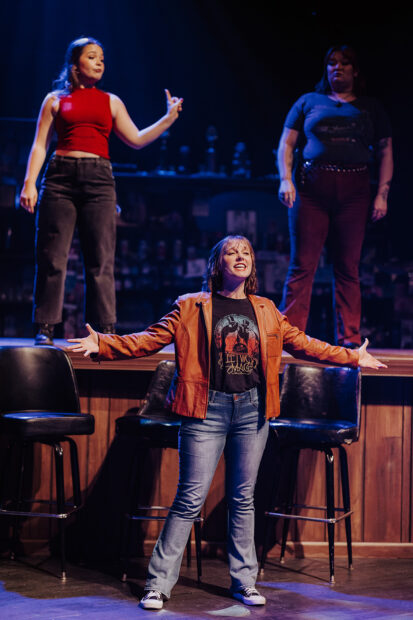
Amy Rittberger in the foreground, Katie Giffin and Jo Michelle Shafer in background on the bar, Ghost Quartet, photo by Kyle Long
Categories
Best Of theatre

Best Of 2021 – Theater/Opera/Dance

God, it felt good to be back in a room with people sharing the vibration of other humans on a stage, the feedback loop of energy and – dangerous as it sometimes felt – sharing breath. Starting literally two weeks after my second shot, I was lucky to see 30 shows and miracle of miracles, none of them were bad.

Every company that’s returned, making work, is bringing it right now – playing to their core strengths and stretching their muscles. Beyond what made this list? I saw crisp, vibrant shows from Evolution and Gallery. Otterbein and Short North Stage’s sister/adjunct company Columbus Immersive crafted productions that fully turned me around on shows I actively didn’t like previously. All four of the Actors’ shows and all four Red Herring productions left me talking about them into the night if not for weeks. MadLab and CATCO revealed the fruits of the energy and enthusiasm of new artistic directors (in the latter case after a year’s preview of fascinating streaming work). Imagine returned with a brand new, original musical with 19 cast members.

This town rang with the echoes of gauntlets dropping and examples of exactly what keeps me going out night after night. I enjoyed every minute of that energy and enthusiasm being back, even when the finished piece didn’t work for me. But the 10 here would have blown me away in any circumstances and it was a hard call whittling down to them.

Back to NYC for Under the Radar and sundry in January, great stuff on the books for the Wexner Center in Spring, fingers crossed we get closer to “back” with every month.

That NYC trip in January includes the reopened revival of Company we originally had tickets to for my 40th birthday in 2020 – there will be more in my year end music playlists, but I can’t imagine my cultural life without the shining influence of Stephen Sondheim who passed away the day before I started assembling this. I grew up steeped in musicals – the heavy influence of my mom and my grandmother – including some of his, including A Funny Thing Happened on the Way to the Forum, West Side Story and Gypsy. But when I discovered his mature work – starting with my massive love of Sweeney Todd and Assassins, it felt like I found musical theater pitched directly at me – this also gives me a chance to acknowledge and publicly express gratitude for the friends who opened that door: Doug Smith, Sean Klein (who we also lost this year, barely a week after we texted about getting the old gang together), Matt Porreca, and Robin Seabaugh; nothing would have fallen into place without each of you.

That said, I want to acknowledge the stellar online work that helped get me through the months beforehand, that gave me a taste, a little hint of the electricity that kept me going. Everything here is in chronological order and everything in person is in Columbus (except otherwise noted doesn’t apply this time, but I’m thirsty for when it does).

Online

Alicia Hall Moran, from her website

Online 

  • Rich Kids: A History of Shopping Malls in Tehran by Javaad Alipoor (The Javaad Alipoor Company, presented by Public Theatre’s Under the Radar) 
  • The Motown Project by Alicia Hall Moran (Presented by Public Theatre’s Under the Radar) 
  • Fragments, Lists, and Lacunae by Alexandra Chasin and Zishan Ugurlu (Presented by New York Live Arts) 
  • Blue Ridge by Abby Rosebrock (Presented by Play Per View) 
  • Revenge Porn by Carla Ching (Presented by Play Per View) 
  • Hymn by Lolita Chakrabati (Presented by Almeida Theatre) 
  • A Fire Shut Up in My Bones by Terrence Blanchard, libretto by Kasi Lemmons (Met LiveinHD) 

In Person 

Don Giovanni, photo by Terry Gilliam
  • Don Giovanni by Wolfgang Amadeus Mozart, libretto by Lorenzo Da Ponte (Opera Columbus), directed by Eve Summer – I’m not sure I could have picked a better return to live theater than this super-charged, intense reading of one of the very first operas I loved by a revitalized Opera Columbus. The safety measures had a fascinating thematic thrust and the performances, especially Jorell Williams in the title role and Amber Monroe’s Donna Elvira, singed my eyebrows off. I said “They amplify the deep loneliness of the libertine and his victims and the teeth-gnashing frustration of attempts at revenge and forgiveness… Having been 14 months since I’d been inside a theater, the longest stretch since I was 16, it was probably not unlikely I’d cry anyway. But it’s hard for me to imagine a better return to live performance than this dazzling Don Giovanni,” in my review for Columbus Underground
  • Carrie, book by Lawrence D. Cohen, music by Michael Gore, lyrics by Dean Pitchford, after the novel by Stephen King, directed by Edward Carignan (Columbus Immersive Theater/Short North Stage) – Growing up in awe of Stephen King’s debut novel, setting the tone for his character-focused horror novels to come, and simultaneously steeped in the lore of this musical adaptation, this came with the deck stacked against it. But Carignan and company not only hit every mark, they crushed those expectations. I took my mom as my plus-one, the reason I read Stephen King in the first place, and she was as dazzled as I was. In my Columbus Underground review, I said, “Carignan, Williams, and the cast never lose sight of the deep sadness at the heart of Carrie and the lesson that we can all be monsters with less of a nudge than we want to admit. And they make that uncomfortable identification into a riotous, quick-witted, wild carnival ride of an entertainment. It’s an alternately sticky-hot and brilliantly cold look at humanity perfect for the depths of summer.” 
  • Various Artists, Columbus Black Theater Festival (Mine4God Productions, presented by Abbey Theatre of Dublin) – One of my favorite events of the Columbus calendar returned in a slightly streamlined version, and resulted in one of my favorite conversations, with artistic director Julie Whitney Scott (I didn’t capture it as well as I would have liked in the article, a reminder to keep trying harder). After writing a preview, I paid to see this on my own dime. And while I didn’t see it all – I didn’t quite allow myself enough time for the rich marathon – the two hours I was in the Abbey sent me back into the night reeling and bending the ear of Anne and whoever else would listen. 
  • Eurydice by Sarah Ruhl, directed by Beth Josephsen (Actors Theatre of Columbus) – The classic Orpheus and Eurydice story was heavy in the zeitgeist this year and Sarah Ruhl has long been one of my favorite playwrights (her memoir Smile is on the bedstand as I write this). In the strongest Actors’ Theatre season in recent memory – I was also blown away by a Much Ado About Nothing, The African Company Presents Richard III, and a childhood favorite of mine The Secret Garden – this lovely, incisive meditation on memory kept rippling in my mind for weeks.  For Columbus Underground, I commented, “The modifications to the climax land with the thud of inevitability and surprised the audience enough at the performance I attended I heard gasps spring up around me. Josephsen and her cast balance the abstract and accessible elements of this modern take on one of the western world’s classic tragic love stories in a way that feels fresh, exciting, and powerful.” 
The Children, photo by Jerri Shafer
  • The Children by Lucy Kirkwood, directed by Michael Herring (Red Herring) – This locked-room drama, balancing intimate, personal apocalypses with a shadow growing over the world, featured blistering performances by Harold Yarborough, Nancy Skaggs, and Josie Merkel, and stood out in a season where I didn’t see anything weak from Red Herring. I said, “At every level, the characters face snowballing consequences of thoughtless choices, wounds never disinfected, from the contaminated water flowing in the power plant to old slights among each other, and have to deal with what they owe the next generation up to and including their use as sacrificial lambs,” for Columbus Underground
  • Let’s Hope You Feel Better by Samantha Oty (MadLab), directed by Sarah Vargo – MadLab came out on fire this year, taking some interesting chances. And this bitterly funny, whiplash-inducing sex farce was one of the best things I saw all year. Boasting killer – *rimshot* – performances by McLane Nagy and Tom Murdock at the center of a stellar cast, this crackled with reminders of the crucial energy MadLab brings to our theater scene. I commented in Columbus Underground: “The serious themes here – does a person have a right to die with dignity, what are the limits on the Hippocratic Oath’s “do no harm,” what do we owe the people in our lives – get a strong, thoughtful workout in Let’s Hope You Feel Better but nothing gets in the way of the play as a sharp, molten-hot, and sub-zero cold, often at the same time, entertainment.” 
  • Life Alert by Chris Sherman, directed by Michelle Batt (eMBer Womens Theater) – eMBer Womens Theater returned with a lovely series of shorts, Muses, and then this dazzling, delayed world premiere boasting a stellar cast with particularly strong performances by Melissa Bair and Josie Merkel. I said in Columbus Underground, “Sherman’s play is deeply concerned with who society considers disposable, whose work matters and whose doesn’t, and how demoralizing that gets. How deeply baked into so many of our consciouses those biases are, how they feel like pollution in the air we breathe and how a woman saying ‘Am I expected to sacrifice my life’ for others’ needs, putting it in the world out loud, is still a radical and necessary act. The ending gets a little more obvious and underlined than anything else but it’s a minor blip after two hours – with one intermission – that rang so true.” 
Mr. Burns, photo by Terry Gilliam
  • Mr. Burns: A Post-Electric Play by Anne Washburn with music by Michael Friedman, directed by Leda Hoffmann (CATCO) – More than anything else this year, this was the experience I missed so badly.  A play I’ve wanted to see since the Off-Broadway run but never made happen, and the first in-person taste of new CATCO artistic director Hoffmann’s work, this slapped me around in all the best ways. Crystallizing thoughts I’d had about storytelling, the strange era of the 20th century where we build art upon allusion on top of allusion, exploding the metaphor at the heart of all history and language. A tribute to the community of our actors, with standout performances by Scott Douglas Wilson, Jonathan Putnam, Acacia Duncan, and Shauna Davis leading a terrific cast. The production’s also – using the three spaces effectively – a reminder of the symbiosis of audience and performers. Anne and I spent the next two hours, right up until an excellent Chuck Prophet show you’ll be hearing about on my live music list, going over this in delighted detail. For Columbus Underground, I commented: “Like the best Simpsons episodes, Mr. Burns bulges with references and easter eggs but in the best sense: I felt a frisson of delight whenever I caught one – as I write this, the example jumping to my mind is Wilson delivering the play’s Sweeney Todd nod “Life has been kind to you” – but it didn’t bog me down looking for them. More, nothing felt tacked on or inessential. Everything adds to a piece I wish I could find the time to see again.” 
  • The Thanksgiving Play by Larissa Fasthorse, directed by Mark Mann (Red Herring) – Red Herring closed 2021 with a wild, ribald farce that reminded my how good their ear is for plays that have achieved some acclaim but might never have made it to Columbus otherwise. Fasthorse’s play made me laugh until my sides hurt, with a cast full of wild energy, especially Todd Covert and Elizabeth Harelik Falter. As I said in Columbus Underground, “Fasthorse’s play finds the perfect tenor for it, without getting too meta or cerebral, grounding the comedy in the ambitions and insecurities of a classic group of misfits, and it’s hard to imagine this getting a better production than Mann and Red Herring provide.” 
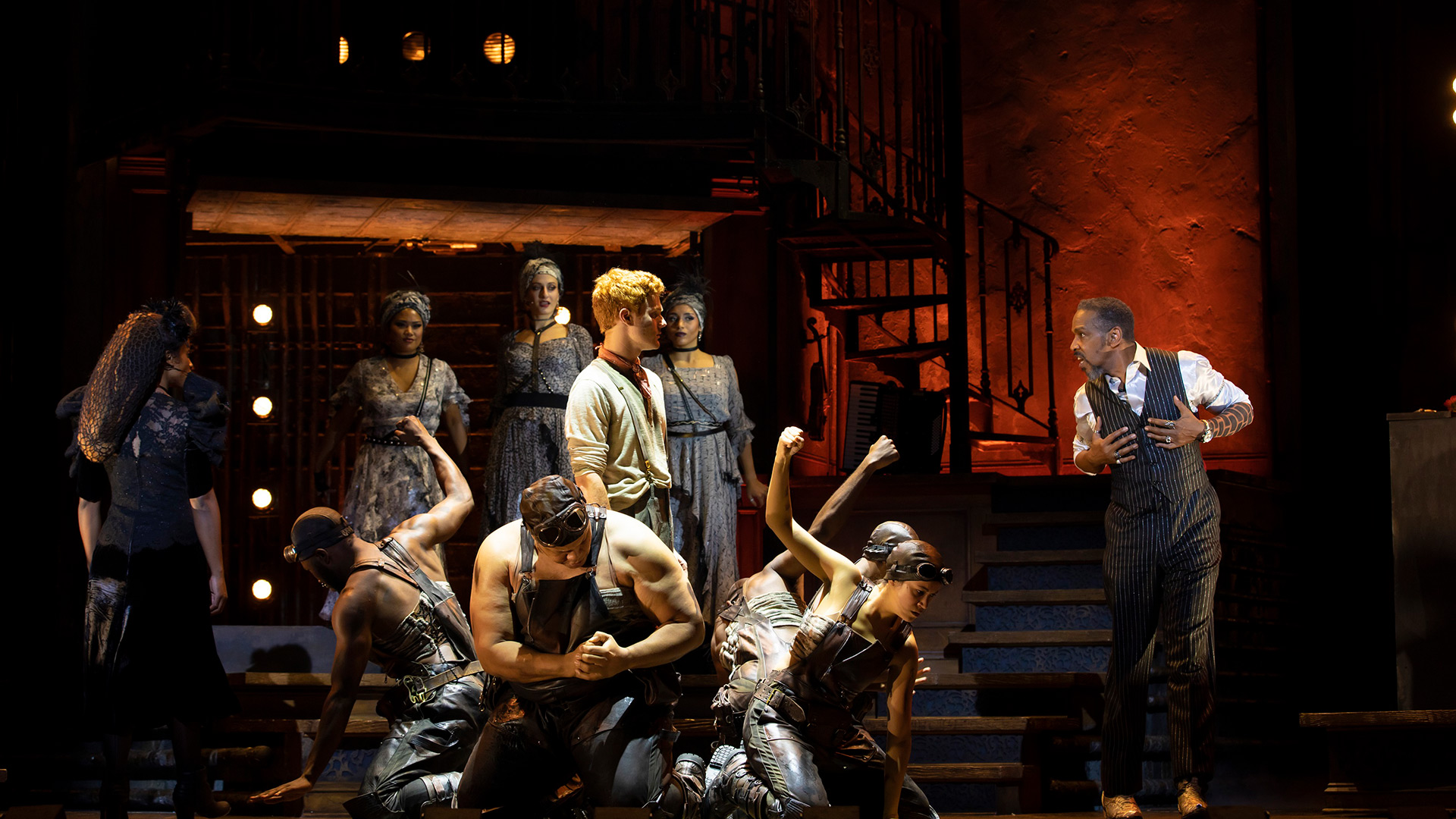
  • Hadestown by Anais Mitchell, directed by Rachel Chavkin (Broadway in Columbus) – I’ve been a fan of Anais Mitchell for many years, her song “Cosmic American” lighting the fire, and I loved the original Hadestown concept album when it came out. I hadn’t managed to catch this expansion on Broadway but my return to Broadway in Columbus with the touring production – featuring Audrey Ochoa who you’ll see on my playlists – reminded me how great, and how specific, that kind of big stage theater can be. How marvelous it is to see something in a packed house. So beautiful Anne and I had conversations about it with different people in different bars for the next two weeks, the only other play I kept wanting to dig into to that extent was Mr. Burns. For Columbus Underground: “Chavkin’s expansion of Mitchell’s song cycle takes one of the quintessential stories of both the transformative power of art and its limitations, its ability to change – and not change – the world and the hearts of both audience and creator, and imbues what could be a heavy slog, with all the fun of a carnival ride or a night at a wild party. As Marable sings while leading the cast in the curtain call, ‘We raise our cups to them.’” 
Hadestown, photo by T Charles Erickson

As always, thank you – to everyone who helped make these shows happen, who joined me for them, who talked with me about them after, and who reads this. Thank you so much.

Categories
"Hey, Fred!" live music theatre

Things I’ve Been Digging – 01/17/2021

Immanuel Wilkins Quartet, from left Kris Davis, Daryl Johns, Immanuel Wilkins, Kewku Sumbry; taken from stream and edited

Immanuel Wilkins Quartet at Smalls

I mentioned APAP in last week’s writeup. Generally, in one of these years when I’d be in New York for mid-January, soaking up the remnants of arts presenters’ bounties, I’d be catching between 6 and 20 sets over a few days of Winter Jazz Fest. WJF’s excellent pivot of panels and performances is going on through March, but I caught a few streams that gave me some of that feeling.

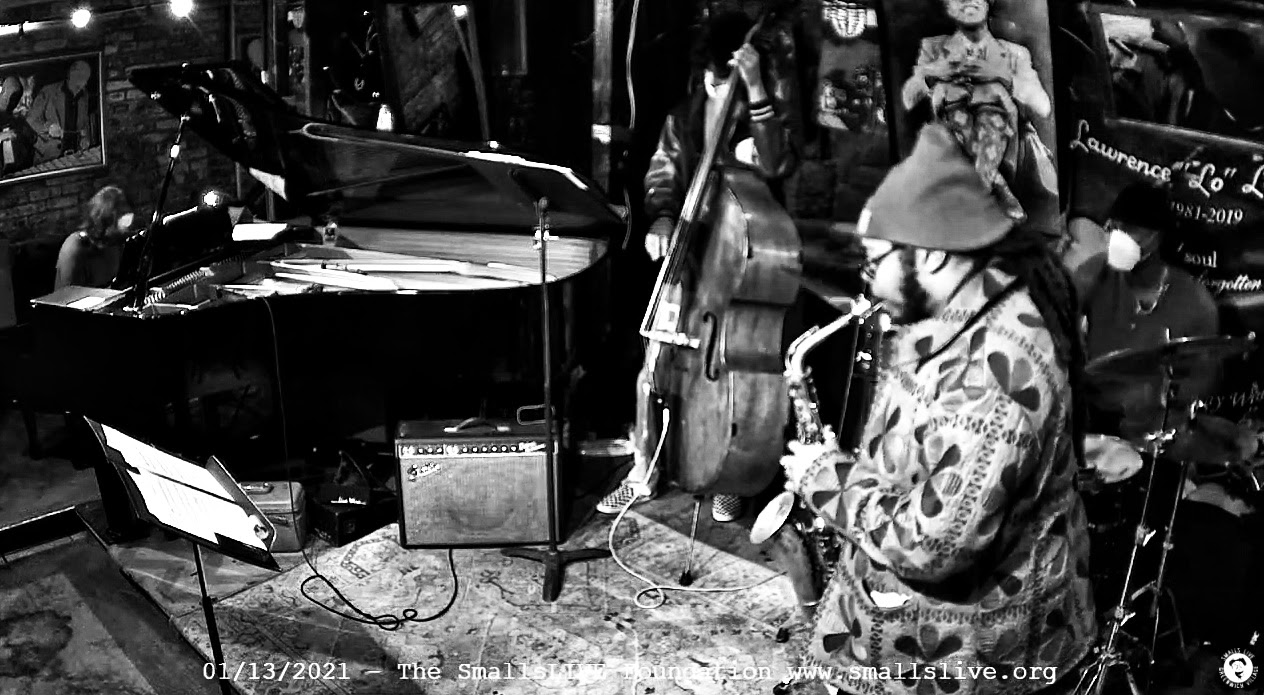
The set that gave me the heftiest dose of that energy came from a stalwart of the classic NYC clubs and at the vanguard of this new digital era, Smalls. Immanuel Wilkins (also a standout on Joel Ross’ astonishing record last year) and one of our finest alto players, lead a striking quartet with Kris Davis (who closed out my previous New York trip with an explosion) on piano, Daryl Johns on bass, and Kweku Sumbry on drums. 

The group wove together songs into unbroken suites, building landscapes and shifting them. Simmering, glistening ballads jostled with ecstatic classic fire music. Long, screeching cries curled like smoke into gorgeous melodies. Textures played out and expanded, then splintered and came together. 

This set was everything I want from a band coming out of the jazz tradition. It made me miss New York, it made me miss walking down to Dick’s Den on a good night, and it made me miss being in the room; at the same time, it reminded me how lucky I am to have this option.

From left: Vijay Iyer, Arooj Aftab, Shazad Ismaily; taken from stream and edited

Love in Exile at Jazz Gallery

Jazz Gallery continues to present a wealth of fascinating programming in its streaming iteration and I was enthralled by their trio this week of pianist Vijay Iyer, multi-instrumentalist Shazad Ismaily (both of whom I’ve seen many times) and vocalist Arooj Aftab whose name pricked my consciousness when she played a Big Ears but I’d never seen.

This was an astonishing, glowing hour of music. Mostly working in these slow, unfolding oceanic tempos, the trio displayed an uncanny telepathy. On one piece, Iyer’s exploded flurries of his classic diamond hard-and-glistening attack into spaces left by Aftab’s silky melodies and Ismaily’s circular, hypnotic bass. Another used that tempo to expand into a rich, cinematic, baroque ballad, riding accumulations into a majestic cascade. 

Other pieces had Ismaily bringing in a droning keyboard tone to underpin a dual longing between Aftab and Iyer. Beautiful and beguiling.

Espíritu; shot taken from stream and edited

Espíritu at Under the Radar

Caught up on the rest of the previous week’s Under the Radar and my favorite piece, Espíritu, came from the Chilean company Teatro Anónimo and the pen of Trinidad González. 

It focuses on – mostly young – people grappling with the deep sickness of ennui and hopelessness. As one character says early on, “We are just a group of useless people with a great plan to stop the destruction of the world.”

That plan staggers and stumbles, people are wracked by cruelty and driven into impoverished fantasies that pass that cruelty on through jagged vignettes. Lines like “People yell at me and that makes them happy…Sometimes they think they’re making love but it’s something different from love. Do they dream?” and “If I were your father I’d burn that notebook and send you off to fight a war,” haunted me for days after seeing this.

If I were managing a company, I’d program a double bill of this with Matt Slaybaugh’s The Absurdity of Writing Poetry but there are probably dozens of plays about fighting despair with art, even, especially, when it feels hopeless, this would productively spark against. It made me miss UTR, made me miss NYC, and made me miss the theaters where I first loved work like this in the Wexner Center and at Available Light.

Categories
"Hey, Fred!" live music theatre

Things I’ve Been Digging – 01/11/2021

My TimeHop reminded me that last year, and three years ago, I was in NYC for festivals around APAP, which is always one of the most invigorating parts of any year I work it in. 

From left: Kirk Knuffke, Gerald Cleaver, James Brandon Lewis, taken from stream and edited

James Brandon Lewis, Kirk Knuffke, and Gerald Cleaver at Arts for Art Inc, 01/06/2021

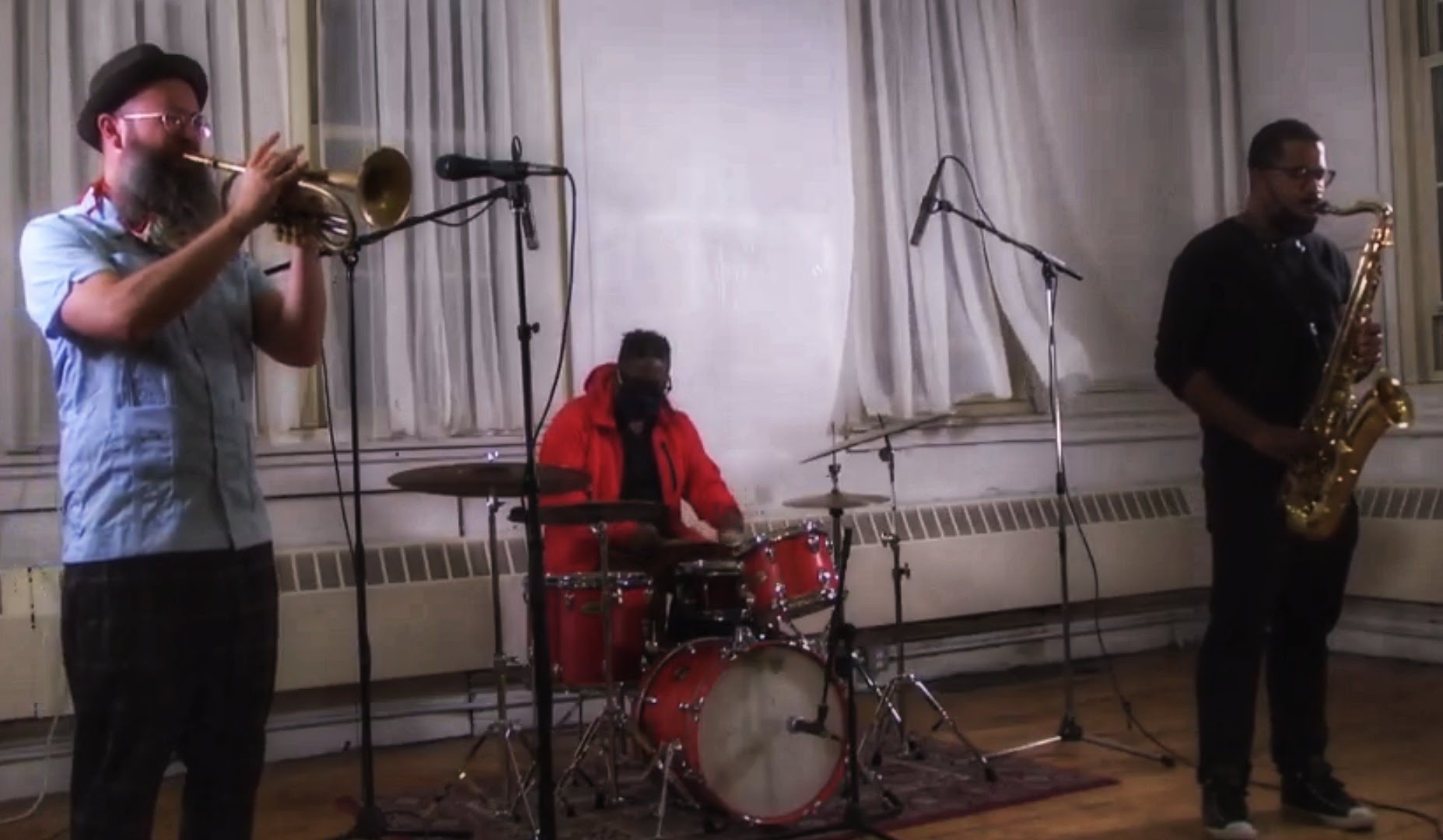
Of the overlapping black music traditions, relatively few hands dig into the fertile intersection between R&B and free jazz. Arts for Art – a storied non-profit that hosts the annual Vision Festival among other services to the culture – kicked off their 2021 with one of the finest examples of the sparks that fly when those two forms hit one another: a trio of sax player James Brandon Lewis, cornet player Kirk Knuffke, and drummer Gerald Cleaver.

As Lewis said in the post-set discussion, “Charles Gayle and Grover Washington, Jr. both came from the same place I did, Buffalo.” This trio wove excerpts of the Bill Withers classics “Ain’t No Sunshine,” and “Just the Two Of Us,” the latter a collaboration with Washington and a massive hit, along with Donny Hathaway’s “Someday We’ll Be Free” into an unbroken 45-minute meditation and exultation.

Lewis’s liquid tone and Knuffke’s sharp, jabbing punctuation aligned on deep hooks like the revolving “I know” section of “Ain’t No Sunshine,” building up the tension and exploding that feeling into a bonfire of abstraction. That jousting coiled into a mournful funeral march before clicking into a more urgent, insistent gear.

Through all of these changes, Cleaver’s drums commented and steered the ship. The one section where he slid into head knocking funk beats felt like an unexpected blast of sun cracking velvet clouds, then as soon as I grasped it, he and the trio were onto something else. 

Everyone in this trio intimately understood both musical forms and used the tropes for their cathartic power as well as misdirection. They didn’t shuffle free playing and dance music; they burned them into something fresh and personal.

Under the Radar, presented by The Public Theater

One of the brightest lights in my personal APAP – and the conduit for many of my favorite things at the Wexner Center every year – is the Public’s Under The Radar fest. This international sampling of moving, riveting performance art and theater pivoted brilliantly to online this year. I’ve checked about half of it so far and there hasn’t been a dud in the bunch. 

Best of all, these are available on demand through the 14th, at https://publictheater.org/programs/under-the-radar/under-the-radar-2021/

Highlights for me so far:

From the innovative Instagram component of Rich Kids

Rich Kids: A History of Shopping Malls in Tehran by Javaad Alipoor

This two hander – which won a prize at the Edinburgh Fringe Festival – featured Alipoor and Kirsty Housley narrating – with dazzling imagery the self-destructive microcosm of the idle rich in Tehran. In doing so, they draw out heartbreaking truths about the decline of civilizations, the scars of colonialism, and the blur between long-term consequences and immediate decisions. 

Full of poison-dagger lines I was still chewing over days later like “There isn’t an anthropocene that connects us, there’s a scar that divides;” vaporwave summed up as “A ghost made of bits and pieces of a past that never quite was;” and a description of Dubai as “It’s like long generations of the past returning eternally to party with them.”

From left: Jason Moran and Alicia Hall Moran. Taken from stream and edited

the motown project by Alicia Hall Moran. 

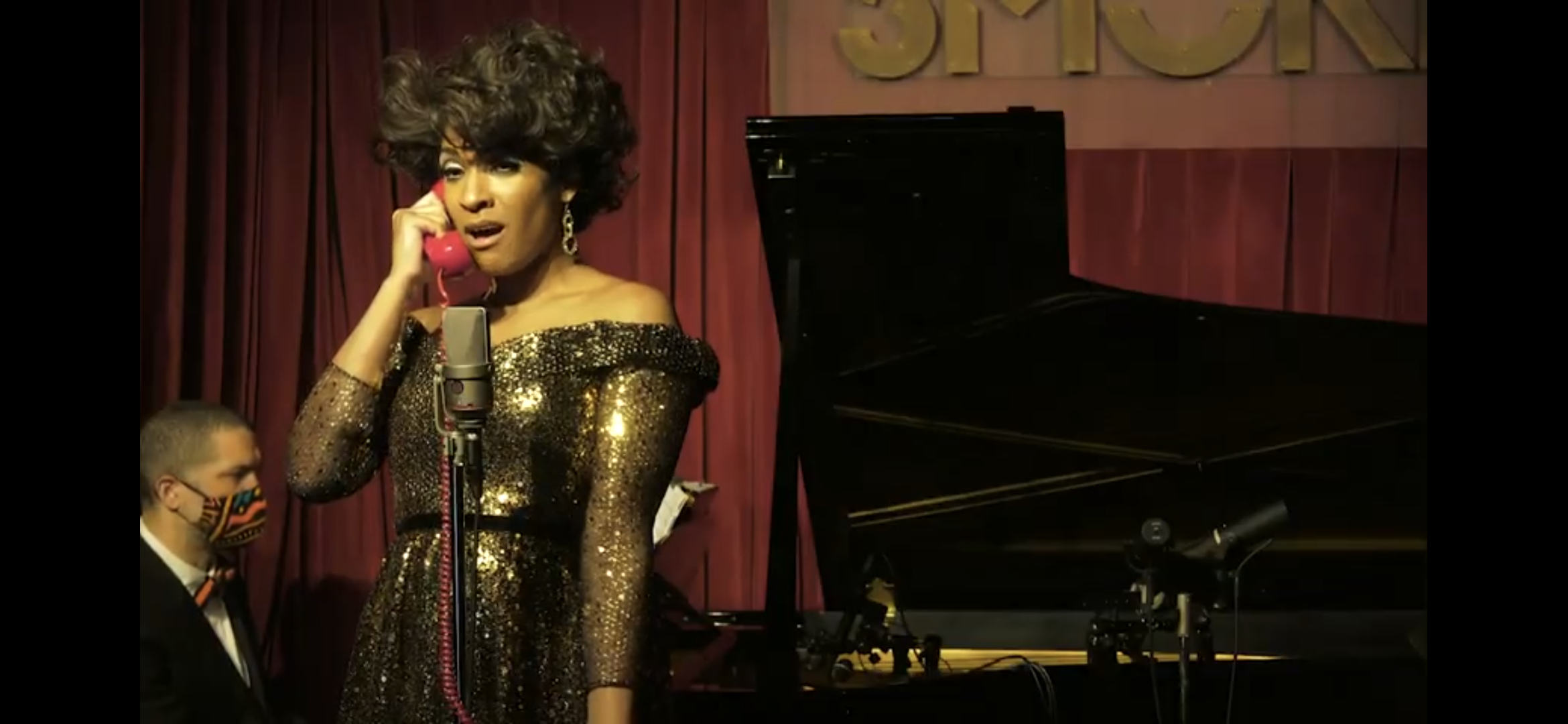
One of our finest American singers, plumbing the rich terrain between Opera and popular music, Alicia Hall Moran assembled a ferocious band for this, including her husband Jason Moran on piano, Reggie Washington on bass, LaFrae Sci on drums, and Thomas Flippin on guitar, alongside fellow powerhouse singers Barrington Lee and Steven Herring.

Moran drew connections between the Motown songbook and classical “art music,” giving both sides equal weight without sanding down either’s essence, and wove them into a crushing portrait of desire. An aria from The Magic of Figaro sparked off the Holland-Dozier-Holland classic “Sugarpie, Honeybunch.” A torturously slow “Heat Wave” was a languid blast from better seasons. A “Signed, Sealed, Delivered,” drew every nuance out of that Stevie Wonder classic without bogging it down. If I see something better this year – even after theatres open – it’s been a good damn year.

Categories
Best Of theatre

Best of 2020 – Theatre/Opera/Dance

“Are you even here? You’re a relic of a dying empire. The ghost of a glorious future that never came.” 

-Sarah Gancher, Russian Troll Farm

Salt given me at Under The Radar’s Salt

Live:

I was lucky to see about 15 shows – almost all outstanding – before doors started slamming shut. These 8 grabbed me hard and wouldn’t let go. Their memories are still burned into my brain this many months later. Photos are taken from press either given directly to me or on the company/creator’s official website.

  • Salt by Selina Thompson, directed by Dawn Walton (01/11/2020 – Public Theatre, Under the Radar, NYC) – Sometimes – and this might be my favorite part of seeing theatre and especially my favorite part of Under the Radar, I see work by a playwright who’s new to me and the voice alone burns a layer of skin off me and makes me feel both more and differently. Selina Thompson’s personal-historical-poetic dive into the Transatlantic Slave Trade, Salt, masterfully acted by Rochelle Rose, did that to me this year. I walked out babbling and as hungry for more of her work as any writing of the last decade.
  • Body Comes Apart by Molly Lieber and Eleanor Smith (01/12/2020 – New York Live Arts, NYC) – This vivisection of expectations, trauma, and freedom balanced an unsparing dedication to truth with a supernova love for the world. Body Comes Apart was a physical hour of dance, and acting was a whirlwind from which I couldn’t look away. It avoided platitudes and simplification but burned with a clarity that made its unanswered questions cut even deeper. I could have seen this three times and still tried to grasp it. 
  • Medea by Simon Stone after Euripides, directed by Simon Stone (01/12/2020 – BAM, NYC) – I’m a sucker for the Greeks and I’d never seen Bobby Cannavale on stage. Something felt very fitting about seeing Stone’s ferocious, knives-out take on Euripides here in the same theatre I saw my favorite Hedda Gabler. The adaptations to the play were interesting, aided by vibrant video. My brain pinballed between the remarkable acting – Cannavale, Rose Byrne, Dylan Baker – and the wrenching image of ash falling on that pristine white stage, both stuck with me well after the next day’s flight home.
The Motherfucker With the Hat, photo by Nick Lingnofski
  • Or by Liz Duffy Adams, directed by Rowan Winterwood (01/17/2020 – Actors Theatre) – Actors Theatre’s relationship with MadLab for smaller-scale indoor plays continued to bear fruit this year, even as they had to cancel what looked like an exciting outdoor season. Or was a delightful drawing room sex romp around the fascinating historical character Aphra Behn (played brilliantly by Michelle Weiser) with crackling support from Andy Woodmansee and McLane Nagy as the other legs of the triangle. Winterwood’s sizzling direction made this a hot, funny winter diversion when I needed it most.
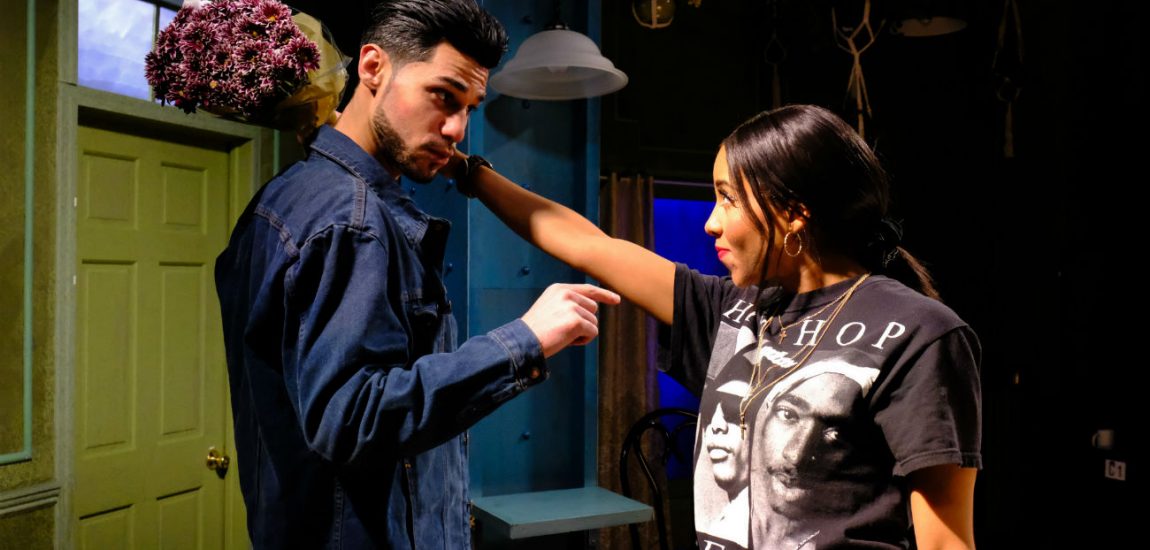
  • The Motherfucker With the Hat by Stephen Adly Guirgis, directed by Chari Arespacochaga (01/23/2020 – Short North Stage) – Short North Stage doesn’t always get enough credit for their dark, low-to-the-ground plays in the Green Room. Their Motherfucker With the Hat was another triumph in that lane. Arespacochaga directed it with the right mix of Greek tragedy and cage match, a stellar cast orbited around a volcanic Raphael Ellenberg.
  • The Bridge Called My Ass by Miguel Gutierrez (01/25/2020 – presented by the Wexner Center) – Gutierrez’s bilingual piece mixed puns, everyday action, and flights of fancy into something I’d never seen before. I didn’t always understand it but I was always enraptured.
The Shadow Whose Prey The Hunter Becomes, photo by Jeff Busby
  • A Doll’s House Part 2 by Lucas Hnath, directed by Michael Garrett Herring (01/30/2020 – Red Herring Theater) – There have been a few times I’ve seen a Columbus production I felt improved on New York, and this was the most recent example. Herring stripped away the ba-dum-bum sitcom rhythm that sank the Broadway version of this for me the night I saw it and made Hnath’s sequel to Ibsen glow like a bruise. All stellar performances, especially Sonda Staley’s for-the-ages take on Nora.
  • The Shadow Whose Prey The Hunter Becomes by Back to Back Theater (02/13/2020 – presented by the Wexner Center) – One of my favorite previews I’ve ever written. I was so glad I held off, skipping this at Under The Radar so I could go into it cold when it played my town. A more complicated bit of metatheatre than the first work of theirs I loved, Ganesh Vs The Third Reich, but brillant and arresting. A look at how much “acting” we all do in making our voices heard and how much marginalized people have to work past just to get their voices heard, to not be seen as a monolithic interest. If this was the last live performance I saw, I went out high.

Online:

We Need Your Listening, screenshot from stream and edited

Theatre feels like a circuit between the stage and the audience, even more than music, to me. But for me, this immediate, physical art reaped the greatest rewards as companies tried to find ways to make work that still felt like theater while wholly embracing the new media. I deeply hope many of us can find ways to continue to make things accessible after we can all gather in a room again. 

It would be a true shame for these opportunities for people with disabilities or other reasons not to be part of the physical exchange of energy, to finally get a wider range of options and then have them taken away.

Things that moved and inspired me with virtual theatre:

Zoom readings run by local stalwarts Krista Lively Stauffer and Tim Browning with their Virtual Theatre Project gave me the chance to catch Douglas Whaley’s phenomenal The Turkey Men (I missed its premiere run when I was in Italy last year), revisit the terrific Red Herring two-hander Thicker Than Water, and dip into remarkable work from our astounding pool of talent.

Established companies pivoted with aplomb and grace: 

Abbey Theatre’s The Sissy Chronicles, photo provided by Joe Bishara
  • Short North Stage revisited shows they’d loved and couldn’t find space for in their schedule previously like the moving early Andrew Lippa John & Jen and the delightfully raunchy Off-Broadway hit by Howard Crabtree and Mark Waldrop When Pigs Fly. They also used their connections to get new material for these revivals while also building new work like Quarantine With the Clauses. 
  • New CATCO Artistic Director Leda Hoffmann met the challenge of her first season in town coinciding with the pandemic and excelled with marvelous Idris Goodwin shorts, Plays For an Antiracist Tomorrow, bringing in legacy CATCO artists as well as fresh blood, then acclaimed Julienna Gonzalez adapted her Detroit Christmas Carol into a Columbus version under Hoffmann’s direction.
  • Joe Bishara came into his own with Dublin’s Abbey Theatre giving life to exciting pieces from artists like Mark Schwamberger and Nikki Davis.
  • Red Herring provided astounding social dramas and made steps toward a hybrid experience.

The plethora of archival work was an embarrassment of riches, from American Conservatory Theatre’s take on Lydia Diamond’s Toni Stone to the Goodman’s hilarious and heartbreaking Jocelyn Bioh’s School Girls or The African Mean Girls Play.

The Elaborate Entry of Chad Deity, screenshot taken from stream and edited

The New Group, Play-Per-View, and more presented riveting reunion readings, giving new life to great plays from past seasons. I especially loved Beth Henley’s The Jacksonian, Kristoffer Diaz’s The Elaborate Entry of Chad Deity, and Suzan-Lori Parks’ Death of the Last Black Man in the Whole Entire World.

I was in awe of groups that created new work from tools not intended for this purpose. Magic came from relatively straightforward narrative work like Mona Mansour’s The Beginning Days of True Jubilation, Theatre of War’s Antigone in Ferguson, and Sarah Gancher’s Russian Troll Farm. to more ephemeral work like We Need Your Listening by Velani Dibba, Ilana Khanin, Elizagrace Madrone, Stephen Charles Smith, Bill T Jones and Arnie Zane’s Come Together Revisited, and Theatre Mitu’s </remnant>.

Antigone in Ferguson, screenshot taken from stream and edited

Even in the dark times, there was still joy if you looked, and I am as grateful as ever people took on these burdens to bring it to us.

Categories
live music theatre

Stitching our Wounds with Golden Threads of Past, Future, and Self

The piece of salt given me at The Public Theatre’s production of salt.

My Friday and Saturday of this New York trip fused unseasonable physical warmth with the warmth of watching communities intersect, share, and watch out for one another. 

Hit six sets of the Winter Jazzfest Marathon Friday, trying to dip in on things that had been on my list and bands I had no experience with or expectations for. Three burned cataracts off my eyes, would not let me stay jaded or sit there with folded arms.

Hypnotic Brass Ensemble

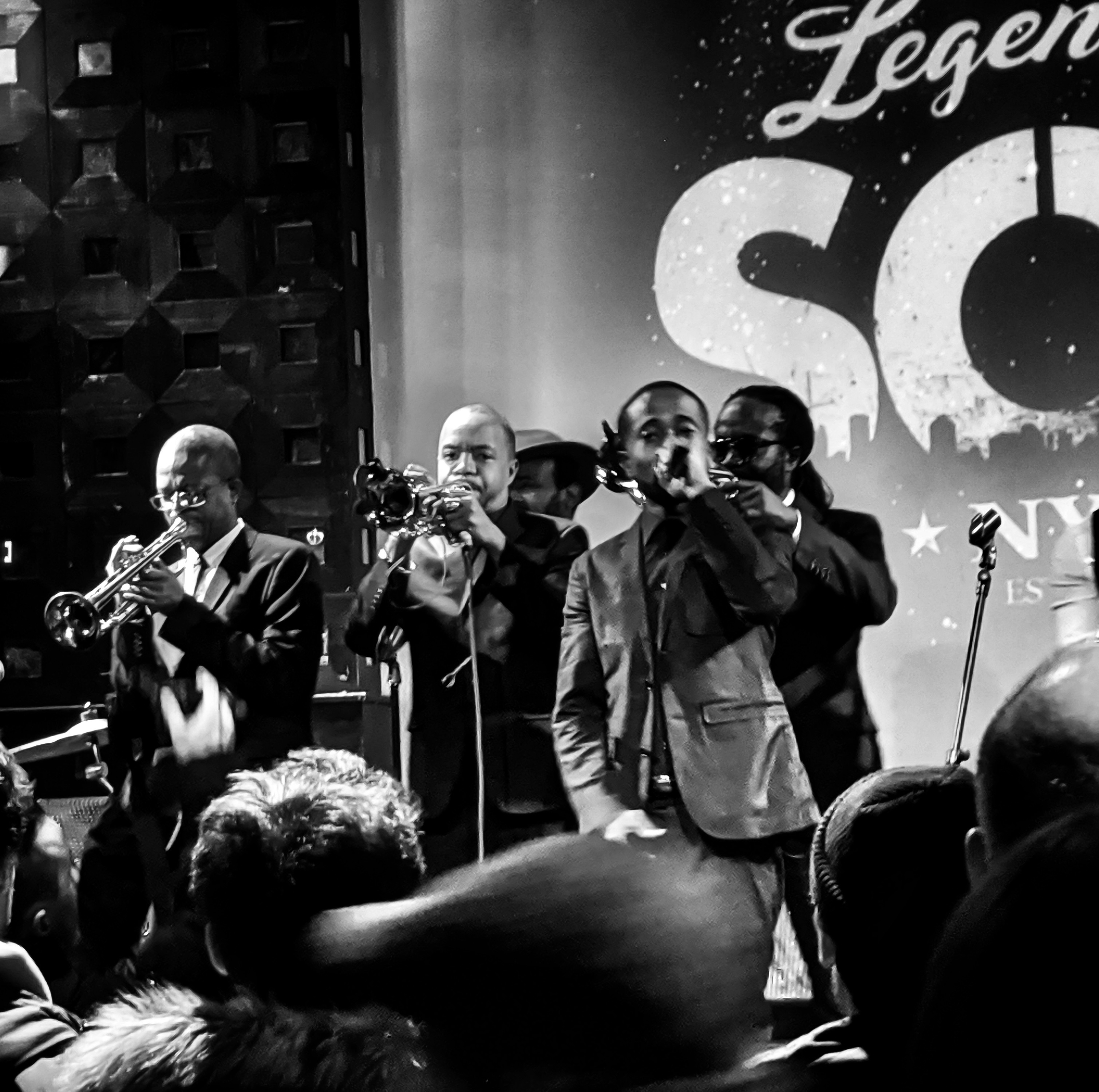
I walked into SOB’s – the site of some of the finest R&B performances I’ve ever seen anywhere – smack into the last third of a dazzling performance by The Era, a Chicago footwork crew. The Era blended virtuosic pushing the limits of the body forms with a sense of shared experience, and empathy for their fellow dancers and their community, spoken word, clips of a documentary, and vital social commentary. Solos highlight the artist as an individual but build the greater whole.

For the last few minutes, as The Era introduced each other and took bows, their fellow Chicagoans Hypnotic Brass Ensemble took the stage, with the drummer laying down a beat and the horns – seven of whom are songs of the great ecstatic jazz artist Phil Cohran – coalescing behind them. That sense of community and love set the stage for Hypnotic Brass Ensemble’s righteous, riotous explosion of joy. The finest funk wah-guitar I’ve heard live since Skip Pitts; thick bass lines and an almost unequaled rhythm section hookup set up blow-your-hair-back horns, gang vocals, and the dance party that’s unheard of at 7:30.

Rode that enthusiasm up 6th Ave to check in on one of my favorite bands I hadn’t seen in many years – since the week of my dear friend Mike Gamble’s wedding, I think – Steven Bernstein’s Millennial Territory Orchestra. The 20th anniversary of this assemblage of downtown NYC jazzers was a tribute to refining and expanding an approach, to taking what matters to them from the past and never being afraid to fuck with it. 

Steven Bernstein and Catherine Russell sharing a look during MTO’s 20th Anniversary set

A paean to the joy of approaching standards like “St. Louis Blues” and “Careless Love” simultaneously as though they just heard them last week and taught them to one another and with all the historical knowledge of every great version that’s come before them. Just as strongly, it was another tribute (you’ll see a theme here) to their community. As he introduced every member of the band – including Catherine Russell, a vocalist for whom “special guest” isn’t even close to adequate – Bernstein had a witty story about how they came into each other’s lives and his palpable love for every person on that stage glowed even brighter than the blistering, surprising solos: “Curtis Fowlkes on trombone! I replaced Curtis in the Lounge Lizards, when he left I got that one solo;” “Peter Apfelbaum and I have been playing music since I was 11 – well, we didn’t really start making music till 12, that first year we were bullshitting;” “They told me I’d love [Matt Munisteri, electric guitarist] who played trad banjo; I said I don’t want to meet some motherfucker who plays trad banjo!”

That same sense of communal bond and simultaneous gazes on the past and the future suffused drummer Makaya McCraven’s Chicago-rooted supergroup. McCraven’s been making noise as one of our most exciting drummers who trusts improvisation enough to run it through a cut-up filter and expose it to every other tool at his disposal. I love his heavy, organic records. But I expected nothing to blow me away as much as the live set.

Makaya McCraven’s band with Marquis Hill soloings

Chicago’s always been one of the principal jazz scenes and they’re having a moment – big records out in the last year from what felt like every member of this Octet, off the top of my head: Junius Paul, Joel Ross, Greg Ward, Brandee Younger, Marquis Hill. This set helped coalesce that coming-out party, extended pieces full of tension and joy, grins exchanged between players but attacking the musical material with an enviable intensity. I texted a friend and said, “This is the kind of awesome, multi-layered groove machine I was led to believe Tortoise would sound like,” but this band doesn’t sound like anything except themselves.

Joel Ross’ machine-gun vibraphone arpeggios took a hi-hat heavy McCraven intro and built a bridge into a volcanic Hill trumpet piece, then subsumed by the whole horn front line at once. The entire band gathered around Brandee Younger as her harp washed over all of us. Ward and the tenor player (I apologize, he was spectacular, I just can’t read my damn handwriting – someone post in the comments so I can correct?) bubbling up uncanny harmonies between their horns. Every few bars brought a wholly surprising and perfectly right turn after turn. Friends and peers who built this language together, like the Yehuda Amichai poem, that baked in the same sun and froze in the same cold, lighting a path straight to the future.

Saturday, both plays I saw were excellent but salt stuck with me and resonating in time with everything else of these two days. Written by Selina Thompson and performed brilliantly by Rochelle Rose with razor-sharp direction from Dawn Walton, salt traces a journey into Thompson’s family history as an adopted black woman grown up in Birmingham, England.

Crowd at Drom for Secret Planet

That journey back to Jamaica and to Ghana excavates old wounds and finds new wellsprings of joy. Ugly slights and horrific mistreatment but also putting her story in the world’s context at large. Better than any performance I think I’ve ever seen, salt understands the crushing repetition of oppression, the way the boring and the horrific take each other as eager dance partners. And, though most of 2019’s year-end list for me dealt with why do we live and what we owe each other, nothing I’ve ever seen has done it better than Thompson, Rose, and Walton do it here. I walked out into the sunlight a blithering idiot (okay, more of).

Later that night, one of my favorite APAP adjacent showcases, Secret Planet, took over one of my favorite clubs, Drom, for the best version of it I’ve ever seen. Cochemea – who I knew best from his sideman duties with Sharon Jones and the Dap Kings – kicked us into a frenzy with instrumental soul, his variety of reeds backed by a band almost entirely composed of percussionists. Seven or eight people building riffs into surging tidal waves and delighting in the sense of play with one another.

Cochemea

That thread got picked up and danced with by Sunny Jain’s (from Red Baraat) new band Wild Wild East, merging featuring Jain at a trap drum kit instead of his usual dhol, fusing spaghetti western tunes, Indian pop, and thick ‘70s psychedelia with a band of sax, guitar, sousaphone, and dueling man-woman vocals. A tribute to exploration and migration wrapped up in a wild party.

Sunny Jain’s Wild Wild East

Alba and the Mighty Lions turned up the psychedelic salsa elements for giant, catchy songs in a rhythmically intense, barbed, rocking package. I didn’t stick around for the whole set only because I realized not eating in 7 hours and running on dancing and whiskey would go badly but I’d watch them again and again.

Alba and the Mighty Lions

Another full day I’m walking into, to badly paraphrase the Andrew Hudgins poem, “As if I’ll only – fat chance – live it once.”

Categories
Best Of theatre

Best Of 2018 – Theatre and Dance

“We tell ourselves stories in order to live.”
– 
Joan Didion, “The White Album”

“The difference between poetry and rhetoric
is being ready to kill
yourself
instead of your children.”

-Audre Lorde, “Power”

Mia Barrow in The White Album, provided by Lars Jan via the Wexner Center

The two soul-enriching elements best delivered by performance, empathy for others and the feeling of community, have never been more needed by me personally and by the world. In a year of extreme highs and fucked up lows, a year where I often didn’t know whether I was coming or going, theatre and dance were the balm they’ve always been – and more.

Having an outlet and hearing from people who were reading and listening and interested in digging deep meant more to me than I can say and I hope I did justice by what I saw. This year was the hardest in memory to whittle down a top 15 from the 60 shows I saw. There was more good work in a wider range of styles than I could take in. Mostly spread between New York and Columbus, I didn’t make it to Chicago and I couldn’t work plays into the handful of Cleveland trips.  As always, everything is in Columbus unless stated otherwise. All art is provided by the artists/companies for promotional purposes, either sent to me directly or from their site.

  1. Variations on Themes from Lost and Found: Scenes from a Life and Other Works by John Bernd, conceived by Ishmael Houston-Jones and co-directed by Miguel Gutierrez and Ishmael Houston-Jones, adapting choreography and text by John Bernd. (Danspace, NYC) – This highlight of a particularly stuffed-with-joy APAP could have justified the cost of a winter NYC trip all on its own. Dance is one of the most alive, immediate artforms – we all know the body – and one of the most dazzling for its presentation of what the body can do. This work of memory, combining texts and choreography and compositions from the artists’ friend John Bernd (a tragically early AIDS casualty) reasserted how alive this work is and raged at the loss of its creator simultaneously. I wrote about it at more length here.

2. Revolt. She Said. Revolt Again. by Alice Birch (Available Light) – In a year where Available Light hit it out of the park repeatedly with work no one else does better, this raw, mesmerizing Alice Birch play was first among equals. Eleni Papaleonardos’ direction balanced thoughtful abstraction with intense physicality and every performance showed me something new or painfully reminded me of something I already knew. I reviewed this for Columbus Underground.

3. Andrew Schneider, Youarenowhere (Wexner Center)  – There’s a certain joy in seeing something that uses tropes you know in such a fresh way it feels completely new. This Schneider piece was a heartbreaking magic show: a virtuosic solo performance, the best science fiction grappling with alcoholism since The Man Who Fell to Earth and a chaotic jumble of the glitching, out of sync nature of the modern world glued to a beating heart. More images that haven’t left me since January than anything else I saw all year.

4. The Realistic Jones by Will Eno (CATCO) – This deceptively simple Will Eno fable about two couples named Jones was a perfect example of the beautiful, human storytelling CATCO brings to the table at its best. Bishara’s direction unwrapped this for the audience like a gift without pandering or trying to sand down the weirdness. I reviewed this for Columbus Underground.

5. The White Album by Lars Jan and Early Morning Opera, adapted from Joan Didion (Wexner Center) – A righteous performance by Mia Barrow at its core charged and illuminated this powerful adaptation of one of the finest American essays. A look at all the ways telling shapes the life and the stories grow into themselves. The accusations this wasn’t dramatized enough had some merit, but it’s probably not surprising hearing those words was as much of a shot in the arm as I needed.

6. Assassins, music and lyrics by Stephen Sondheim and book by John Weidman (Short North Stage) – My favorite Sondheim on a visceral level, Assassins, received a gorgeous technicolor-nightmare production at Short North Stage featuring razor-sharp direction by Gina Hardy Minyard and a cast that’s hard to imagine being bettered. I reviewed this for Columbus Underground.

7. Pursuit of Happiness by Pavol Liska and Kelly Copper (Nature Theatre of Oklahoma, Under the Radar, NYC) – Nature Theatre of Oklahoma have a knack for taking things we think we know and making sure we really see them. This look at America through the lens of the Western in collaboration with En Knap, blows up our treasured (or sneered-at) myths about America into a hilarious, grim Grand Guignol cartoon.

8. Company by Stephen Sondheim and George Furth (SRO Theatre); Falsettos by William Finn and James Lapine (Gallery Players) – These two shows are high water marks for the ability of the musical to shine a light on our worst, most craven tendencies and point to the hope of self-realization. Great direction – Kristoffer Green for Company and Ross Shirley for Falsettos – casts, and musical direction gave a new coat of paint on these fabulous scores and sent me out into the night thankful for my town and mulling a lot of things over. Reviewed for Columbus Underground: Company and Falsettos.

9. An Octoroon by Branden Jacobs-Jenkins (Available Light) – This Jacobs-Jenkins play was one of the most acclaimed and controversial Off-Broadway hits in recent years and the Available Light production was a marvel, directed by Matt Slaybaugh and with a for-the-ages performance by David Glover at its heart. I reviewed this for Columbus Underground.

10. [PORTO] by Kate Benson (Available Light) – Benson’s [PORTO] was a sharp and funny look at the complications and dangers of trying to live in the world, to stake out a place for yourself without treating others badly. Note-perfect direction by Eleni Papaleonardos and a phenomenal cast including standout performances by Elena Perantoni and Michelle Weiser, made this terrific play an experience that was impossible to forget. I reviewed this for Columbus Underground.

11. Breaking the Code by Hugh Whitemore (CATCO and Evolution Theatre Company) – These CATCO and Evolution collaborations always bear fruit and this gripping take on Whitemore’s classic dissection of Alan Turing, directed by Joe Bishara, was especially soul-enriching. A riveting performance by Ian Short as Turing and Dave Morgan as Dilwyn Knox, particularly Morgan’s horrifying soliloquy about compromise, knocked this over the fences. I reviewed this for Columbus Underground.

Etrois sont les Vaisseaux, Wexner Center

12. Étroits sont les Vaisseaux by Kimberly Bartosik/daela (Wexner Center for the Arts) – This dance piece, named for a mammoth Anselm Kiefer sculpture, took a look at a couple on a shifting, melting landscape of intimacy (danced by Joanna Kotze and Lance Gries). When I interviewed Bartosik for a preview she said her goal was to find that emotional, dramatic space without being dramatic or emotional and this succeeded in spades. Every subtle gesture, every undulation, felt charged and fraught without being obvious or over the top. This ripped my heart out and used it for a shadow play.

13. White Rabbit Red Rabbit by Nassim Soleilmanpour (Available Light) – This piece travels the world, speaking for its author Soleilmanpour, forbidden a passport because he wouldn’t serve in the military. It takes what could be a parlor trick, a play the actor hasn’t seen before the curtain comes up, and (with the careful facilitation of Eleni Papaleonardos) turns it into a fable about complicity and compromise. In the middle of a very long day – that started with a phone call from the day job at 4:15am – this shook me to the core. I couldn’t bring myself to stay for the talk-back but I stopped twice on the mile walk home to text friends about this; I just couldn’t not talk about it.

14. Our Country: The Antigone Project, Conceived and Devised by Annie Saunders and B. Wolff (Under the Radar, NYC) – This was a beguiling, complicated intermingling of memory and myth, childhood and America. Created based on taped conversations between Annie Saunders and her brother, and starring Saunders and Max Hersey, and with direction by Wolff that merged a deep empathy with not letting its characters off the hook, it was as immediate and accessible as a house on fire but so hard to nail down it would have required many, many viewings to exhaust.

15. Apologia by Alexi Kaye Campbell (Roundabout Theatre, NYC) – This British import featured a volcanic Stockard Channing at its center as an art historian who just published a summing-up memoir that’s roiled her family. With a supporting cast led by a terrific Hugh Dancy and Megalyn Echikunwoke and strong direction by Daniel Aukin, despite an ending that pulled its punch too early, this was a haunting look at the costs for women in pursuing success.